
As our methodology involves observing, listening, gathering and sharing, we programmed an alley walk as part of the wonderful Belfast Design Week. A walk along several alleyways to see what we find. We limited the spaces in line with COVID restrictions ‘limited places, liminal spaces’ and they quickly booked up.
Who would want to walk in alleys with us? A retired town planner, someone who had just moved back to the city, a few local residents, a couple of architects, a photographer, someone who was in the process of buying a house in the area. We walk together, stopping to discuss, and at various points along the way we share some quotes from placemakers and poets.
Gathering at the Parklet – parking space turned extended pavement for convening and eating al fresco, with distance.
It’s hard to hear, with masks on, on a busy thoroughfare.
We knew it would be, so we take to the alleys without delay.
A right, then a left and we are met with quiet and colour. We stop for a chat and we’re right outside the home of one of the group. We hear about the making of this place. ‘Forbidden to welcoming’.
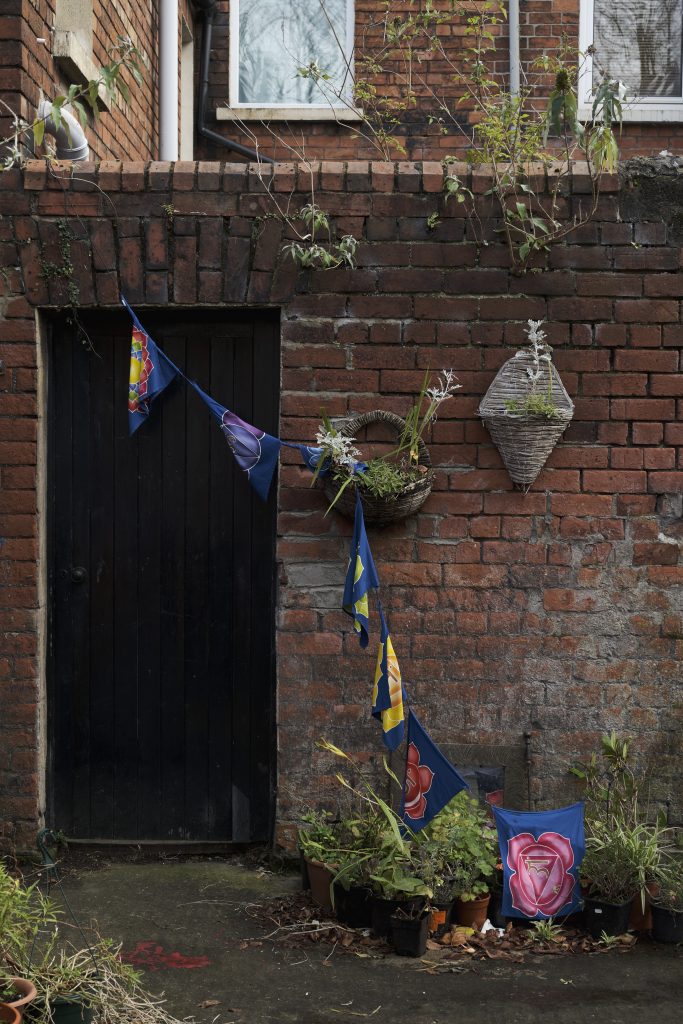
A shared community that has grown organically in the back alley with music, drinks, play. A neighbour is having coffee. They join us for a bit. We see tables, planters, bricked up… are they windows or coal chutes? Are they alleys or entries?
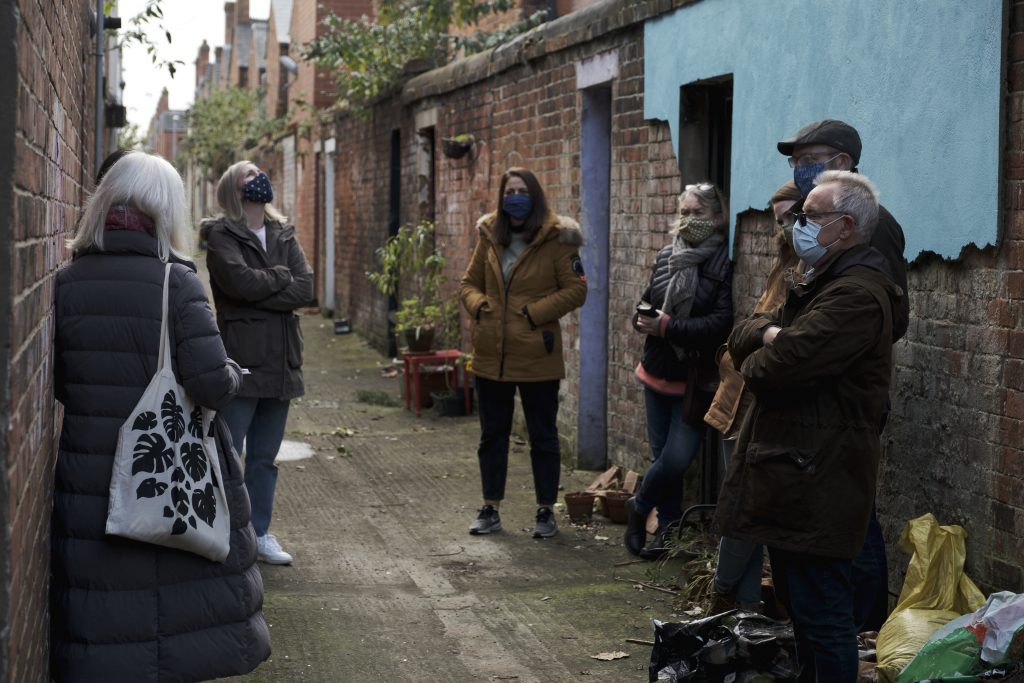
We talk about routes:
‘ I’d imagine myself pointing and saying, ‘well, orientation is there,’ meaning the person needed to go round such-and-such a corner. ‘Go there,’ I’d say. ‘Just round that corner. See this corner? Go round it and when you get to the junction by the letterbox at the start of the ten minute area you head up by the usual place’ Anna Burns
Further on we cross a road. It feels a bit more serious. Smoke spills out from boilers. Less hanging about. We talk about bins. Should we keep them in the yard? In the alley? What about a shared bin space? We hear about yards on the other side of walls being transformed. New places. New stories. New uses with the kids cycling to school.
We reach the end and make a U turn down the next alley. Leaping over puddles and faeces, past abandoned items. The terraces climb two stories above us and the barbed wire hangs overhead. It’s a green space. Mossy. Ferns, weeds growing underfoot. We gasp for air at the end.’

Heading back along the next one, we need to open a makeshift gate, making sure to close it behind us. Beautiful benches and planters made from pallets. Too nice to stop here. It feels like we are trespassing. We stop by the washing machine further along and we talk about interventions and debate the gates a bit.
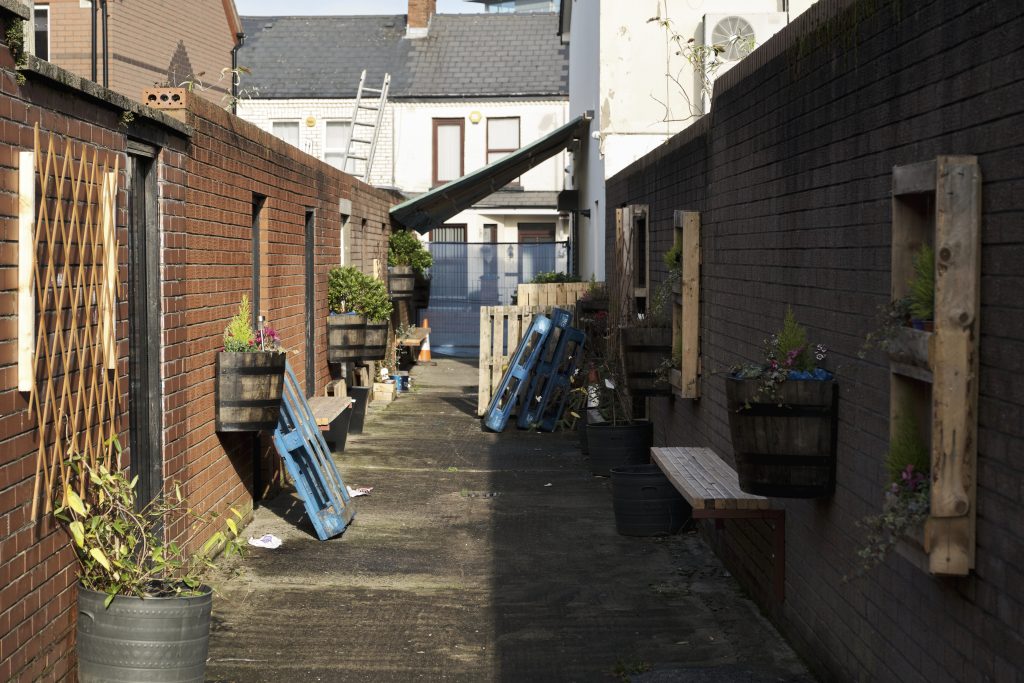
We head down towards the sun and meet someone (official) clearing drains. An annual occurrence he tells us. It makes us think about ownership and responsibility. We are near the end of the circuit. A triangle of alleys with a derelict site in the middle. We’re curious. We think about the possibilities for a home, a walled garden.
At the final alley, another gate (‘it was open last time’) and it’s unlocked, so we go inside for a final chat and we share words from two female disrupters. ‘A hero!’ someone declares when we talk about Jane Jacobs:
“There is no logic that can be superimposed on the city; people make it, and it is to them, not buildings, that we must fit our plans.”
And then some Holly McNish
‘…no throwing, catching, football matches – one broken window – council snatches – every patch of makeshift pitch – not got a garden? Give a shit!’
A local resident explains the lack of space for restaurant bins that spill onto the road and then back to the pavement or blocking the alley, depending on who complains the loudest – the result of ill-thought-out planning…but look how the cafes are thriving.
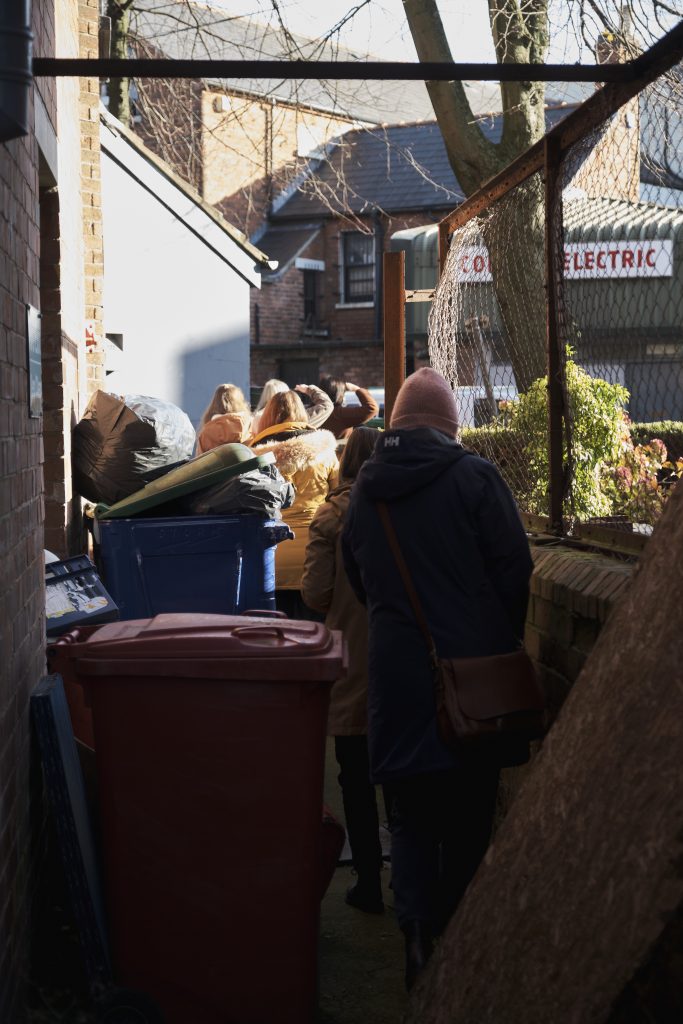
Hustle, bustle, back to your day – gone, again, the quiet of the alleys.
“Loved this trip round the entries/alleys of my neighbourhood” Katherine Fox