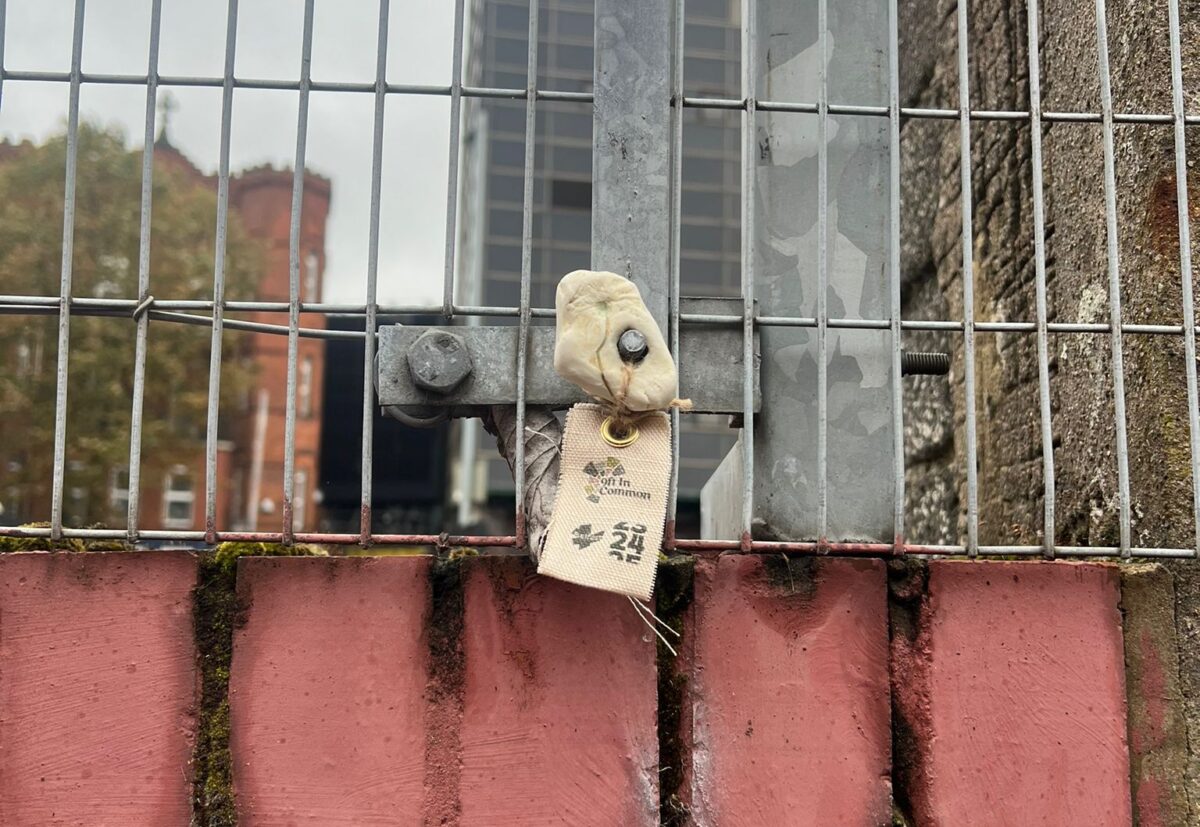
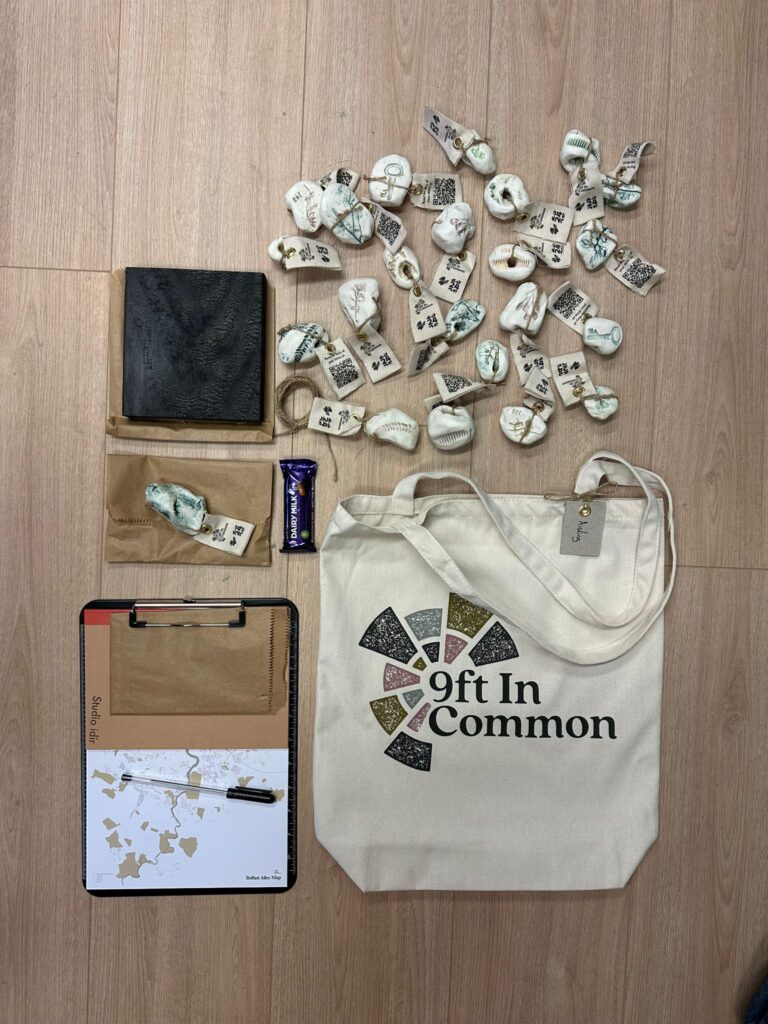
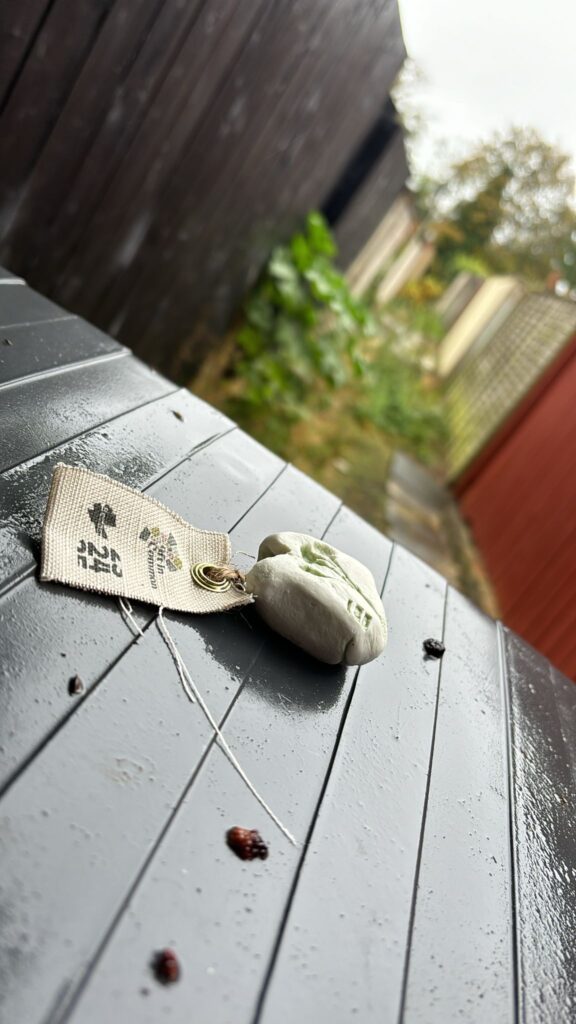
Having exhibited Multitudes together as an edition, we* distributed the stones across Belfast’s alleyways. A series of tiny offerings.
We hoped that the experience of finding one of these 202 porcelain hag stones would allow the finder to perhaps reconsider any preconceptions that they may have had about alleyways and allow them to see these overlooked spaces in a new way.
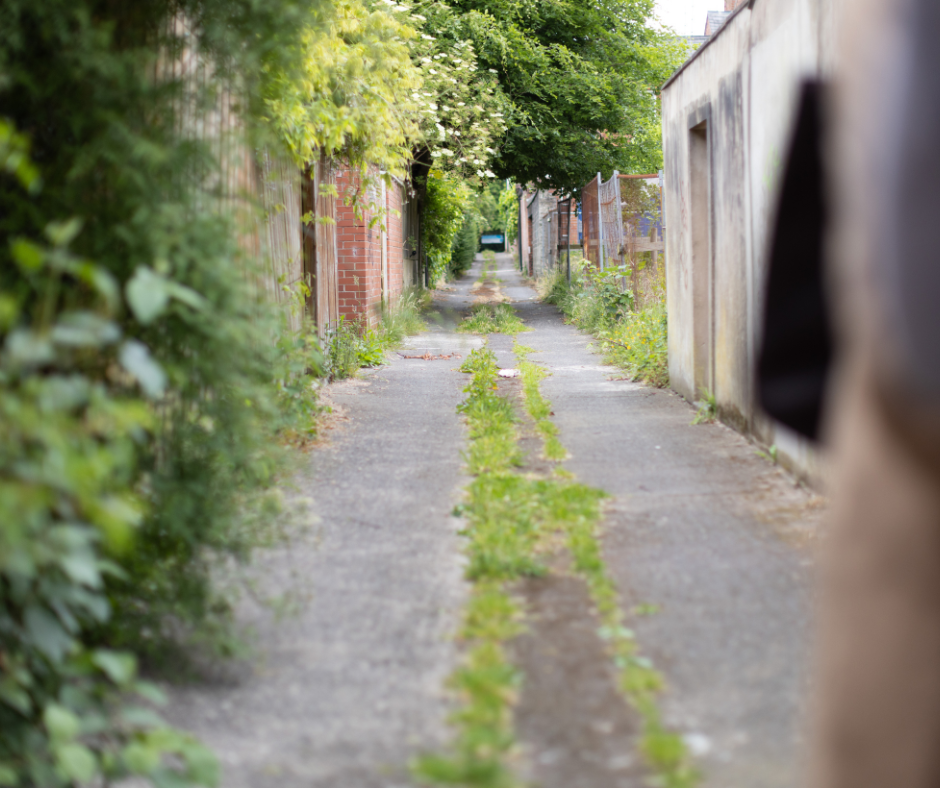
Now, we weren’t just hiding hagstones in alleyways, for that would be too easy. In the lead up to Samhain, before the days got too short, we attempted to walk every alleyway in the city! In doing so, we created an audit of these spaces – something that had never been done before!
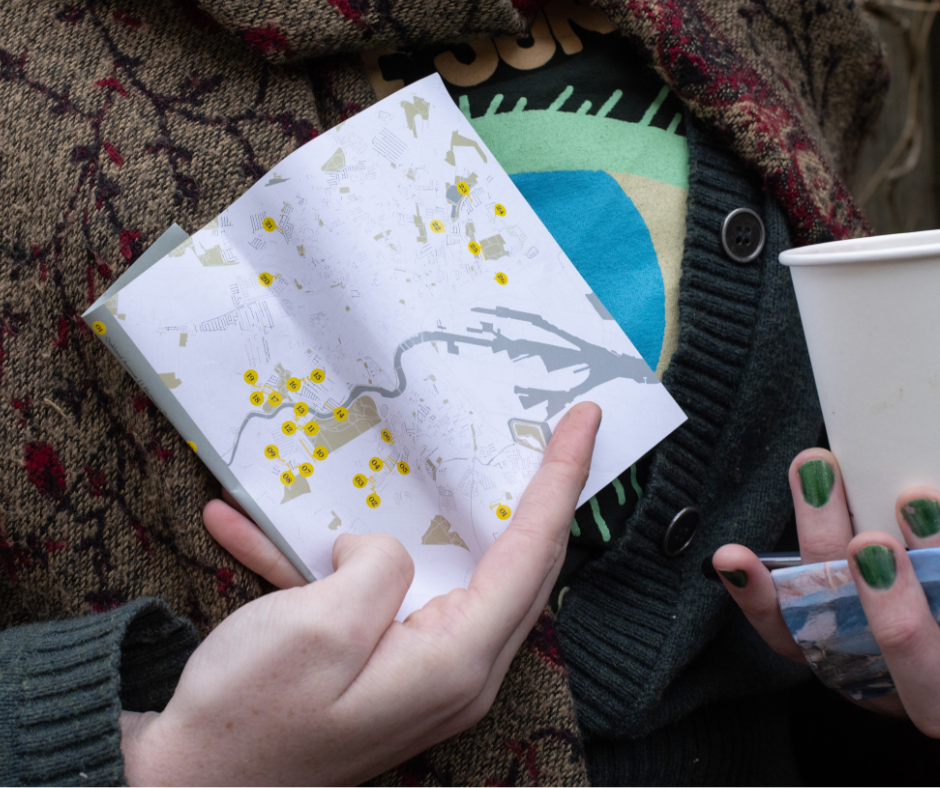
Our Alley Walkers Expidition Bags – with maps stones and a few goodies to keep
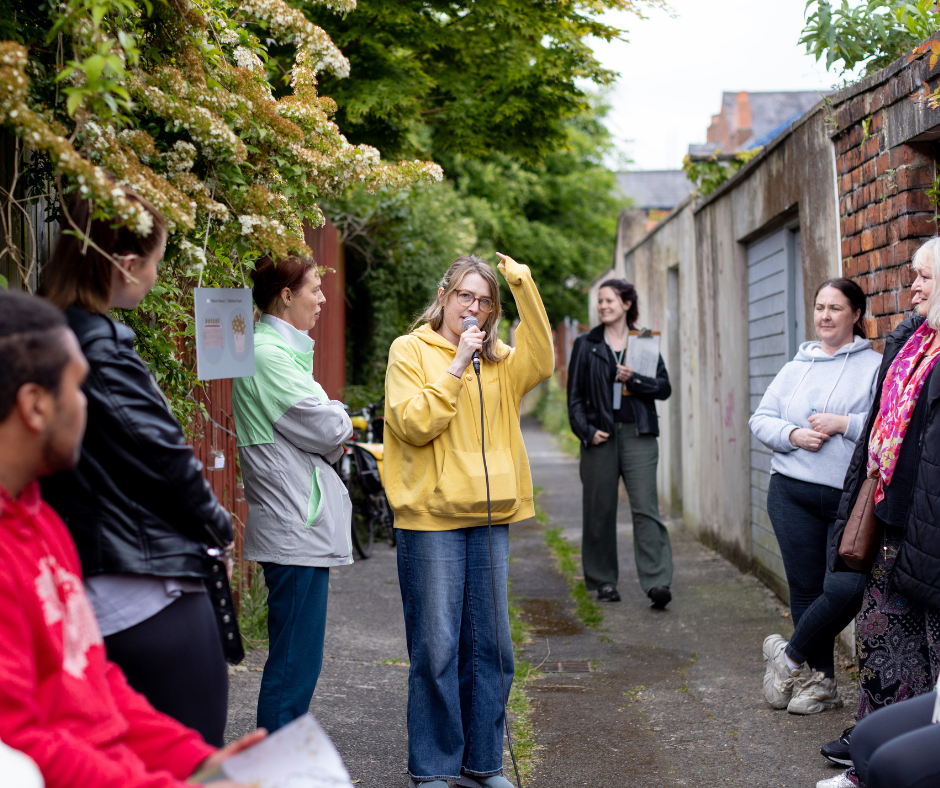
Our team of researchers conducted a field analysis of each alley in the city, so that we could better understand them and their potential. This on the ground analysis involved GIS mapping, recording observations, and collecting information about each space. And since no two alleys are the same, this was quite the undertaking. We had a Whatsapp group that’ was buzzing and bubbling from dawn to dusk with deep questions like ‘is this an alley?!’
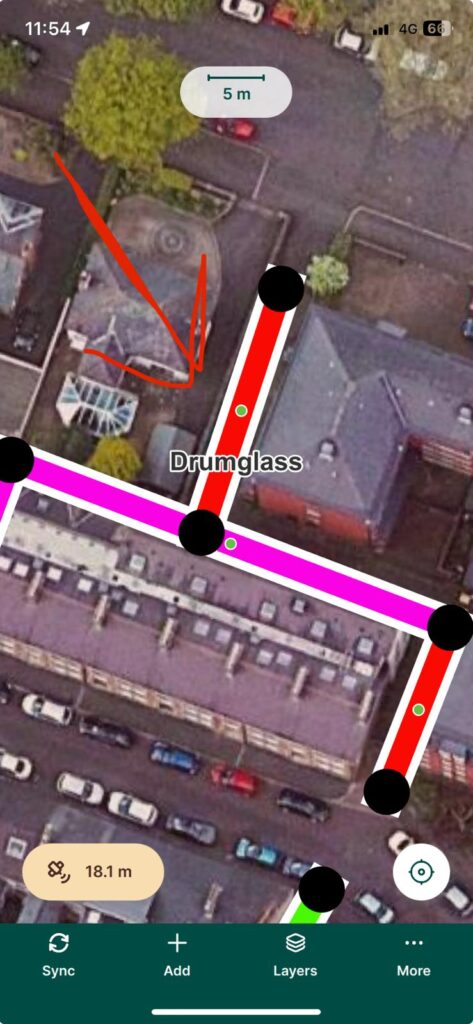
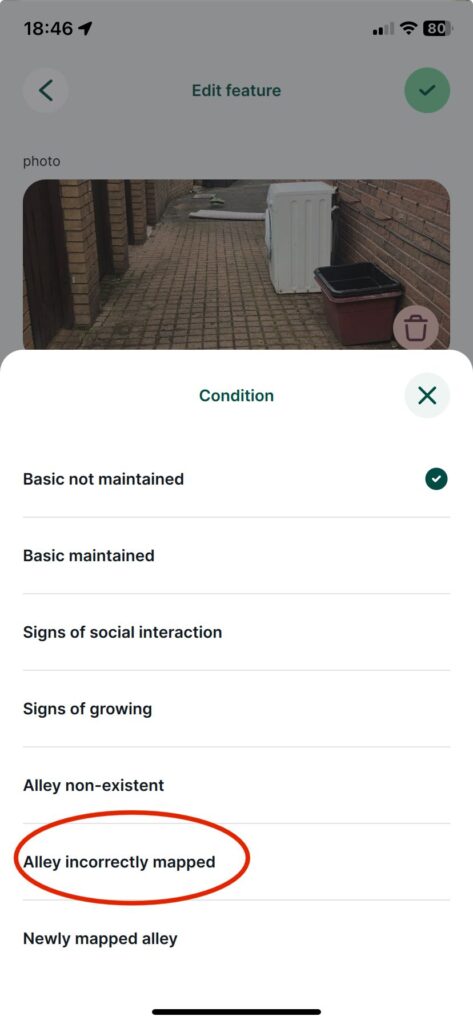
We began by verifying information from the Belfast Alley Map, working across the city’s electoral wards. Our mapping expert James (of North Mapping Services) built us an app in which to store the information that we recorded. We had the ability to add new alleyways, remove dud alleyways, comment on the condition of them, pin point areas of social interaction or community growing. We could identify where gates have been erected, and we can upload images of each alley. And we could also record the coordinates of the hidden hag stones!
A stone in the wild. GIS mapping in actionwe are verifing our map data
Why did we do this?
We are interested in the alleyways as rights of way across the city.
We wanted to demonstrate that they are (mostly) passable, as we coordinated efforts with bin days, sneaking in through unlocked gates.
We are massive map nerds.
We believe that you can’t get to know a space without being present in it.
We think walking is a powerful way to explore.
We wanted to show how, when occupied, these spaces become safer for everyone.
We wanted our research to be as useful as possible, to as many people as possible.
* The Royal We: our expanded team of alley walkers – Aisling & Eloise, Anna, Jemma, Kashmira, Salomé, Pól, Sarah H, Sarah W, John and Jonathan
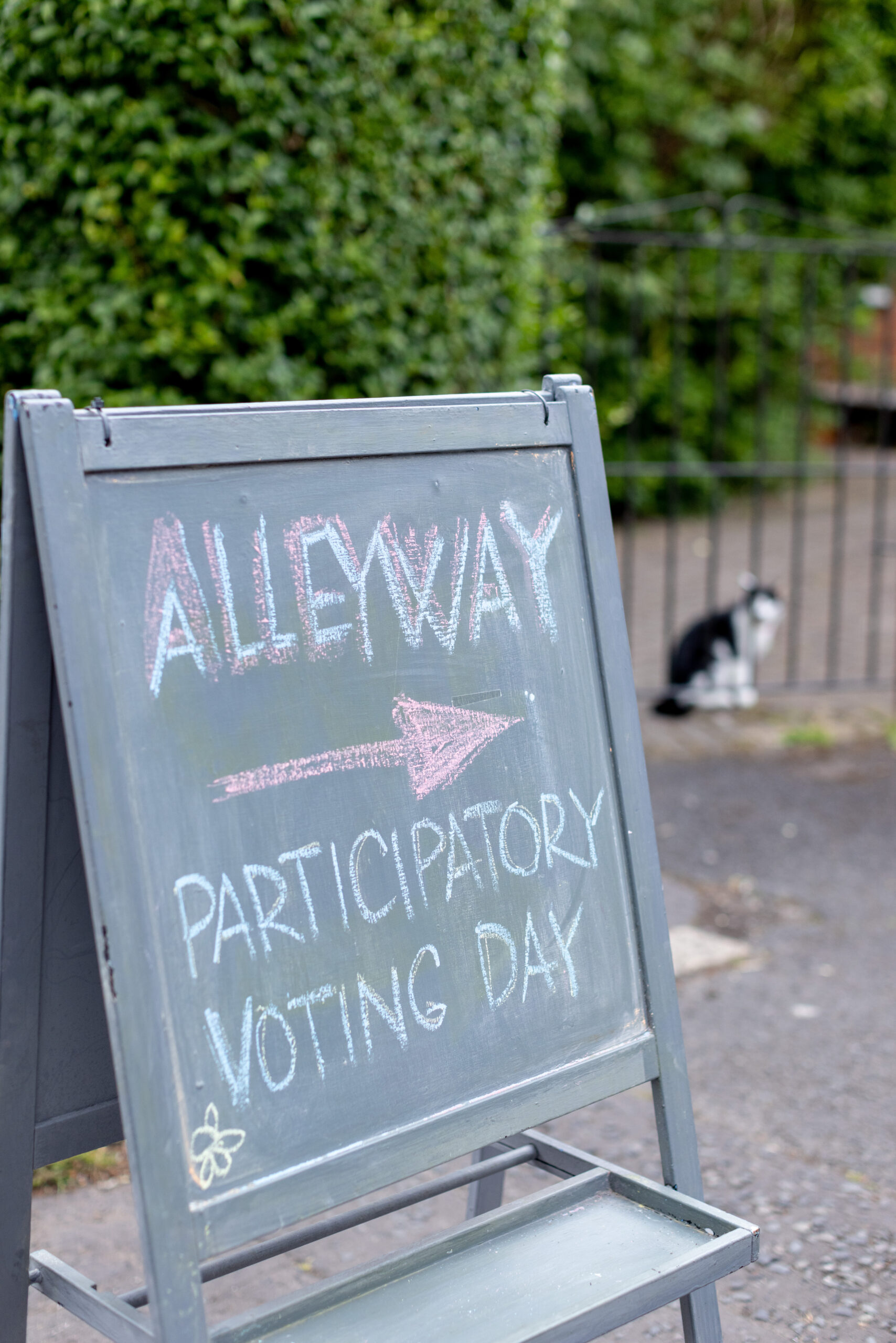
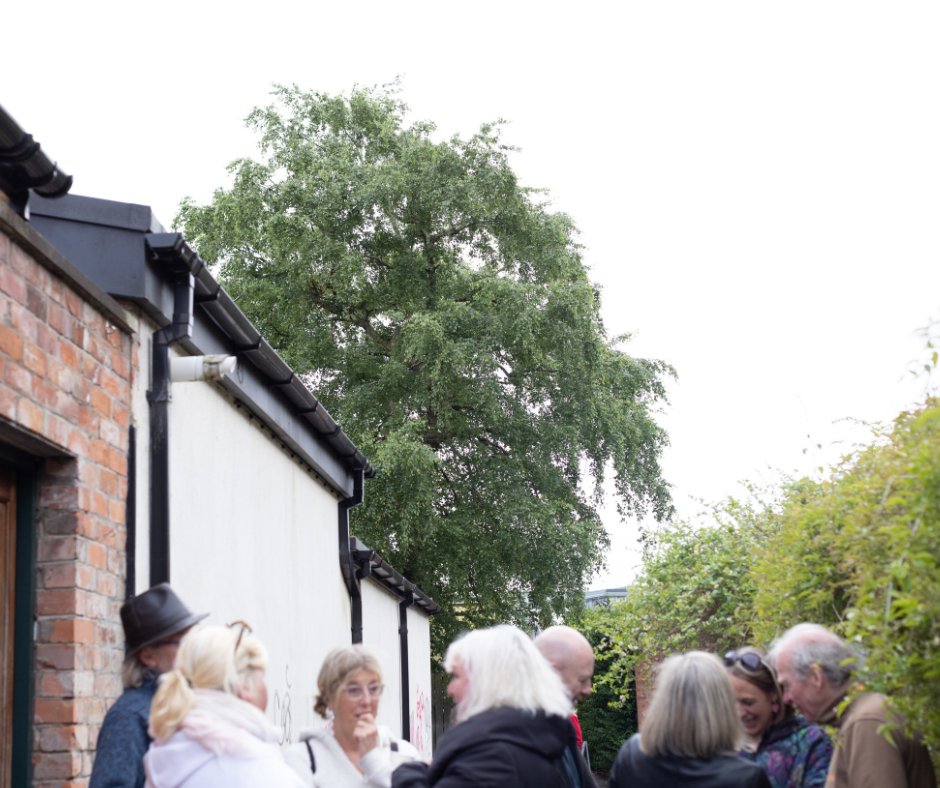
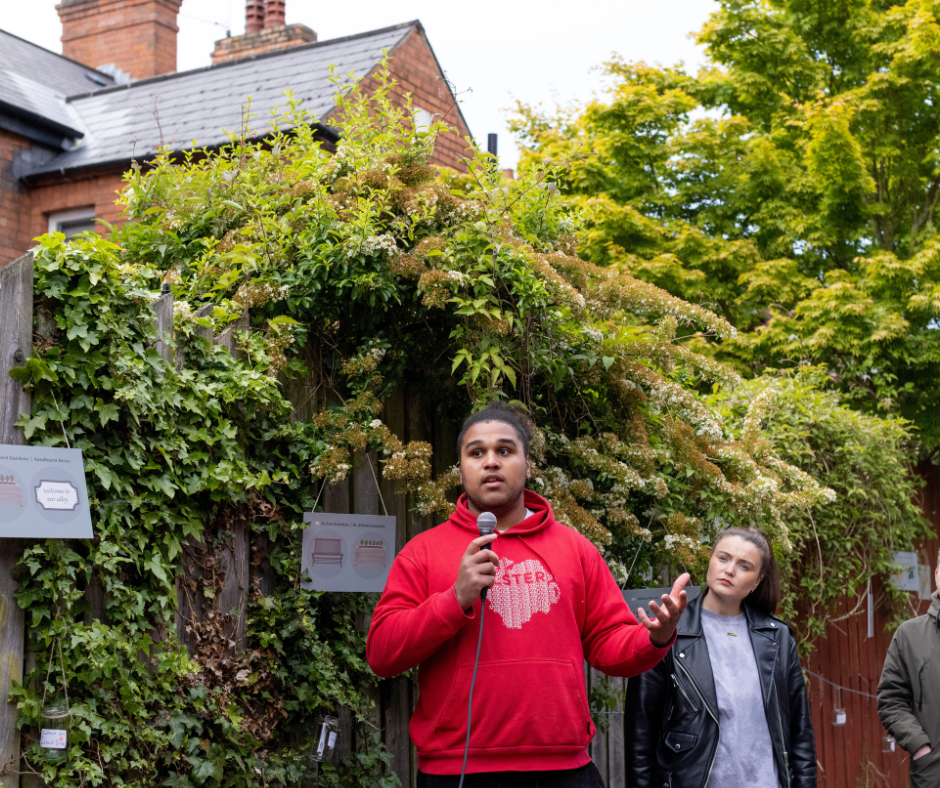
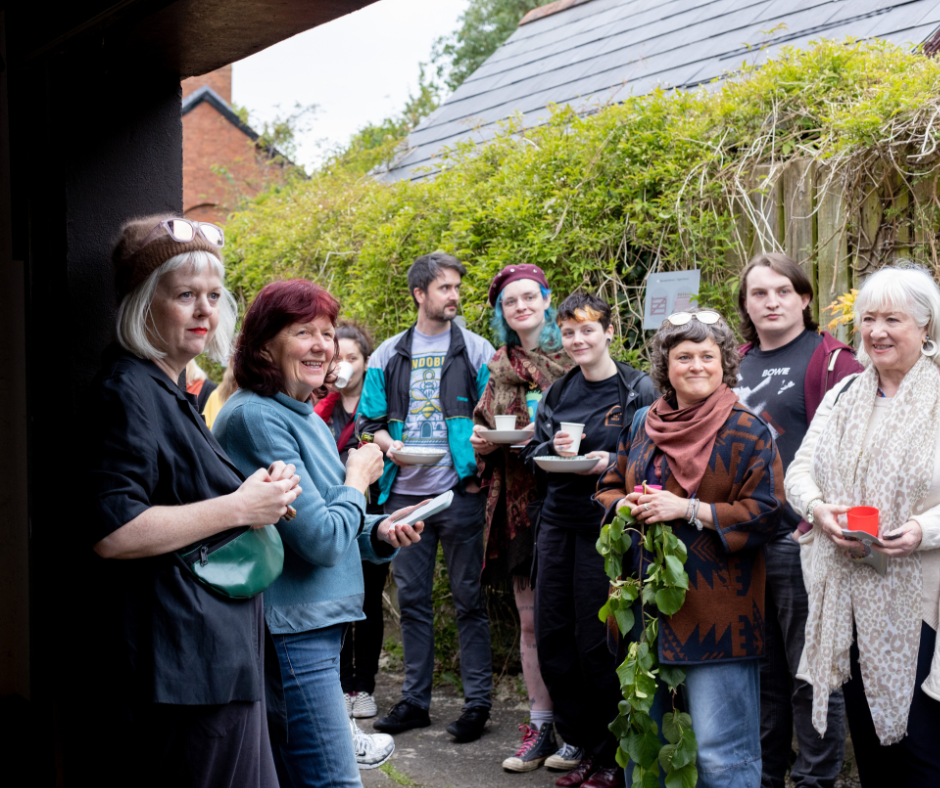
Reflecting on our wonderfull voting day gathering on June 7th.
We see it so often – ‘fixes’ that are applied to problematic places by doing the same thing over and over. A one size fits all approach. And decisions being made without ever visiting the place, or considering the people that use it.
Through our Belfast 2024 project, AManifesto for the Alleys, we wanted to understand what a human centric approach might look like. Solutions that are formed by the people themselves. Our partnership with Social Farms & Gardens (SF&G) has been an important part in nurturing and supporting this process, with the incredible grass roots Reclaim the Commons network of community growers across Belfast.
Socially engaged artist Katharine Wheeler writes in her working principles‘Put ideas out into the world as they are forming and let them come back changed’. Through 9ft in Common, we strive to create environments where people’s ideas are valued in the hope that they remain connected to and invested in them. So, what does this look like? SF&G cast a call out for ideas for small changes that people wanted to make in their alley. We were excited to see what might come back.
In response to the call out, we received 27 ideas and diverse stories about ways in which residents would like to make their alleyway better. Throughout each story was an underlying hope to make it a better place for people and with people. It was never just about making physical changes.
We had £4000 to spend across all proposals, and SF&G designed a gorgeous gathering that would help distribute the money fairly. They used a participatory budgeting framework that they were familiar with and it had proven to be successful in creating an inclusive and fun environment. The emphasis was on participation, with time for making new alley friends and catching up with neighbours.
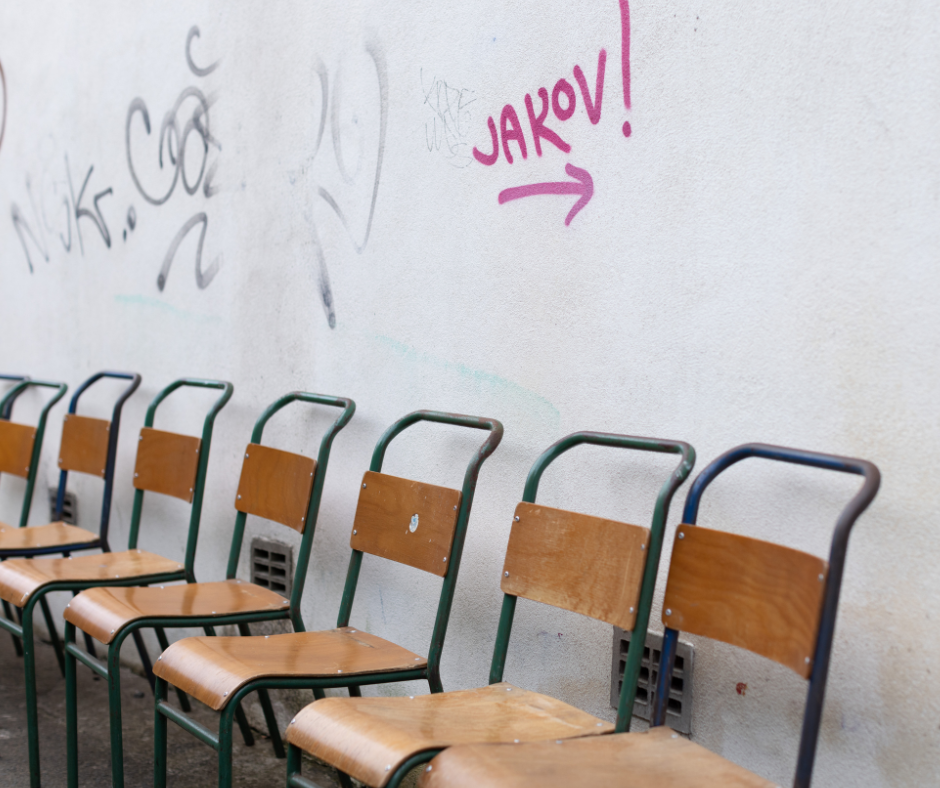
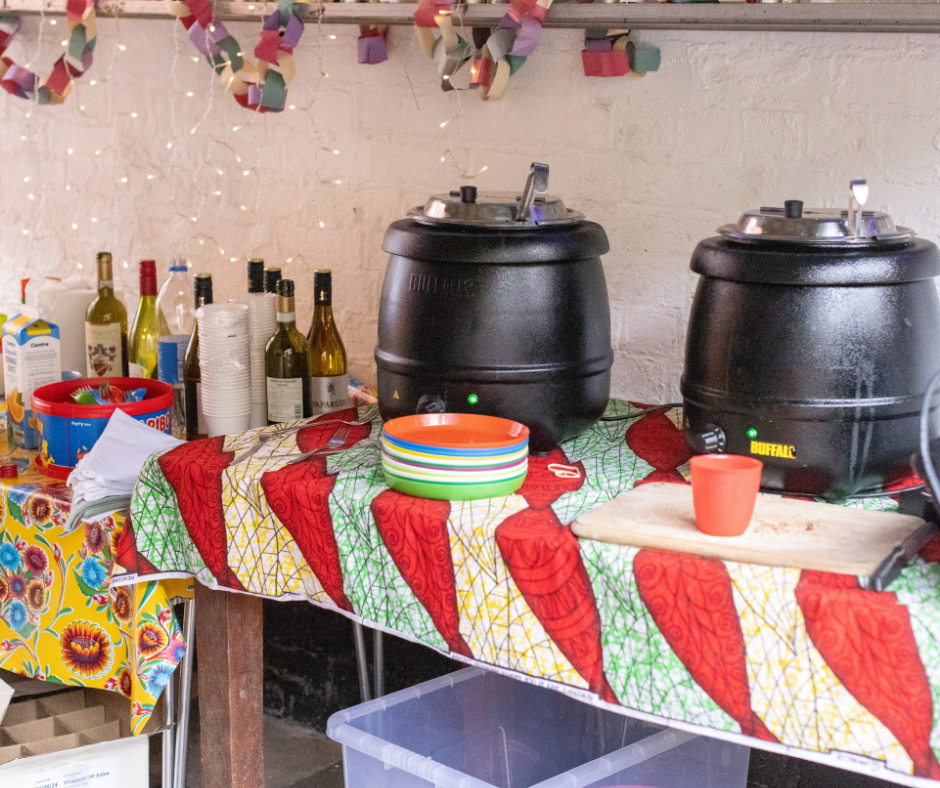
We chose to host the gathering in an alley. Gambling with the weather gods, we assembled at Harpers Yard, an incredible community led pop up café that runs a series of fundraisers from the alley and backyard yard of a home.
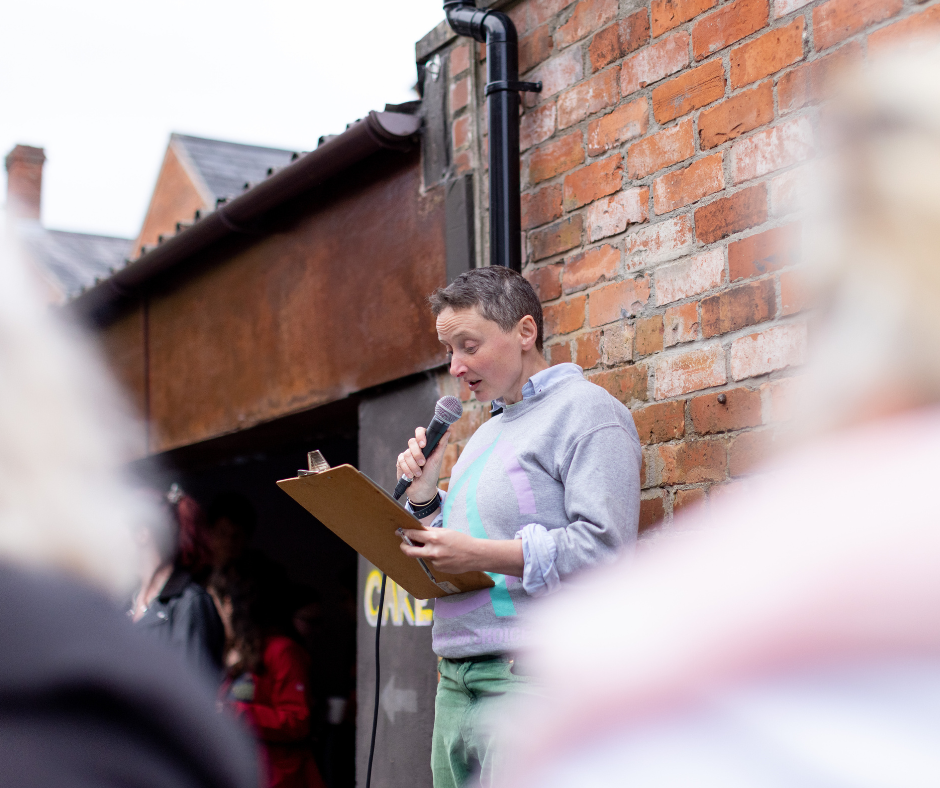
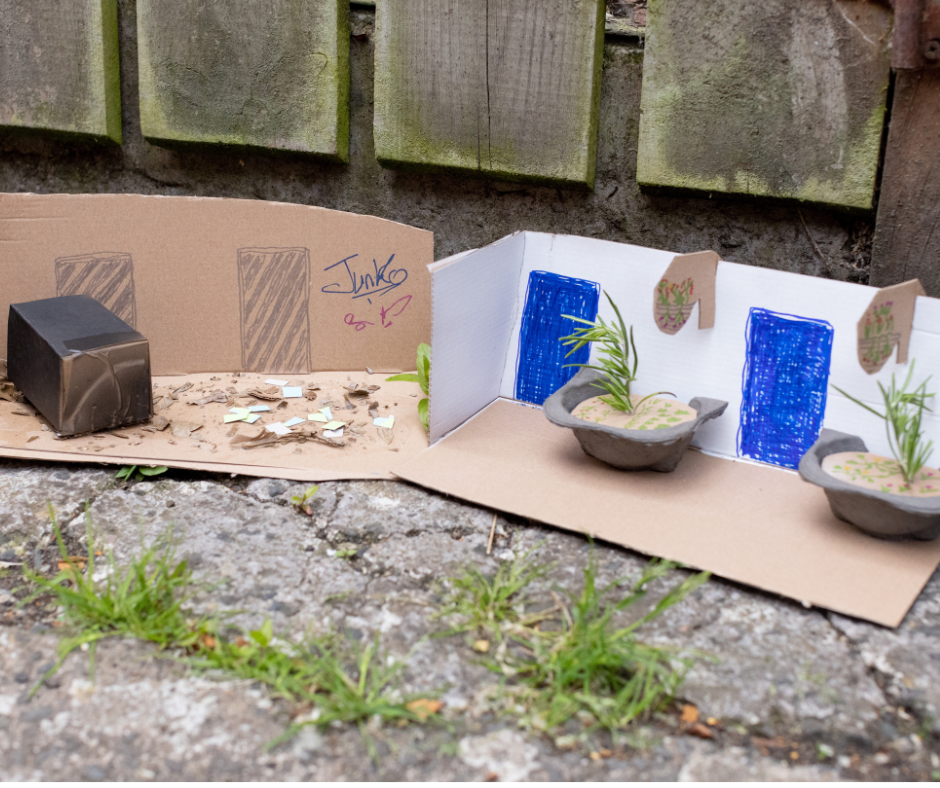
After tucking into a bowl of stew, people were invited to share their ideas with a one minute pitch. We saw concept drawings, masks, models. We heard new solutions to age old problems. We became part of each individual community, with memories shared about wonderful grandparents hosting barbecues in one alley and play shops in another. And we imagined dreams for the future – an outdoor electrical socket (to plug the toaster in!), a skip to help clear rubbish, seating so that everyone could feel comfortable and welcome.
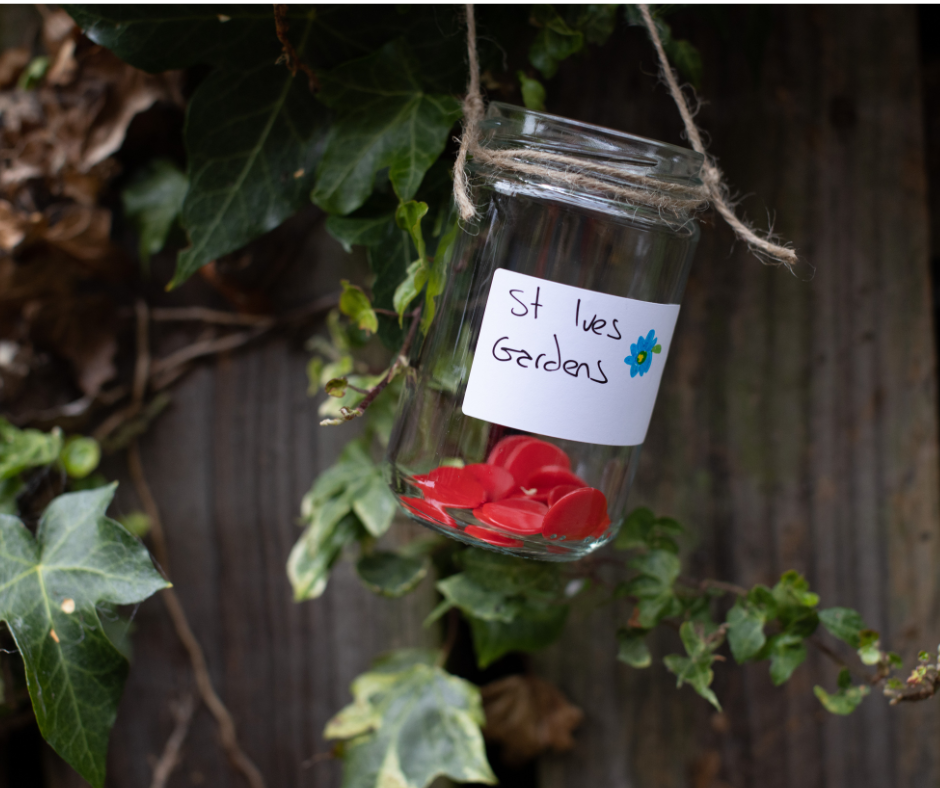
Then it was time to vote. Each person had been given a beautiful handmade paper wallet filled with tiddlywinks, thanks to Miriam at SF&G. Empty jam jars that had been destined for recycling were given a new lease of life as voting vessels. 27 of them were hung along the alley next to bespoke signs for each idea, reminding us of the wish list. The sound of chatter and tiny tiddlywinks hitting the bottom of glass jars filled the next few minutes, and then it was time to count the scores.
Annnnd, everyone was a winner, with £4000 spread across all ideas. Awards were given based on the number of tiddlywinks in each jam jar. Not the most high tech, but extremely wholesome and interactive 🙂
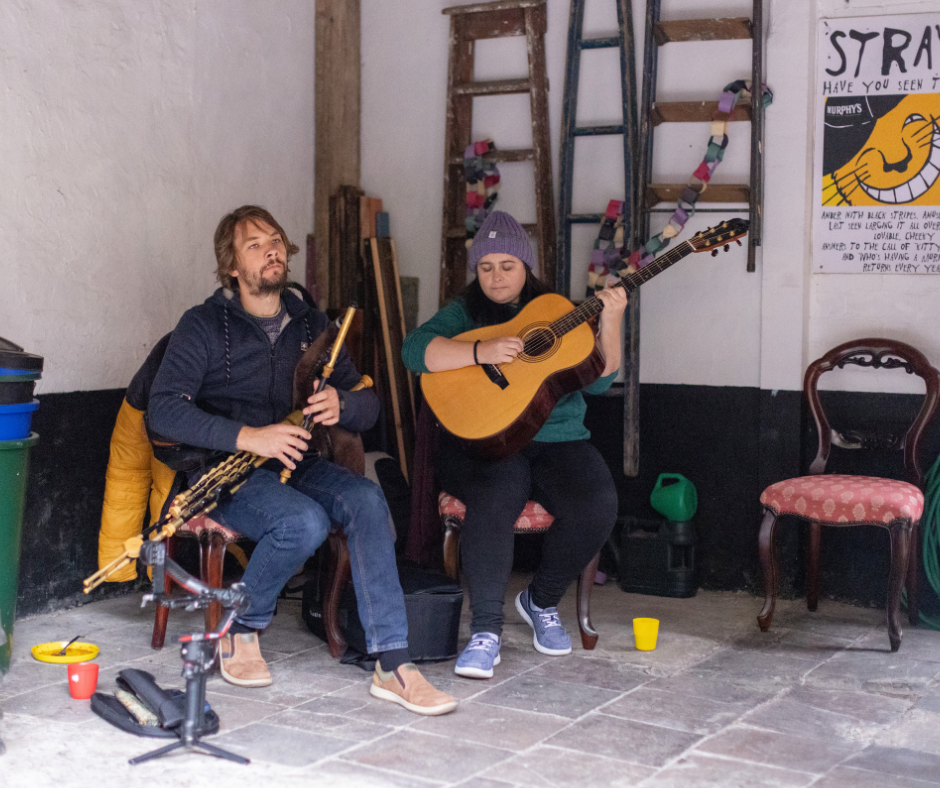
Finally the alley awards were announced, ranging from £50-£300. There were no expectations cast, no big forms to fill in. Just an awful lot of good will, joy, delightful conversations, new relationships formed, loud cheers, warm hearts, big smiles, and live music to end the evening.
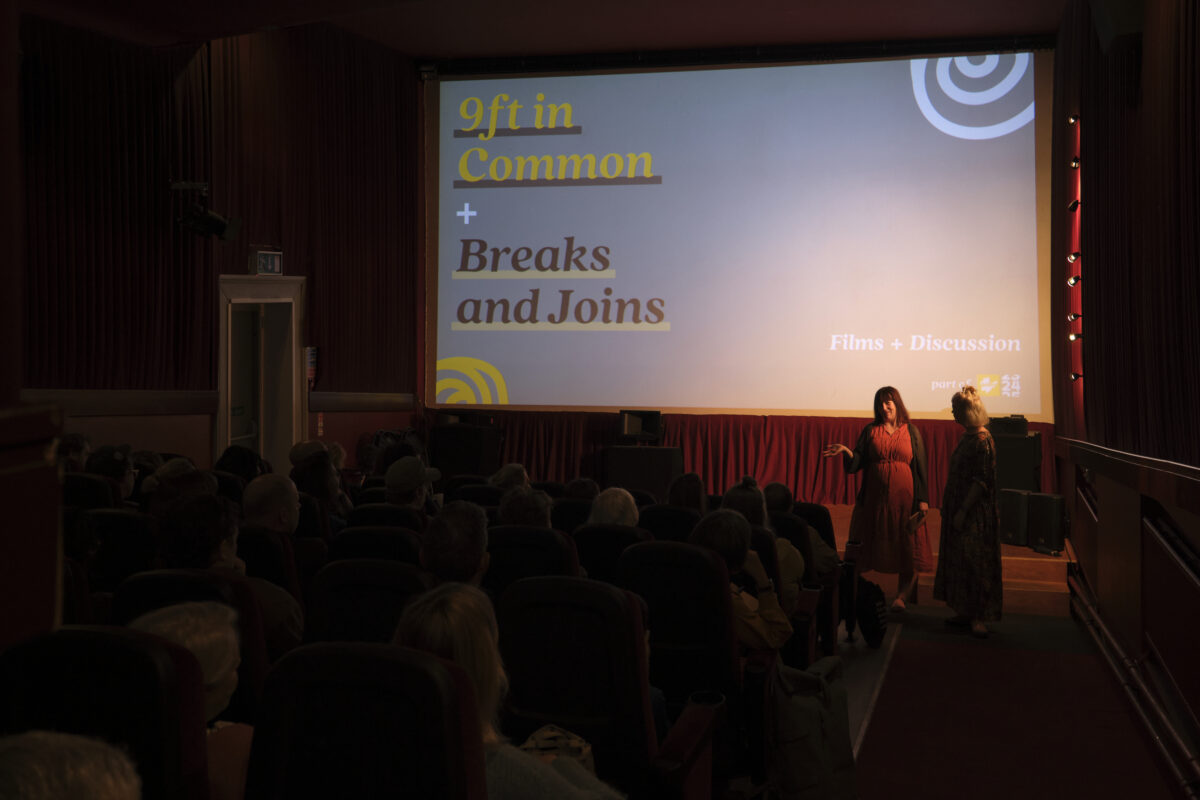
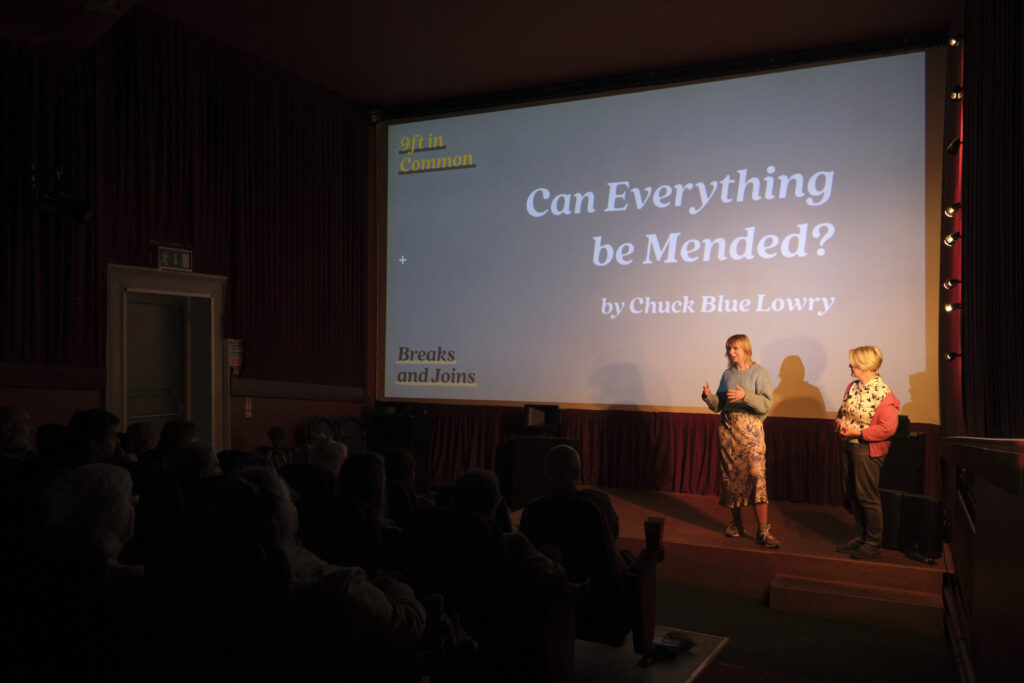
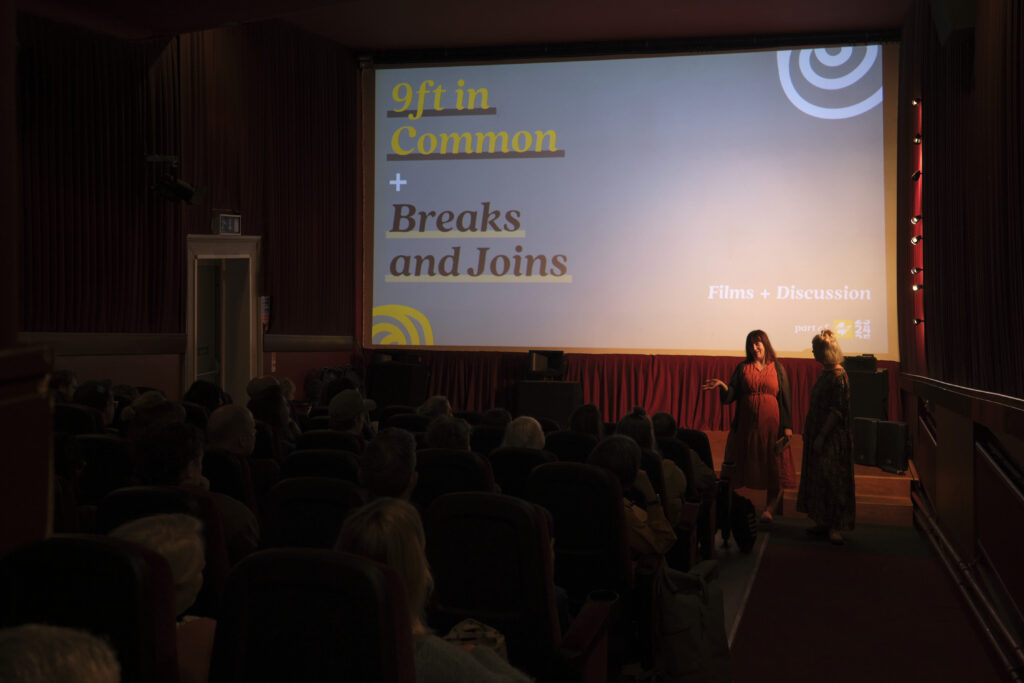
We had a wonderful gathering at Belfast’s only art deco cinema, local landmark, and prized community asset, the Strand Arts Centre in east Belfast. To mark the midpoint of our year as part of Belfast 2024 celebrations, we were keen to share what we had been working on and what inspires us. Our guests for the day were Sue Mayo and Chuck Blue Lowry, from the London based project Breaks and Joins, whose creative practice has recently focused around the act of repair, in repair cafes, communities and individuals.
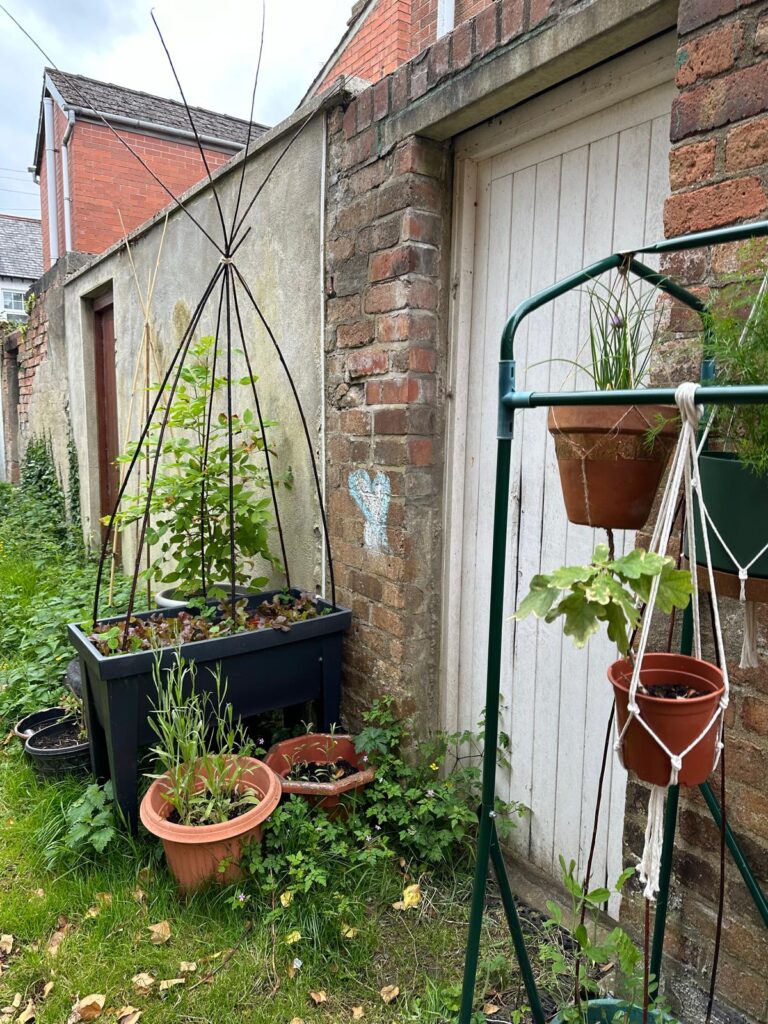
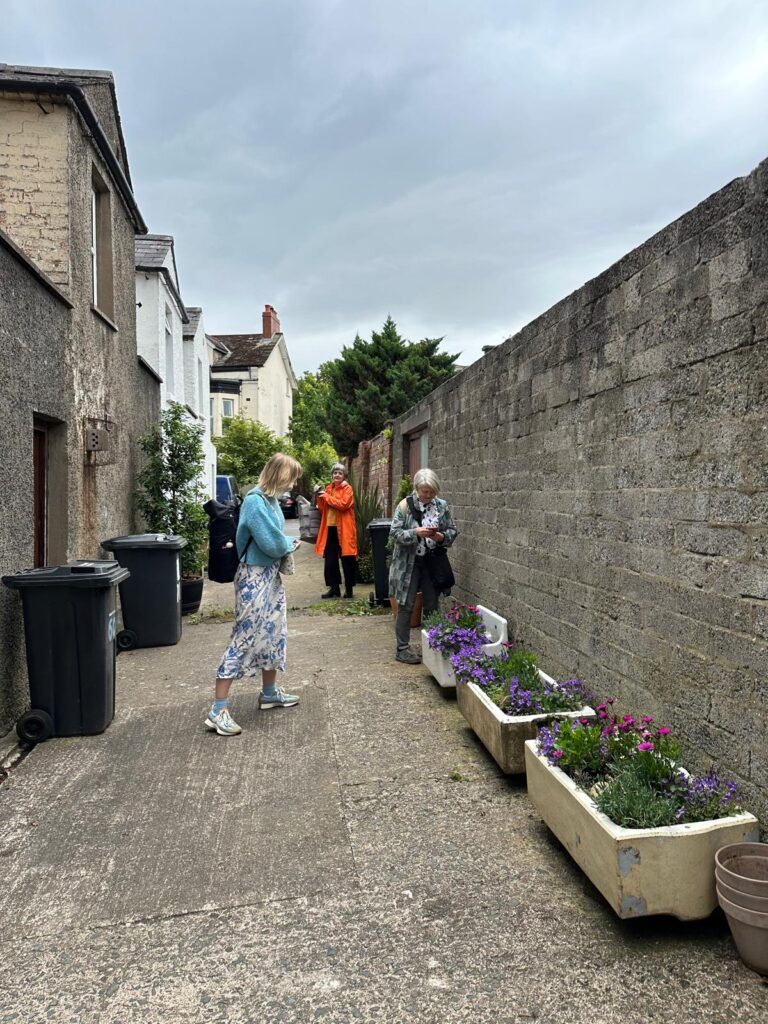
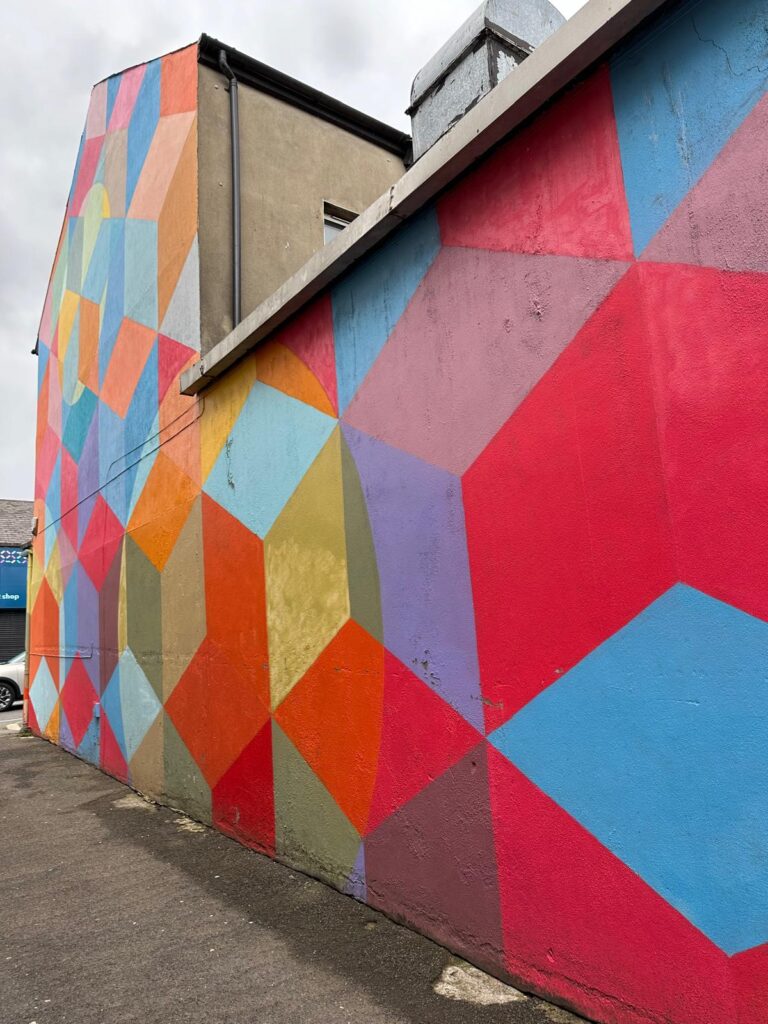
Of course we fitted in an alley walk from Ballyhackamore to Belmont first. A quick visit to Halstein Drive, with much ooo-ing and aaa-ing at the handmade planters, the abundance of herbs and was that a few bunches of carrots? Over next to Belmont Drive where we watch through the gates on one side of the street, into an alley with its crowd of bins. The other side, with no gates, tells a different story – fruit trees, tables and chairs… we take this route down towards Dundela Avenue and then over to the greasy alley behind the shops off Belmont. We seek relief half way down to admire Rob Hilken’s colourful wall art. Then on to the Strand Arts Centre.
The Strand is about to undergo its own repairs, with a multi million pound investment. This act of care will place importance on the building and on its surrounding community, of which we are a part.
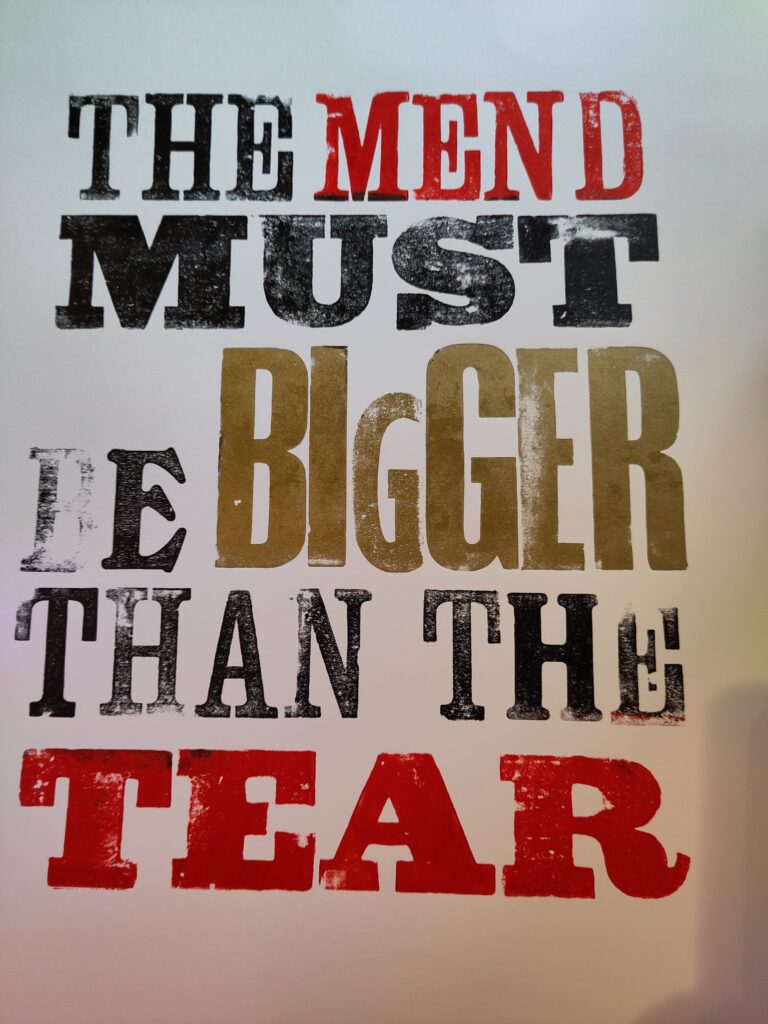
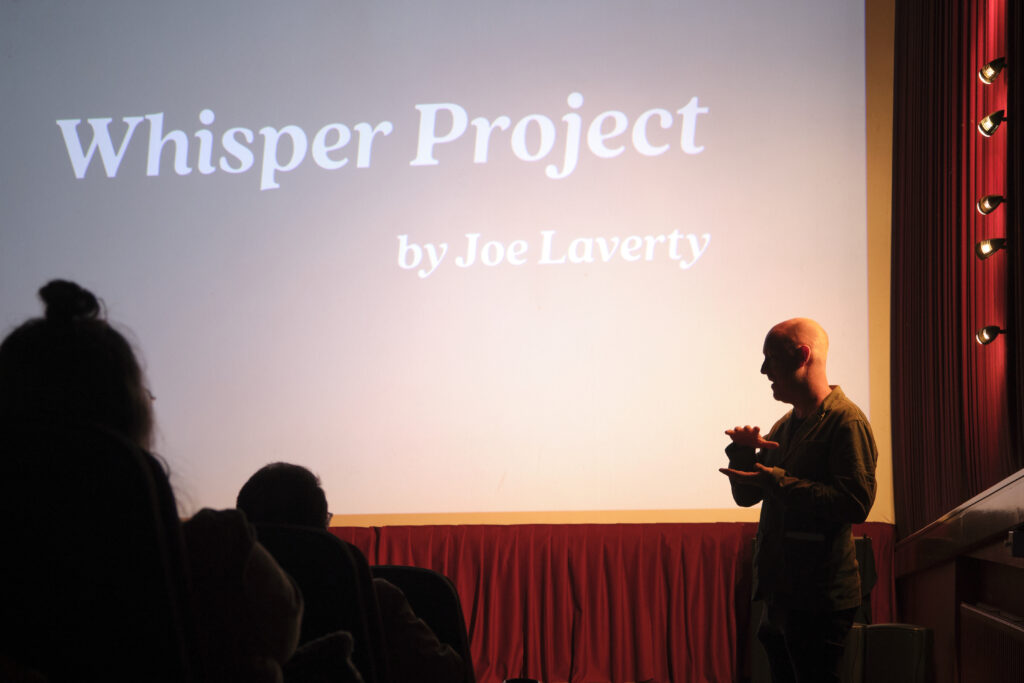
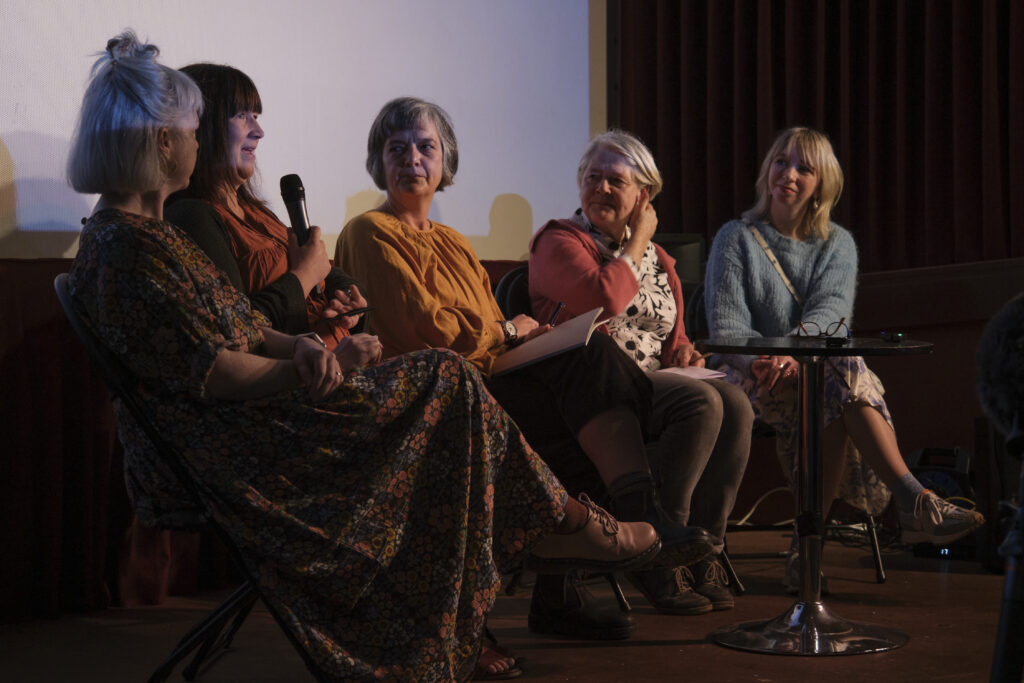
And it’s a full house! We show a trailer of Simon Mill’s documentation for 9ft in Common’s manifesto for the alleys, which sets the context. Joe Laverty’s Whisper Project zones into one alley, not too far away from the Strand, where we commissioned Joshua Burnside to play a mini gig on the eve of Bealtaine. Breaks and Join’s third, feature-length film spans out again to explore the wider act of repair in a London repair cafe, and through several artists and makers creative practices. “The mend always needs to be bigger than the tear,” says Sue, as she introduces the film. Atmospheric footage of welding and mending is accompanied by evocative poetry that reminds us of the sentimental value of objects, and that the act of repairing a loved object is an act of self-care, about much more than just the object. Belfast-born ceramicist places deliberate scars in her pots, and mends them with gold, highlighting the strength and beauty that can be found in imperfection. Afterwards, Julie Tomlin of Shed hosts an intimate panel discussion with thoughtful and provocative comments and questions from the floor.
More Reflections, written by Sue Mayo
Breaks & Joins is a project about the repair of our stuff, our selves and our communities, and we were delighted to be invited by 9ftincommon to be part of the film screenings marking the mid point of their project. We had met both online and in person, spending two brilliant days together in Rotterdam, with Julie Tomlin from SHED, where we were able to reflect on our projects with the help of each others questions, intuitions and sense of connection.
Chuck filming in Belfast 2022.
Our project had filmed in Belfast when our friends Rachel Ho, Micah Purnell and Orla Gilkeson were part of the Cathedral Quarter Arts Festival, and it was great to be back, this time at the Strand Arts Centre. Walking with Aisling and Amberlea down back alleys that had been tended and others that hadn’t, before the screening, was such a vivid reminder of how initially small acts can make such a difference, and that we can reclaim territory for the common good. Seeing the untended alleys reminded me of a woman who came to the Repair Café run by our colleague Mo Sumah, who said to us that she thought that if you left things unrepaired they drained energy. The desire to mend, to reclaim, to repurpose is an act of hope.
Screening ‘Can Everything be mended?’ for only the third time was a great experience. The cinema was packed and the Q & A that followed was thoughtful and joyful. Shout out to the children who made it through the full hour! In each location where we screen the film the resonances are different, and it was great to hear from the audience and to be part of a trio of films, all reflecting the detail, the particularities that are where change happens. We have been thinking a lot about the idea that ‘All flourishing is mutual’, words from the philosopher Kropotkin, writing at the time of Darwin. So many acts of repair demonstrate that we need each other; the transformation of the alleyways both brings people together and requires collective effort. We look forward to continuing our connections!!
Seeing the untended alleys reminded me of a woman who came to the Repair Café, who said to us that she thought that if you left things unrepaired they drained energy. The desire to mend, to reclaim, to repurpose is an act of hope.
Sue Mayo
Amberlea, Aisling, Julie, Sue and Chuck on at the pannel discssion. These images, Simon Mills.
A performance with Joshua Burnside and friends on Bealtaine
Aisling’s Version
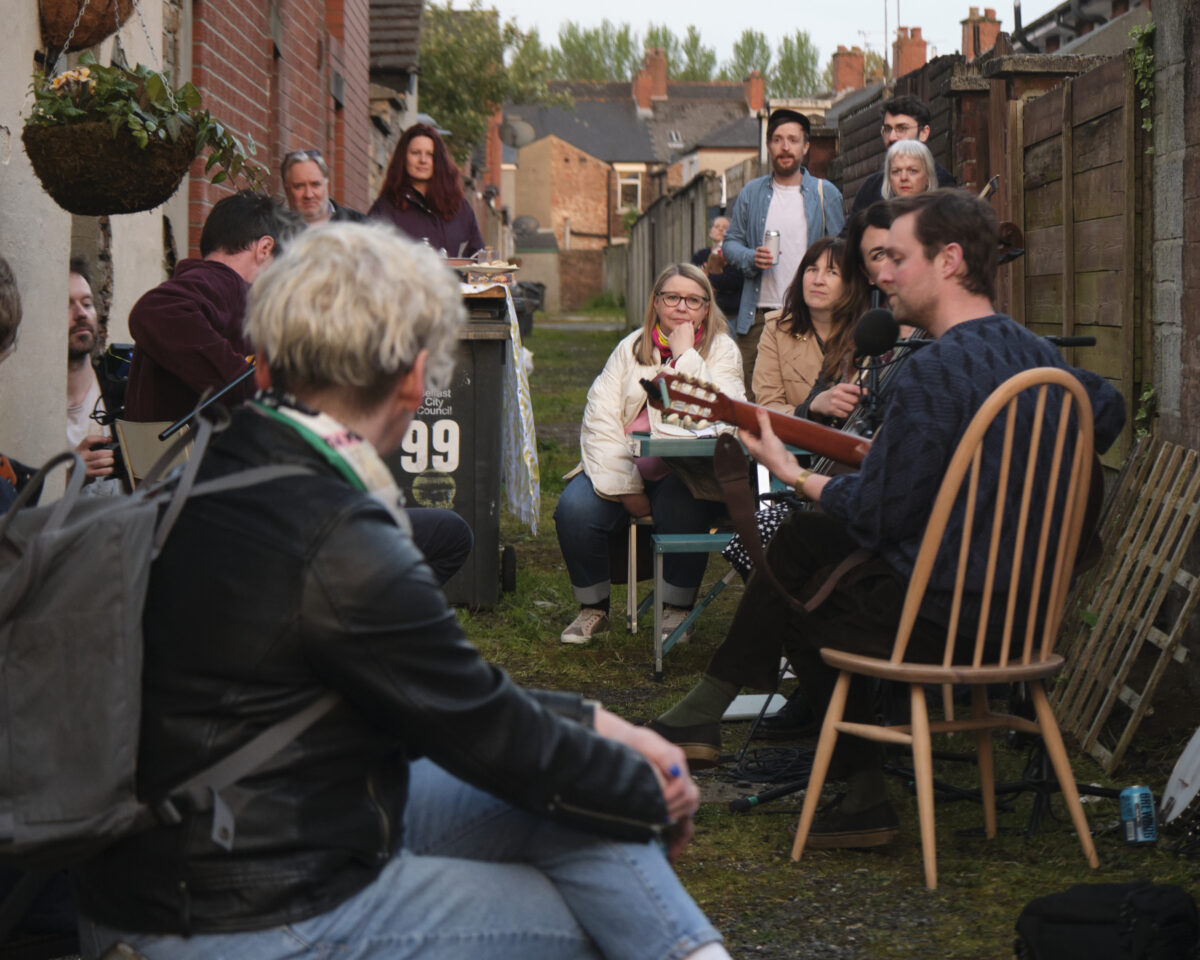
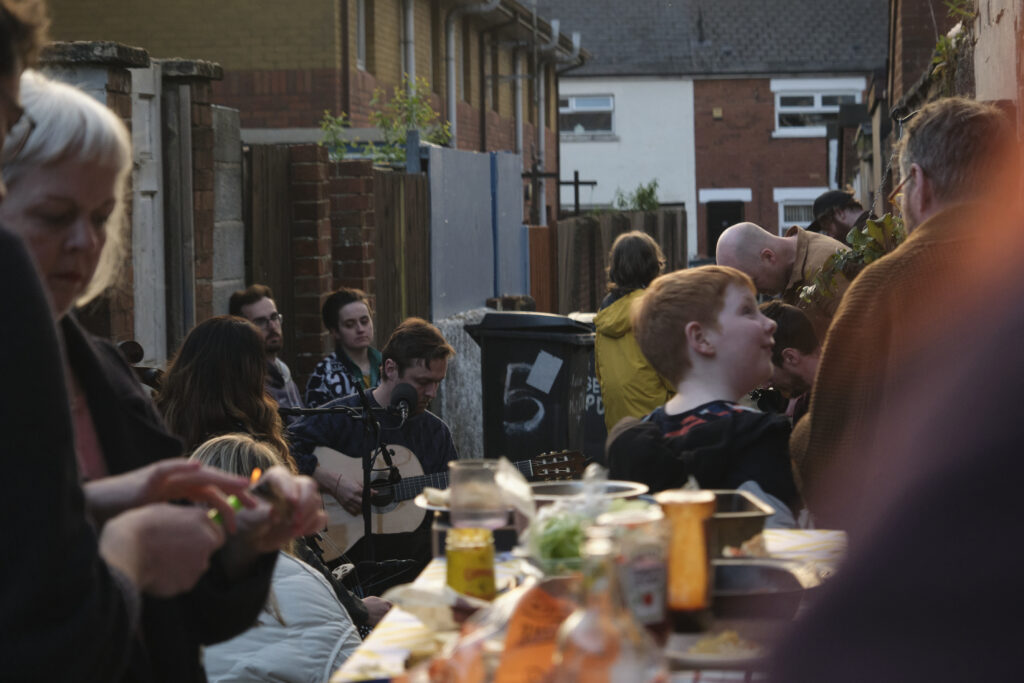
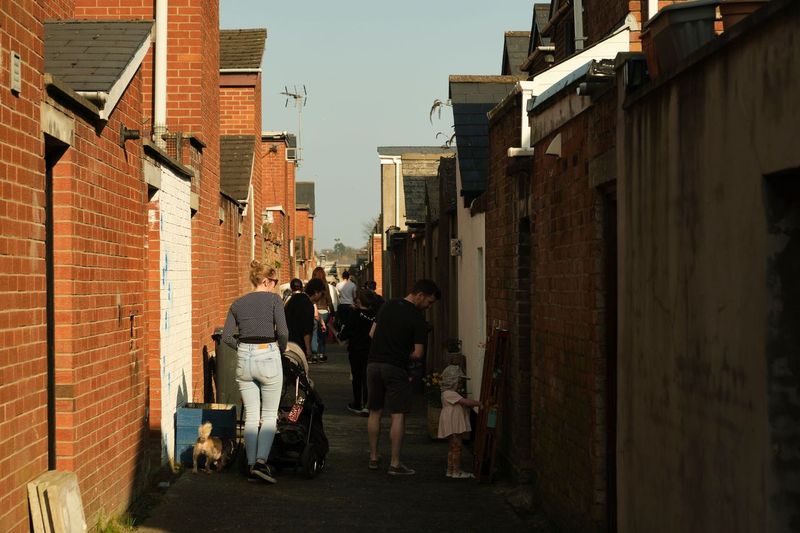
A scattering of neighbours and others gather in an ungated East Belfast alley on the eve of Bealtaine. A BBQ is firing in someone’s back yard and a bit of plywood across two old bins has become an impromptu serving station for shared hot dogs and slaws. Benches and picnic tables have spilled out from backyards of houses, where palette planters proudly display the first growth of newly seeded flowers and herbs. In a recent alley clear-up, Emily built this planter from a palette. She likes to make things, but not to grow, but luckily her greenfingered neighbour opposite has already lined up a neat row of plants, identifiable by their lollipop stick labels.
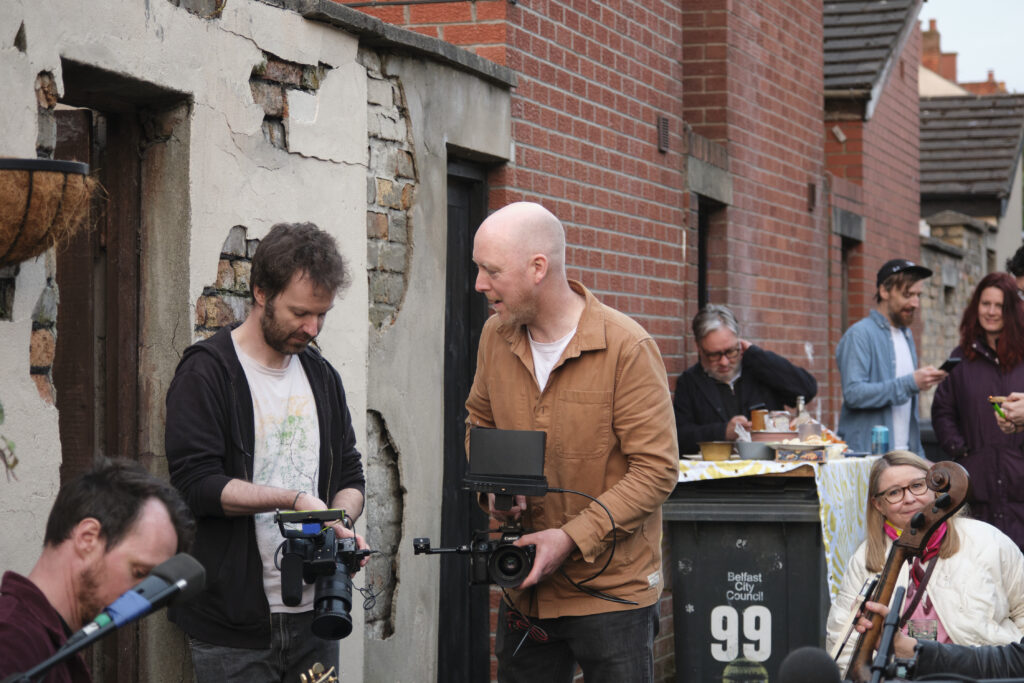
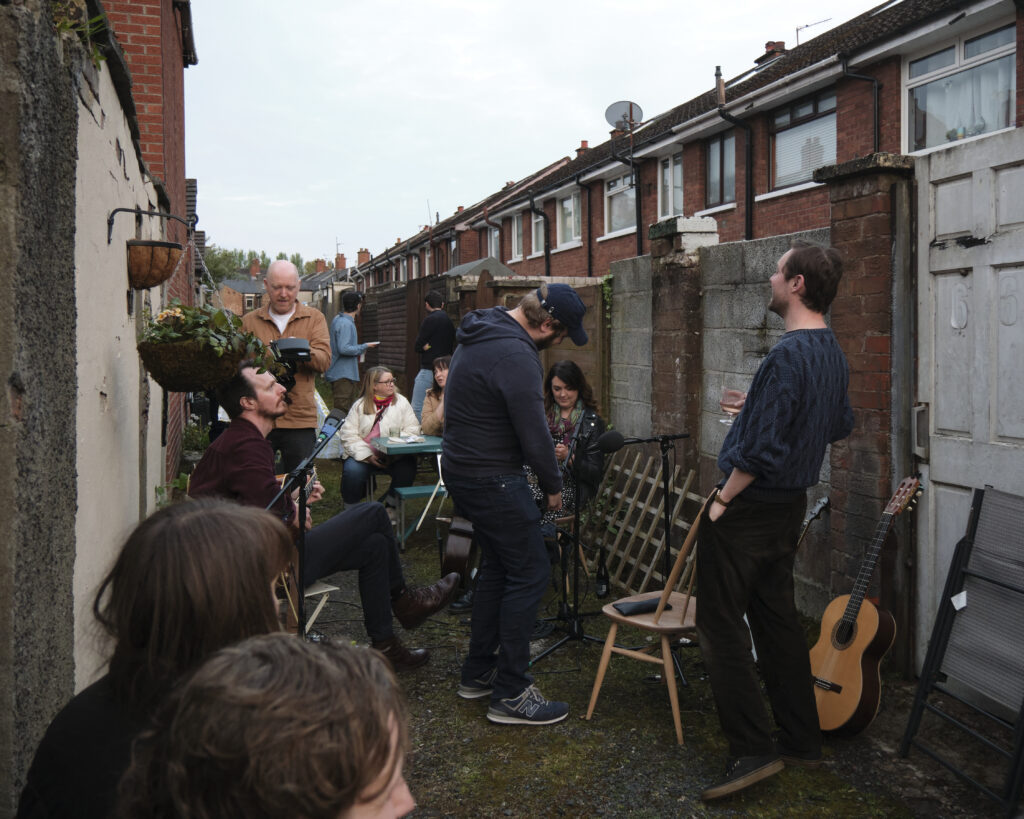
This isn’t just any alley – it’s the alley behind the Hyndford Street house that Van Morrison grew up in, and, according to local music critic and photographer Stu Bailie, the location in which he met with the band the Sputniks some 65 years ago. Today we are gathering with music, again, our shared purpose. Local singer-songwriter Joshua Burnside, who lives some dozen doors down from Van the Man’s house, has gathered some musical friends to entertain us with a few songs, while Joe Laverty films his Whisper Project, which beautifully captures acoustic music in abandoned and overlooked spaces. Further along the alley, people young and old are recycling newspaper into plant pots, and sewing sunflower seeds, over conversation with new friends and old.
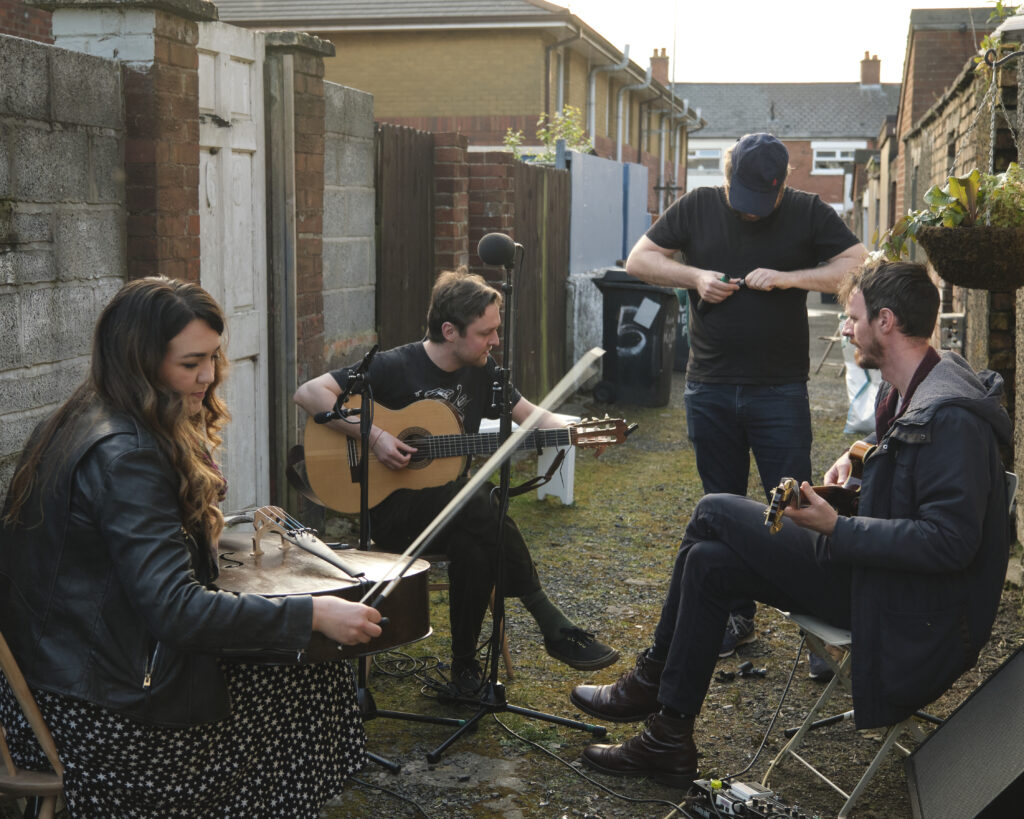
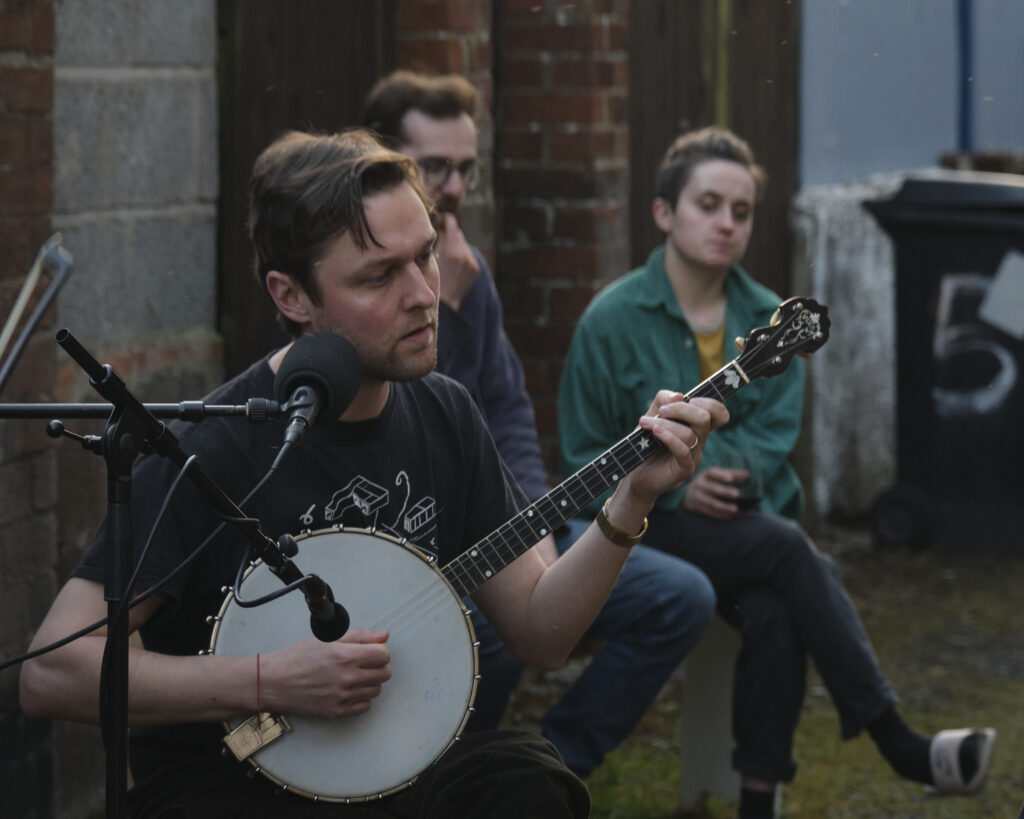
As the musicians warm up, the chatter dies down, the deep resonant sound of a cello playing in an alley one that no one is likely to forget. The songs start playing and, like many of Van’s, they’re songs of a Belfast man, referencing local Belfast streets, in his Belfast lilt. “I am the ghost of Bloomfield Road”, sings Josh, reflecting on becoming a father, while the child that made him one plays nearby on the alley floor, cooing away, indifferent to his father’s beautiful sound, and the magic of the moment. He’s in his own magic moment – shoes off, grabbing at blades of grass and small objects his mother hastens to remove before they make it to his gummy mouth, pulling himself to stand and shuffle along the various benches. Banjos, guitars, harmonies, and the cello, meanwhile, enchant the audience.
There are perhaps 20 of us there, plus several dogs, and more heads peek from their back gates, and look out a window of a house with a frontage looking clean southwards, straight down the alley. Others can be heard taking to their alleys to enjoy the music in private, and soak up the last light of this beautiful spring evening.
The songs start playing and, like many of Van’s, they’re songs of a Belfast man, referencing local Belfast streets, in his Belfast lilt.
Amberlea’s version
We lucked out with the weather after two rainy recces to this alley in the east of the city. Beautiful Bealtaine! We arrived as neighbours were serving up dinner: a pot luck served atop the bar, assembled from wheely bins, an old door and a lush yellow curtain as a table cloth.
There had been a few upgrades to the alley since our last visits, with walls painted, planters made from pallets, and cute alley flower beds where raspberry bushes had been recycled from another garden and planted into the earth.
Around us gates opened as neighbours popped out to say hello. Someone was leaving with their bike – they were sorry to miss it. Another was organising the bins at the end – it was the eve of bin day and they like to keep things ship shape to help the refuse collectors.
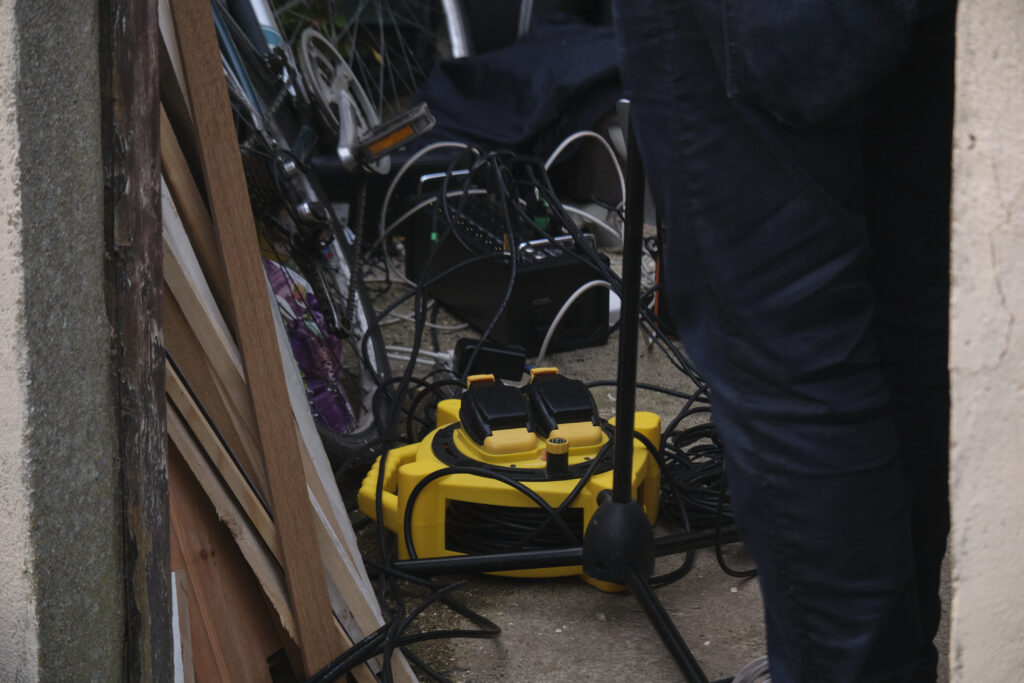
We were there to celebrate the beginnings of the celtic summer, Bealtaine, with folk musician and local resident Joshua Burnside. An intimate sundown gig at his back gate (he’s used to playing sold out shows in concert halls, rather than spilling out into the alley beyond the yard). A small space means a small gathering, but we had commissioned photographer and film maker Joe Laverty to record it for his wonderful Whisper Project, combining Joe’s love of place and music. So there we were, us alley cats, the neighbours, a lean film crew, three merry musicians, and a few delighted lurkers perched on hand made benches.
A couple of guitars, a banjo and a cello. Wonderful bellyful harmonies. Songs about the city. And over the music, the rumble of bin wheels, a back yard door slam, a flight overhead destined for another place, the tired baby. People chatting in their yards, some yard doors open, some closed.
Sunflowers were planted, stories shared, new memories created. An activation of this space, existing with all the usual alley stuff, transforming it for a moment into a joyful neighbourhood place.
A couple of guitars, a banjo and a cello. Songs about the city. And over the music, the rumble of bin wheels, a back yard door slam, a flight overhead destined for another place, the tired baby. People chatting in their yards, some yard doors open, some closed.
Would you rather have gateson your alley OR £18,519 to spend on making your alley a better place to play, grow, navigate the city?
Belfast City Council have publicly announced (via Belfast Live) an open consultation for Phase 5 of alley gates. We mapped the list included within the article which amounts to 27 alleyways across the city. We also note that some of these alleyways have already been gated. The budget for this is £500,000 (an average of £18,519 per alley!). So far the city has spent more than £3,000,000 of ratepayers’ contributions on alley gates.
We have called for an evaluation of phases 1-4 so that evidence can be gathered to show if gates actually work or if they are (what councillors have described to us as) ‘a sticking plaster’ or ‘a panacea’
From our observations over the past 3 years, we can see that in a small number of gated alleys, the community has gathered to transform the alley into a beautiful communal space. However, we’ve seen many more instances where behind the gates lies disarray. We’ve also witnessed many great examples of ungated alleys that are a pleasure to be in thanks to the neighbours.
Alleyways that are adopted by Department of Infrastructure, as most in Belfast are, are public highways, and therefore technically, rights of way. So, too, are any alleys that are used by residents and (critically) others as a route. Belfast City Council is duty bound to assert, protect and keep rights of way open and free from obstruction. This is one of the council’s most important duties under the Access (NI) Order, 1983. Blocking these routes with locked gates contravenes that order.
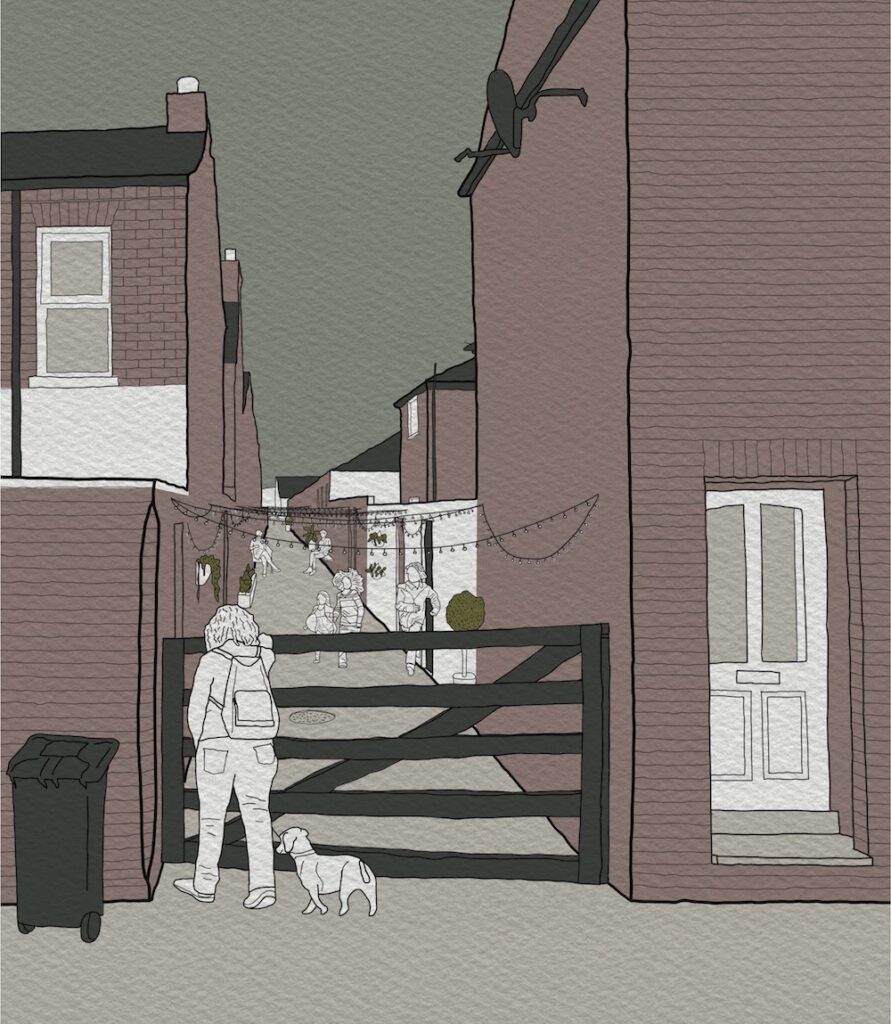
We would like Belfast City Council and city residents to consider the options other than gates that may help solve common alleyway issues. What if, instead of being gated, the alleys were instead seen as a vital contributor instead to the city’s currently fragmented green infrastructure? A safe and traffic-free walking and cycling route; a place to gather and to play.
Our ideas are developed based on the premise that more populated, well-lit, visible, overlooked and cared for alleys are going to act as deterrents to anti-social behaviour.
We have been asking, as part of this investigation, whether there are other, more creative and cost-effective ways to make the alleys safer and reduce anti-social behaviour. What can we do to avoid adding more locked gates to a city like Belfast, which already has far too many walls and fences between people, and are none too easy to take down?
We question whether a more holistic response to each alley can be developed according to the needs of the residents? Have a look at our ideas and if you want to tell us about your alley, we’d love to listen!