We met with West Belfast resident and People Before Profit MLA Gerry Carroll to talk about alleyways in the west of the city, so that we could plan some alleyway walks there. Gerry has been involved in alleyway improvement schemes over the years and talked about the barriers to alleyway improvements, including land ownership. Most of the alleyways have been gated and he has seen first-hand how this hasn’t stopped fly tipping, labeling gates as a bit of a ‘sticking plaster’ albeit an arguably necessary one. People Before Profit don’t have a hard policy position for or against gates, but they do receive lots of civic complaints from people about their alleyways.
Gerry is interested in our idea of a toolkit which shows residents how to get involved in making their alleyway better. We talk about giving people options of things that could happen in their alleyway: planters, artwork, play. Gerry talks about the ‘good alleys’ where communities have begun to use their alley as a shared space. We talk about green infrastructure: Bog meadows, local farms. How can the alleys connect?
We ask about bin day, and we plan our visit to the area (on our one-a-day lockdown walk) to coincide, with the hope of being able to see inside the gates.
A meeting with Social Farms and Gardens NI was fruitful (pun intended). They help groups and individuals turn spaces into places, ‘supporting communities to farm, garden and grow together’. They suggested the idea of an alleyway network – a community of interest. To date we’ve been focused on the physical, so this seems like a great alignment.
We talk about the transferability of our investigation and how it’s not just Belfast centric. We talk about Derry/Londonderry, from the core commercial alleyways that are the target of dumping, to the potential of residential alleys where peace walls separate one end of the alley to the other. We hear about the history of ‘informal recycling’ whereby neighbours would have left an unwanted item of furniture for another neighbour to claim – don’t leave your bike!
Our conversations turn to growing in alleyways. What are the potential for green walls? Would native species like the Irish blackthorn be a deterrent for antisocial behaviour? The alleyways have a microclimate. We hear about the potential of growing peaches and apricots up red brick walls. What about the biodiversity of alleys? We know of foxes, frogs, fruits and wildflowers in alleyways. An alleyway biodiversity survey could be a great research project. We order a copy of The Urban Flora of Belfast on their recommendation.
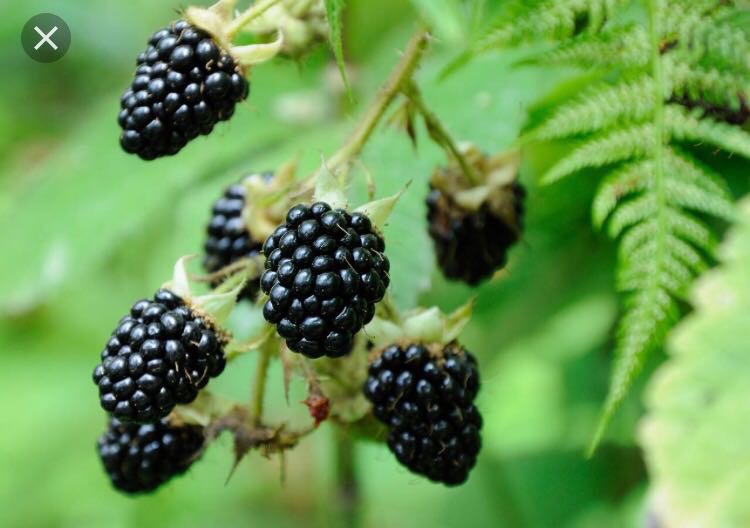
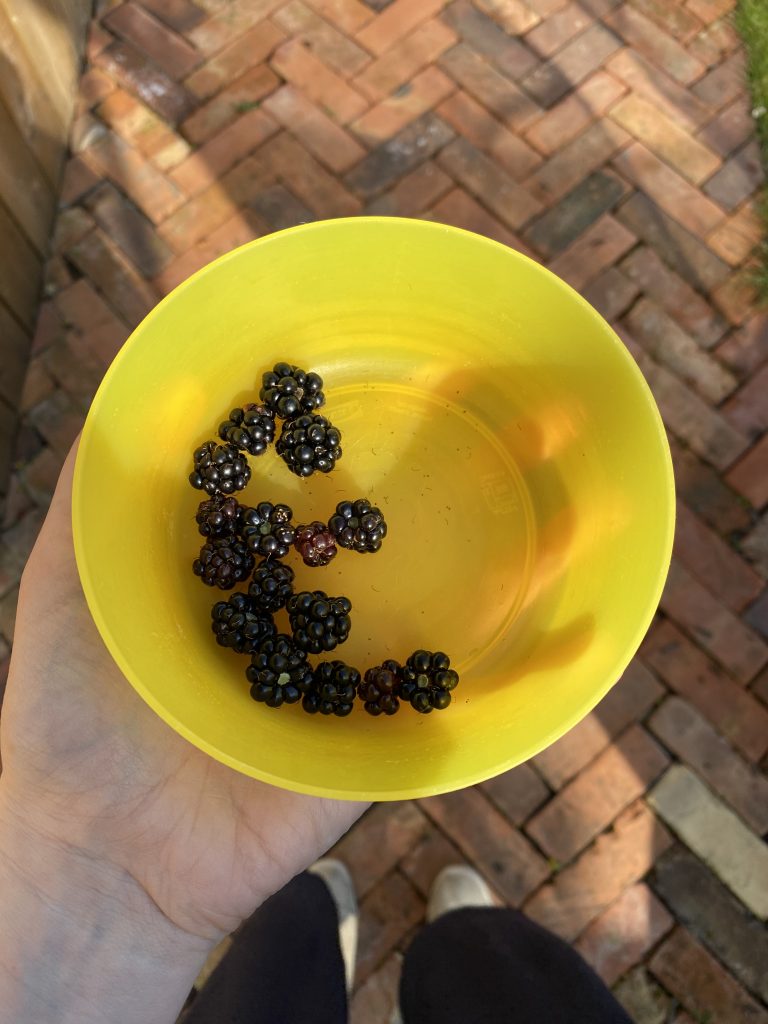
Blackberry picking in a Belfast alleyway
What’s next? We plan a local webinar followed by a UK wide webinar where we can share progress on 9ft in Common and create a resource sheet/ toolkit of what to expect. Look out for dates on our twitter and instagram accounts.
We visit one of the most complex neighbourhoods in Belfast. A merry medley of community activists, quiet citizens, party people, young families.
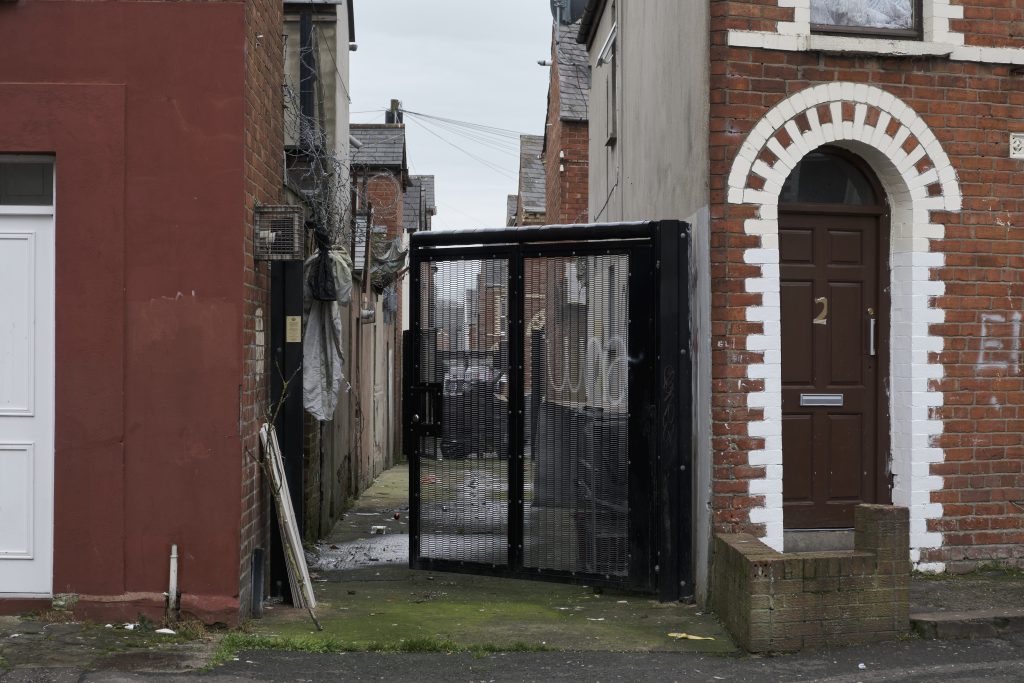
We strike lucky again with our visit occurring on bin day allowing us to negotiate the neighbourhood via alleys and open gates.
Image: Gated alley, The Holy Lands, South Belfast
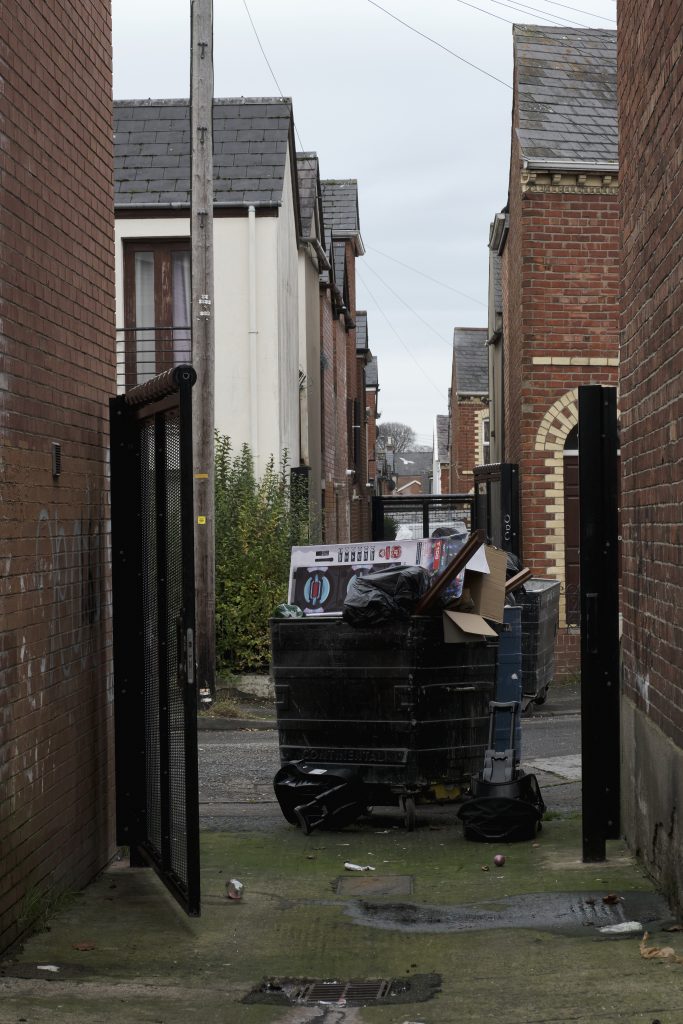
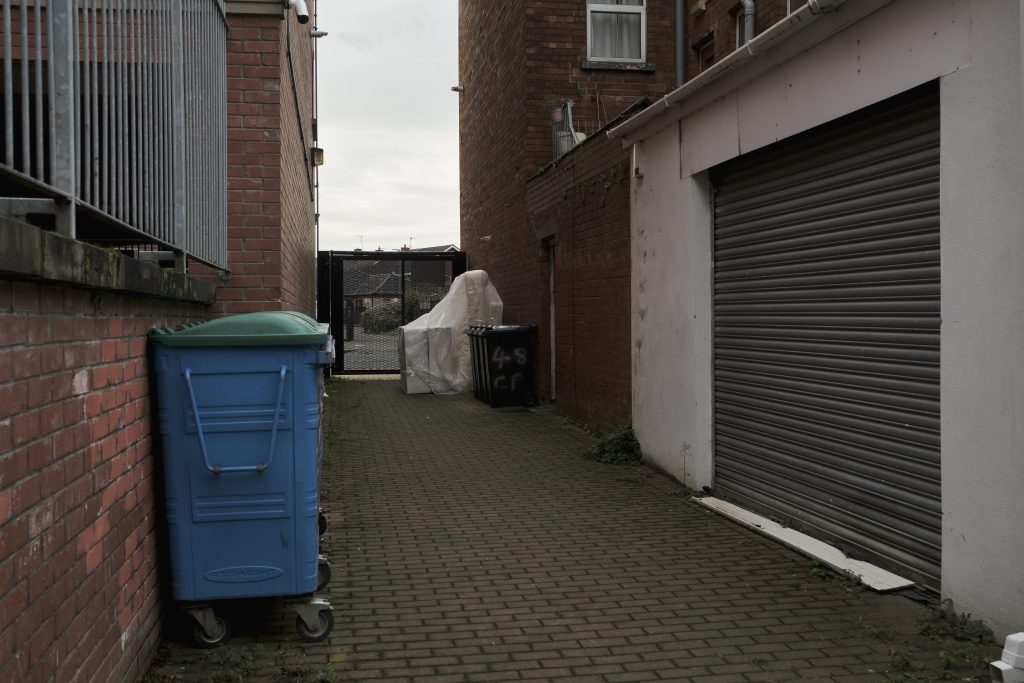
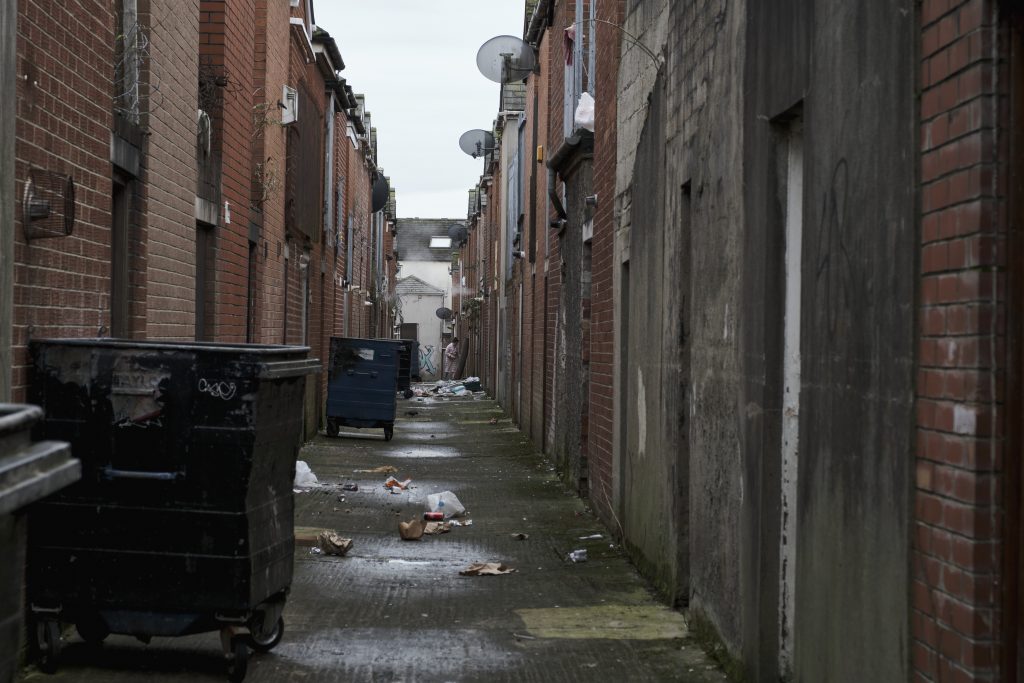
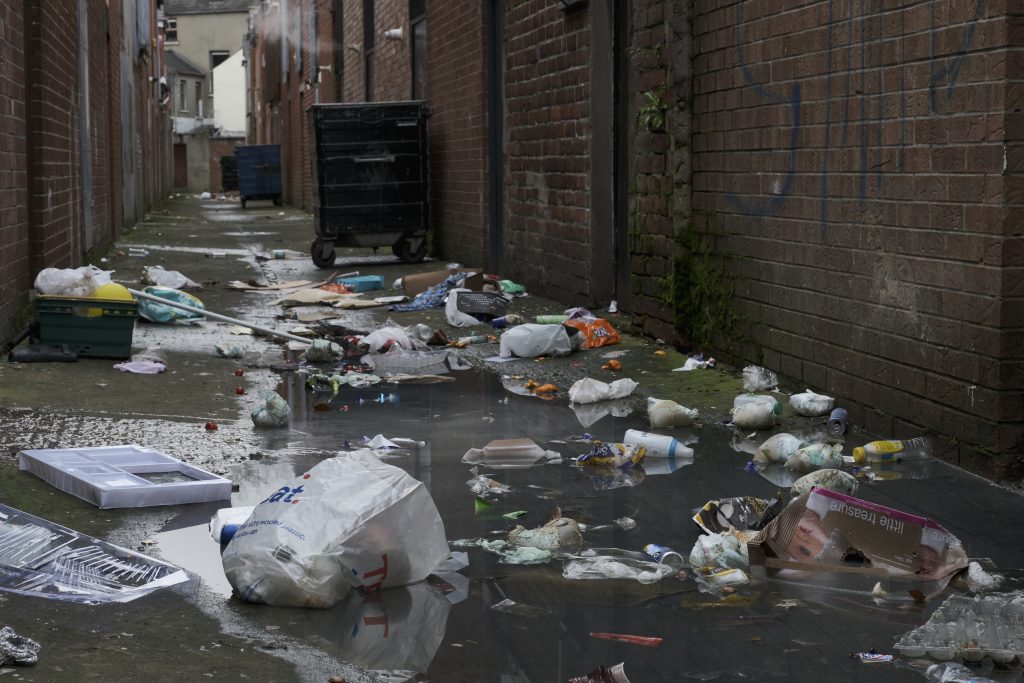
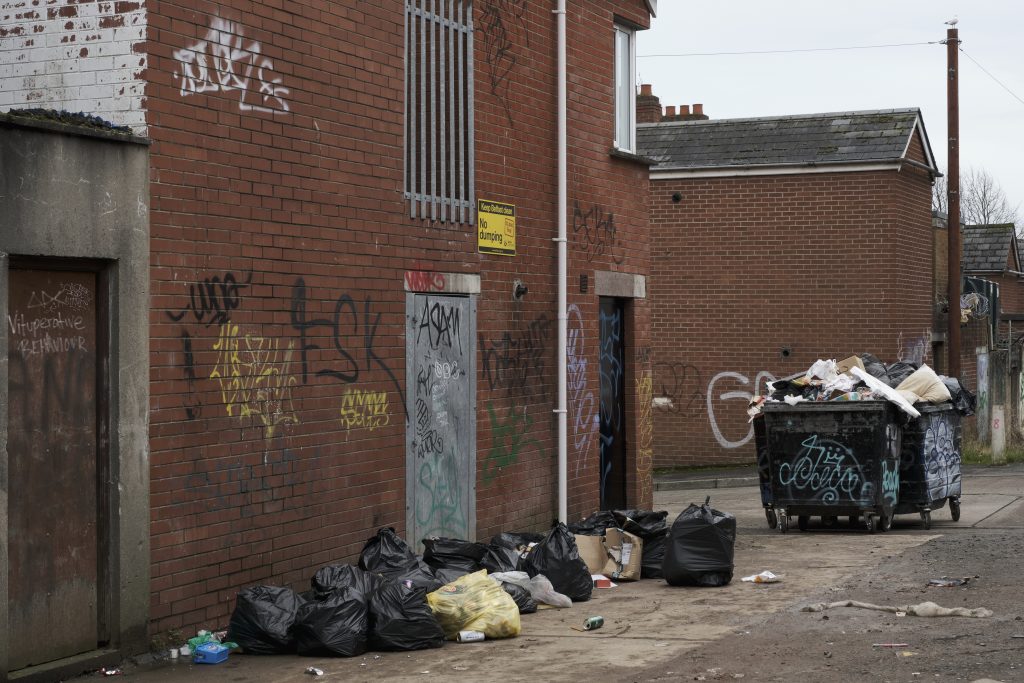
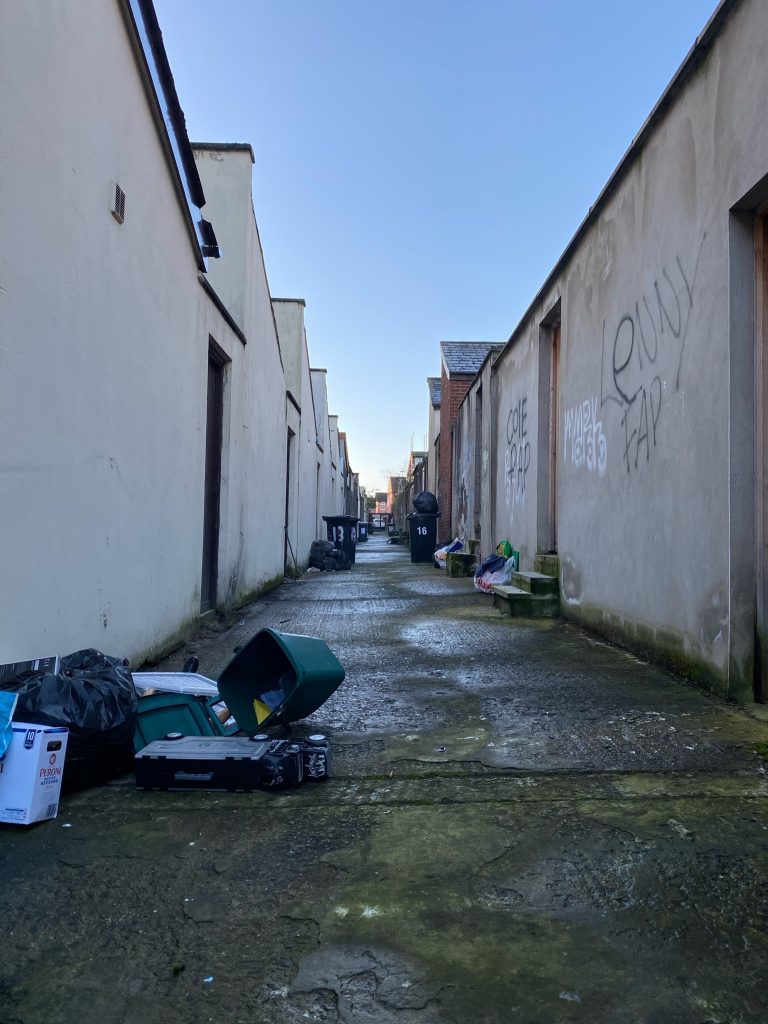
We greet the refuse collection team and explain what we are up to. ‘You’ve got your work cut out for you!’ They respond. They tell us of the fly tipping with claims of residents and landlords throwing bags over the back wall. Normally they have enforcement officers, but COVID restrictions have meant that no enforcement is happening. People can fly tip as they please and ‘we’re the ones that have to clean it up.’ Bulk waste bins instead of regular wheelie bins loiter about the alleys, heaped high. One is upside down.
Image: Overflowing bin, The Holy Lands, South Belfast
We cross a few alleys like this, weaving around gates and peeking inside at broken glass, raw meat, quilts on barbed wire before heading to our scheduled meeting with residents of Wildflower Alley – the award winning poster child for all alleys. An Alley with a name. We’ve been reading about the benefits of about naming places.
Photographer and local resident Joe introduces us to Alison, Brid and Jim who all come to tell us their stories, generous with their time.
Image: Wildflower Alley, The Holy Lands, South Belfast
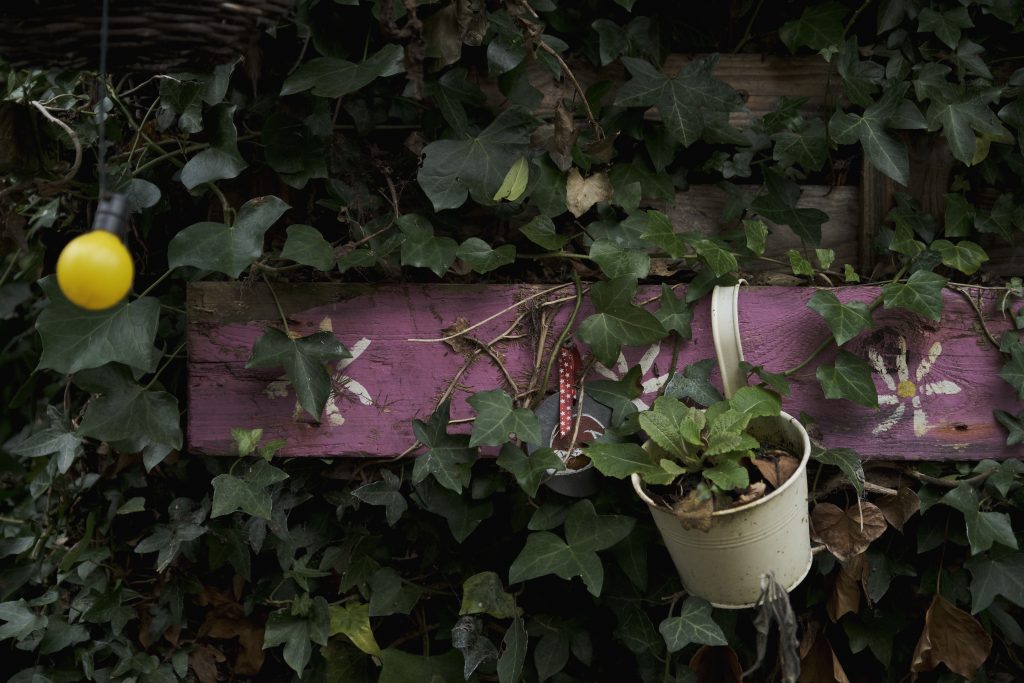
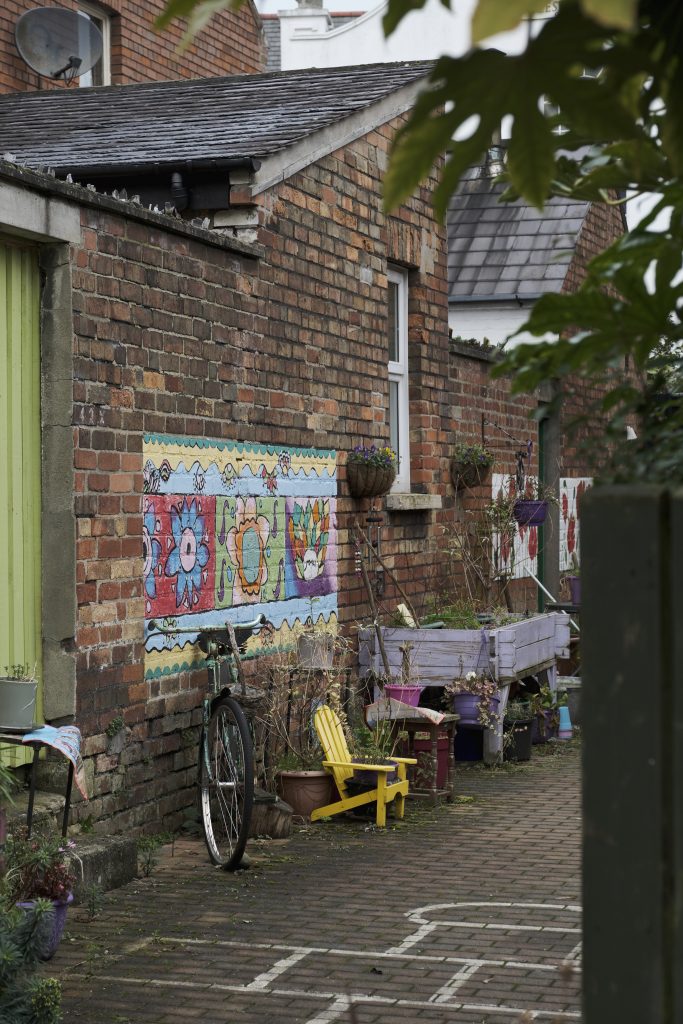
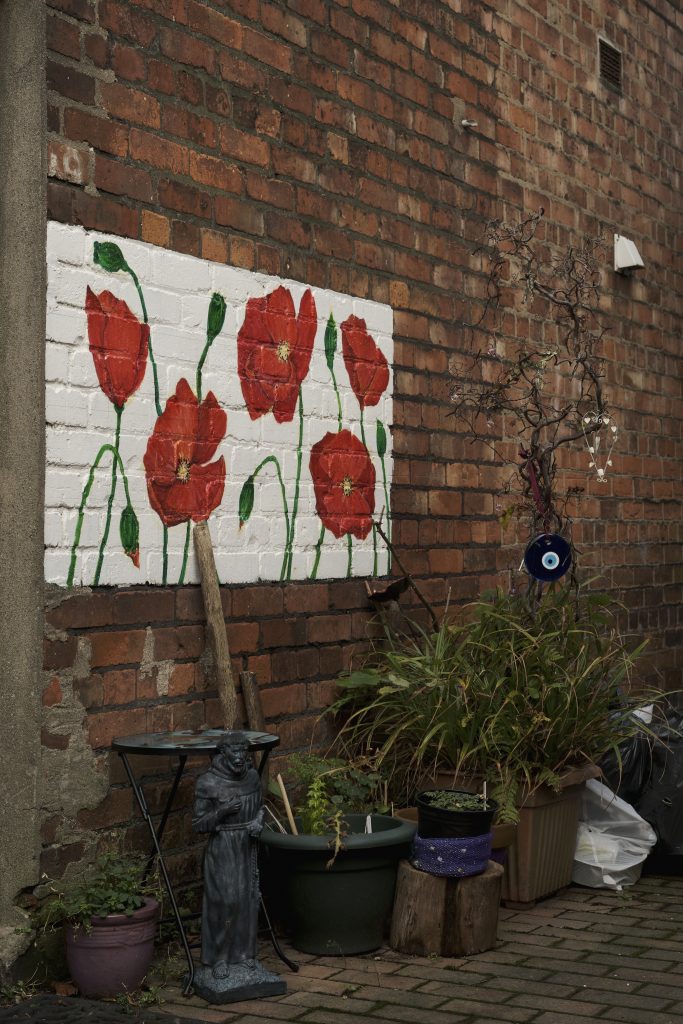
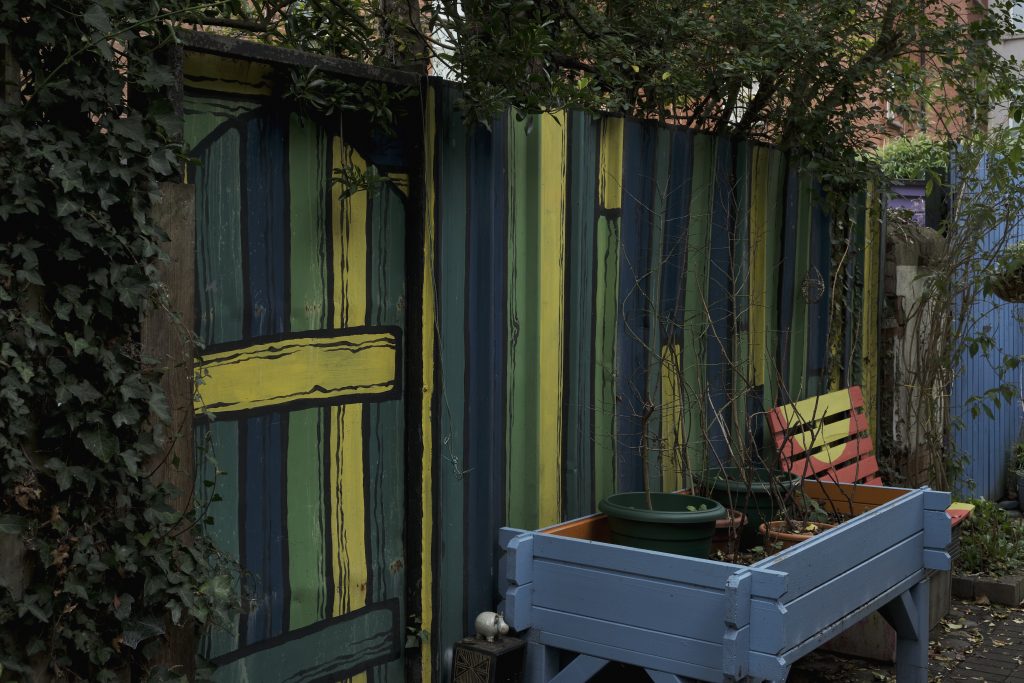
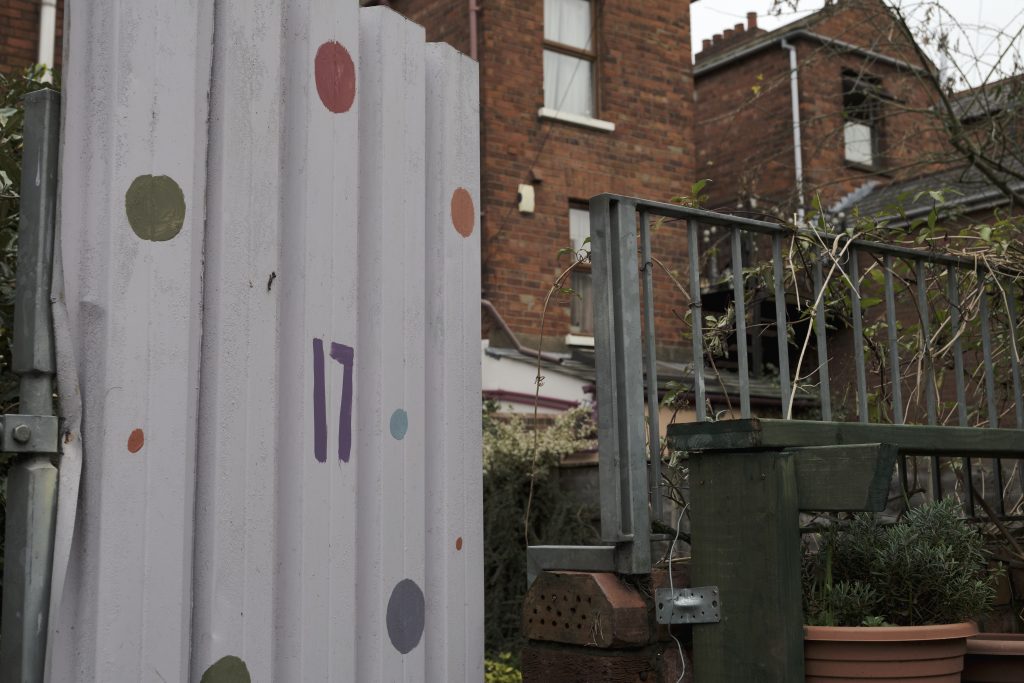
It’s a delightful cacophony of colour and wilderness right in the heart of The Holy Lands. University terrain. Flowers and lights and decorations, murals, composting, hopscotch, communality. ‘Trespassers will be composted.’ The gates were necessary, they feel, due to antisocial behaviour.
Image: Wildflower Alley, The Holy Lands, South Belfast
Brid mentions the ambition for a green route through the neighbourhood. This is not a route. Gates keep out antisocial neighbours and even tourists. Brid talks about a pilot to have the gates open and we think about segregation and peace walls and interventions designed to keep people apart.
Image: Wildflower Alley, The Holy Lands, South Belfast
We hear about the funding they’ve been awarded, when Department for Infrastructure paid for brick paving as a pilot, and their frequent battles and frustrations with the local HMO Landlords. The landlords want the whole thing cleared, supposedly so they can get their cherry pickers and trucks along it.
Image: Wildflower Alley, The Holy Lands, South Belfast
Jim has fashioned shelves out of timber studs, and points out a bed frame destined for his next project.
Image: Wildflower Alley, The Holy Lands, South Belfast
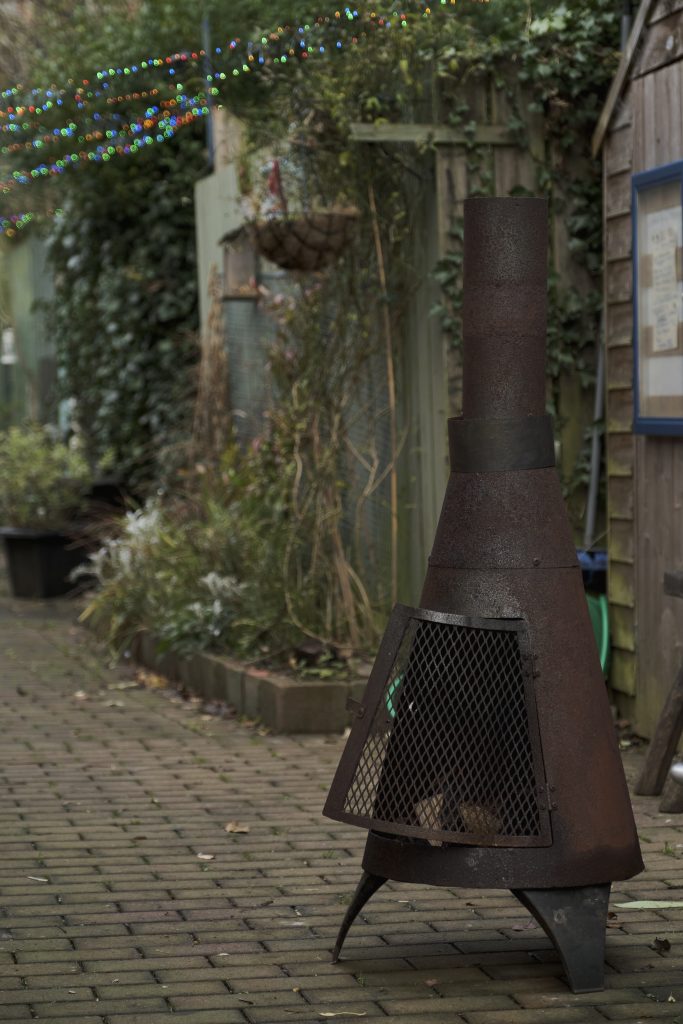
Alison is trialling a notice whiteboard on the communal shed door, locked but with a key anyone can use to share messages and news. She plays trad music. They rescued a chiminea from a skip and have been gathering to play music together around the open fire, where the alley unexpectedly widens out in the middle enabling social distance. There’s a communal power hose too.
Image: Wildflower Alley, The Holy Lands, South Belfast
Brid is the spearhead of the alley transformation, and wider neighbourhood improvements. She shows us new trees on the street, complete with wildflowers and porous tarmac on the pavements and road. ‘It works!’ says Joe. ‘No drains. No more puddles.’
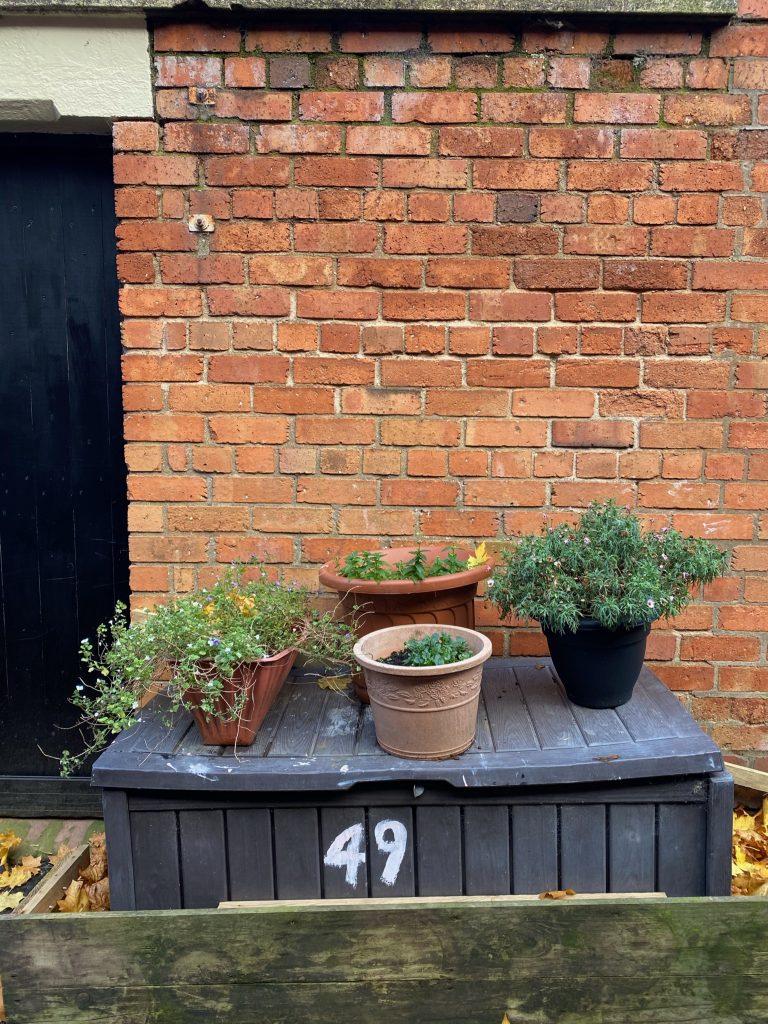
‘You paint the yard side of the gates first,’ says Brid. ‘If people don’t want to, we’ll do it for them. Then you hang some hanging baskets. You don’t need much – people just threw out what they had sitting in their attics and we went from there.’ She speaks about the challenge of getting student renters on board, encouraging them to recycle and use their fortnightly black bins. ‘You need a mix of carrots and sticks.’
Image: Wildflower Alley, The Holy Lands, South Belfast
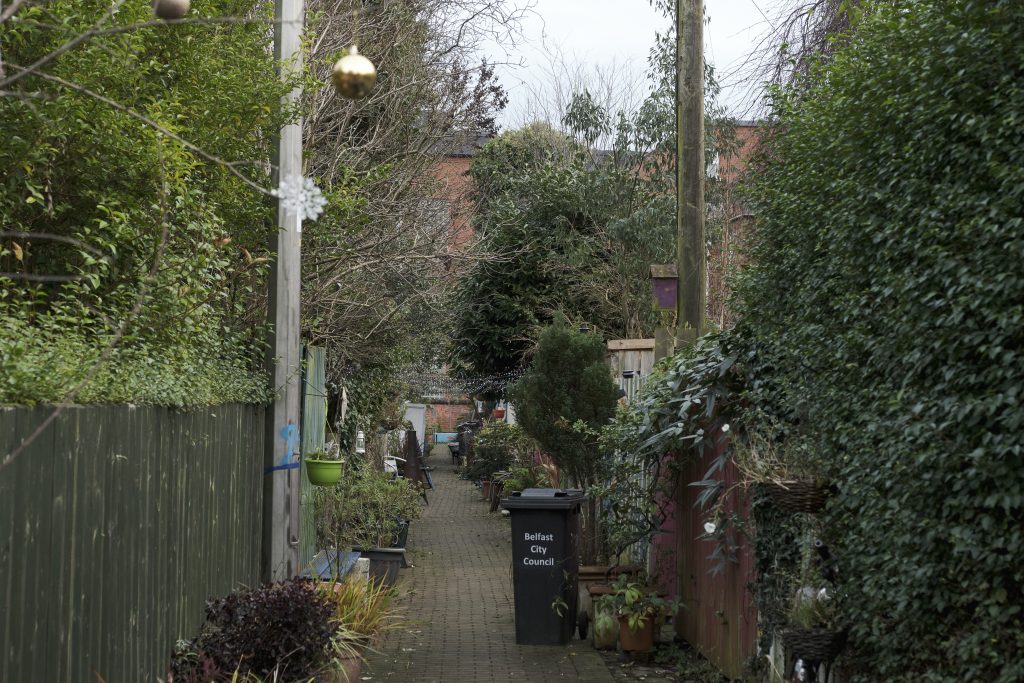
Solar-powered Christmas lights line our route down the alley – the fruits of Brid’s latest funding success.
New bagged mattresses at the end, appearing yesterday we’re told.
Image: Wildflower Alley, The Holy Lands, South Belfast
Oops! We inadvertently, momentarily trespass onto 1 ft of land, indistinguishable from the rest, that actually belongs to the landlord of the adjacent flats. The alley gardeners say they are forbidden from putting their recycling here. Or painting the white wall of another landlord’s very large store (definitelynot a workshop), opposite. Landlords are getting a bad rap. We make a note to include them in our conversations.
Next, Brid is turning her attention to an ungated, unadopted alley – helping a local resident to transform one side of it, leave the other clear for passage. No benches this time, nothing that can’t be fixed down. Horsey Hill, where the horses used to bring goods up and down for the river. We’ll go there for a look.
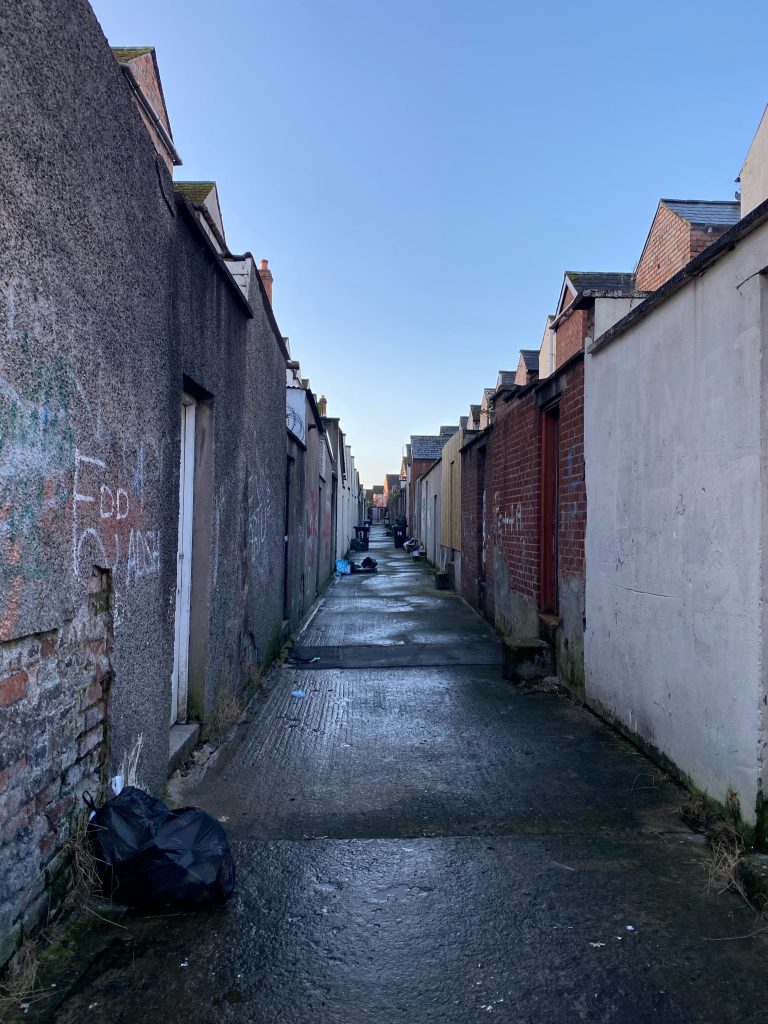
Our route there, not so charming, as we take to the other alleys, taking a look along the bowels of the Holyland student housing. Seagulls, bin juices, detritus and decay. Someone in a pink dressing gown, scrubbing with a brush beyond their own back gate, sloshing it with water. Surrounding them, devastation. Used nappies swelling and grimey in the puddles of dirty water.
Image: Alleyway, The Holy Lands
Gate locked at the other end – hearts sink to have to carefully backstep our way through the wreckage, again.
‘- recommend long-term solutions for unadopted alleyways,
– provide options for transformation/regeneration of alleyways,
– as well as reviewing current alleygate criteria, taking into account the potential amendment to include consideration of community effort in maintaining their alleyways, in addition to the use of anti-social behaviour statistics.’
The report refers to the top 20 worst alleys that require attention, and we are excited to see Jane’s alley included (see previous Journal entry). A pilot will seek to uncover the ownership of an initial 4 alleys from the list, something that we have discussed with them and so we are delighted to see it in the report.
Image: Community activism in an open East Belfast alley
A letter from Naomi Long Minister of Department of Justice (DoJ) accompanies the report, cheering on community activism:
‘From my Department’s perspective, there are obvious benefits to be derived from such community-driven initiatives in terms of creating passive surveillance, potentially tackling anti-social behaviour, engendering community cohesion and improving community safety.’
We know that Belfast City Council are mapping alleygates on or close to interfaces for DOJ and we have requested access to these maps when it is complete.
Although the proposal is for an alleyway transformation scheme, the conversation is focused mainly on gates. Councillors discuss the unexpected outcomes of gating alleys; the need for community involvement; the popularity of gates; concerns around gates; the closing of a right of way.
Image: Open alley, East Belfast
They press for urgency on an evaluation of early phases of alley gates and the proposal is accepted.
Image: Community activism in a gated alley, North Belfast
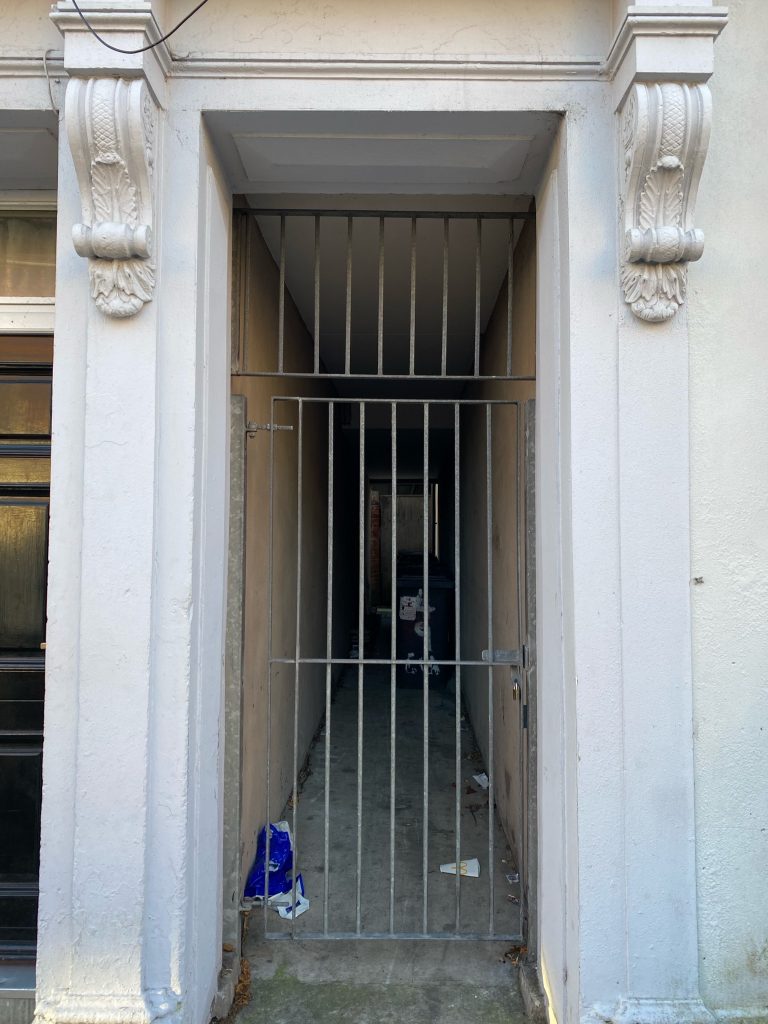
A morning of North Belfast alleys. More stilted than our usual roams, due to the gates. We’re reliant on local residents who let us in by prior arrangement, but good news it’s bin day so some other gates have been left ajar.
Image: Gated alley, North Belfast
We meet at the end of an alleyway which has recently been gated with 4 gates by Belfast City Council. It is a T shape and on the shorter part it would have provided a short cut to neighbouring streets. There are remnants of graffiti and a rainbow flag hangs in one yard door. On the longer part, the yard doors on one side open level with the alleyway, whereas the doors on the other side are accessed by steep steps. We wonder how residents can bring wheelie bins in and out.
Image: Gable wall, North Belfast
The gates were installed over one year ago after a lengthy community campaign whereby a local community regeneration forum lobbied local councillors and logged complaints of anti social behaviour to Belfast City Council. Before the gates were installed, a resident recalls instances of people drug taking, graffiti, arson, and the fear that went with that. And in comparison, the transformative effect that the gates have had on this alleyway.
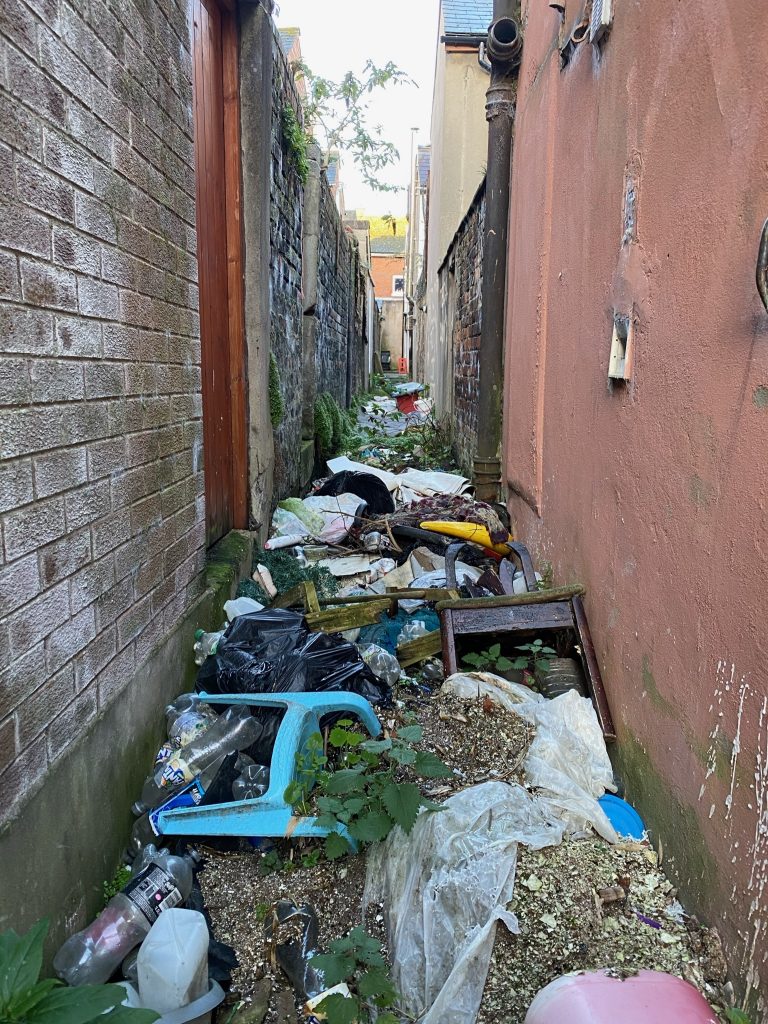
It gets cleansed by a street cleaner each Friday and this regular maintenance also removes fly tipping by some neighbours who disclose of rubbish at their back gates. When we visit there are signs of fly tipping such as rubbish bags, cardboard and kids toys. We wonder about the incentive to not leave waste in the alleyway if Belfast City Council will collect it regardless.
Image: Fly tipping, North Belfast
We talk about the future of the space. The local resident who has granted us access has plans about painting the outside of the boundary wall and gate that belongs to their property. There are a few residents who are keen to do something to make the alleyway usable and they are considering options that will not interfere with access for the street cleansing vehicle.
We take alleys where we can en route to our next rendezvous.
Several are gated and fenced across, none of them official.
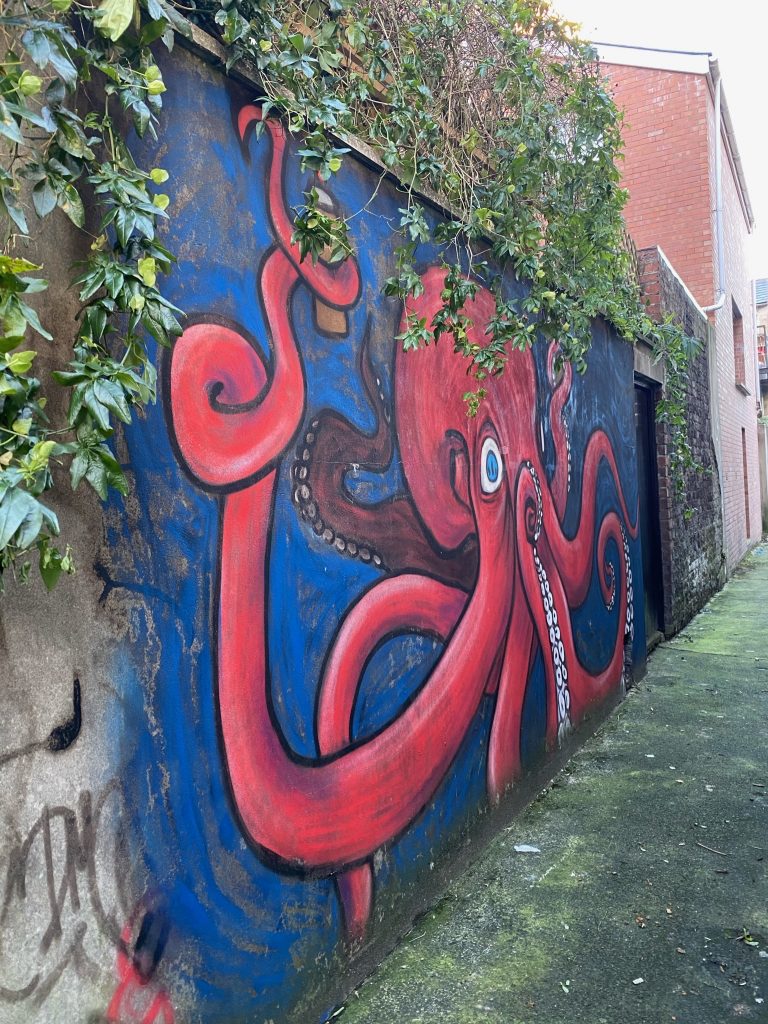
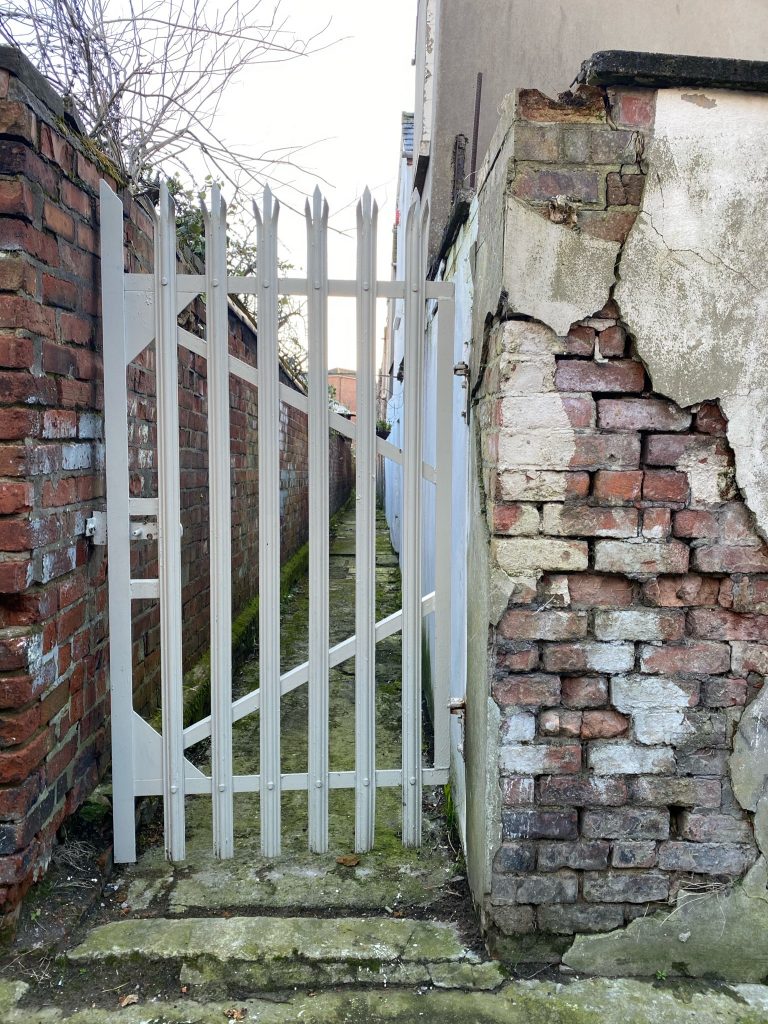
Another opened gate. It has a padlock, but it isn’t secured. The gate is like a double garden gate. Unpainted metal with thin railings and bobbles on top. Was it installed by a resident? Paw prints in the concrete beneath our feet. An L shape, we follow it around the corner where it gets very narrow and we are greeted by wall art: An octopus, a cat, a guitar playing watchman of the alley.
Image: Alley art, North Belfast
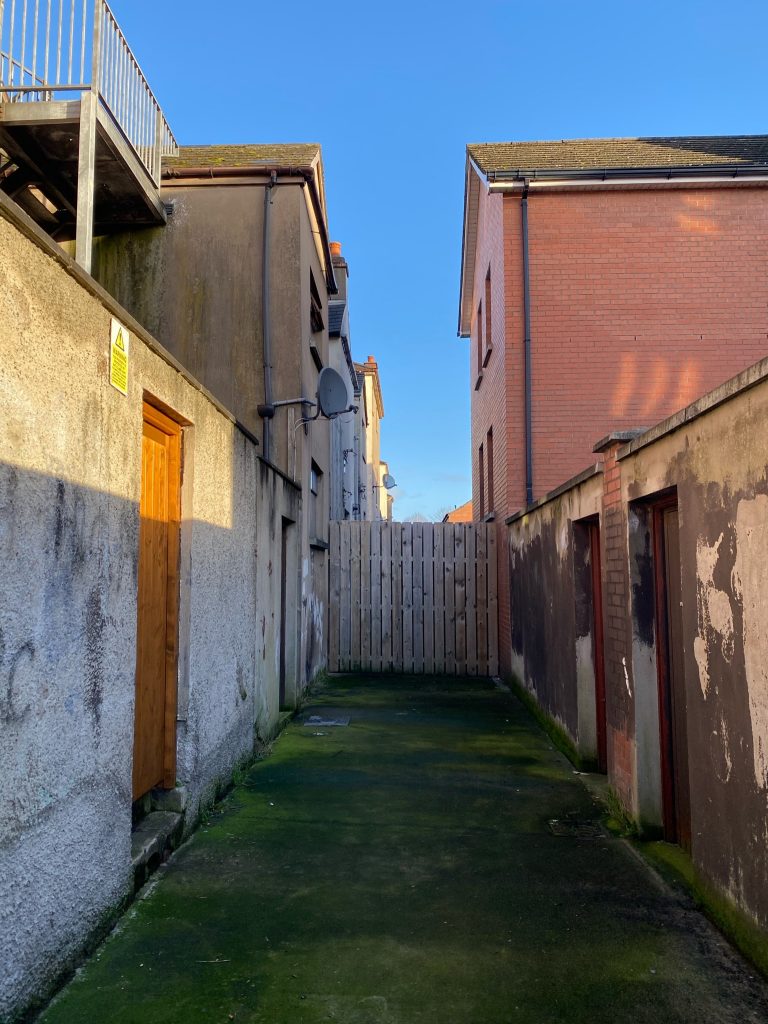
It gets wider again. Balconies up high, Small doors where you’d need to stoop to enter, a burnt out bin and the smell of weed in the air as someone leaves the alleyway as we approach. There’s no gate on the other end. We cross the road and the opposite alleyway is barricaded by a big wooden fence. A dog barks at us from the other side. A DIY dog run?
Image: A fence across an unadopted alley, North Belfast
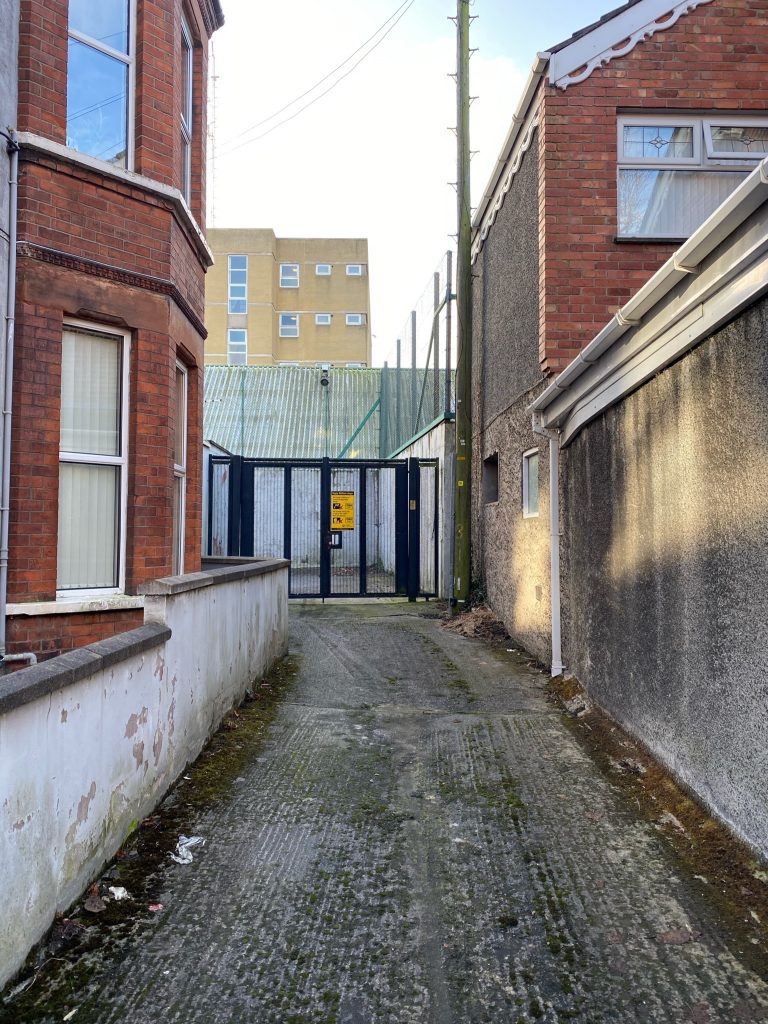
Next, we enter another gated, but open alley. This gate we know was made by a local resident. An engineer we are told. It is painted black and has similarities to the Belfast City Council gates, but it is lighter.
Image: DIY gates, North Belfast
This alley is quite wide. Discarded tree branches at the other end of it stop us from wandering further but it looks like a work in progress.
Image: DIY gates, North Belfast
Theres another smaller gate to the right. Again it’s unlocked. Painted a pale grey. We go inside and it’s very narrow. Someone has painted their back wall white and added flower baskets and solar lights. We remark on how pretty it is. Further down there’s cigarette ends, weeds, dog poo. A tiny child’s footprint, concretised in time. How big is that foot now, and wither does it wander?
Image: Unadopted alley, North Belfast
To the left there’s a crumbling wall and a church on the other side. The neighbour tells us how they’ve considered asking the church if they can punch a doorway through and use the church grounds.
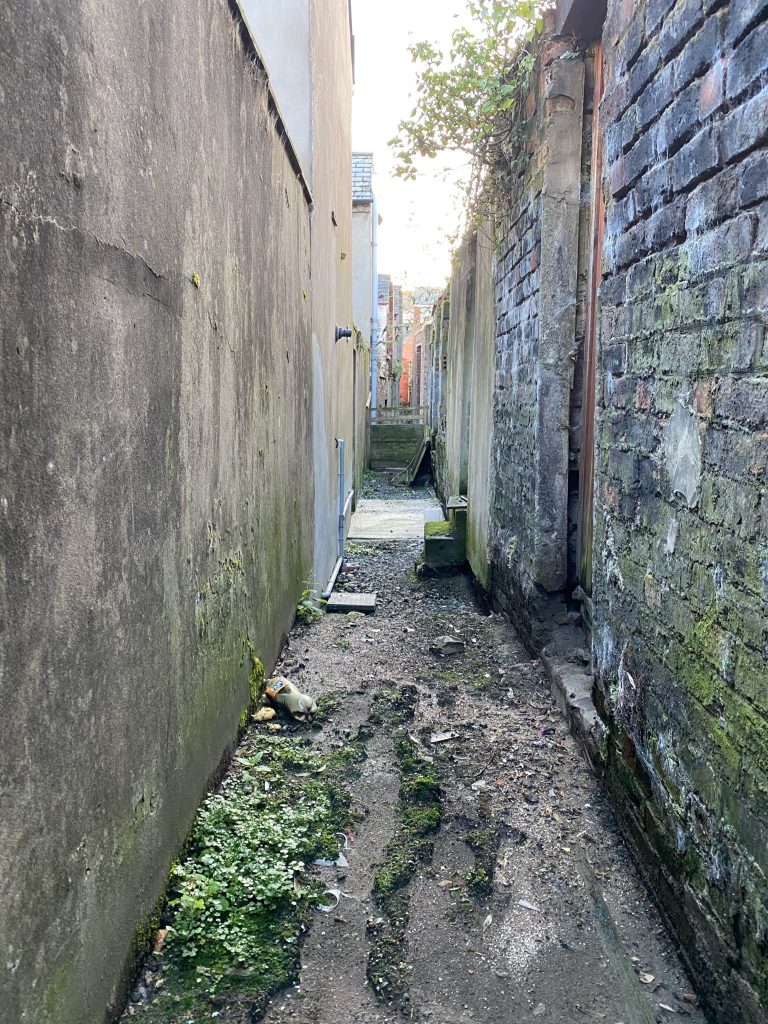
Jane wants us to see the alleyway at the back of her property. There are access points along the street which present themselves as locked gates in doorways, but they appear to be privately owned, perhaps with a right of way for the houses in between.
Image: Ornate and private access to an alley, North Belfast
The only access is though Jane’s House, so we mask up and are led through to the back yard. An oasis. Jane has had to commission a new back gate since her previous gate was eaten through by rats. She tells us how she found 8 dead rats in a mop bucket in her yard during the summer. This prompted Jane to write to local Councillors, Belfast City Council, Department for Infrastructure (DFI). Nobody can or will help. The alleyway is not adopted by DFI and therefore it’s outside of everyone’s remit. Who owns it? We’re curious to find out.
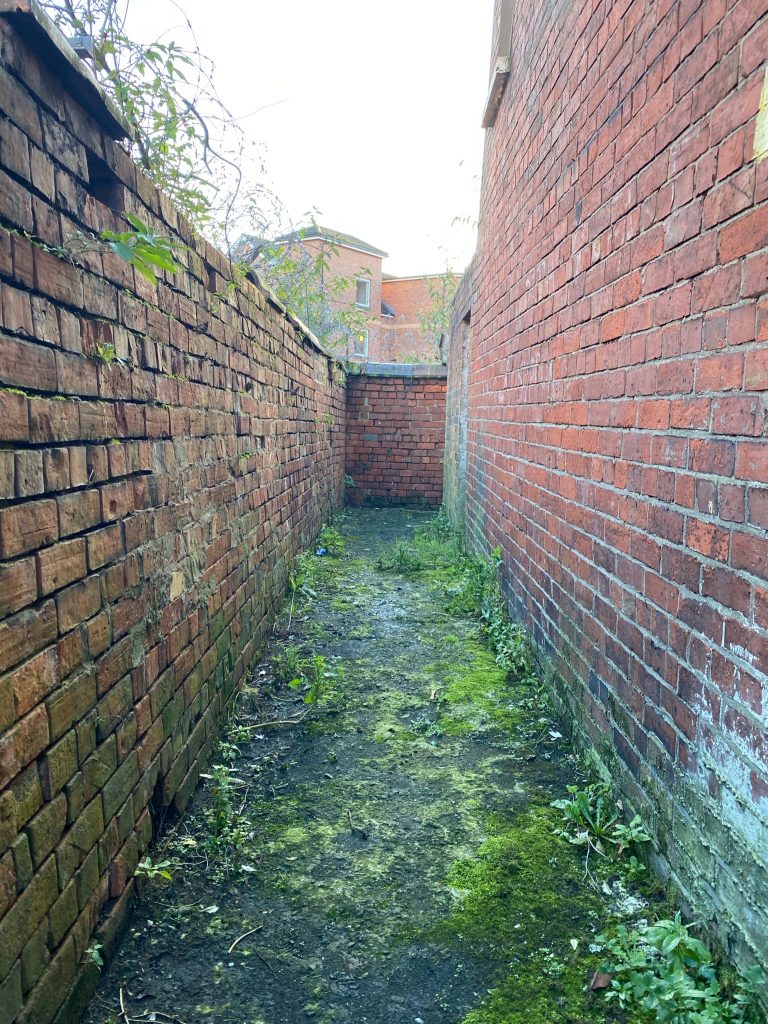
We reach an alley that could be something out of war times, Victorian times, trench warfare. Congratulations, Jane – yours is the worst we’ve seen!
Images: Unadopted alley, North Belfast
It’s tall and very narrow. One way, there is toxic rubbish you can’t get past, the residents can’t clear, and the other way has been dug out and fenced across and all kinds of barricaded. Not a space you’d spend too long – back through the oasis and on out to the street go we for a pavement chat with activist Elfie about her alley across the way and local residents who use and improve the alleys.
Next we find a very well watched alley. A police station, a camera, a bay window. The safest alley in the city!
Image: Overlooked alley, North Belfast
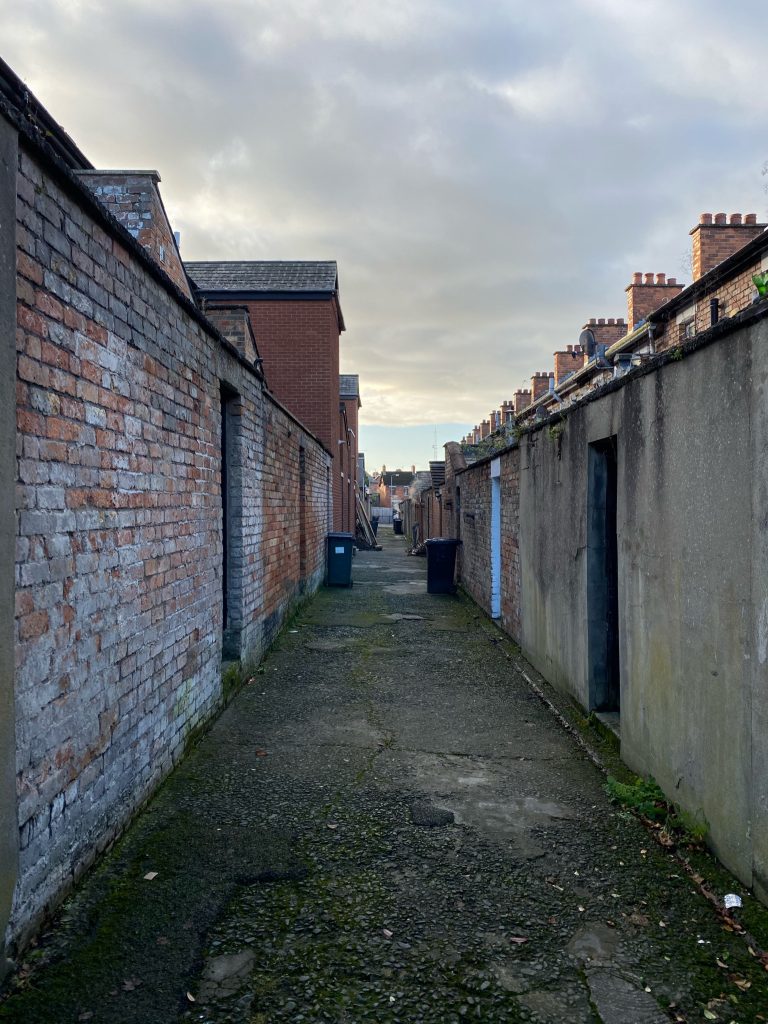
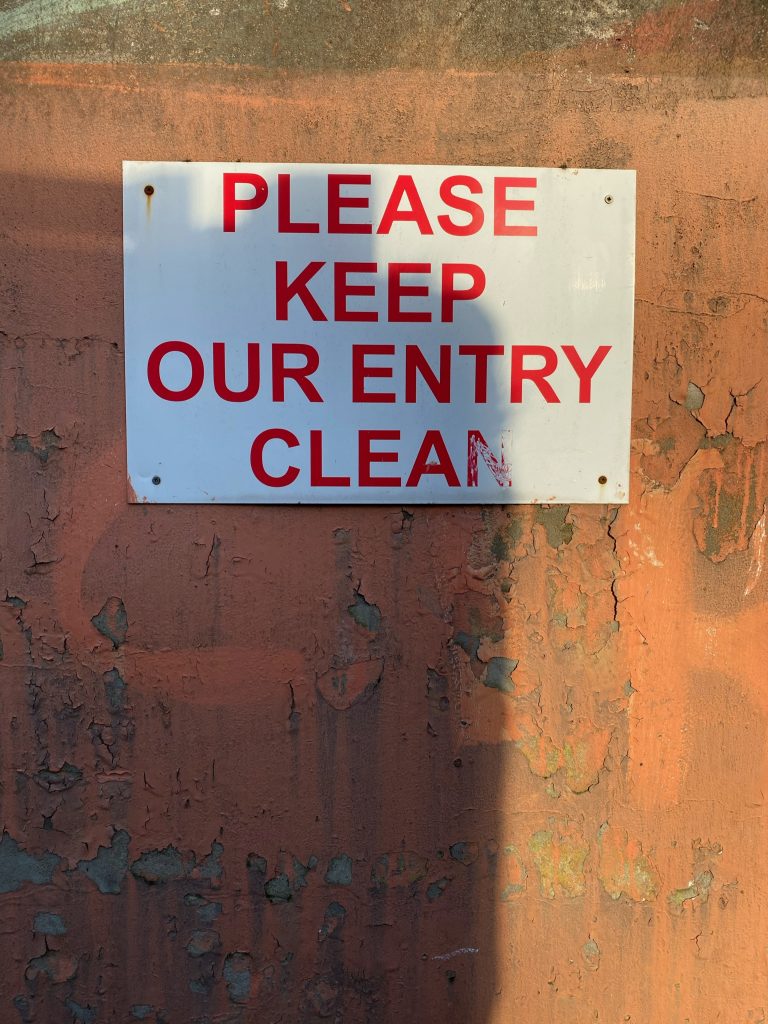
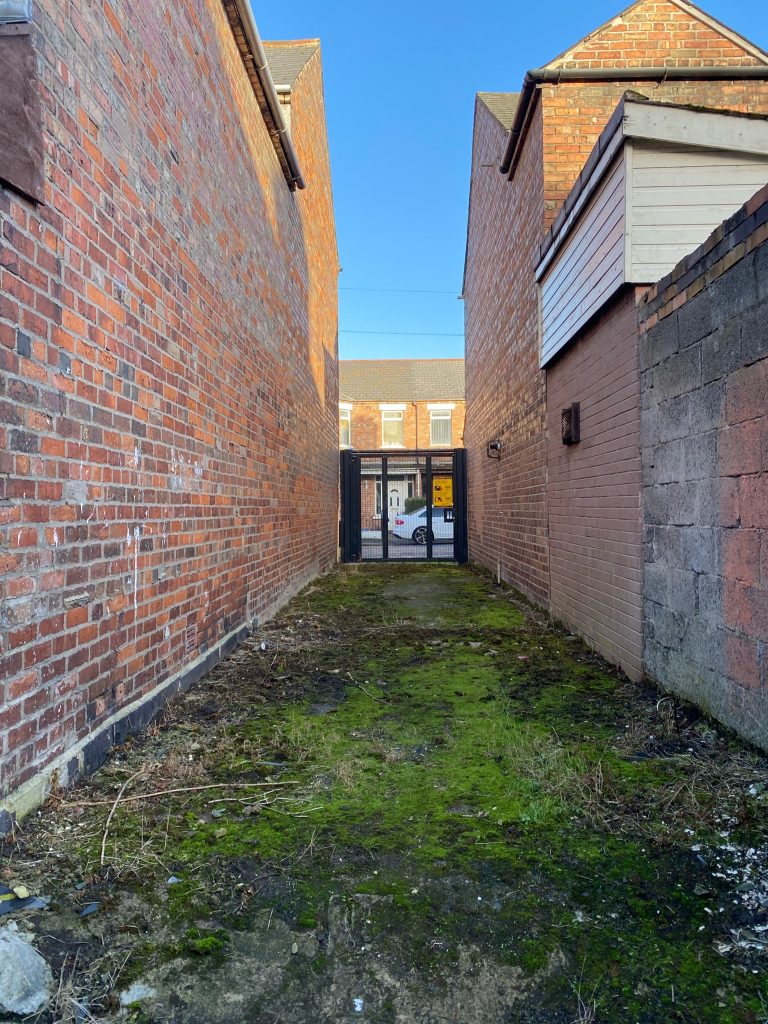
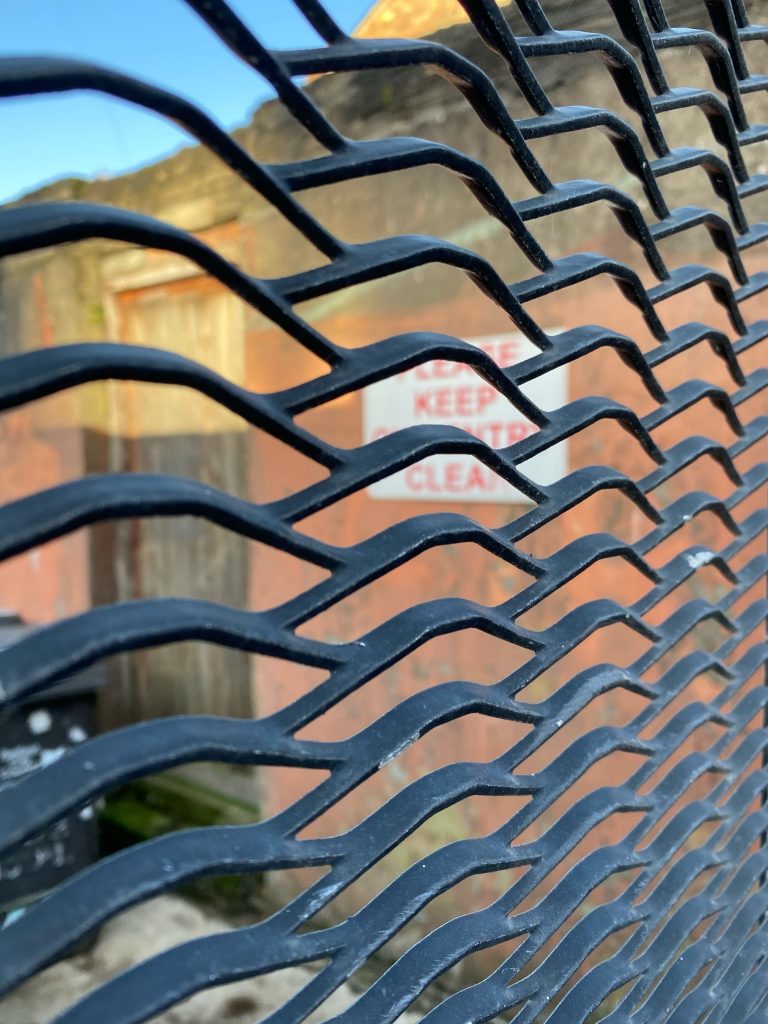
On to another. Lisa unlocks it for us. She doesn’t recall it not being gated. There’s a sign at the end ‘please keep our entry clean’. We spot barbecues. Signs of life? And a toilet! To the right another very good sized space, ripe for play. Potential for a small gathering spot.
Image: Gated alley, North Belfast
We ask about maintenance. Lisa hasn’t ever seen a street cleansing vehicle in the alley and it doesn’t seem to be maintained regularly. We make a note to ask Belfast City Council what the rules are. Why do some get cleaned and others don’t?
As we walk toward the end, Lisa tells us how she has never walked down to the other end of the alley before. We reach the end and it’s not the end yet. A garage, a curved wall, a pile of leaves that have gathered in the wind, bricked up doorways and cages. We exit through the gate we entered and it locks behind us.