Categories
Journal

Conversations About Maps

After speaking with The Green Party Councillors, we chat with a knowledgeable urbanist about land ownership in Belfast. We can assume that the Housing Executive own certain areas of roads and alleyways. We discuss a cross agency land ownership map which shows areas of strategic importance for the city, which may also show alleyway ownership. We decide to follow up with the Housing Executive to try to find out more.

However, some alleys are privately owned and not registered so that involves a lot of digging through archives to locate an owner. We discuss the Department of Communities Land ownership which is now mapped and publicly available on Spatial NI. We also talk about the Belfast City Council mapping of alleygates across the city. 
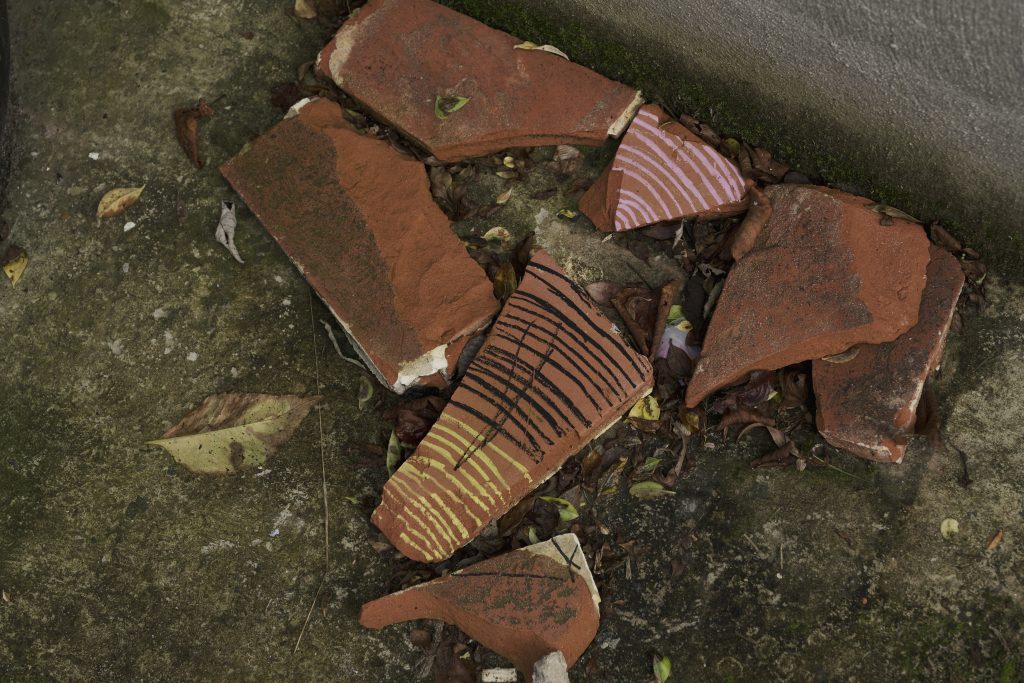
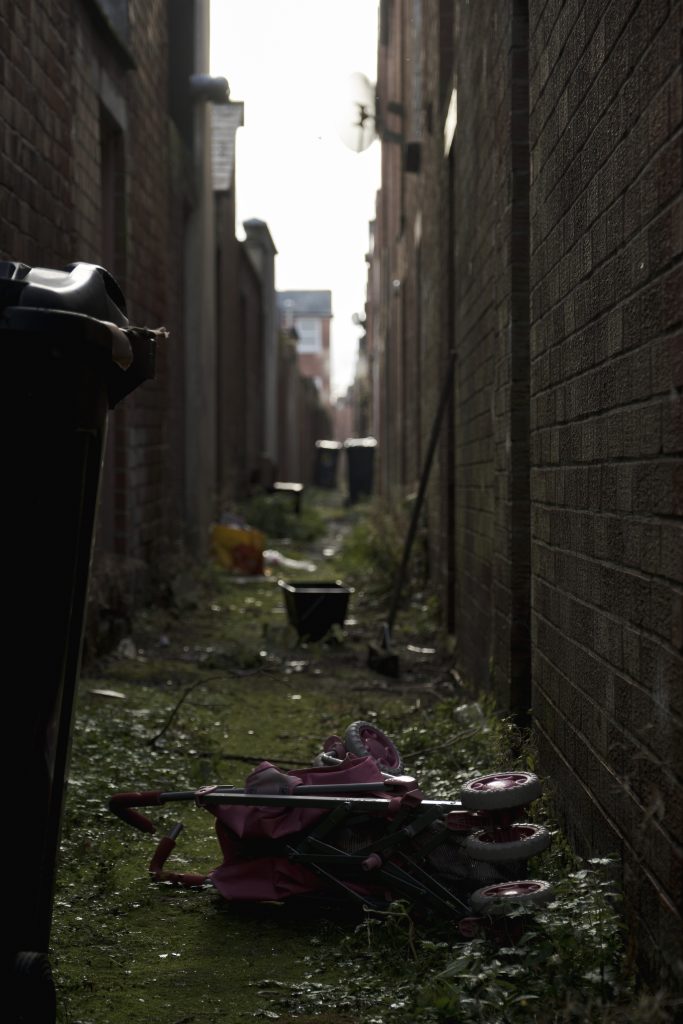
Image: Alleyway, South Belfast

We also talk about other questions that we can be asking throughout investigation: Can we link any of the data around alleygates to NISRA figures. Have we considered the age of the housing stock for the household with alleyways? And how can we bring this fragmented story together?
Categories
Journal

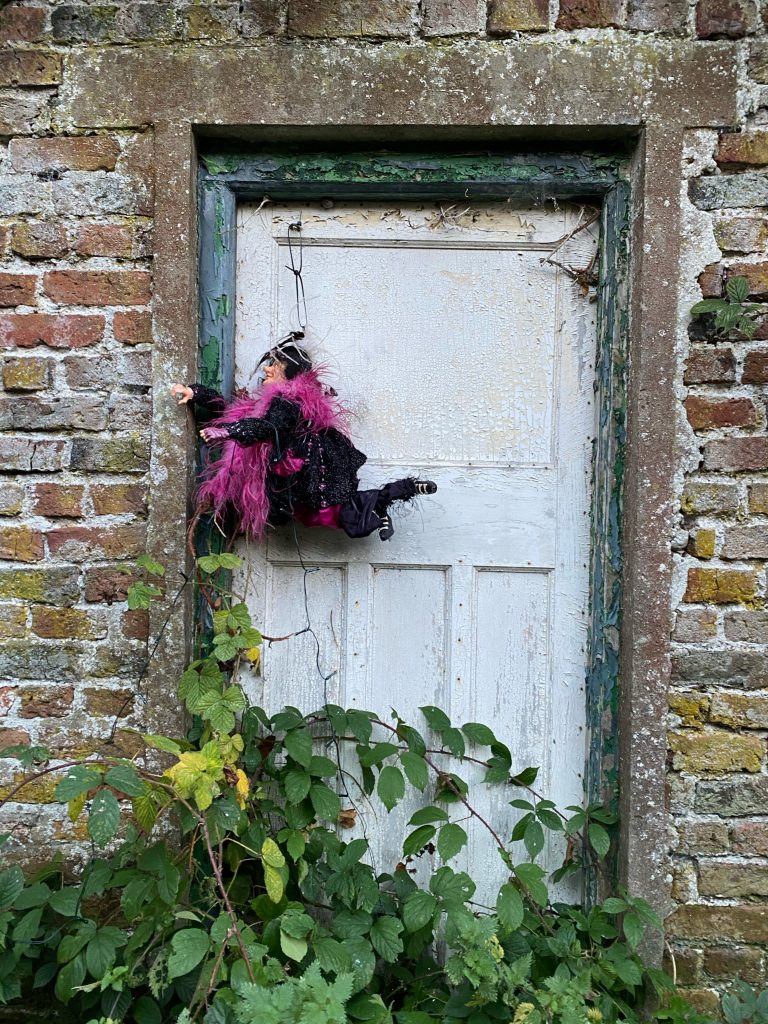
A Spooky Alleyway

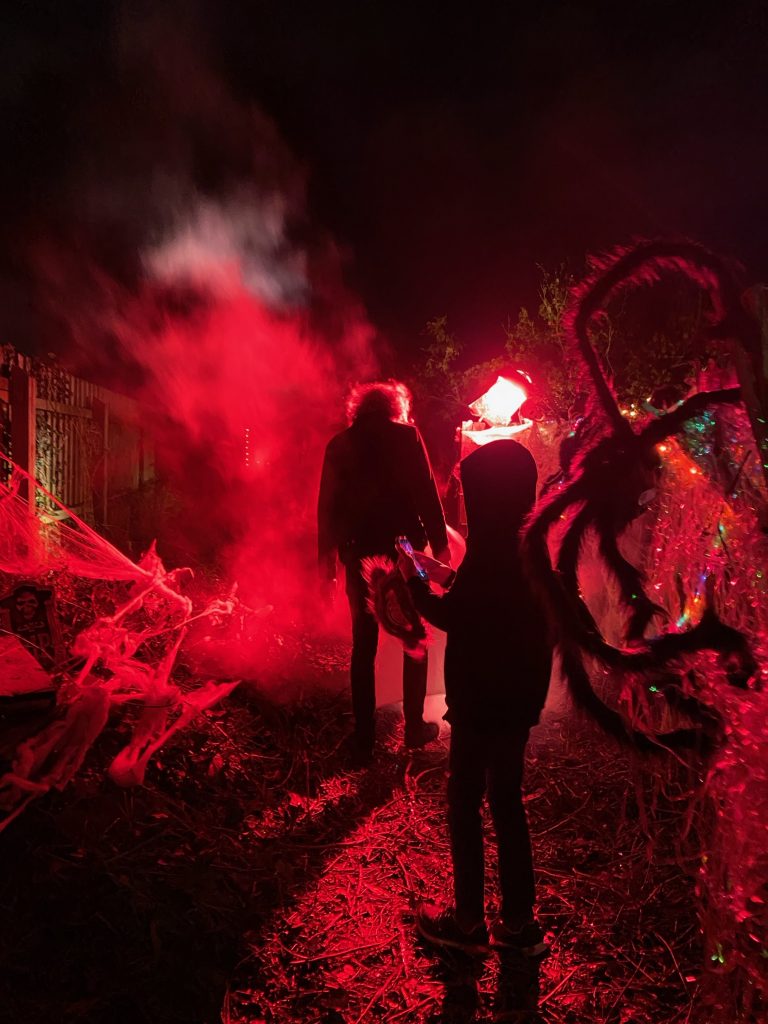
In the absence of trick or treating and to keep each other safe, a street of neighbours co-ordinated a spooky walkway along the back alley. More than 30 households decorated the backs of their houses and took turns to explore it under the light of a full moon.

One neighbour told us that they had never walked along the alley before. Another neighbour had not taken part in any social activity since the first Northern Irish lockdown several months ago. People kept a safe distance and the forgotten back alley became the common ground that people were longing for, with over 30 mini installations using props and lights along the route.

Categories
Journal

The Green Party Conversation

We’ve been following Belfast City Council minutes, live meetings, social media posts, and aligning news articles around alleyways. 

Image: Alleyway, South Belfast

This has helped inform an initial list of people that we’d like to speak with. As paths had crossed in previous projects and campaigns we requested a meeting with a Green Party Councillor (Aíne Groogan), which multiplied into 4 Green Party Councillors (4 Councillors! we applaud their enthusiasm for alleyways) and a meeting via ZOOM. 

The Councillors (Aíne Groogan, Mal O’Hara, Brian Smyth & Anthony Flynn) were keen to see an alternative story develop, saying that alley gates were a panacea to a very complex issue. We talked about burglaries, fly-tipping, management, and ownership of alleyways. On average councillors in one part of Belfast are receiving requests for alley gates 3 times per week. This is unmanageable in terms of resource required. Each gate costs approximately £3,000 and perhaps there are 2 or 3 or 5 gates needed per alleyway. And then there’s the issue around ownership. It’s not always easy to establish ownership of an alleyway. 

This was a great development quite early in the investigation. We started to think about alternatives to what happens now. We decided to develop a series of design concepts (alternative stories) that could make alleyways safer, cleaner and permeable. They would need to be more cost effective than gates and not necessarily require sign off by the ‘owner’ of an alleyway. These concepts can provide visual stimulation and could potentially be piloted and evaluated in different parts of the city. 

“Could be a real game changer for Belfast, maximising space. & improving connectivity” Aíne Groogan, Green Party Councillor

Categories
Events Journal

Alley as a Gallery

An event called Liminal (Space) Belfast caught our attention and we booked tickets for this very short alley walk, which was a curated installation and exhibition over the course of an afternoon. Liminal (Space) Belfast is a pop up event showcasing art and artists in the public realm.

‘Liminal Belfast – an exhibition in an alley. It’s a (free) sell-out, a steady trickle of visitors passing through.

T-junction: two ways in, only one way out.

Art about lockdown.  Glass, blueprint, screen projection, installations.

Lungs, insects, shattered glass, still holding itself together, just.  

Shredded leaves of a book, still attached at the spine, flutter in the wind. It is very windy.’

Image: Alleyway, East Belfast. Liminal (Space) Belfast.

We chatted with the artists about using the alley as an inspiration and a place to show work. We were reminded of Artist Jonathan Brennan’s exhibition ‘Alleys of the East’. The instigator of Liminal (Space) Belfast, Meadhbh McIlgorm tells us about the preparation that went into making the alleyway suitable for visitors. Days of work clearing and cleaning the space. A ticketing system to keep numbers manageable for social distancing. Conversations with neighbours about the back walls of their yards. Could they use the wall to hang work? Management of an unmanaged space, Liminal (Space) Belfast turns the alley into a place.

Categories
Journal

What’s in a Name? An Alleyway in 1902

The name 9ft in Common is inspired by a lease first signed in December 1902, confirming a right of way over and along a 9ft passage in Belfast. It was designed to be a space that could be accessed by all landowners and tenants within the houses, whose boundaries back onto it. 

Although in quite recent years it had been used as a shared space to play, it had also become a place to leave unwanted things, a place to forget. The buddleia and blackberries grew until the 9ft passage was no longer passable. The unadopted status and unknown ownership had led to a demise of the passage, until a group of neighbours checked their leases and decided to reclaim the 9ft in common.

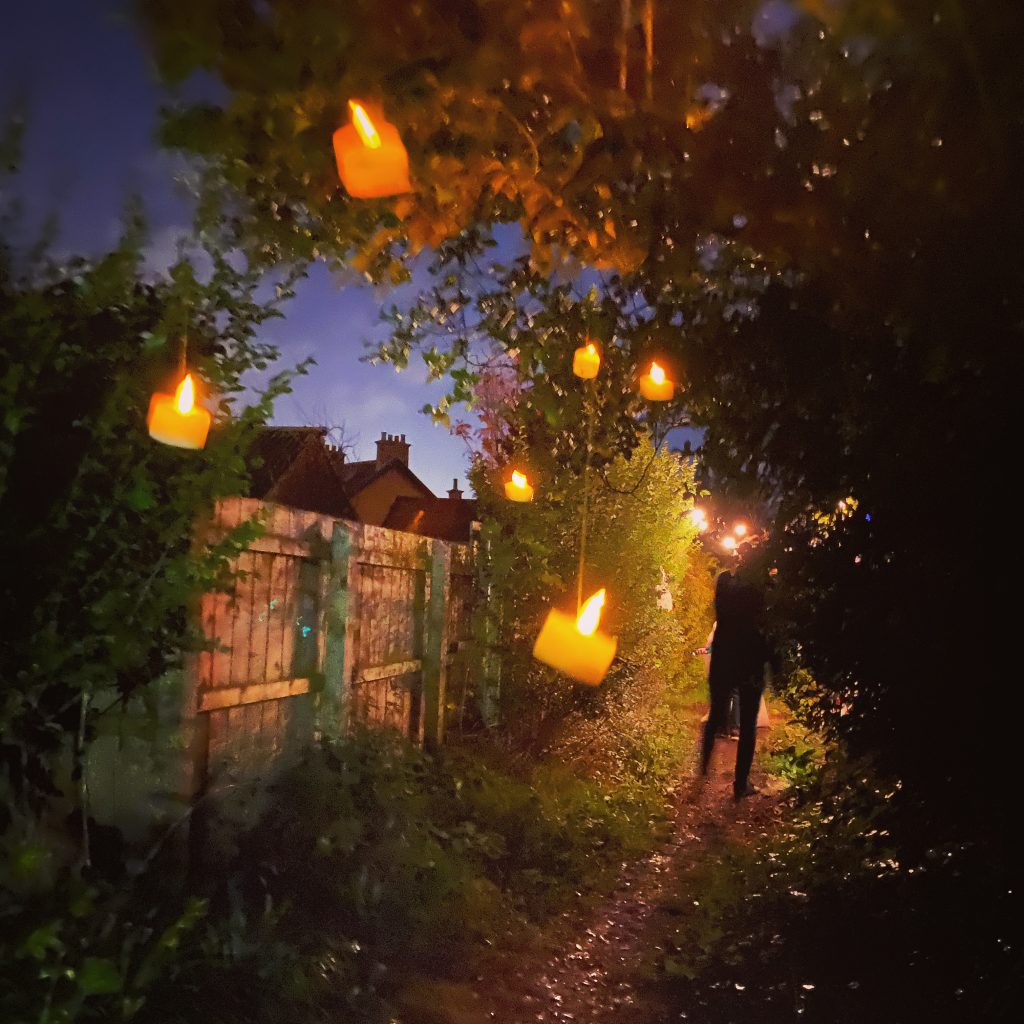
Image: Alleyway, East Belfast (temporary lighting installation by No.52)