

Lighting, or lack of, comes up again and again in conversations about alleys regarding safety and access. Common solar lights often have a limited life span and need to be replaced each year. As we began approaching Samhain, with the nights drawing in and the days getting shorter, we wanted to have one of our commissions focus on lighting.
We approached artist and technician at Flax:lab Martin Boyle initially with a few enquiries about workshops and materials. In the process we discovered that Martin lives beside an alley which through the ‘Right Up My Alley’ Participatory Budgeting project in the summer, had just started their campaign to transform the alley into a green and social space.
Martin talked about how he wanted to support the alleyway development, but was unsure of the best way to get involved. Martin’s design project LAZY 8 focuses on colour and pattern – we thought this would be a great opportunity for us to pilot a lighting design project, and for Martin to share his creative thinking and making (and the gift of light!) with the neighbours.
The brief was set:
Investigate more sustainable options for outdoor alley lighting, taking a maker–led approach to design and function.
Martin investigated a range of possibilities and designs using both acrylic and jesmonite casts for LED lights.
Martin gave consideration as to how the lights would look during the day as well as lit up at night. With sculptural qualities, their vibrant contrasting colours stand out in the alley. The 4 lights with different colour combinations have been installed as test pieces in Greenore Street Alley and the results are just beautiful!
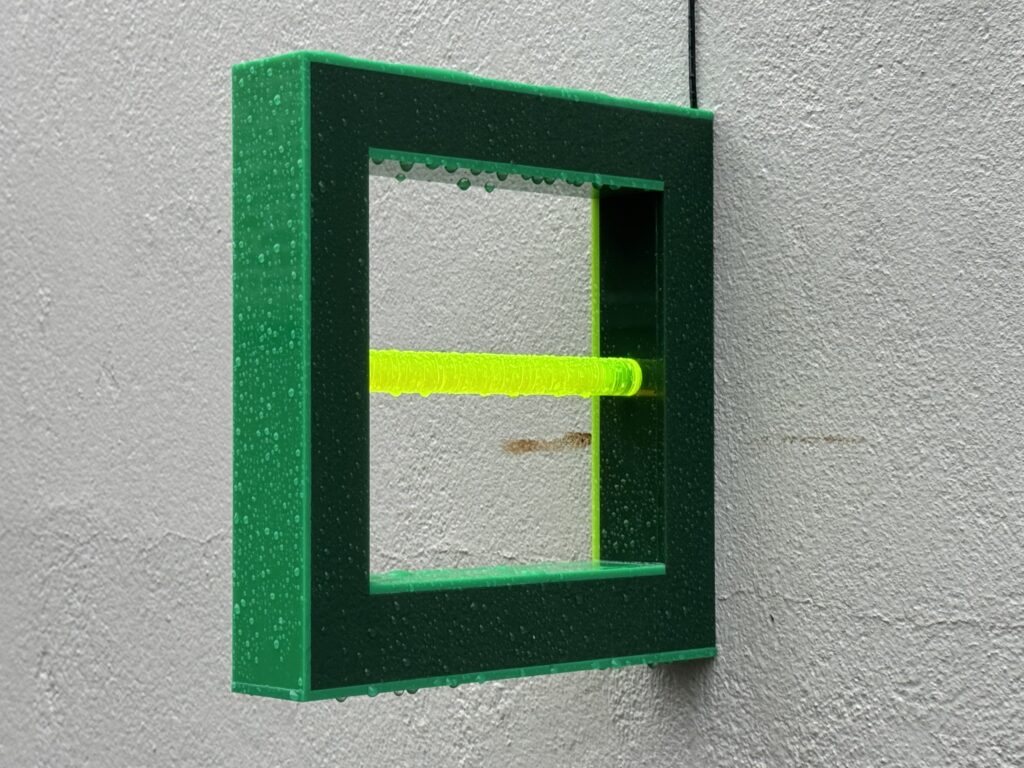
The fluorescent colours of the tubing appears ‘on’ during the day with a natural glow and light up at night based on sunshine levels using LED lights and solar panels.
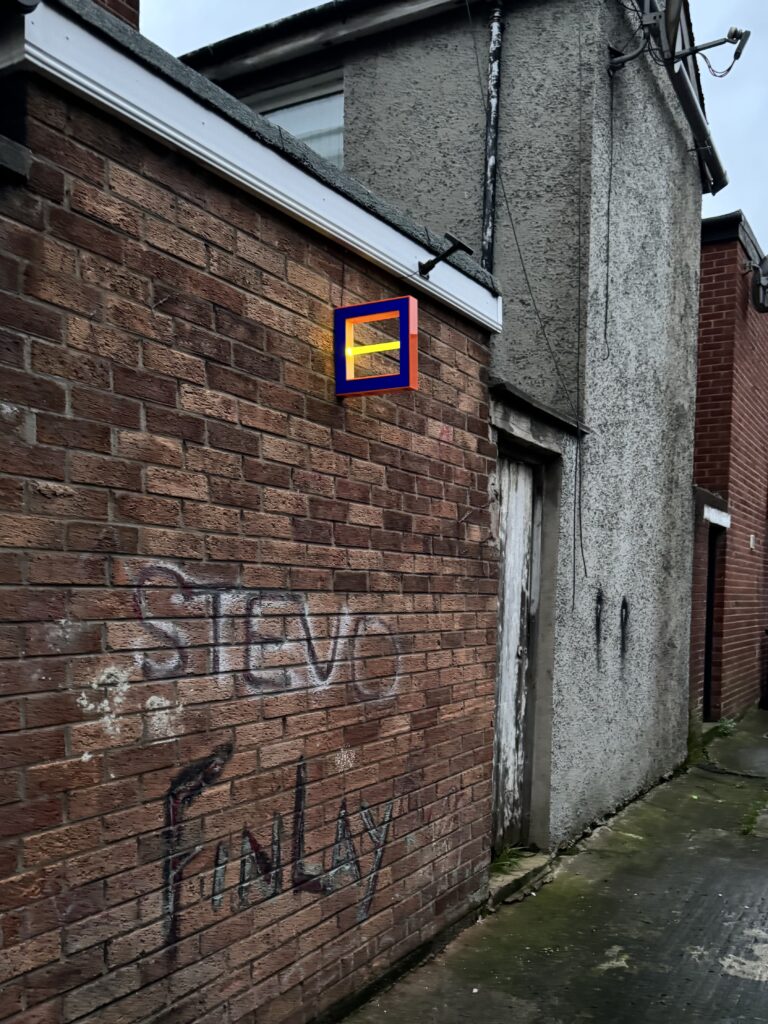
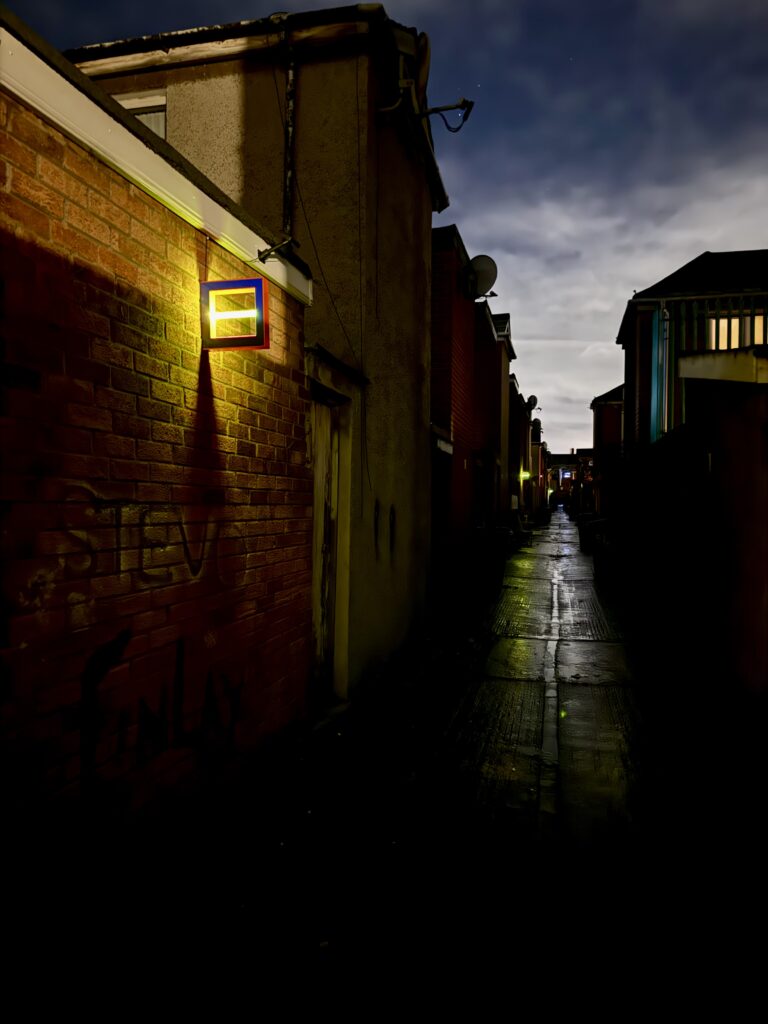
The coloured acrylic light boxes have been laser cut and assembled for minimum wastage of material and designed so the lights can be removed and replaced when needed. The boxes are water resistant which will also help extend the life of the LEDs inside.
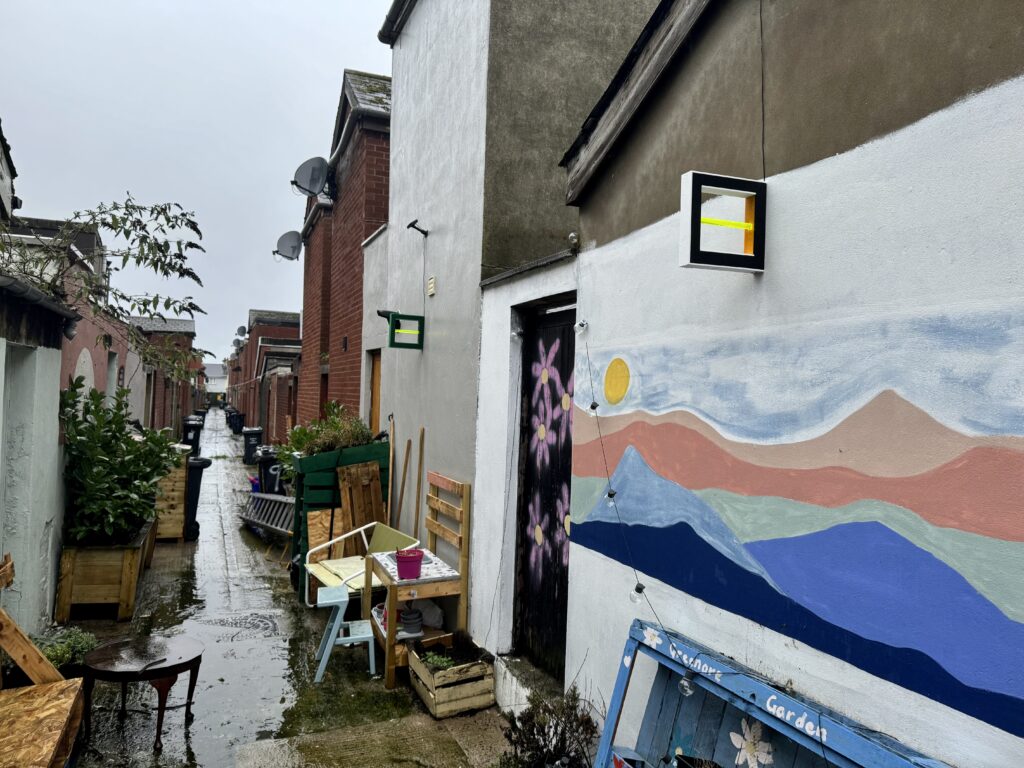
For another option, Martin experinmented with casting frames in Jesmonite plaster with Portland stone finish. He felt with the inital test that the light disappeared into visual architecture of the alley during the day.
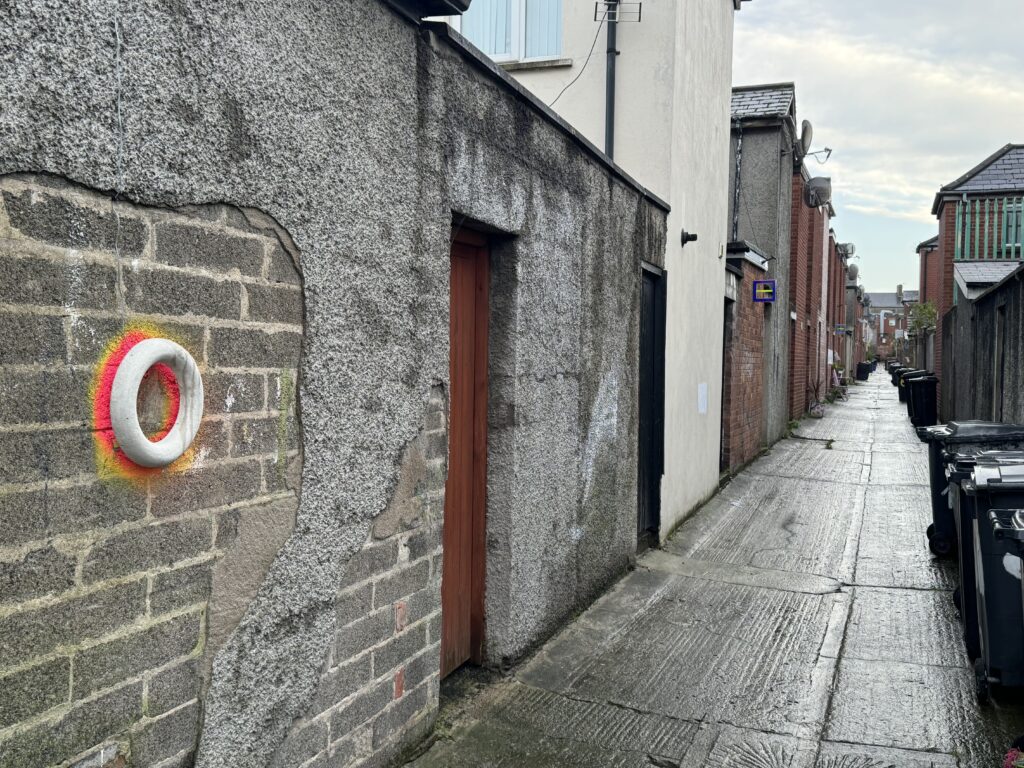
He re-thought the piece to become a more sculptural wall mounted light which we think has a great echo of the concrete and typical renders of the alley walls. The LED strip is waterproof and powered by a solar panel mounted above to catch maximum light.
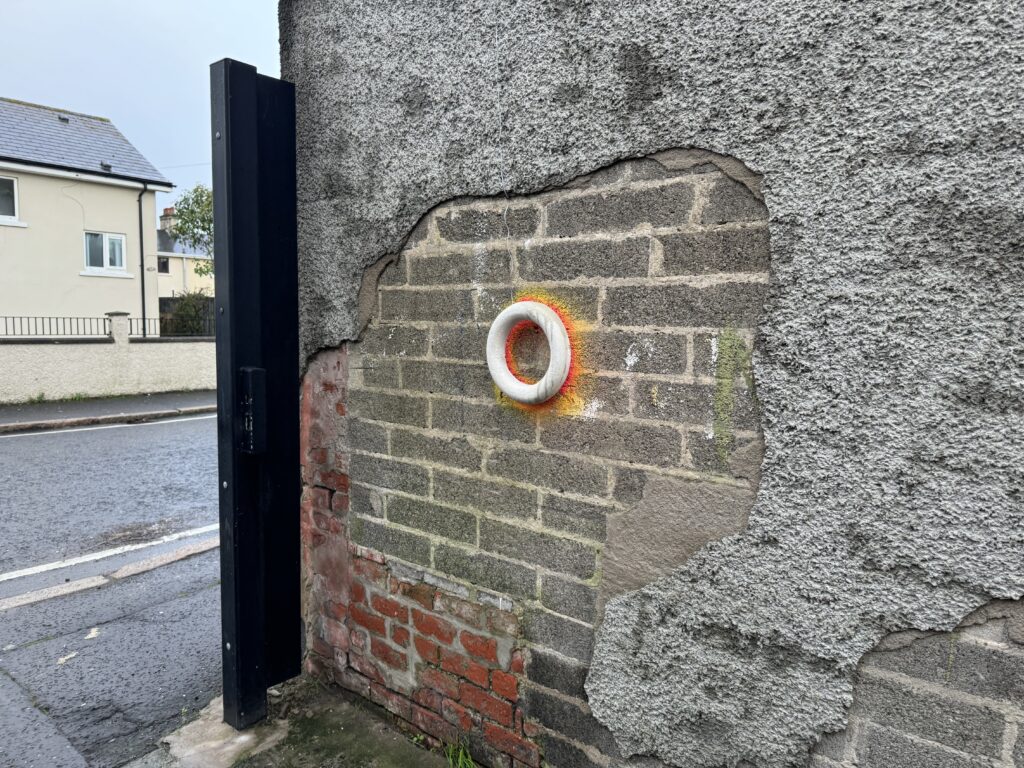
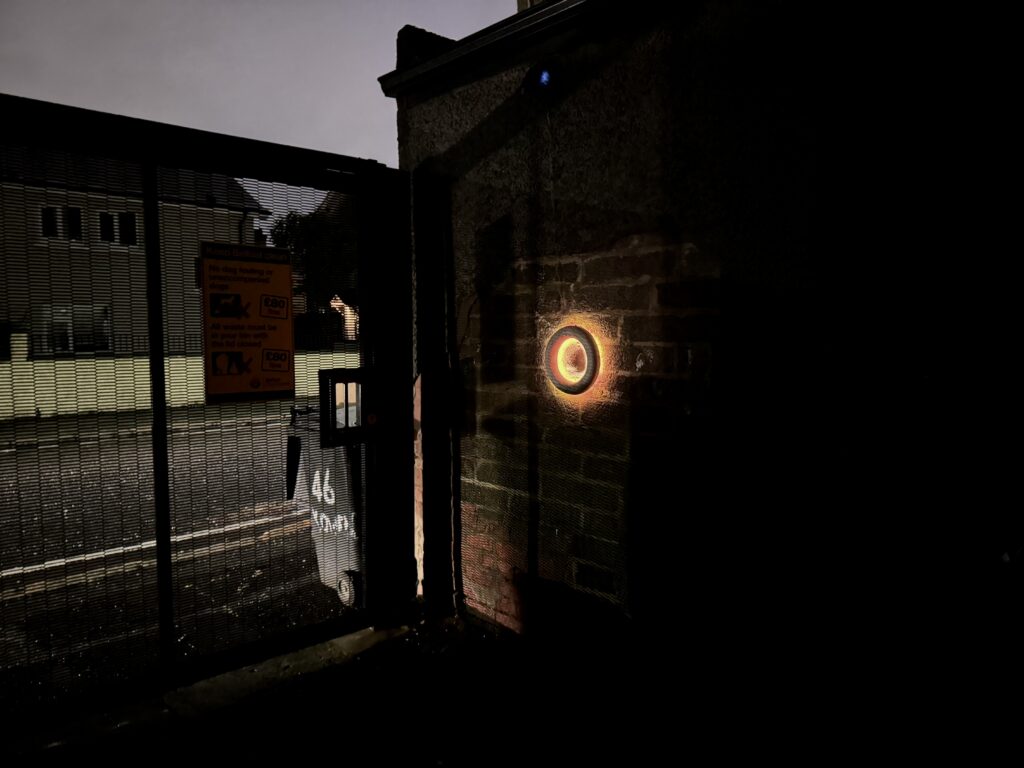
Martin says feedback from the neighbours has been positive, although there is not much activity in the alley at this time of year. He is looking forward to the sun rising further to better power the solar panels and is planning to do some other workshops sharing similar skills with neighbours in spring 2025.
What a shining result!
Beautful photos across this page all courtesy of Martin Boyle. Those interested can read more about the design and material process in the document below.