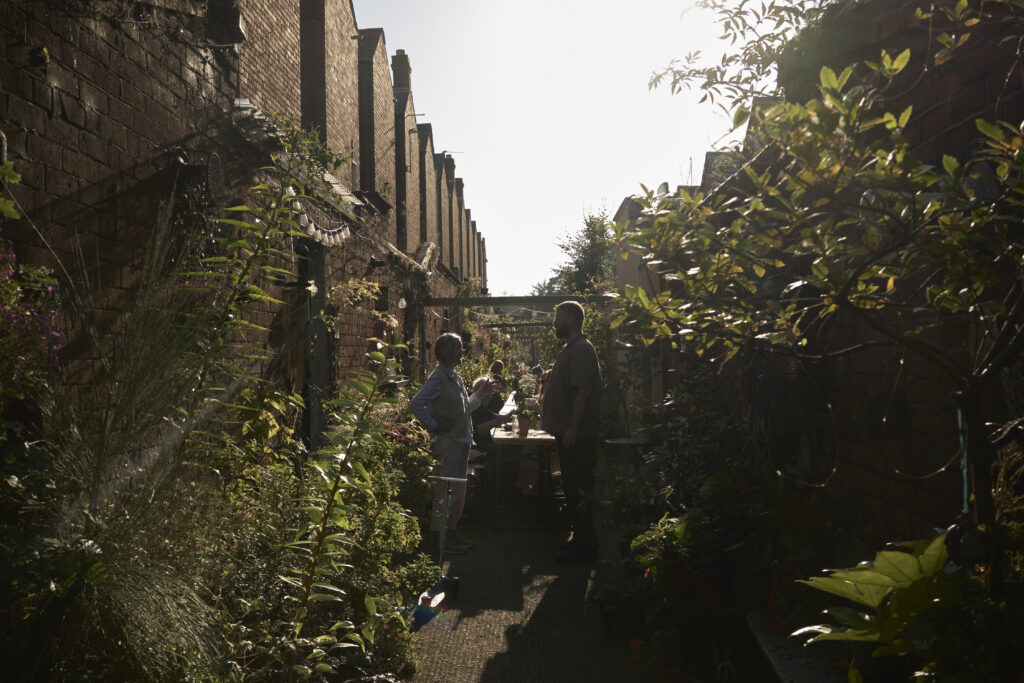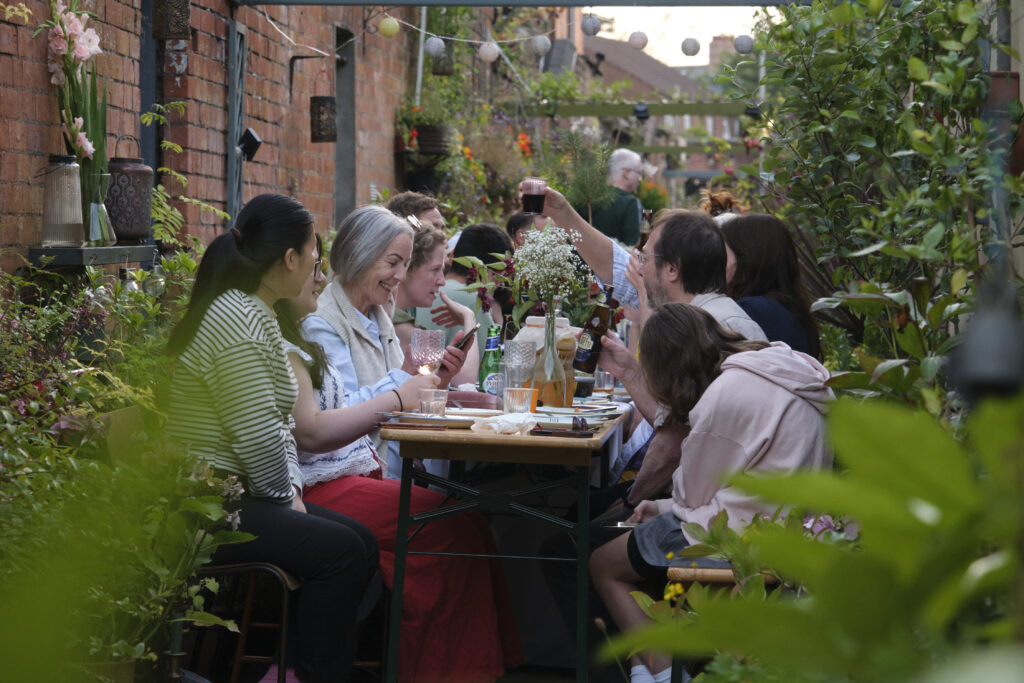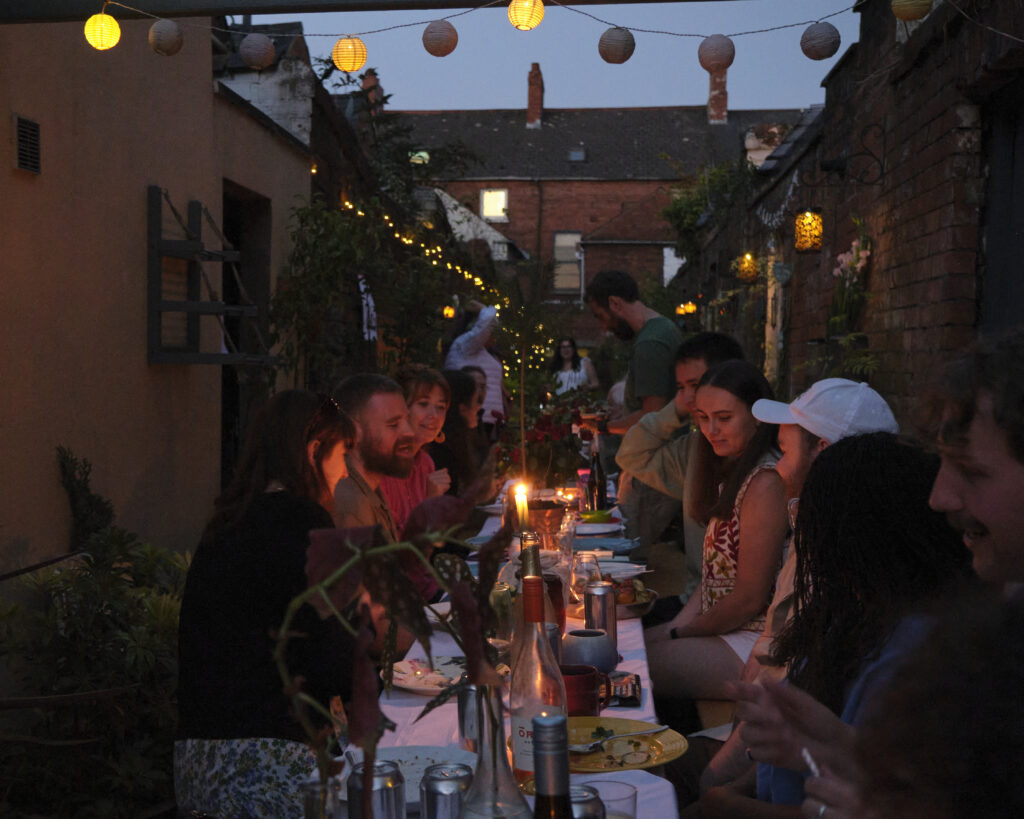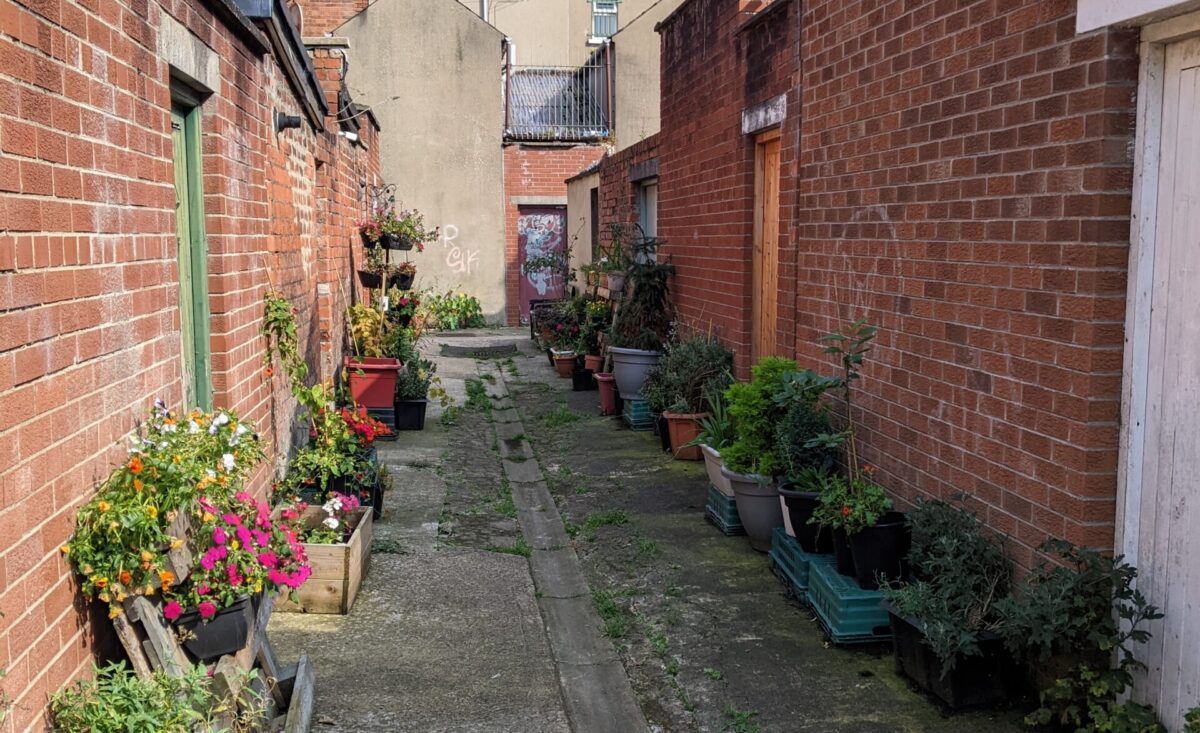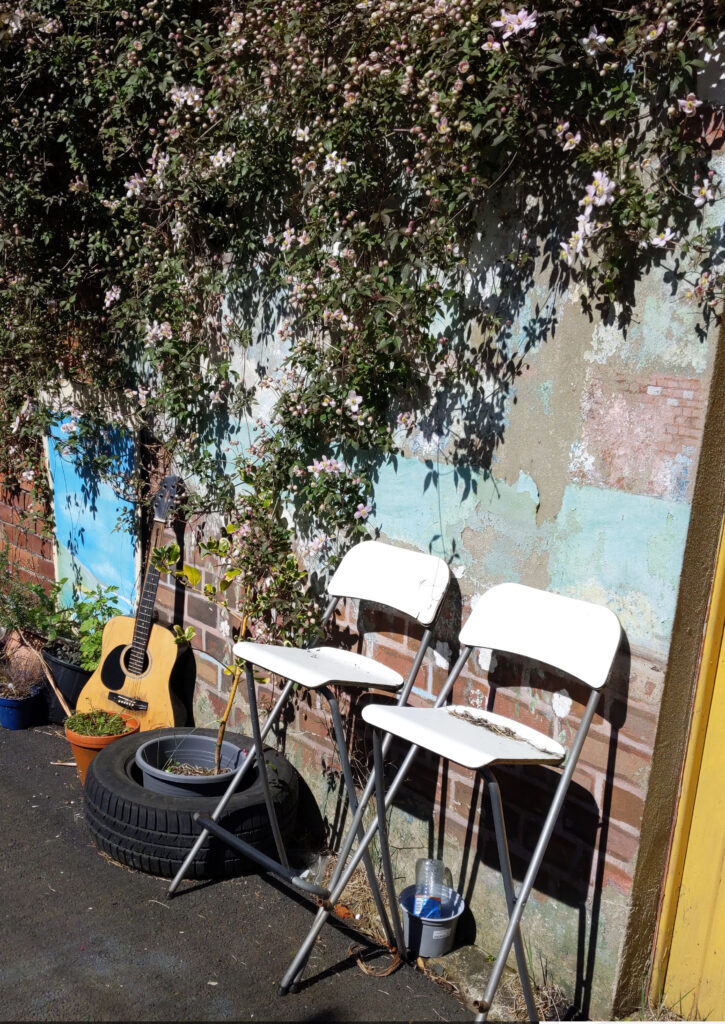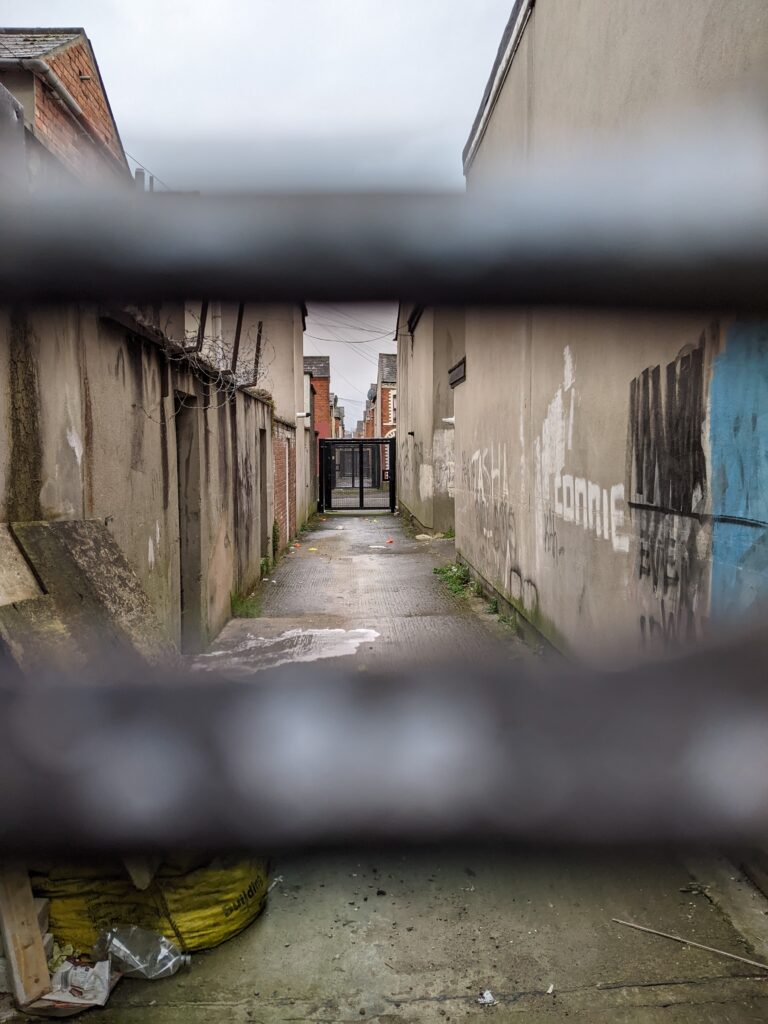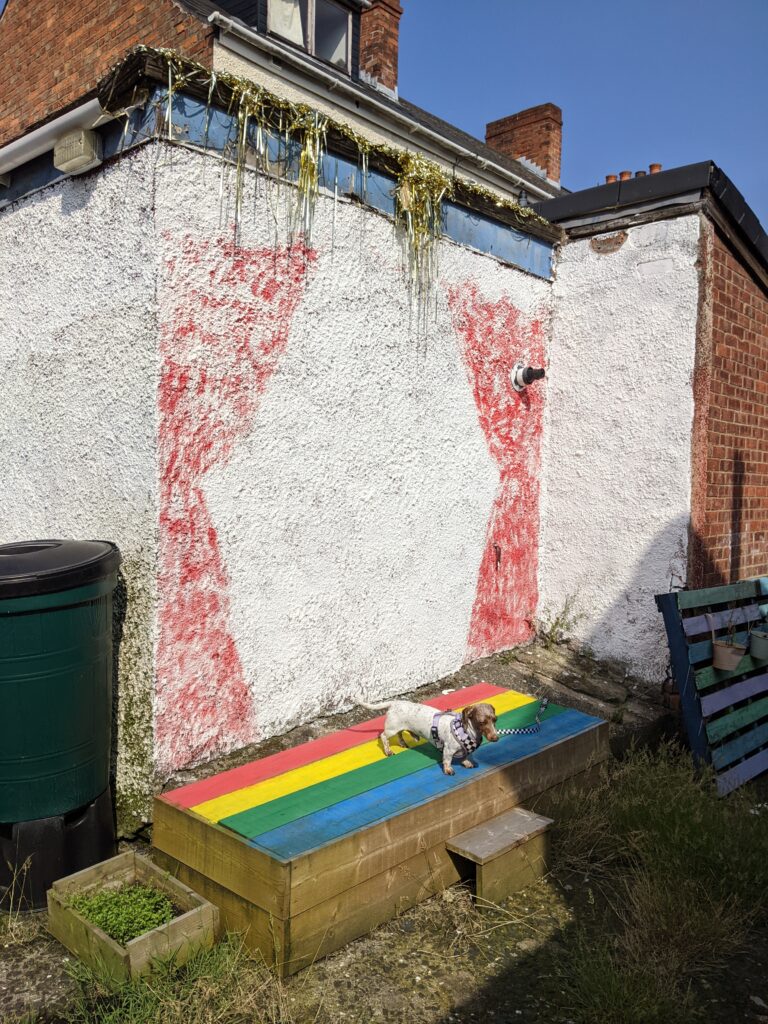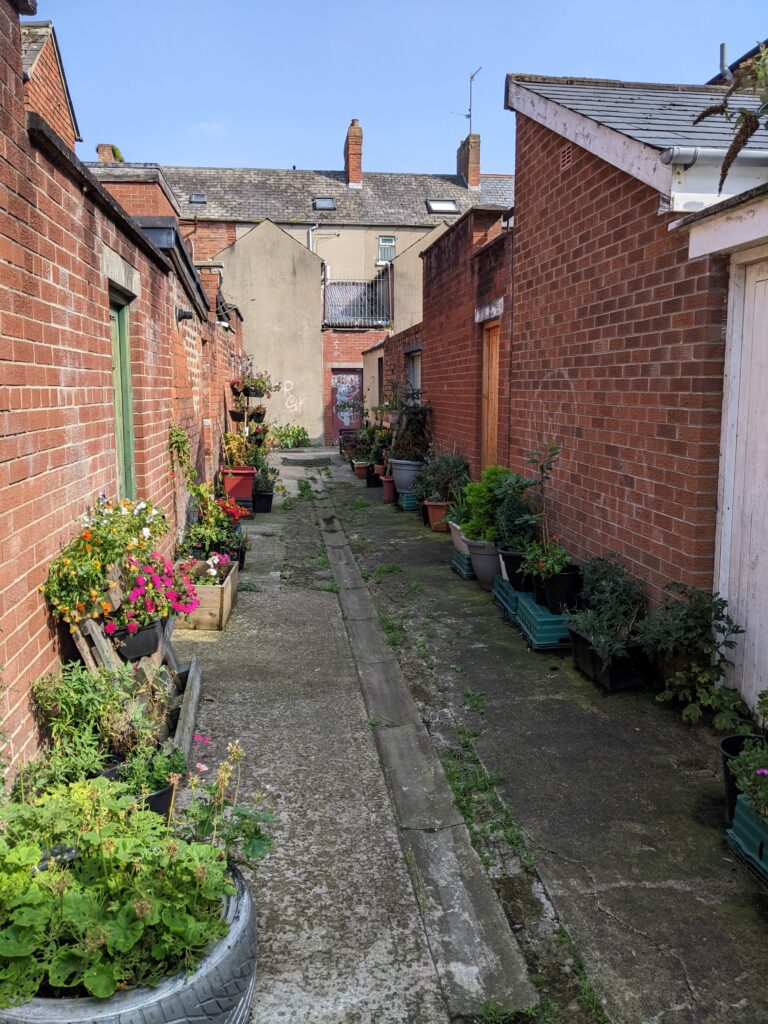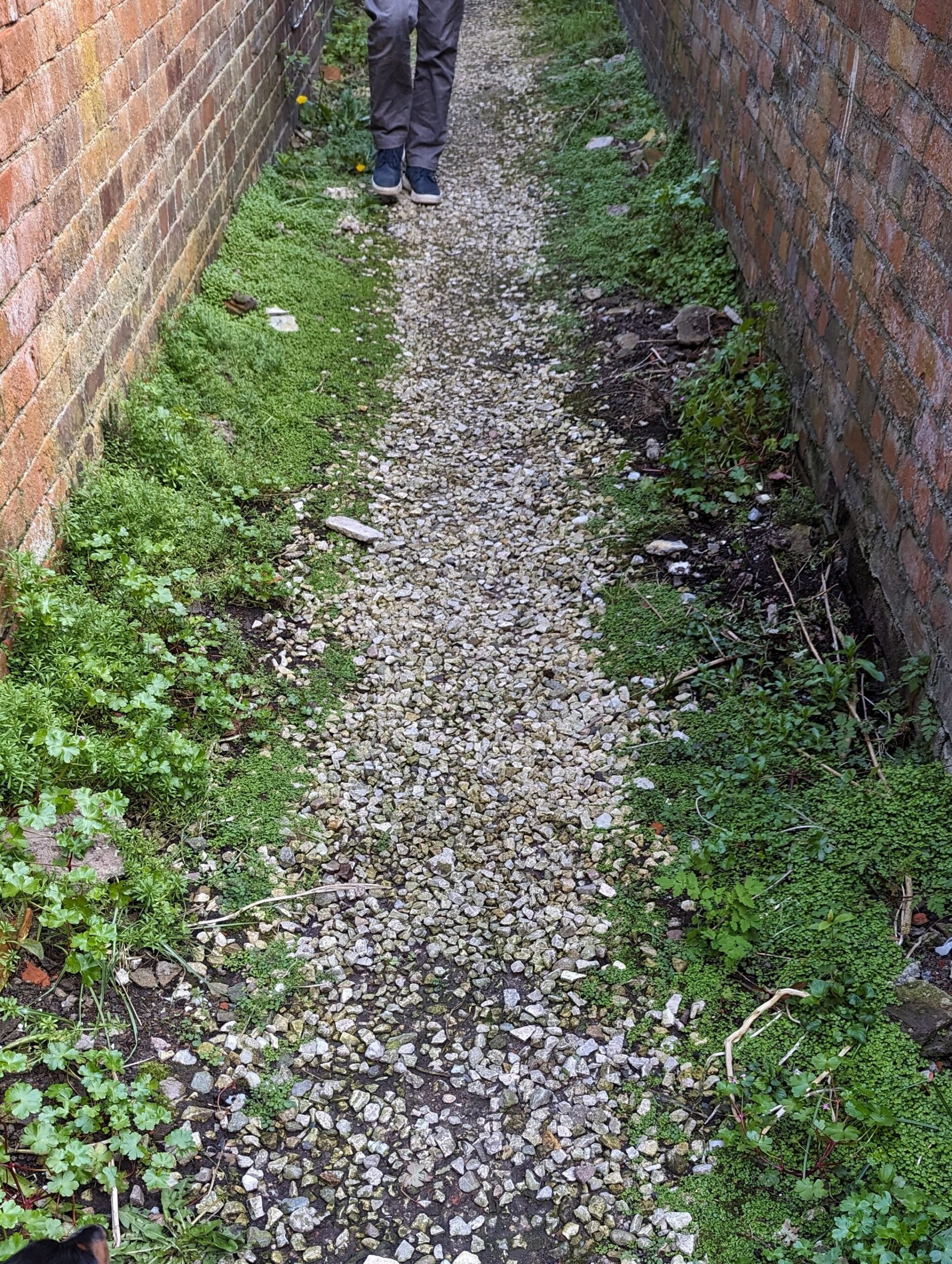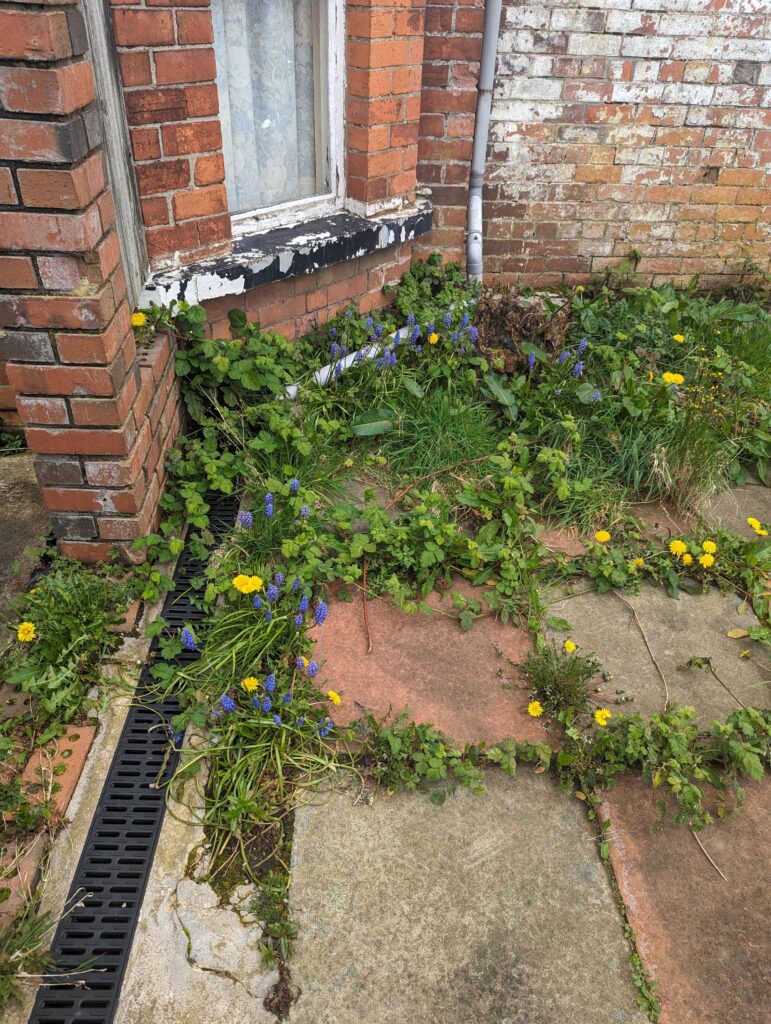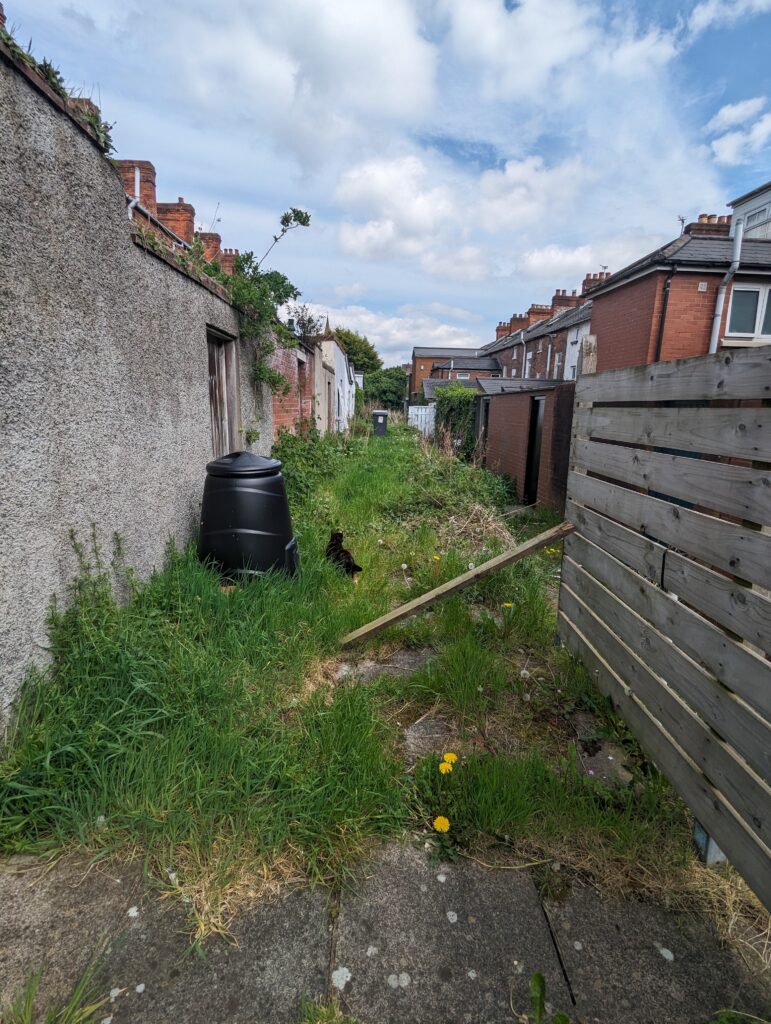
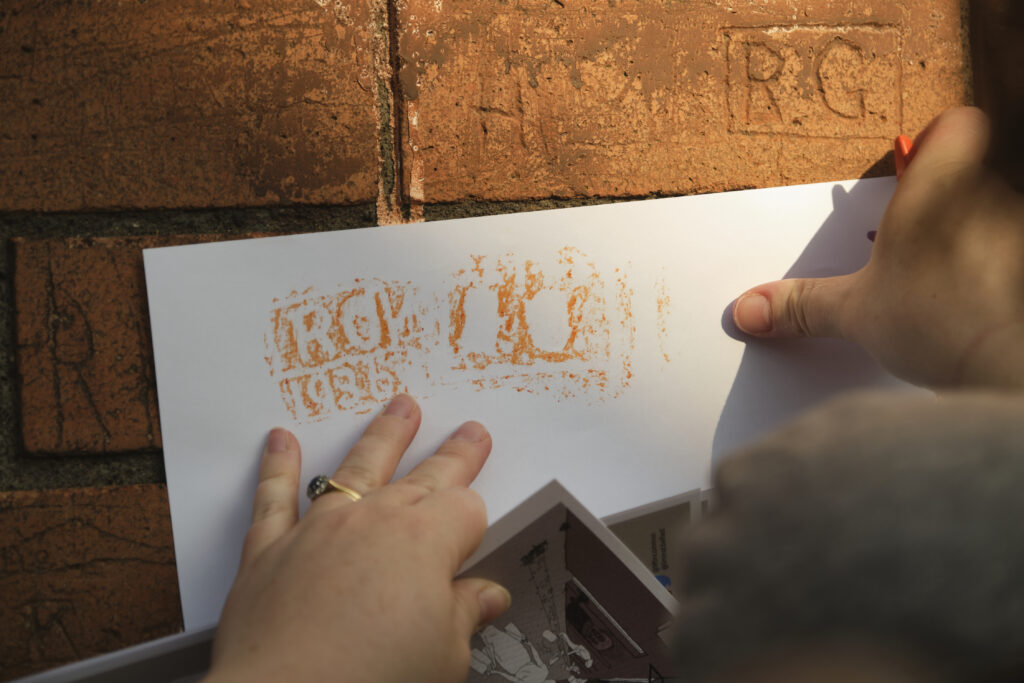
Belfast’s alleyways are a legacy of the the city’s industrial heritage, designed as shared rights of way for landowners and tenants. What remains of our Victorian heritage makes up some of the most beautiful architectural details in the city, from ornate street-lamps, beautiful red brick buildings and iconic street signs. In the alleys over the past two hundred-ish years, boundaries have become blurred and land ownership is inconsistent from house to house, even on the same street. However look closely and there are still signs of the people who have occupied these spaces before us – blocked up coal shoots, fixing and fittings, initials and dates scratched into red bricks
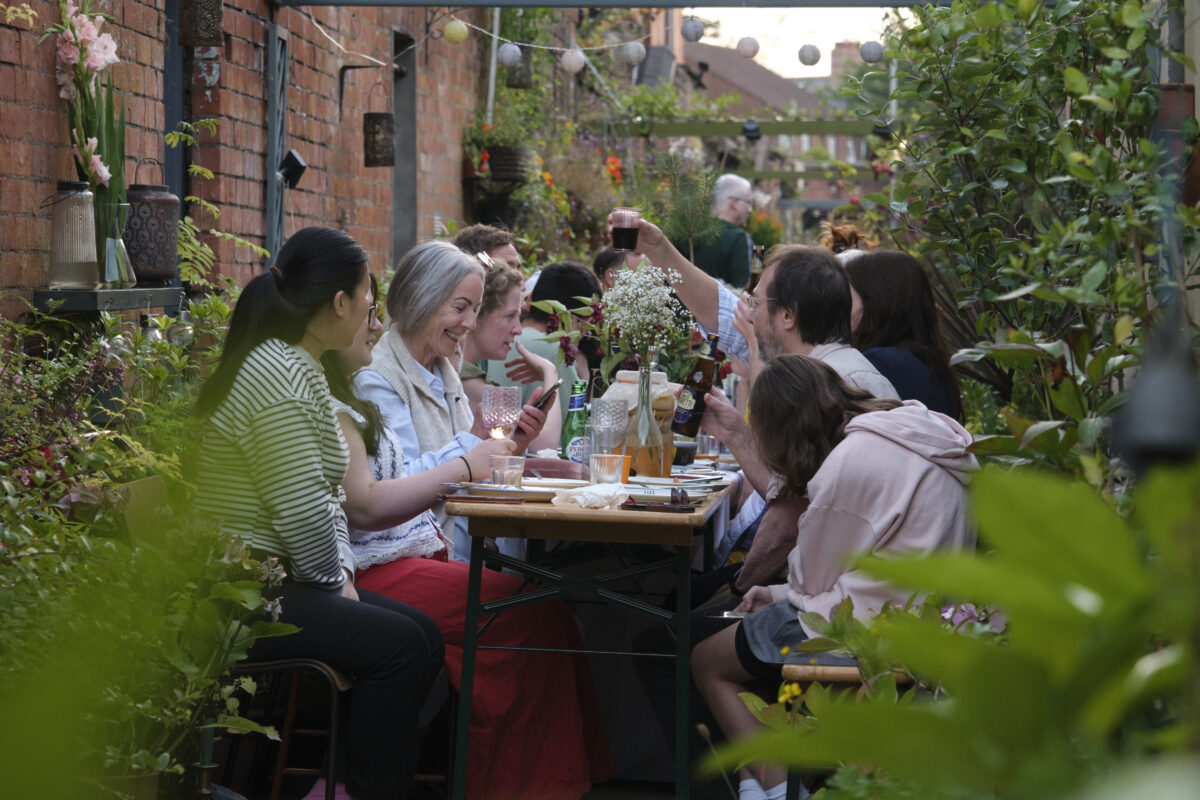
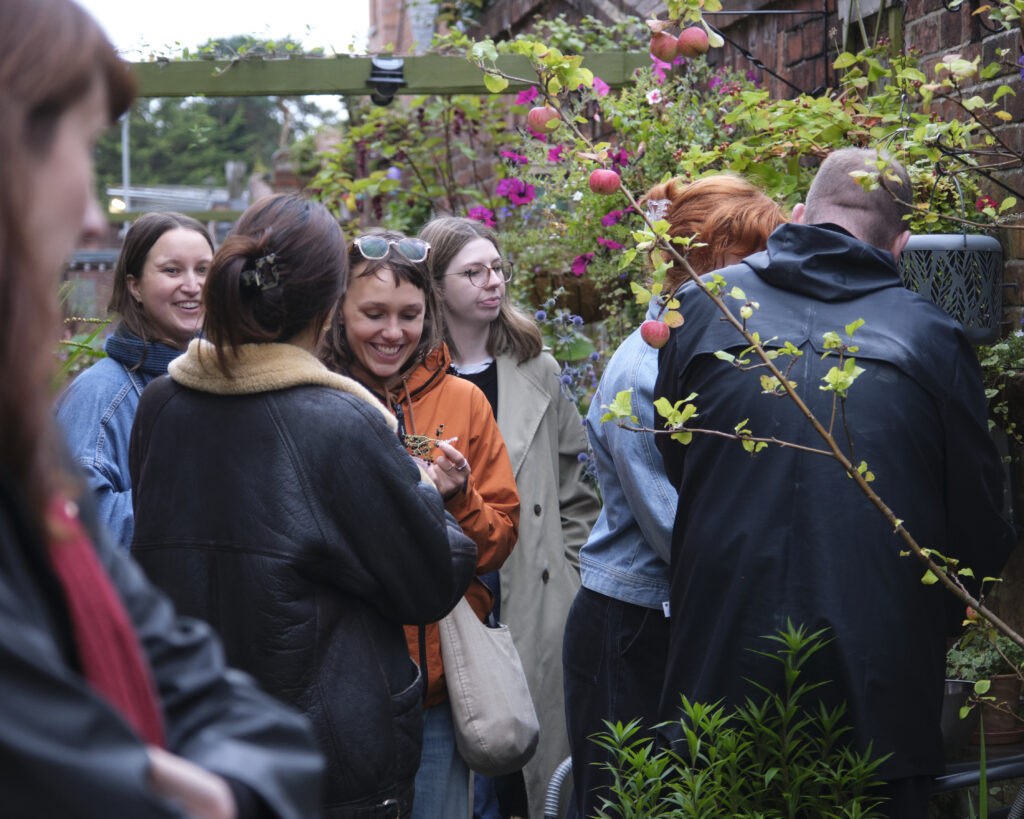
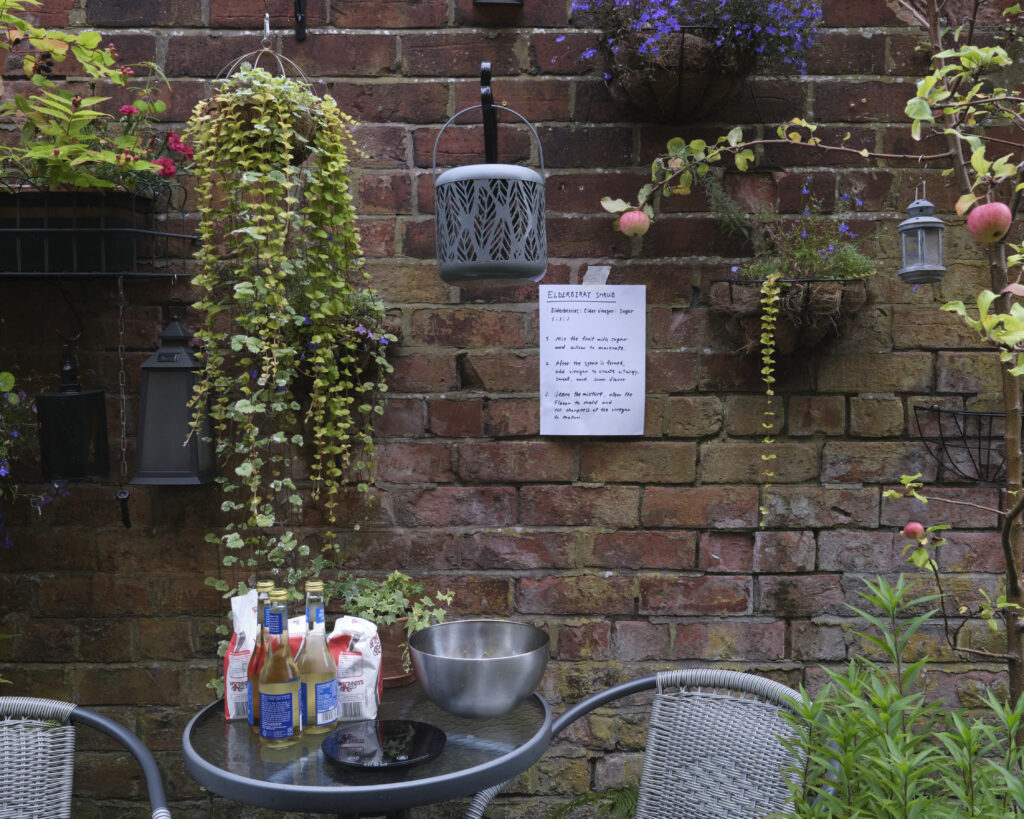
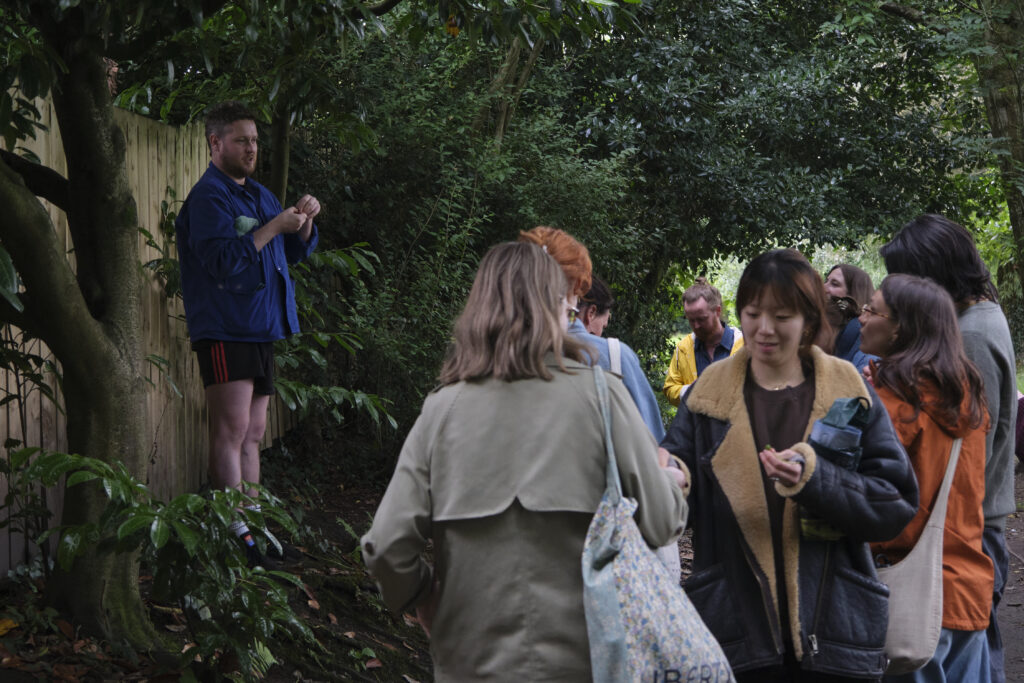
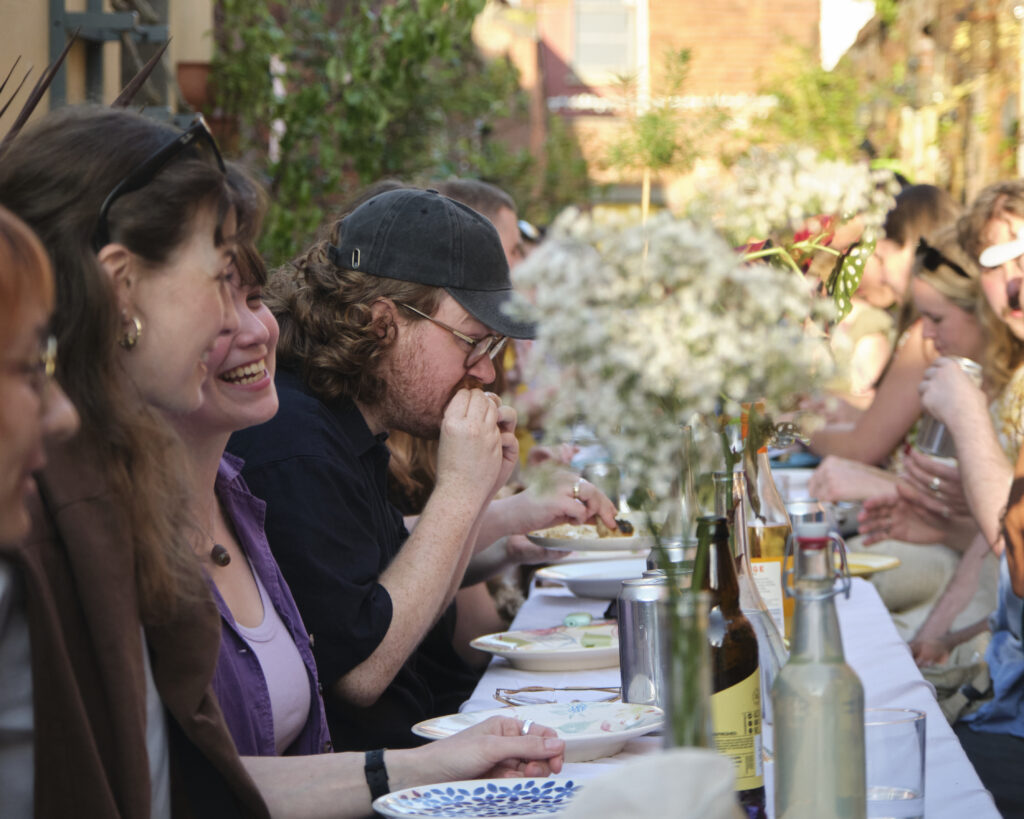
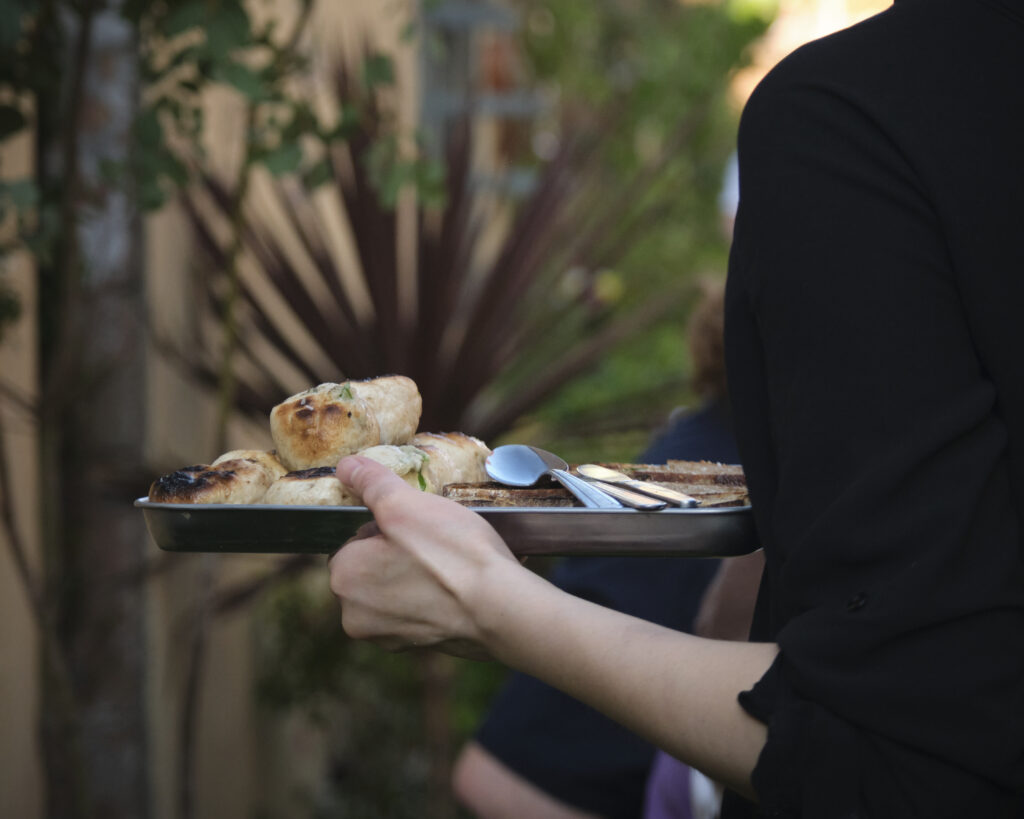
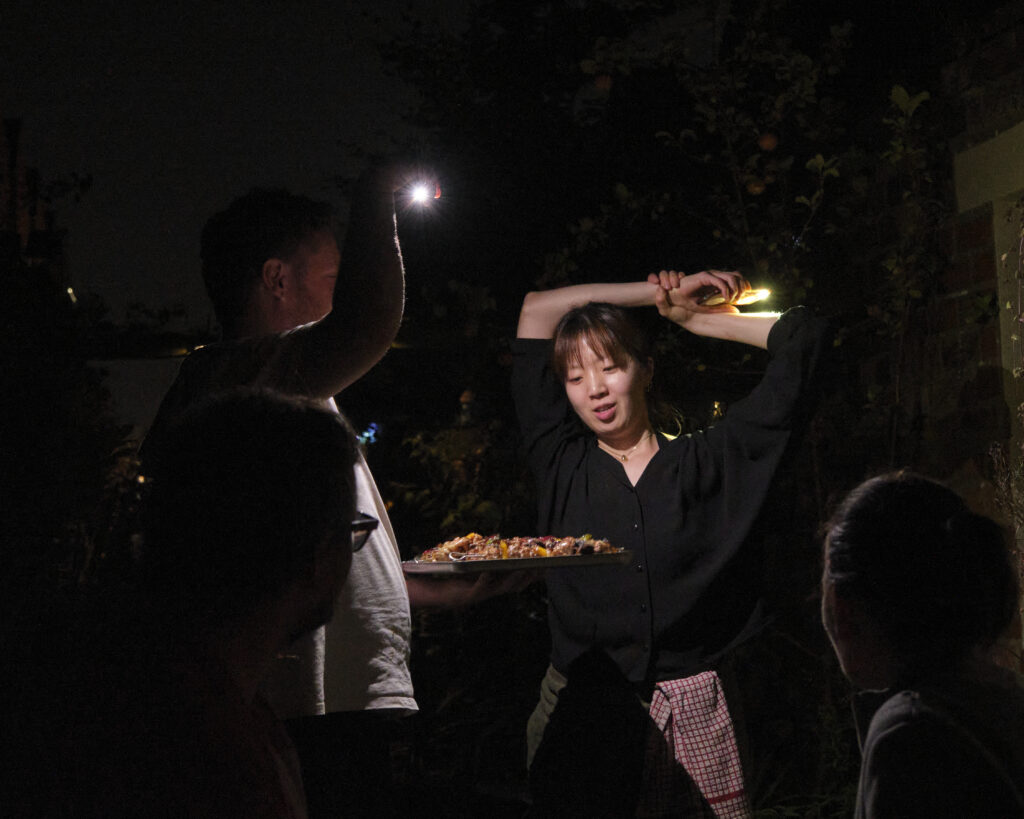
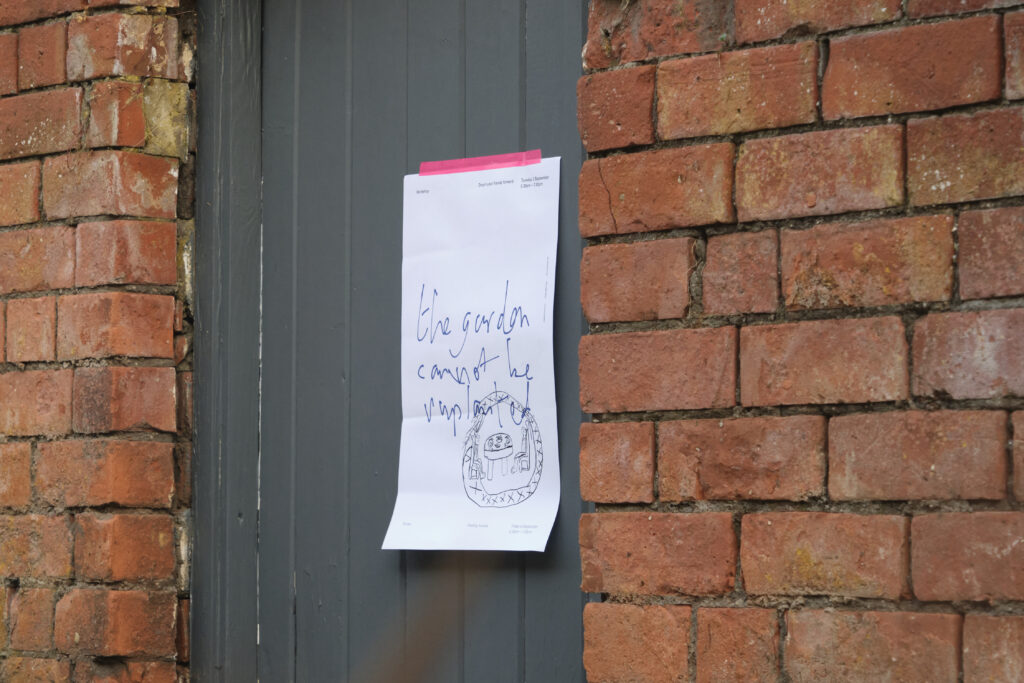
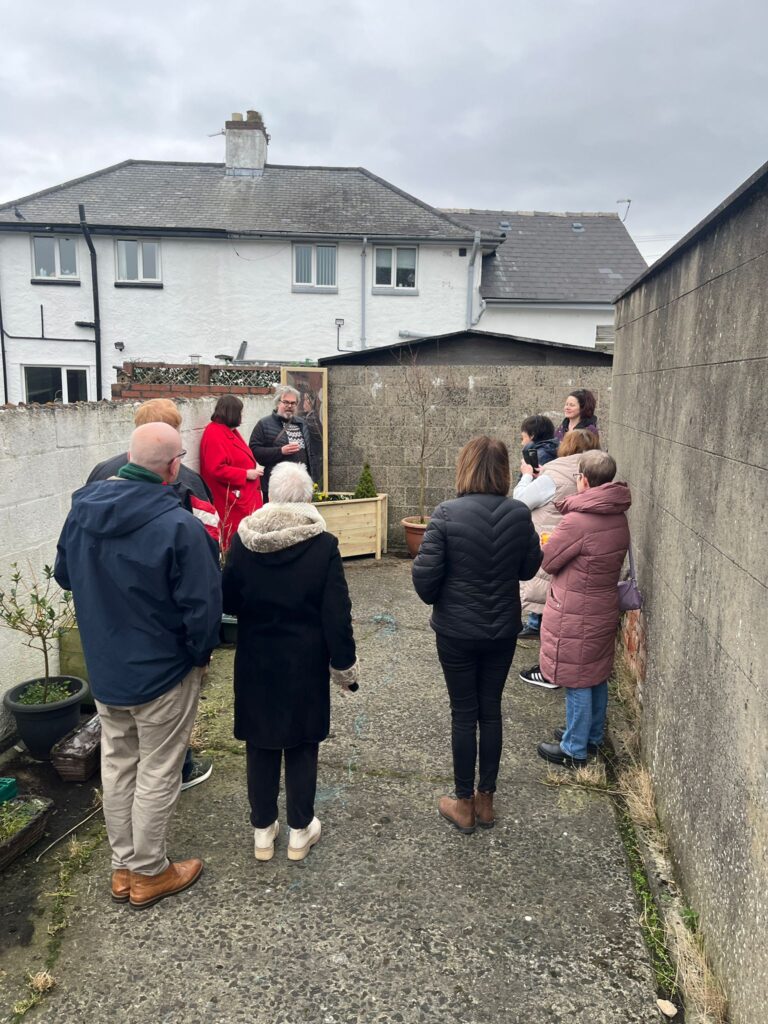
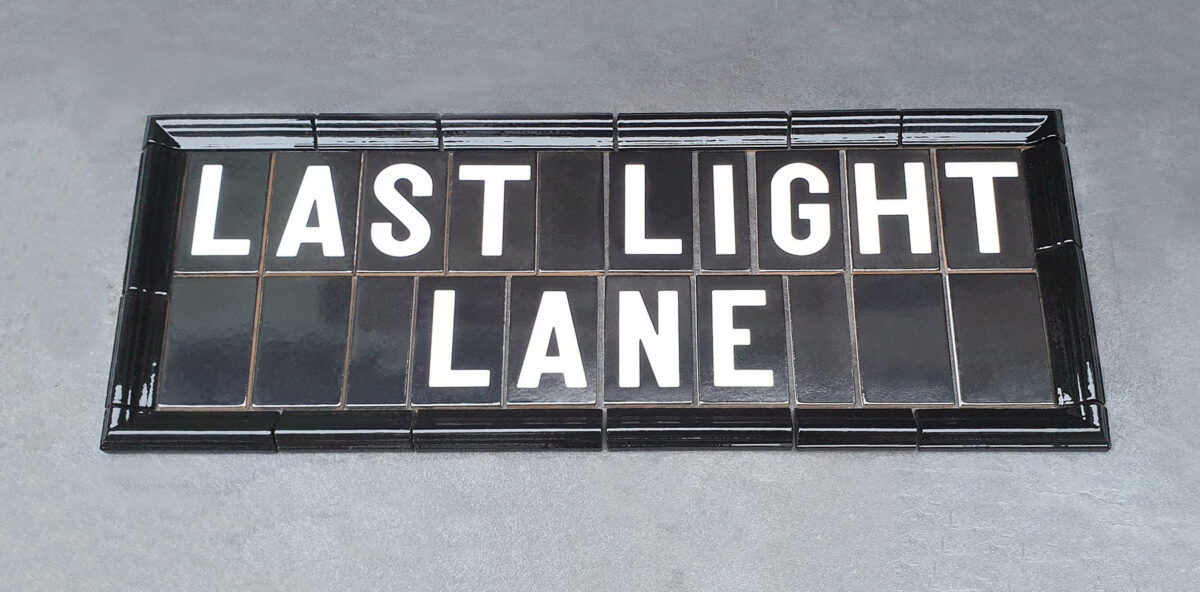
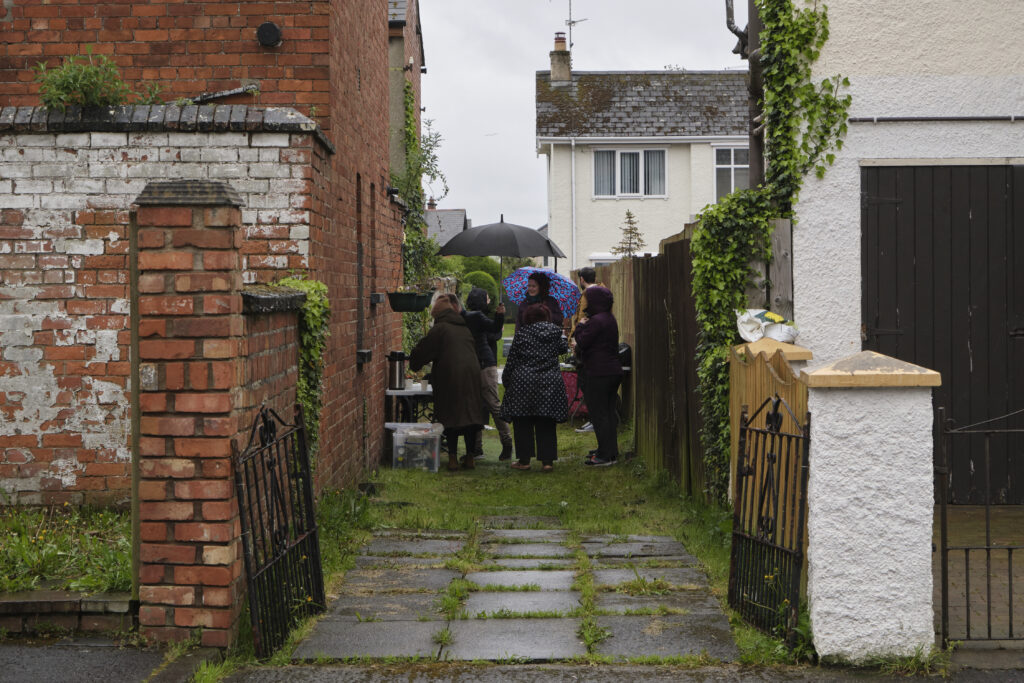
Back in 2020, we were contacted by Carl in the north of the city. They co-own (with one other house) a short alley off Glandore Avenue, known informally as Last Light Lane because it gets the last light of a sunny day. They had worked hard to ensure it was safe for public access. We celebrated Bealtaine Eve here in 2024, getting to know Carl, his brother Nathan and other local residents from the the Restore Glandore ATC group.
One of the projects the group had been advocating for was the reintroduction and restoration of the traditional Belfast Street Signage on surrounding streets, but they had struggled to get the support to make it happen. They had already formed a research partnership with an artisan tile maker, to explore and revive the lost process of making these much-loved signs.
Having already been thinking to create a beautiful sign for a named alley, we saw an opportunity to combine the resident’s dedication to their neighbourhood with a celebration of their role as proud custodians of Last Light Lane.
To bring this vision to life, we commissioned expert tile maker, Terry Cartin Ceramics to craft a sign for Last Light Lane using traditional techniques – screen-printed, ceramic-glazed tiles. There was quite a bit of R&D work to be done around materials and process – sourcing and matching the correct font, colours and moulding. Terry also had to take into consideration how, if required, the process could be scaled up or replicated for producing more signs. Amazingly, the cost estimate per sign using these artisan processes isn’t much different to the costs of the machined replica signs produced by Armatile which can be seen across the city.
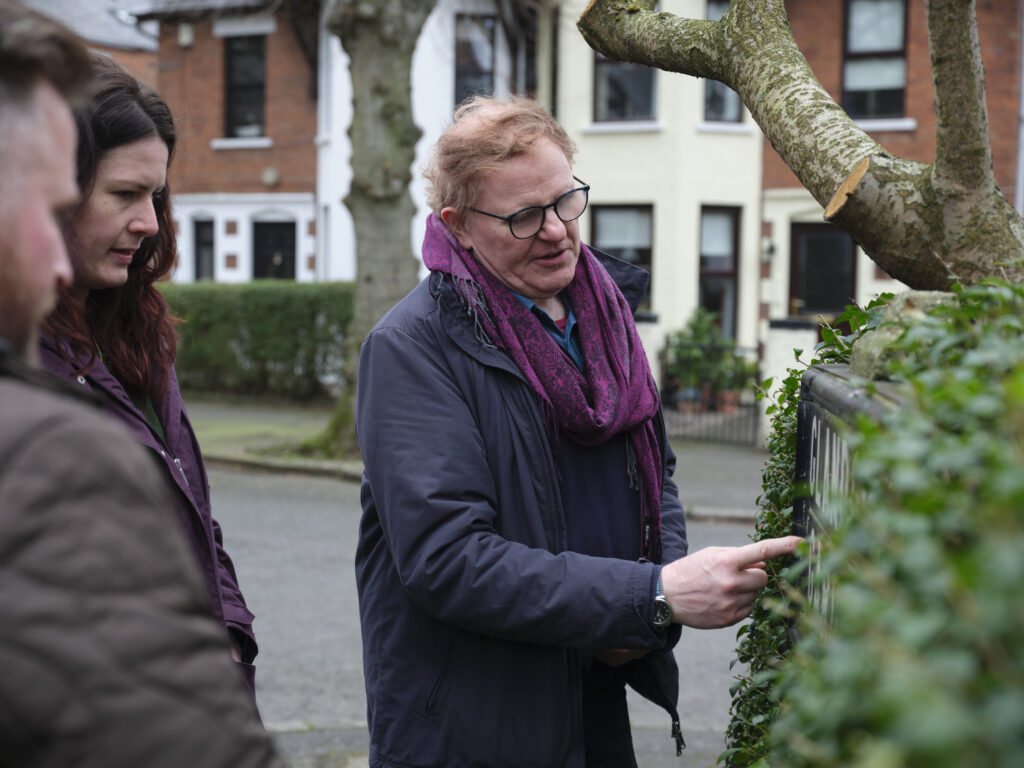
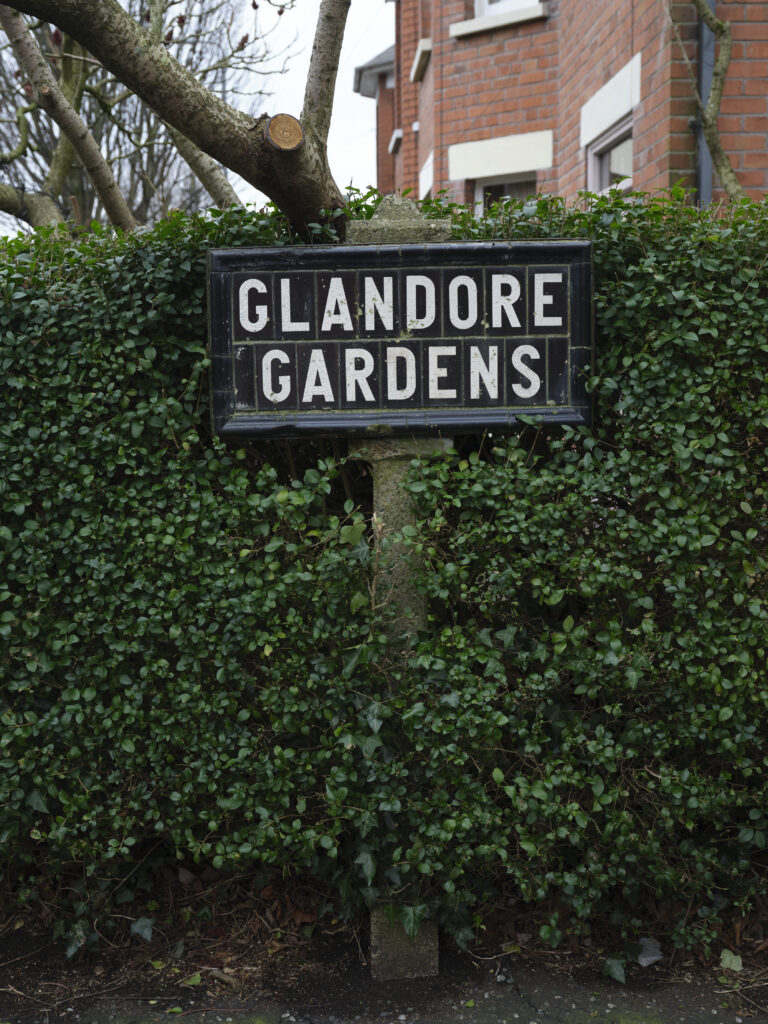
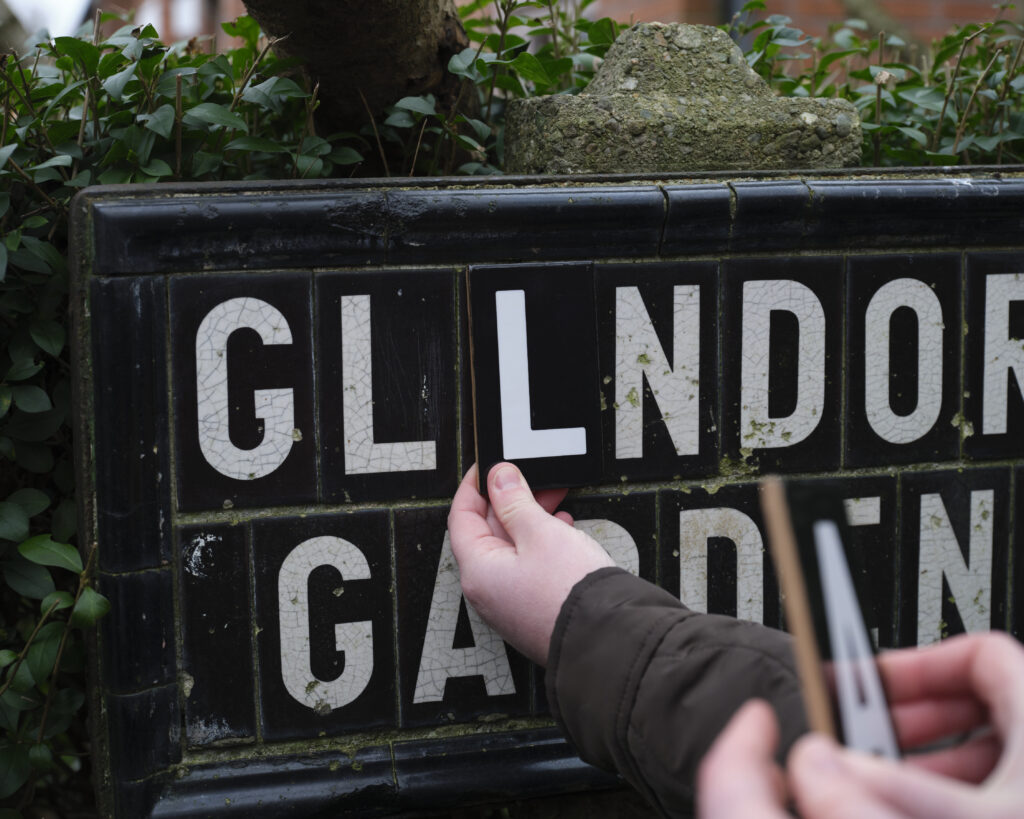
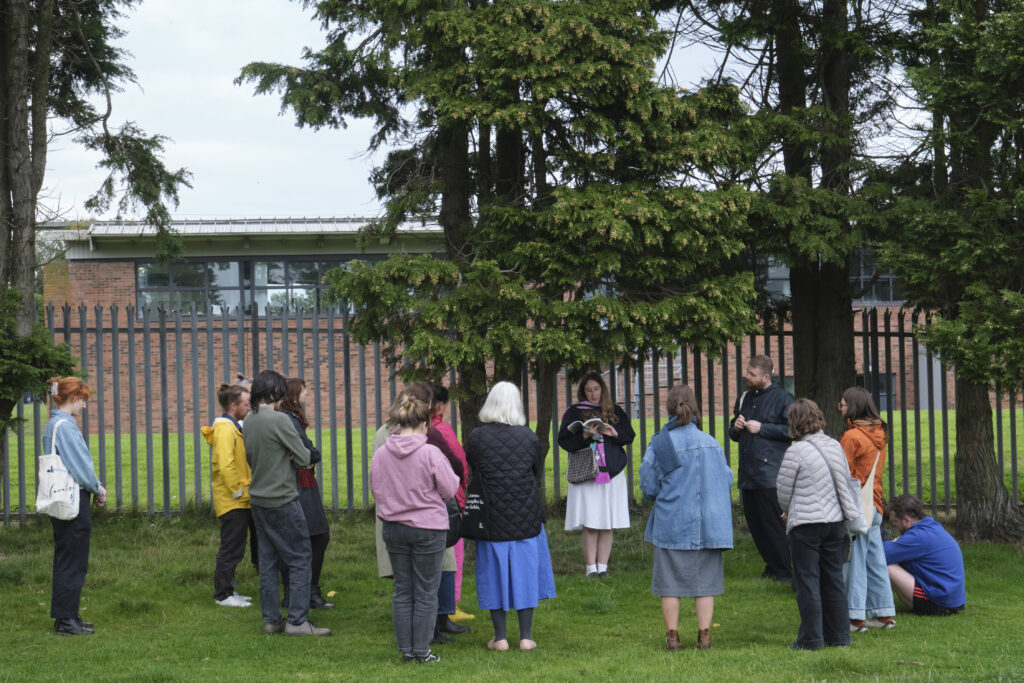
In January 2025, Terry travelled up to Belfast to drop off the precious tiles and talk us though his production and design process. We did a walk about the area to compare and contrast with the few remaining traditional Victorian signs.
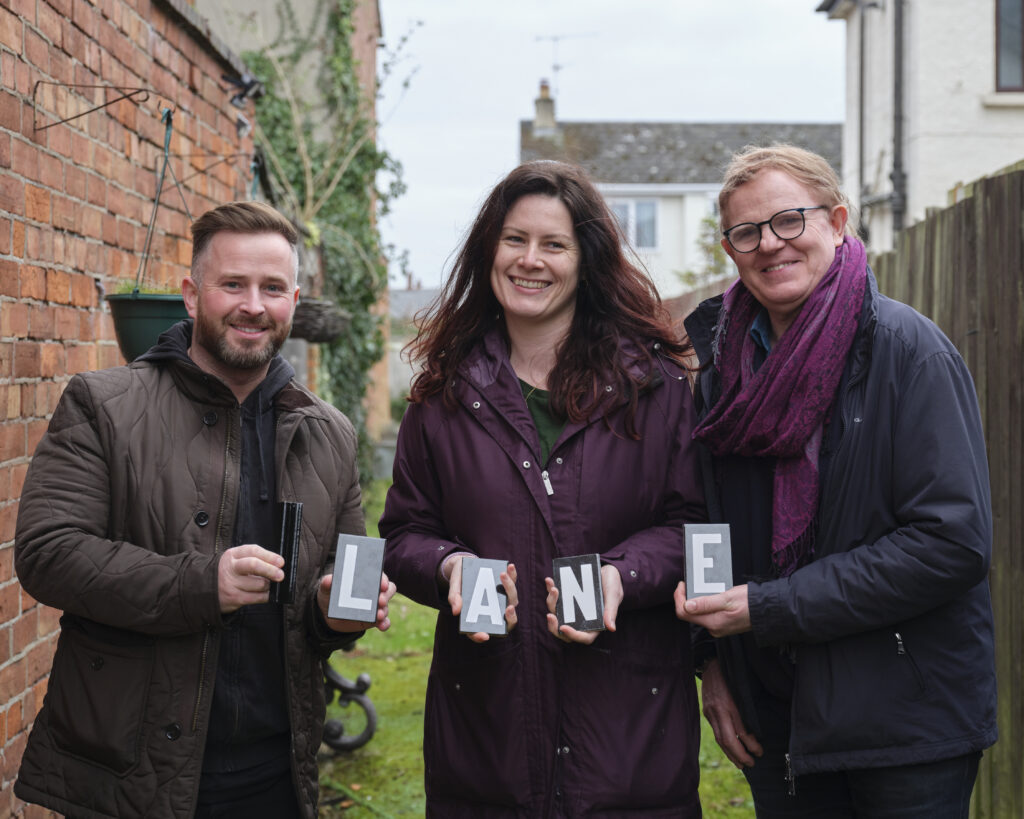
Ceramic signage must, by its nature, be part of a structure or be permanently secured to it, so fitting the sign was another hurdle – especially since there were no spares in case of breakage! For safety, installation was post-ponded for a few months till a spell of warmer weather would allow for proper drying of the adhesive. But here we are finally – a sign for Last Light Lane in place at last!
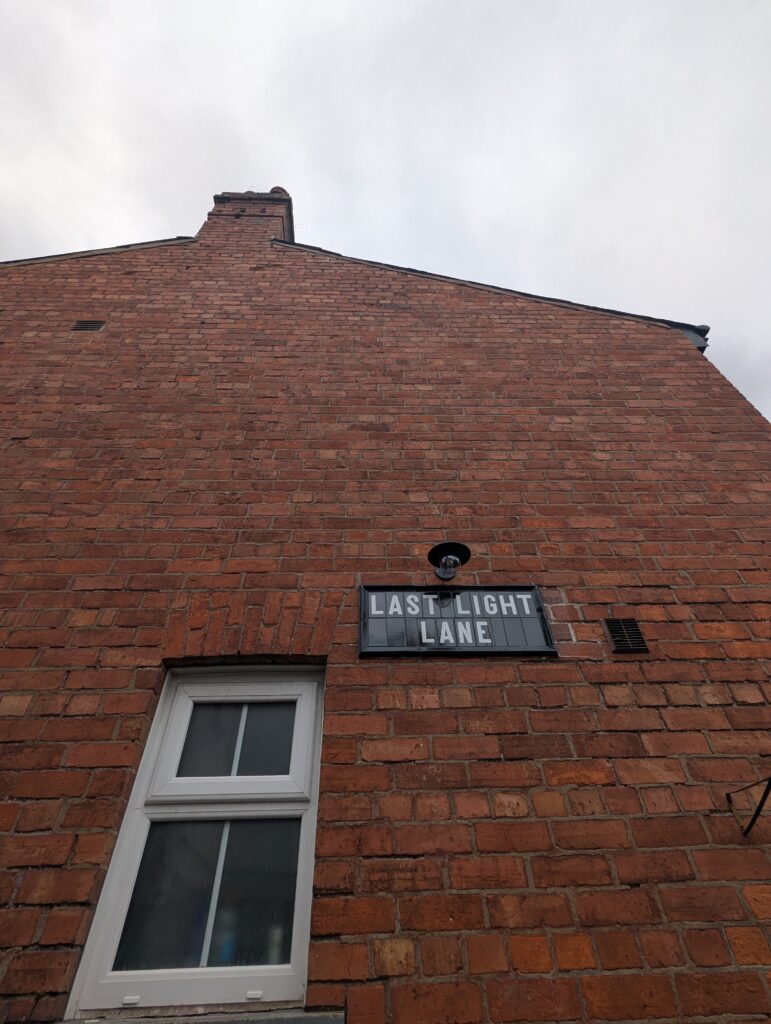
This decision to commission this street sign was an investment in quality and traditional craftsmanship and the preservation of heritage skills. Street furniture and signage play a strategic role in urban planning, placemaking, and community wellbeing. How we choose to preserve (or not) these often-overlooked details of the city, raises questions about our future heritage: What will last to tell these story in the next hundred years? Is it the mass produced utilitarian alternatives that are increasingly seen in the city, or something that is handcrafted, rooted in tradition and reflective of Belfast’s identity? Can we apply the same thinking to the alleys themselves? What functions might they serve in another 100 years and how do we preserve this heritage for future generations?