Categories
Gatherings Journal

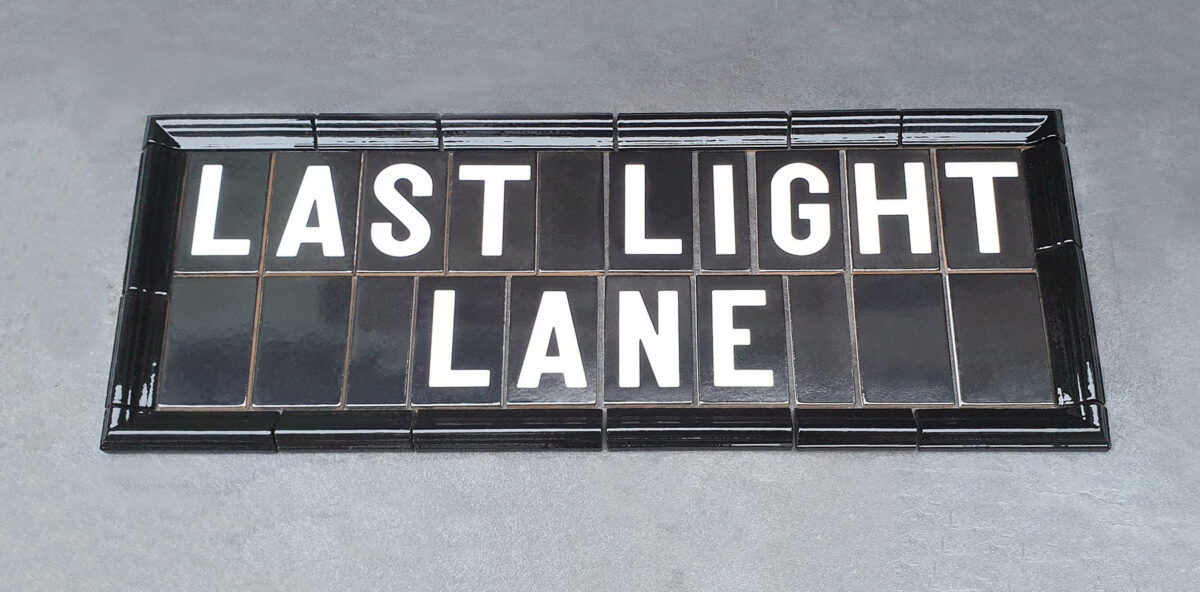
New Heritage on Last Light Lane 

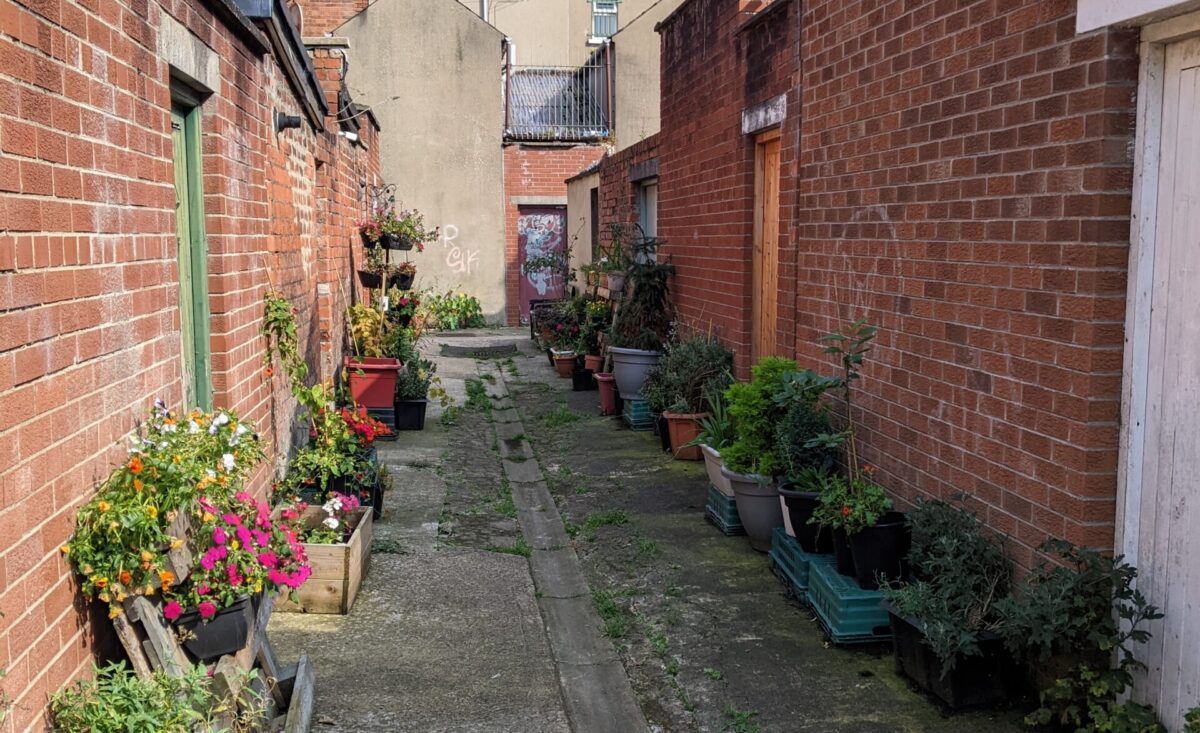
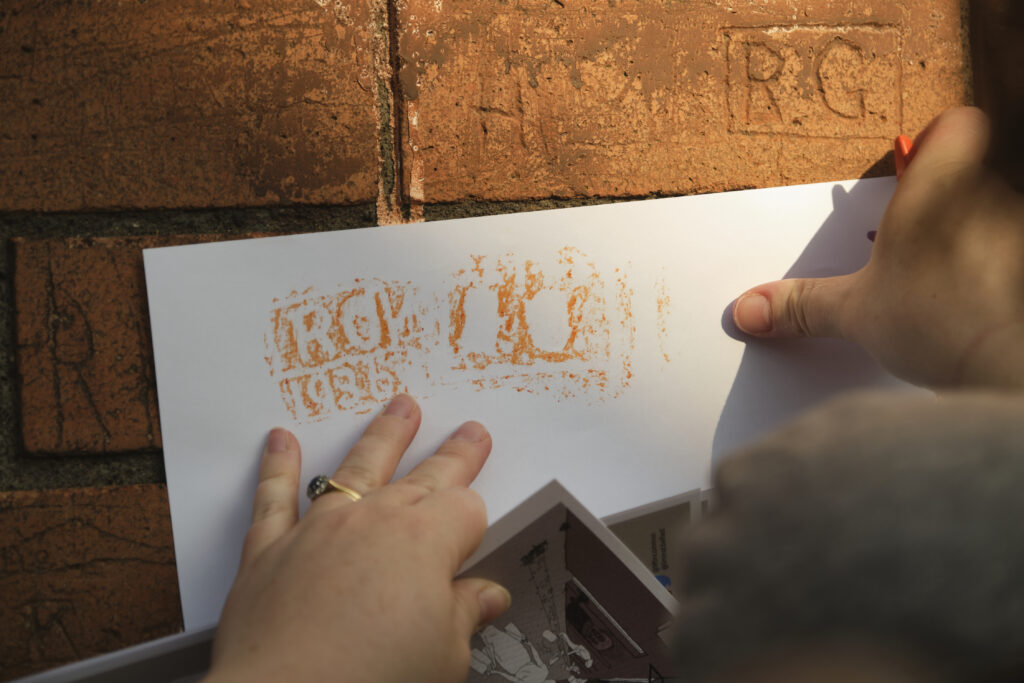
Belfast’s alleyways are a legacy of the the city’s industrial heritage, designed as shared rights of way for landowners and tenants. What remains of our Victorian heritage makes up some of the most beautiful architectural details in the city, from ornate street-lamps, beautiful red brick buildings and iconic street signs. In the alleys over the past two hundred-ish years, boundaries have become blurred and land ownership is inconsistent from house to house, even on the same street. However look closely and there are still signs of the people who have occupied these spaces before us – blocked up coal shoots, fixing and fittings, initials and dates scratched into red bricks
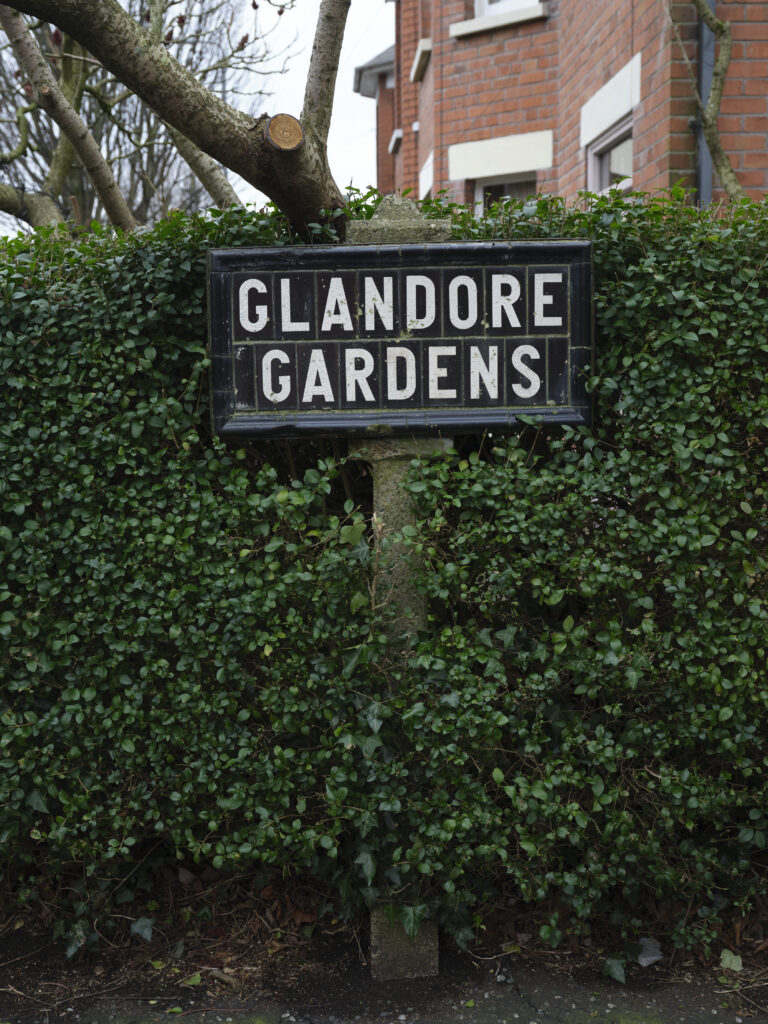
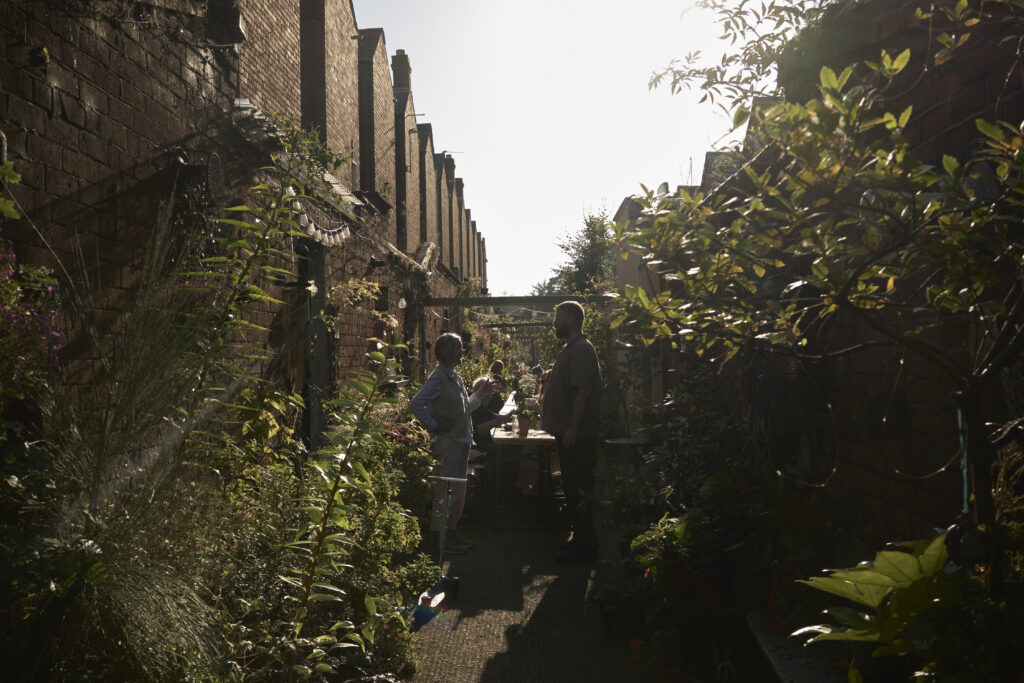
Back in 2020, we were contacted by Carl in the north of the city. They co-own (with one other house) a short alley off Glandore Avenue, known informally as Last Light Lane because it gets the last light of a sunny day. They had worked hard to ensure it was safe for public access. We celebrated Bealtaine Eve here in 2024, getting to know Carl, his brother Nathan and other local residents from the the Restore Glandore ATC group.
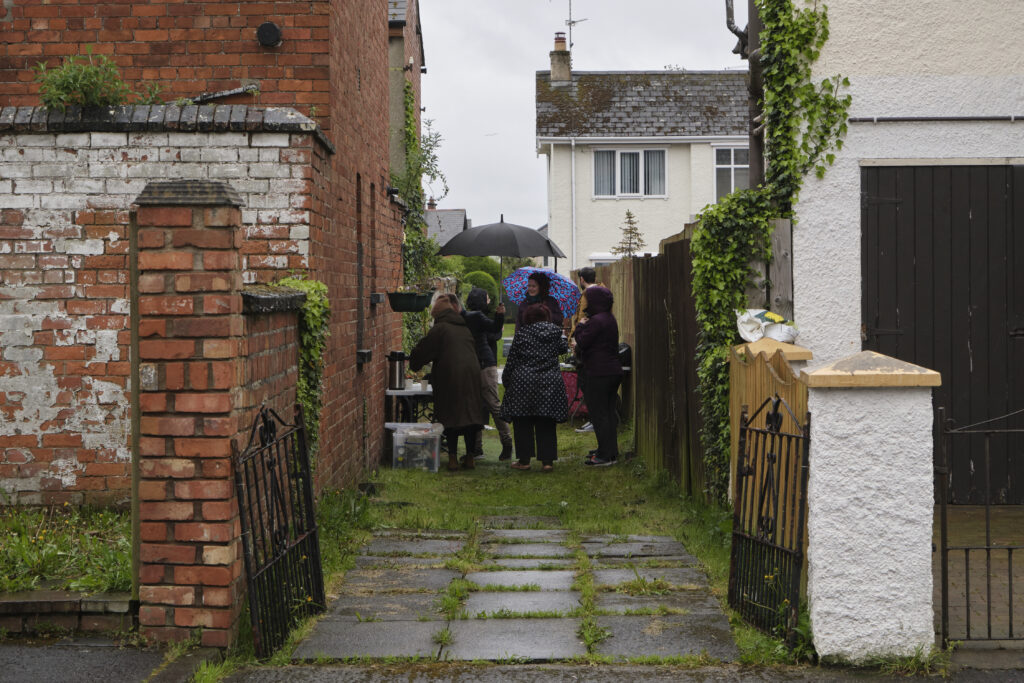
A not so sunny Bealtaine in Last Light Lane 2024

One of the projects the group had been advocating for was the reintroduction and restoration of the traditional Belfast Street Signage on surrounding streets, but they had struggled to get the support to make it happen. They had already formed a research partnership with an artisan tile maker, to explore and revive the lost process of making these much-loved signs.

Having already been thinking to create a beautiful sign for a named alley, we saw an opportunity to combine the resident’s dedication to their neighbourhood with a celebration of their role as proud custodians of Last Light Lane. 

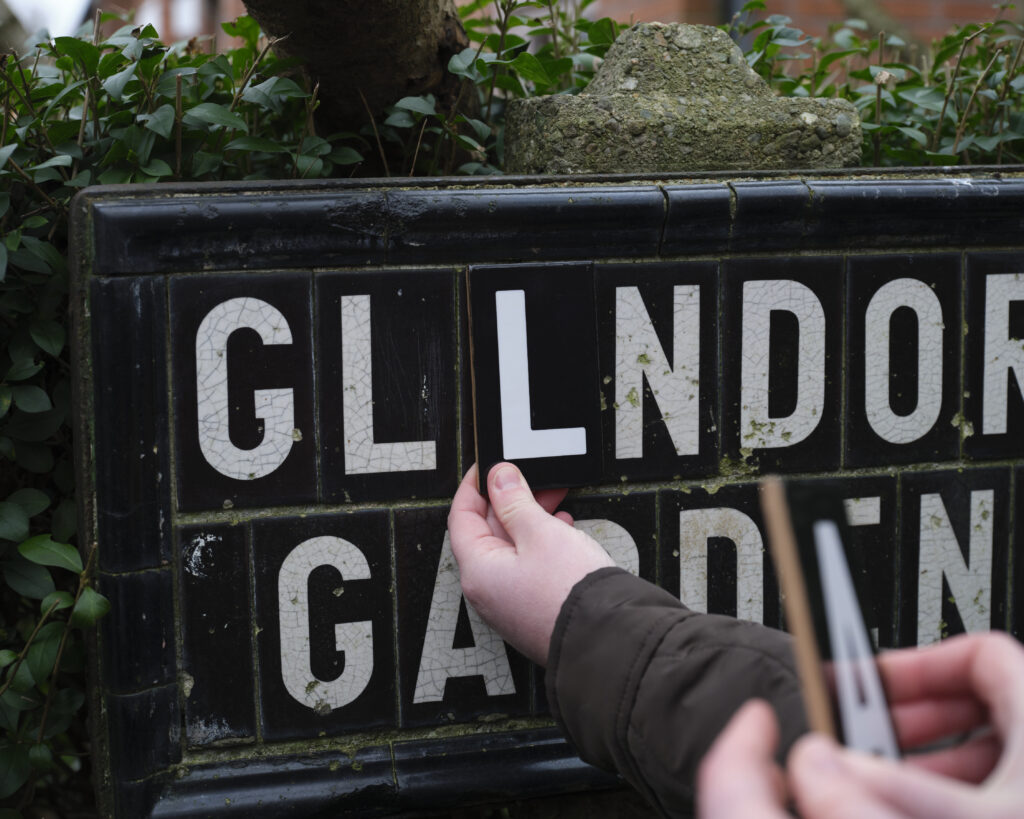
To bring this vision to life, we commissioned expert tile maker, Terry Cartin Ceramics to craft a sign for Last Light Lane using traditional techniques – screen-printed, ceramic-glazed tiles. There was quite a bit of R&D work to be done around materials and process – sourcing and matching the correct font, colours and moulding. Terry also had to take into consideration how, if required, the process could be scaled up or replicated for producing more signs. Amazingly, the cost estimate per sign using these artisan processes isn’t much different to the costs of the machined replica signs produced by Armatile which can be seen across the city. 
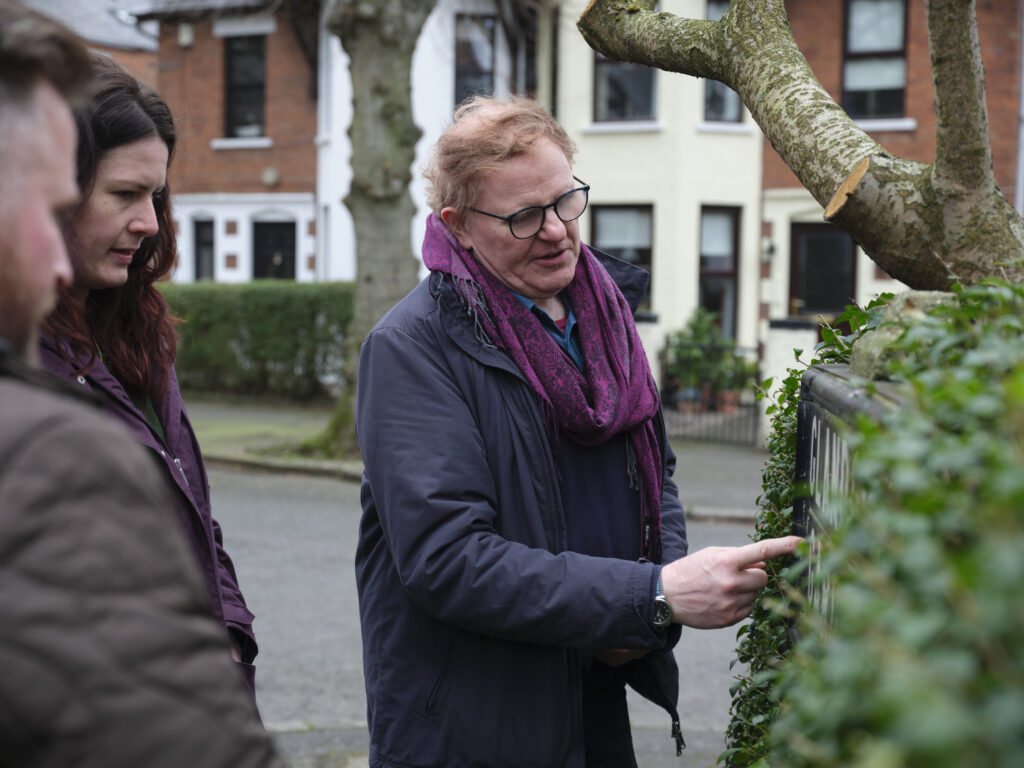
In January 2025, Terry travelled up to Belfast to drop off the precious tiles and talk us though his production and design process. We did a walk about the area to compare and contrast with the few remaining traditional Victorian signs.
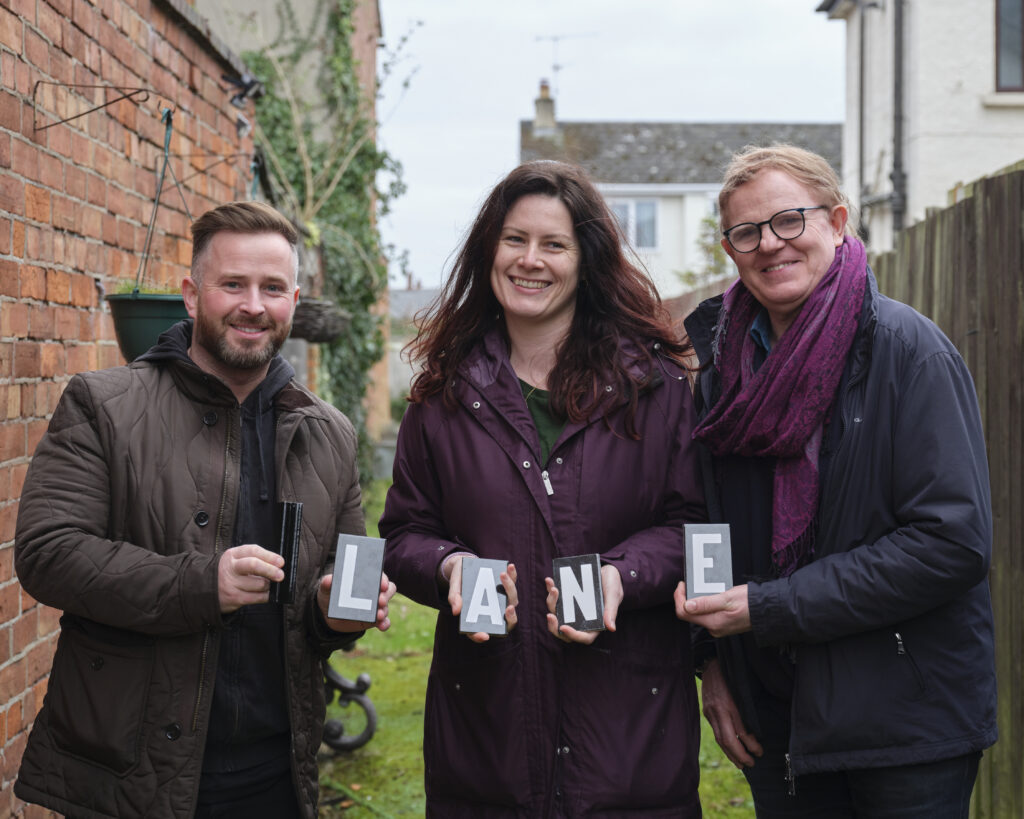
Carl, Meadhbh & Terry with the tiles when they arrived in Belfast

Ceramic signage must, by its nature, be part of a structure or be permanently secured to it, so fitting the sign was another hurdle – especially since there were no spares in case of breakage! For safety, installation was post-ponded for a few months till a spell of warmer weather would allow for proper drying of the adhesive. But here we are finally – a sign for Last Light Lane in place at last! 
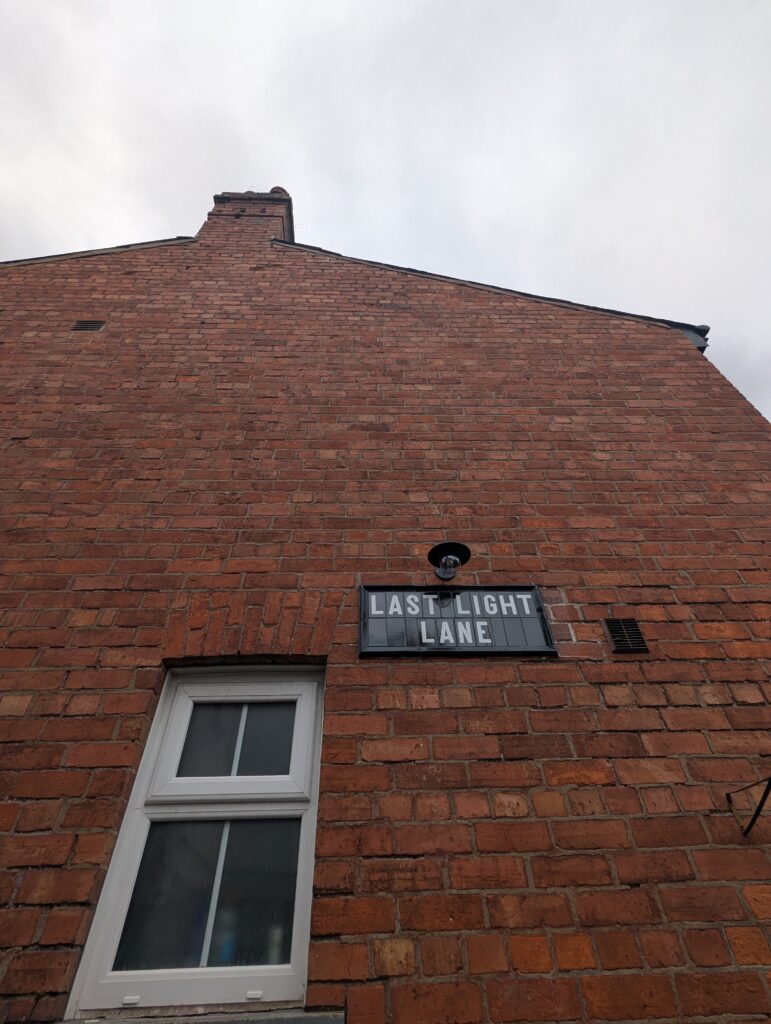
This decision to commission this street sign was an investment in quality and traditional craftsmanship and the preservation of heritage skills. Street furniture and signage play a strategic role in urban planning, placemaking, and community wellbeing. How we choose to preserve (or not) these often-overlooked details of the city, raises questions about our future heritage: What will last to tell these story in the next hundred years? Is it the mass produced utilitarian alternatives that are increasingly seen in the city, or something that is handcrafted, rooted in tradition and reflective of Belfast’s identity? Can we apply the same thinking to the alleys themselves? What functions might they serve in another 100 years and how do we preserve this heritage for future generations?
Categories
Events Gatherings

Feeding Houses

a Co-Designed Neighbourly Dinner at Ardmore-Rossmore Alley

Feeding Houses was a beautiful part of our alleyway commission with artist and chef Phillip McCrilly. Knowing Phillip’s thoughtful, considered and always delicious work, and knowing he lived on the lovely Ardmore-Rossmore Alley in South Belfast, we invited him to create a response to our Lughnasadh (harvest) theme of ‘Feast’.

Sharing food – a cup of tea, a slice of cake – is often the first step in building an alleyway community initiative with neighbours. So we loved the idea of a collaborative alley meal. Phillip, whose practice explores the transgressive and interdisciplinary possibilities of food and hospitality, was immediately full of ideas. He thought our commission would sit well alongside another project he was developing through the British Art Network, where he planned to collaborate with Moonhyung Lee, chef at Silo (the world’s first zero-waste restaurant), and curator Cecelia Graham.

Phillip said:

“Since March 2020, the residents of Rossmore and Ardmore Avenue have organically collaborated to repurpose our alleyway into a shared community garden. This situation offered amazing potential for a community feast, and I wanted to collaborate with as many people as possible.”

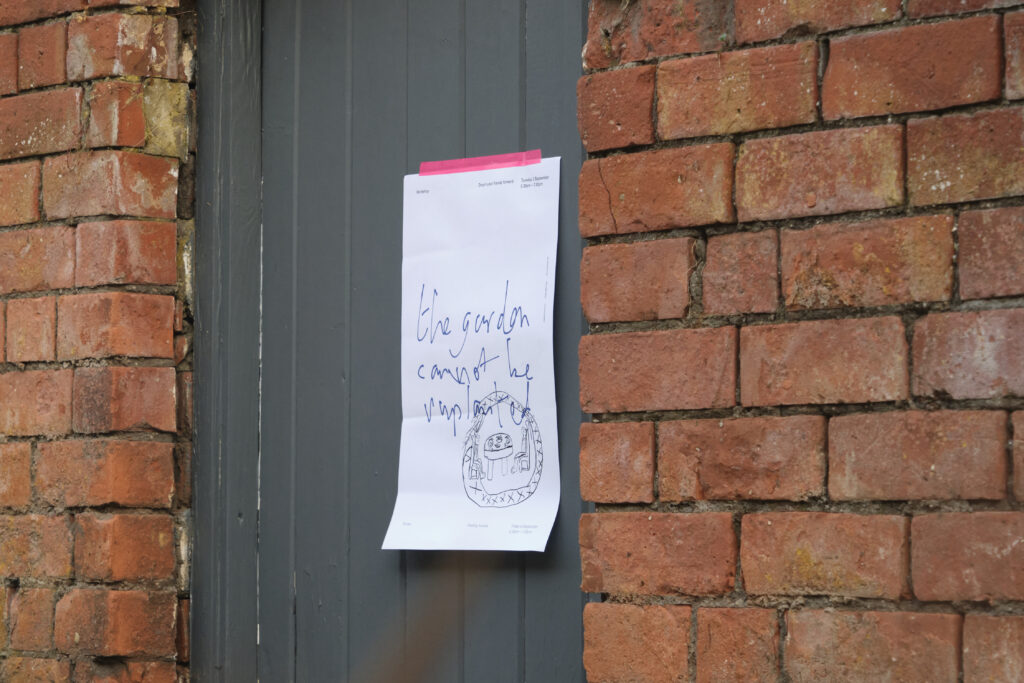
The proposal he returned with was titled This Garden Cannot Be Unplanted, a response that wove together the histories of domestic hospitality, reciprocal and alternative economies, and the legacy of grassroots food initiatives.

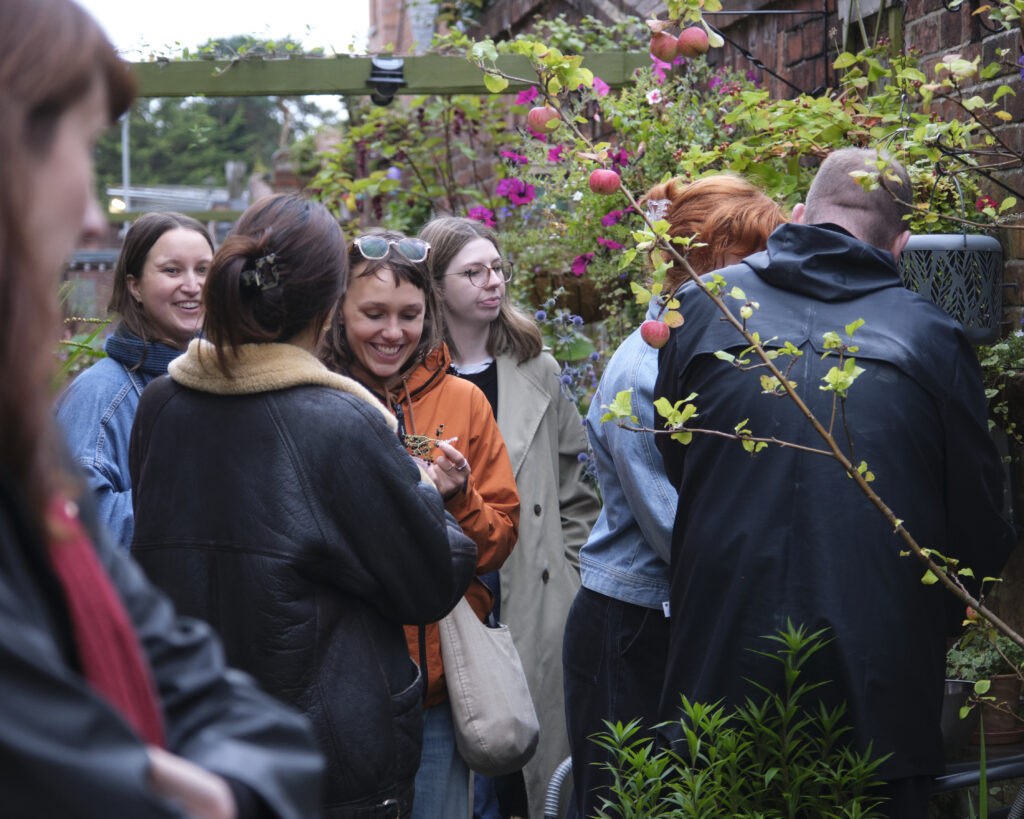
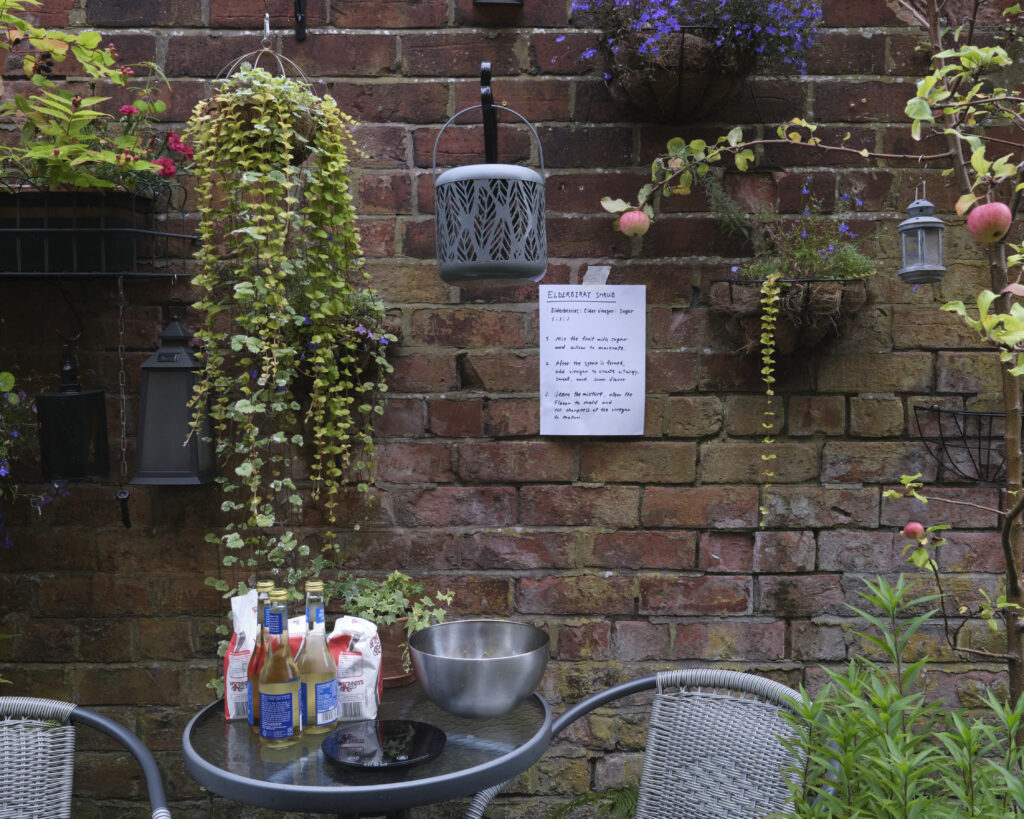
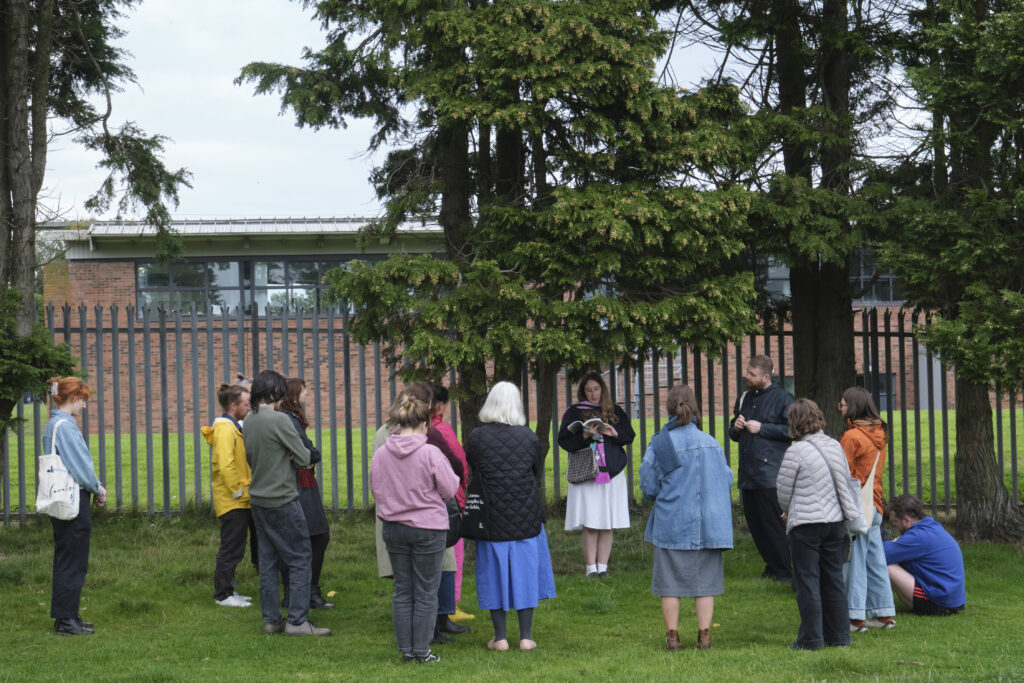
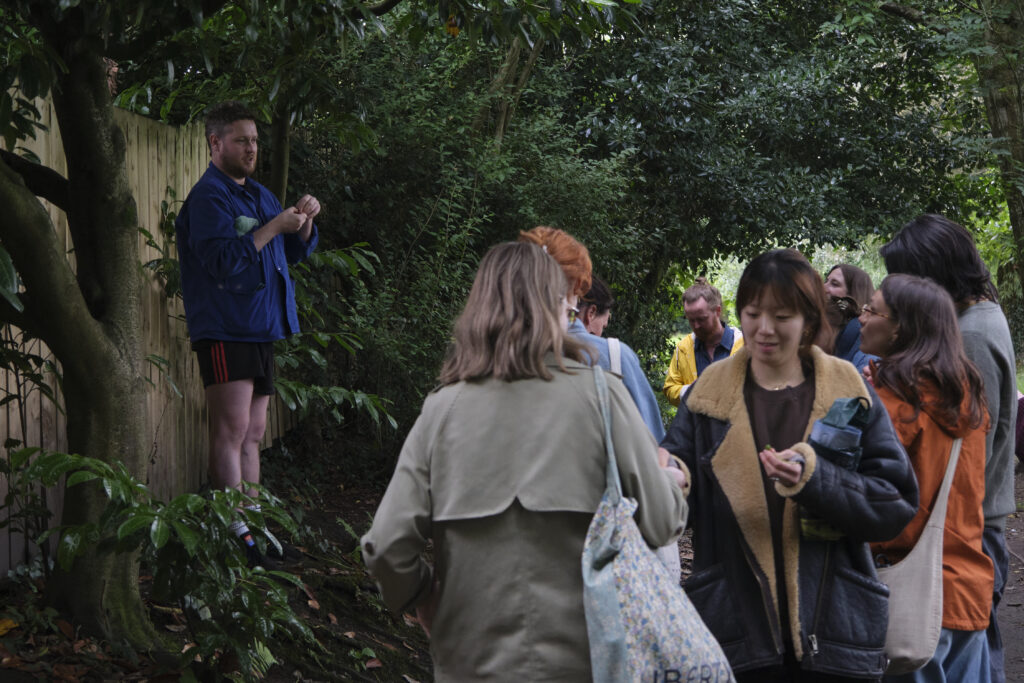
The first part of the project was a public workshop on 3rd September called Dream Your Friends Forward. Participants took part in neighbourly foraging, walking together to Cherryvale Playing Fields to gather seasonal ingredients, which they later used to create batches of syrups back in the alley.

“Throughout the workshop, we discussed sustainable foraging practices that encourage us to harvest ethically, and to think about how this slow and thoughtful act creates the foundation for empathetic and neighbourly approaches to artistic practice.”
– Cecelia Graham

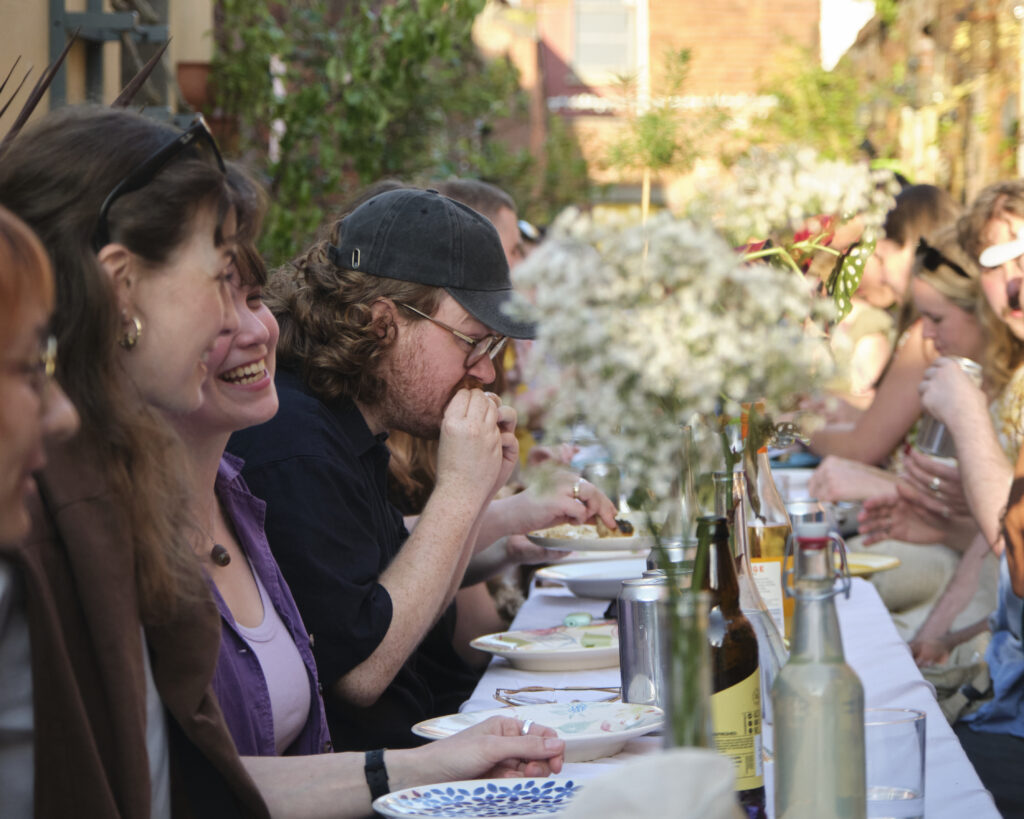
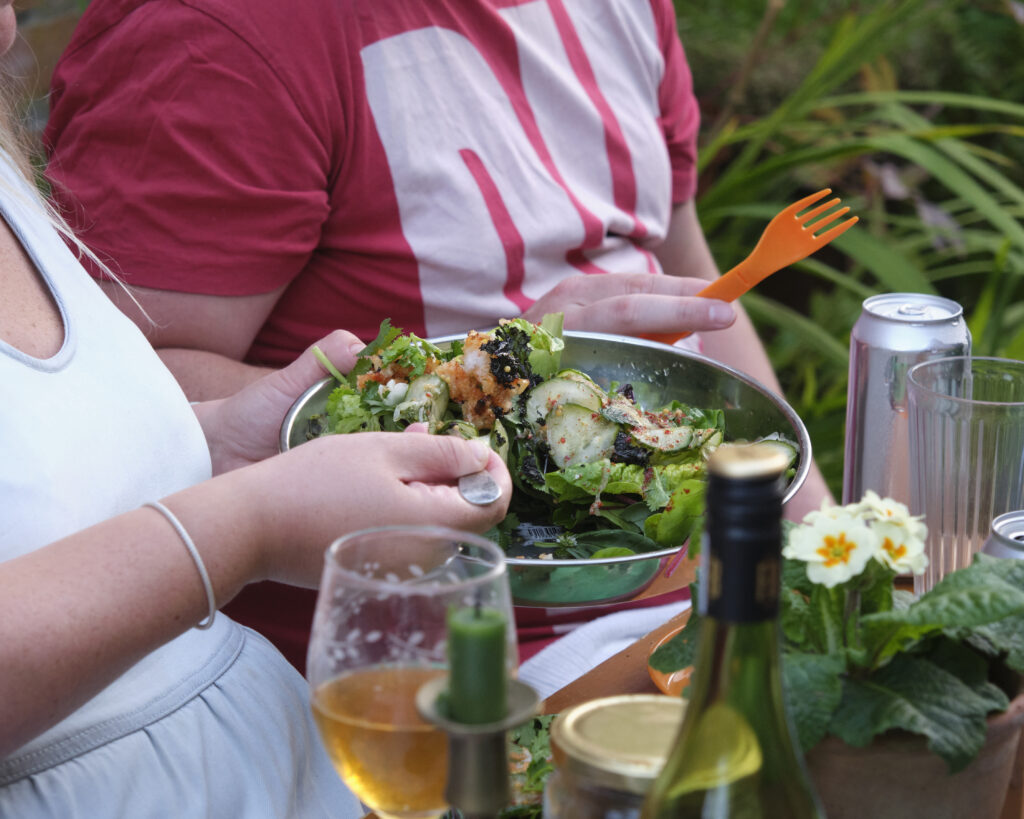
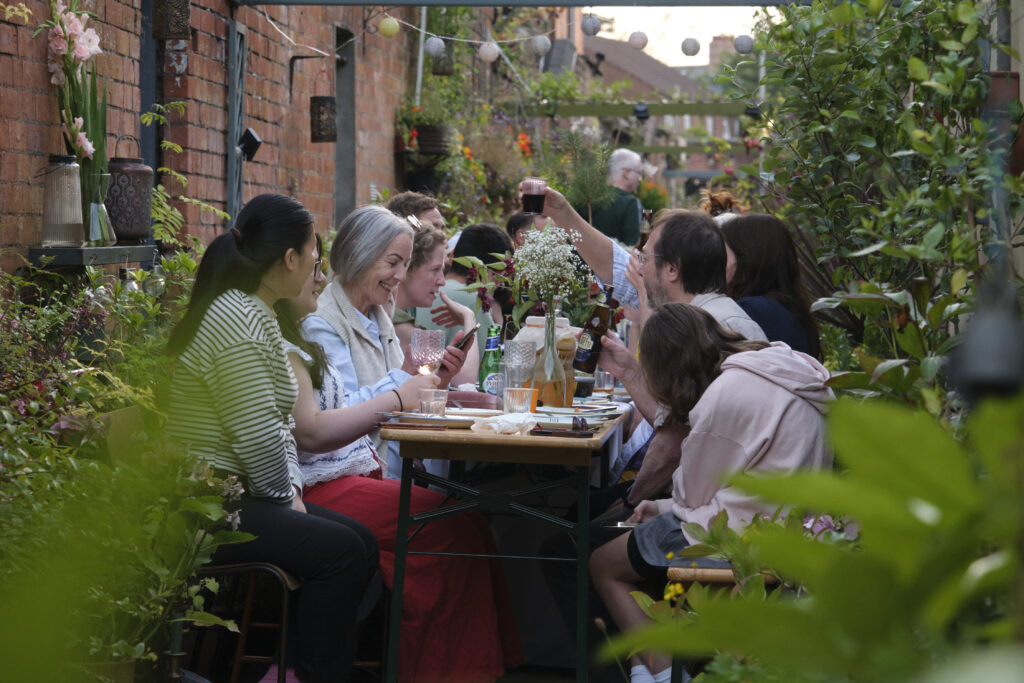
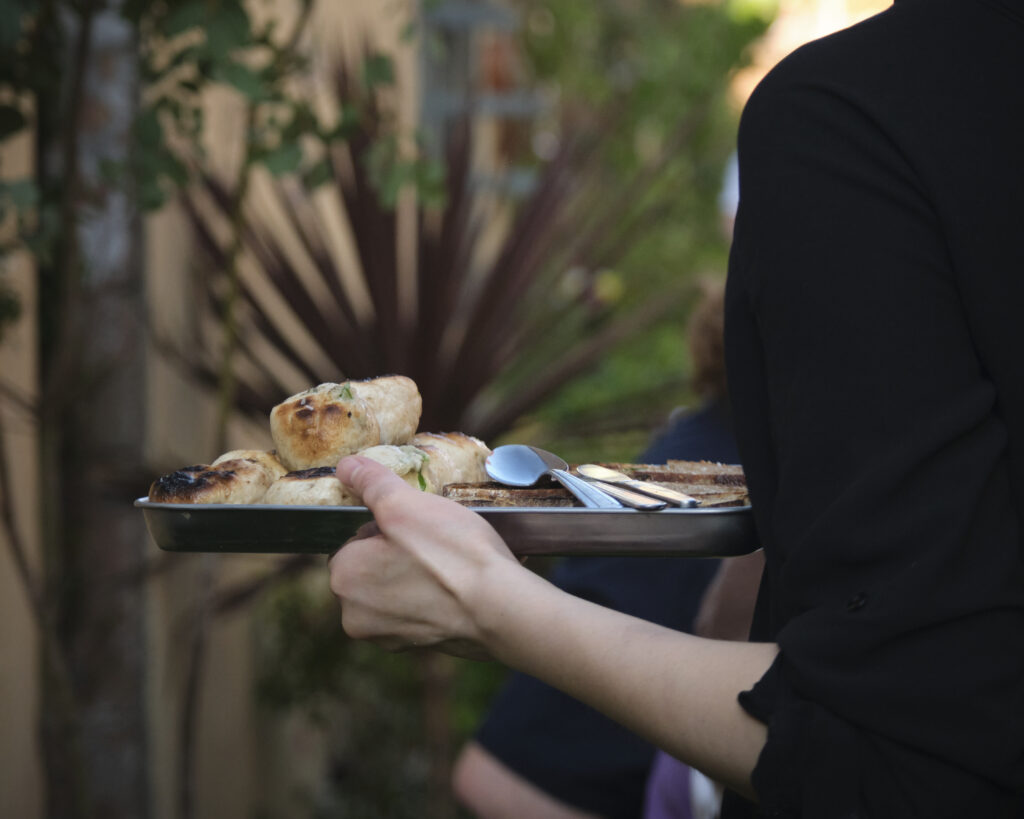
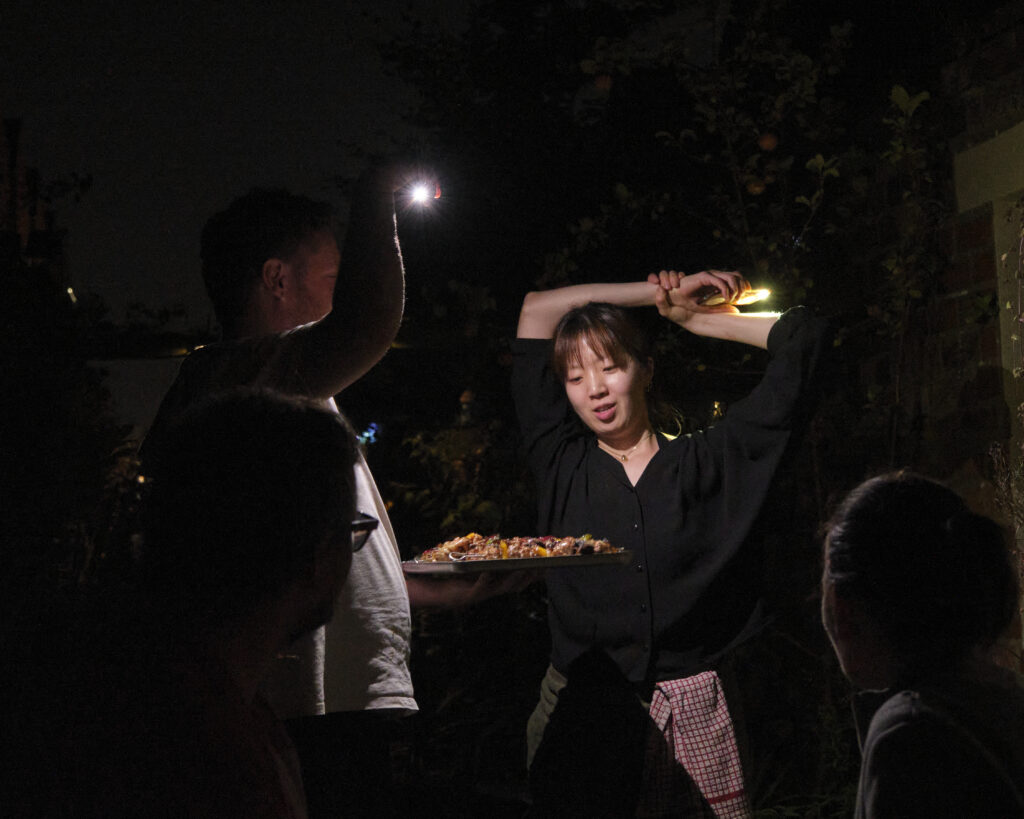
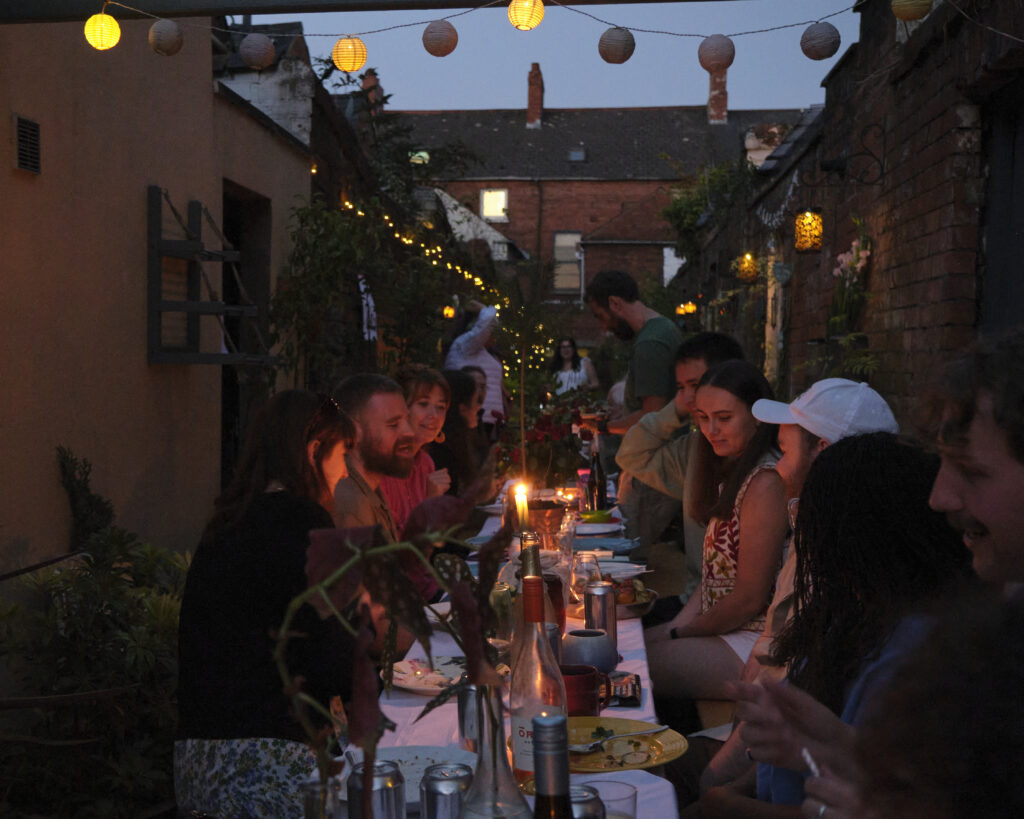
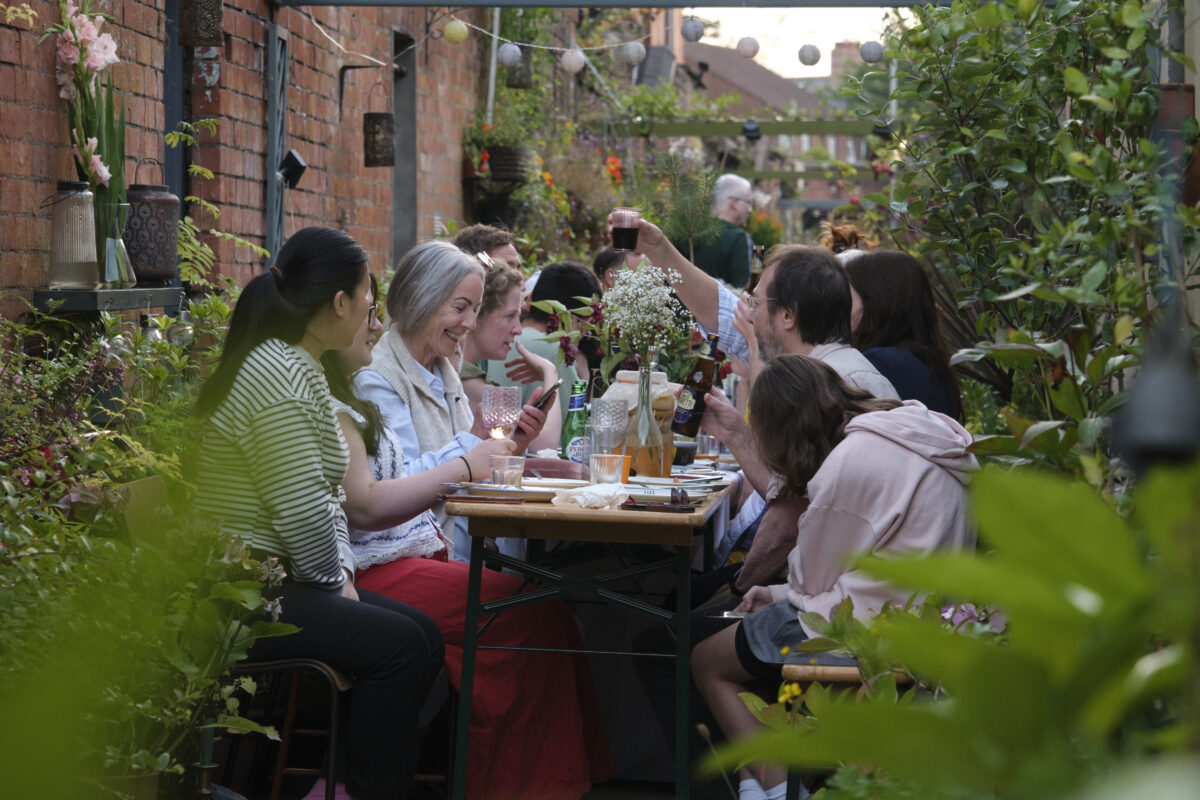
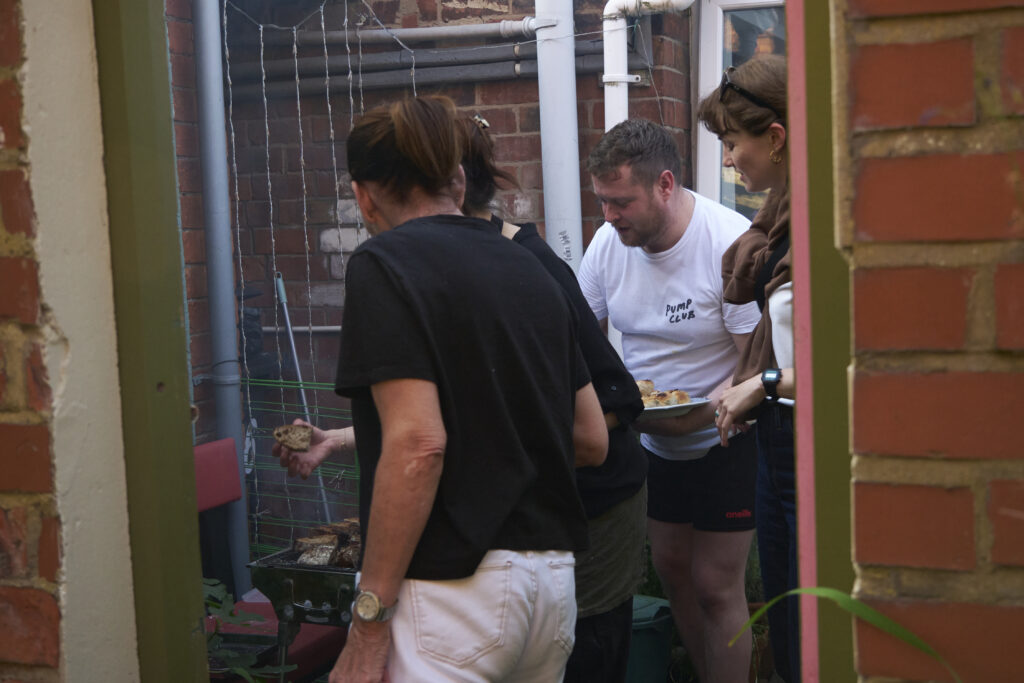
The second part was Feeding Houses, an alleyway dinner for around 55 friends and neighbours, inspired by an Irish tradition to create community through sharing food. It was held on Friday 6 September on a (luckily) gloriously sunny evening. Everyone at the table had contributed something: plates, flowers, cutlery, even rarely used kitchen tools donated for the effort. Over the week, neighbours brought along surplus ingredients and equipment – the kinds of things often left at the back of cupboards, forgotten or overlooked. Phillip and Moon used their skills in Phillip’s home kitchen to turn what might have been waste into an extraordinary shared meal. Each bite was a delight, and guests enjoyed the food, the drinks and the company until night fell, with the final courses served by torchlight.

Here’s what one neighbour had to say:

“A beautiful event in the Rossmore/Ardmore alleyway, masterminded by artist Phillip McCrilly. Foraging ingredients from the local area and also from neighbours’ kitchens, Phillip and collaborator Moonhyung Lee created course after course of delicious food – in the process reducing waste and breathing new life into unloved items that may otherwise have been discarded. This was a truly inspiring and memorable evening. It taught me a lot about the power of engaging with your community and the world around us, and what’s possible when we come together.”

Moon’s reflections captured the spirit of the project beautifully:

“Growing up in a city of concrete and having lived in an apartment my whole life, spending time in this alley, where everyone knows each other, was truly enlightening. It highlighted the importance of sharing knowledge, appreciating nature, and building a sense of community through food. During the two days of workshops and the dinner, Phil’s neighbour dropped off fresh vegetables and cooking equipment. Jake went fig leaf foraging for a dish we wanted to try, and the team at Boundary Brewery generously lent us tables, benches and some refreshing beers. It felt incredibly special to be embraced by the community in such a short time. Everyone was eager to lend a hand and offer support.’

Feeding Houses showed how sometimes a meal can nourish the dinners for much longer than one day, how there’s always enough when we share, and when the sun shines in a Belfast alleyway, sure there’s nowhere better!

Categories
Uncategorized

Reflecting Neighbourhoods

A Mirror for Rainbow Alley 

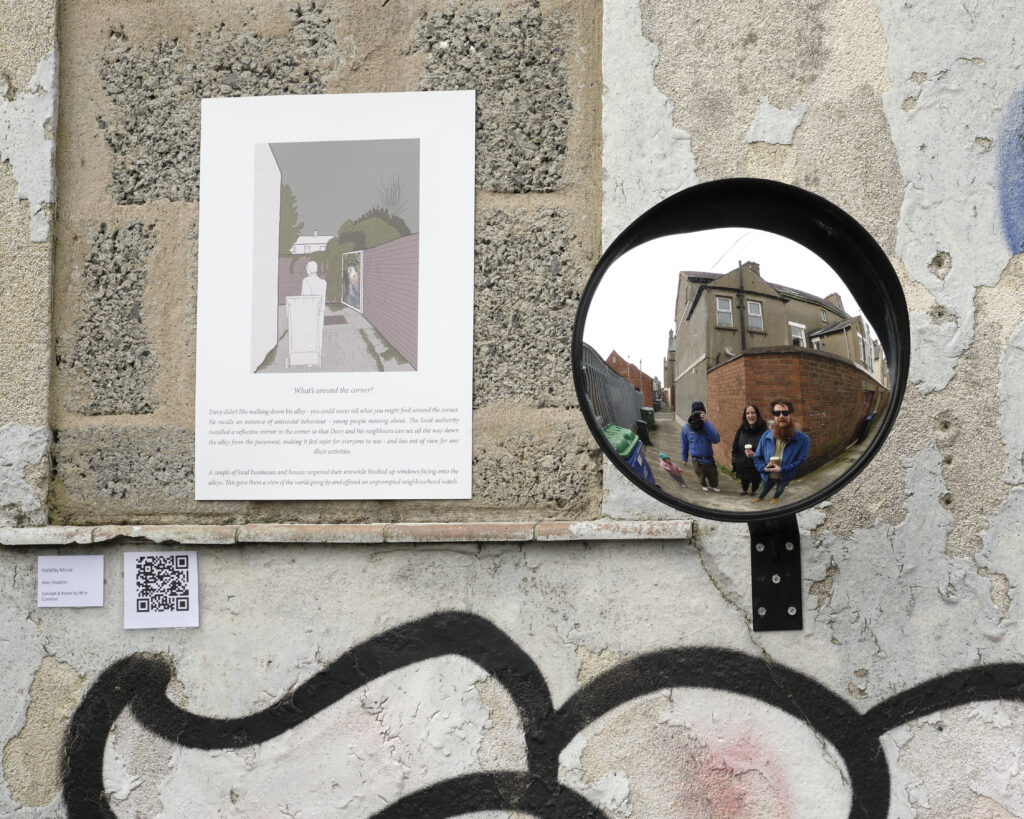
One of the first design ideas to come out of 9ft in Common’s early research in 2020 was using mirrors as a ‘gate-free’ way to improve alley safety. The thinking was simple: a well-placed mirror in the corner could let neighbours see down the alley from the pavement, making the space feel more visible – and less inviting for any anti-social or suspicious behaviour. Much like a traffic mirror for blind spots, which we did in fact try out temporarily in one alley back in 2021.

Early in the Manifesto for the Alleys project, Joanne from Rainbow Alley got in touch to say they was interested in trialling this idea in a specific section of their alley which had been experiencing a range of anti-social problems*. We were excited to explore the concept in a more permanent way, but there was a practical challenge straight away – the original idea involved fixing the mirror to a wall, which wasn’t an option here. That meant going back to the drawing board.

As with all our commissions and interventions, we returned to a set of guiding questions to shape the idea:

  • Is it either beautiful or useful?
  • Is it creative, inspiring and/or challenging?
  • Does it solve a problem or create a social opportunity?
  • Is it replicable — could someone else recreate or build on it in their own alley?
  • Does it still allow access for bins, street cleaners, and other daily use?
  • Is it in context and ‘of a place’?
  • Will its impact be deep or widespread?
  • Will it leave a positive legacy?

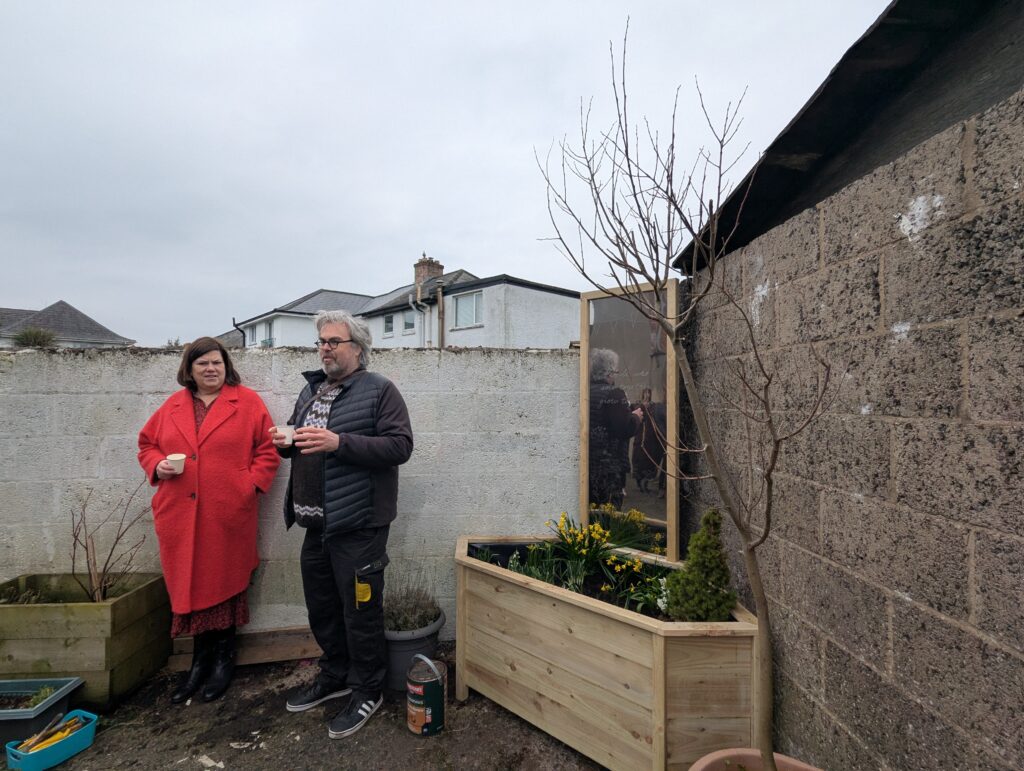
We knew Rainbow Alley’s mirror needed to be more than just functional. Could it reflect both its surroundings and the strong sense of community already rooted in the space? A glass mirror was out – too fragile, too risky. And without a wall, how would it be supported? That’s when Aaron, drawing on his architectural skills, proposed building the mirror into a freestanding planter. We got hold of some promising safety mirror samples and made a few models, but it quickly became clear we’d need more creative input to bring the idea fully to life.

We invited visual artist Jonathan Brennan to explore possibilities with us. One of the materials we’d tested  – a highly polished stainless steel – had reminded us of a printing plate, and we thought it could potentially be etched or engraved by someone with the right skills and tools?

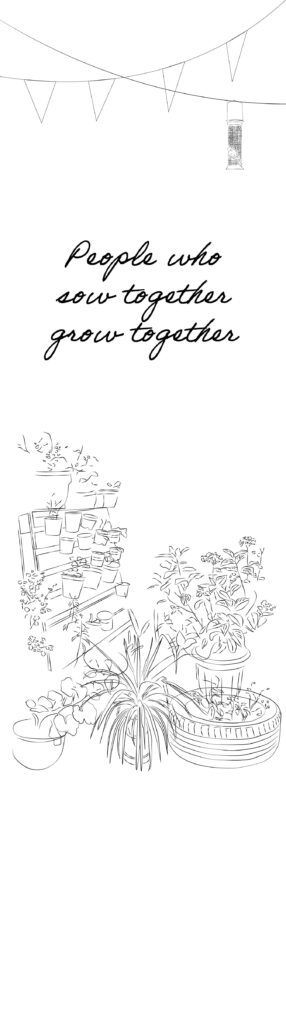
Jonathan visited the alley, talking with neighbours and gathering ideas: from the cross-community potato crops (planted on St. Patrick’s Day and harvested on the Twelfth of July), to the different birds often spotted overhead, and the small highs and lows of everyday alley life. From these conversations, Jonathan developed a series of sketches and drawings that would inform the final engraving design (pictured left).

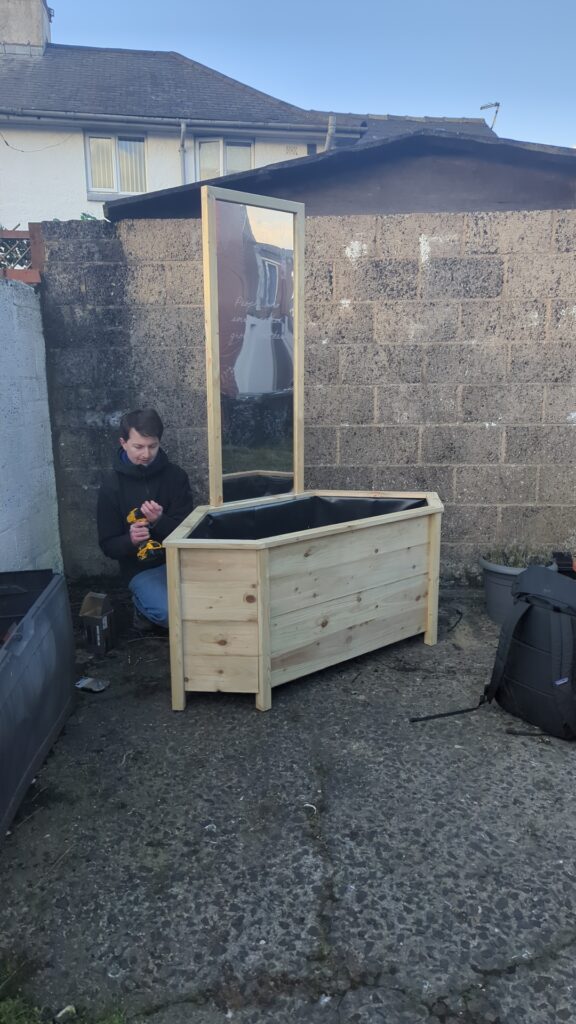
We still needed a skilled maker to realise the physical structure. Luckily, we met Chris Campbell Palmer while he was leading a course at Belfast Tool Library. Chris is an artist and technician with years of experience as a sculpture fabricator, gallery technician and film-set mould maker. He designed and built the sturdy wooden planter and the frame to support the mirror — helping us move from concept to construction.#

Chris putting all the piece together!

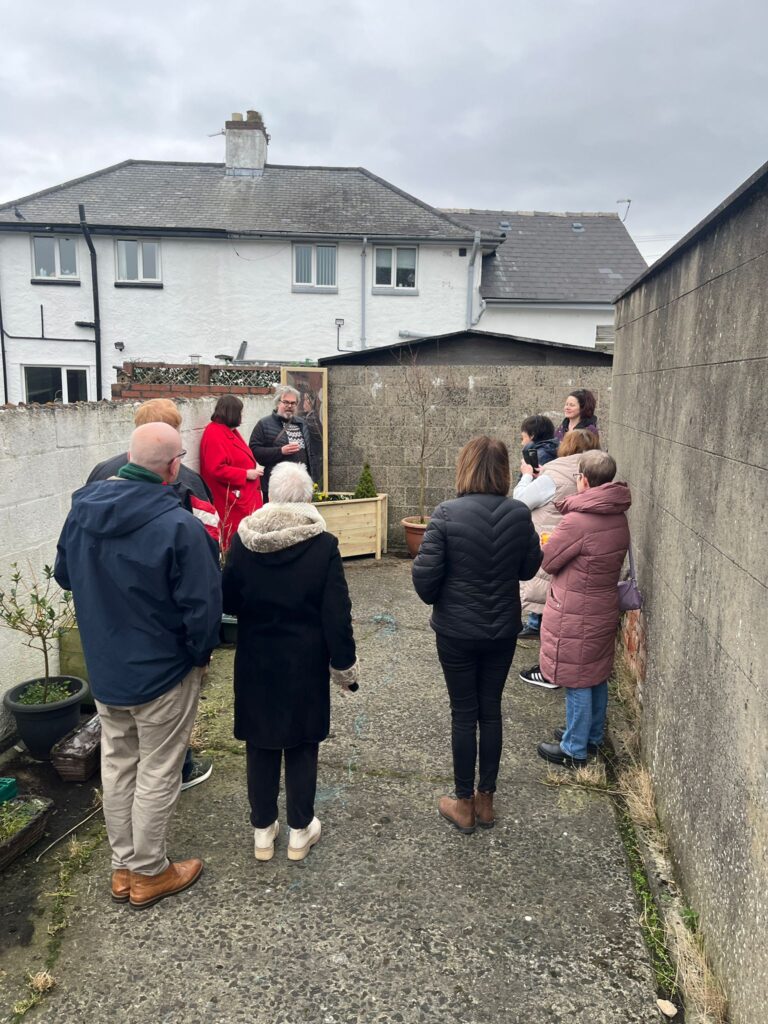
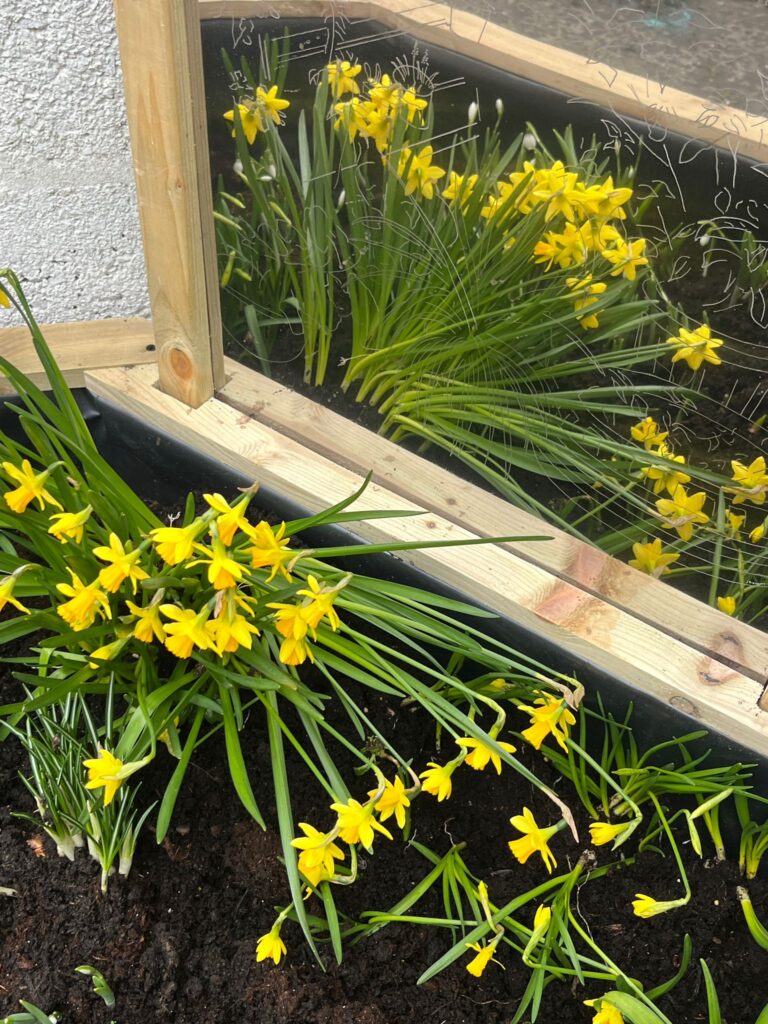
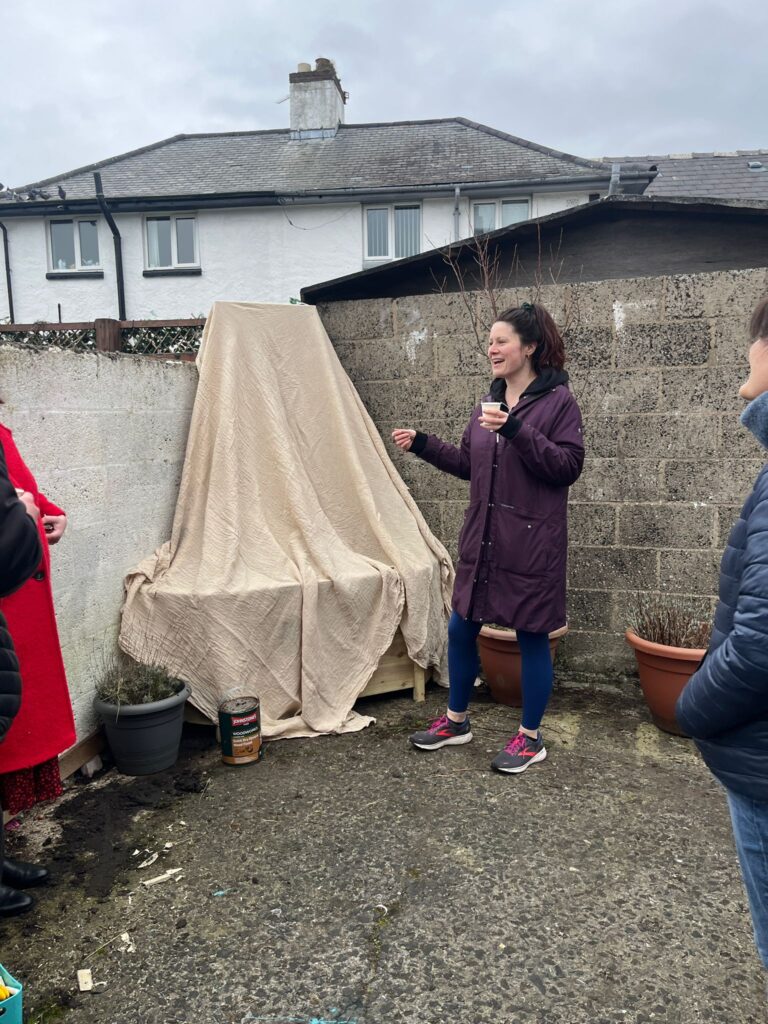
On February 7th 2025 – Imbolc season again, marking a full Celtic calendar year since the Manifesto Project began – we gathered in Rainbow Alley with neighbours to celebrate the finished installation. Jo had filled the planter with beautiful early spring flowers. There was Buck’s Fizz, plenty of chat, and a real sense of pride in what had been made together.

As it says on one of the walls along the alley, and now on the mirror itself:

“People who sow together grow together.”

*note: this section of Rainbow Alley received council gates in March 2025

Categories
Journal

Perspectives from Germany

We love getting different perspectives of people from outside Belfast!
Birgit was undertaking a Masters in Urban Planning at the University of Kassel in Germany and was interested in the ideas of urban commons and unclaimed spaces. Birgit is now a Research Assistant at University of Braunschweig. Photos courtesy of her, taken during her research visit.

Examining the ‘Backside of the City’ – What the Belfast Alleyways taught me about Common Space

When I heard about 9ft in Common and their research in and around the Belfast Alleyways, I soon got drawn to this very special type of urban space. In Germany, where I come from, we hardly have any terraced houses. The single-family home dominates suburban areas, whereas in cities people live in apartment buildings that are up to 5 floors high. We do have a lot of closed backyards, but no alleys. 

This led me to choosing the Belfast Alleyways as a topic for my Master thesis and examining how they offer space for Urban Commons. During my research I soon found out that they are in parts maintained by Belfast City Council, however most of them are not really ‘owned by anybody’. What a great prerequisite for Common Space, I thought. I went for a lot of alleywalks during my research phase in April 2024, I could feel – what Meadhbh told me when we were strolling through the alleys of her neighbourhood – as soon as people start to use these (at first glance very narrow) spaces, they magically appear bigger. 

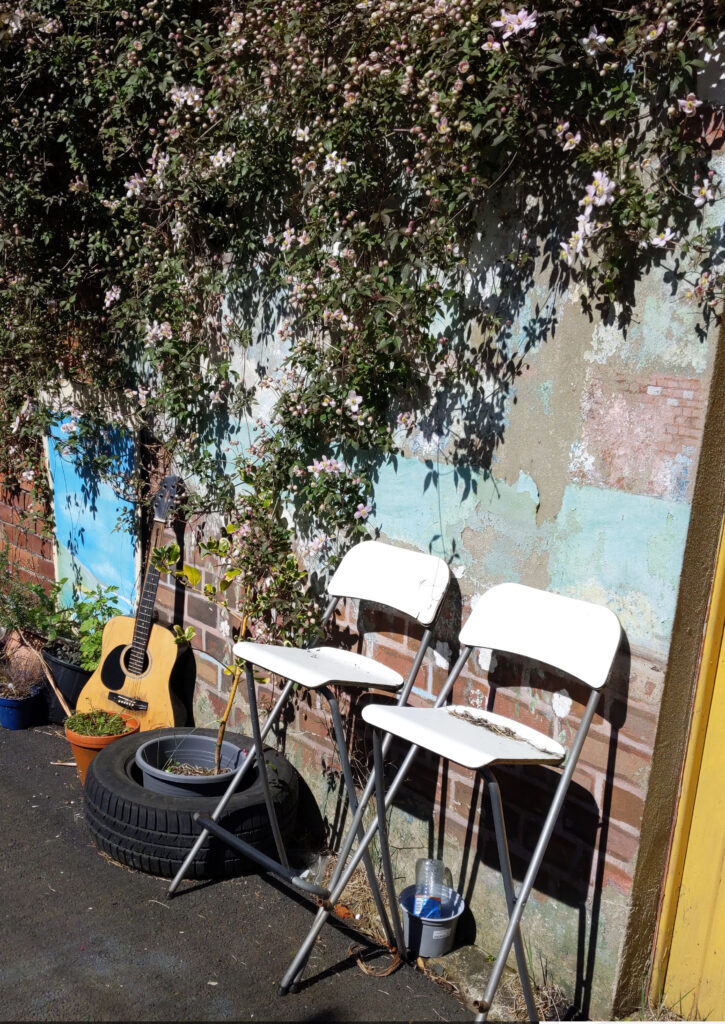
a sunny spot – small touches can make it look so inviting.

I got in touch with Bríd Ruddy, one of the founders of Wildflower Alley, who showed me her neighbourhood in the Holylands and made me realise that claiming ownership of the space behind your house also affects how you perceive the front of it. You might become more aware of the need for Common Space in your city in general, especially in a densely populated area like the Holylands. 

But what does an alley need to be “claimed”, and furthermore, “maintained” as Common Space? Who claims and who maintains? How does the capitalisation of Housing influence the alleys behind those houses? Is the promise of safety and security that the current gating process makes, fulfilled? Does it only apply to the safety of residents or can it be interpreted as security for capital investment? 
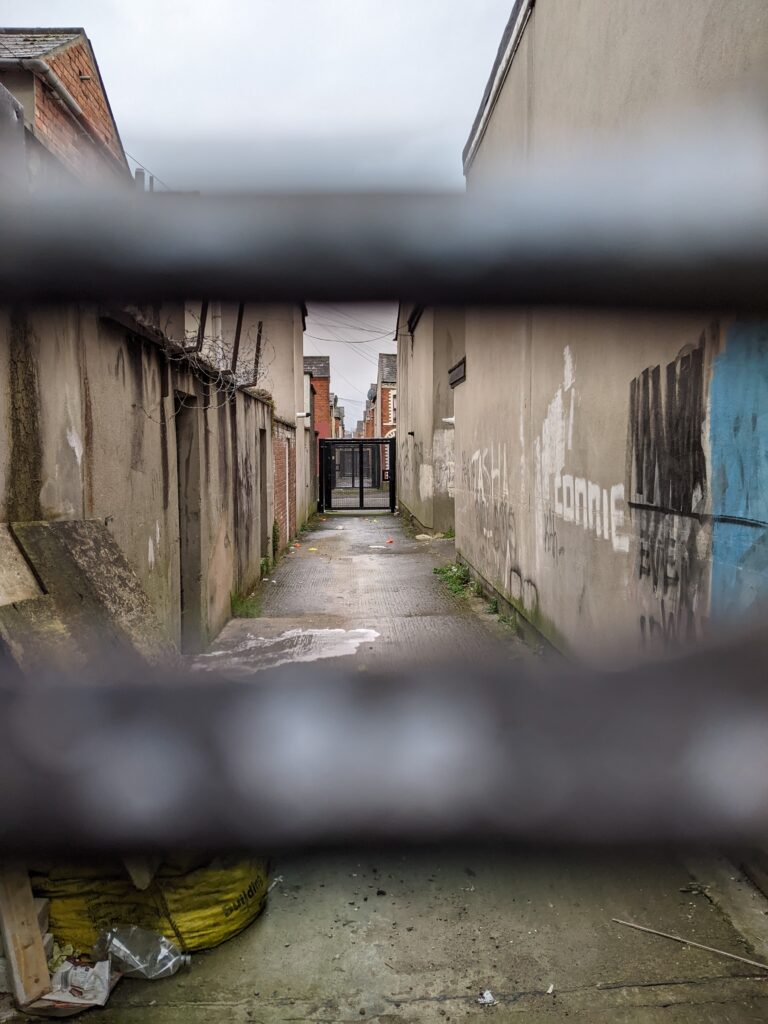
Alleygating – there are pros and cons.

A lot of questions arose during my research on the alleys in South Belfast. In Bríd’s case, the gates surely were a necessity to make Wildflower Alley flourish. But in other areas I wasn’t so sure about people’s intentions of wanting gates for their back alley. After all, the security paradigm in Great Britain and Northern Ireland and the control of public space that comes with it, are still very strange to me. In Germany, we also like to lock our front and back doors, but further security measures and surveillance for private residences are still very rare. Strolling through the inner city alleys of Belfast, I realised that chicken wire and cameras might make the residents feel safer in their homes, but also give passers-by an impression of walking through an unsafe area. But – I am first and foremost an outside observer. The way I see and use the space differs from the way people who live in Belfast or grew up here might see it, a fact I always tried to keep in mind during my stay.

There are also structural requirements that make an alley usable. Not every passage has the capacity to become an Urban Garden or Urban playground for residents. Some shorter, more open alleys are good pathways and nice short-cuts to avoid busy streets. But isn’t that Common Space, too? Does anyone feel responsible to claim these transit spaces for Common use? And with that in mind, doesn’t the gating process regarding those alleys make them unusable in the long run?

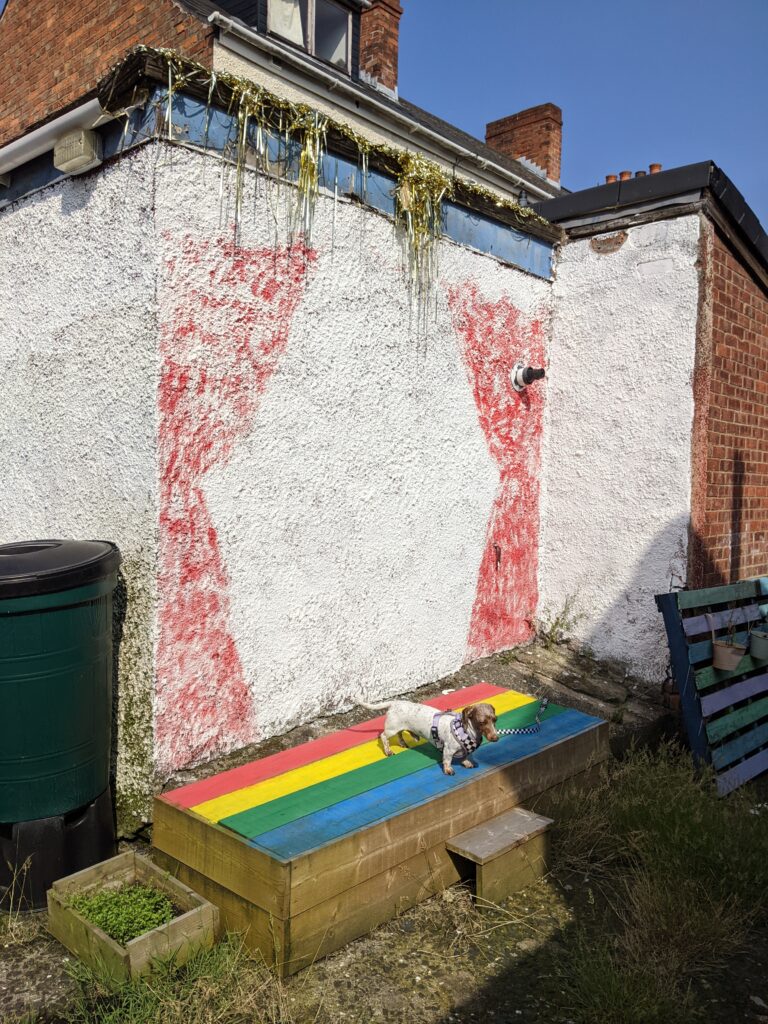
Birgit’s sister’s dog takes on ‘the stage’ at Rainbow Alley, East Belfast.

I did find some answers to these questions, but an even greater result of my field trip to Belfast was that it is not only the Common space that has to be claimed and maintained, but also the social process of making Common space itself. It is a permanent negotiation that requires resources, but it also takes willingness and belief in democratic principles. This may sound dramatic, but it reflects decades of scholarly research on Urban Commons. Cities are always on a threshold of new development, some may be unplanned or unplannable. It needs groups and individuals that are willing to actively shape their city and (in the big picture) also society. 

In 1968 the economist Garret Hardin coined the term “the Tragedy of the Commons” in his essay of the same name. He declared that the Commons are damned to be overused and exploited because people are driven by self-interest and the maximisation of outcome. This theory has long been refuted by scholars that dug into the Commons as a research topic. Elinor Ostrom, a scholar of environmental economics, being one of them. She conducted studies that proved Common resources can be preserved and what people needed to achieve that. But even as the Belfast Alleyways showed me what is possible when people take action, particularly driven by the social experiences of the Covid pandemic,a lot more could be done. 

While many local authorities would agree, that the idea of (Urban) Common Space is worthwhile, they do not seem to see it when it is right in front of their eyes: Space that is owned by everyone and no one, and people who are willing to cultivate this space for the better of everybody who’s using it. And despite all the Common force I found in the alleyways, administrative bodies and planning departments seem quite inert when it comes to integrating these developments into their concepts permanently. 

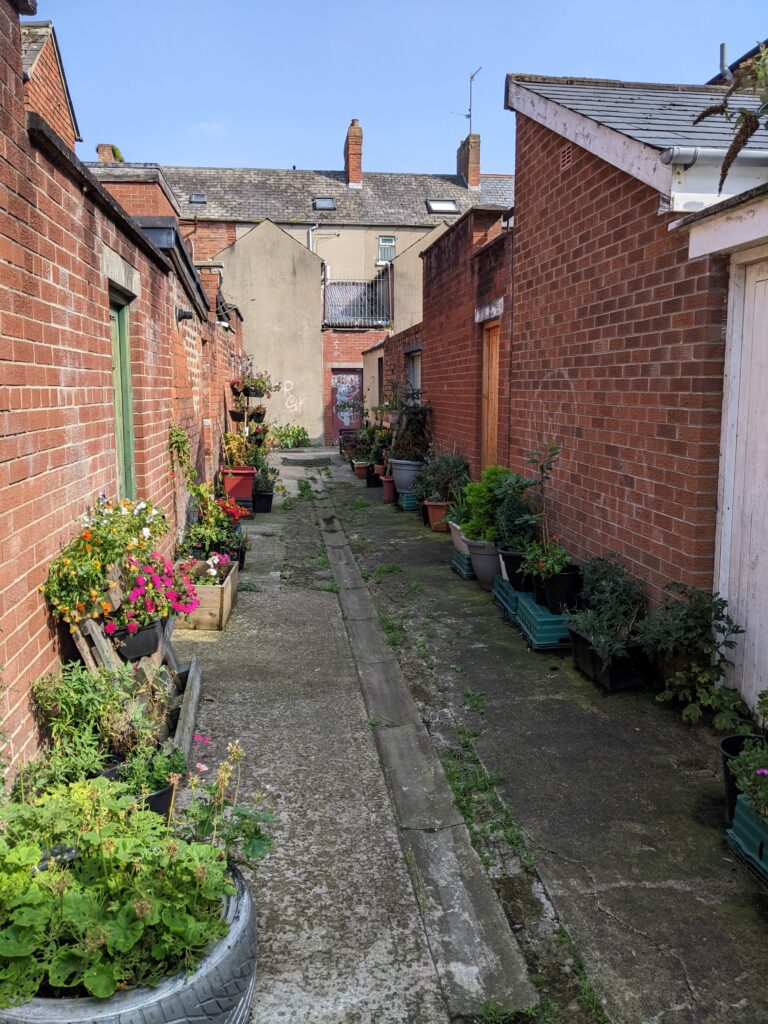
Rainbow Alley: I like this photo as it shows how much can be done with little adjustments.

__

I am very grateful that I have gotten insights into the network of Belfast Alleyways. Thanks to Bríd and Meadhbh who showed me their neighbourhoods. Also Aisling and Amberlea, who I didn’t meet personally, but who let me make use of the knowledge pool they created and curated online. Thank you all for letting me be part of this project and hope to see again you on my next visit!

Categories
Events Gatherings Journal

Reflections on our Manifesto Launch

Across the year of Belfast 2024 so far we’d been working quietly and steadily. Gatherings were small and intimate, developed in collaboration with neighbours. Launch day feels different though. There are almost 100 people booked to join us at the Ulster Museum (big thanks to them for hosting us!) and media interest has boomed! This is what it has all been building to, and the anticipation is palpable. 

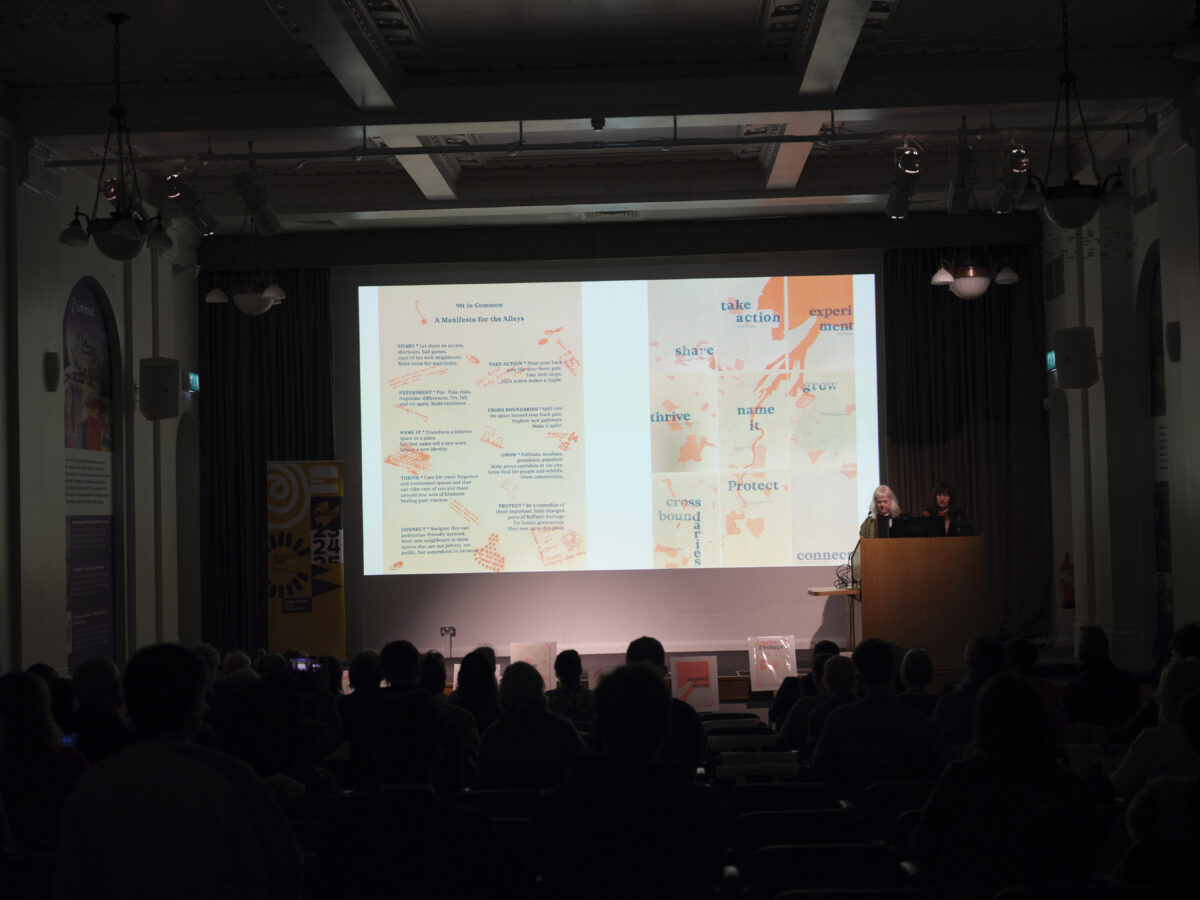
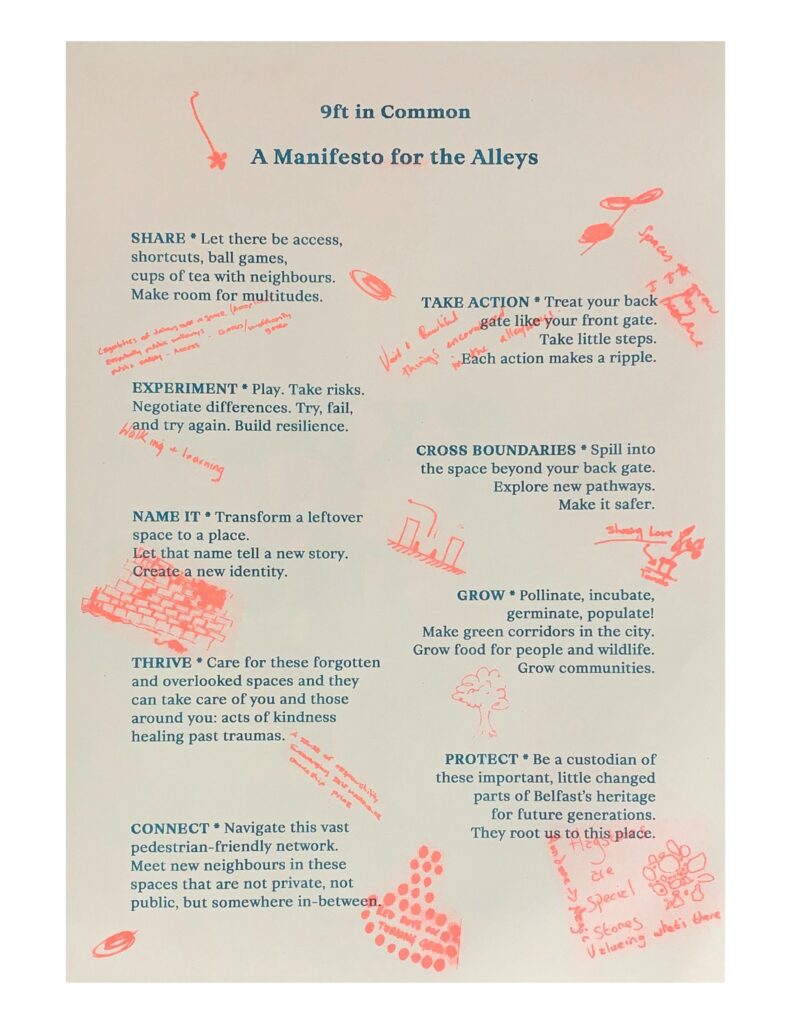
The Manifesto has 9 key points which have been developed through a myriad of conversations, over several years. It captures and mobilises people’s intentions, hopes and wishes for the alleys behind their houses and across the city. It makes reference to the many great things that are already happening in alleyways. Our research has found that there are already signs of growing and/or social interaction in 7% of Belfast’s alleyways. The Manifesto considers the potential of the other 93%. It is a call to action for residents and decision makers alike. 

A Manifesto for the Alleys. Click to read more details.

Graphically, the Manifesto for the Alleys has been designed by Emily and Alessia at Soft Fiction Projects. Their work focuses on ‘an exploration of underrepresented voices, oppositional histories, geopolitical narratives underpinned by intersectional feminist perspectives which challenge and reframe dominant hegemonic power structures.’  They chose to incorporate the original Belfast Alley Map in their design, along with handwritten notes taken during 9ft in Common’s reflective public workshop, held at Samhain. Two sided, they reveal the full Manifesto on one side with one of the 9 points illustrated on the other. 9 versions of this side tile together to form the Belfast Alley Map. They are more than the sum of their parts.

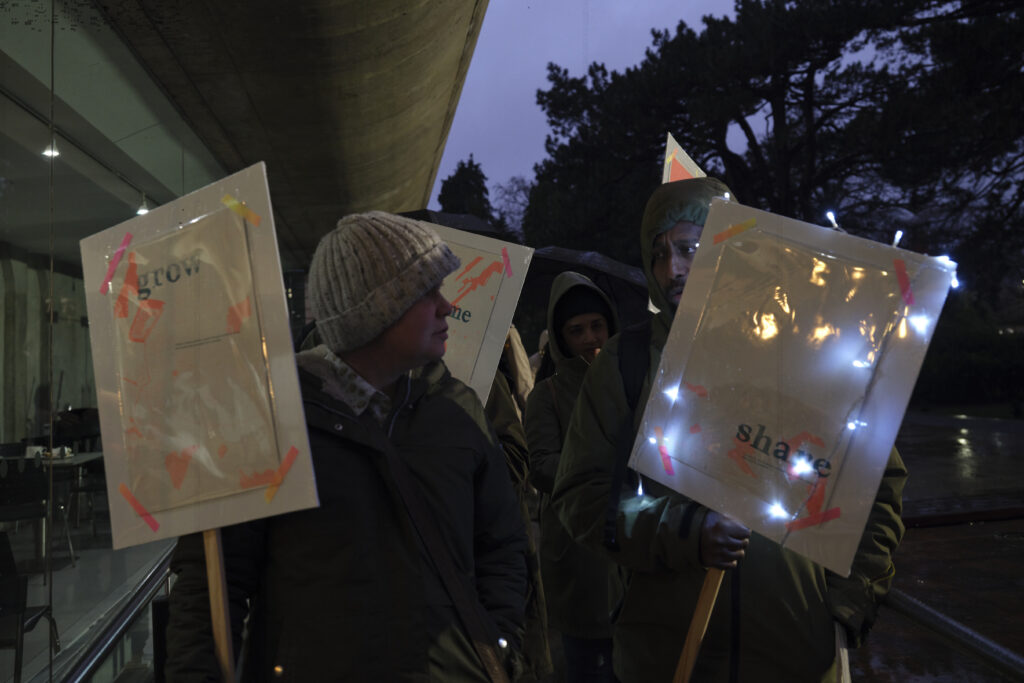
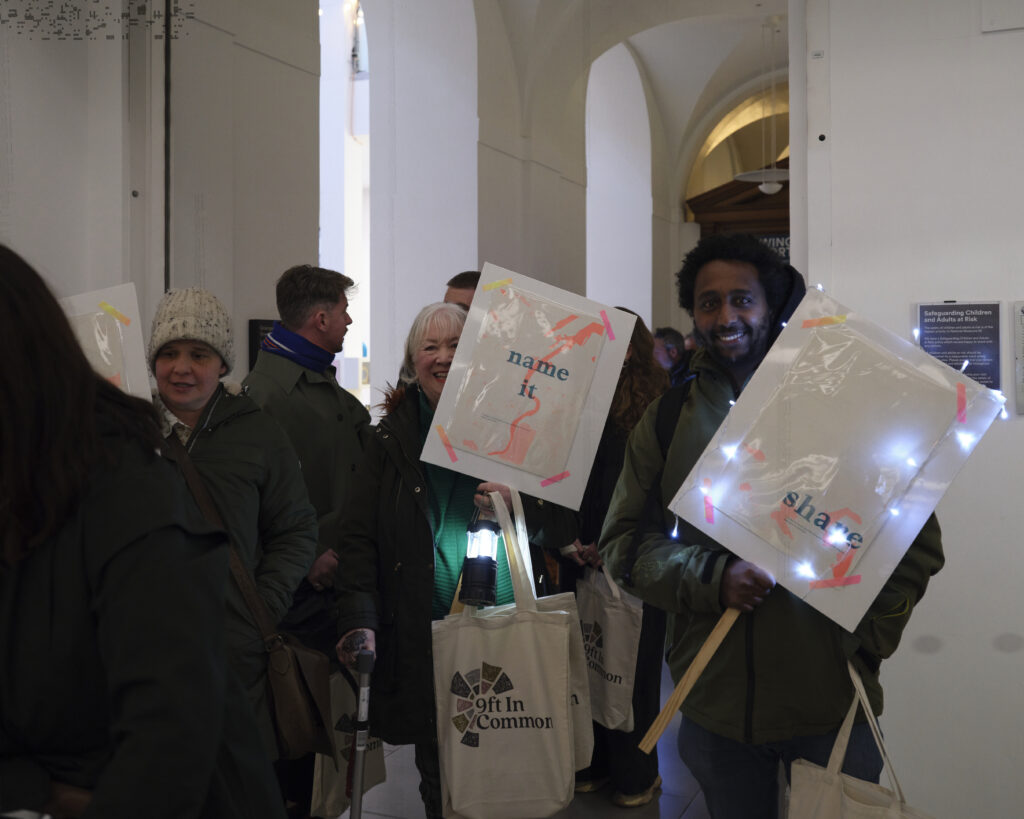
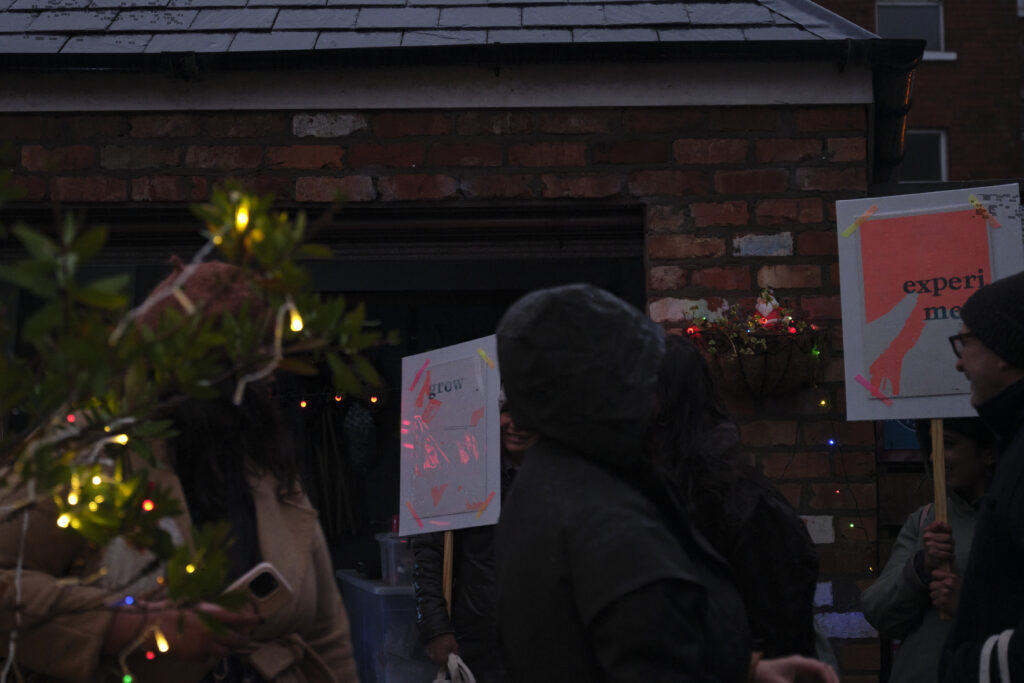
On the day of the launch we’ve got the manifesto prints displayed on placards, lined up in front of the stage – a nod to the manifesto spirit. Upon arrival guests are invited to select a print of their choice to keep. 

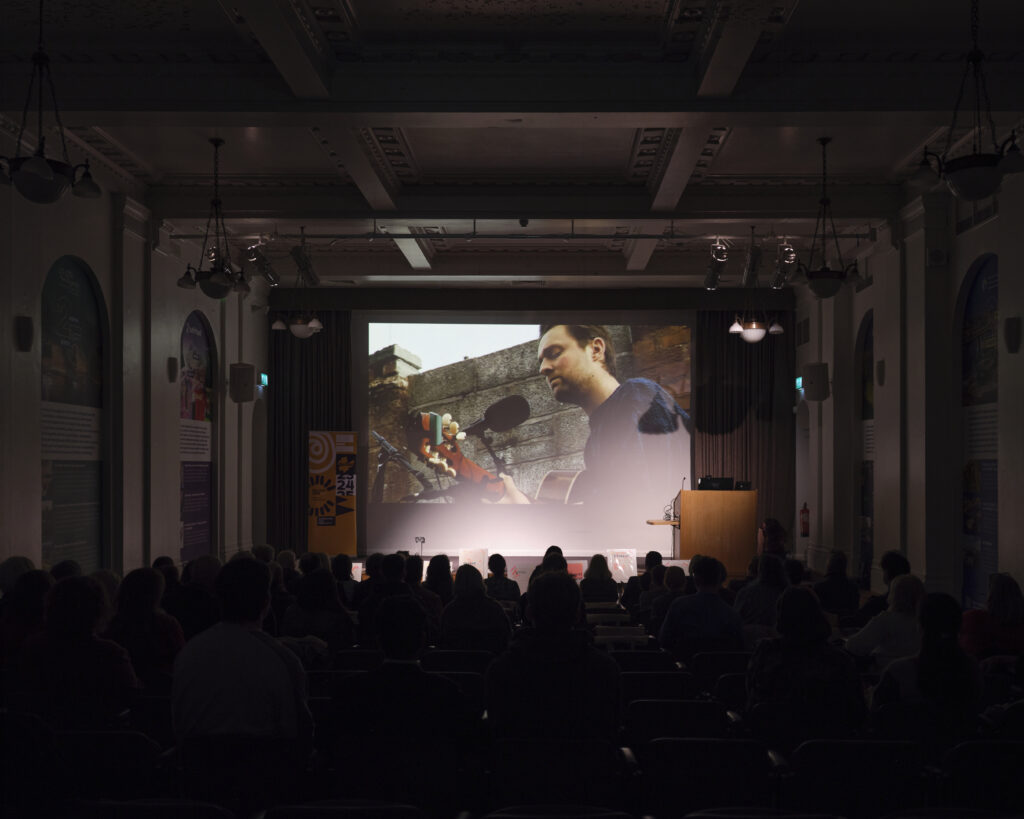
Opening the event by playing Joe Laverty’s Whisper Project recording of Joshua Burnside from Bealtaine.

We open the event by hitting play on the melodic tones of Josuha Burnside singing his new single ‘Up and Down’ for the Whisper Project recording in Hyndford Street alley for Bealtaine – one of the 9ft in Common Belfast 2024 commissions. It calms the room. The Lord Mayor of Belfast, Councillor Mickey Murray and Northern Ireland Director of the National Heritage Lottery Fund Dr Paul Mullan follow with opening remarks around the importance of culture, heritage, people and place. 

Then it’s time for Amberlea, Aisling and baby Eloise – cooing in the sling – to share highlights of what we discovered over the year and snapshot some key commissions and collaborations. Invited collaborators, partners, and alleyway activists take turns to introduce each call to action from the floor, and we follow each one with an example project for each of the 9 Manifesto points.  There are so many great examples – we could talk for hours, if we only had time! 

9ft in Common – a short film by Simon Mills.

After the presentation it’s time for the film premier. Simon has been documenting the alleys with us since 2020. His  film, now titled 9ft in Common, shares the complexities and possibilities for the alleys on a city wide scale using footage from many of the gatherings and activities which took place over our 2024 project. This too is filled with some beautiful ambient soundscapes of the alleys as well as original music from local musicians Tim Sharkey and Joshua Burnside (again). We hear audio snippets from people who’ve made use of their alleyways and the impact that it has had on their neighbourhood. Cats, maps, birds, bins, gates, graffiti, red bricks, foliage, shadows, an aeroplane overhead. It’s all here, everyday ordinaryness sprinkled with everyday magic. Well done Simon – who’d have thought there was such a beautiful piece of art waiting to be made about the overlooked spaces that many use only to keep their bins?!

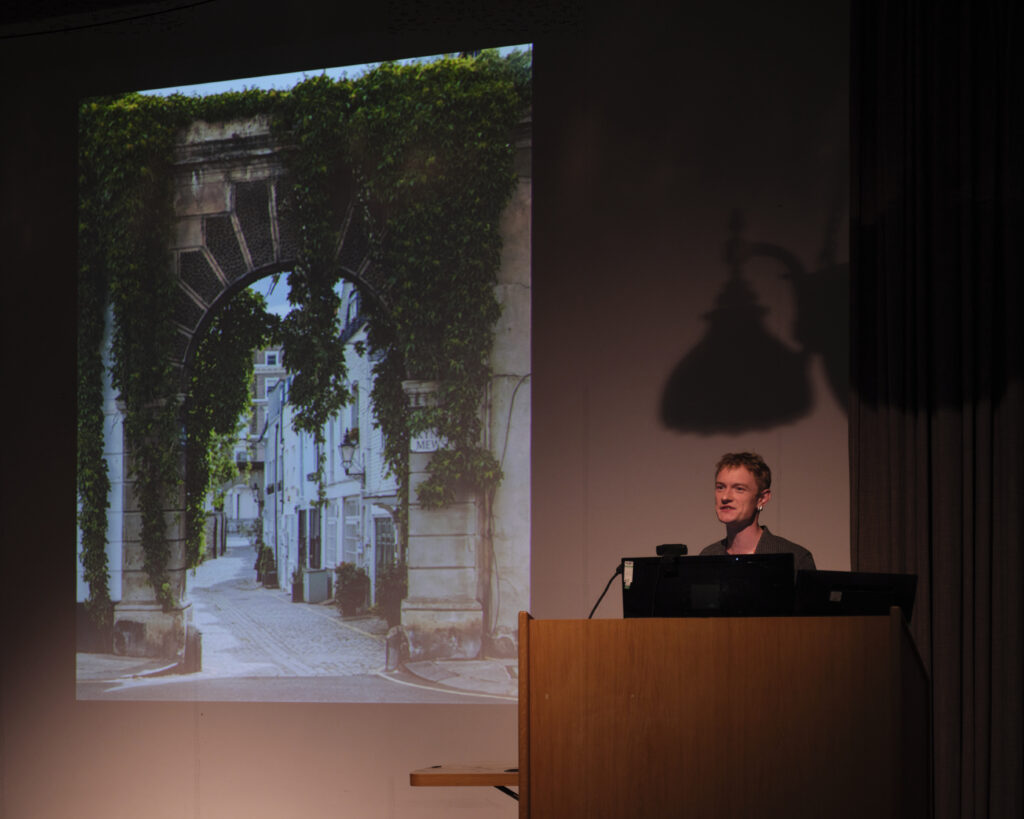
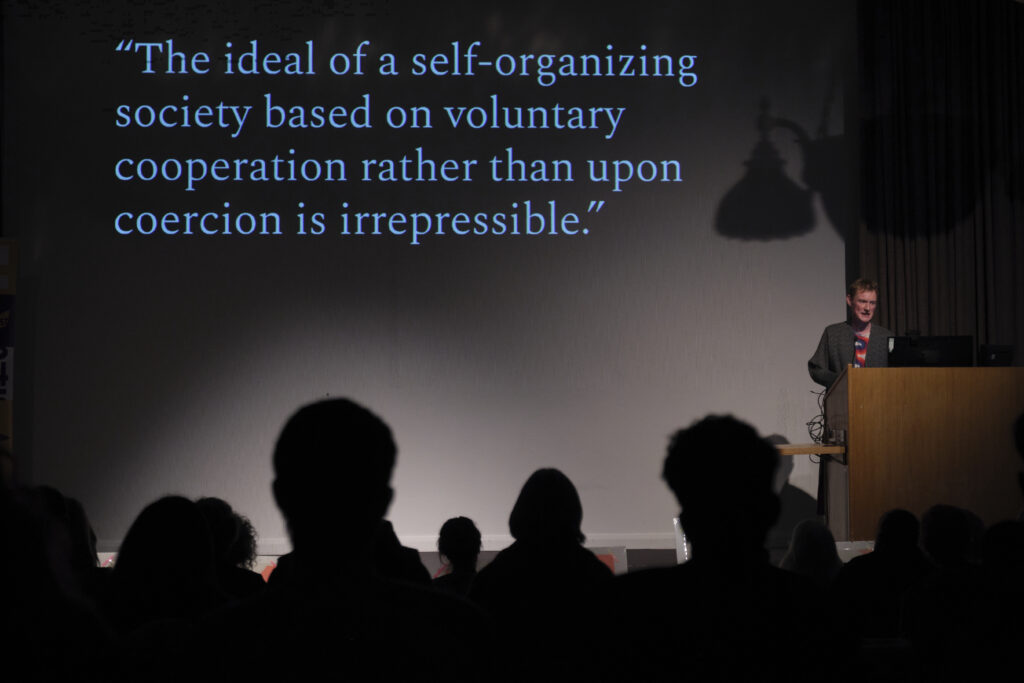
Last to take the stage is Phineas Harper, invited over from London to respond to the Manifesto for the Alleys with a series of provocations on alleys and shared space. Phinneas’s career spans criticism, curation, education, youth work, journalism and sculpture. Phinn was asked to provide some wider context at national and global scales – and they do this wonderfully, with 5 points that challenge us all to consider radical ideas such as rethinking alleys as the fronts, not the backs, and making maintenance (and bins) sexy.  Did you know that the ubiquitous black wheelie bin we all know and loathe was never intended for this purpose, but for factory waste?!  Nor did we! 

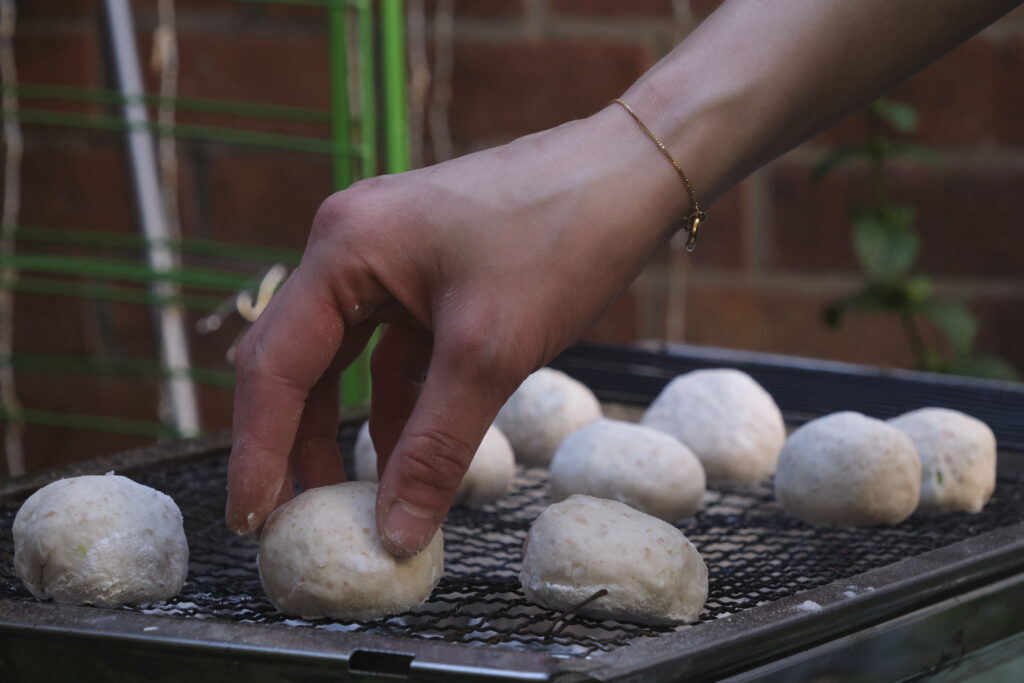
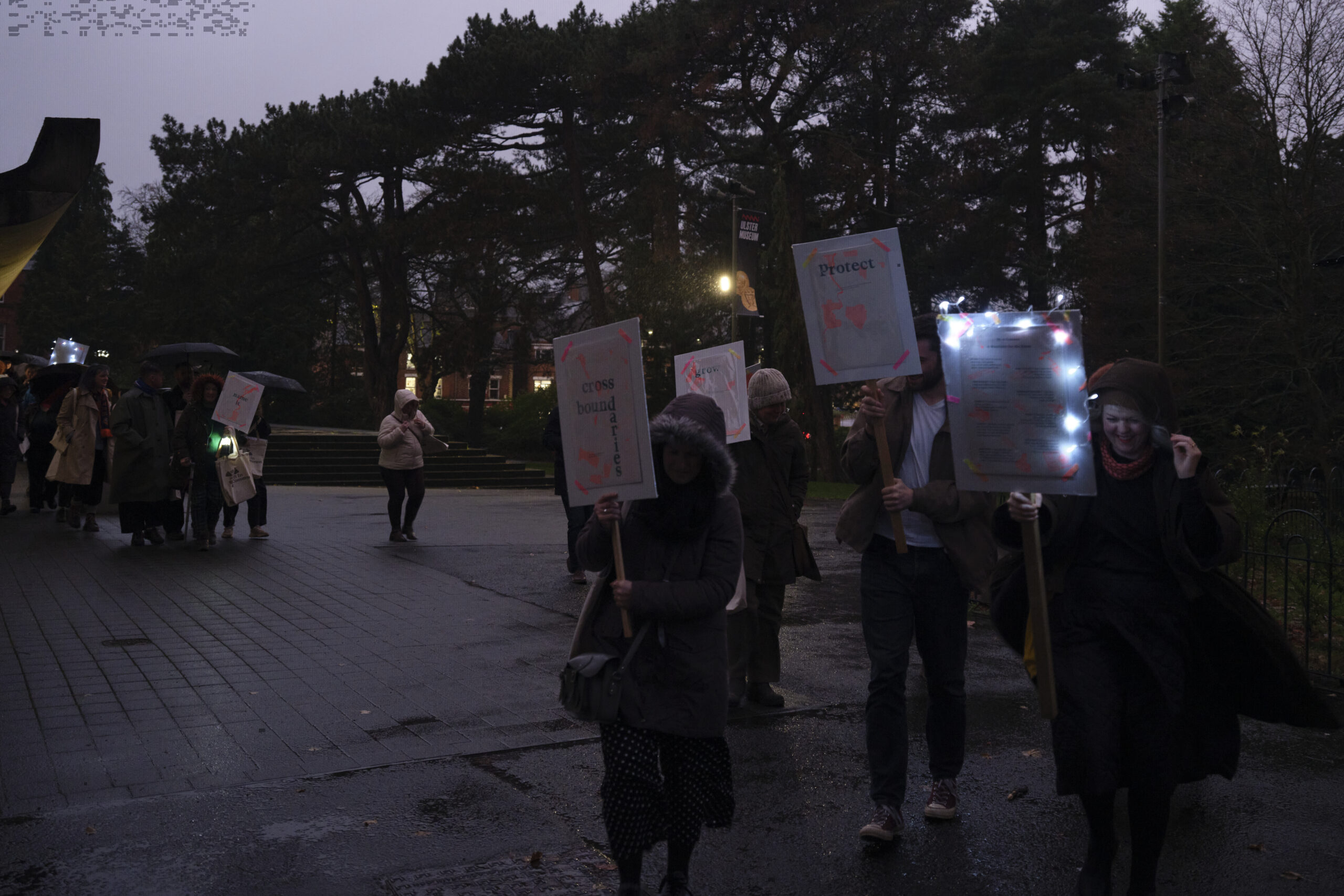
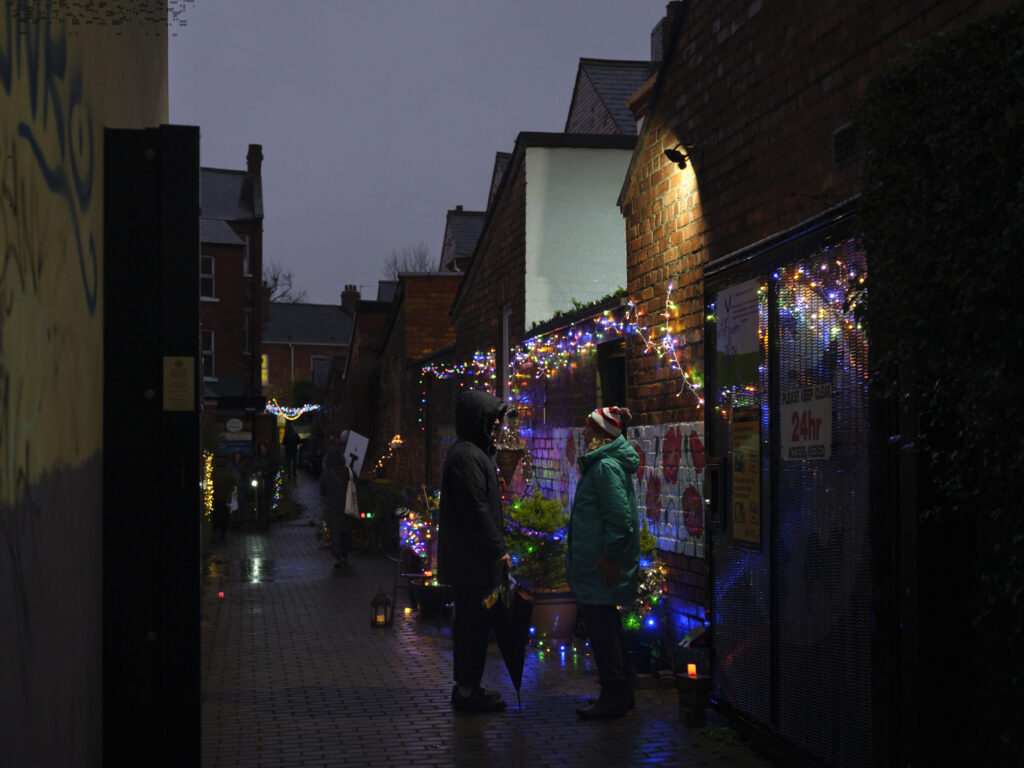
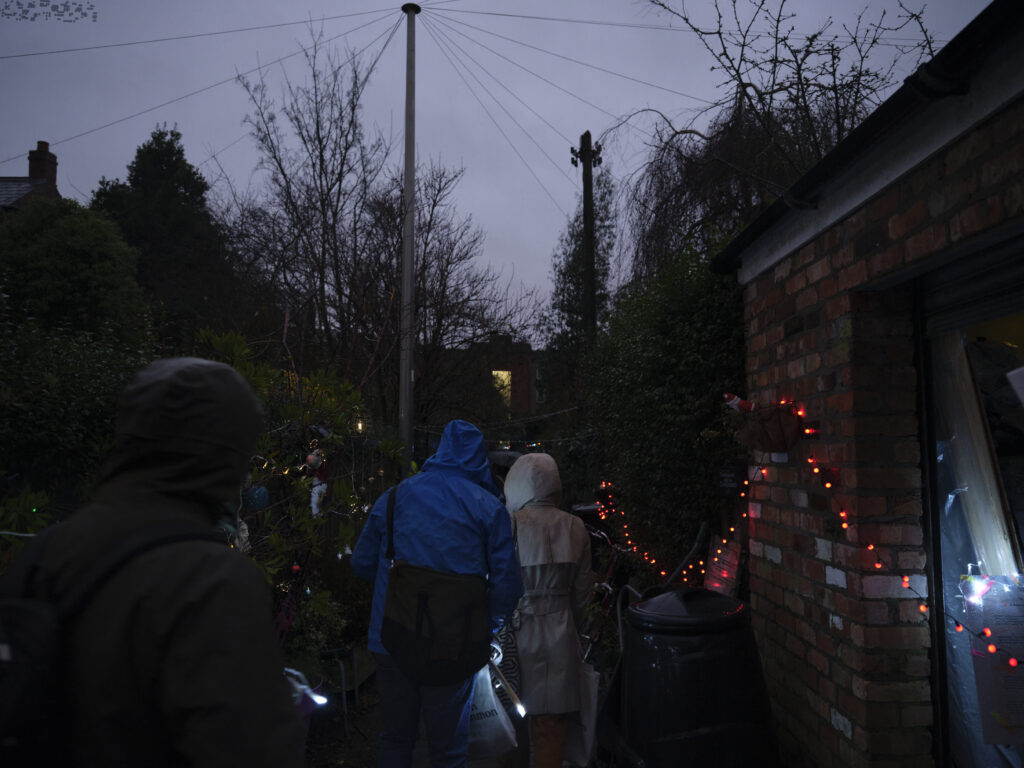
We conclude The Manifesto launch, fittingly, with a visit to an alley, the spaces which we are passionate about, where we’ve done our best thinking, and have had some truly magical moments across the years. We’ve been coordinating with the nearby Wildflower Alley – Belfast’s original alley garden transformation project, due to celebrate its 10 year anniversary in 2025 – for the last few weeks, setting up plans to host a final gathering after the museum presentations, as darkness falls and the Christmas lights shine. Unfortunately, the weather has other plans: Storm Darragh is fast approaching. Despite the high wind and pouring rain we set off on a lively procession in the dark, the wind and the rain, through the Botanic Gardens to the lovely plants and shiny festive lights at Wildflower, then onwards to our bad-weather alternative shelter at City Church, which leads the Holylands Community Garden project. Here we raise a delicious glass of Back Alley Brew – a chocolate mint porter which our project partner Jo has brewed at Laurelbank Farm using chocolate mint that has been grown and tended by the Growing Potential project participants in their alleyways. Beautiful! To top it off, we’ve asked Phillip McCrilly back to provide some tasty snacks. There are pakoras, puffs and other delicious treats as well as the locally foraged figleaf and sumac lemonade that we loved from his Dream Your Friends Forward workshop at Lughnasadh. 

Big thanks to everyone who helped us launch the Manifesto for the Alleys in such a spectacular fashion on such a wild and blustery night.

If you didn’t make it along, you can pick up a limited edition Manifesto for the Alleys print from PS2 Gallery (Belfast City Centre, gallery hours; Tuesday – Saturday, 12pm – 5pm) while stocks last.

Watch this space for news of our final few commissions! 

written colberatively be Aisling, Amberlea & Meadhbh. Photos by Simon Mills.