We visit one of the most complex neighbourhoods in Belfast. A merry medley of community activists, quiet citizens, party people, young families.
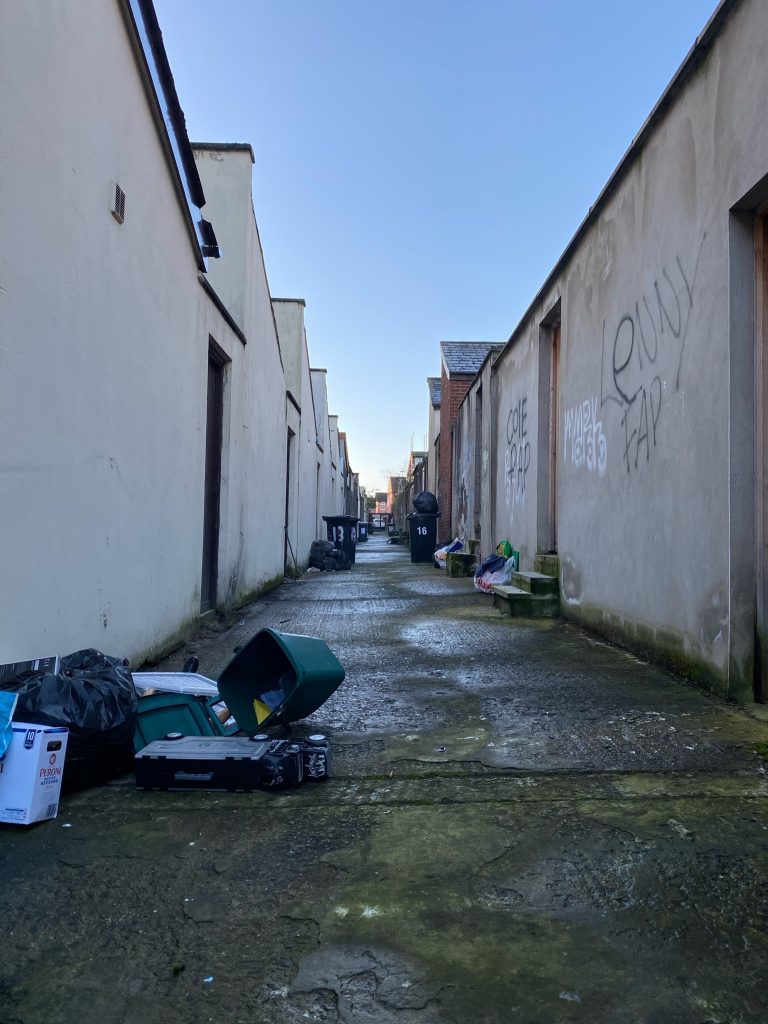
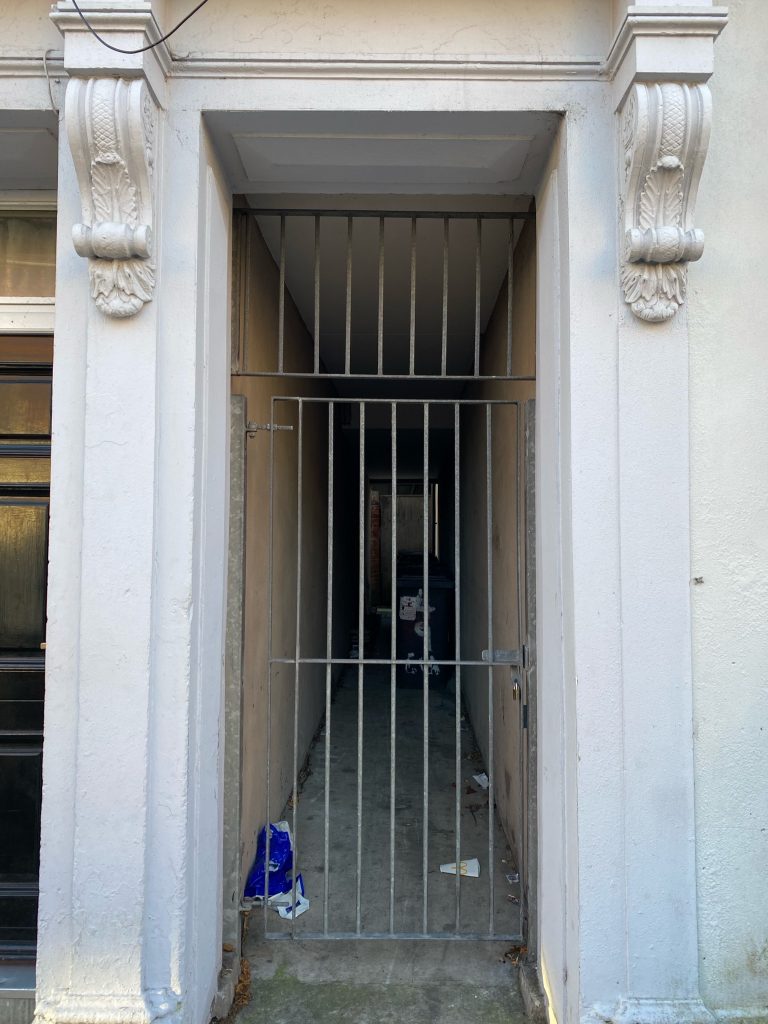
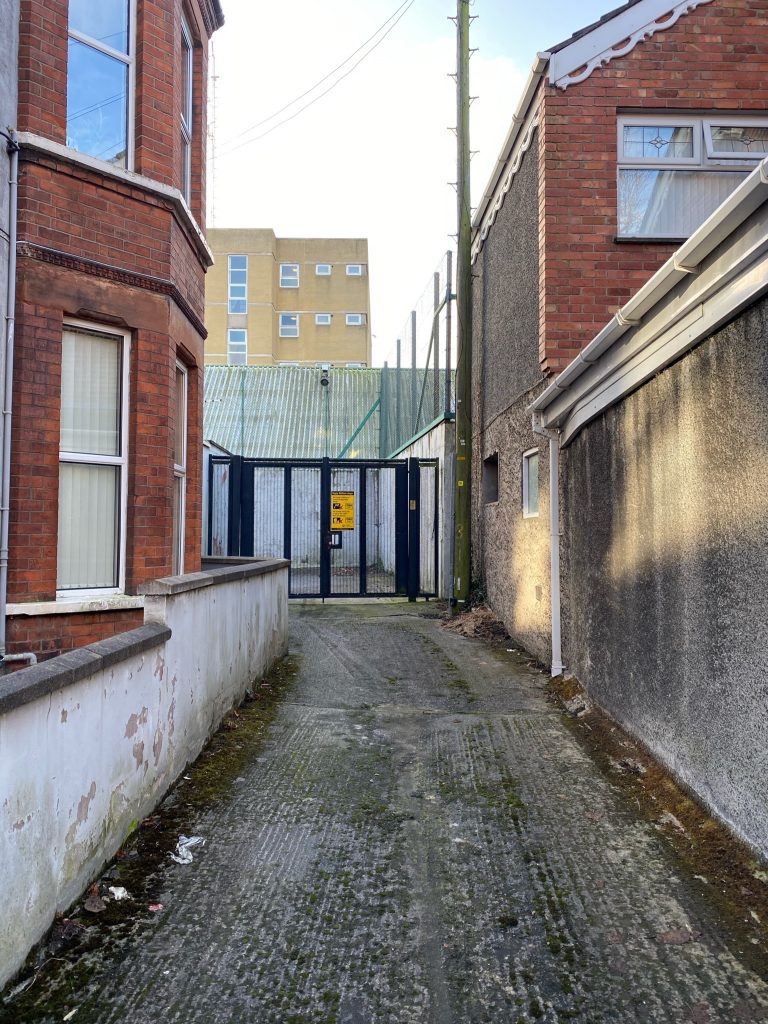
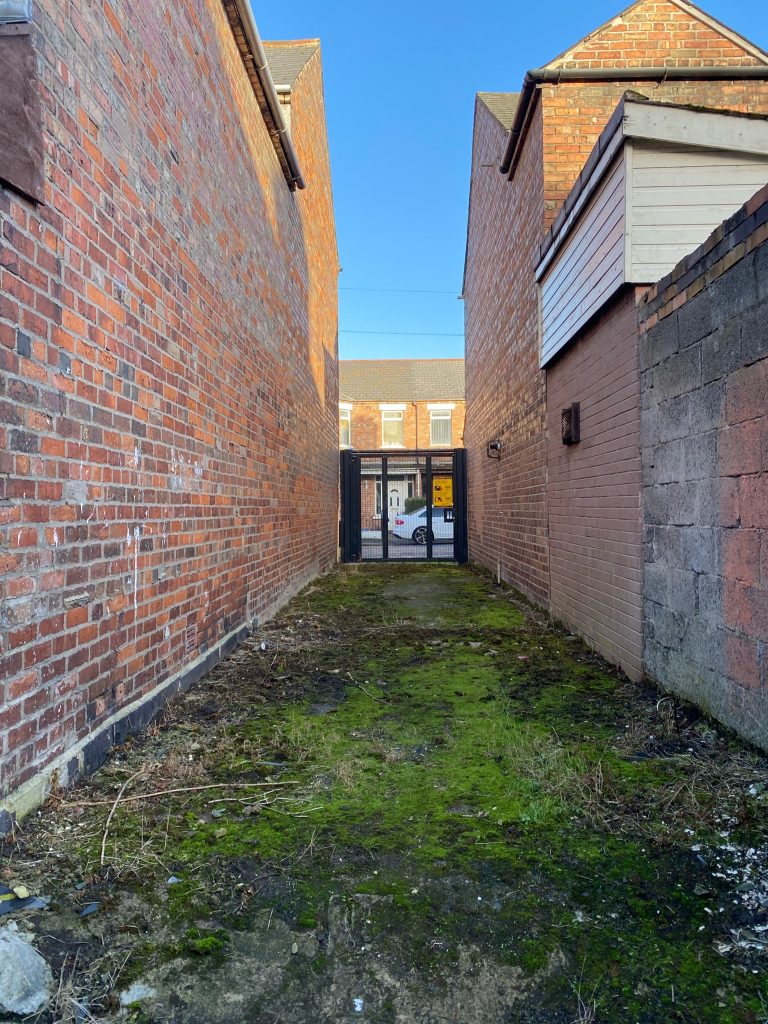
We strike lucky again with our visit occurring on bin day allowing us to negotiate the neighbourhood via alleys and open gates.
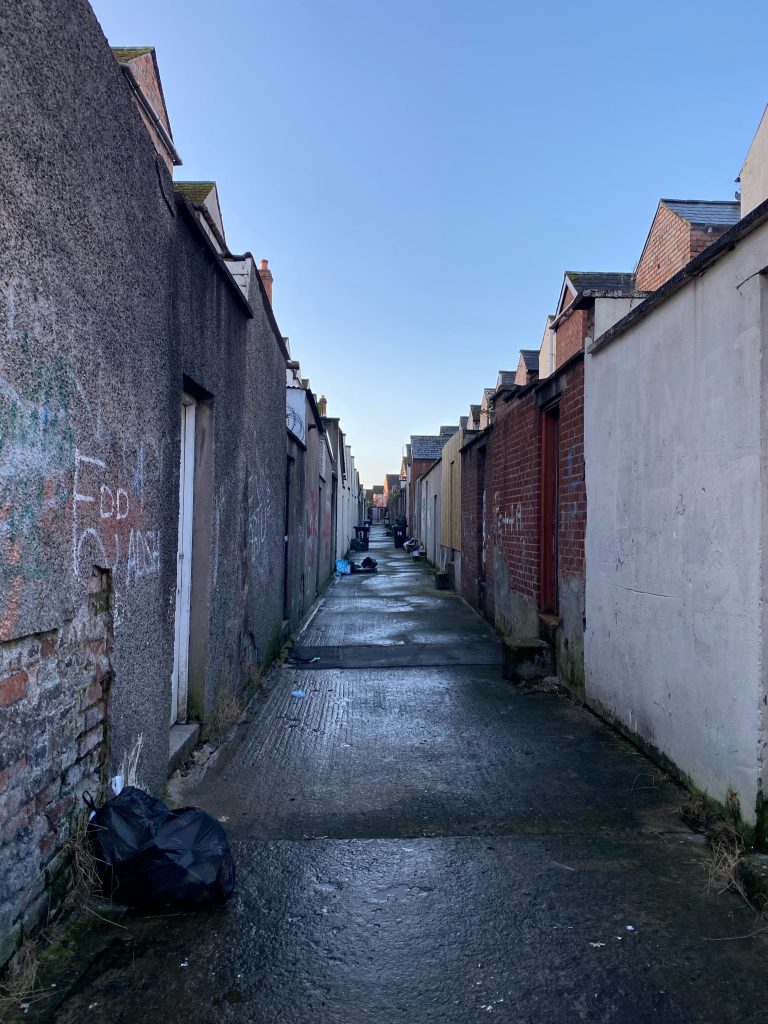
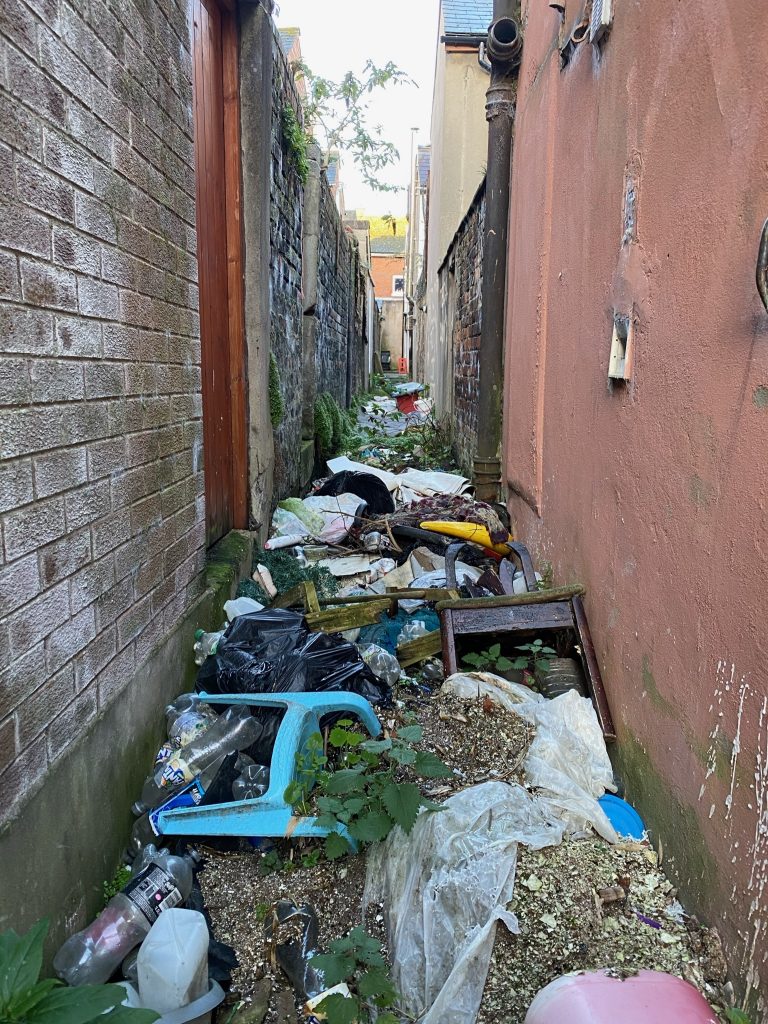
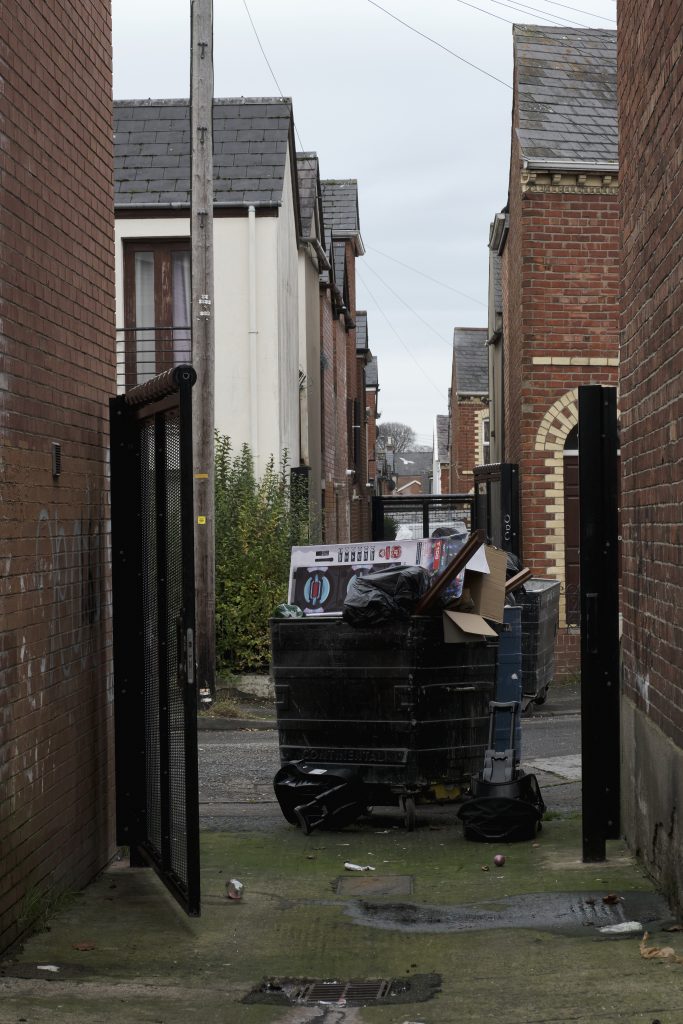
We greet the refuse collection team and explain what we are up to. ‘You’ve got your work cut out for you!’ They respond. They tell us of the fly tipping with claims of residents and landlords throwing bags over the back wall. Normally they have enforcement officers, but COVID restrictions have meant that no enforcement is happening. People can fly tip as they please and ‘we’re the ones that have to clean it up.’ Bulk waste bins instead of regular wheelie bins loiter about the alleys, heaped high. One is upside down.
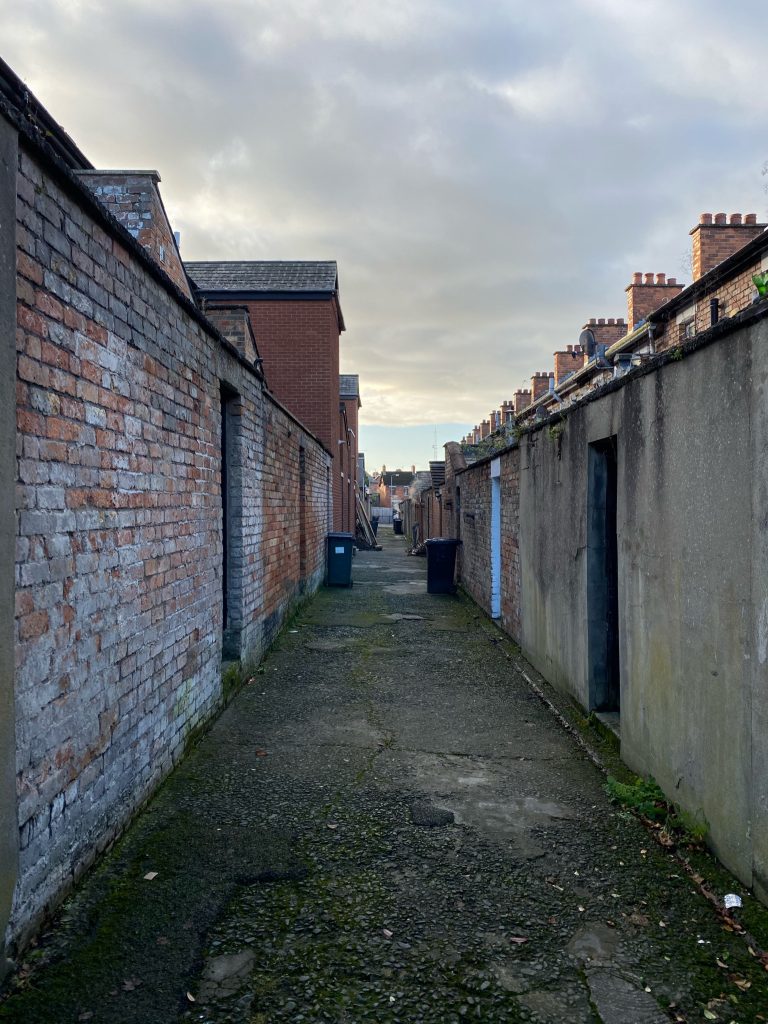
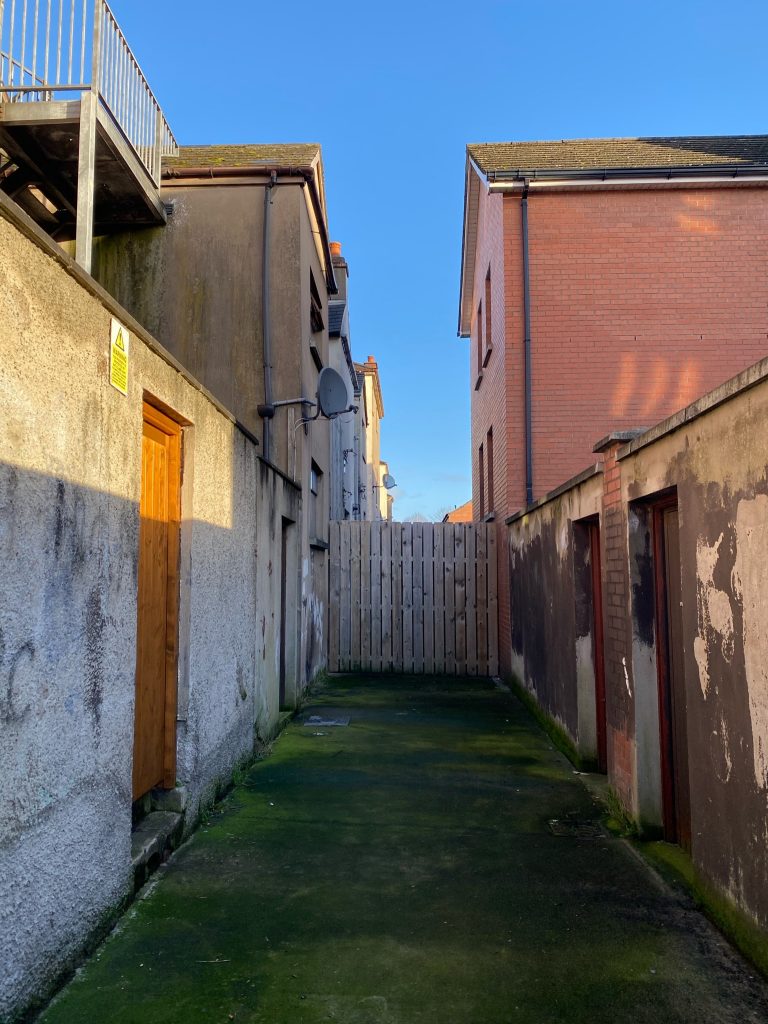
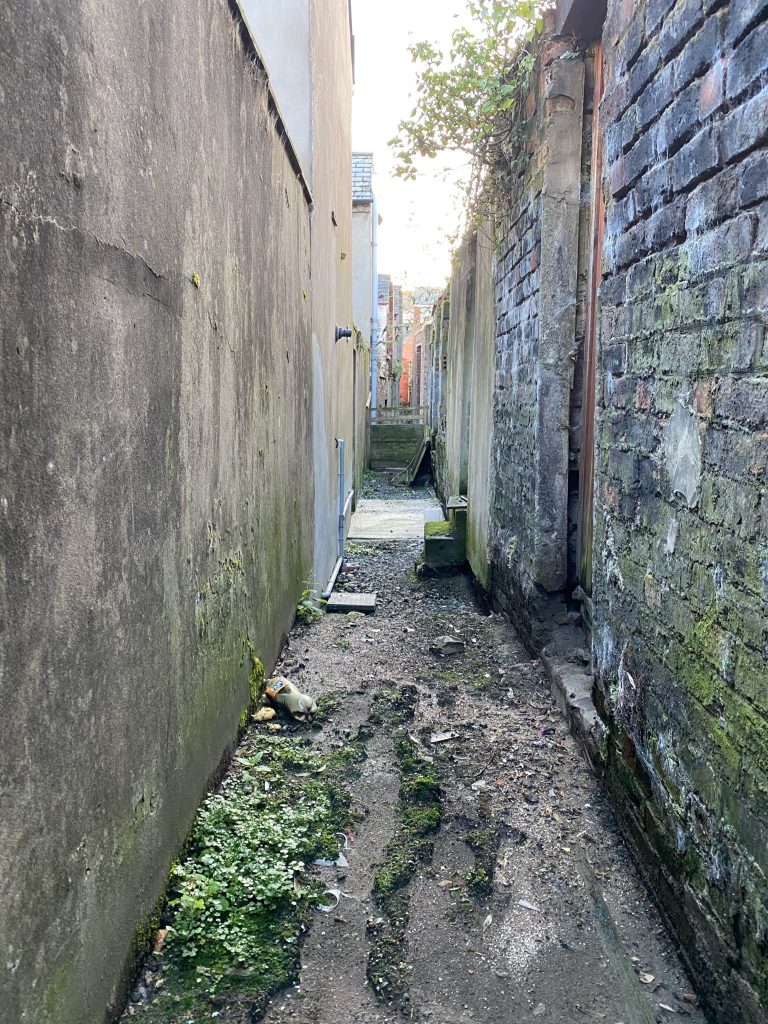
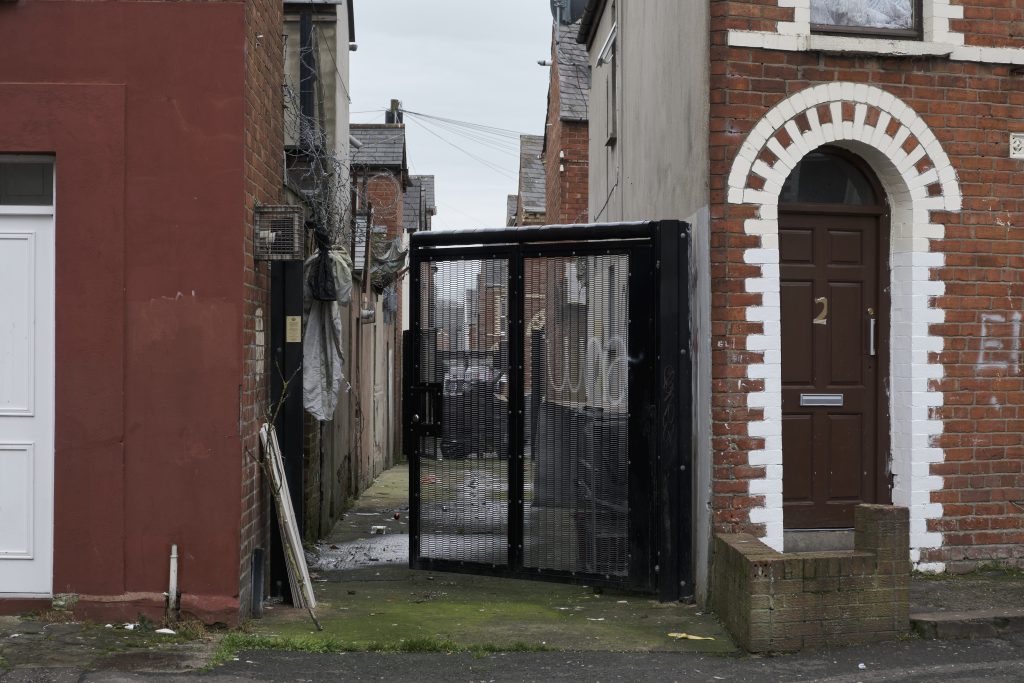
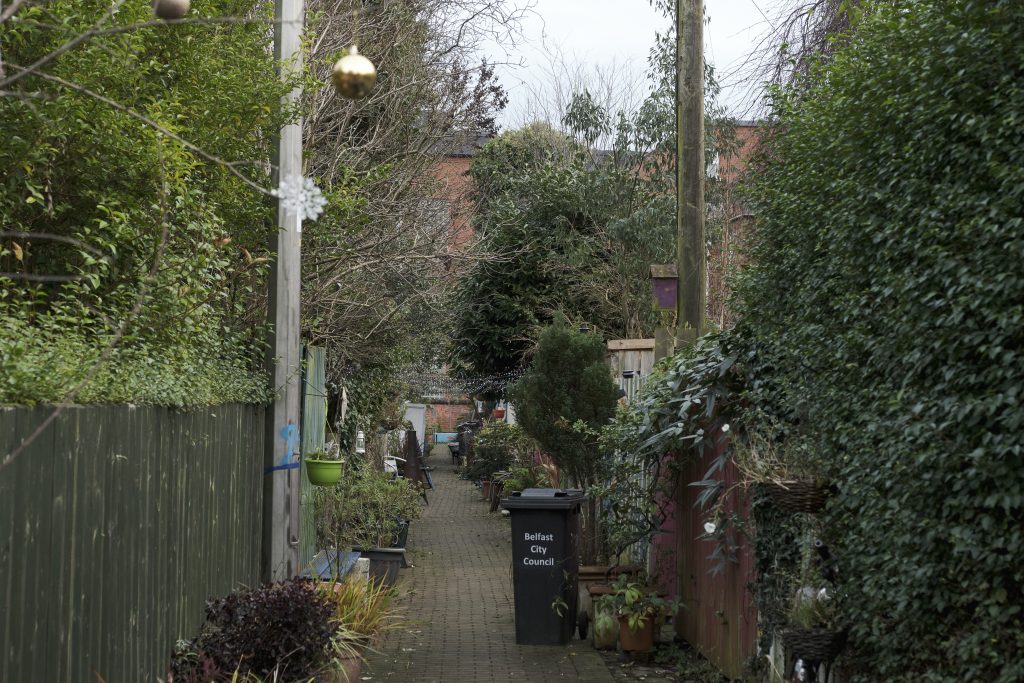
We cross a few alleys like this, weaving around gates and peeking inside at broken glass, raw meat, quilts on barbed wire before heading to our scheduled meeting with residents of Wildflower Alley – the award winning poster child for all alleys. An Alley with a name. We’ve been reading about the benefits of about naming places.
Photographer and local resident Joe introduces us to Alison, Brid and Jim who all come to tell us their stories, generous with their time.
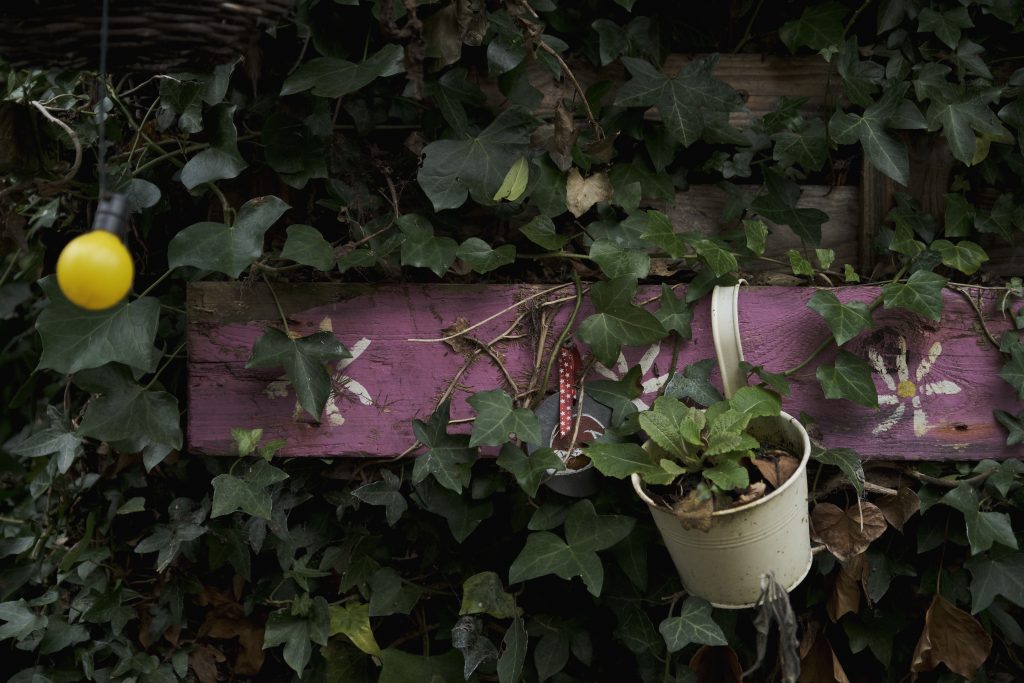
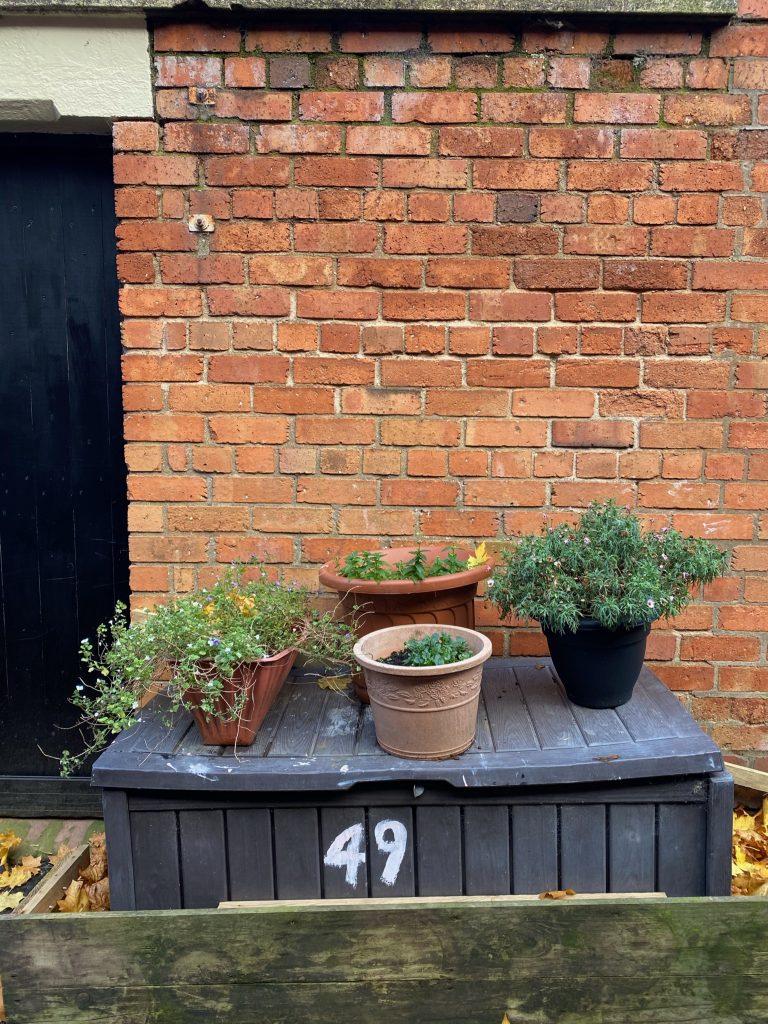
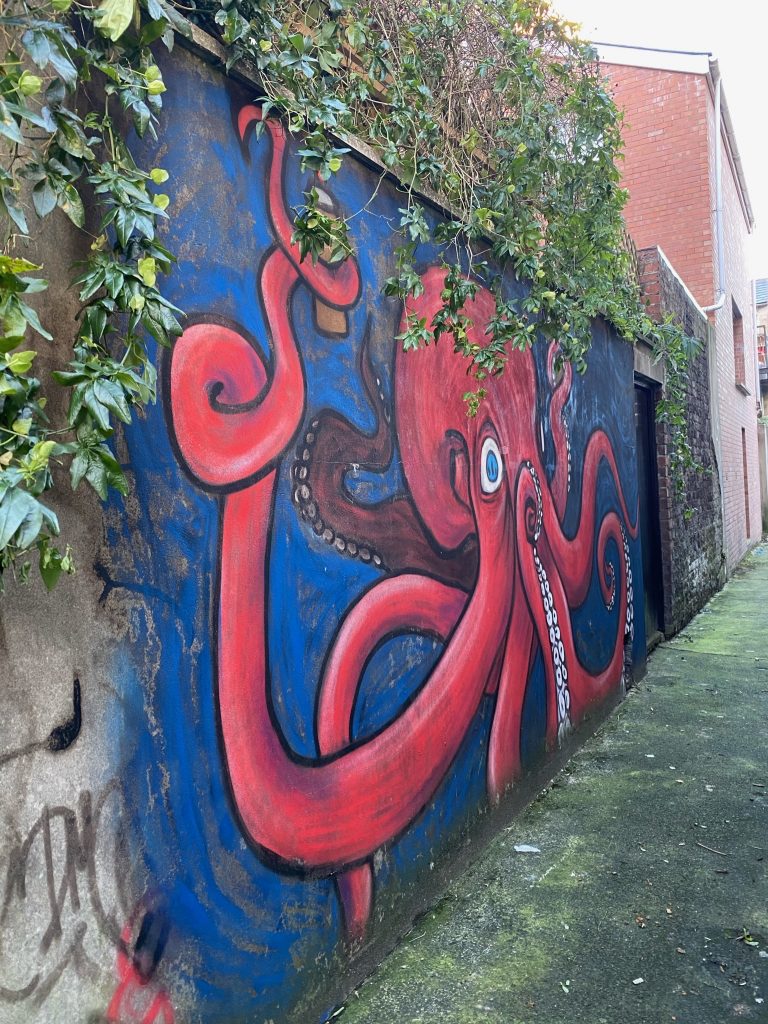
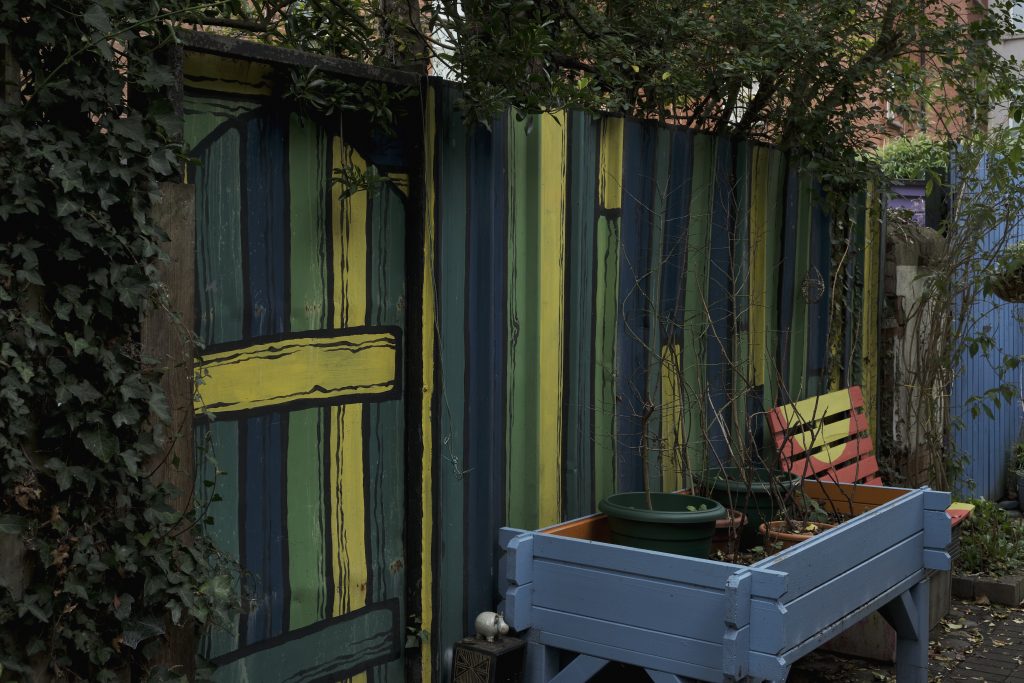
It’s a delightful cacophony of colour and wilderness right in the heart of The Holy Lands. University terrain. Flowers and lights and decorations, murals, composting, hopscotch, communality. ‘Trespassers will be composted.’ The gates were necessary, they feel, due to antisocial behaviour.
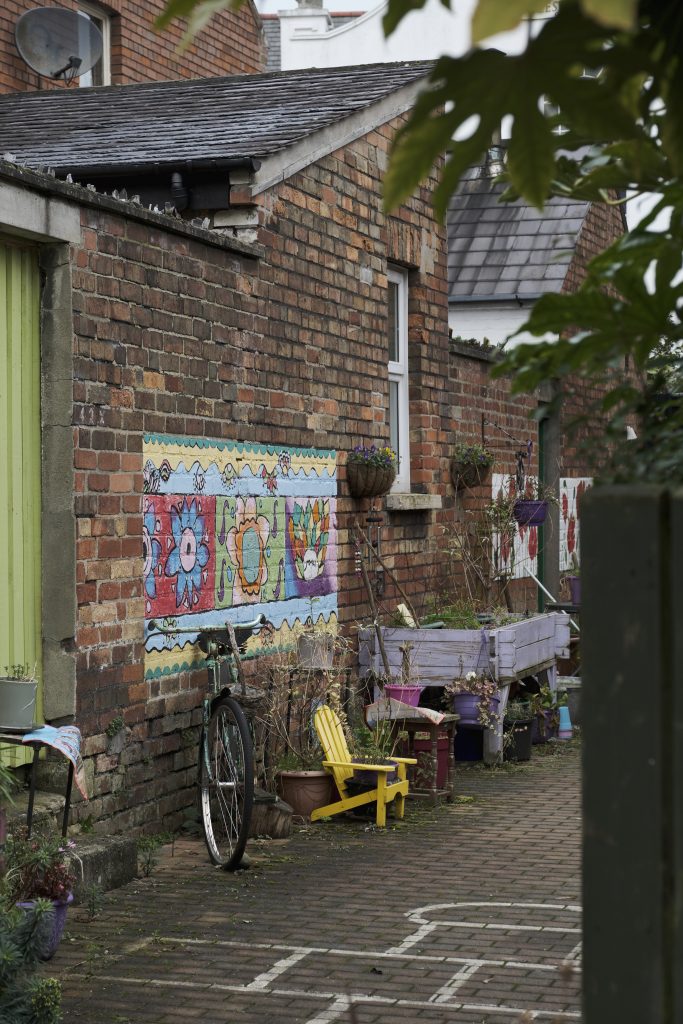
Brid mentions the ambition for a green route through the neighbourhood. This is not a route. Gates keep out antisocial neighbours and even tourists. Brid talks about a pilot to have the gates open and we think about segregation and peace walls and interventions designed to keep people apart.
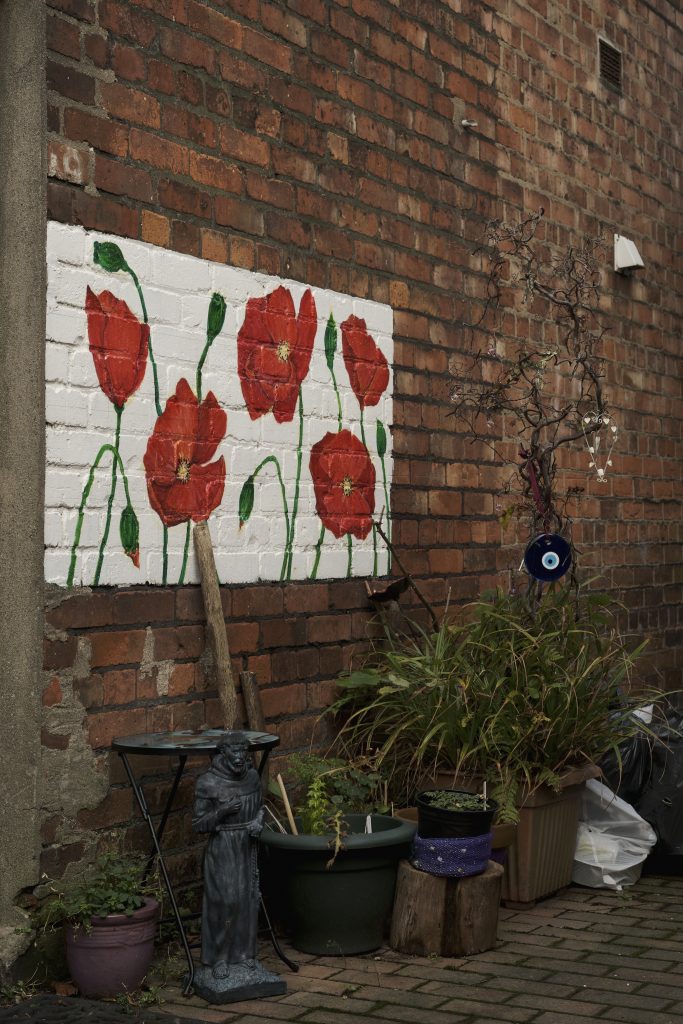
We hear about the funding they’ve been awarded, when Department for Infrastructure paid for brick paving as a pilot, and their frequent battles and frustrations with the local HMO Landlords. The landlords want the whole thing cleared, supposedly so they can get their cherry pickers and trucks along it.
Jim has fashioned shelves out of timber studs, and points out a bed frame destined for his next project.
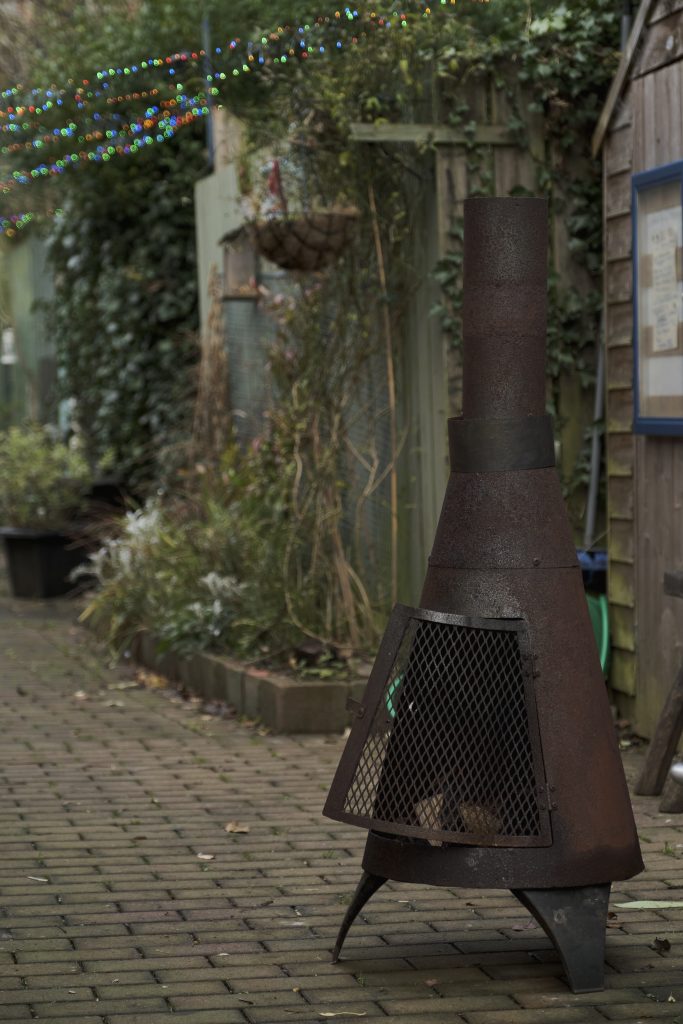
Alison is trialling a notice whiteboard on the communal shed door, locked but with a key anyone can use to share messages and news. She plays trad music. They rescued a chiminea from a skip and have been gathering to play music together around the open fire, where the alley unexpectedly widens out in the middle enabling social distance. There’s a communal power hose too.
Brid is the spearhead of the alley transformation, and wider neighbourhood improvements. She shows us new trees on the street, complete with wildflowers and porous tarmac on the pavements and road. ‘It works!’ says Joe. ‘No drains. No more puddles.’
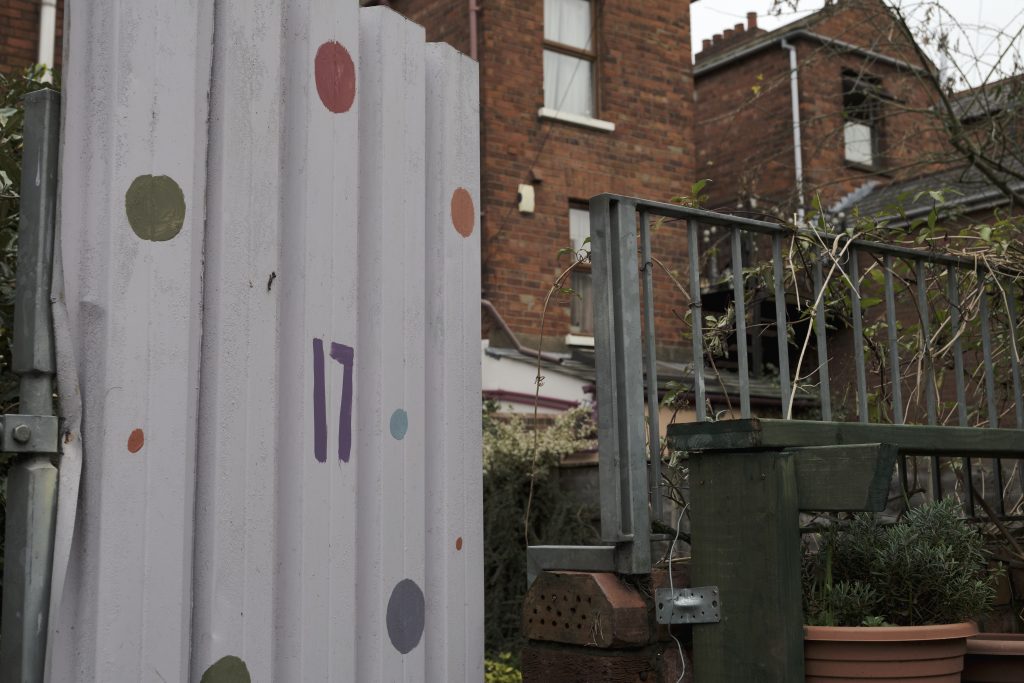
‘You paint the yard side of the gates first,’ says Brid. ‘If people don’t want to, we’ll do it for them. Then you hang some hanging baskets. You don’t need much – people just threw out what they had sitting in their attics and we went from there.’ She speaks about the challenge of getting student renters on board, encouraging them to recycle and use their fortnightly black bins. ‘You need a mix of carrots and sticks.’
Solar-powered Christmas lights line our route down the alley – the fruits of Brid’s latest funding success.
New bagged mattresses at the end, appearing yesterday we’re told.
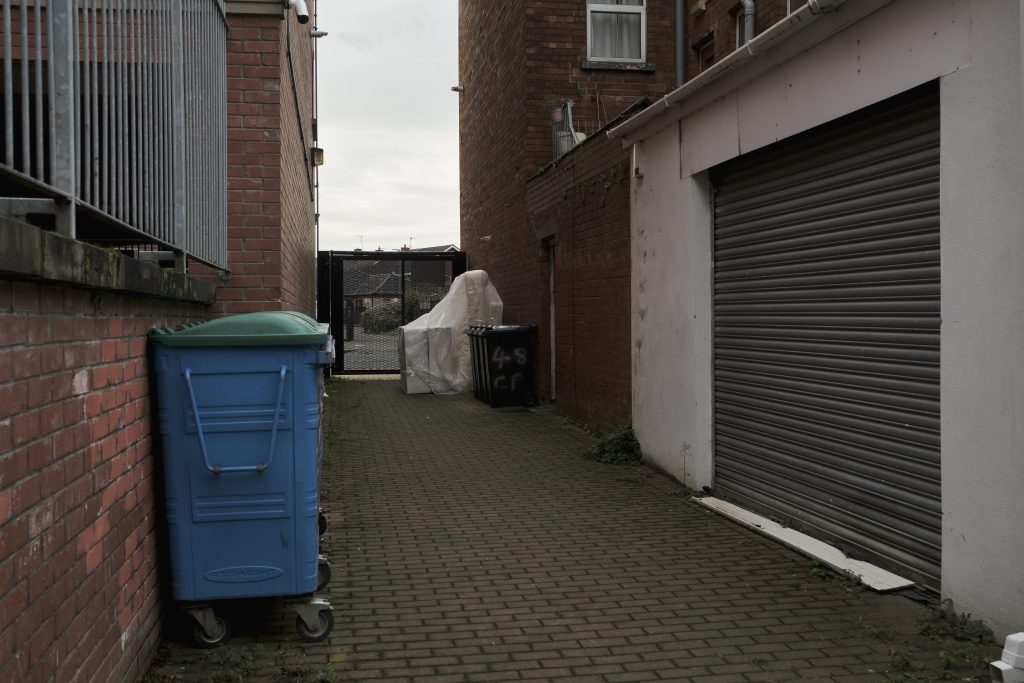
Oops! We inadvertently, momentarily trespass onto 1 ft of land, indistinguishable from the rest, that actually belongs to the landlord of the adjacent flats. The alley gardeners say they are forbidden from putting their recycling here. Or painting the white wall of another landlord’s very large store (definitely not a workshop), opposite. Landlords are getting a bad rap. We make a note to include them in our conversations.
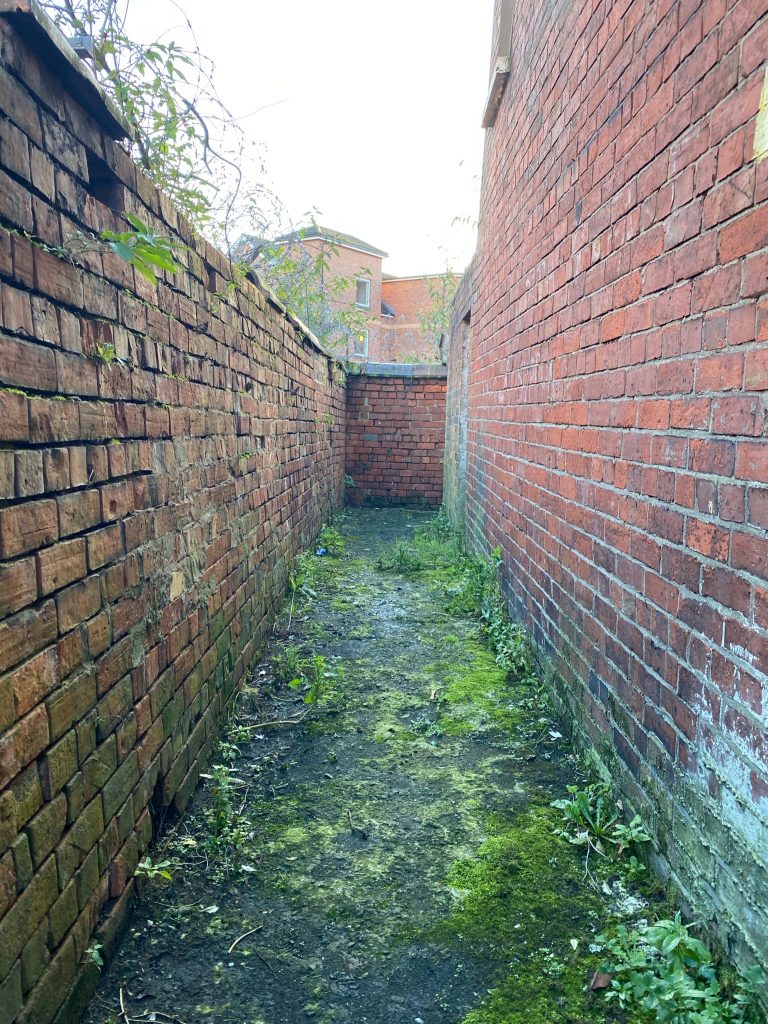
Next, Brid is turning her attention to an ungated, unadopted alley – helping a local resident to transform one side of it, leave the other clear for passage. No benches this time, nothing that can’t be fixed down. Horsey Hill, where the horses used to bring goods up and down for the river. We’ll go there for a look.
Our route there, not so charming, as we take to the other alleys, taking a look along the bowels of the Holyland student housing. Seagulls, bin juices, detritus and decay. Someone in a pink dressing gown, scrubbing with a brush beyond their own back gate, sloshing it with water. Surrounding them, devastation. Used nappies swelling and grimey in the puddles of dirty water.
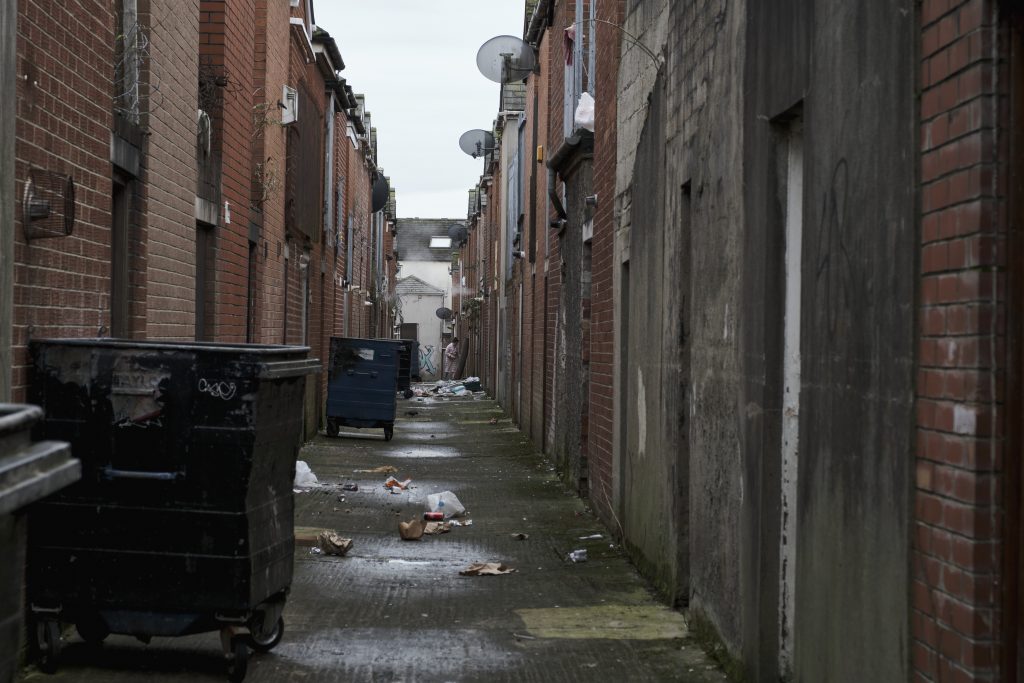
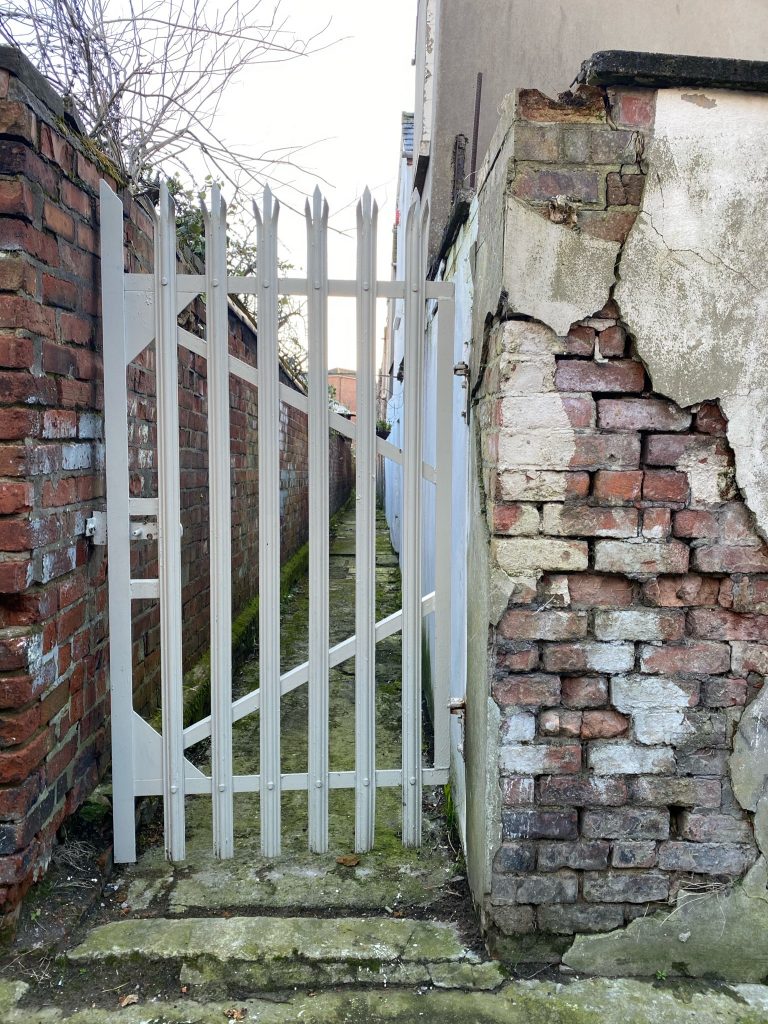
Gate locked at the other end – hearts sink to have to carefully backstep our way through the wreckage, again.
More seagulls, barbed wire, broken things, dumped things, overflowing bins, barred windows.
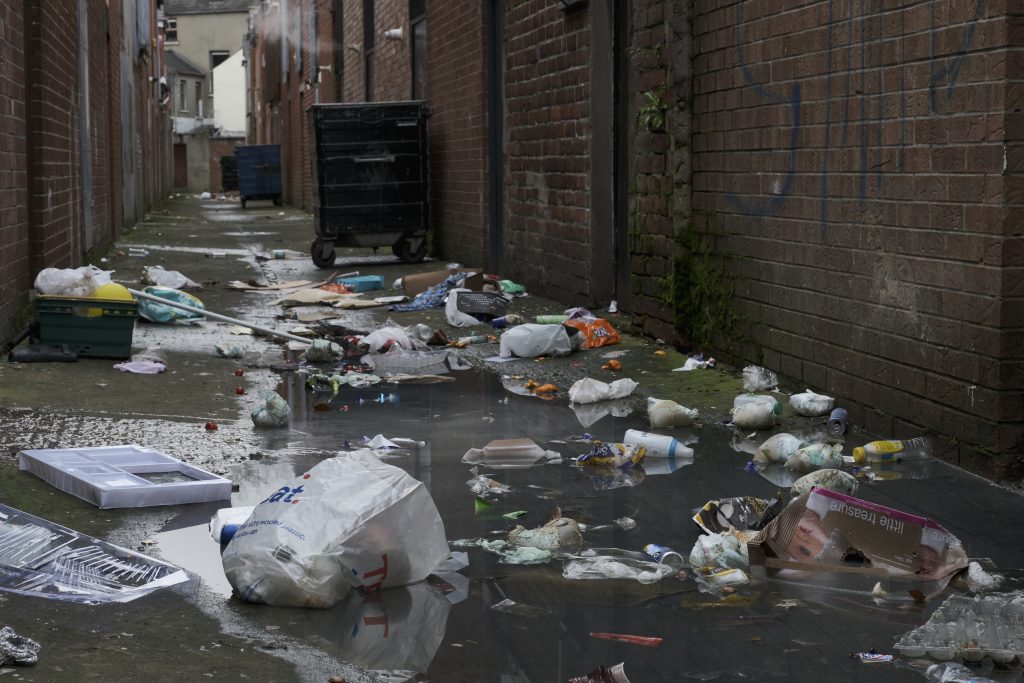
Hold your breath.
Not a place to spend time.
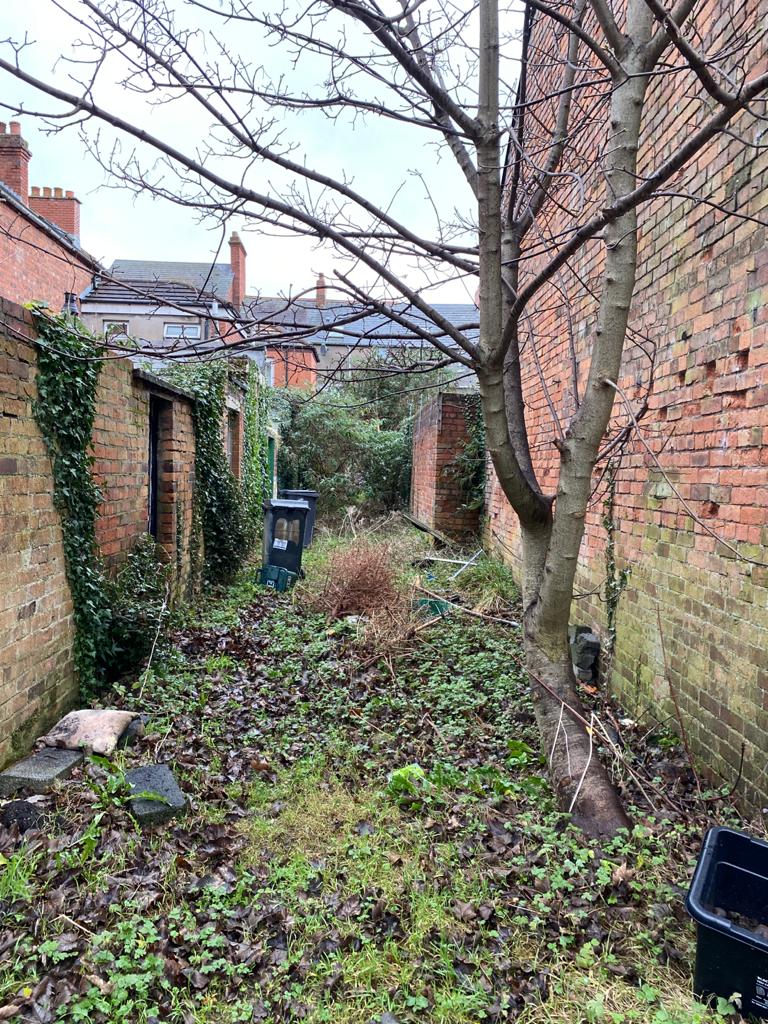
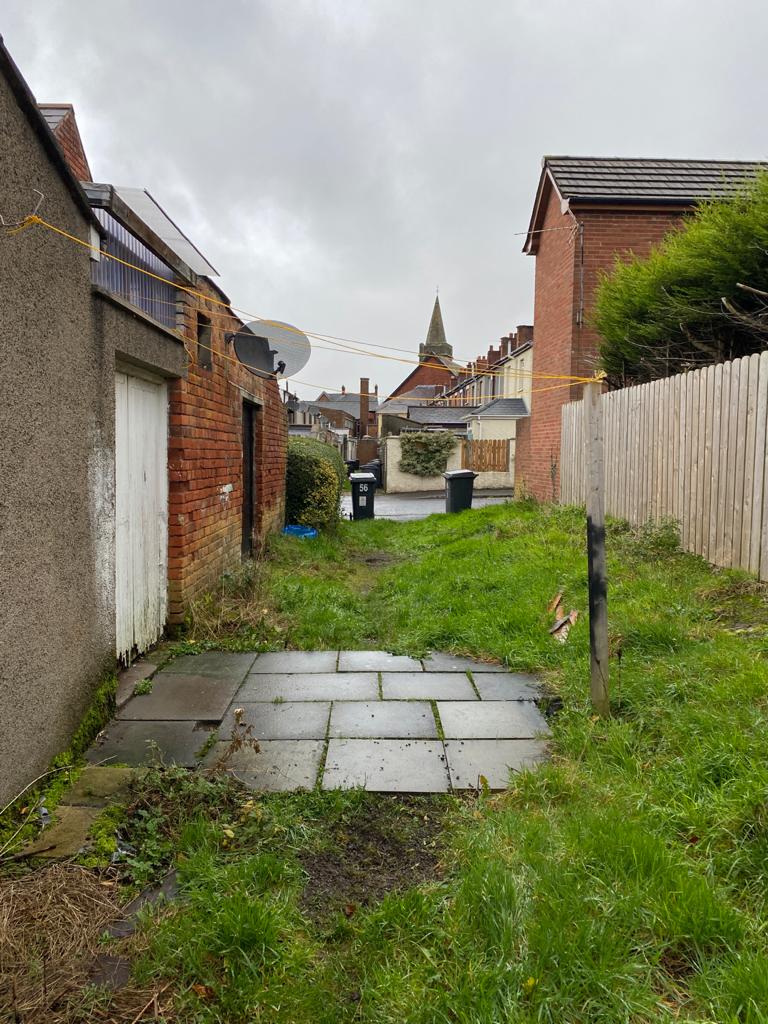
And then we find Horsey Hill, we think – perhaps the widest alley yet, wide open, short, with views straight down the hill to the river.
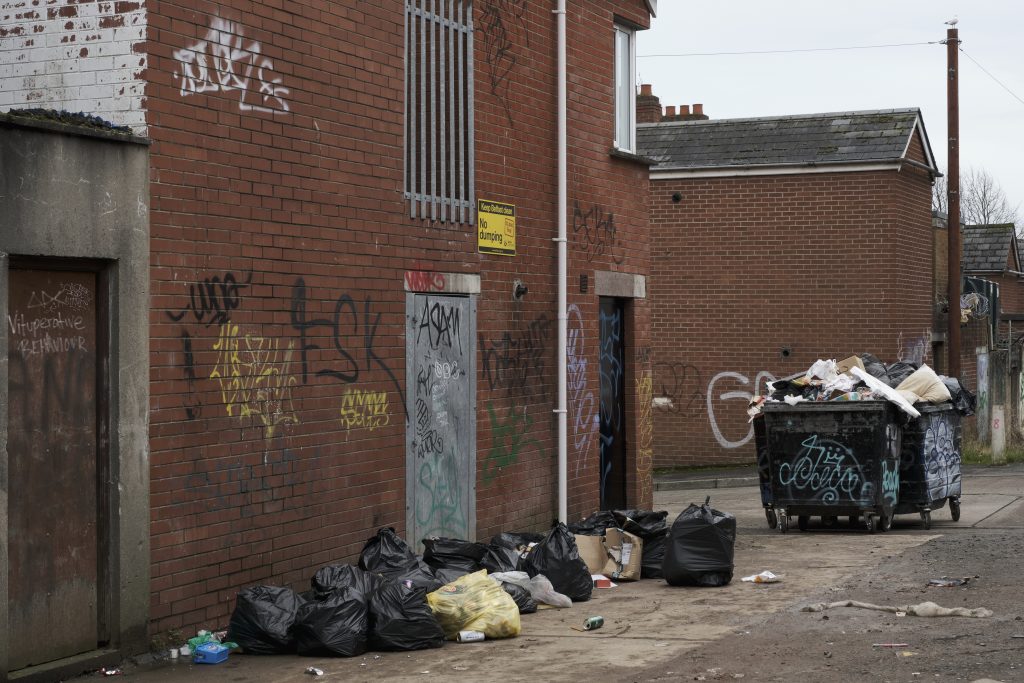
It’s overgrown and underloved – there’s potential here.
Can’t wait to see what they’ll do with it. How can we help?
Behind us another open gate. A steel planter, a leather sofa.