Categories
Gatherings Journal

New Heritage on Last Light Lane 

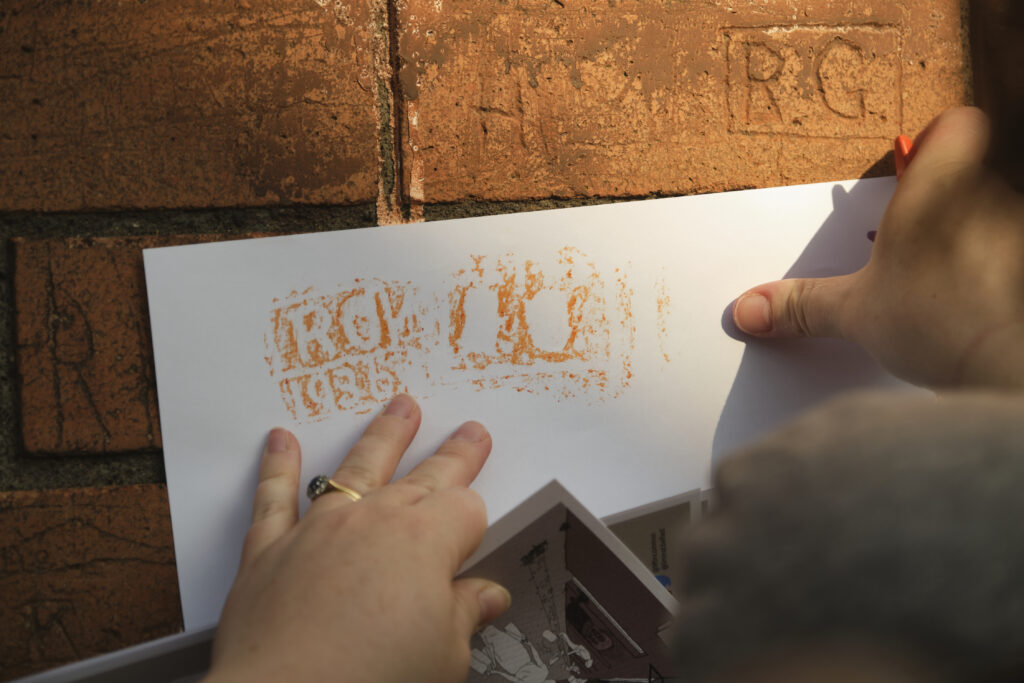
Belfast’s alleyways are a legacy of the the city’s industrial heritage, designed as shared rights of way for landowners and tenants. What remains of our Victorian heritage makes up some of the most beautiful architectural details in the city, from ornate street-lamps, beautiful red brick buildings and iconic street signs. In the alleys over the past two hundred-ish years, boundaries have become blurred and land ownership is inconsistent from house to house, even on the same street. However look closely and there are still signs of the people who have occupied these spaces before us – blocked up coal shoots, fixing and fittings, initials and dates scratched into red bricks
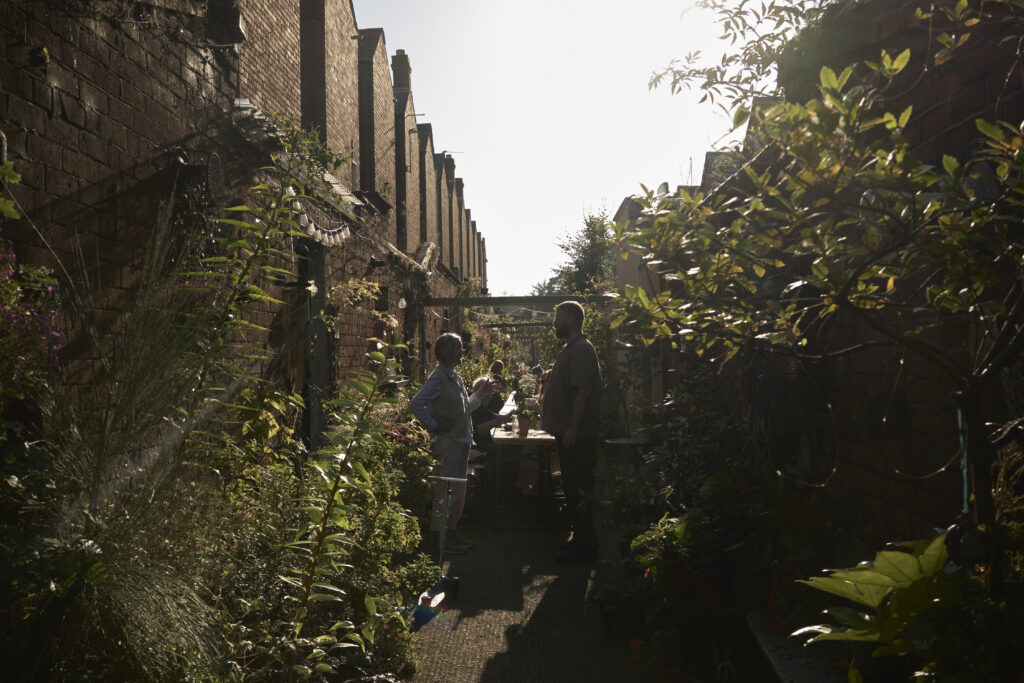
Back in 2020, we were contacted by Carl in the north of the city. They co-own (with one other house) a short alley off Glandore Avenue, known informally as Last Light Lane because it gets the last light of a sunny day. They had worked hard to ensure it was safe for public access. We celebrated Bealtaine Eve here in 2024, getting to know Carl, his brother Nathan and other local residents from the the Restore Glandore ATC group.
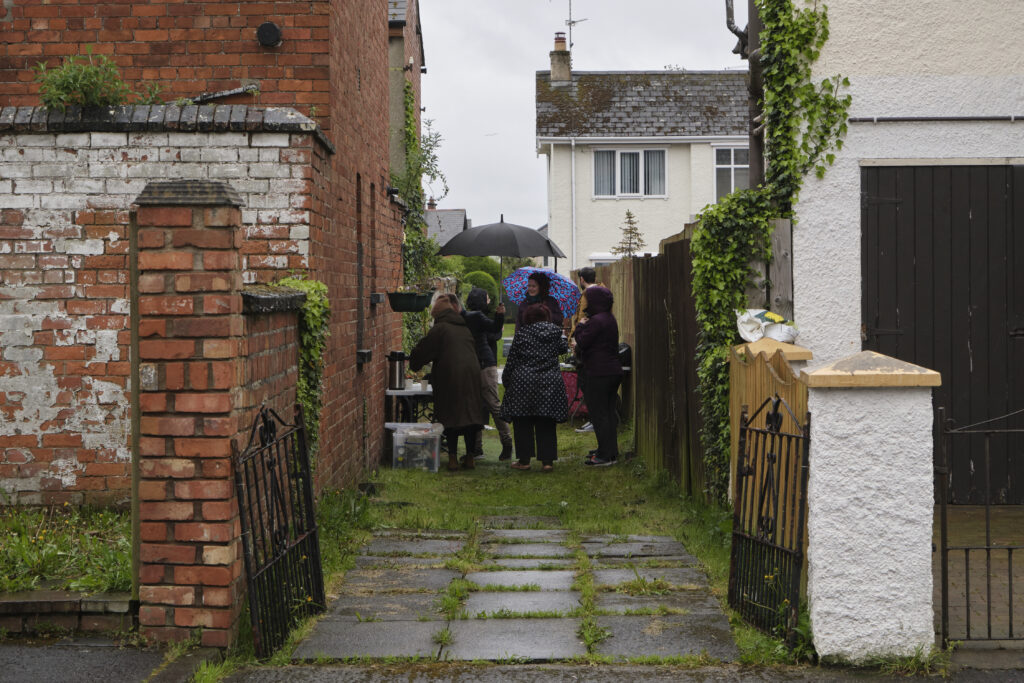
A not so sunny Bealtaine in Last Light Lane 2024

One of the projects the group had been advocating for was the reintroduction and restoration of the traditional Belfast Street Signage on surrounding streets, but they had struggled to get the support to make it happen. They had already formed a research partnership with an artisan tile maker, to explore and revive the lost process of making these much-loved signs.

Having already been thinking to create a beautiful sign for a named alley, we saw an opportunity to combine the resident’s dedication to their neighbourhood with a celebration of their role as proud custodians of Last Light Lane. 

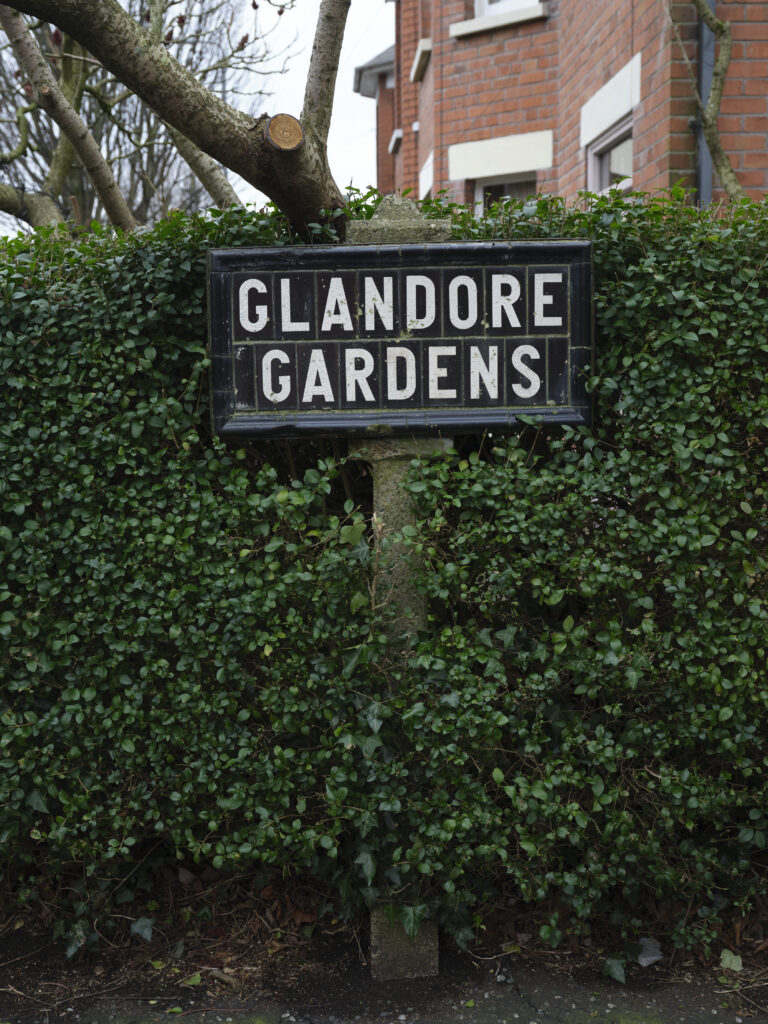
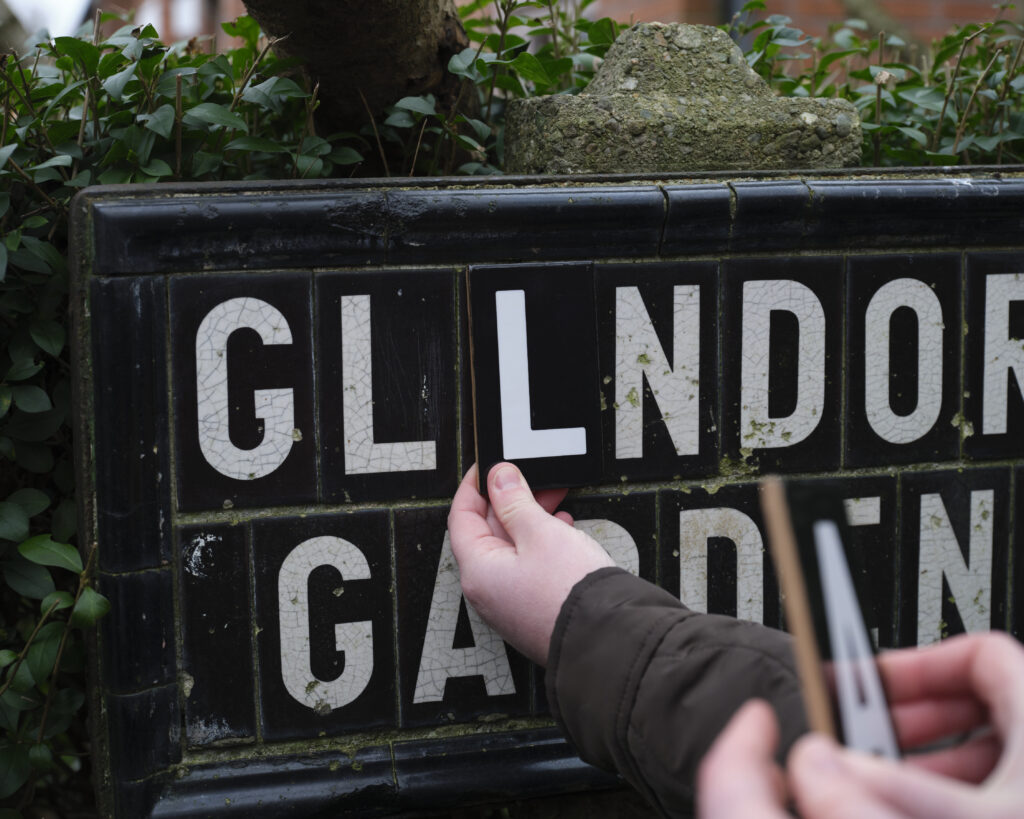
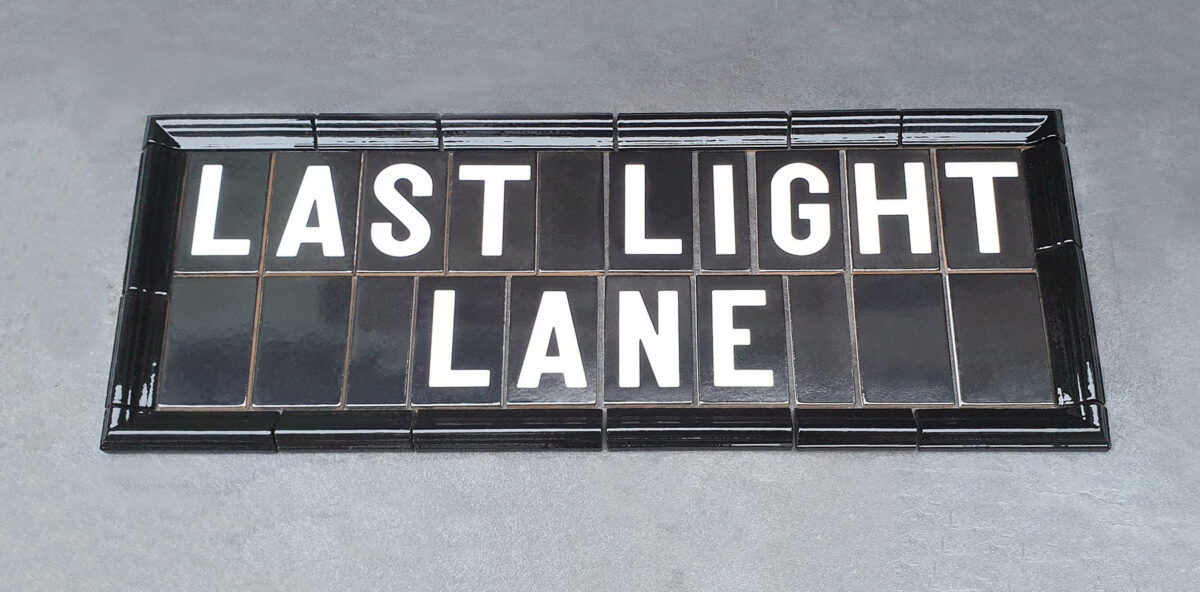
To bring this vision to life, we commissioned expert tile maker, Terry Cartin Ceramics to craft a sign for Last Light Lane using traditional techniques – screen-printed, ceramic-glazed tiles. There was quite a bit of R&D work to be done around materials and process – sourcing and matching the correct font, colours and moulding. Terry also had to take into consideration how, if required, the process could be scaled up or replicated for producing more signs. Amazingly, the cost estimate per sign using these artisan processes isn’t much different to the costs of the machined replica signs produced by Armatile which can be seen across the city. 
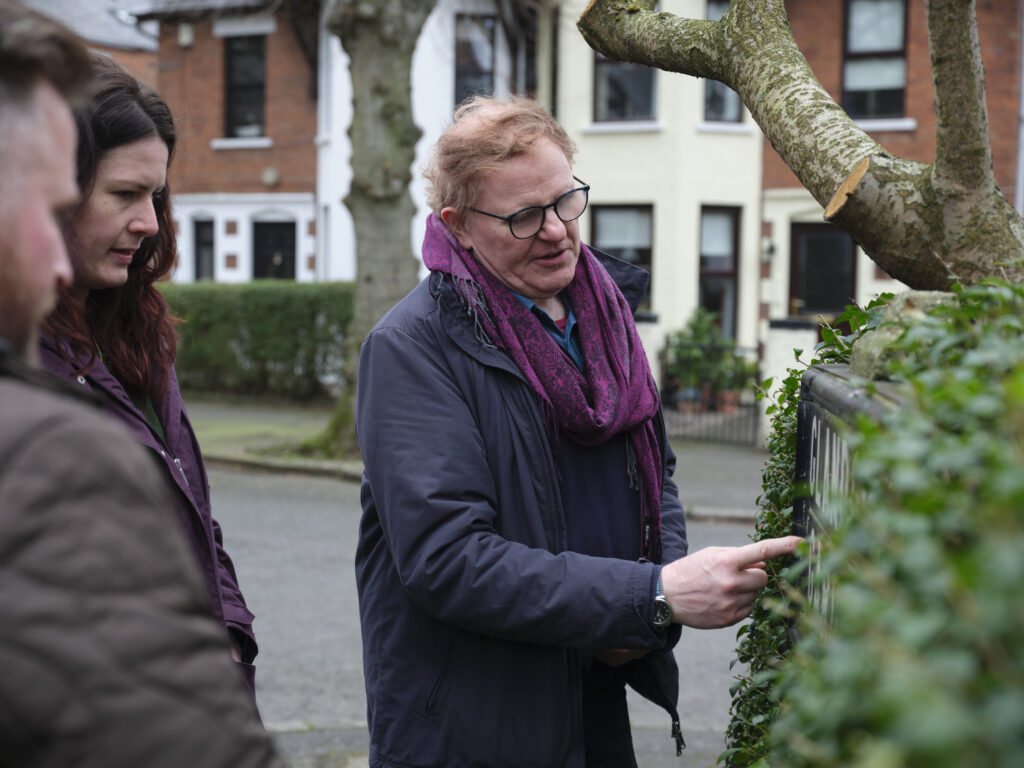
In January 2025, Terry travelled up to Belfast to drop off the precious tiles and talk us though his production and design process. We did a walk about the area to compare and contrast with the few remaining traditional Victorian signs.
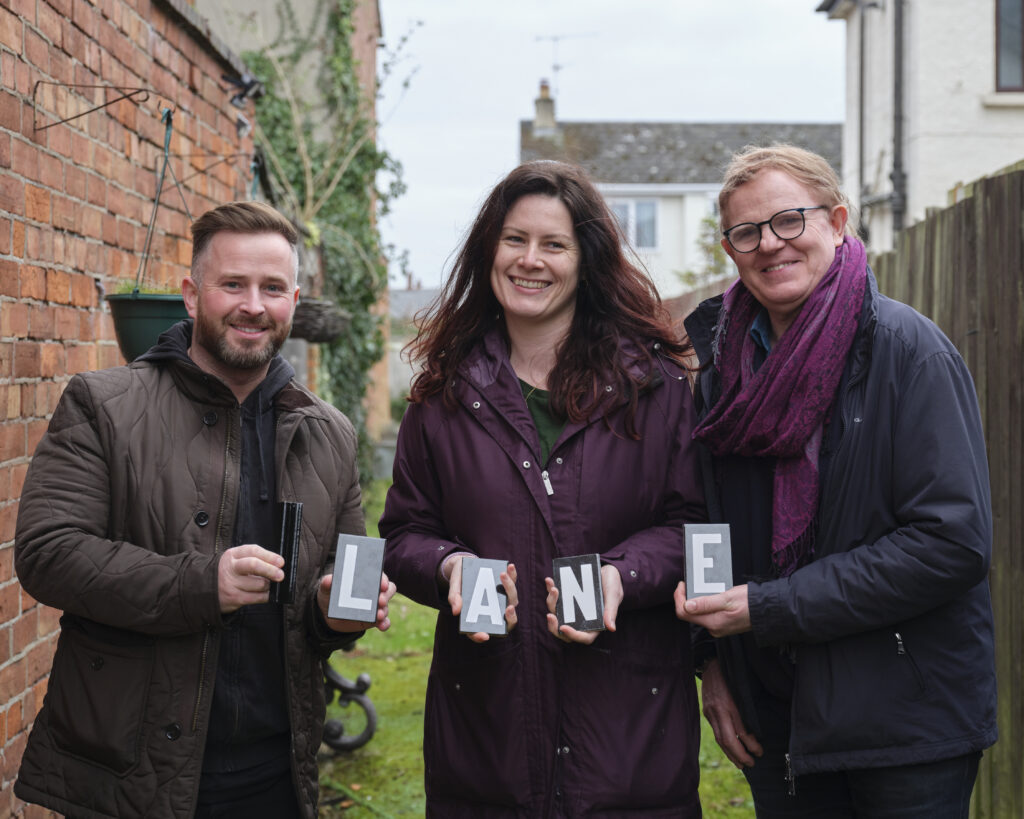
Carl, Meadhbh & Terry with the tiles when they arrived in Belfast

Ceramic signage must, by its nature, be part of a structure or be permanently secured to it, so fitting the sign was another hurdle – especially since there were no spares in case of breakage! For safety, installation was post-ponded for a few months till a spell of warmer weather would allow for proper drying of the adhesive. But here we are finally – a sign for Last Light Lane in place at last! 
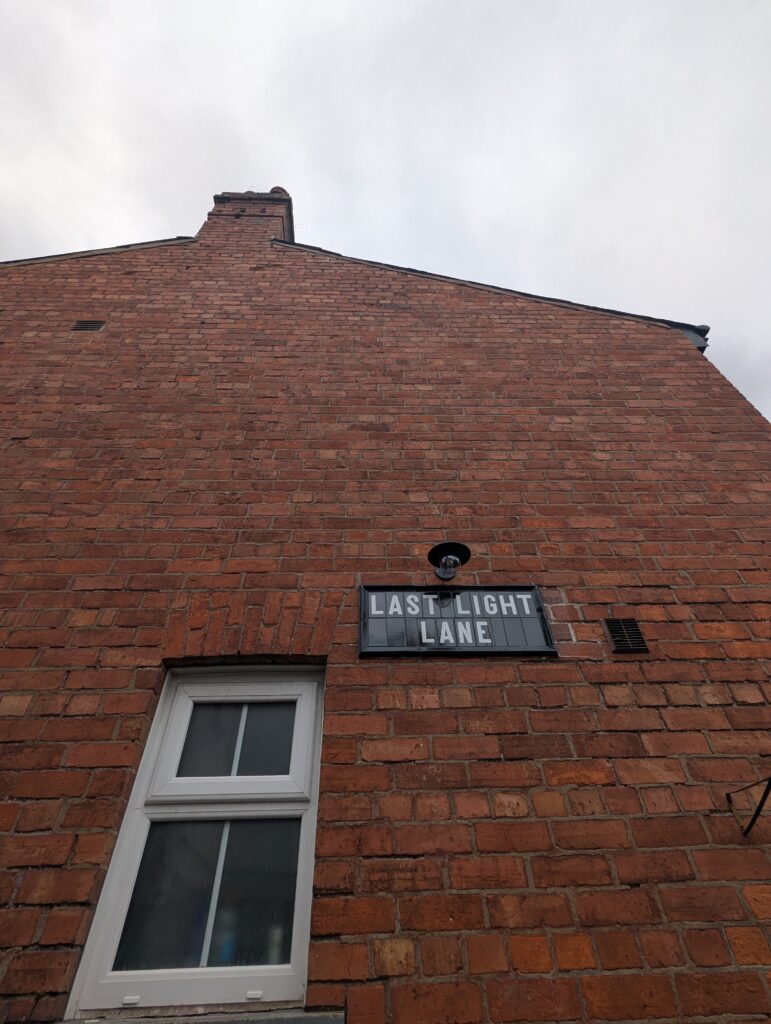
This decision to commission this street sign was an investment in quality and traditional craftsmanship and the preservation of heritage skills. Street furniture and signage play a strategic role in urban planning, placemaking, and community wellbeing. How we choose to preserve (or not) these often-overlooked details of the city, raises questions about our future heritage: What will last to tell these story in the next hundred years? Is it the mass produced utilitarian alternatives that are increasingly seen in the city, or something that is handcrafted, rooted in tradition and reflective of Belfast’s identity? Can we apply the same thinking to the alleys themselves? What functions might they serve in another 100 years and how do we preserve this heritage for future generations?
Categories
Events Gatherings

Feeding Houses

a Co-Designed Neighbourly Dinner at Ardmore-Rossmore Alley

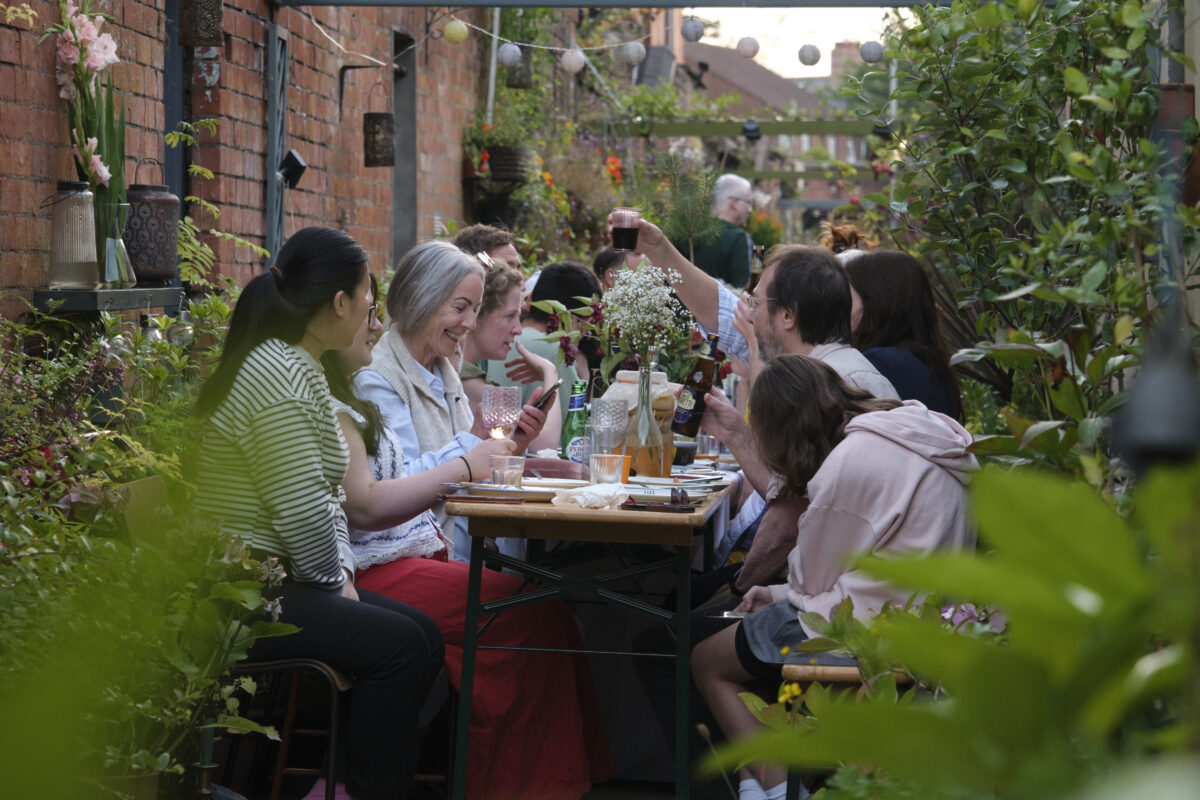
Feeding Houses was a beautiful part of our alleyway commission with artist and chef Phillip McCrilly. Knowing Phillip’s thoughtful, considered and always delicious work, and knowing he lived on the lovely Ardmore-Rossmore Alley in South Belfast, we invited him to create a response to our Lughnasadh (harvest) theme of ‘Feast’.

Sharing food – a cup of tea, a slice of cake – is often the first step in building an alleyway community initiative with neighbours. So we loved the idea of a collaborative alley meal. Phillip, whose practice explores the transgressive and interdisciplinary possibilities of food and hospitality, was immediately full of ideas. He thought our commission would sit well alongside another project he was developing through the British Art Network, where he planned to collaborate with Moonhyung Lee, chef at Silo (the world’s first zero-waste restaurant), and curator Cecelia Graham.

Phillip said:

“Since March 2020, the residents of Rossmore and Ardmore Avenue have organically collaborated to repurpose our alleyway into a shared community garden. This situation offered amazing potential for a community feast, and I wanted to collaborate with as many people as possible.”

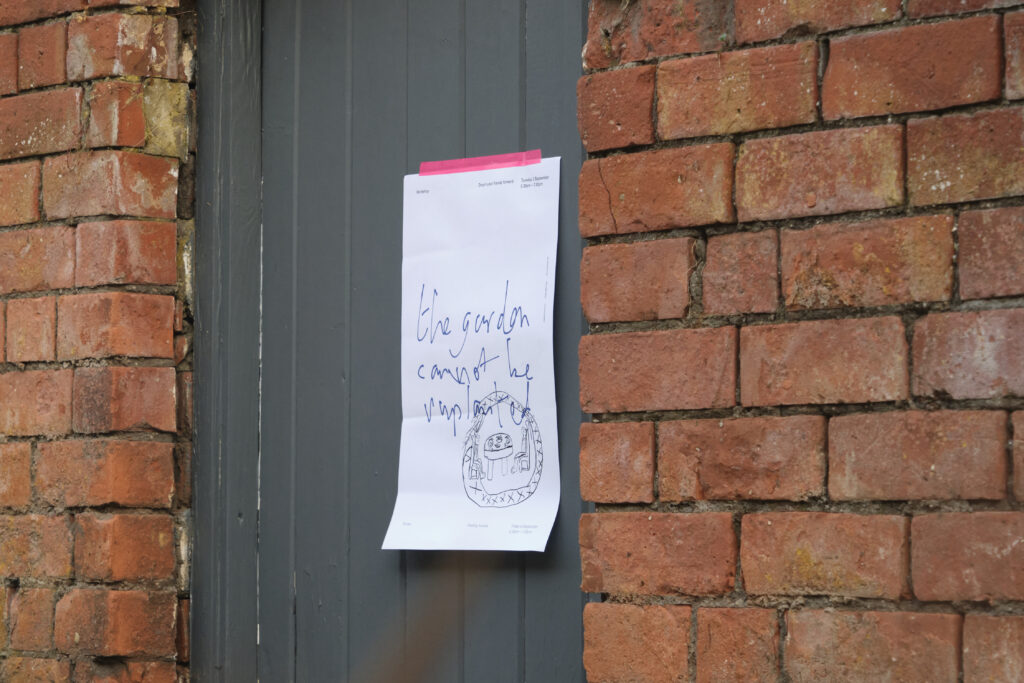
The proposal he returned with was titled This Garden Cannot Be Unplanted, a response that wove together the histories of domestic hospitality, reciprocal and alternative economies, and the legacy of grassroots food initiatives.

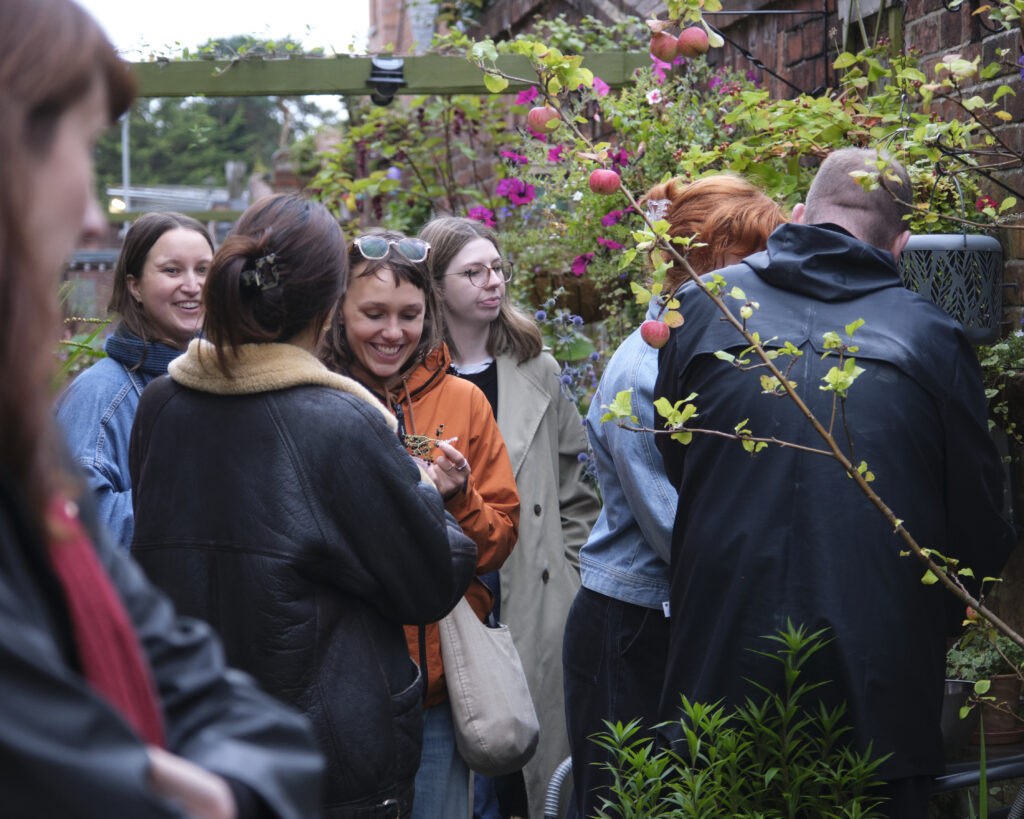
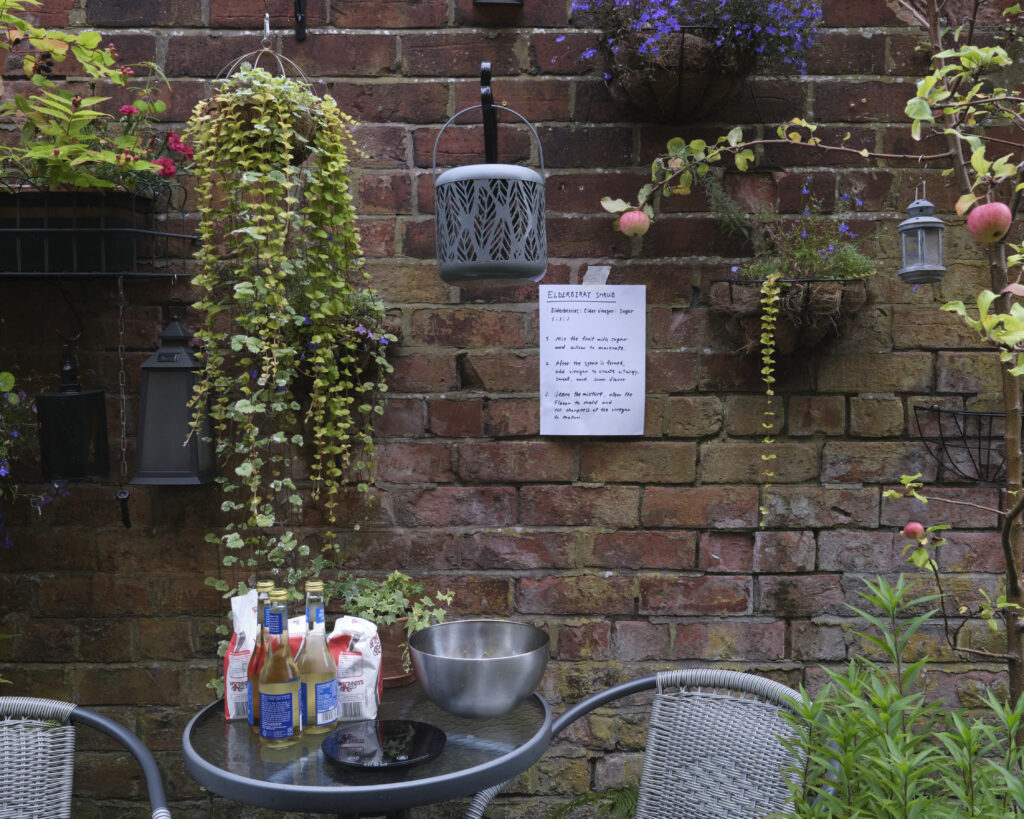
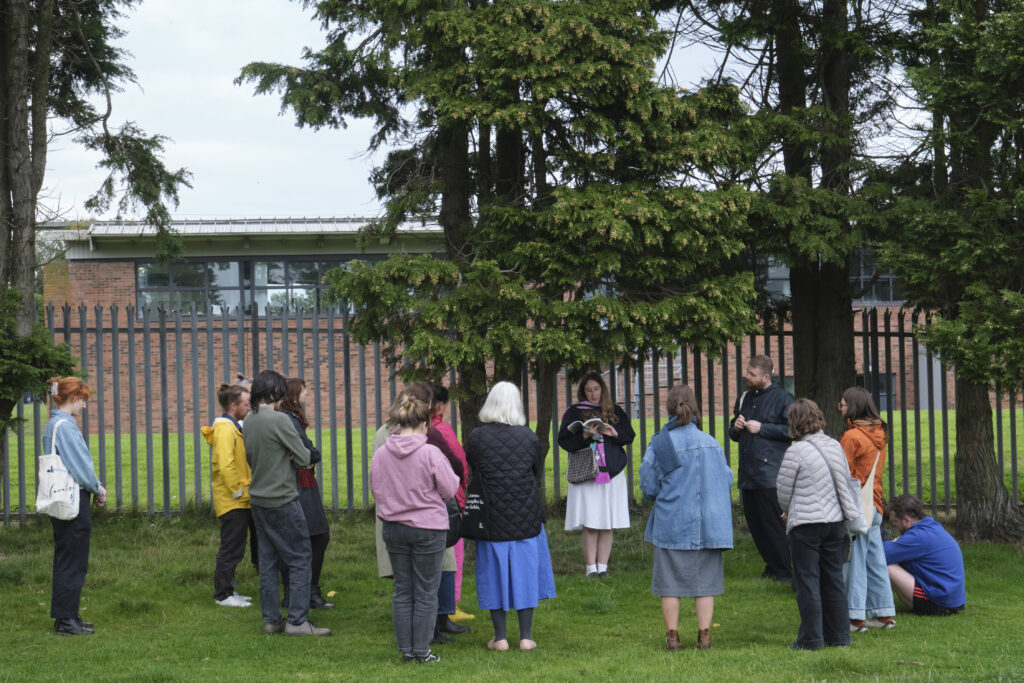
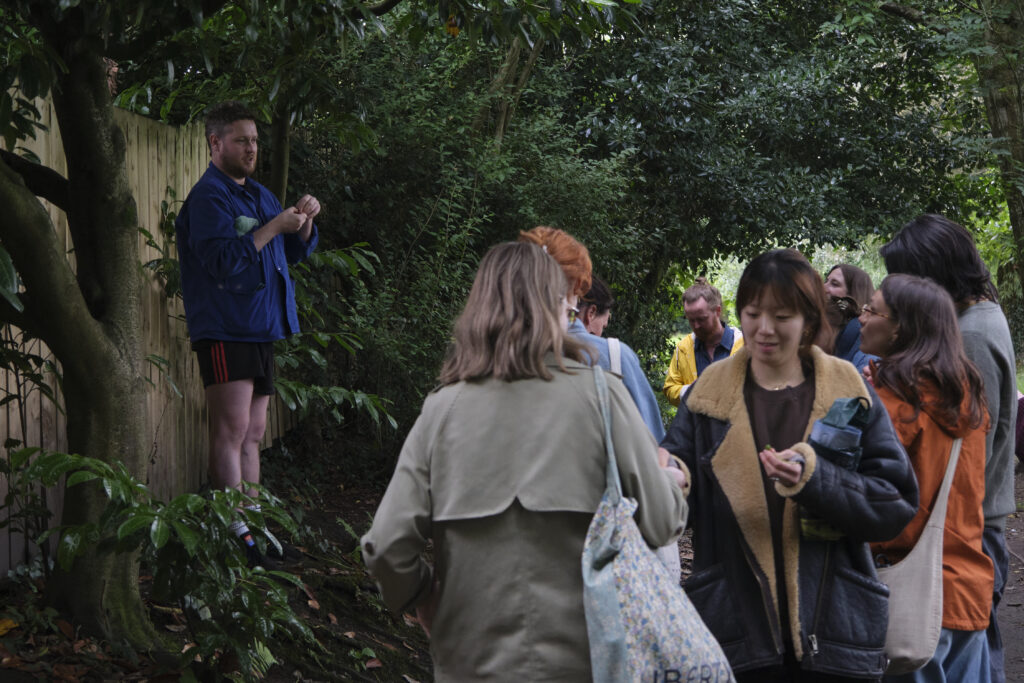
The first part of the project was a public workshop on 3rd September called Dream Your Friends Forward. Participants took part in neighbourly foraging, walking together to Cherryvale Playing Fields to gather seasonal ingredients, which they later used to create batches of syrups back in the alley.

“Throughout the workshop, we discussed sustainable foraging practices that encourage us to harvest ethically, and to think about how this slow and thoughtful act creates the foundation for empathetic and neighbourly approaches to artistic practice.”
– Cecelia Graham

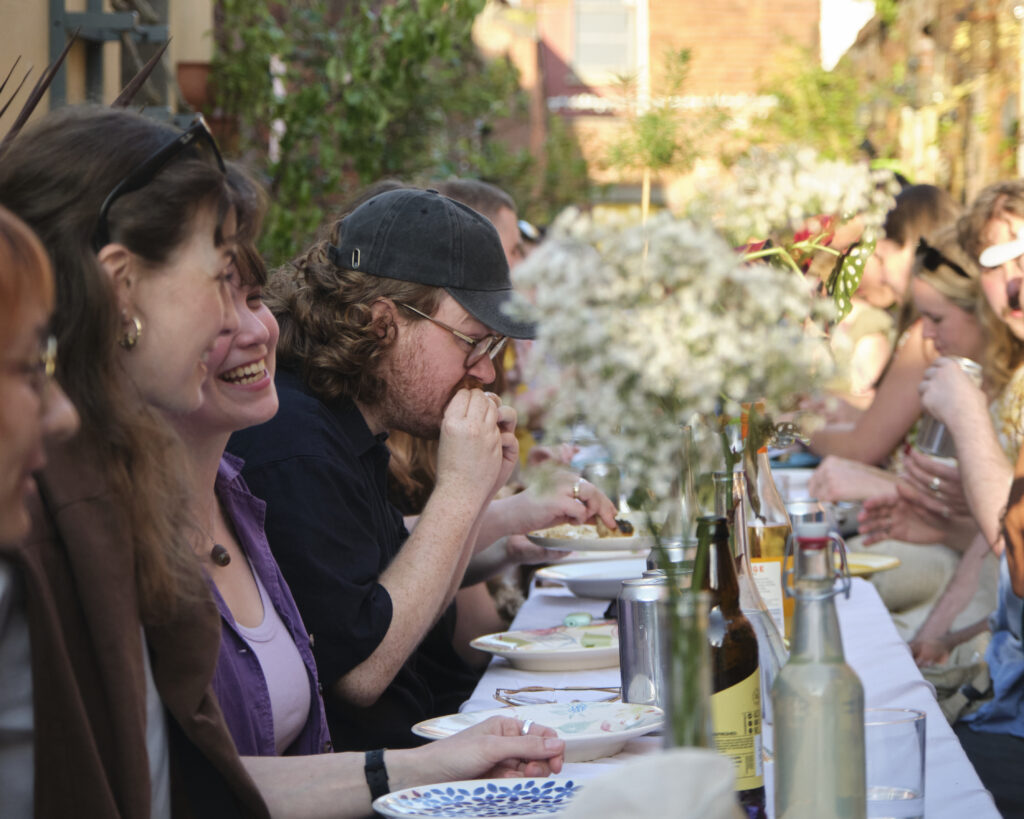
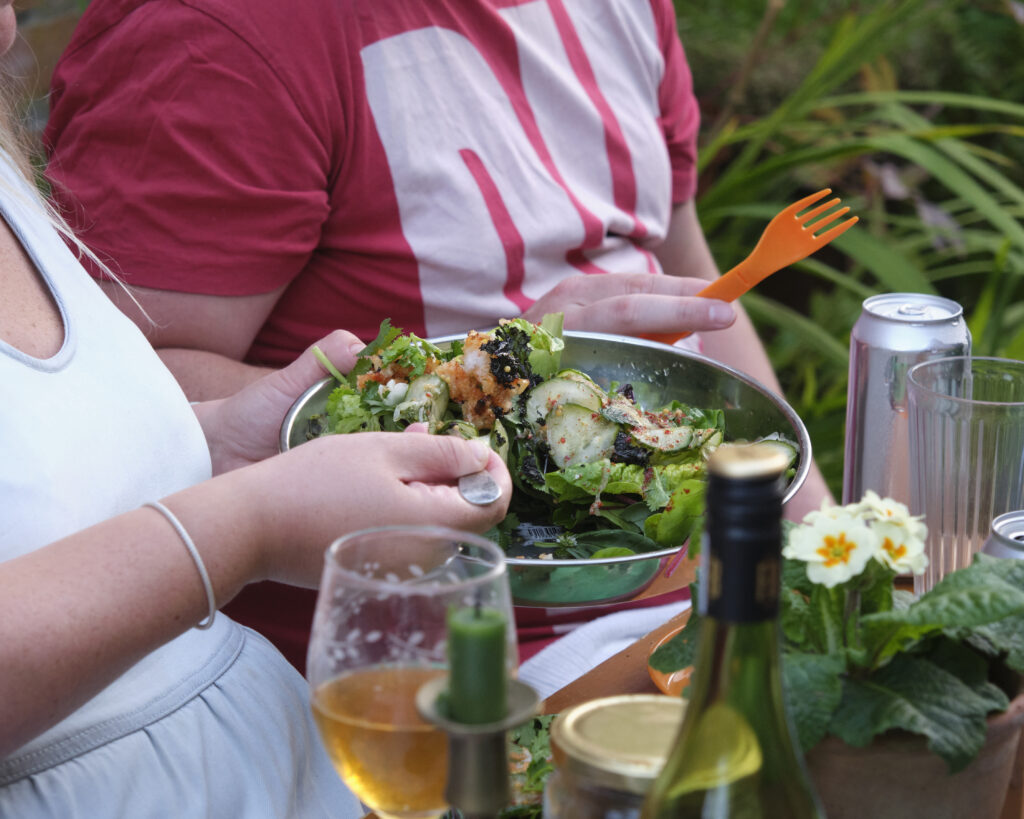
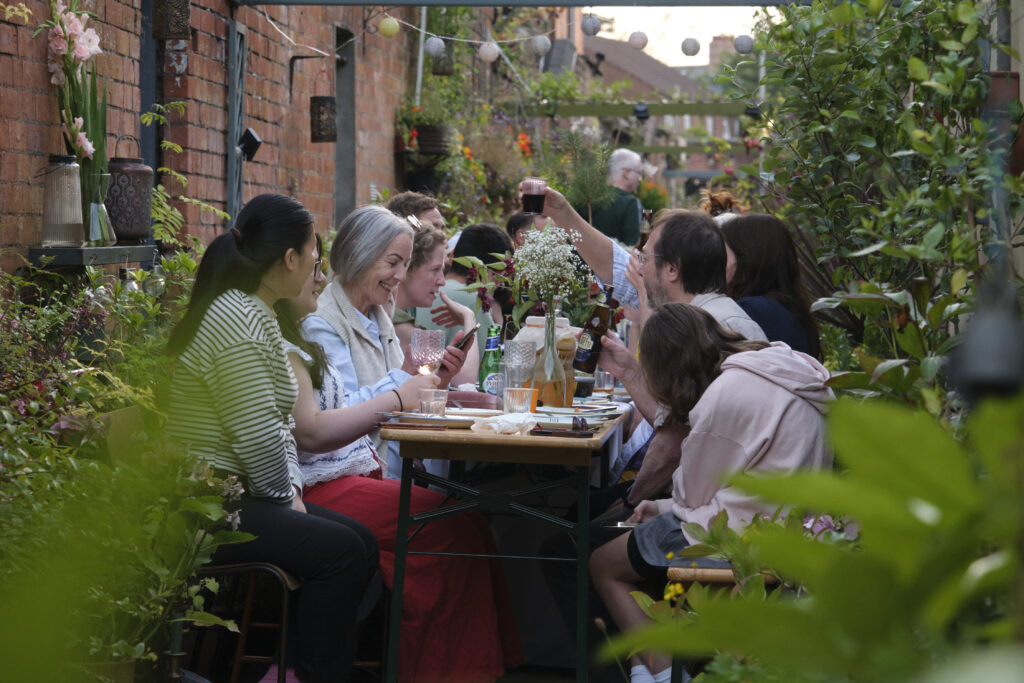
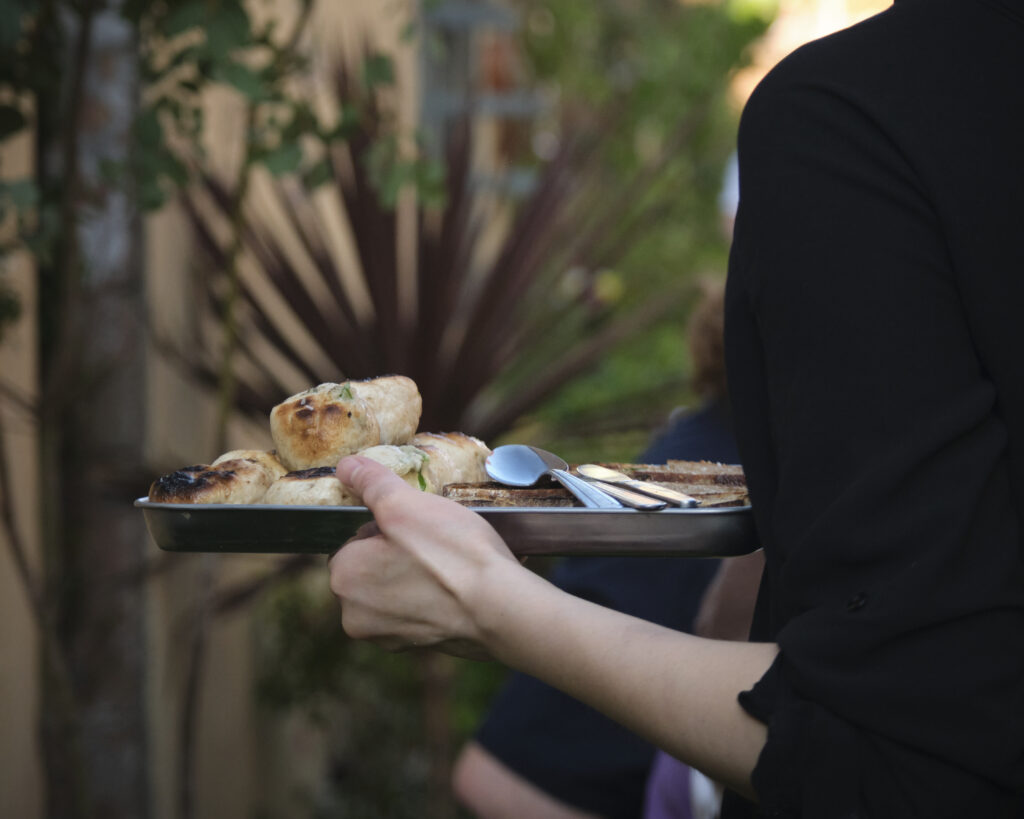
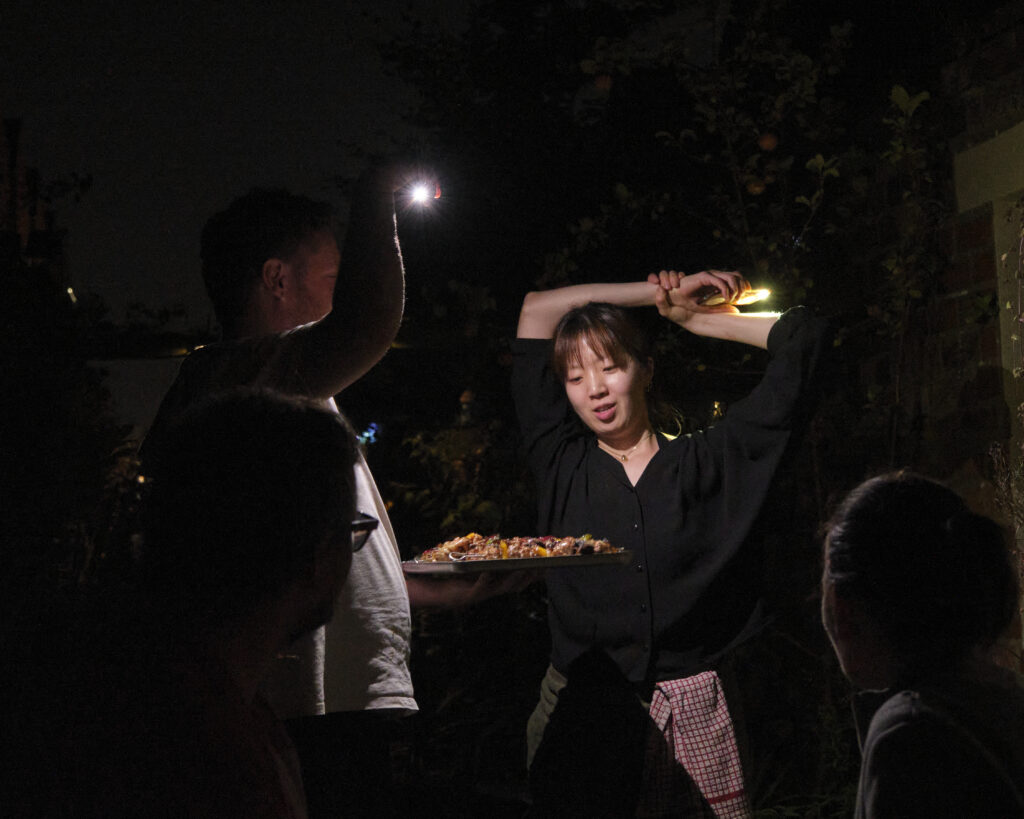
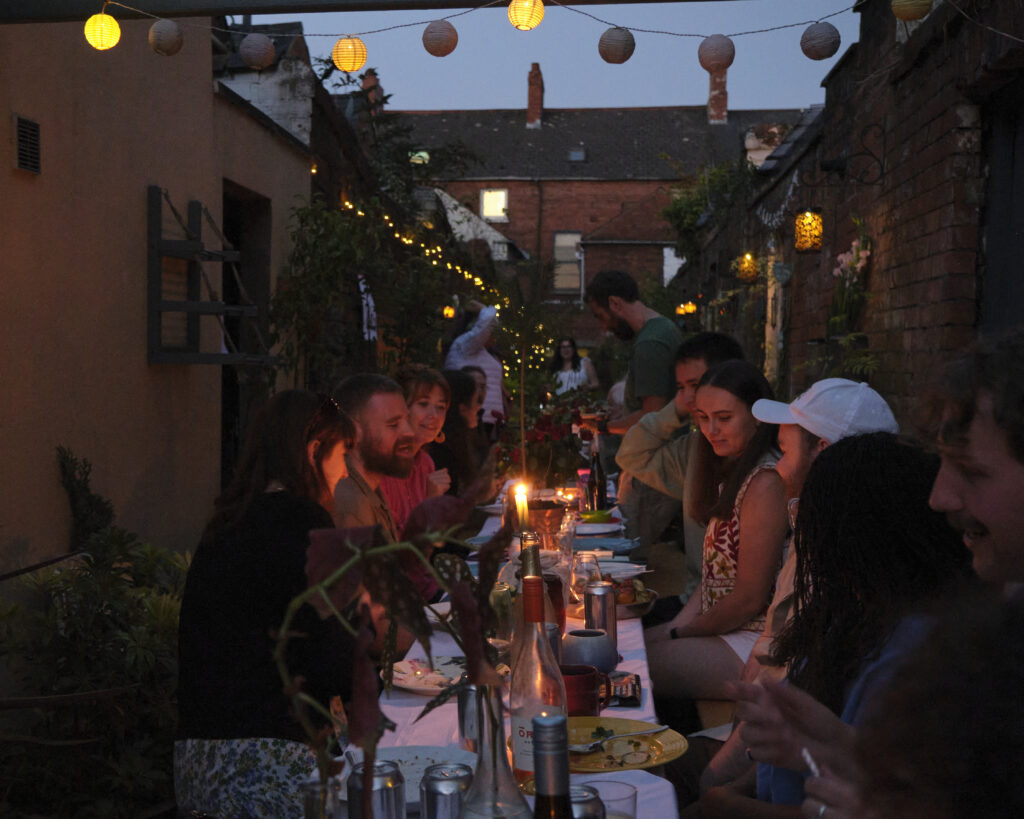
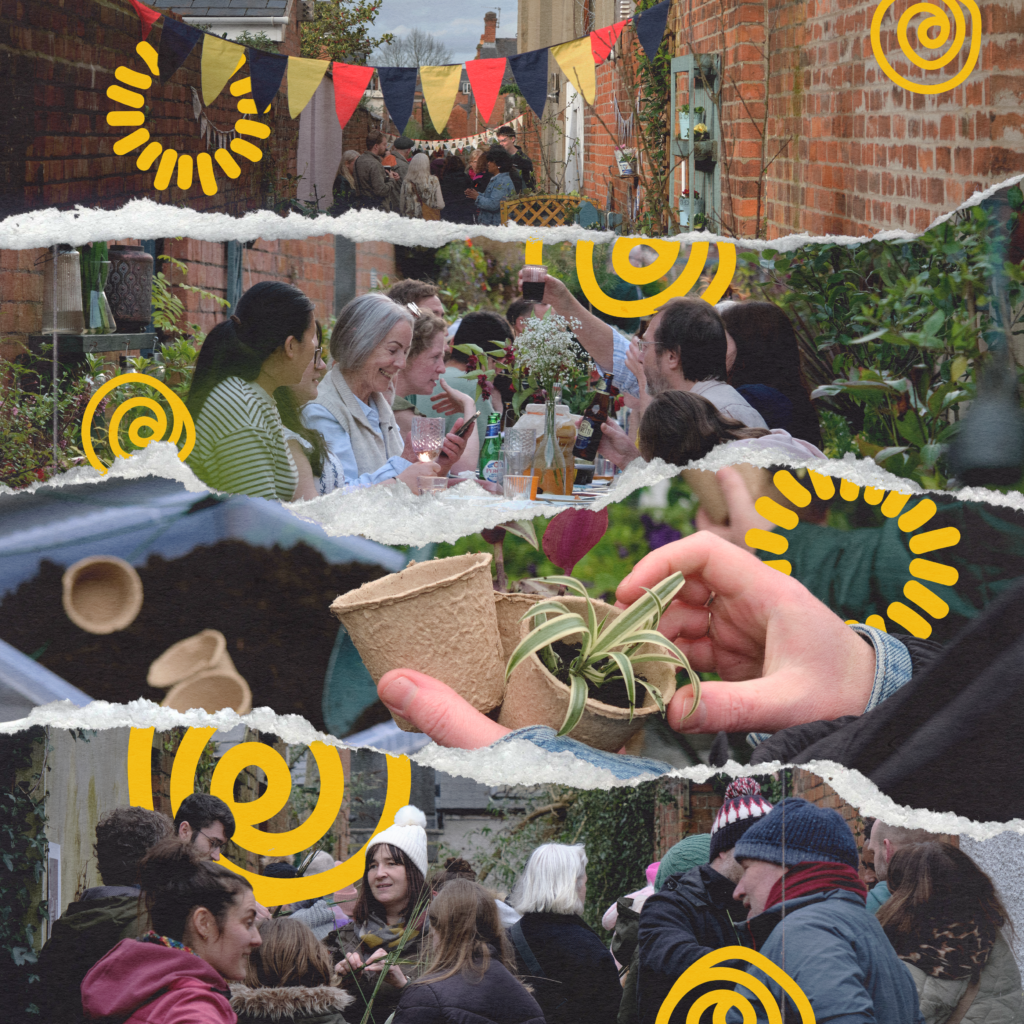
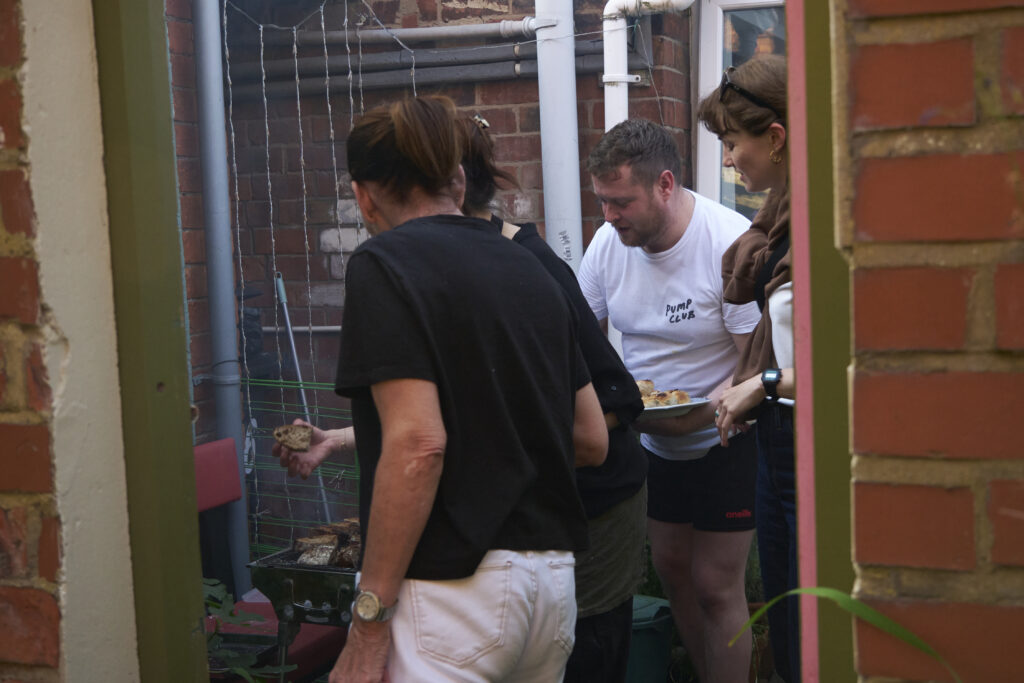
The second part was Feeding Houses, an alleyway dinner for around 55 friends and neighbours, inspired by an Irish tradition to create community through sharing food. It was held on Friday 6 September on a (luckily) gloriously sunny evening. Everyone at the table had contributed something: plates, flowers, cutlery, even rarely used kitchen tools donated for the effort. Over the week, neighbours brought along surplus ingredients and equipment – the kinds of things often left at the back of cupboards, forgotten or overlooked. Phillip and Moon used their skills in Phillip’s home kitchen to turn what might have been waste into an extraordinary shared meal. Each bite was a delight, and guests enjoyed the food, the drinks and the company until night fell, with the final courses served by torchlight.

Here’s what one neighbour had to say:

“A beautiful event in the Rossmore/Ardmore alleyway, masterminded by artist Phillip McCrilly. Foraging ingredients from the local area and also from neighbours’ kitchens, Phillip and collaborator Moonhyung Lee created course after course of delicious food – in the process reducing waste and breathing new life into unloved items that may otherwise have been discarded. This was a truly inspiring and memorable evening. It taught me a lot about the power of engaging with your community and the world around us, and what’s possible when we come together.”

Moon’s reflections captured the spirit of the project beautifully:

“Growing up in a city of concrete and having lived in an apartment my whole life, spending time in this alley, where everyone knows each other, was truly enlightening. It highlighted the importance of sharing knowledge, appreciating nature, and building a sense of community through food. During the two days of workshops and the dinner, Phil’s neighbour dropped off fresh vegetables and cooking equipment. Jake went fig leaf foraging for a dish we wanted to try, and the team at Boundary Brewery generously lent us tables, benches and some refreshing beers. It felt incredibly special to be embraced by the community in such a short time. Everyone was eager to lend a hand and offer support.’

Feeding Houses showed how sometimes a meal can nourish the dinners for much longer than one day, how there’s always enough when we share, and when the sun shines in a Belfast alleyway, sure there’s nowhere better!

Categories
Events Gatherings Journal

Reflections on our Manifesto Launch

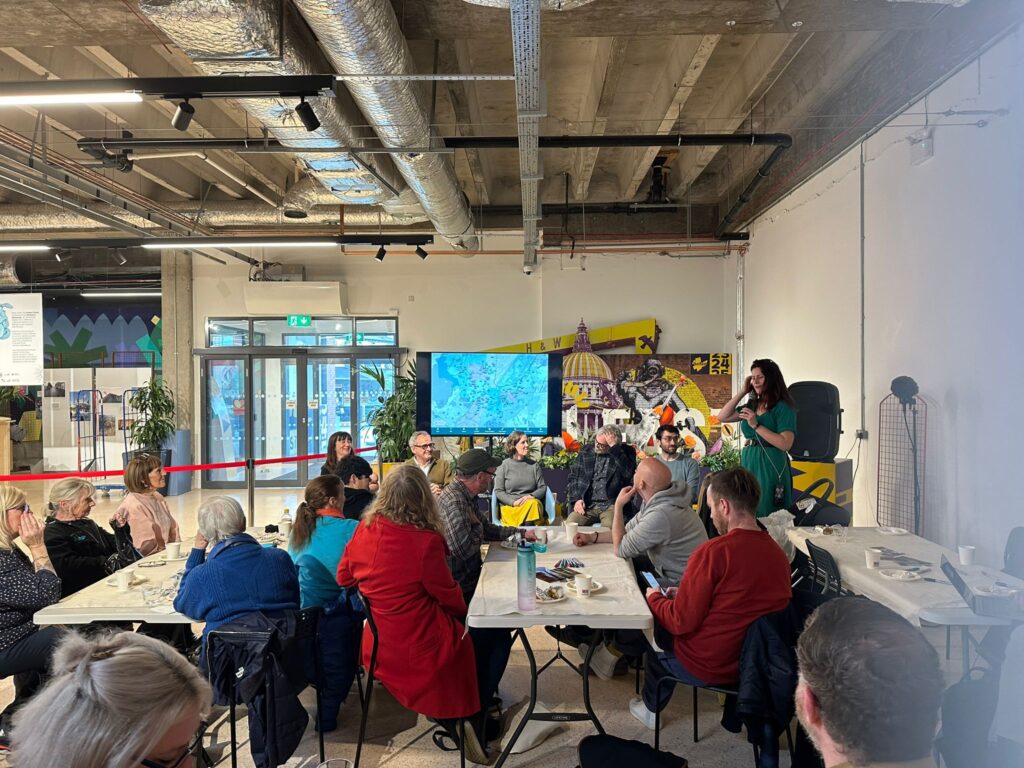
Across the year of Belfast 2024 so far we’d been working quietly and steadily. Gatherings were small and intimate, developed in collaboration with neighbours. Launch day feels different though. There are almost 100 people booked to join us at the Ulster Museum (big thanks to them for hosting us!) and media interest has boomed! This is what it has all been building to, and the anticipation is palpable. 

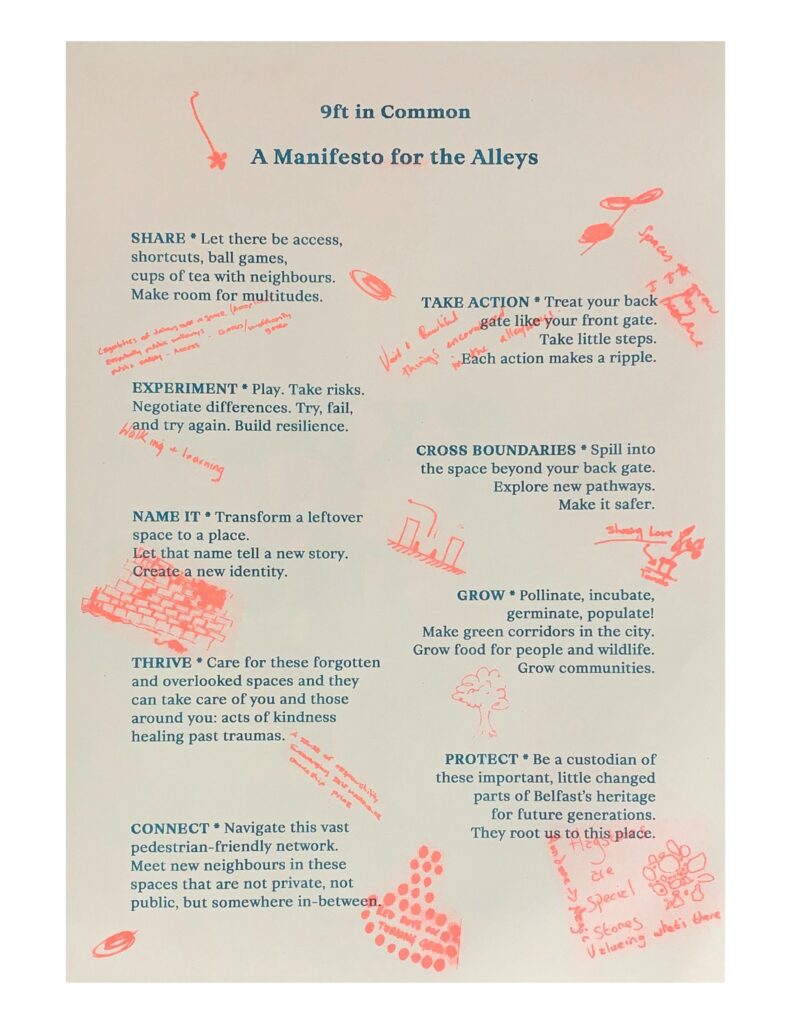
The Manifesto has 9 key points which have been developed through a myriad of conversations, over several years. It captures and mobilises people’s intentions, hopes and wishes for the alleys behind their houses and across the city. It makes reference to the many great things that are already happening in alleyways. Our research has found that there are already signs of growing and/or social interaction in 7% of Belfast’s alleyways. The Manifesto considers the potential of the other 93%. It is a call to action for residents and decision makers alike. 

A Manifesto for the Alleys. Click to read more details.

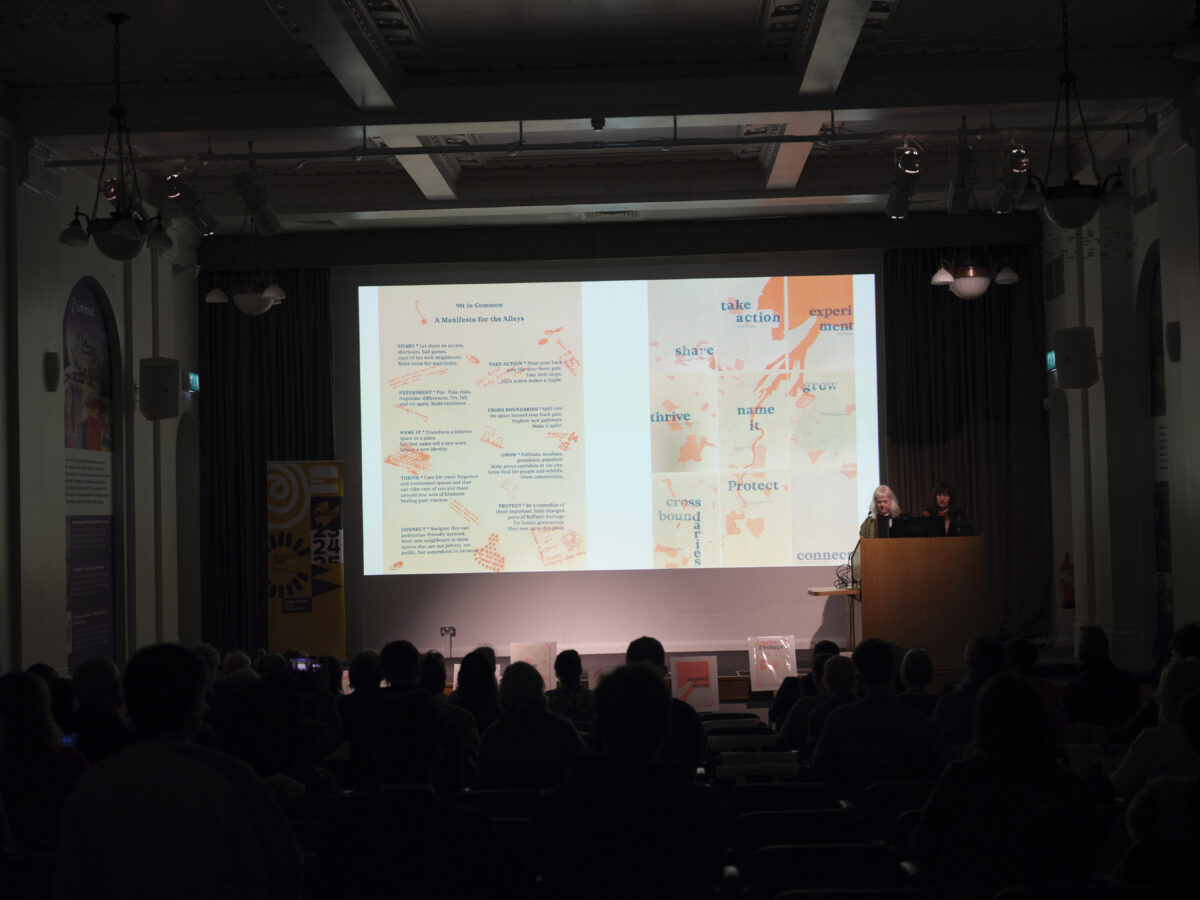
Graphically, the Manifesto for the Alleys has been designed by Emily and Alessia at Soft Fiction Projects. Their work focuses on ‘an exploration of underrepresented voices, oppositional histories, geopolitical narratives underpinned by intersectional feminist perspectives which challenge and reframe dominant hegemonic power structures.’  They chose to incorporate the original Belfast Alley Map in their design, along with handwritten notes taken during 9ft in Common’s reflective public workshop, held at Samhain. Two sided, they reveal the full Manifesto on one side with one of the 9 points illustrated on the other. 9 versions of this side tile together to form the Belfast Alley Map. They are more than the sum of their parts.

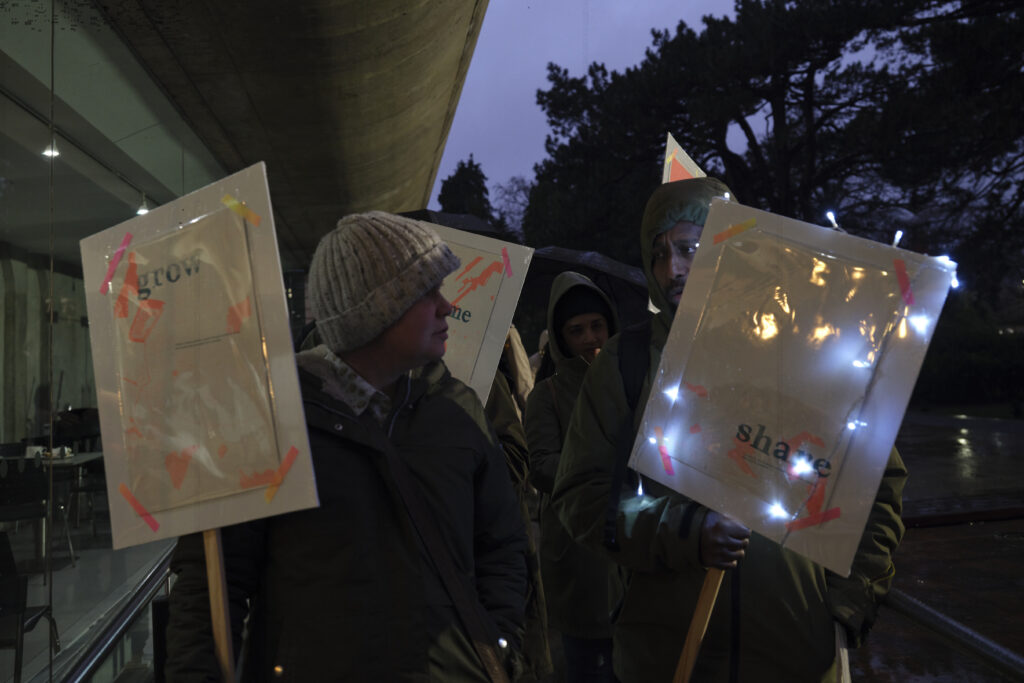
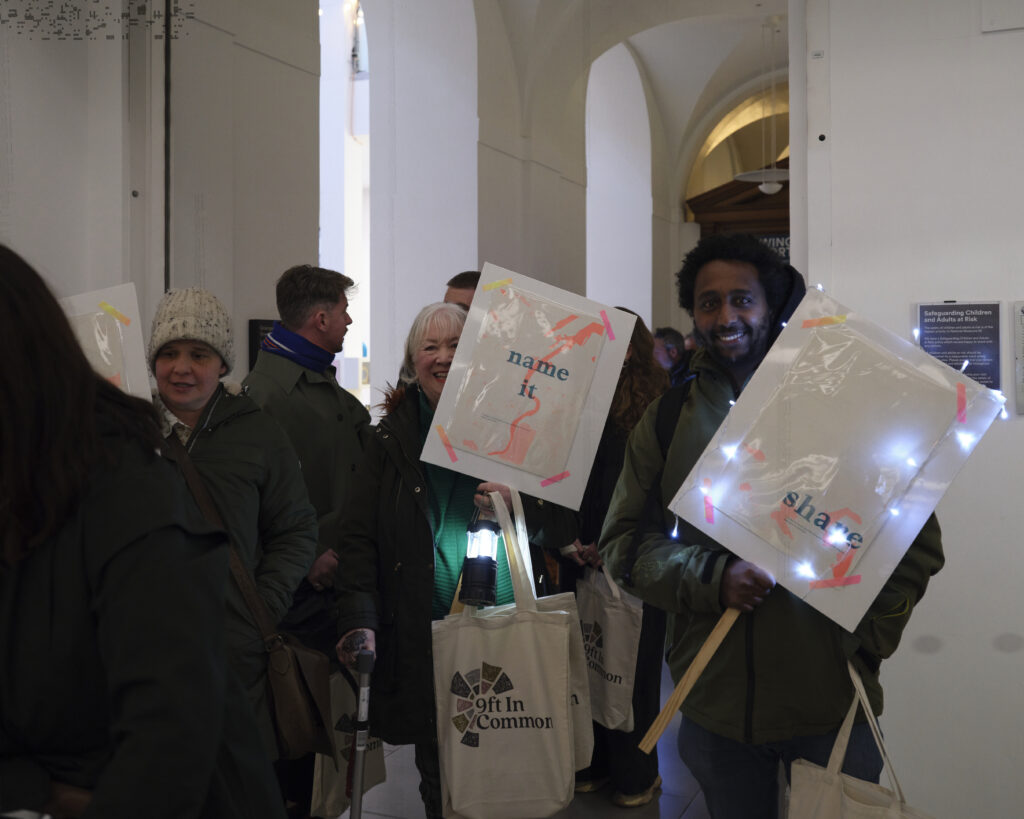
On the day of the launch we’ve got the manifesto prints displayed on placards, lined up in front of the stage – a nod to the manifesto spirit. Upon arrival guests are invited to select a print of their choice to keep. 

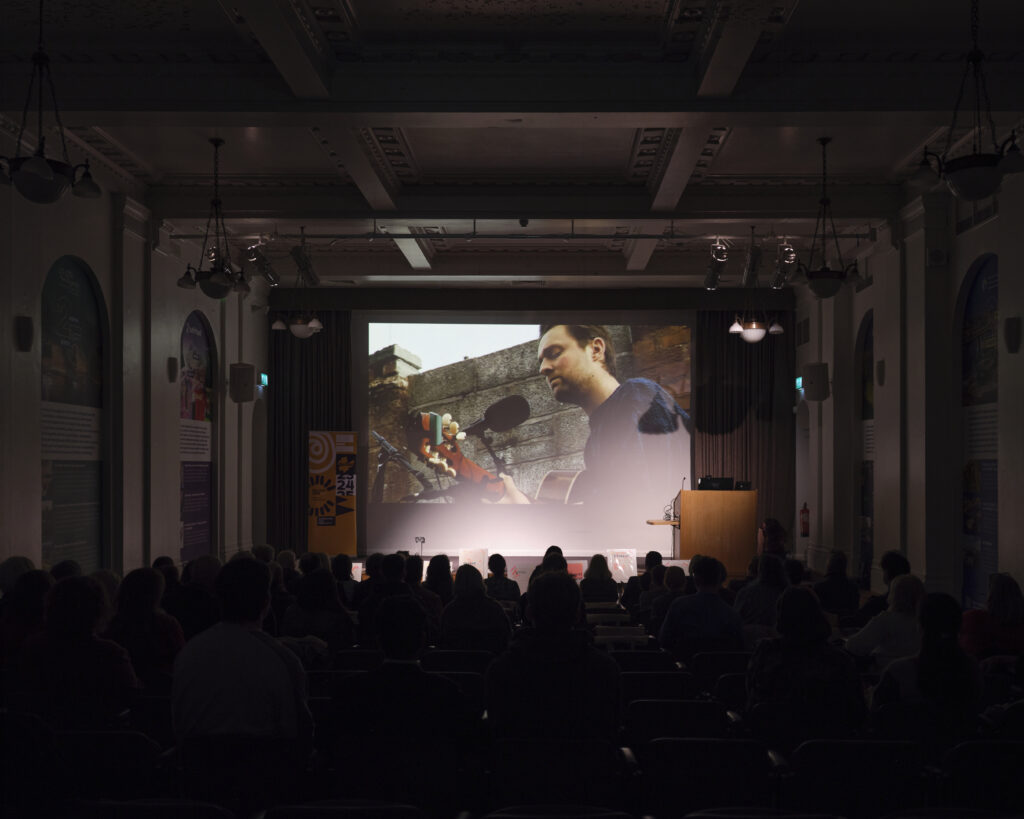
Opening the event by playing Joe Laverty’s Whisper Project recording of Joshua Burnside from Bealtaine.

We open the event by hitting play on the melodic tones of Josuha Burnside singing his new single ‘Up and Down’ for the Whisper Project recording in Hyndford Street alley for Bealtaine – one of the 9ft in Common Belfast 2024 commissions. It calms the room. The Lord Mayor of Belfast, Councillor Mickey Murray and Northern Ireland Director of the National Heritage Lottery Fund Dr Paul Mullan follow with opening remarks around the importance of culture, heritage, people and place. 

Then it’s time for Amberlea, Aisling and baby Eloise – cooing in the sling – to share highlights of what we discovered over the year and snapshot some key commissions and collaborations. Invited collaborators, partners, and alleyway activists take turns to introduce each call to action from the floor, and we follow each one with an example project for each of the 9 Manifesto points.  There are so many great examples – we could talk for hours, if we only had time! 

9ft in Common – a short film by Simon Mills.

After the presentation it’s time for the film premier. Simon has been documenting the alleys with us since 2020. His  film, now titled 9ft in Common, shares the complexities and possibilities for the alleys on a city wide scale using footage from many of the gatherings and activities which took place over our 2024 project. This too is filled with some beautiful ambient soundscapes of the alleys as well as original music from local musicians Tim Sharkey and Joshua Burnside (again). We hear audio snippets from people who’ve made use of their alleyways and the impact that it has had on their neighbourhood. Cats, maps, birds, bins, gates, graffiti, red bricks, foliage, shadows, an aeroplane overhead. It’s all here, everyday ordinaryness sprinkled with everyday magic. Well done Simon – who’d have thought there was such a beautiful piece of art waiting to be made about the overlooked spaces that many use only to keep their bins?!

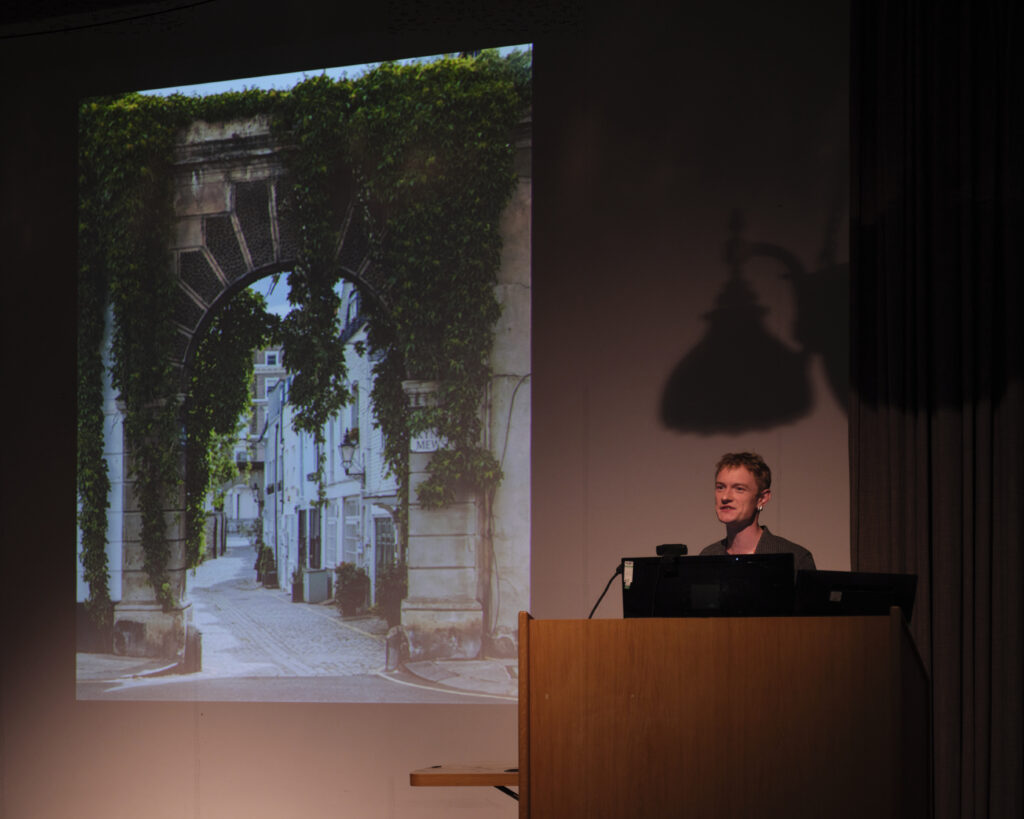
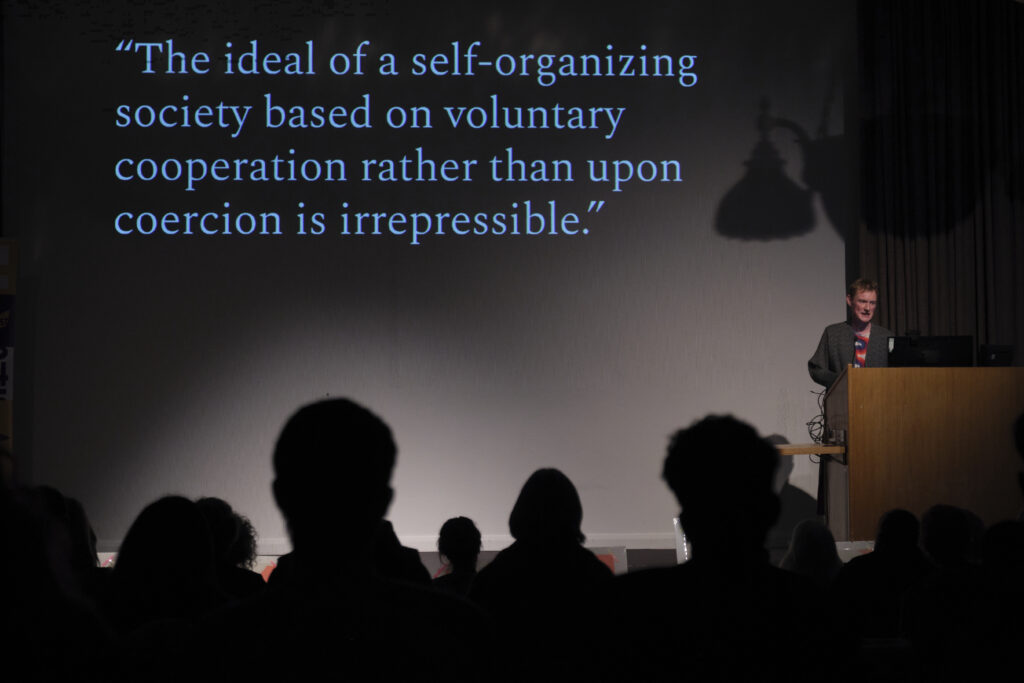
Last to take the stage is Phineas Harper, invited over from London to respond to the Manifesto for the Alleys with a series of provocations on alleys and shared space. Phinneas’s career spans criticism, curation, education, youth work, journalism and sculpture. Phinn was asked to provide some wider context at national and global scales – and they do this wonderfully, with 5 points that challenge us all to consider radical ideas such as rethinking alleys as the fronts, not the backs, and making maintenance (and bins) sexy.  Did you know that the ubiquitous black wheelie bin we all know and loathe was never intended for this purpose, but for factory waste?!  Nor did we! 

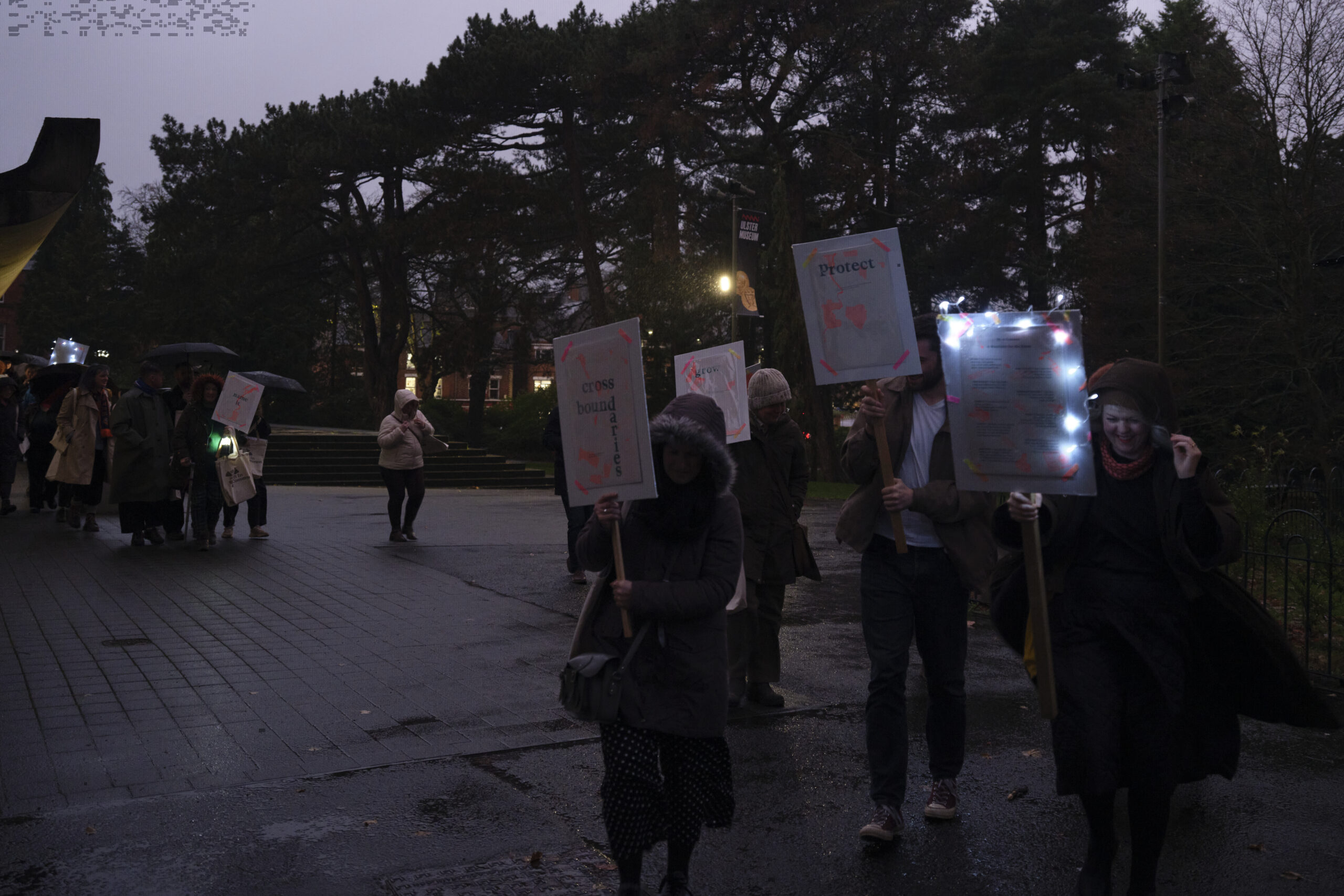
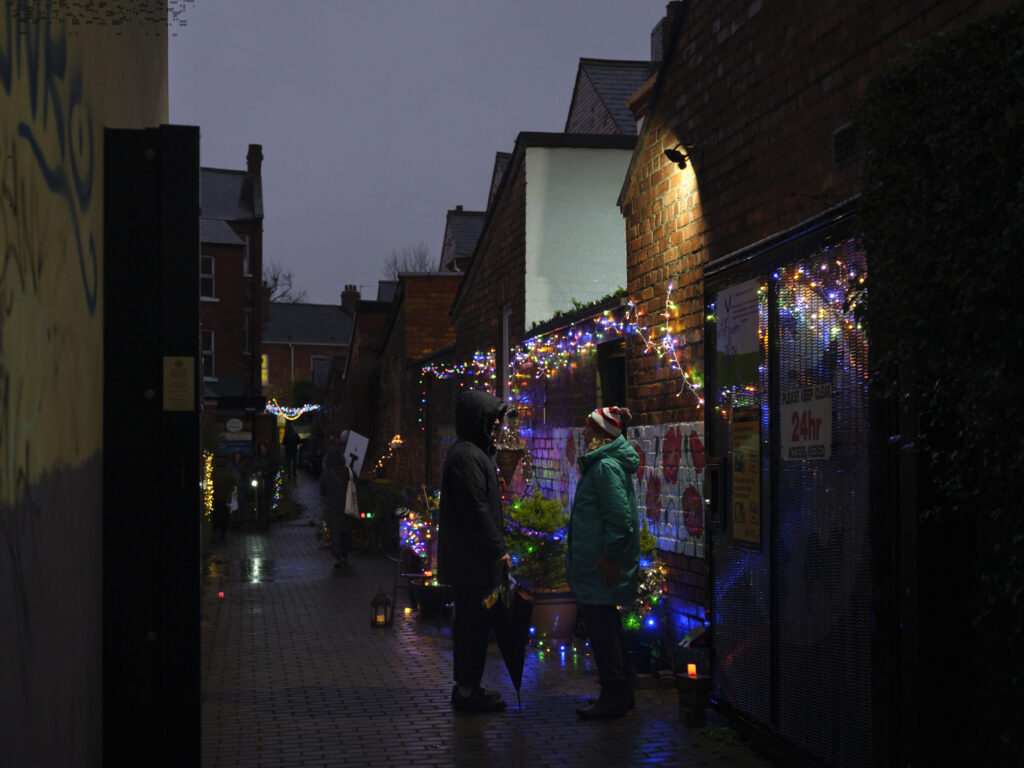
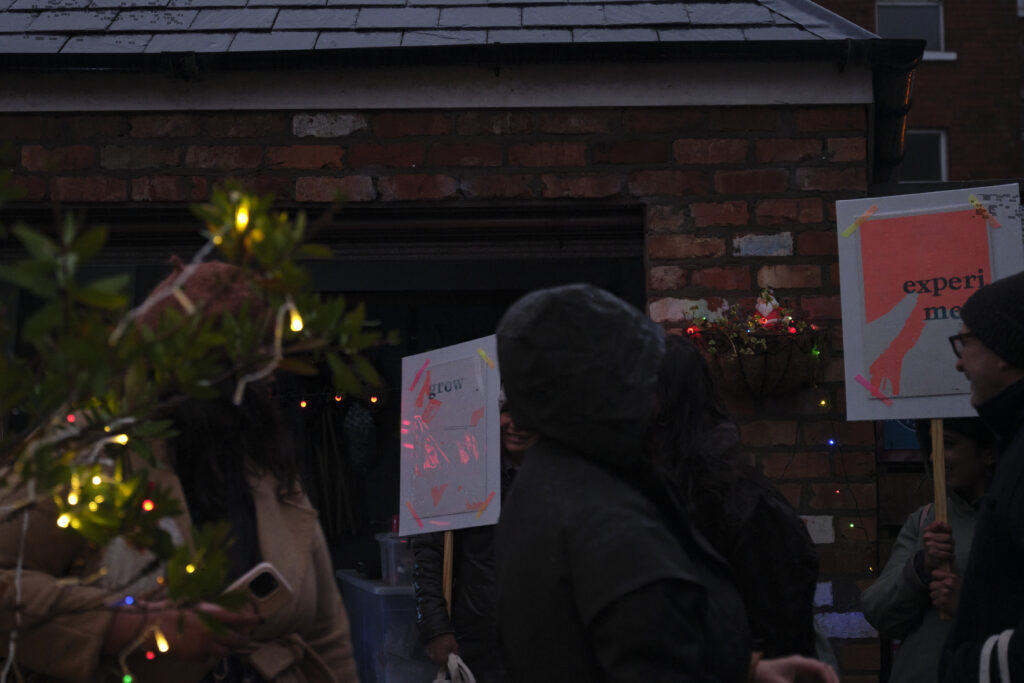
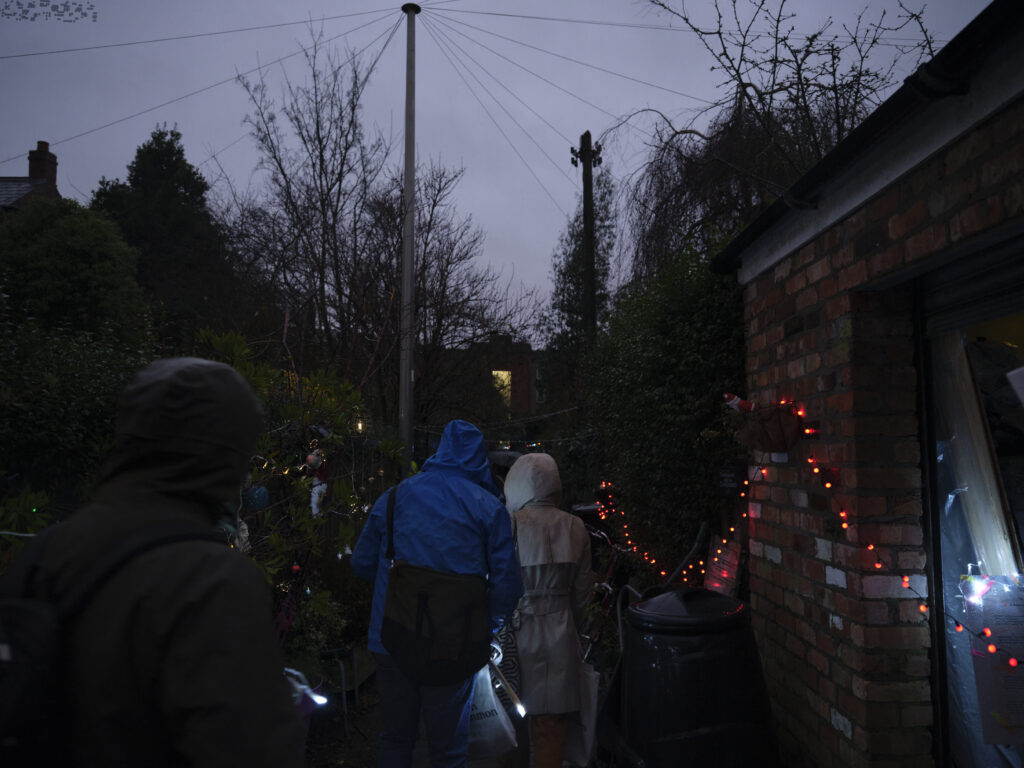
We conclude The Manifesto launch, fittingly, with a visit to an alley, the spaces which we are passionate about, where we’ve done our best thinking, and have had some truly magical moments across the years. We’ve been coordinating with the nearby Wildflower Alley – Belfast’s original alley garden transformation project, due to celebrate its 10 year anniversary in 2025 – for the last few weeks, setting up plans to host a final gathering after the museum presentations, as darkness falls and the Christmas lights shine. Unfortunately, the weather has other plans: Storm Darragh is fast approaching. Despite the high wind and pouring rain we set off on a lively procession in the dark, the wind and the rain, through the Botanic Gardens to the lovely plants and shiny festive lights at Wildflower, then onwards to our bad-weather alternative shelter at City Church, which leads the Holylands Community Garden project. Here we raise a delicious glass of Back Alley Brew – a chocolate mint porter which our project partner Jo has brewed at Laurelbank Farm using chocolate mint that has been grown and tended by the Growing Potential project participants in their alleyways. Beautiful! To top it off, we’ve asked Phillip McCrilly back to provide some tasty snacks. There are pakoras, puffs and other delicious treats as well as the locally foraged figleaf and sumac lemonade that we loved from his Dream Your Friends Forward workshop at Lughnasadh. 

Big thanks to everyone who helped us launch the Manifesto for the Alleys in such a spectacular fashion on such a wild and blustery night.

If you didn’t make it along, you can pick up a limited edition Manifesto for the Alleys print from PS2 Gallery (Belfast City Centre, gallery hours; Tuesday – Saturday, 12pm – 5pm) while stocks last.

Watch this space for news of our final few commissions! 

written colberatively be Aisling, Amberlea & Meadhbh. Photos by Simon Mills.

Categories
Gatherings Journal

Thin Places: a Samhain Gathering

Thin Places

Outside space, a glimpse of sky 

to be both separate and connected, 
listen to other people’s music the smells of other dinners. 
Atmospheric with boiler exhausts
Oh? Have you made this a runway for me?
a run-a-way, to run away 
away from this house which sometimes feels so tight with obligation 
I feel it in my chest – the walls pressing 
give me air even if it’s mostly carbon 
I’ll be here, learning quiet defiance and resilience from the weeds.

That was a poem I (Meadhbh) meant to read to open our Thin Places gathering in 2 Royal Avenue on November 1st – I didn’t of course because I was too frazzled with the nerves and pressures of event hosting. Something I did say though, half joking, half serious but I stand by it was ‘you don’t choose alley life, alley life chooses you’.

It’s a very odd and niche thing to think about, talk about, occupy and frequent quite as many alleys are as we of the 9ft in Common team do, but I think after the Allez Alley project we have a few more converts to our motley crew.

A good portion of these wondeful people who ‘choose alley life’ – among them artists, producers, architectural graduates, educators, surveyors, growers, marketeers – were able to gather with us alongside curious friends and other project collaborators. It was Samhain, our final seasonal celebration and a time which marks the transition into winter, the final period of winding down towards a new year.

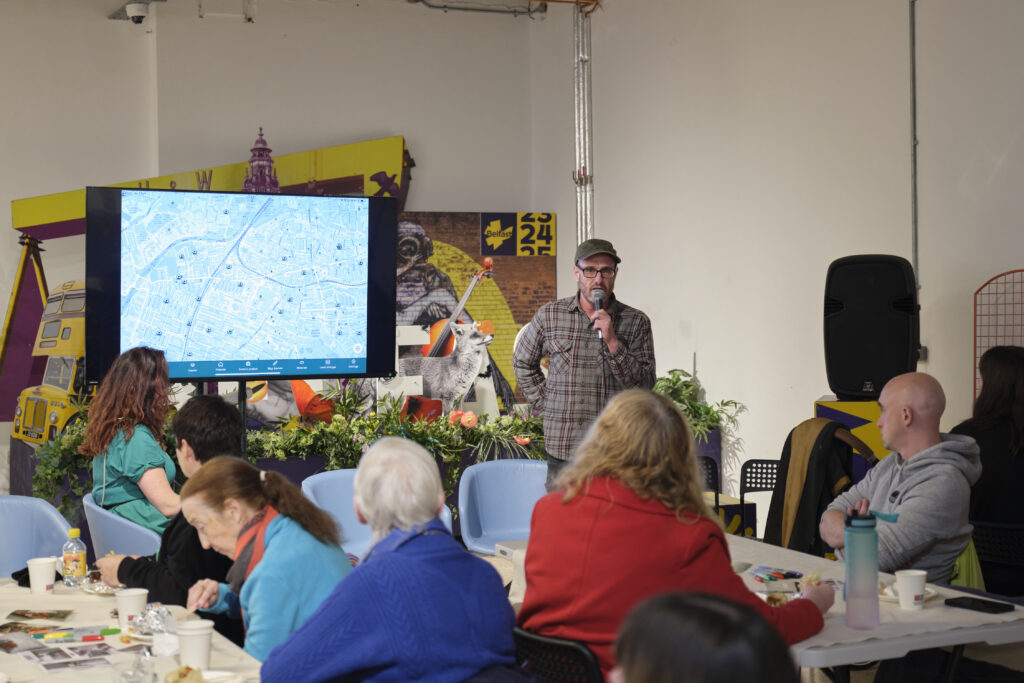
James Bamford, North Mapping Services – talks about our methodolgy

After some tasty food provided by in-house café Yala and a brief presentation from James of North Mapping Services to outline our project methodology and data capture, we invited our team to share some reflections on their experience of walking the city. 

We heard a range of stories, some heartwarming, some hilarious. They spoke about how certain areas felt very policed by the residents and how in other areas no one seemed to notice anyone coming and going at all. 

For the most part, although there were a few uncomfortable encounters and places where the walker felt unsafe – when they spoke to residents and told them what they were doing and why, people were very supportive and keen to chat, sometimes even opening gates to let them though for a better look. We spoke about how talking to strangers in the city is getting less and less common but how it got easier the more you made yourself break down the barrier of awkwardness to do it. 

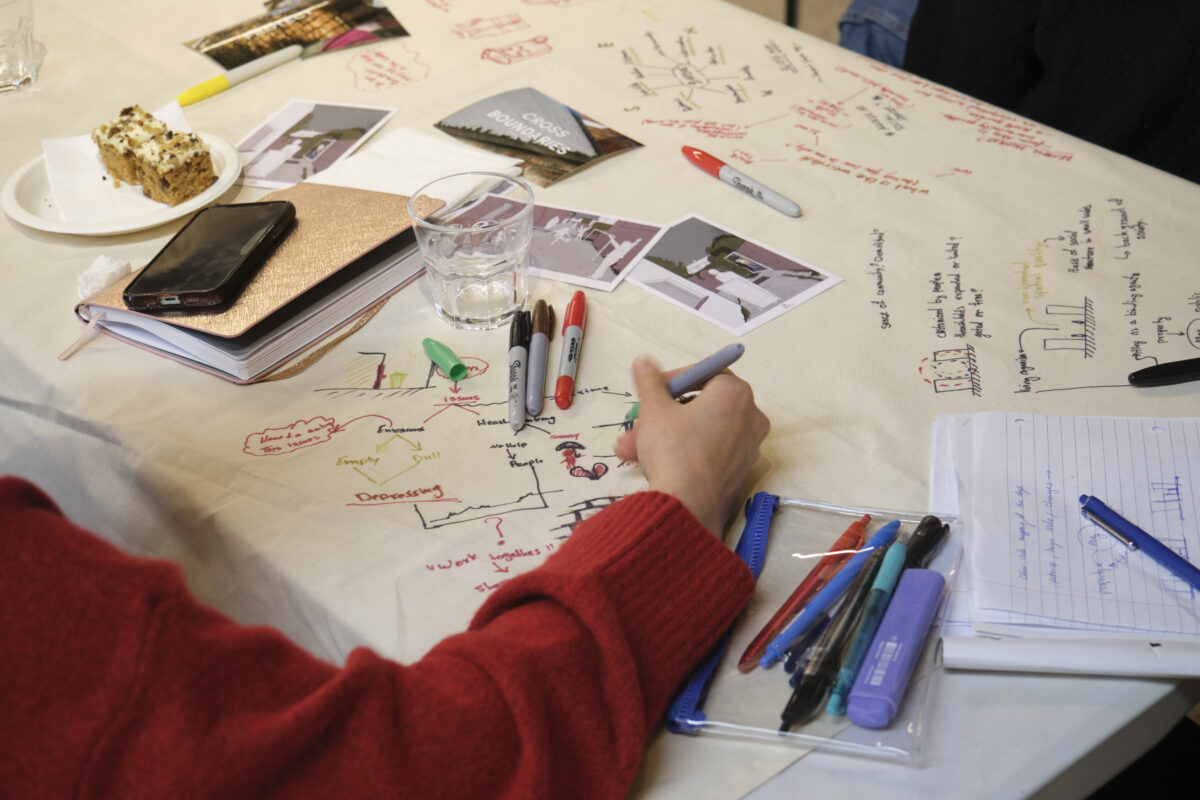
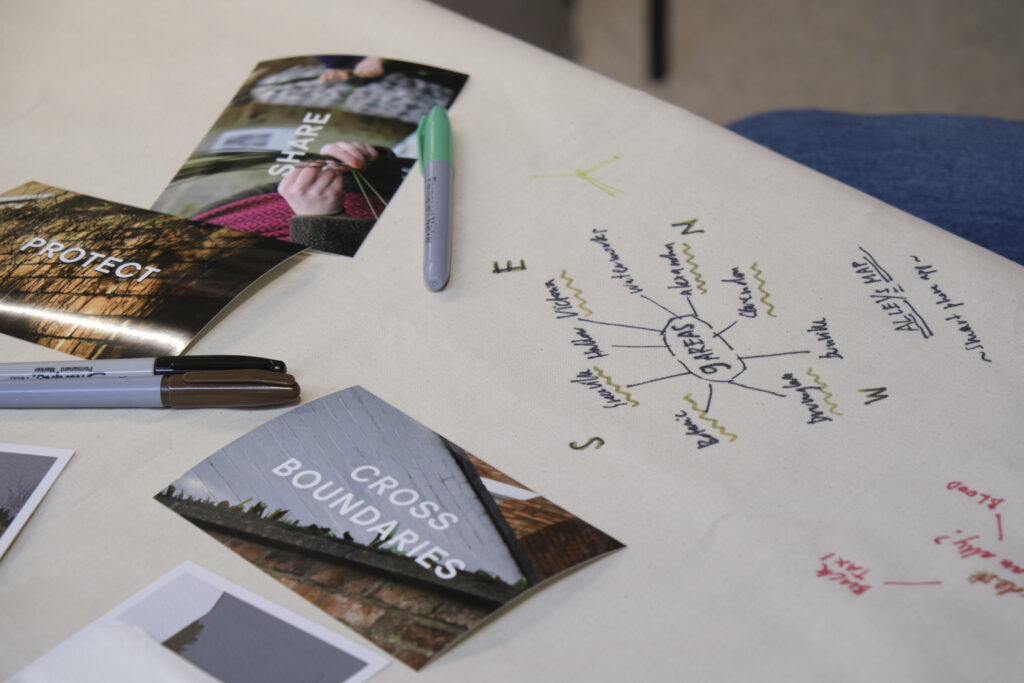
notes and key themes from the emerging manifesto across the table.

They told stories of beautiful surprises hidden around unassuming corners. Neighbours feeding cats and birds. Halloween decorations blowing away in storms. Weird patches of nothing (or our preferred term, ‘potential something’) tucked away behind houses and gates. Stories of growing and sharing. 

We talked about the differences between walking alone, vs walking in company. Company always made the task easier and it was interesting to see others’ opinions on the categorization or condition of the alley: maintained vs not maintained. 

Hiding the hagstones was a highlight for everyone. It felt thrilling and uplifting and a little bit rebellious. I’m not sure why… perhaps it’s because leaving any trace – litter, destruction, graffiti – is generally discouraged. It is a rare thing indeed to give gifts to strangers with no expectation that they will be received or even welcomed. Some of our walkers mentioned meeting nice neighbours and then strategically leaving the stones in palaces where they knew they would soon be found by a friendly face. 

When you do something new there are always going to be learning points along the way. If doing it again we would probably invest in some hi-vis vests and lanyards – people with a hi-vis and lanyard always look more official and the team said in certain areas they would have found that quite comforting. On the whole though, we managed to survey over 90% of the alleys in the city with very few incidents or issues and more importantly, those doing it overall had an enjoyable time. We heard feedback about lots of incidental benefits too, it was:

‘a reason to get out of the house and walk – I felt healthier and more active’

‘A way of seeing parts of the city I’d never been in before’ 

‘A unique way to learn all the bin collection days in my area’

‘a way of getting to know a part of the city I’d never normally visit’

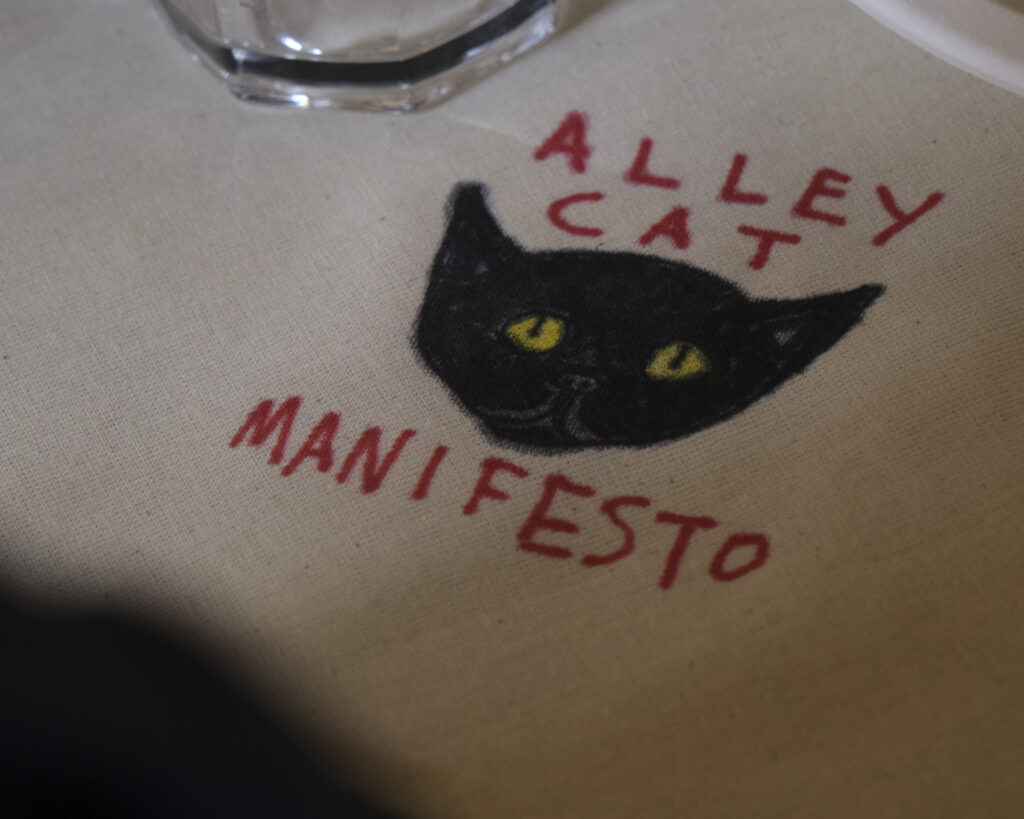
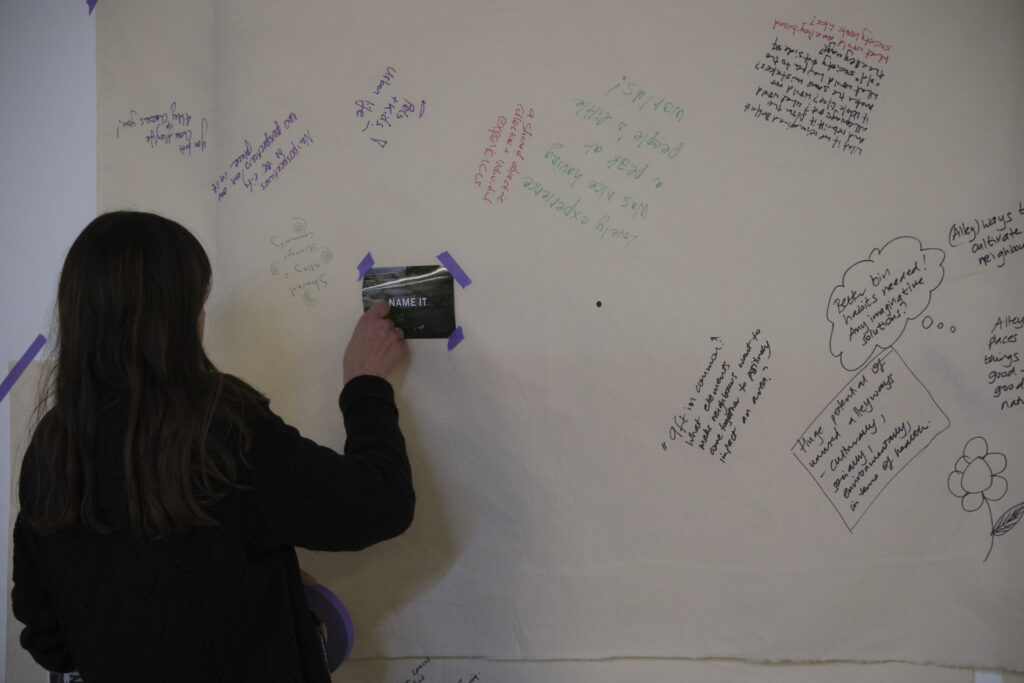
There was plenty of time for audeince comments and questions as we went back and forth on experiences and findings. Throughout the gathering, our audience was encouraged to draw, write and make notes on the table clothes. These canvas cloths were then hung on the walls by Alessia and Emily from artist-run initiative Soft Fiction Projects  who will incorporate some of the notes and observations into the design of the limited edition printed manifesto which will be unveiled at our Manifesto launch on Dec 6th – the final gathering of our 2024 programme – hope you can join us there too!

a snap of the pannel discssion.
Categories
Events Gatherings

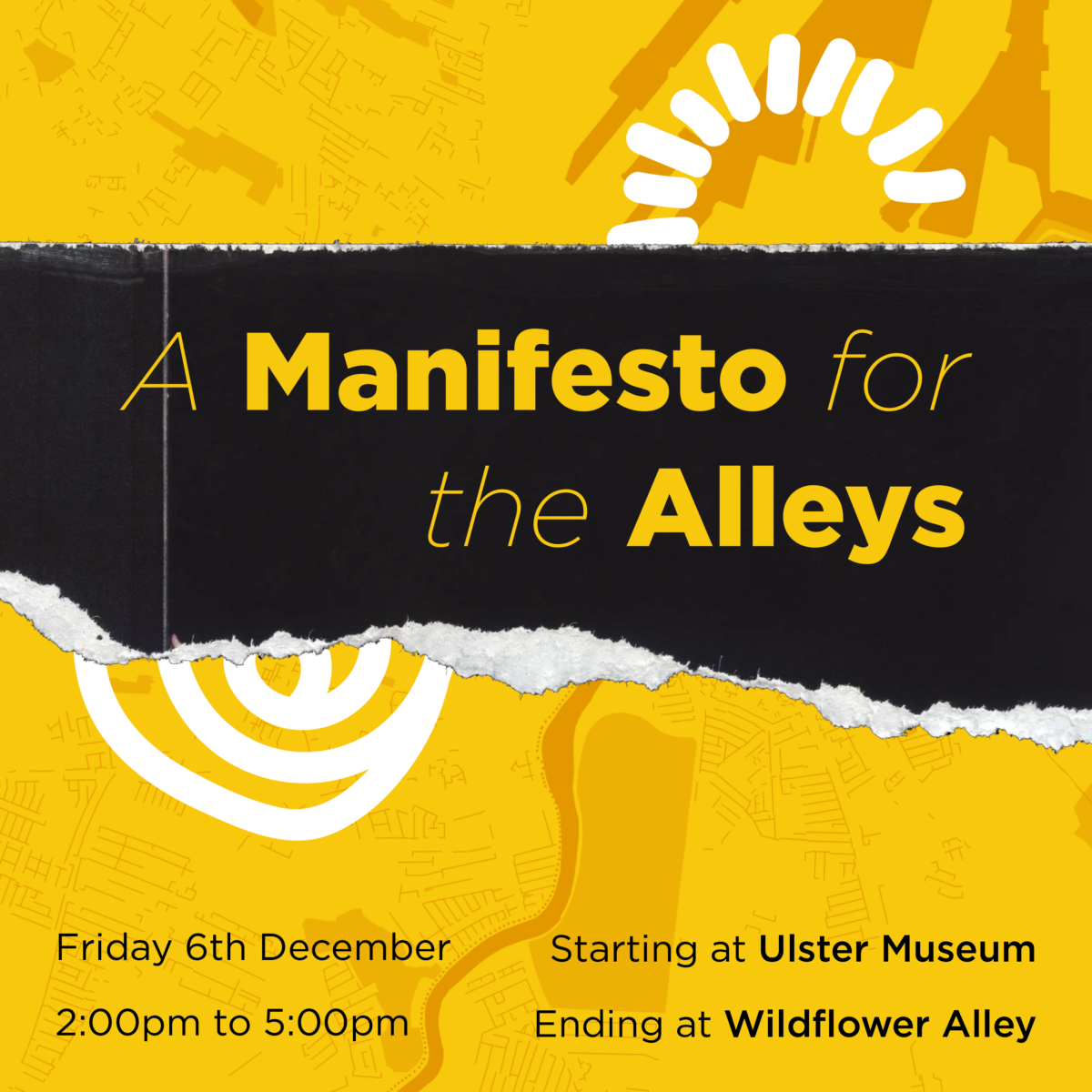
A Manifesto for the Alleys – Launch Event

Adopt the manifesto and occupy the alleys!
We call on alleyway activists, decision makers, artists, social researchers, urbanists and curious onlookers.

Join 9ft in Common as we launch A Manifesto for the Alleys, the culmination of years of research into the social and spatial potential of Belfast’s alleyways.

This final public gathering in our Belfast 2024 programme will premiere the film A Manifesto for the Alleys, created by videographer Simon Mills, who has been documenting the 9ft in Common project since 2020.

Attendees will receive a special limited-edition risograph print of the manifesto, designed by artist-run initiative Soft Fiction Projects.

9ft in Common will share stories and findings, themed around the Manifesto’s nine points, illustrating the potential of these over looked and leftover spaces.

We will be joined by guest Phineas Harper, who will leave us with a provocation, before we embark on a closing procession to deliver the Manifesto to nearby Wildflower Alley, symbolically bringing the manifesto back to the alleys and the people who make them unique.

Notes

  • Special thanks to our friends at Ulster Museum and Wildflower Alley for hosting us.
  • The Ulster Museum is located in the Botanic Gardens and is easy to get to by public transport. Deatiled visting, transport and access information can be found on their website, here.
  • The gathering will involve a short 5-10 minute stroll to Wildflower Alley for refreshments, so please bring your coat and sensible shoes. Wildflower Alley is Belfast’s original alley garden transformation project, celebrating its 10th anniversary in 2025
  • 9ft in Common is a research project led and developed by Amberlea Neely of Starling Start and Aisling Rusk of Studio idir. It asks questions about the wider use of the alleyways for play, growth and connection across the city. 9ft in Common: A Manifesto for the Alleys is one of 17 locally-led projects which have been commissioned by Belfast 2024. It is a large-scale, collaborative investigation into the alleys that crisscross Belfast, prompting us to reconsider the possibilities lying just beyond our back gates.
Speakers on the day will include

Amberlea Neely & Aisling Rusk: Creative Co-Leads, 9ft in Common

Dr Aisling Rusk is founder of award-winning Belfast-based architecture practice, Studio idir, working on a range of bespoke residential, community engagement, conservation and hospitality projects. Her research and work explore practices that build connection in the leftover and in-between spaces of cities during and after conflict. Aisling was the inaugural chair of RSUA’s Women in Architecture group (2010-23), supporting and promoting greater diversity in architecture in Northern Ireland.  She teaches at QUB in the Streetspace Studio, and, in 2020, was named one of the Architect’s Journal’s 40 Architects under 40, a celebration of the UK’s most exciting emerging architectural talent. 

​​Amberlea Neely is Director of Starling Start, where she initiates and develops strategic cultural research and creative placemaking projects. Her approach seeks to increase understanding of place and bring about positive change. Amberlea has been a Lecturing Associate on the MA Arts Management at Queen’s University Belfast, and she was Acting Director of non-profit PLACE. Amberlea is proud to be a current trustee of Strand Arts Centre as it undergoes a multi-million-pound refurbishment. She has been Chair of Northern Ireland’s largest photography festival in UK and Ireland, Belfast Photo Festival and was a founding board member of Platform Arts. 

Phineas Harper (Invited Guest)

Phineas Harper is an innovative leader in developing sustainable cultural programmes that engage broad audiences with architecture and design. Their career spans criticism, curation, education, youth work, journalism and sculpture.  They have written widely on the intersection of architecture and politics including for the Guardian, Dezeen, the Literary Review, the Independent and Harvard Design Magazine. Phineas was Chief Executive of charity Open City until 2024 – an educational charity empowering communities to learn about, experience and have a role in shaping places where they live. Their career is marked by a long-standing commitment to making architecture and heritage more engaging and accessible to younger and more diverse audiences.

Jo Facer – Laurelbank Farm & Manifesto Growing Potential Project Lead. 


Jo Facer is the founder of and Head of Growing at Laurelbank Farm, a 7-acre organic farm located just outside Saintfield, Co. Down. The farm’s vision is to reconnect people to the land, and to nourish and empower people through farming and feasting. At the heart of Laurelbank is ‘Farm & Feast’ – a community supported agriculture scheme (CSA) in which members share the risks, rewards and responsibilities of growing food. This sustainable business model involves members working together to cultivate and harvest delicious produce. In addition to her role at the farm, Jo is an author and teacher. Co-authoring with Erin Bunting, Jo released her first book, ‘The Edible Flower: A Modern Guide to Growing, Cooking, and Eating Edible Flowers,’ in 2023. She also runs regular ‘grow your own’ courses at the farm.

Welcome addresses wil be given by Councillor Micky Murray, Lord Mayor of Belfast and Patricia Corbett a National Lottery Heritage Fund, Committee Member for Northern Ireland

9ft in Common: A Manifesto for the Alleys is one of 17 locally-led projects which have been comissioned by Belfast 2024 following an open call to the arts sector in the city.


Belfast 2024 is an ambitious cultural celebration for our city. It is presenting a wide programme of creative local projects, events and city initiatives in 2024 – made by the people of Belfast for the people of Belfast.

The aim of the programme is to support jobs in the creative sector, create new opportunities for residents to enjoy and participate in the arts, and showcase the city as a global destination for culture, through its three key themes of People, Place and Planet.

For more details of the Belfast 2024 programme, visit
belfast2024.co.uk