Categories
Events Gatherings Journal

Multitudes – an Exhibtion at Belfast Stories

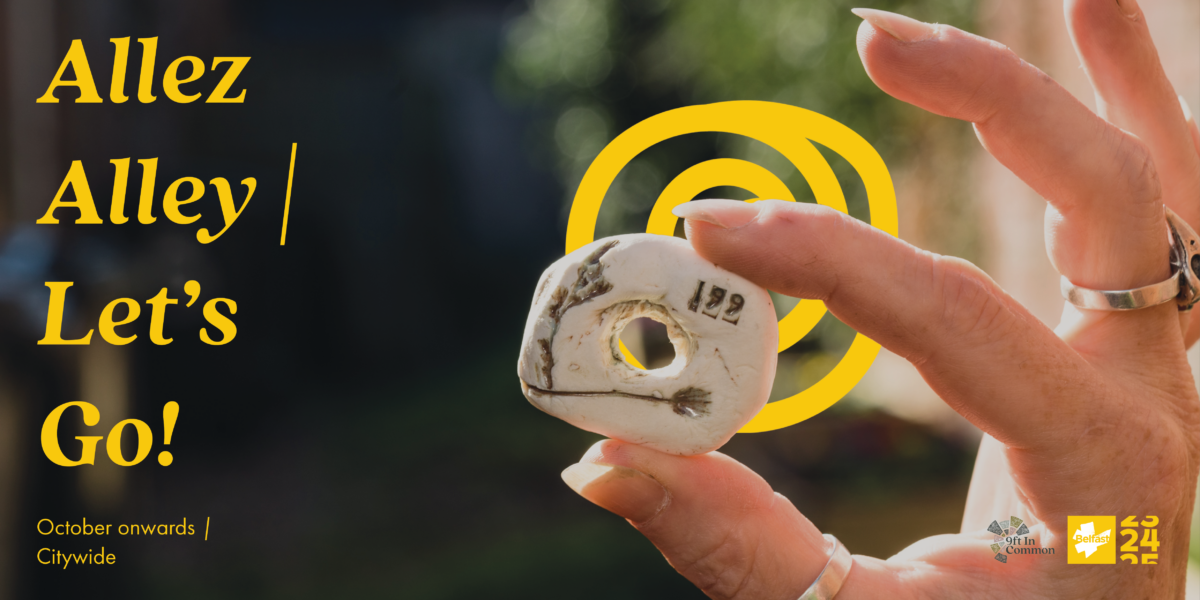
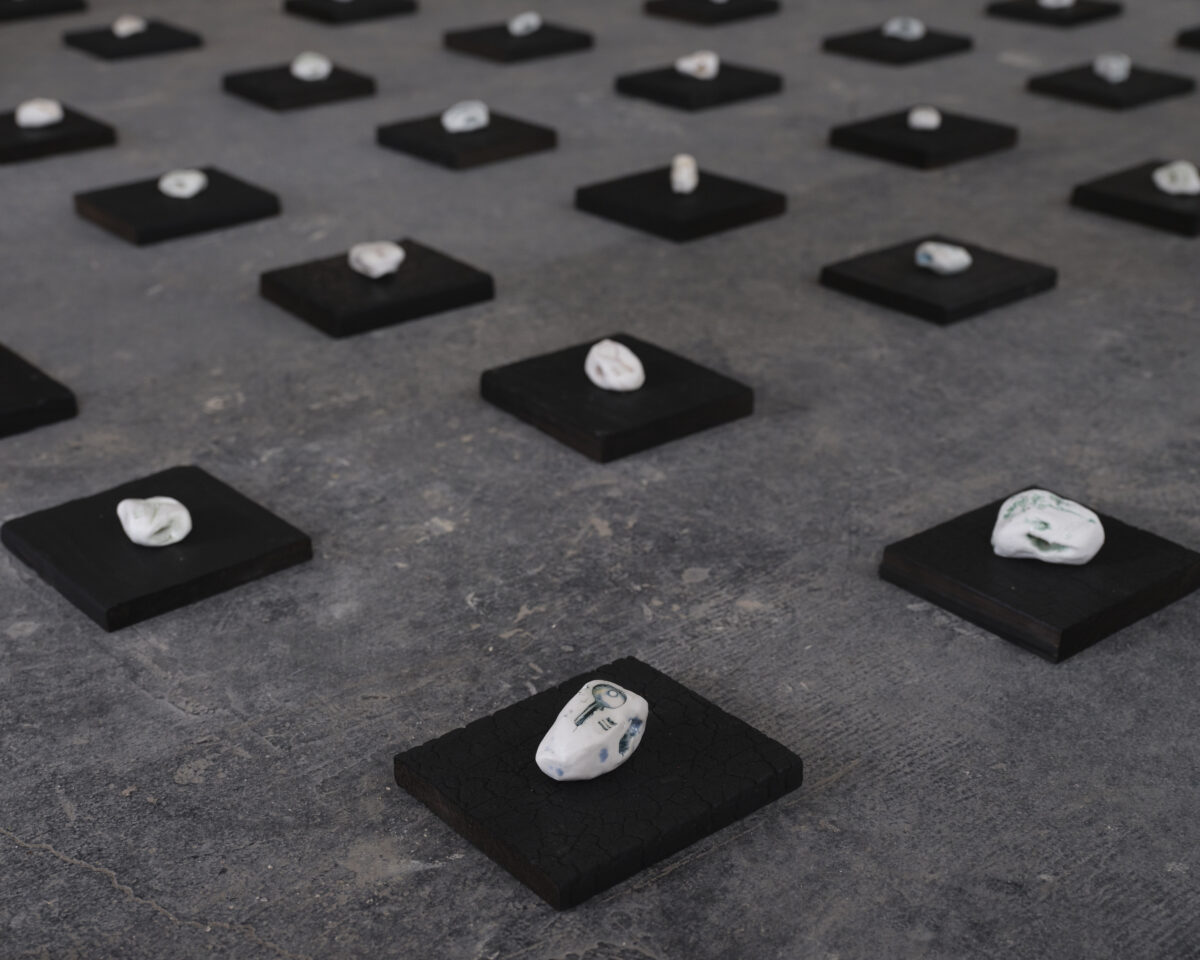
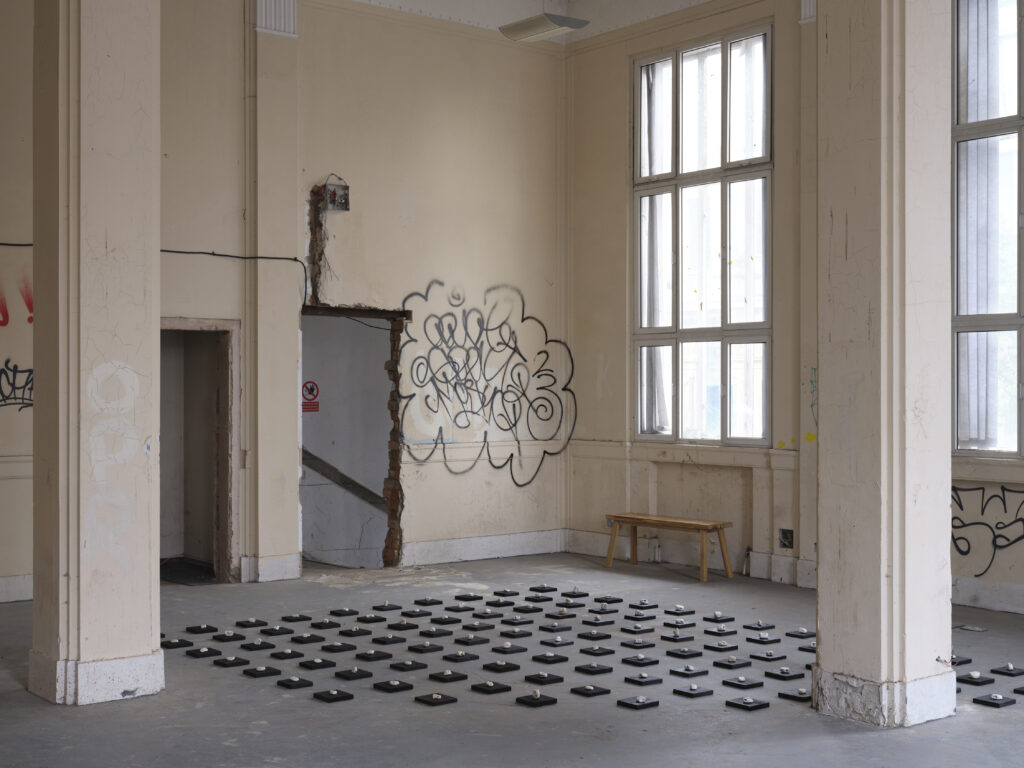
9ft in Common presents Multitudes, a symbolic offering of 202 ceramic hag stones that honours Belfast’s 202 kilometre long mapped network of alleyways as well as the people and stories that populate them. 

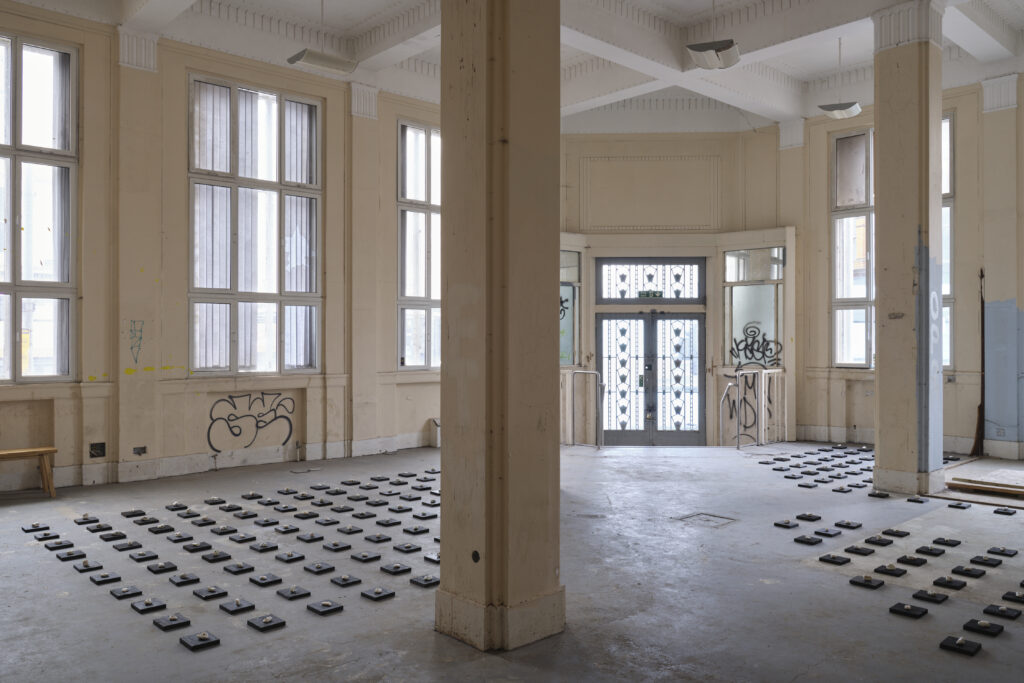
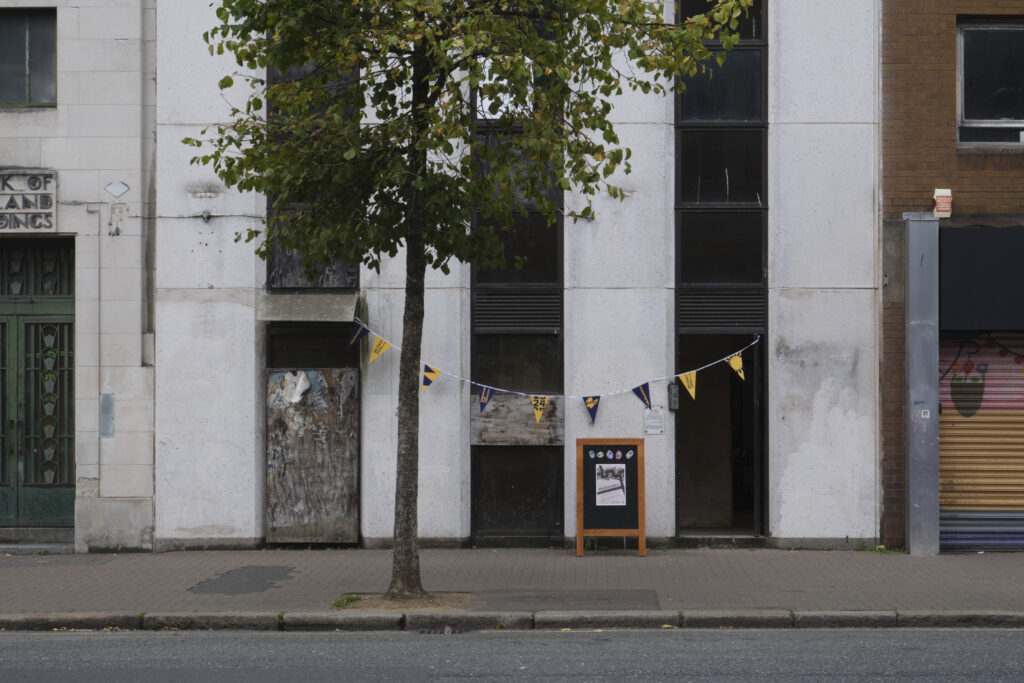
The exhibition will take place in the Banking Hall of the Belfast Stories Building (Former Bank of Ireland), Royal Avenue, Belfast over the autumn equinox weekend Saturday 21st and Sunday 22nd of September, open 11am – 3pm daily.
Creative Concept

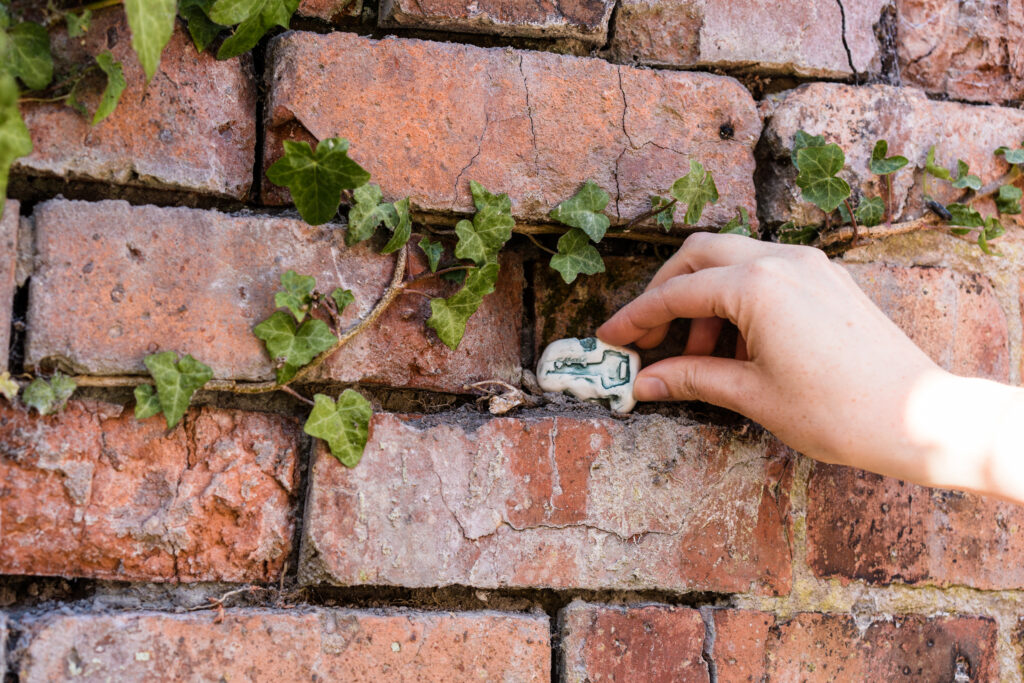
Hag Stones are naturally occurring stones with a hole. Traditionally they were believed to protect against evil and were used as good luck charms. Looking through the hole was thought to enable people to see other realms of possibility.

Our research for 9ft in Common: a Manifesto for the Alleys has always been about making people see other realms of possibility, the creative potential of overlooked and leftover spaces. What would our alleys look like if they became growing spaces, wildlife corridors, or an alternative means of travelling around the city? Belfast would gain green space equivalent to over 76 football pitches, more than 4 Botanic Gardens, or pathways stretching more than 18 times the length of the Comber Greenway! Imagine how much that extra greenspace could benefit the city’s biodiversity, growing potential and our mental health.

Our ceramic hag stones differ from their natural counterparts for this exact reason. Through imitation they celebrate natural forms; our alleys are capable of the same change, moving from man-made spaces to celebrations of the nature, stories, and identities so many cities lack. Over the last few years many alleys have become enriching spaces for all sorts of cross-pollination, and we anticipate many more to come.

We invite you to visit the hag stones, to contemplate our city’s rich built heritage, and to imagine a future for its often overlooked and taken for granted alleyways. What multitudes exist?
Artists & Makers

The 202 ceramic hagstones were made in Belfast by Claire and Karen Gibson of Red Earth Designs.

Karen and Claire grew up in Whitehead by the Sea and have a love of all things natural….. beach finds, curiosities, fragments, patterns, interesting weatherworn natural forms, seed pods and marine life to name a few. Much of their work is influenced by the natural world, the textures revealed by the passing of time and the effects of environmental elements. They often incorporate nostalgic objects as well as industrial and architectural forms into their designs and sculptural works.  

The wodden plinths are crafted by local artisan business Toasted Wood using an ancient burning technique, shou sugi ban, that creates natural protection for the wood.  Toasted Wood supplies bespoke cladding for architecture and interior design.   

The installation is accompanied by an alleyway soundscape by photographer and videographer Simon Mills who has been documenting the 9ft in Common Project since 2020.

Building Access & Accessiblity Information

Please note that this exhibition takes place in an old building in a state of disrepair, so there will be several obstacles to accessibility.

Due to health and safety restrictions the building is not suitable for wheelchairs. We recommend that anyone using a wheelchair consider these restrictions before visiting. There is temporary ramp access to the reception room over a single step, but there are seven steps into the banking hall that will not have a ramp. Part of the exhibition will be in the reception room, and the rest will be in the banking hall.

There are no toilets in the building. The nearest Changing Places toilet is in CastleCourt Shopping Centre, five minutes away. There are toilets in 2 Royal Avenue, also five minutes away.

The nearest bus stop is at Belfast Central Library only a minute away. There are Blue Badge parking spaces around the corner on North Street, and two more across the road from the venue, outside Deerah.

We will try our best to light the space, but light levels may vary depending on the weather.

If you have any questions please feel free to get in touch! You can message us directly on Instagram, send us an email at info@9ftincommon.com, or call Studio Idir at 028 9040 6542 – ask for Aaron if calling and he will be able to help.

Guide and support dogs are very welcome!
Categories
Events Gatherings

Multitudes


Did you find one?
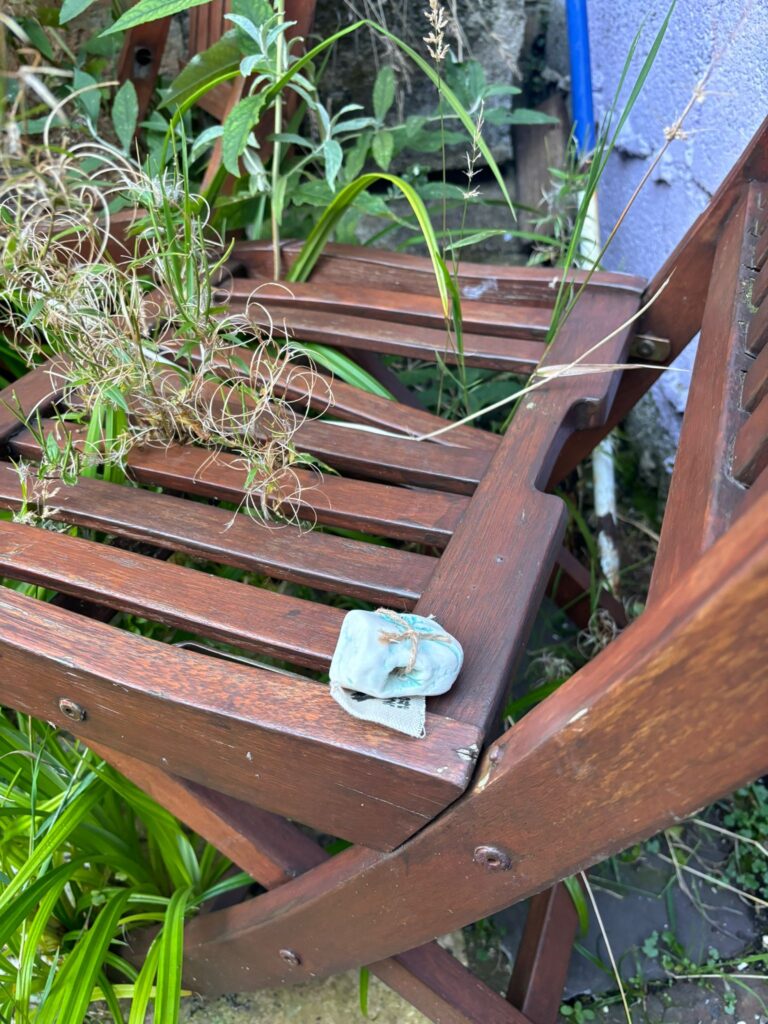
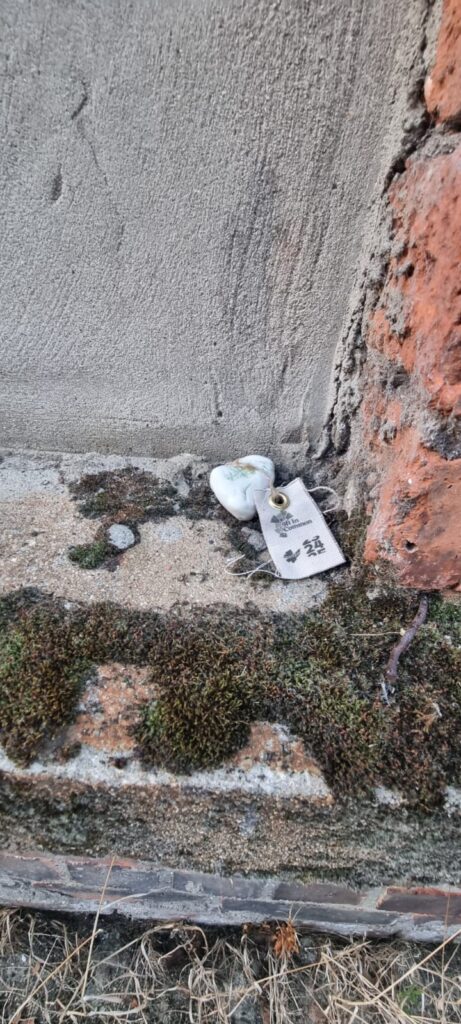
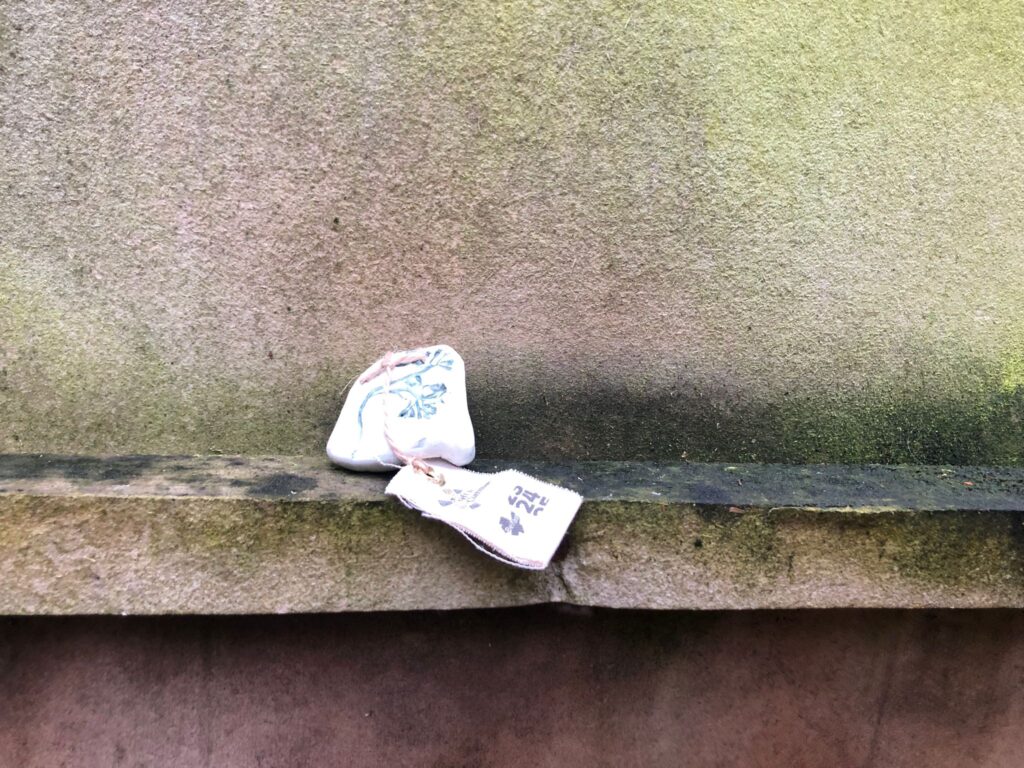
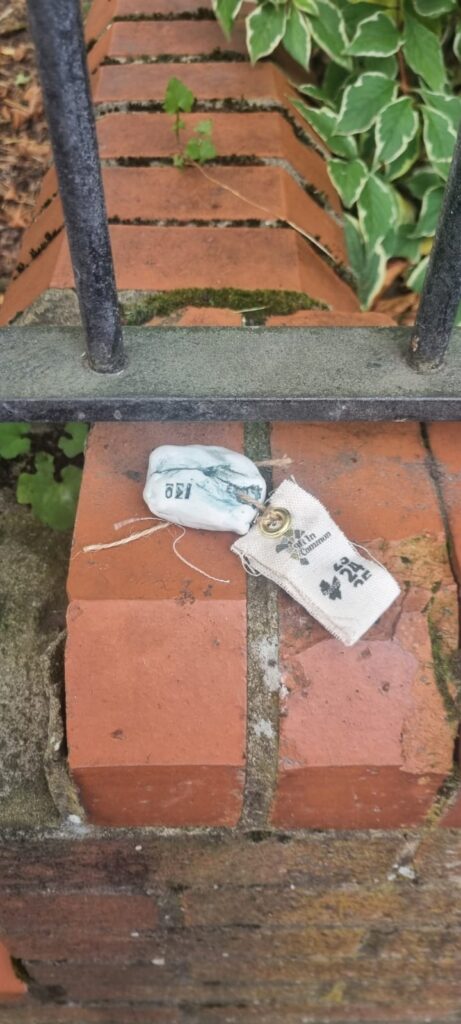
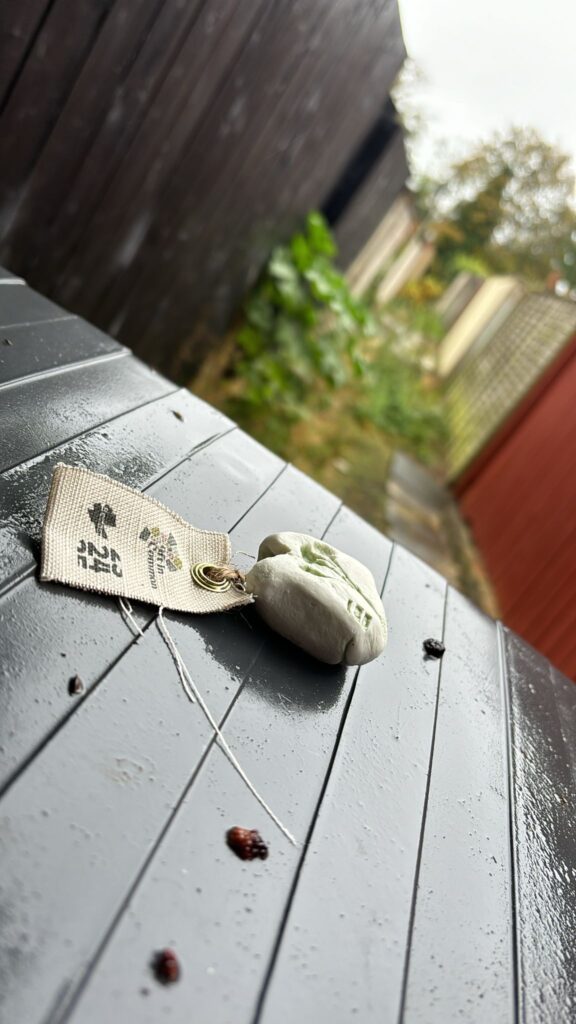
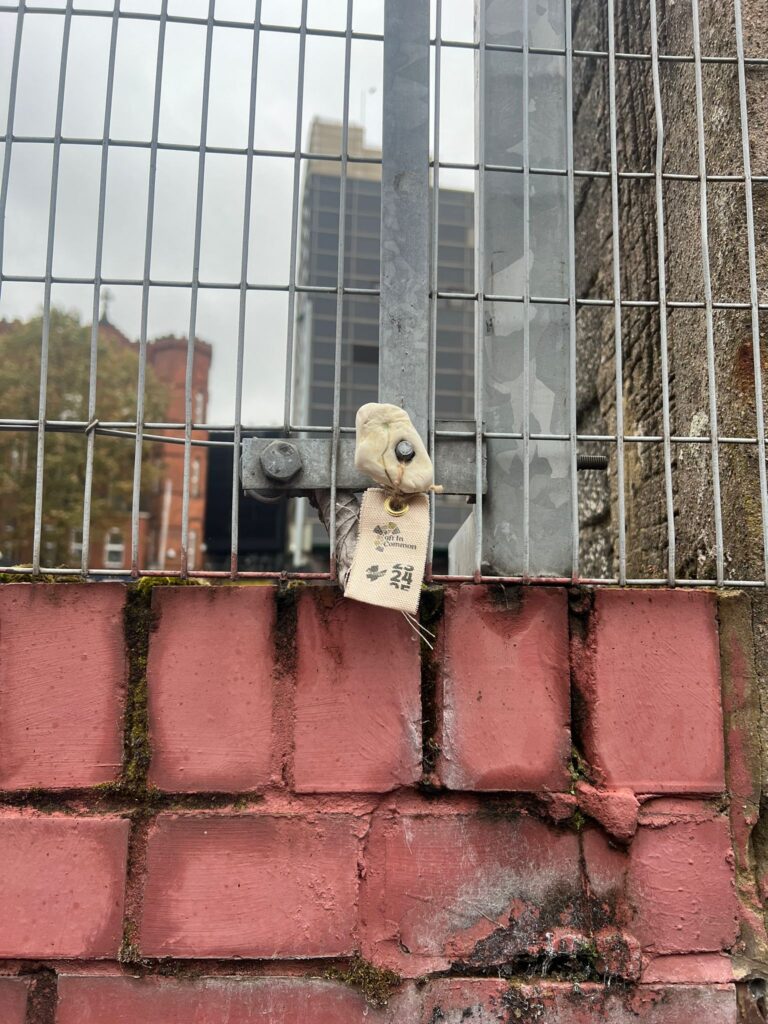
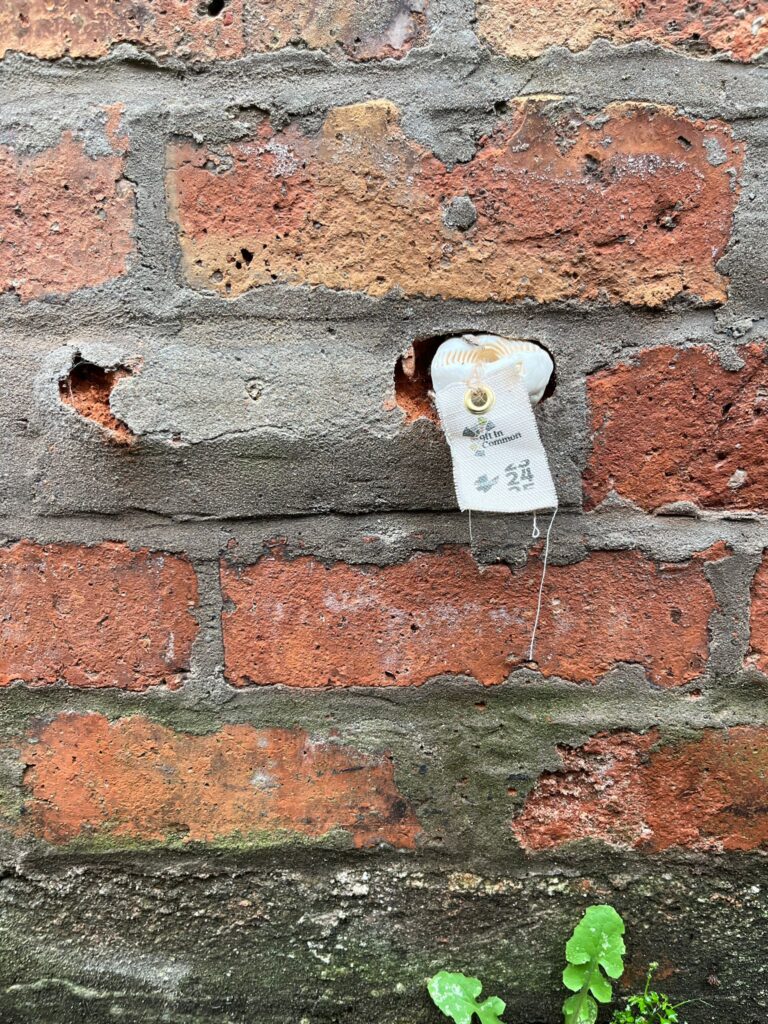
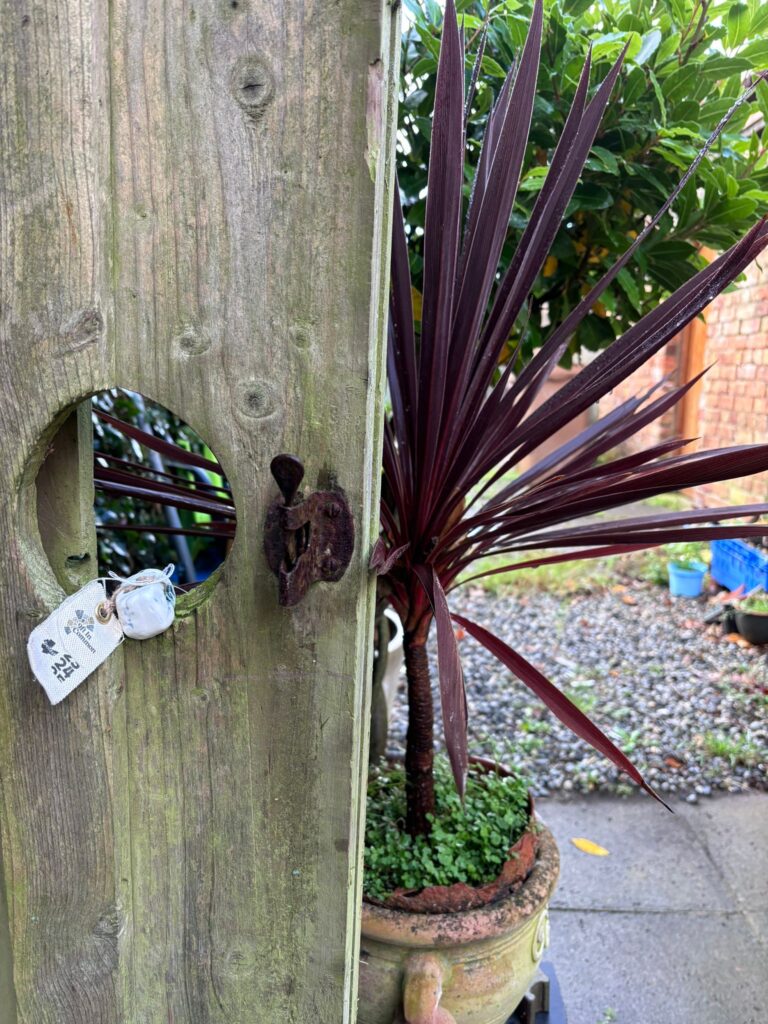
Our stones were hidden in alleys across Belfast over October 2024.

Hag Stones are naturally occurring stones with a hole. Traditionally they were believed to protect against evil and were used as good luck charms. Looking through the hole was thought to enable people to see other realms of possibility.

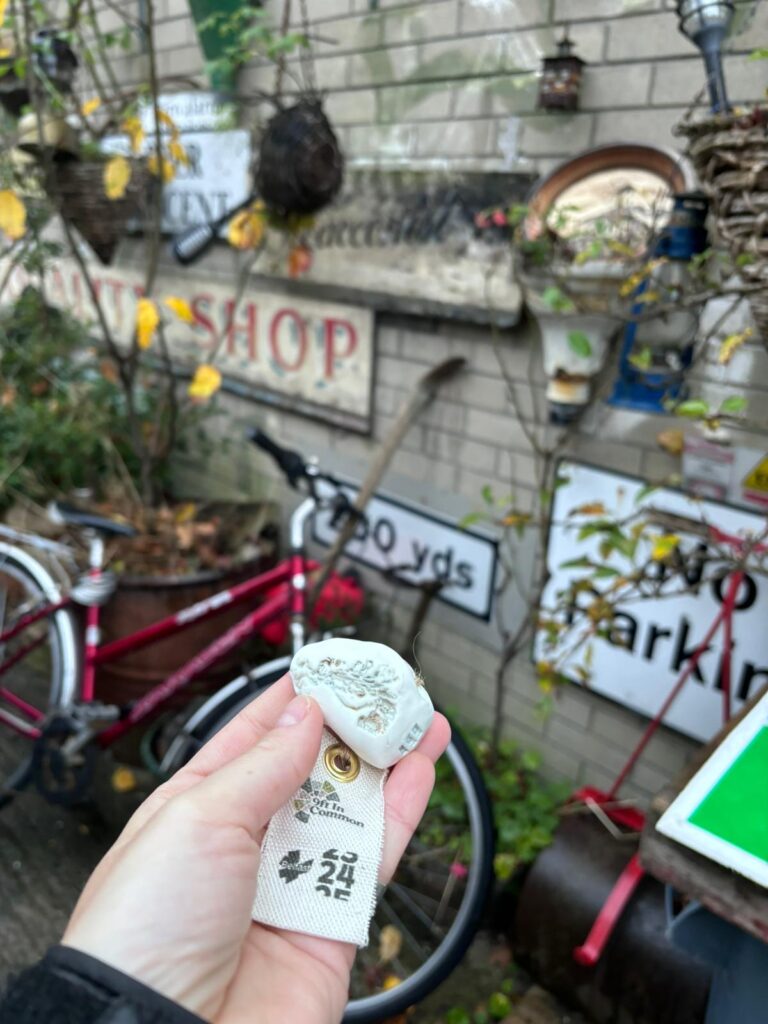
As part of the Manifesto for the Alleys programme, 9ft in Common commissioned Claire and Karen Gibson of Red Earth Designs to create 202 ceramic hag stones as a symbolic offering to honour Belfast’s 202 kilometre long mapped network of alleyways as well as the people and stories that populate them. Each one is unique, with an edition number and an imprint. It’s a mini sculpture, a precious piece of handcrafted porcelain. We exhibited them as a full set over the autumn equinox weekend (full details) and then they were gifted to the alleys.

If you found one, lucky you!

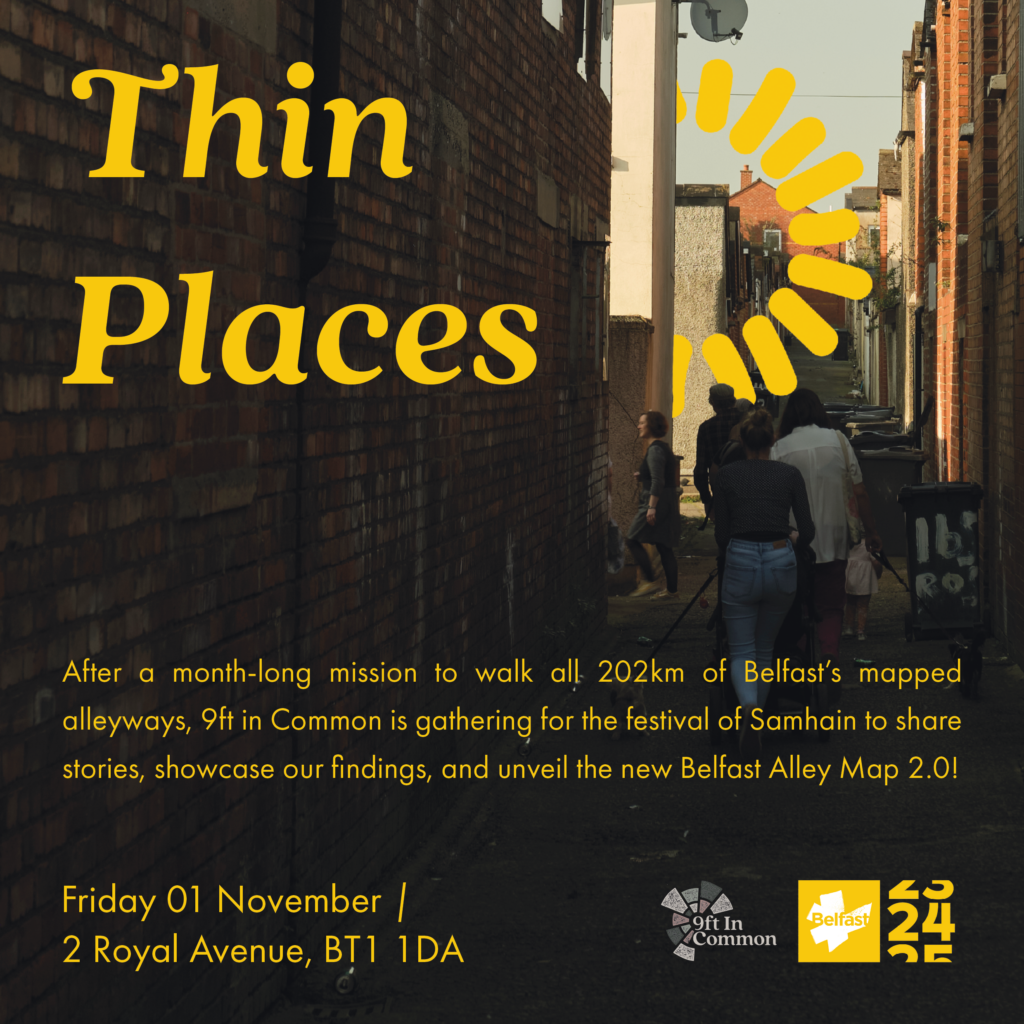
Finders were invited to join us at our Samhain Gathering in 2 Royal Avenue on Nov 1st, for lunch and some lovely chats on the experience of exploring the alleys of the city, hiding and finding Hag Stones in the process.

If you couldn’t make November 1st but still wanted to tell us something – email info@9ftincommon.com with your story, or tag us @9ftinCommon on Instagram or Twitter/X.

Here are some of the stones already hidden. Do you recognise an alley near you?

Our research for 9ft in Common: a Manifesto for the Alleys has always been about making people see other realms of possibility, the creative potential of overlooked and leftover spaces.

What would our alleys look like if they became growing spaces, wildlife corridors, or an alternative means of travelling around the city? Belfast would gain green space equivalent to over 76 football pitches, more than 4 Botanic Gardens, or pathways stretching more than 18 times the length of the Comber Greenway!

Imagine how much that extra greenspace could benefit the city’s biodiversity, growing potential and our mental health.

Categories
Events Gatherings Journal

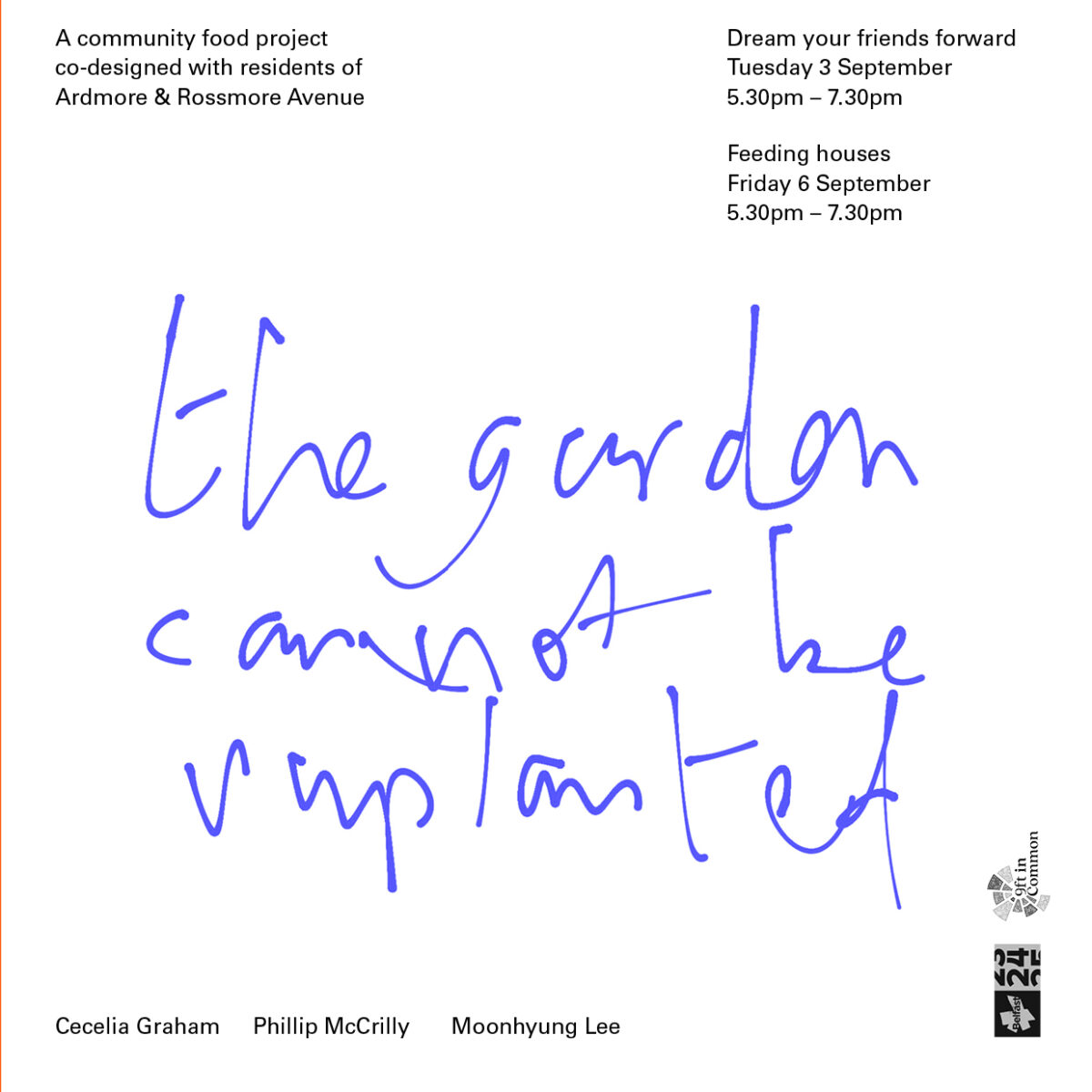
The Garden Cannot Be Unplanted – Phillip McCrilly

An alleyway commission responding to the harvest theme of ‘feast’.

9ft in Common is delighted to introduce a new alley artist commission with Belfast based artist and chef Phillip McCrilly. Knowing his thoughtful, considered and delicious work, and that he’s a resident of the beautiful Ardmore-Rossmore Alley in South Belfast, we approached Phillip to design a creative response to our Lughnasadh theme of Feast. 

In our initial chat we spoke about the values and research interests of 9ft in Common – how we are interested in the alleys as places for connection between neighbours, how growing in a shared space also grows relationships and how shared food – a cup of tea, a slice of cake – is often the first step in building these community initiatives. 

Phillip, interested in the transgressive and interdisciplinary possibilities of food and hospitality, had no shortage of ideas and thought it would pair well with another collaborative project he had on, supported by the British Art Network, where he was keen to collaborate with chef Moonhyung Lee and curator Cecelia Graham. We said; yes please, the more the merrier – and just love the proposal he’s come back to us with ‘This Garden Cannot Be Unplanted’ – Check back here, and @phillipmccrilly (instagram) for more details as the project unfolds over the coming weeks.

Learn more about Phillip’s concept. Video Simon Mills

This Garden Cannot Be Unplanted

The project responds to a history of transformative domestic hospitality, reciprocal and alternative economies, as well as a legacy of community-based food initiatives, and has been co-designed with residents of Ardmore and Rossmore Avenue.

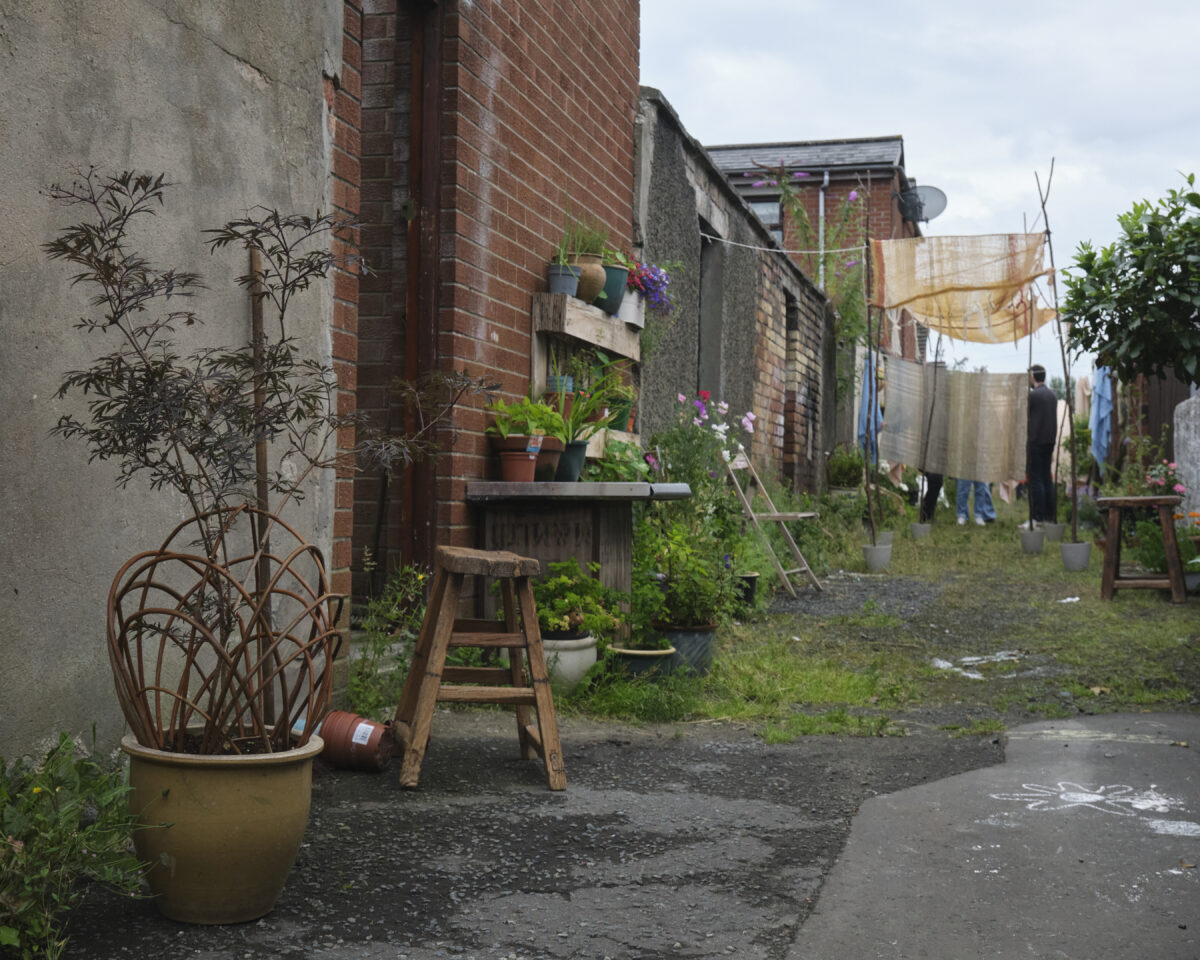
Taking the shape of a public workshop, an alleyway dinner for residents and the introduction of a shared equipment and ingredient resource, the commission responds to and is facilitated by the unique nature of the alleyway as a space started and shared by the street’s inhabitants. We seek to consider how this particular site can propose new systems of togetherness and support.

‘The garden cannot be unplanted’ is a 9ft in Common commission by Phillip McCrilly in collaboration with Moonhyung Lee and Cecelia Graham as part of Belfast 2024.

Workshop: Dream your friends forward

Tuesday 3 September 2024 5.30pm – 7.30pm
(now fully booked)

‘Dream your friends forward’ brings together a group to collectively engage in and consider the act of neighbourly foraging. We will contemplate how acts of companionship and exchange enable us to cultivate new ways of being that put forward alternative economies, and build upon forms of knowledge that emerge from our surrounding environment, neighbours and soon-to-be friendships.

Funded by British Art Network.

Dinner: Feeding Houses

Friday September 6th

Participant/Invite Only

Further Details to be shared soon.

About the Artist
Phillip McCrilly is a Belfast-based artist and chef. Interested in the transgressive and interdisciplinary possibilities of food, hospitality and education, he was a participant within the Gramouce’s first alternative MA in Food & Art Studies, as well as a former co-director of artist-run spaces, FRUIT SHOP and Catalyst Arts. Considering cruising and foraging as likeminded deviant practices, his research centres around queer collective acts of land and property reclamation. Recent projects include wet HEAT sweats without scent, a Platform Commission for 40th edition of EVA International, and Meals and Sandwiches, a series of kitchen-based residencies at The American Bar, and Bakari Bakery, Belfast. 

Categories
Gatherings Journal

Wild Service

We first met Emily McIlwaine who is an artist, a weaver and a mother via the application to our Growing Potential project back in January. We couldn’t include everyone who applied to that project, but we came back to her and the neighbours of Hyndford Street for our beautiful Bealtaine Gathering. We knew then that this alley and the people that lived on it still had more creative goodness to share.

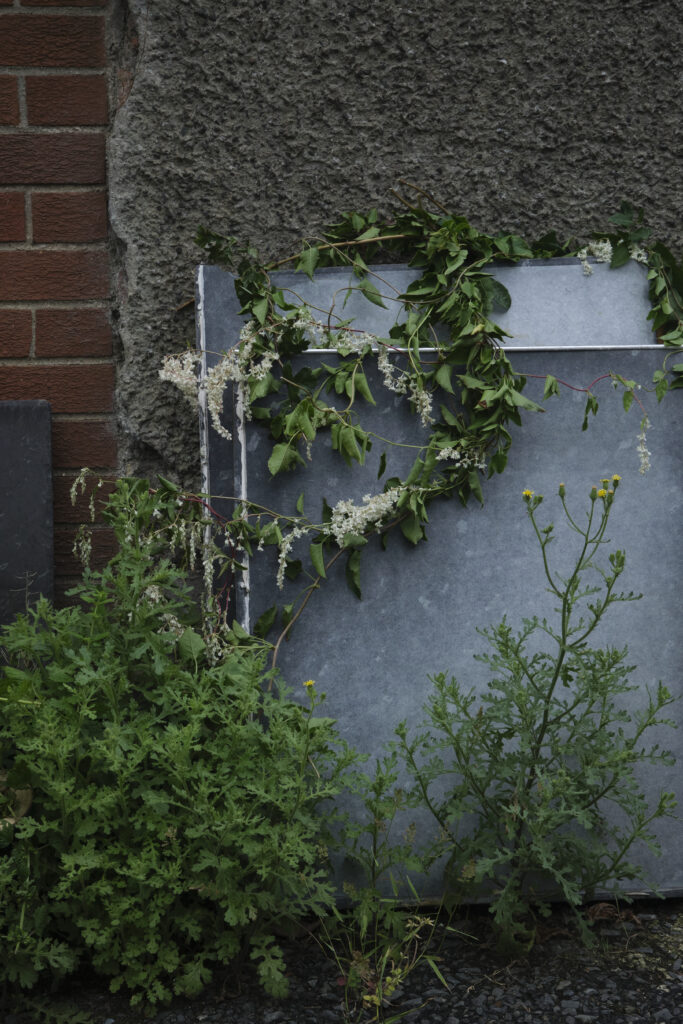
The alley is intriguing. Closer to Bloomfield Road it is gated but this segment is open. The surface is so uneven that the council will only collect the bins from the top end or the entrance known as the ‘wedge’ on Alberta Parade. It’s a wild and liminal space for sure with weeds and moss in an ongoing battle with the tarmac. We asked Emily if she would like to take on one of our alley commissions, looking at weaving with willow and wool in different ways and presenting whatever those results might be in the alley for Lughnasadh as craft is one of our celebration themes for the season.

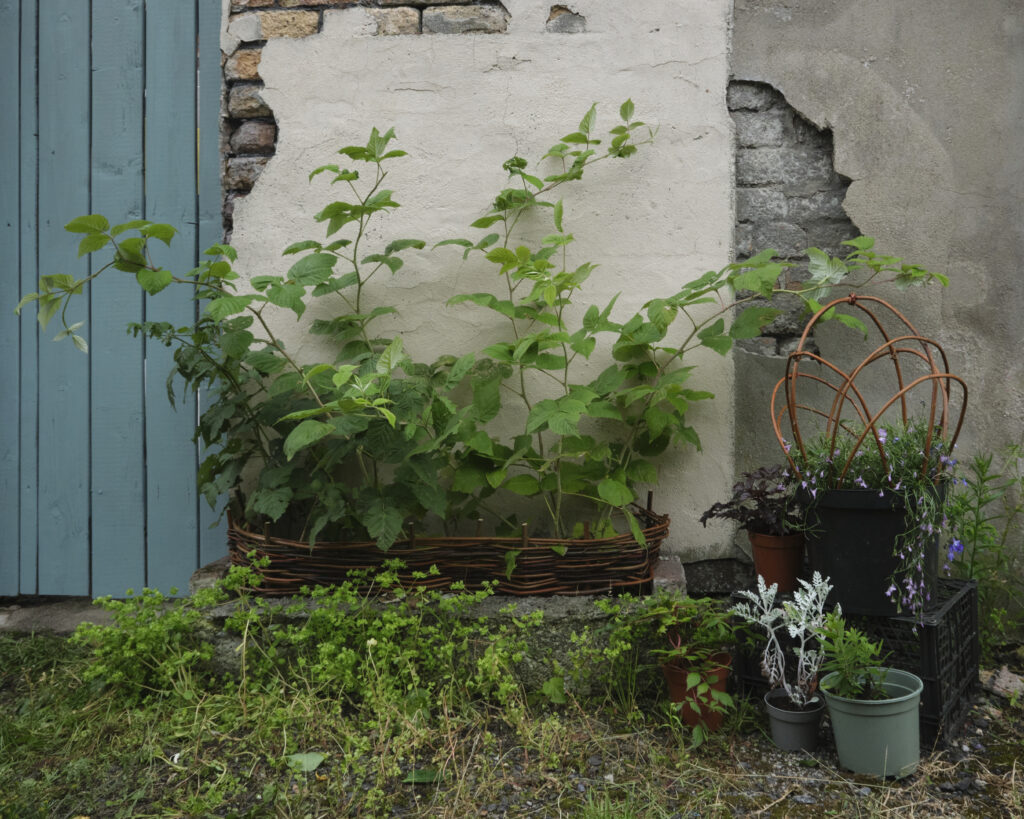
Woven willow structures for plants.

As part of the process we had some lovely conversions. We spoke about nests – nesting herons on the greenway and nesting in the context of making a house a home. We talked about making, and making the most of whatever outside space you have from the tiny yard to the alley – especially important with a small child and the challenges that come with that too. It is interesting that for the majority of the alley growing projects that we have encountered there is usually a determined woman at the centre, on a mission to make the edges of home that bit nicer. We hoped that presenting this type of work in the alley would continue to soften its landscape for those that lived there. 

noticing, honouring and supporting what is already there growing.

Emily suggested ‘Wild Service’ as a title for the project, inspired by the book of the same name, edited by the Right to Roam advocate Nick Hayes. The book argues that humanity’s loss and nature’s need are two sides of the same story and calls for mass reconnection to the land and a commitment to its restoration, celebrating the presence of humans in nature. 

Wild service: the concept of service is vital to this new beginning. It subverts the culture of our time which sees nature as a resource to be exploited and humans… Instead, it allows us to begin from a radically altered position of deference… to the land itself. (Hayes, N., 2024, pg xiii )   

In her artistic practice working predominantly with natural fibres and dyes, Emily explores the influence of Irish tradition, myth and the celtic wheel – already an amazing fit for our programme!
About her approach she said:  

I like the idea that I’m not removing what nature is doing with the alley (weeds!) but I am honouring and adding to the space with objects that are made out of natural materials, which could be left to the alley without making an environmental impact. On another level I’ve been thinking about Lughnasadh and the rituals involved with that to show reverence and gratitude to the earth for what it gives us.

The beauty of commissions is that it’s a process of trust and transformation. You shake all of these ideas around and trust that the artist is going to translate it into something magic. As well as some experiments with willow structures for supporting plants that she had propagated, grown and cared for, Emily couldn’t resist using the opportunity to create some new weaves on the loom, and the results were marvellous. 

Woven Canopy.

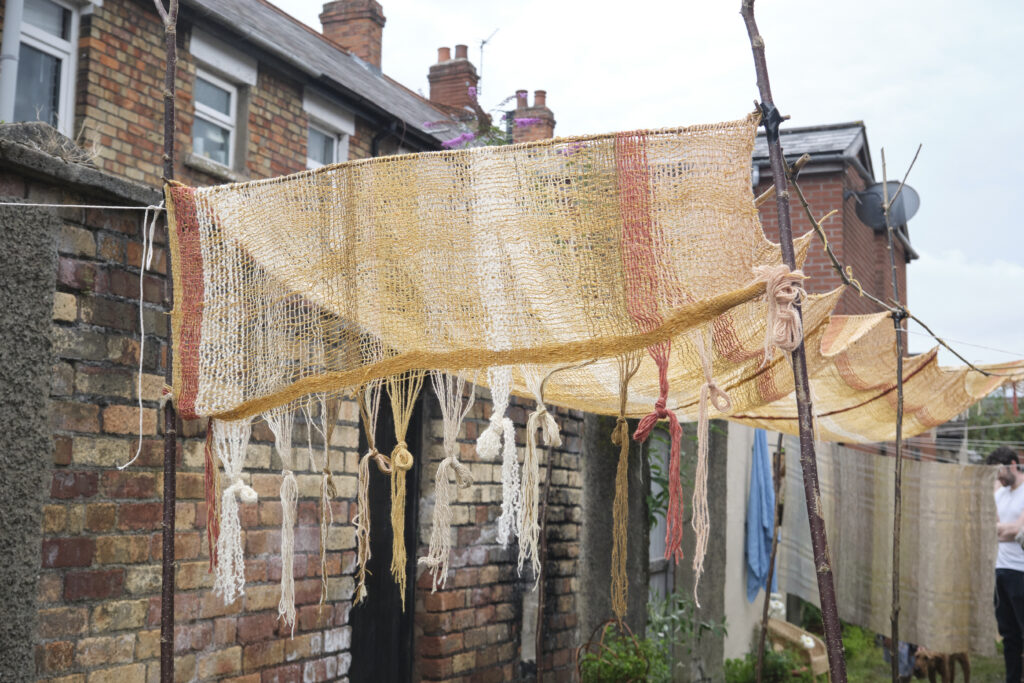
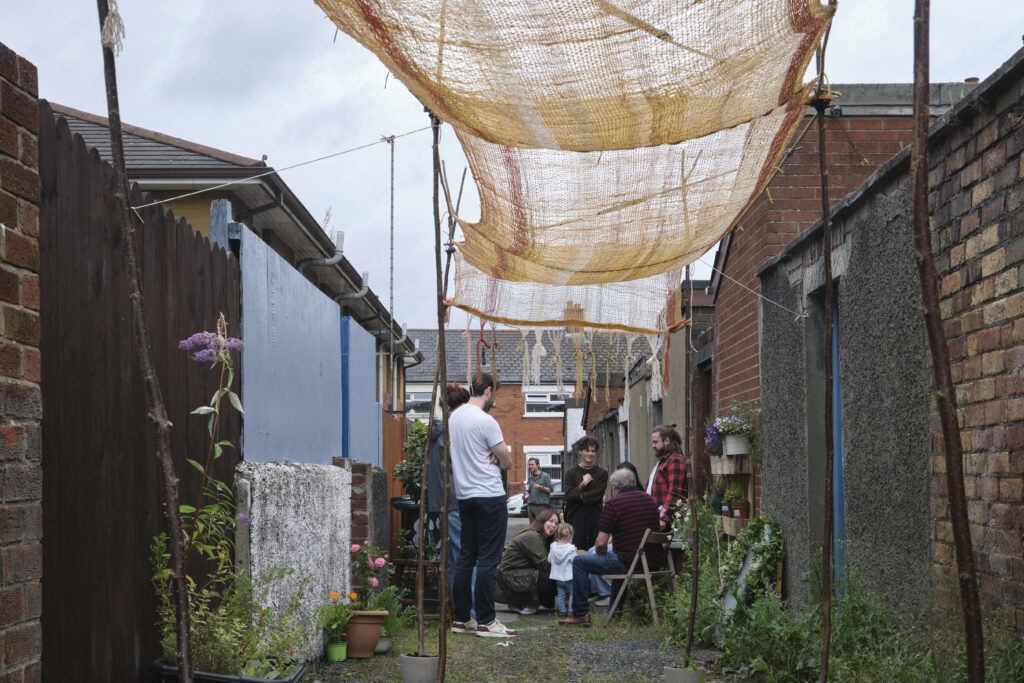
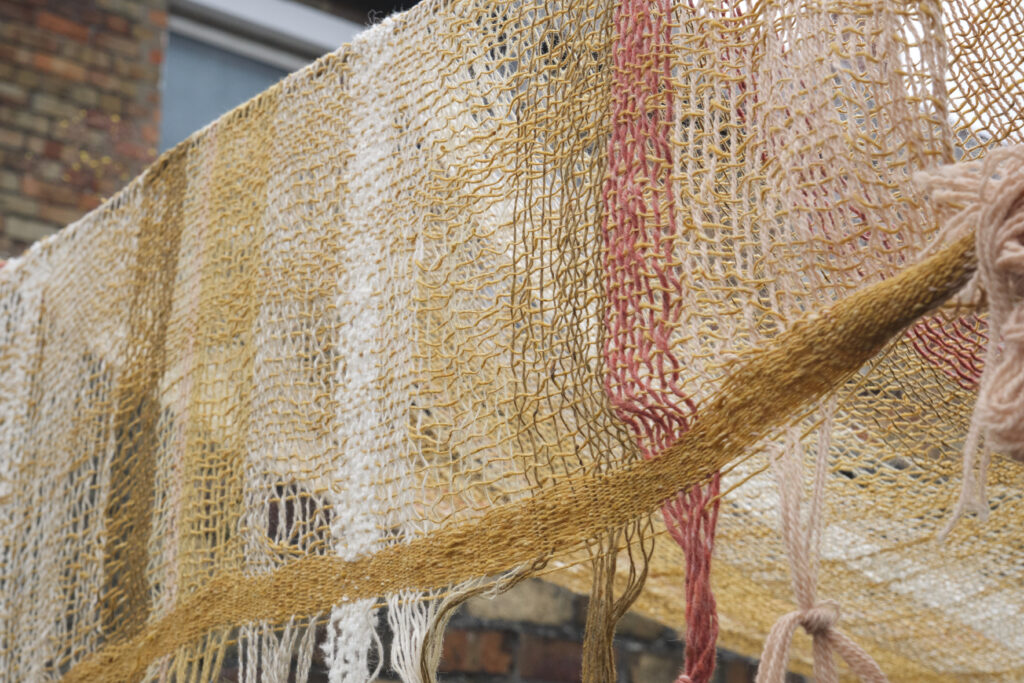
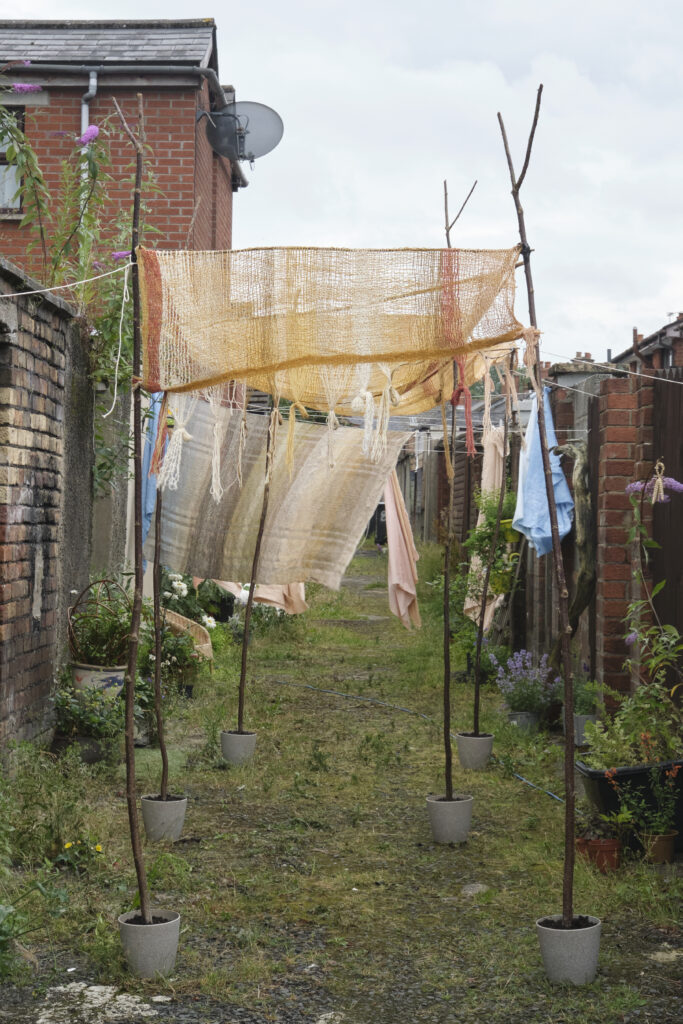
The most striking piece was a large woven canopy made with naturally dyed yarn in a beautiful ombre of oranges and rusts. The canopy was precariously draped over branches arranged to look like the beginnings of a living willow arch. Through the gorgeous open weave you got snippets of walls, roofs and sky. The grids of threads echoing the grids of brick. It billowed in the wind, almost regal, as if marking a grand entrance, something palatial, with plants and greenery lining its sides. 

detail of colours.

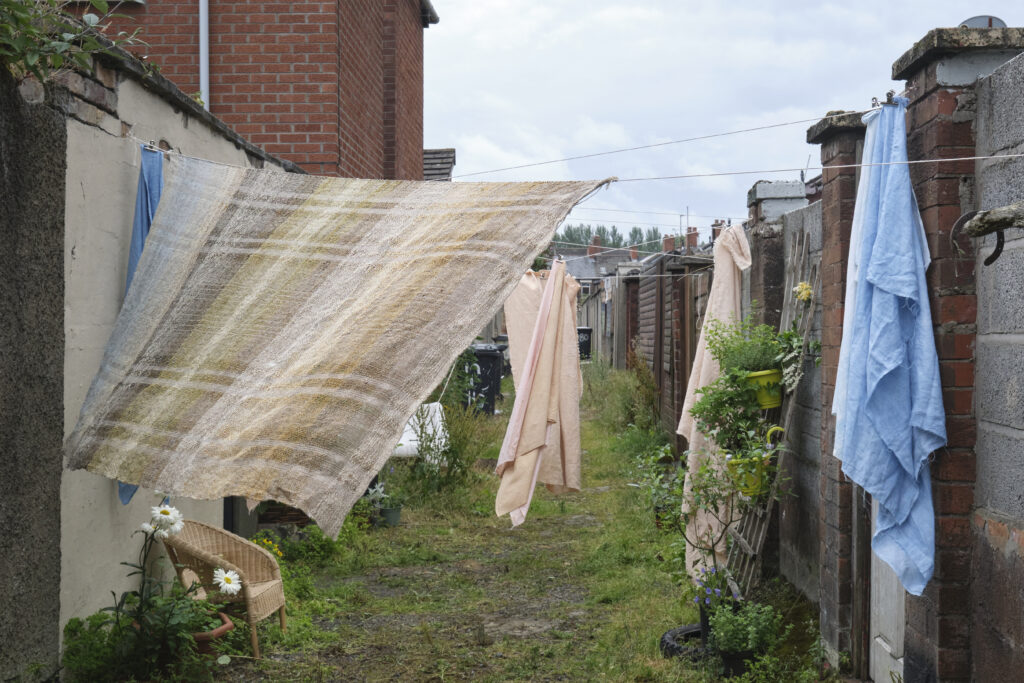
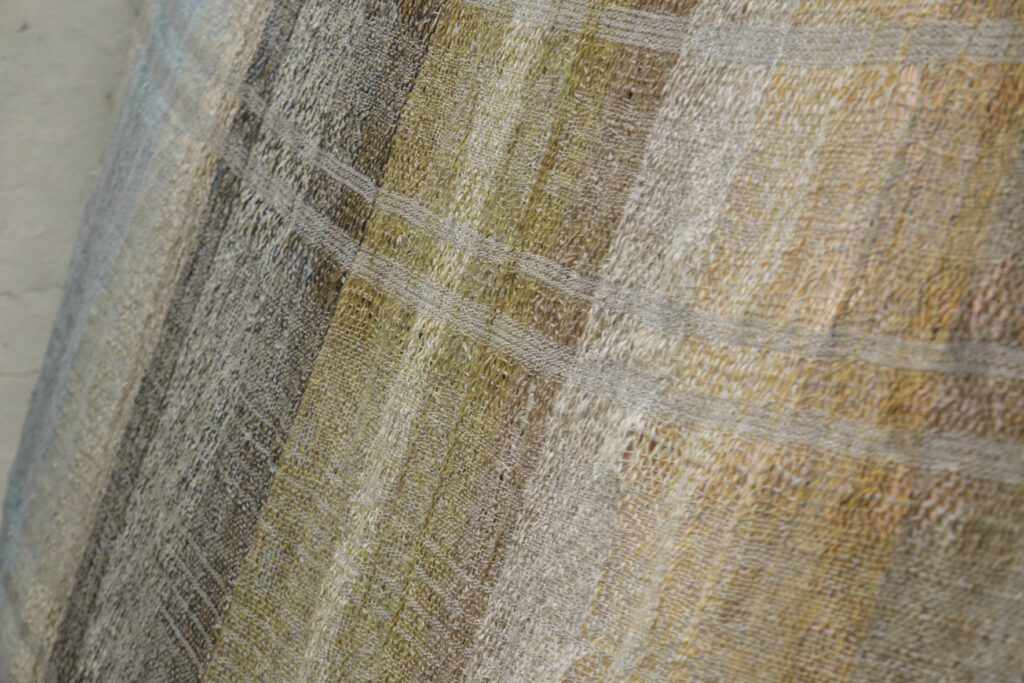
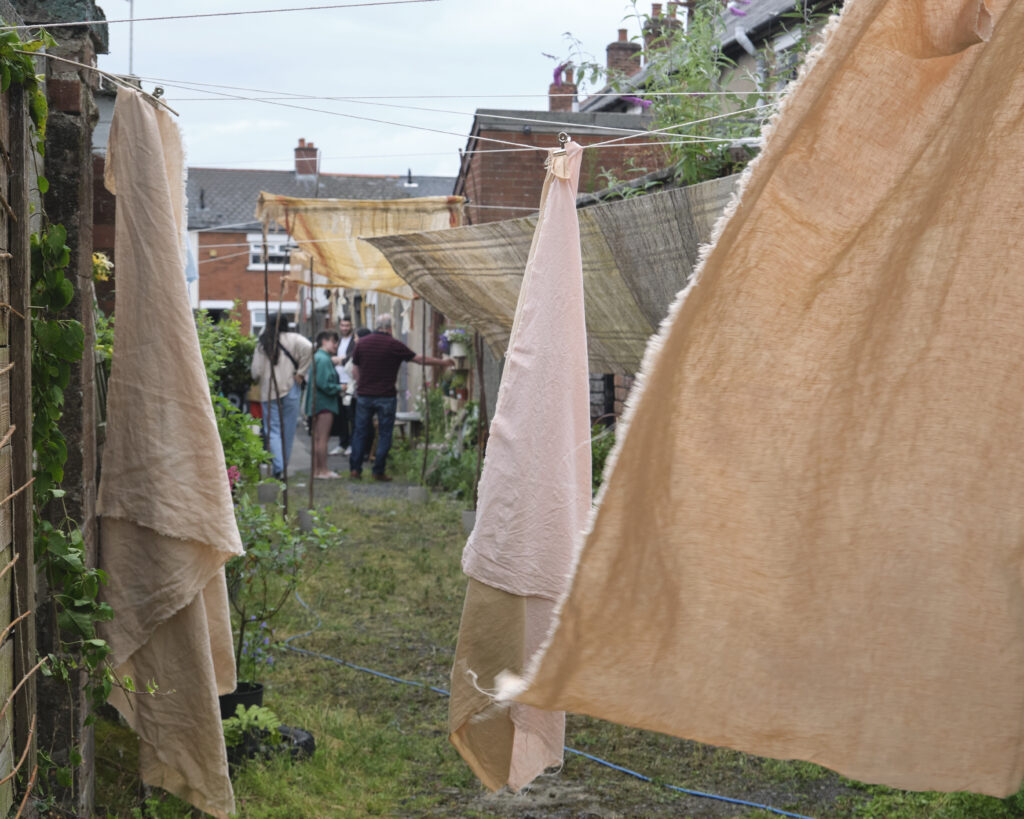
The second woven piece was more subtle, made with a mixture of Donegal Yarns and linen. We felt like this piece reflected all the muted urban colours of the alley – chalky stoney neutrals, like patches of exposed brick and peeling paint. Terracottas and rusty brown. Earth tones and greyish blues. It was the first piece you encountered hung on a series of strings, reminiscent of washing lines. Emily’s practice is process led, there was no fixed final presentation conceived at the beginning of making but she said she ‘wanted to make objects that felt airy and spacious but also broke up the space and were semi interactive’. 

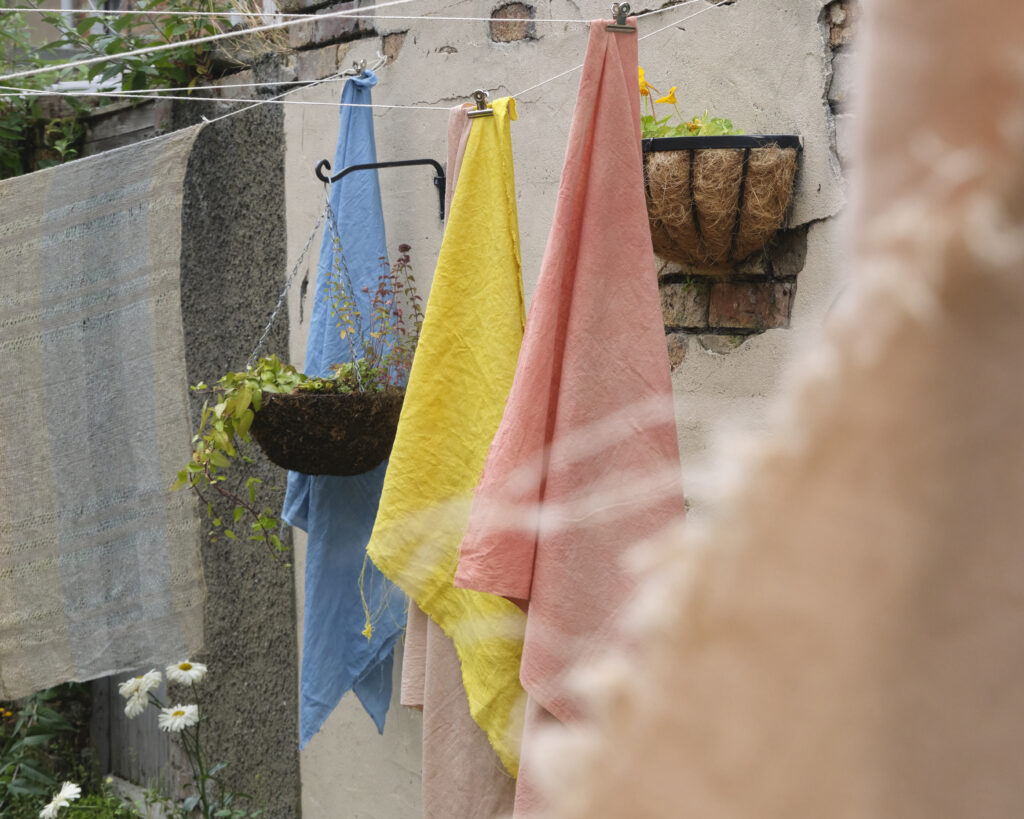
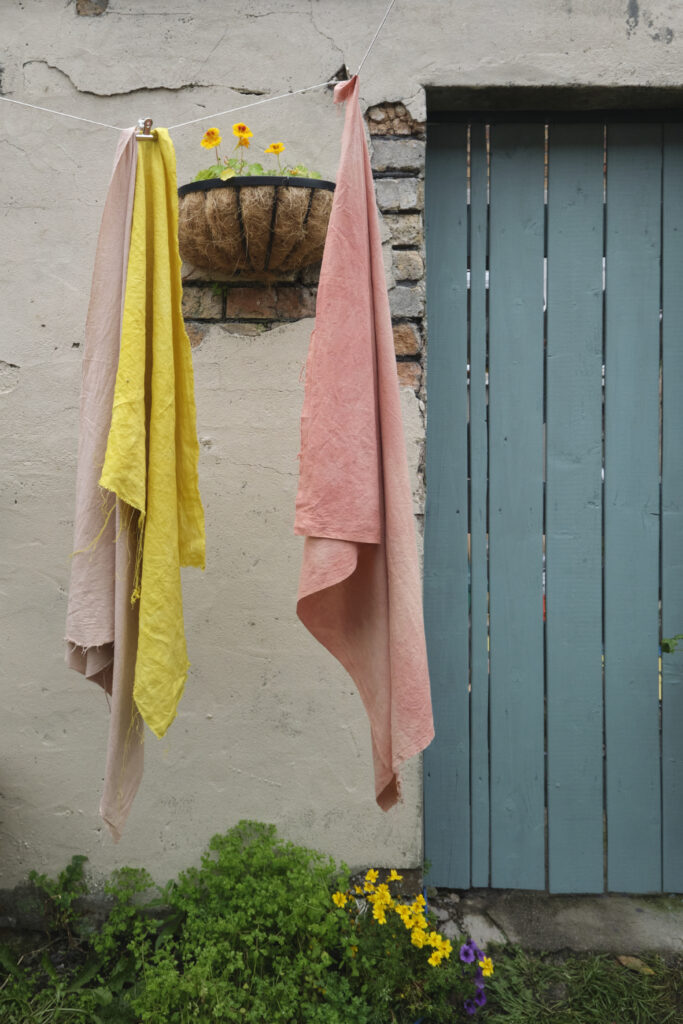
Following on behind the woven piece, a selection of coloured linens drape and billow from the makeshift ‘lines’. Some are peachy, one is vibrant yellow, another is steely blue. The natural plant dyes she used included woad, weld, avocado and madder. For me, it’s hard to look at linens on the line and not think about the heritage of these terrace houses that were likely built for the workers of Owen O’Cork Mill on the Beersbridge Road, less than 500 metres away from where we are standing. There’s a deep history of work with fabric and fibre in the area and I’m sure at many stages the alleys were overrun with busy women and washing lines – sure how else would anything get aired and dried? I’m sure some of the neighbours think we are mad but who knows, maybe they will be inspired to occupy the space on the next good day for drying.

Exhibitions are by nature temporary but this is more temporary than most, lasting only a few hours this Sunday morning. Everyone who drops by stays to talk and chat for a significant time, likely lulled by the mellow soundscape which Joshua, Emily’s husband, had recorded to accompany the experience. The delish sesame flapjacks and mushroom pastries made by Lorna at Tacacucina help too and thankfully the rain holds off. Just as the alley is a throughway, rather than a destination, I imagine that the work Emily has presented will continue to move and transform into something else. We look forward to seeing how both it and the alley here continue to grow and develop. 

Photos throughout by Simon Mills.

Categories
Gatherings Journal

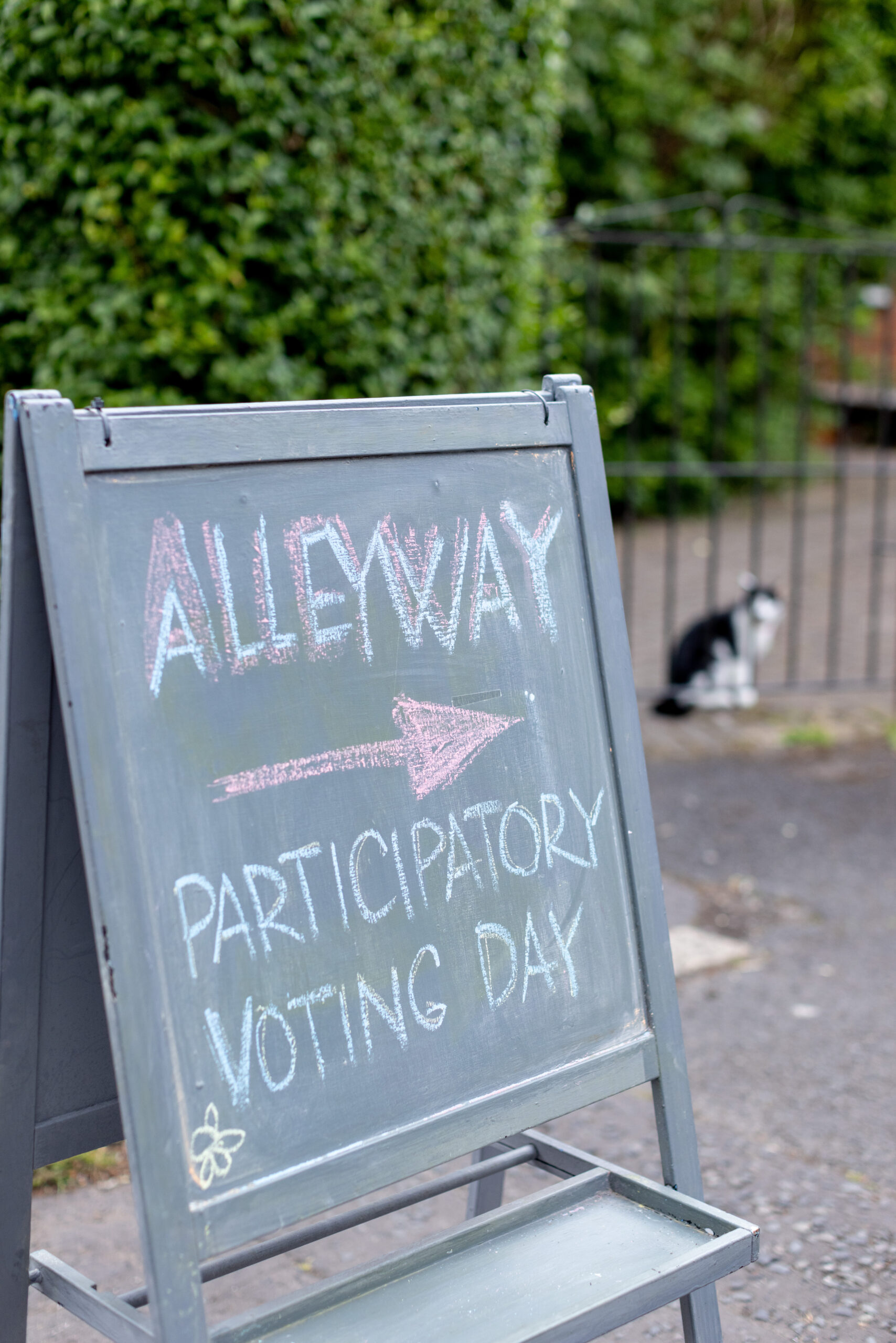
Participatory Budgeting

Reflecting on our wonderfull voting day gathering on June 7th.

We see it so often – ‘fixes’ that are applied to problematic places by doing the same thing over and over. A one size fits all approach. And decisions being made without ever visiting the place, or considering the people that use it.

Through our Belfast 2024 project, A Manifesto for the Alleys, we wanted to understand what a human centric approach might look like. Solutions that are formed by the people themselves. Our partnership with Social Farms & Gardens (SF&G) has been an important part in nurturing and supporting this process, with the incredible grass roots Reclaim the Commons network of community growers across Belfast.

Socially engaged artist Katharine Wheeler writes in her working principles ‘Put ideas out into the world as they are forming and let them come back changed’. Through 9ft in Common, we strive to create environments where people’s ideas are valued in the hope that they remain connected to and invested in them. So, what does this look like? SF&G cast a call out for ideas for small changes that people wanted to make in their alley. We were excited to see what might come back.

In response to the call out, we received 27 ideas and diverse stories about ways in which residents would like to make their alleyway better. Throughout each story was an underlying hope to make it a better place for people and with people. It was never just about making physical changes. 

We had £4000 to spend across all proposals, and SF&G designed a gorgeous gathering that would help distribute the money fairly. They used a participatory budgeting framework that they were familiar with and it had proven to be successful in creating an inclusive and fun environment. The emphasis was on participation, with time for making new alley friends and catching up with neighbours. 

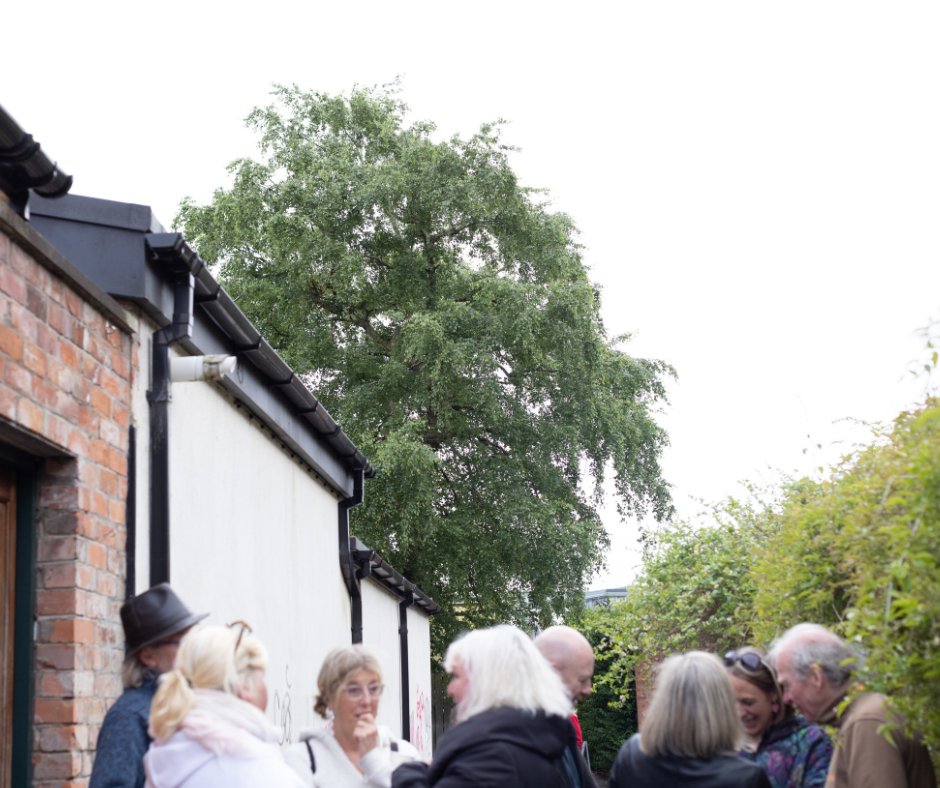
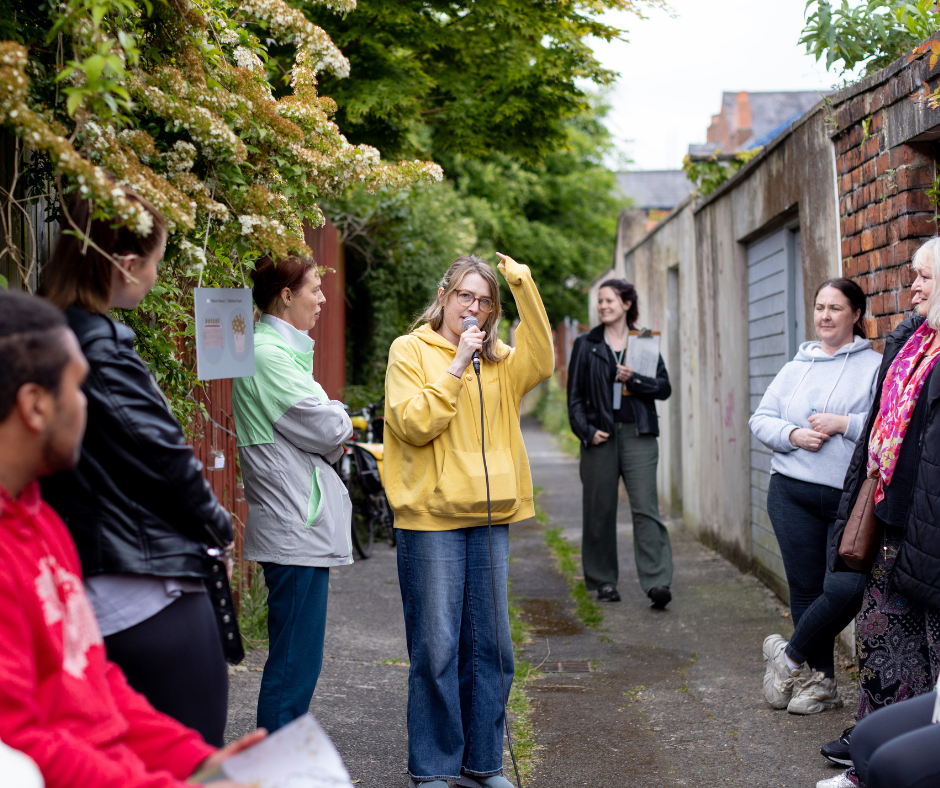
We chose to host the gathering in an alley. Gambling with the weather gods, we assembled at Harpers Yard, an incredible community led pop up café that runs a series of fundraisers from the alley and backyard yard of a home. 

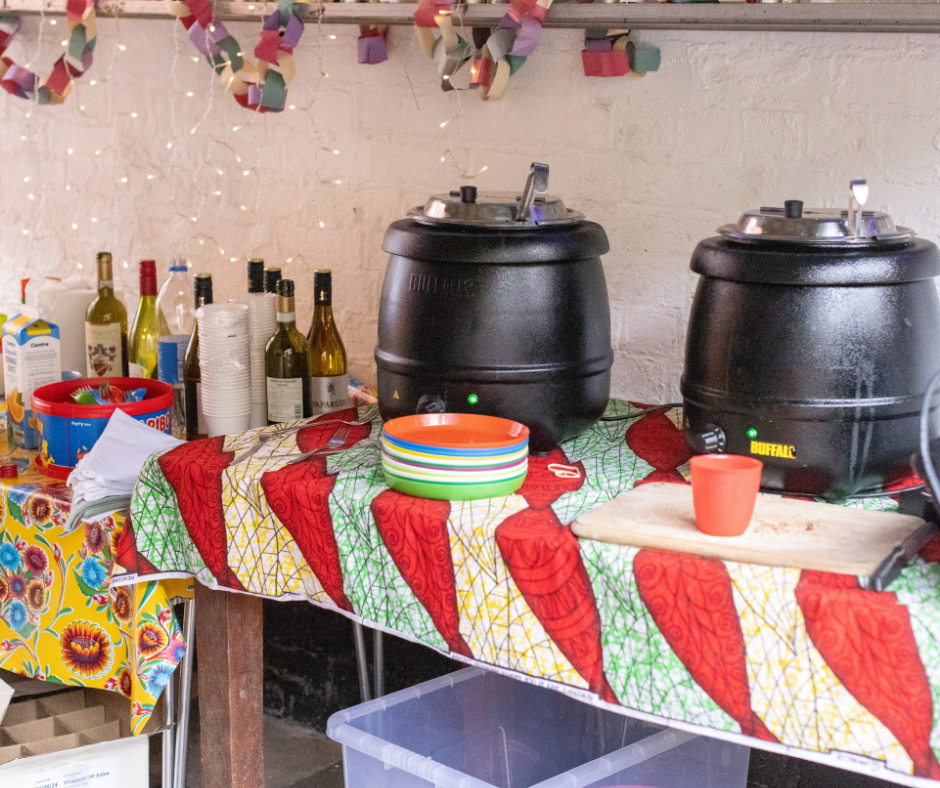
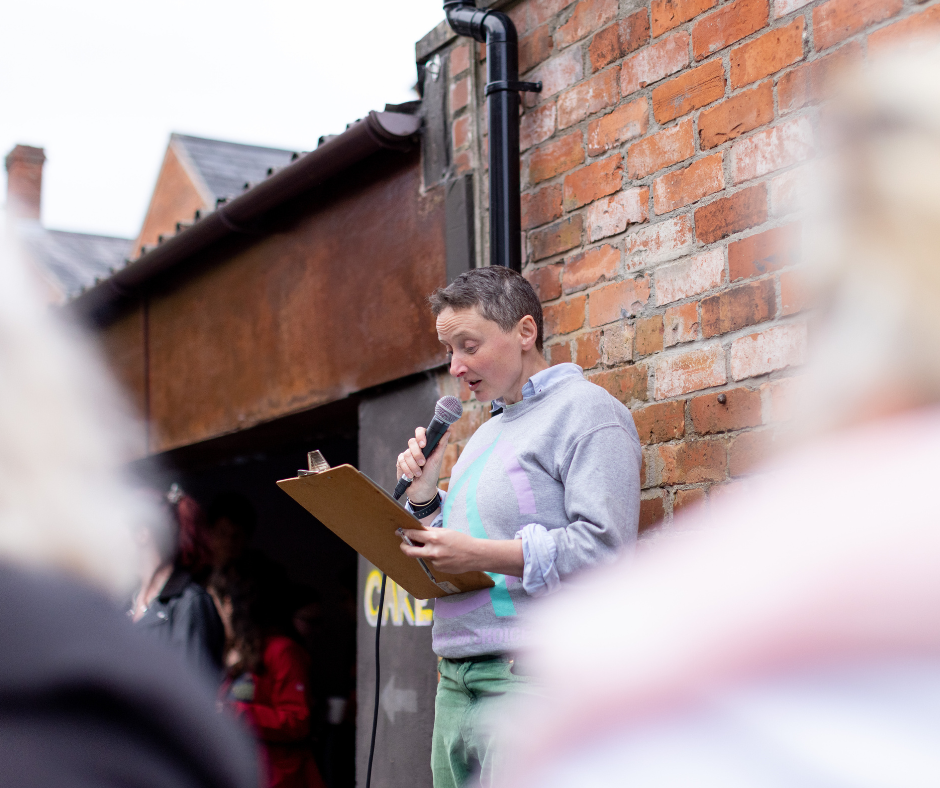
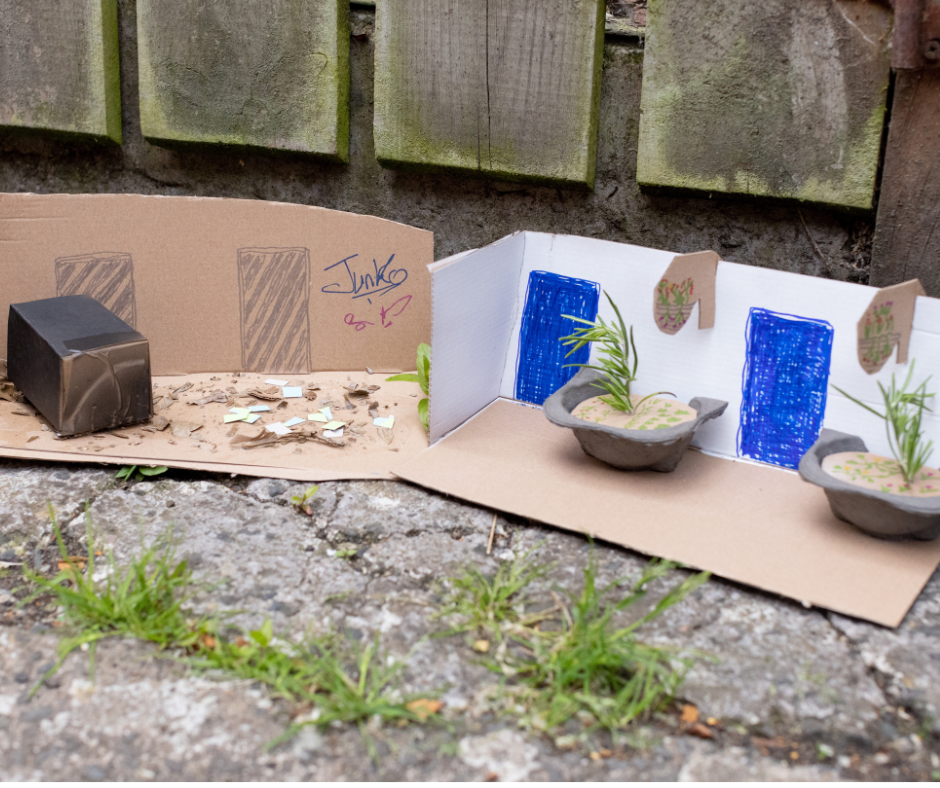
After tucking into a bowl of stew, people were invited to share their ideas with a one minute pitch. We saw concept drawings, masks, models. We heard new solutions to age old problems. We became part of each individual community, with memories shared about wonderful grandparents hosting barbecues in one alley and play shops in another. And we imagined dreams for the future – an outdoor electrical socket (to plug the toaster in!), a skip to help clear rubbish, seating so that everyone could feel comfortable and welcome. 

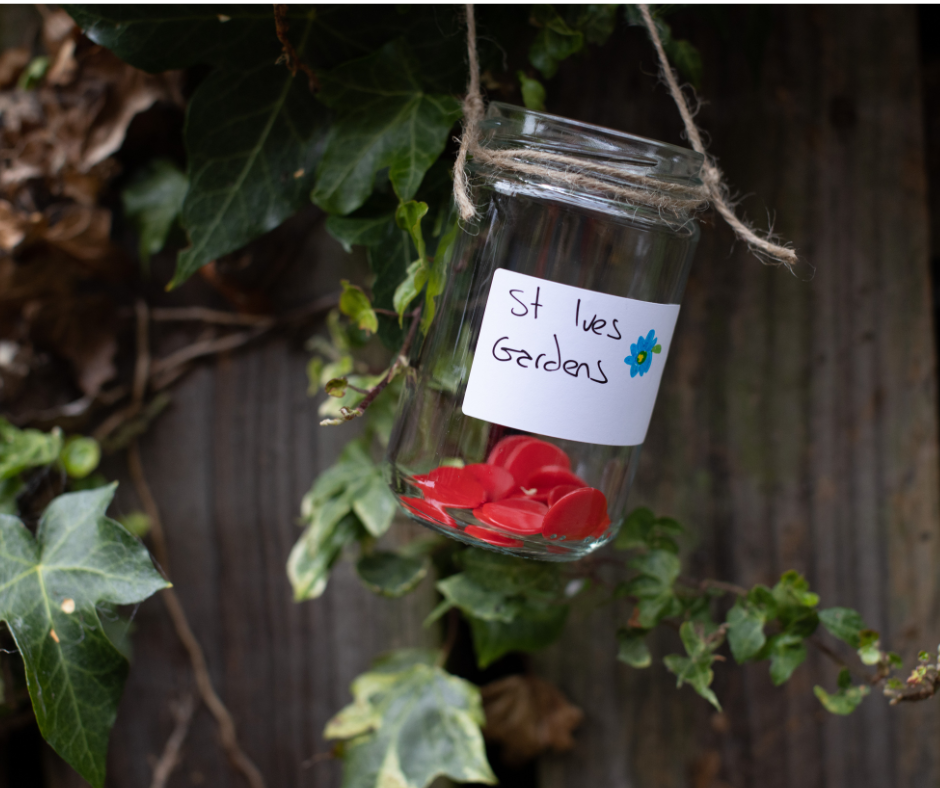
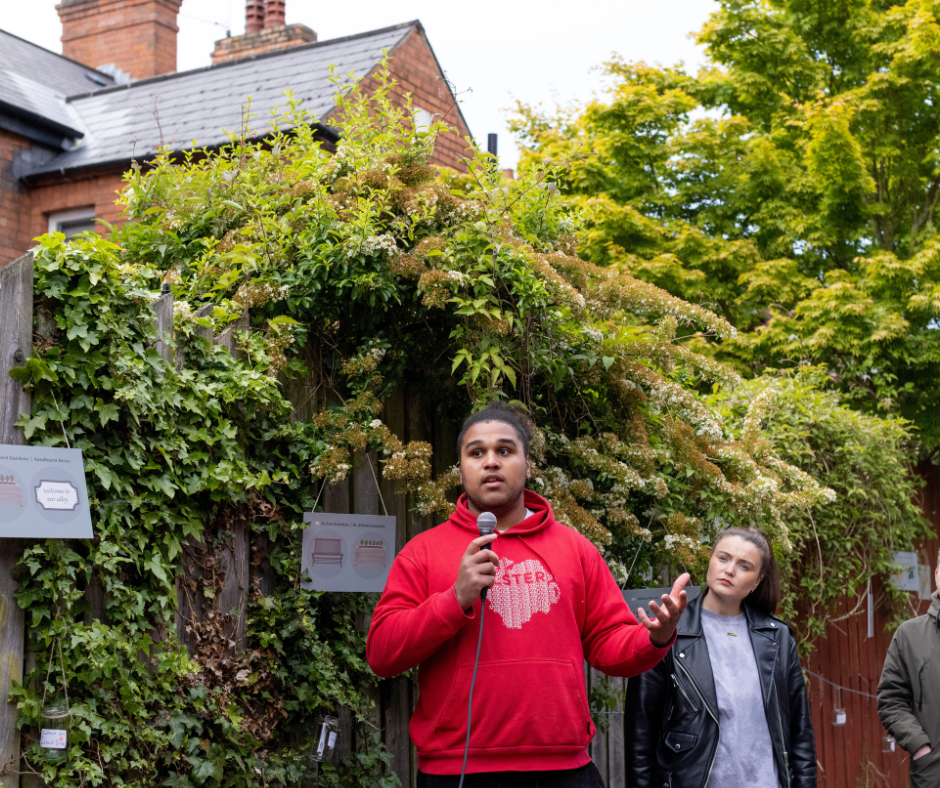
Then it was time to vote. Each person had been given a beautiful handmade paper wallet filled with tiddlywinks, thanks to Miriam at SF&G. Empty jam jars that had been destined for recycling were given a new lease of life as voting vessels. 27 of them were hung along the alley next to bespoke signs for each idea, reminding us of the wish list. The sound of chatter and tiny tiddlywinks hitting the bottom of glass jars filled the next few minutes, and then it was time to count the scores. 

Annnnd, everyone was a winner, with £4000 spread across all ideas. Awards were given based on the number of tiddlywinks in each jam jar. Not the most high tech, but extremely wholesome and interactive 🙂

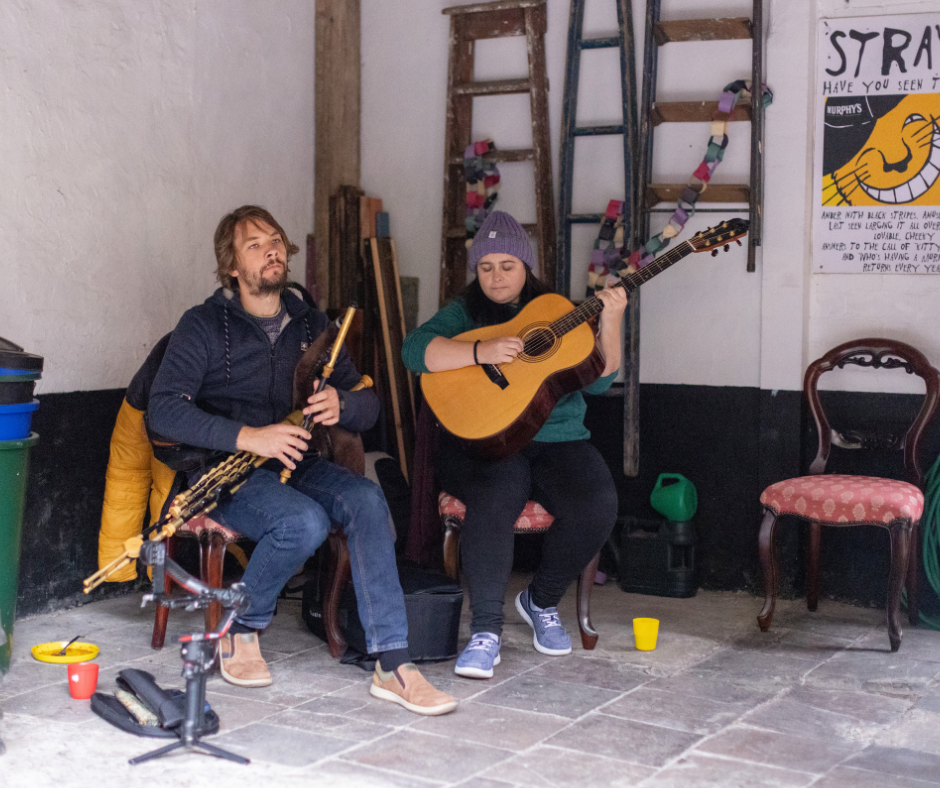
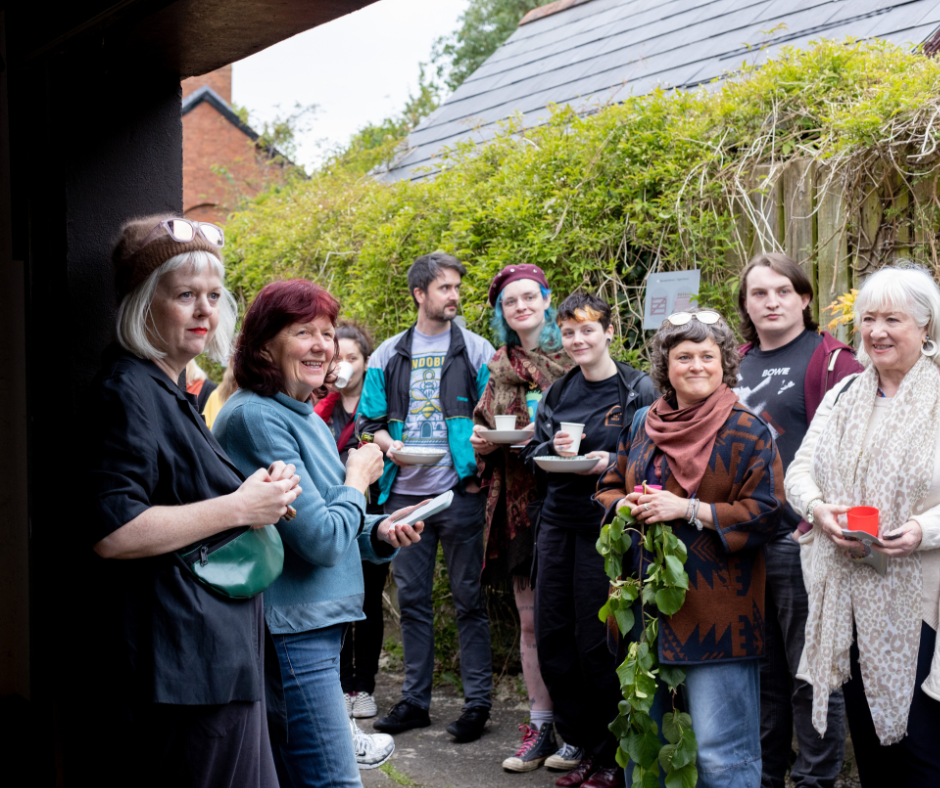
Finally the alley awards were announced, ranging from £50-£300. There were no expectations cast, no big forms to fill in. Just an awful lot of good will, joy, delightful conversations, new relationships formed, loud cheers, warm hearts, big smiles, and live music to end the evening. 

Images of the event courtesy of Jamie Trimble Photogrpahy

You can also watch a great short film captured for Belfast 2024 on their facebook page, here.