Categories
Journal Resources

Wild Belfast: Biodiverse Alley Advice

Wild Belfast’s Tips for Welcoming More Biodiversity to Your Alley

We had an wonderful time collaborating with Wild Belfast during our Alley Safari back in May. Wild Belfast are a passionate group dedicated to conserving and enhancing Belfast’s natural habitats. They host ecological recording sessions, advocacy campaigns, and workshops to engage and empower local residents to protect the green spaces and wildlife that make our city vibrant and unique.

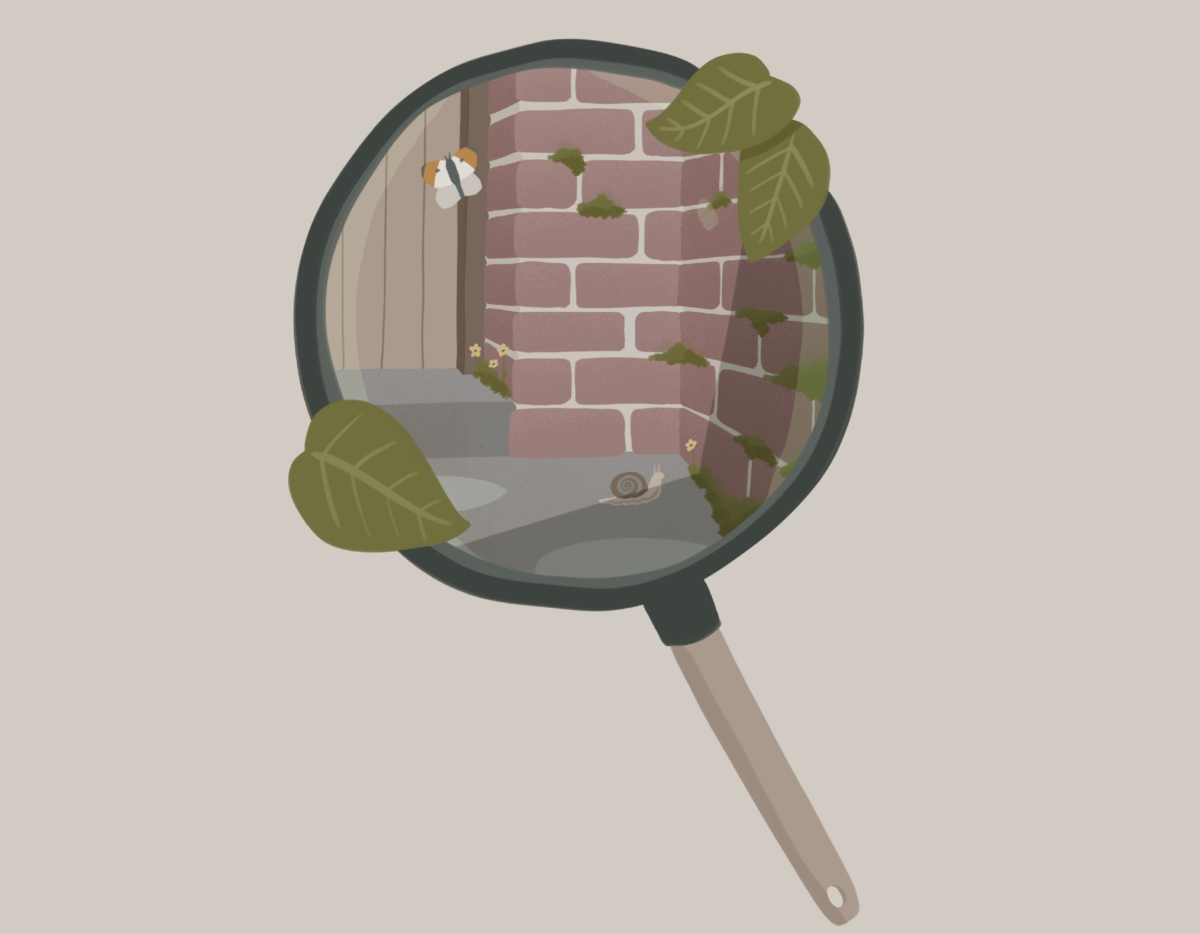
When it comes to increasing biodiversity in your alley, factors like sunlight, shelter, water availability, and surface materials can significantly impact what will thrive. Here are some tips and insights from Wild Belfast to help transform your alley into a haven for wildlife:

Start with the Ecological Context

Understanding the local environment is crucial. Wild Belfast suggests using resources like the Centre for Environmental Data and Recording (CEDaR) to identify the ecological characteristics of your area. This data can guide your decisions on what vegetation to plant and which features to install, helping you prioritize specific species and strategies tailored to your location.

Alternatively, Wild Belfast also have a membership strucutre if you want to stay up-to-date with their lastest projects and access the collective knoweldge of their members via their forum – another good starting point!
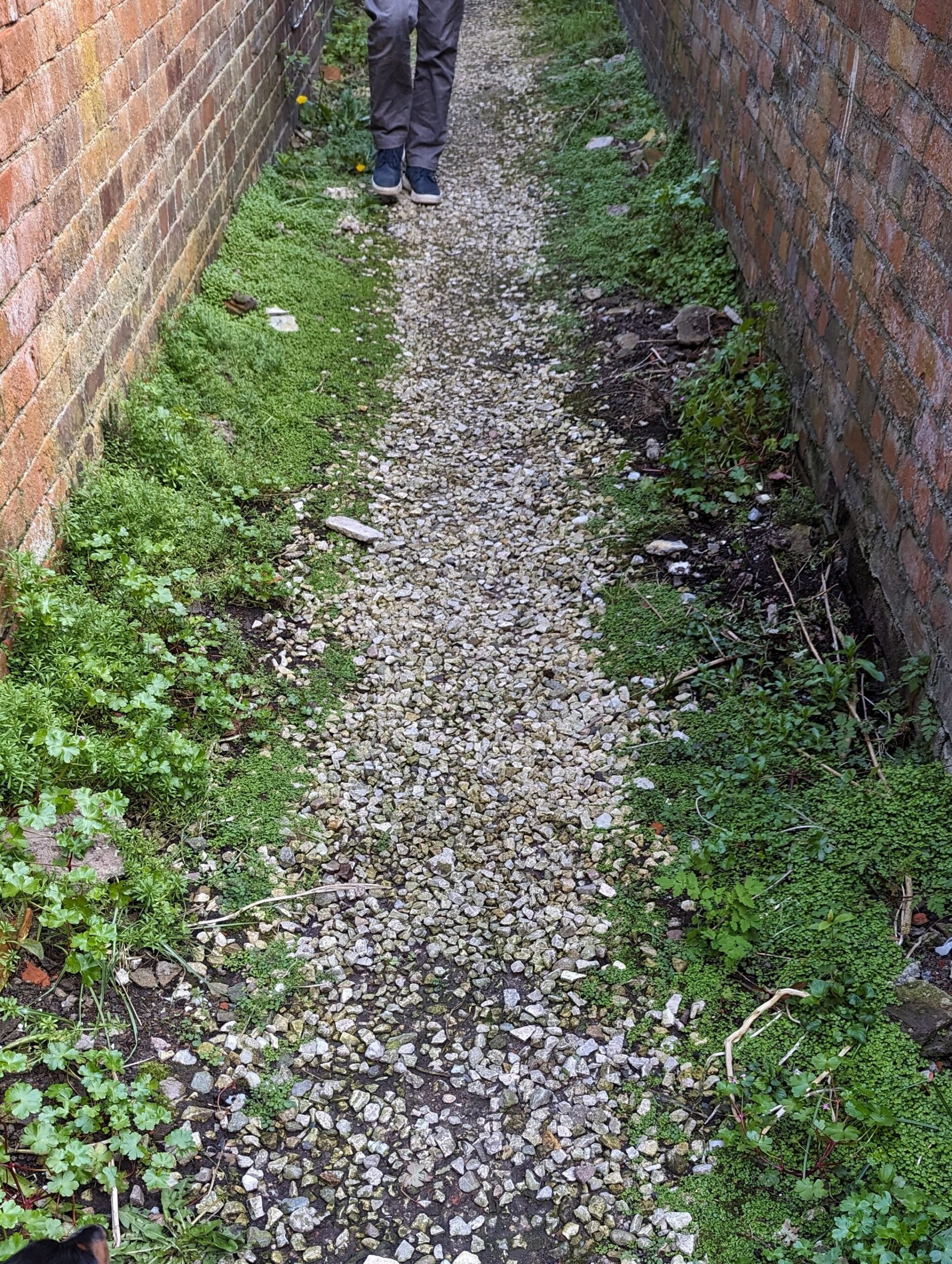
An alley without a concrete surface, has more biodiversity potential.
Green is Great—Native is Better

While any greenery is better than none, planting native species is the most effective way to support biodiversity. Native plants provide essential food and habitat for local wildlife throughout their life cycles.

Wild Belfast shares an example:

“Buddleia may be great for adult pollinators, but it doesn’t support the larval stages of any pollinator. The same applies to most non-native plants. Invertebrate larvae are often species-specific, depending on native plants like common nettles—which, while not a human favorite, are vital for many invertebrates.”

Balance is Key

It’s important to strike a balance between maintaining a tidy space and fostering biodiversity. Over-sanitizing urban areas can remove valuable habitats for wildlife. Wild Belfast reminds us:

“The presence of rats is more often linked to human waste rather than untidy vegetation. Managing this perception is essential to preserving biodiversity.”
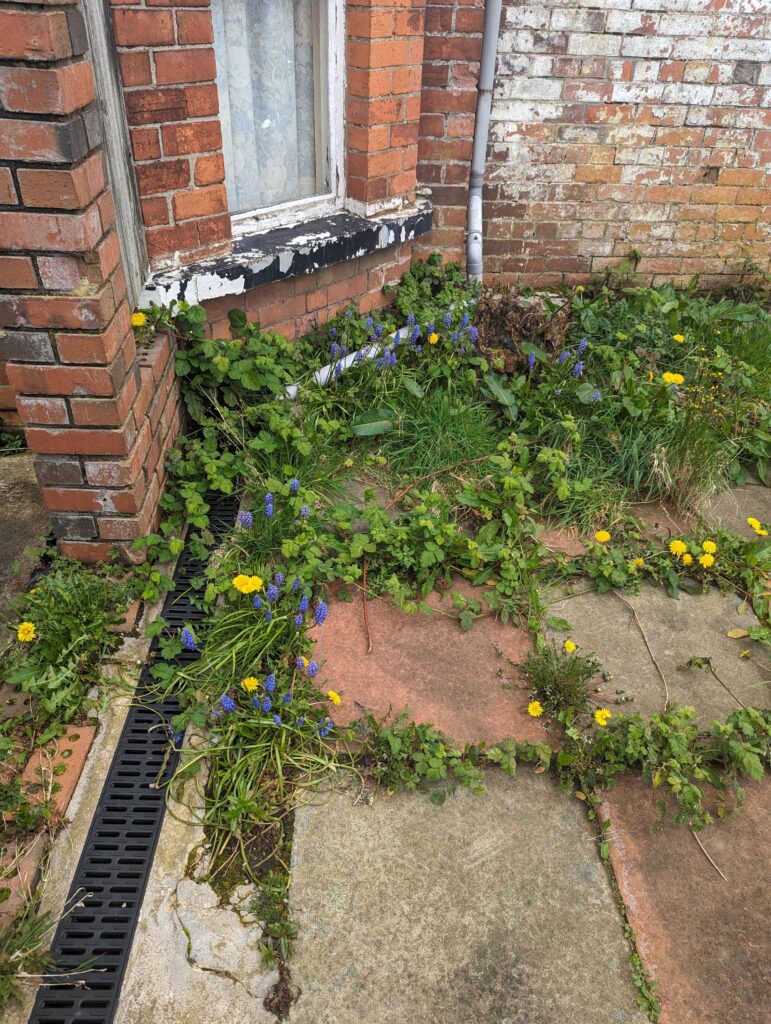
Bees, Bugs, and Insects

Insects are vital for pollinating urban plants and breaking down organic matter to enrich the soil. To support these minibeasts:

  • Plant a variety of native flowering plants to provide food and shelter.
  • Leave leaf litter and avoid pesticides to create safe spaces for insects to thrive.

Wild Belfast also emphasizes the importance of well-placed bug hotels:

“Bug hotels and bee homes should be placed in direct sunlight, as insects use the sun for warmth. They also need good foraging habitat within 1 km, or uptake will be limited. Beware of shallow store-bought bug hotels, as many are ineffective. For example, cavity-nesting bees need tunnels at least 15 cm deep to ensure proper nesting and population balance.”

Additionally, consider creating sandy substrates for mining bees, which lay their eggs in sandy soil. Wild Belfast advises against introducing honeybees as a biodiversity measure, noting that they compete with native pollinators and can pressure natural populations further.

Water Sources

We all know our plants need water but an accessible and open water source is invaluable—not just for birds to drink and bathe, but for supporting the life cycles of various species.

Wild Belfast highlights the benefits:

“In sunny, flower-rich spaces, water sources can quickly attract hoverflies, which are fantastic pollinators. Many hoverfly larvae are aquatic, so even small water features can make a big impact. While amphibians are unlikely to thrive in urban alleys due to predators like cats, water features will still significantly enhance invertebrate biodiversity.”
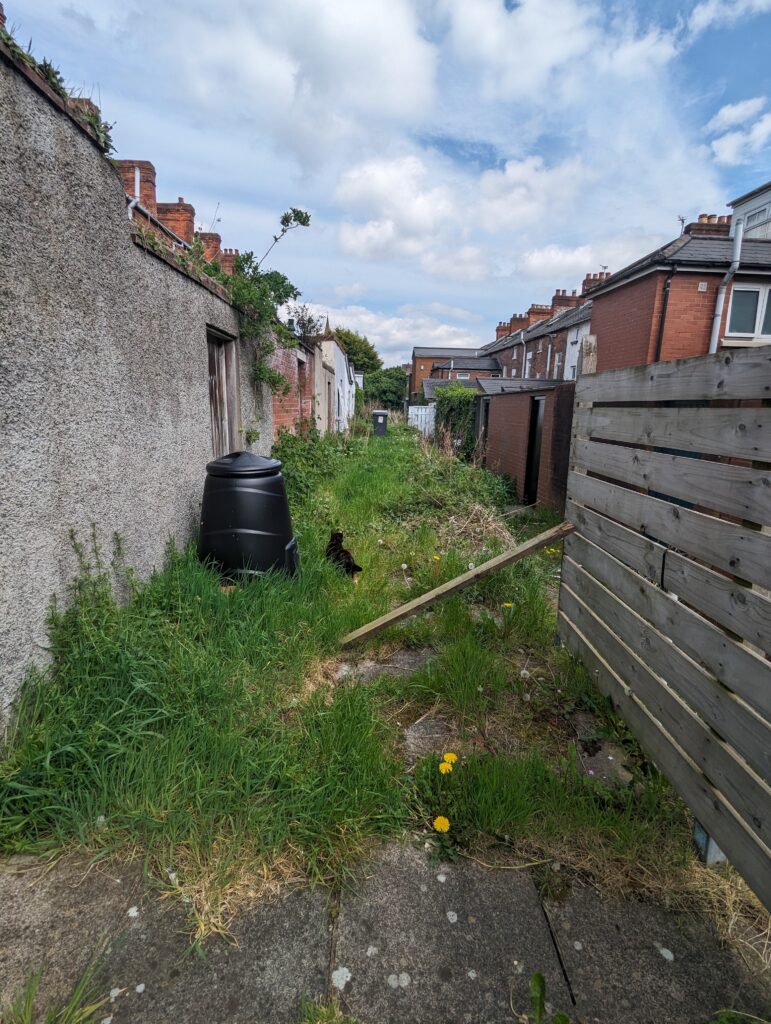
Sorry cats you aren’t great for biodiversity of the alleys.
Birds and Bats

Birds and bats are more than just charming to watch or listen to—they play crucial roles in supporting urban biodiversity:

  • Seed Dispersal and Pollination: Birds help pollinate flowers and disperse seeds, enabling native plants to thrive and regenerating green spaces.
  • Natural Pest Control: Many bird species feed on insects and small pests, maintaining ecological balance and reducing the need for chemical pesticides.
  • Connecting Habitats: Birds and bats encourage the development of parks, rooftop gardens, and tree corridors. These green spaces link fragmented urban habitats, supporting diverse wildlife populations.

Wild Belfast shares these practical tips for installing bird and bat boxes:

“Bird boxes should ideally be placed a minimum of 3 meters high—5 meters is optimal for all species, including bats. Avoid direct sunlight by placing boxes on north-facing walls or in shaded areas on east- or west-facing walls. If south-facing walls are the only option, make sure the boxes are shaded, such as under soffits or eaves.”

Remember. You don’t have to do everything all at once. Take action – Get started with small steps, every action you take creates a ripple.

If you are still looking for more ideas here are some addional resources recommended by Wild Belfast:

Landscaping and Biodiversity Guide for New Developments – Developed by Clúid Housing and approved by the All-Ireland Pollinator Plan this guide has lots of practical advice on native planting and leaving space for nature. Although it’s written with new developments in mind, there are plenty of ideas for reimagining existing spaces. 

This online PDF Landscape and Urban Design for Bats, produced by the Bat Conservation Trust has some really useful information on designing habitats for bats and the insects they feed off. 

Butterfly Conservation also got in touch to signpost some resources:

Butterflies and moths are sensitive indicators of the health of our environment. To help them, they encourage everyone to Create a Wild Space for butterflies and moths in whatever patch of space is available. Further info on wild spaces and the ongoing mapping project, here.   See the below video as a good starting point for identifying differnt species:
Categories
Journal Resources

Manifesto for the Alleys

Our year-long research project exploring the untapped potential of Belfast’s urban alleyways has culminated in a series of action points, which suggesting how citizens could reclaim and repurpose up to 76 football pitches worth of vital public space.

Throughour our Belfast 2024 Comission 9ft in Common has gathered intentions and hopes for the alleys from a wide range of participants and collaborators. We’ve documented the spaces and how people respond to them in a variety of ways including photography, film, journal reflections and conversations. This research has influenced the 9 key points of the manifesto document and accompanying film ‘9ft in Common’, filmed and produced by Simon Mills.

We are asking Belfast; if we adopt the Manifesto and occupy the alleys, what new spaces, friends and connections will we find along the way?

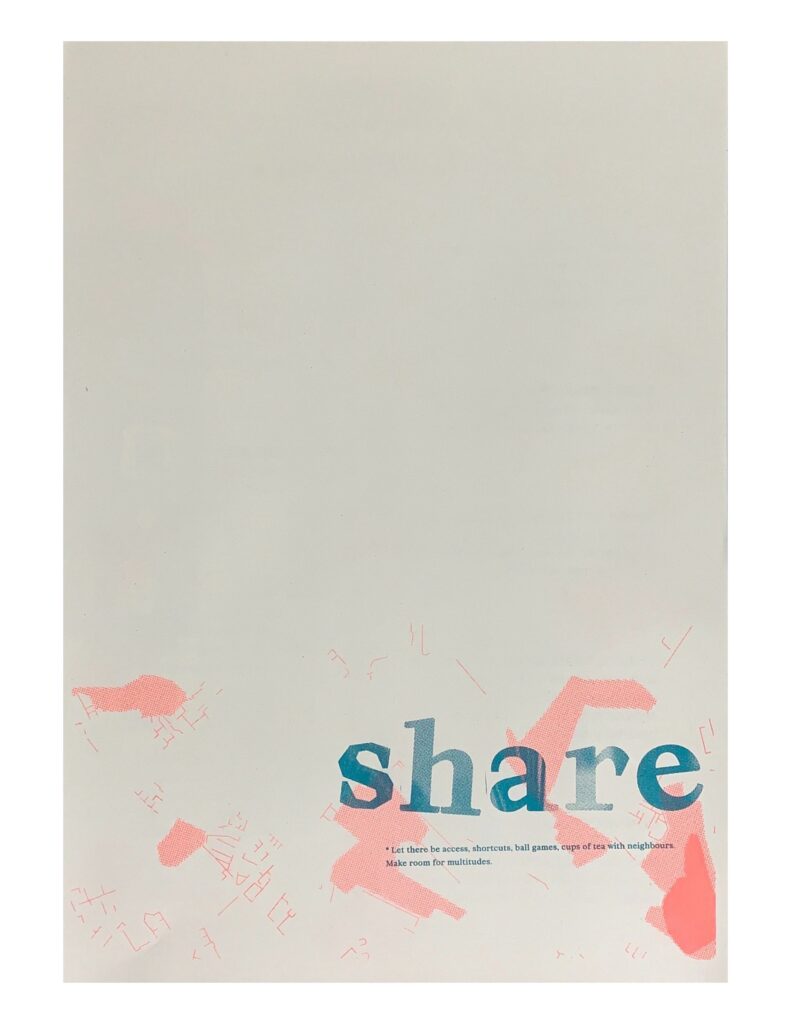
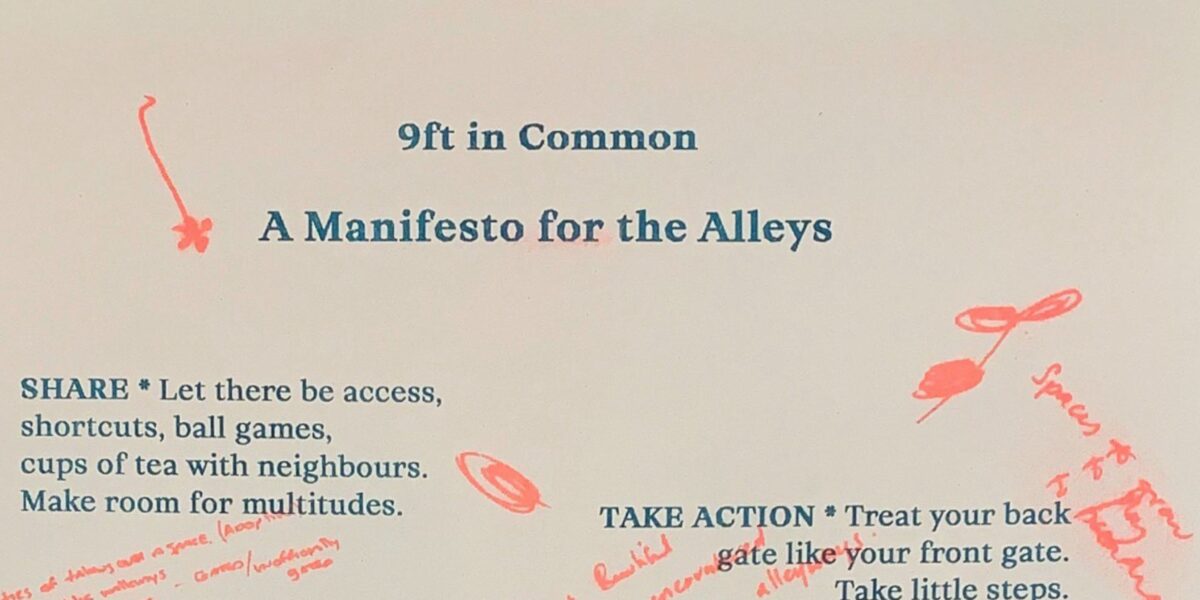
  1. SHARE

Let there be access, shortcuts, ball games, cups of tea with neighbours. Make room for multitudes.

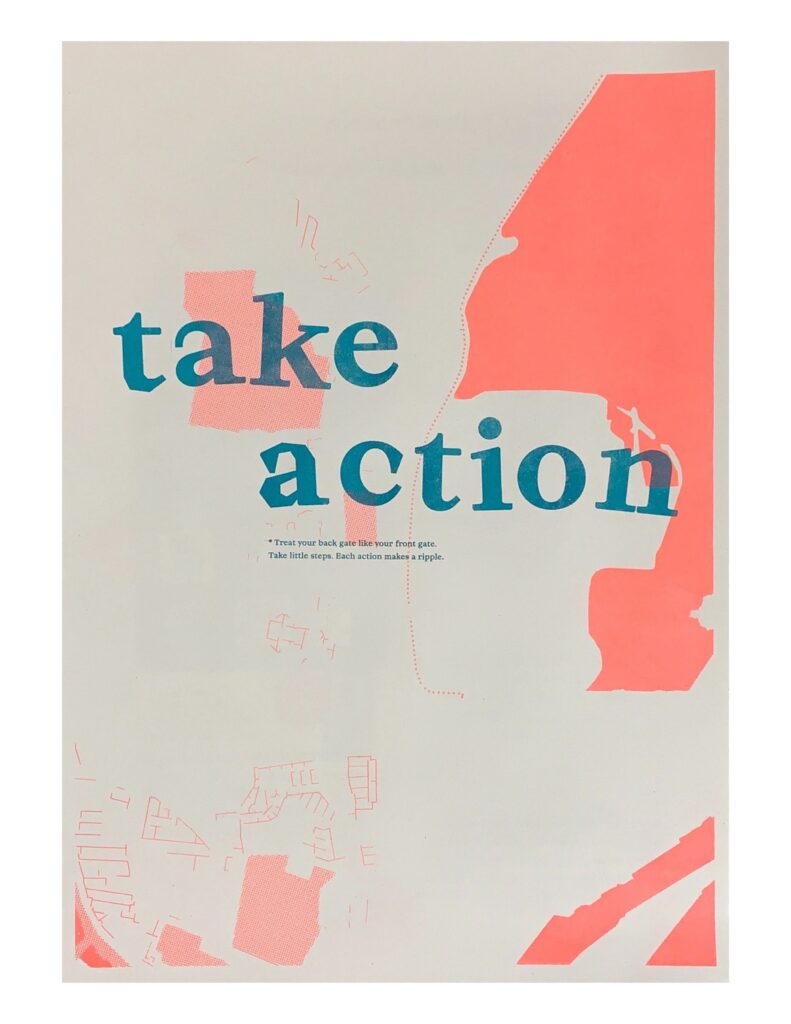
  1. TAKE ACTION

Treat your back gate like your front gate. Take little steps. Each action makes a ripple.

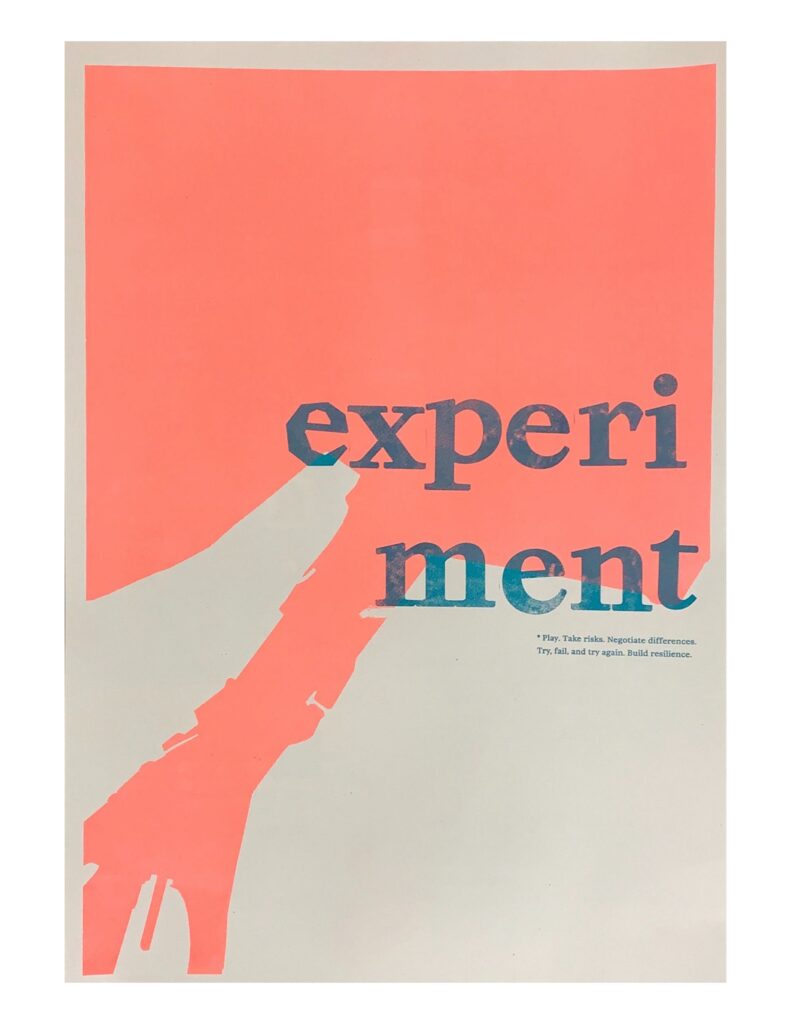
  1. EXPERIMENT

Play. Take risks. Negotiate differences. Try, fail and try again. Build resilience.

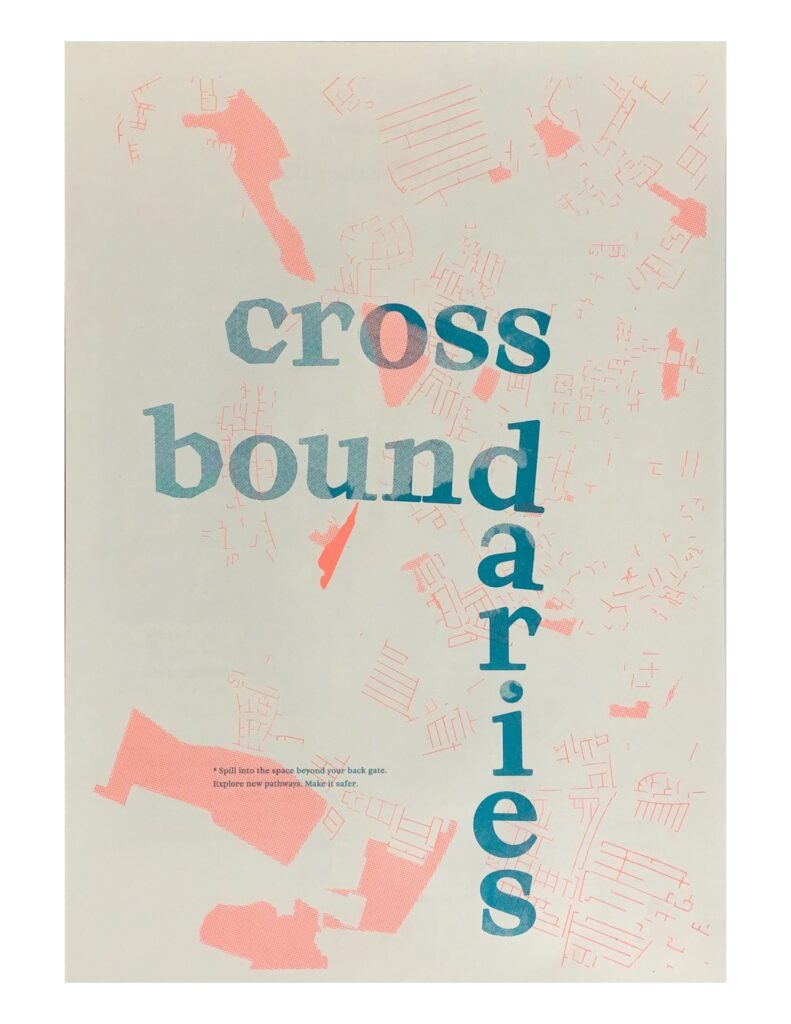
  1. CROSS BOUNDARIES

Spill into the space beyond your back gate.  Explore new pathways. Make it safer. 

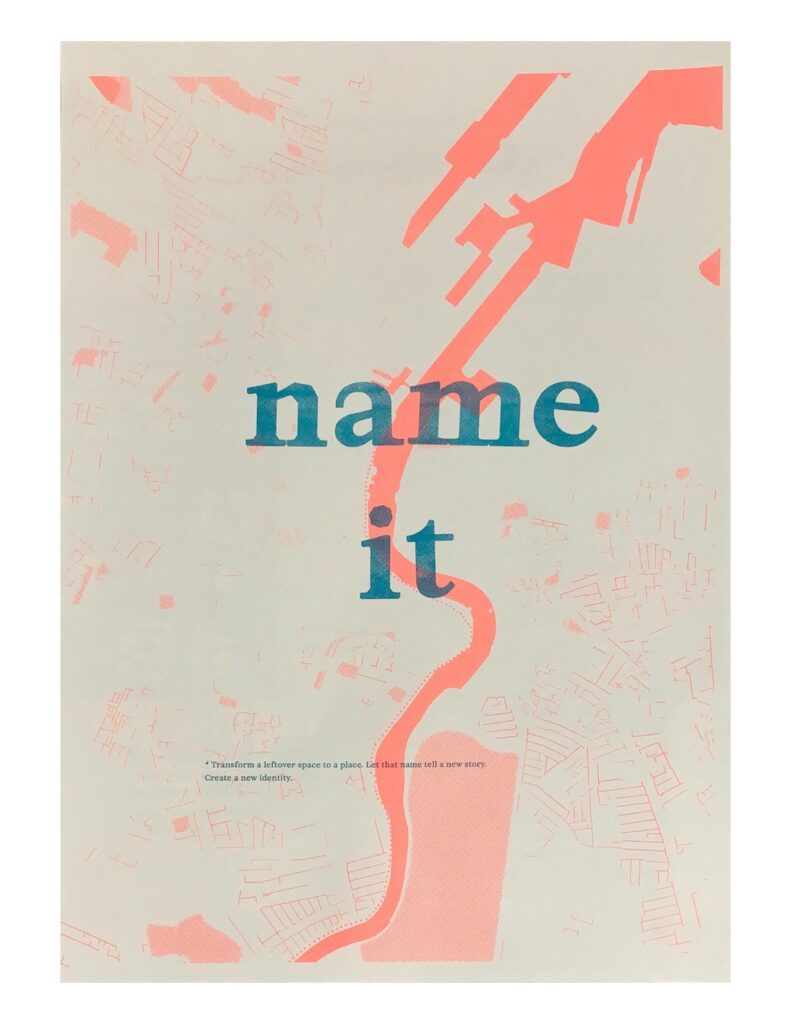
  1. NAME IT

Transform a leftover space to a place. Let that name tell a new story. Create a new identity.

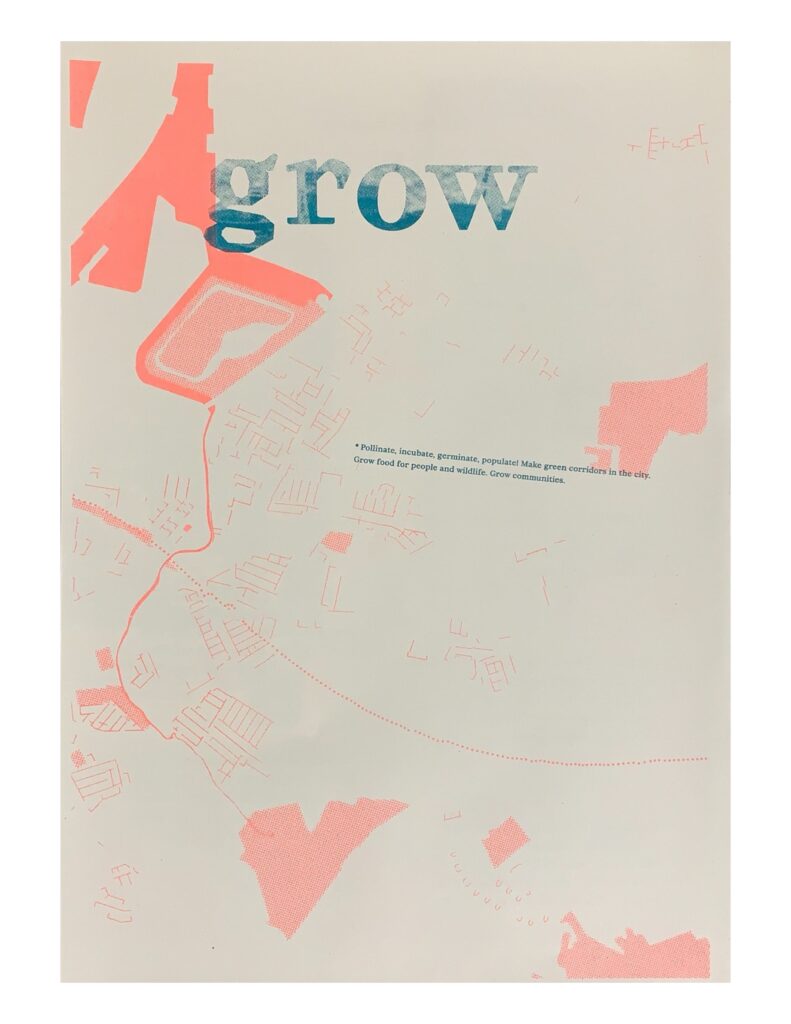
  1. GROW

Pollinate, incubate, germinate, populate!  Make green corridors in the city. Grow food for people and wildlife. Grow communities.

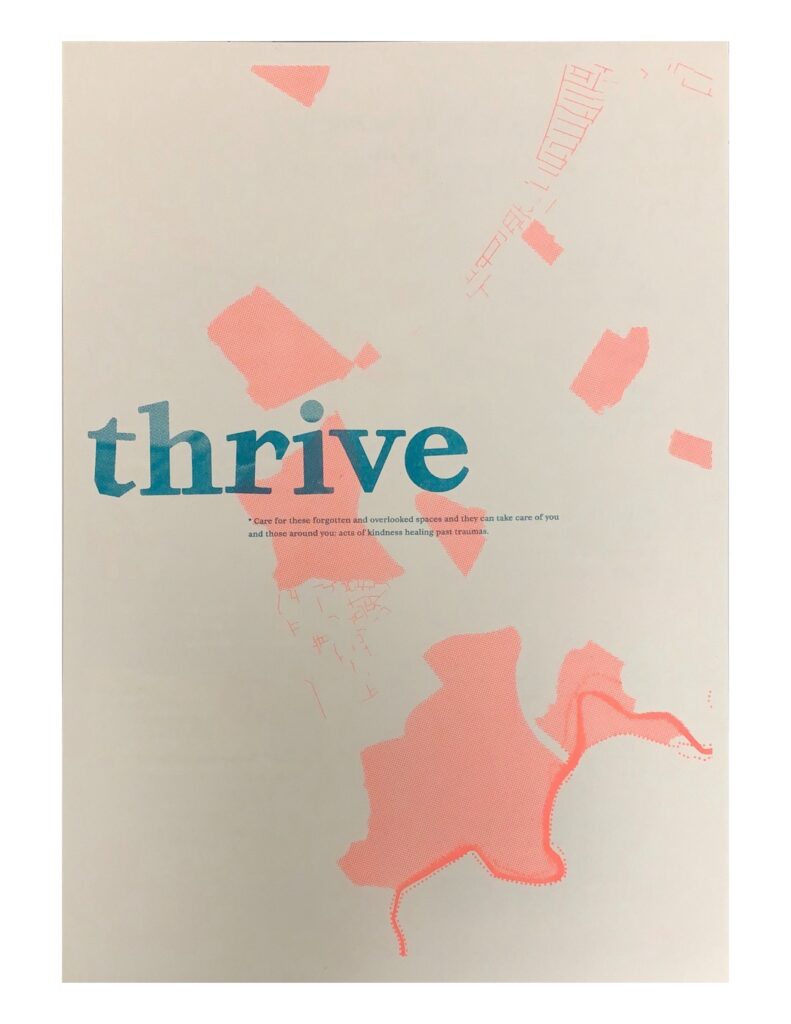
  1. THRIVE

Care for these forgotten and overlooked spaces and they can take care of you and those around you: acts of kindness healing past traumas.  

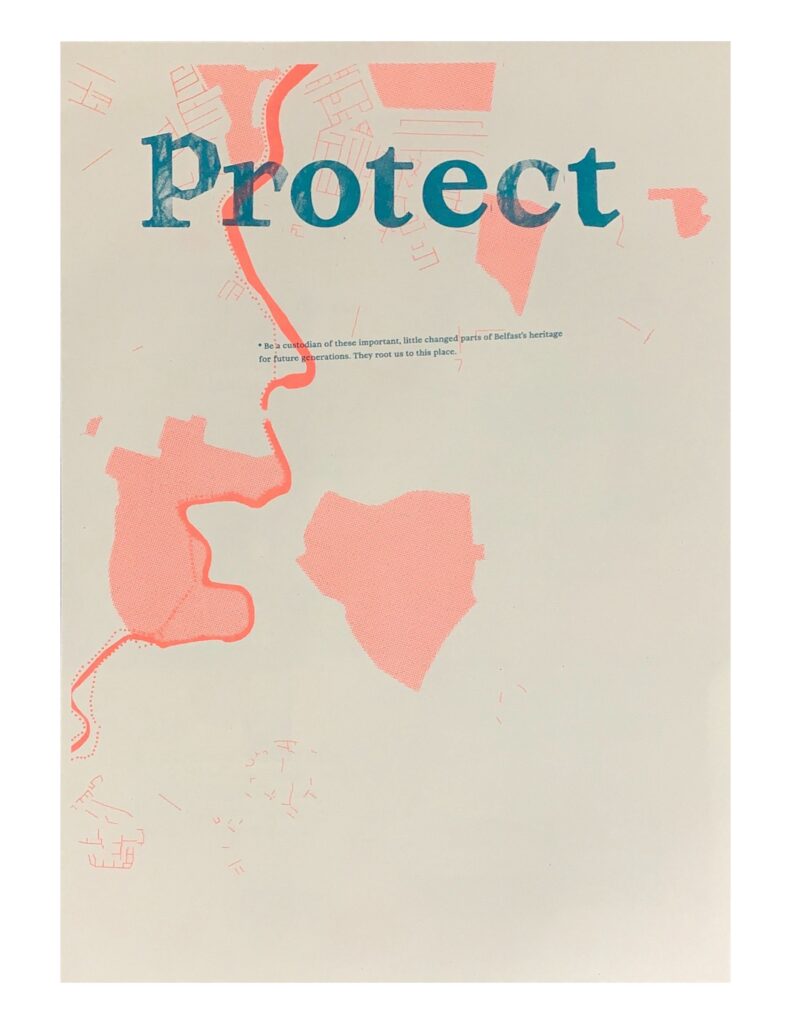
  1. PROTECT

Be a custodian of these important, little changed parts of Belfast’s heritage for future generations. They root us to this place.

  1. CONNECT

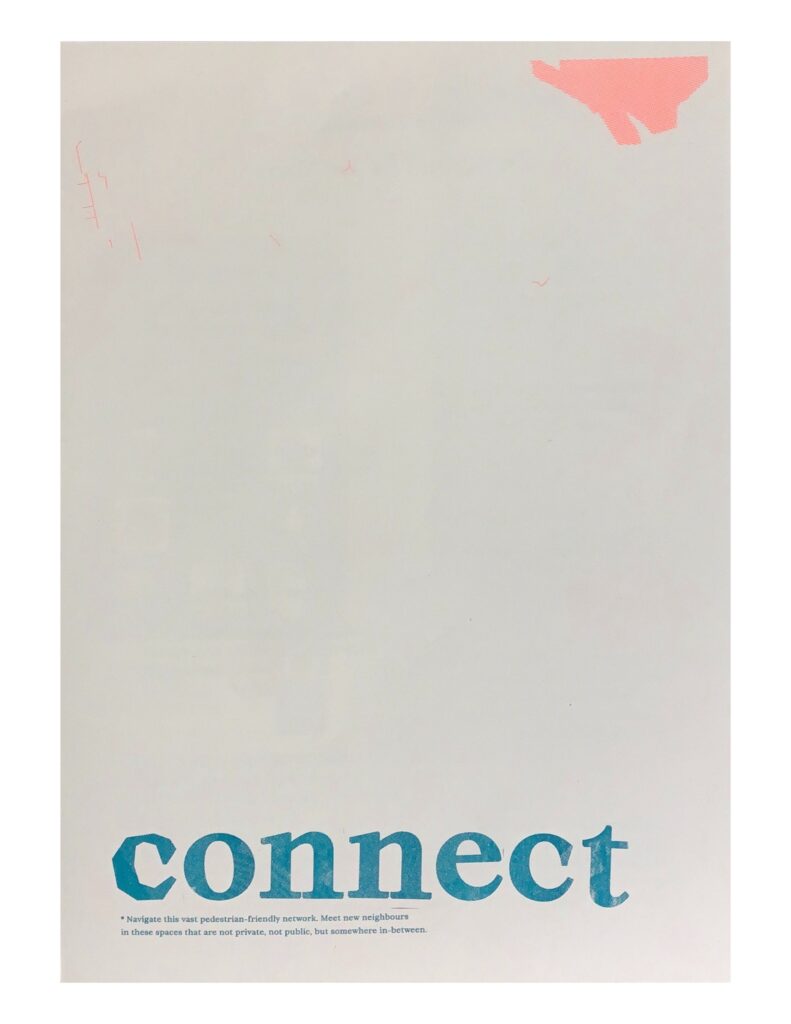
Navigate this vast pedestrian-friendly network. Meet new neighbours in these spaces that are not private, not public, but somewhere in-between.

The printed manifesto document has been designed by Soft Fiction Projects an artist run initiative founded in 2018 by artists Alessia Cargnelli and Emily McFarland. They are a limited edition of 450 risographic prints on archival paper.

9ft in Common

A film by Simon Mills

Categories
Events Journal Resources

Under the Shelter – Competition Results

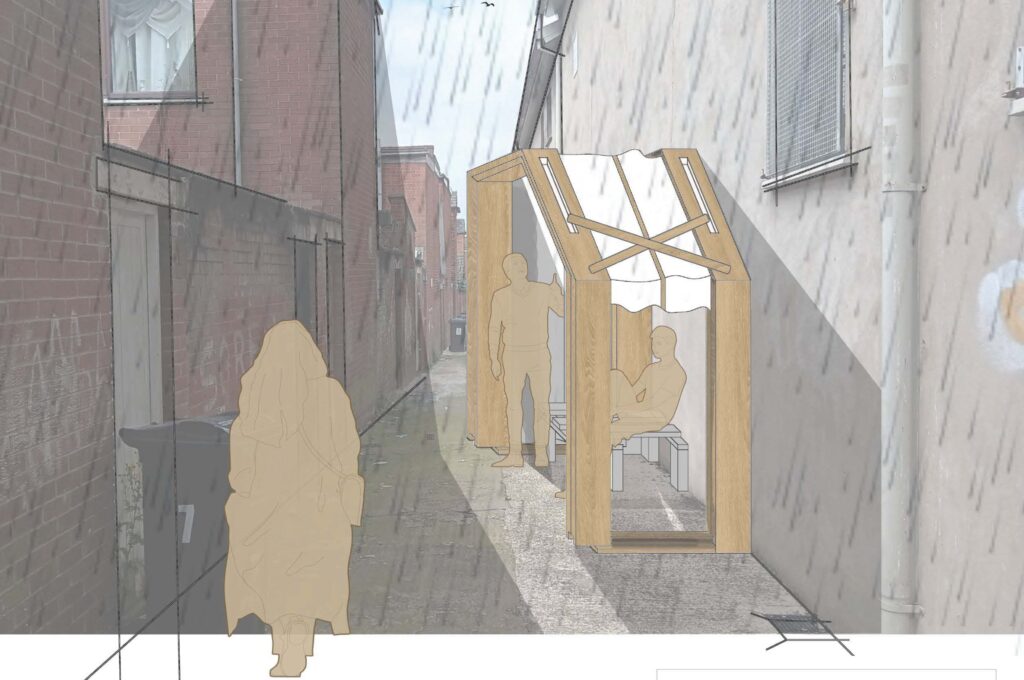
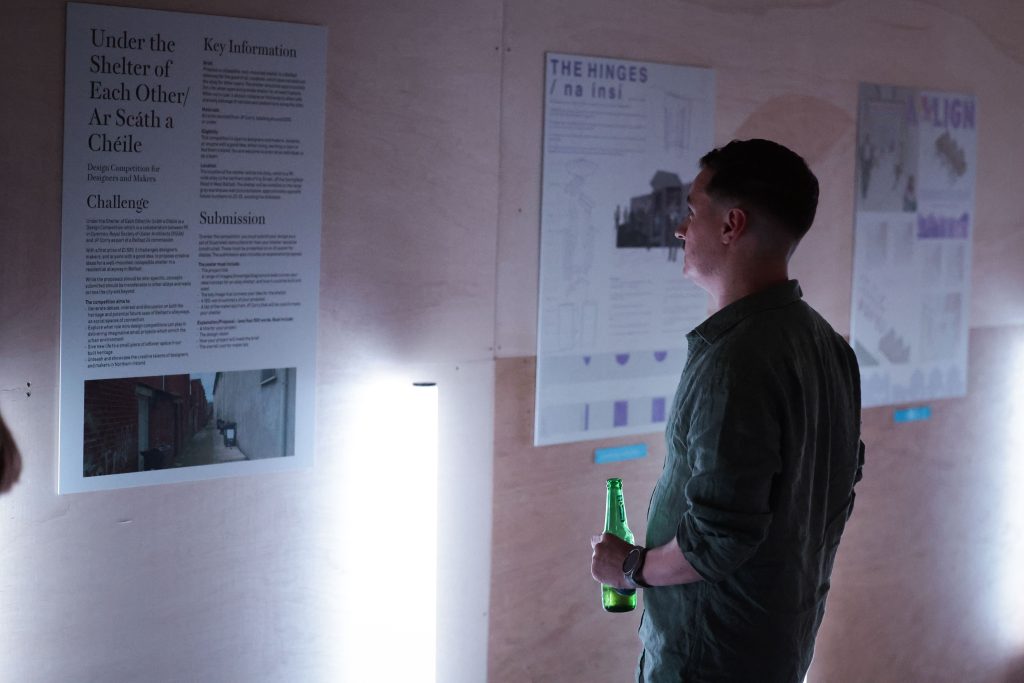
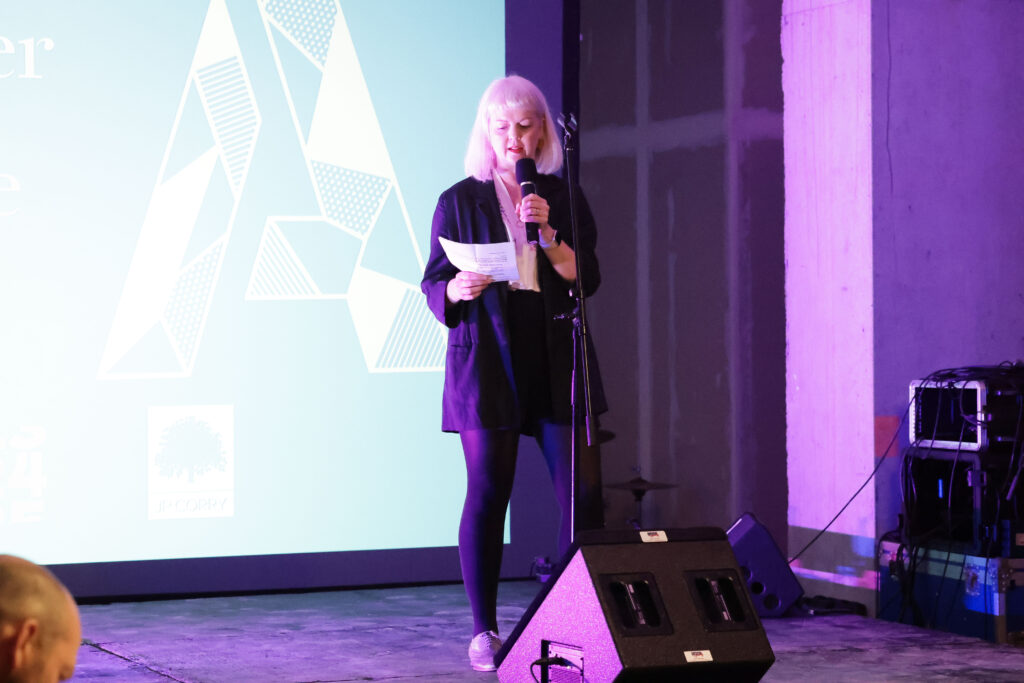
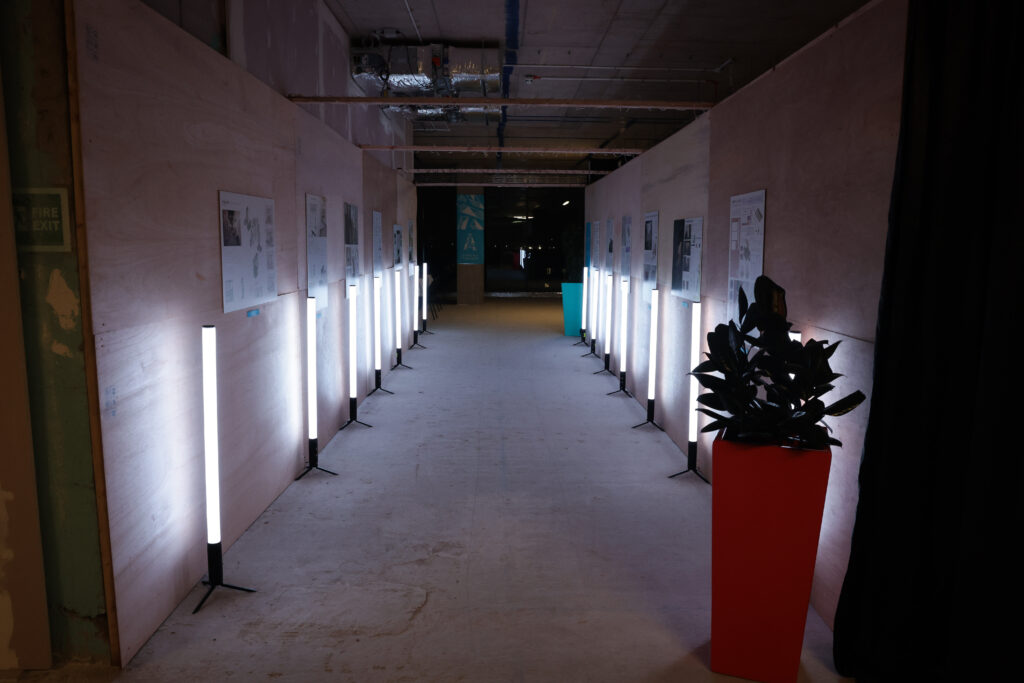
Architecture Night celebrated 11 entrants to the ‘Under the Shelter of Each Other/ Ar Scáth a Chéile’ Design Competition.

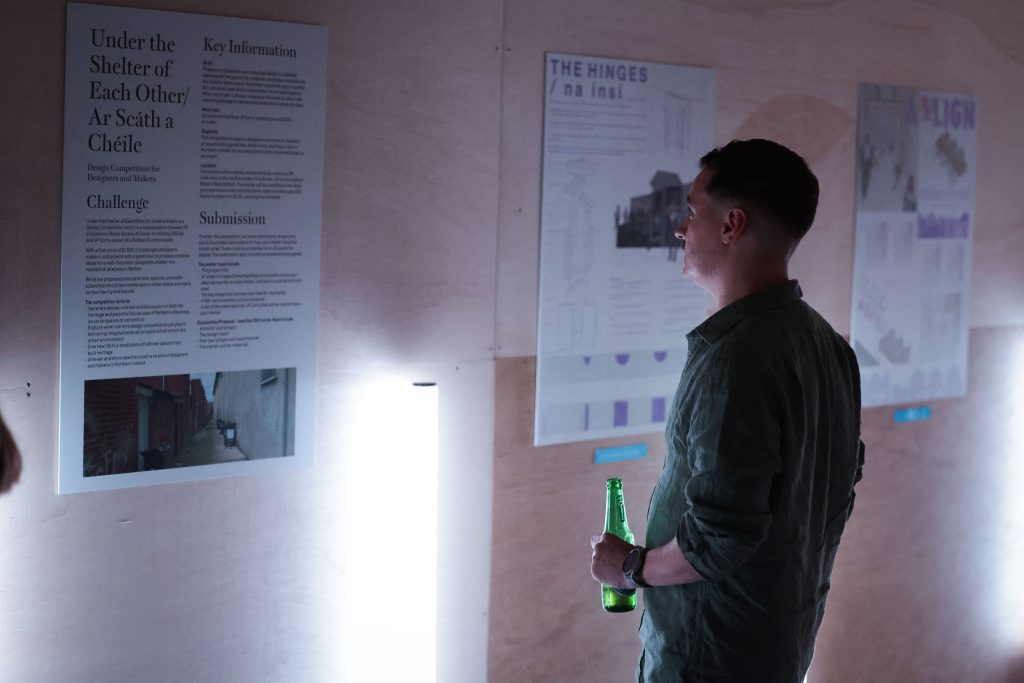
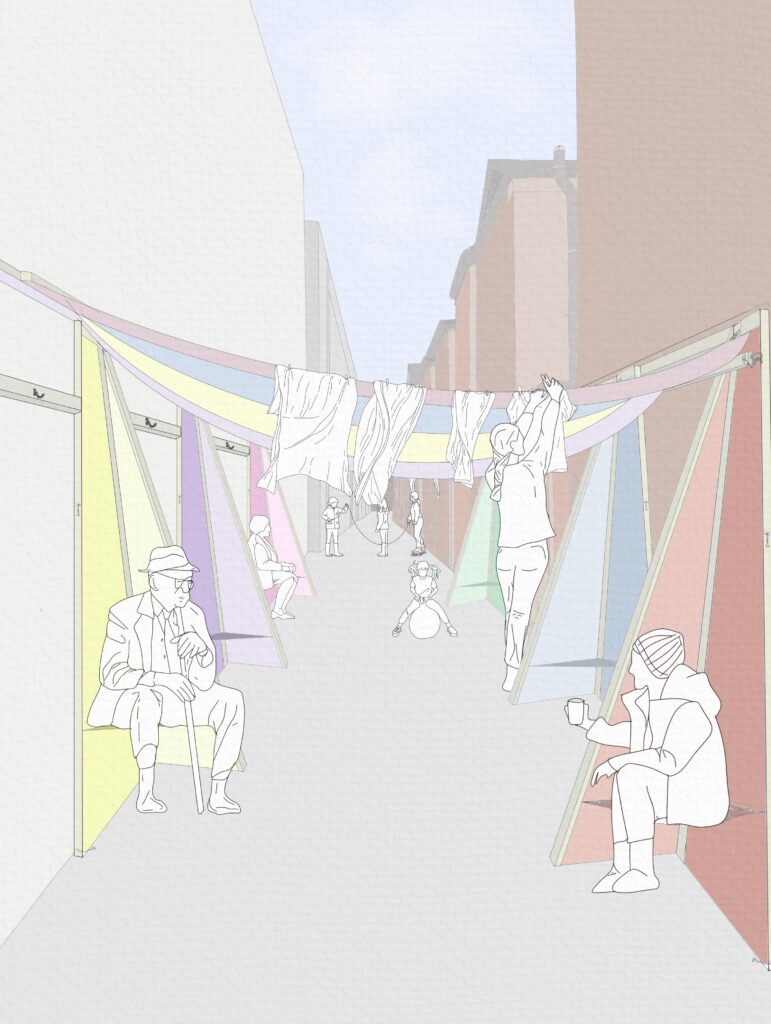
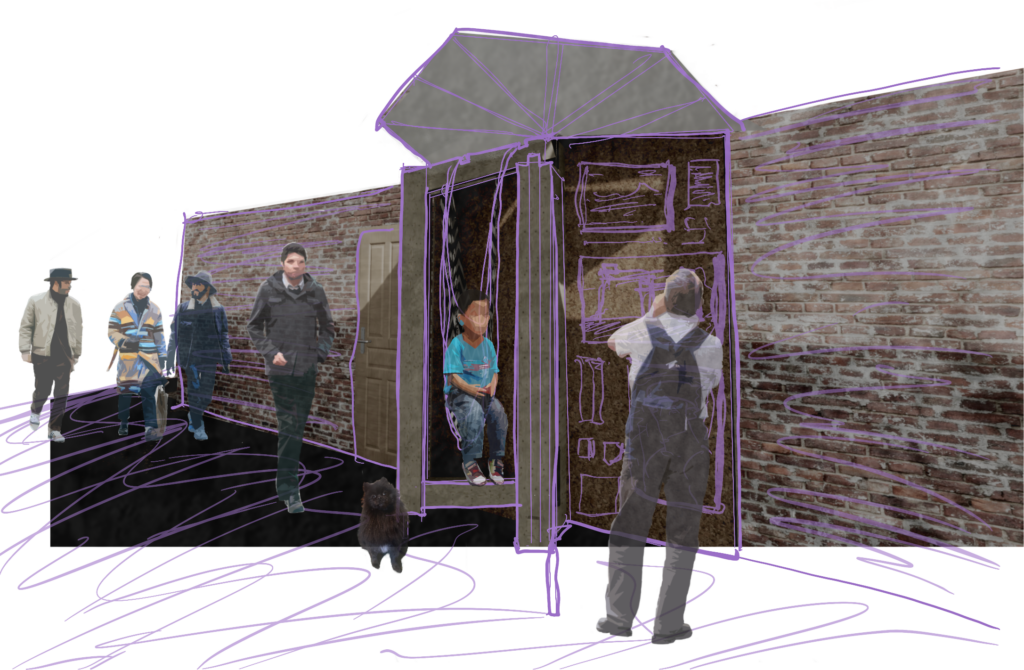
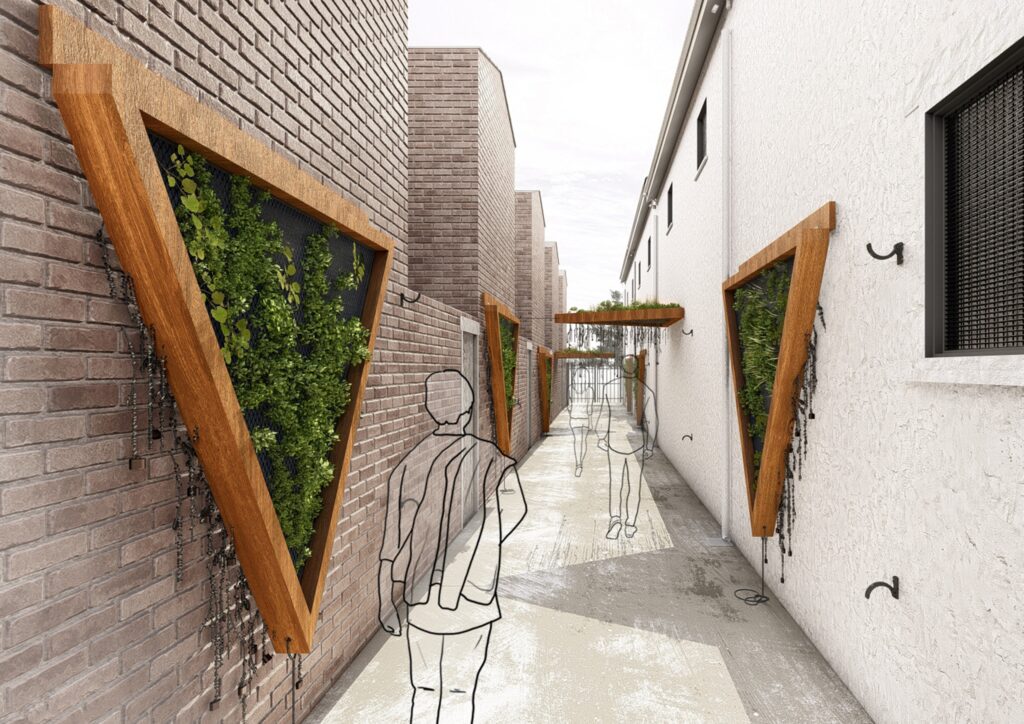
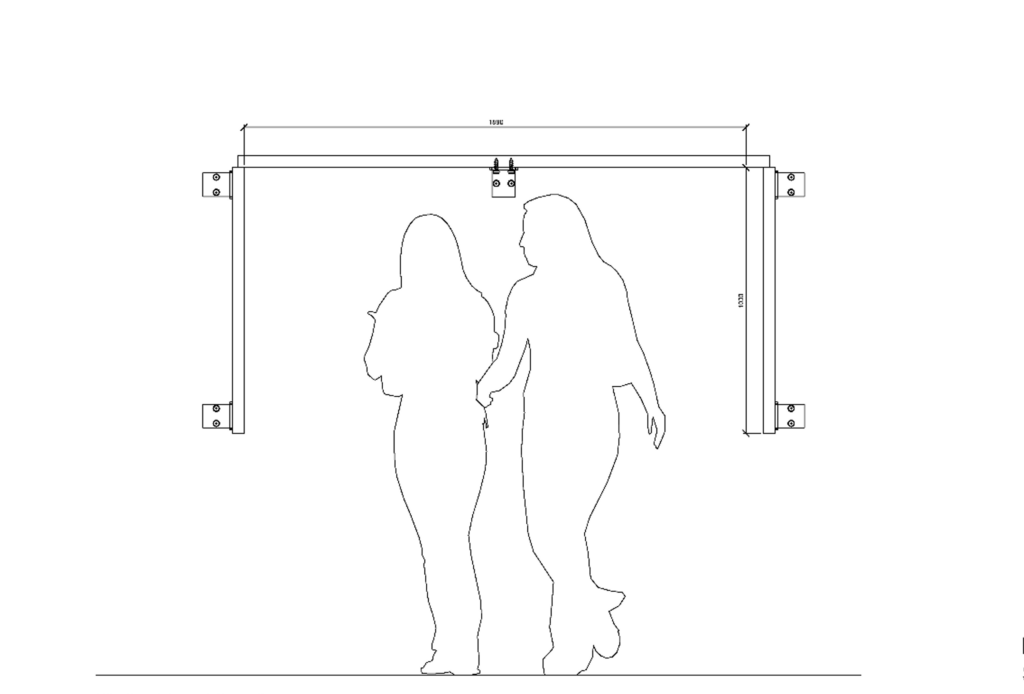
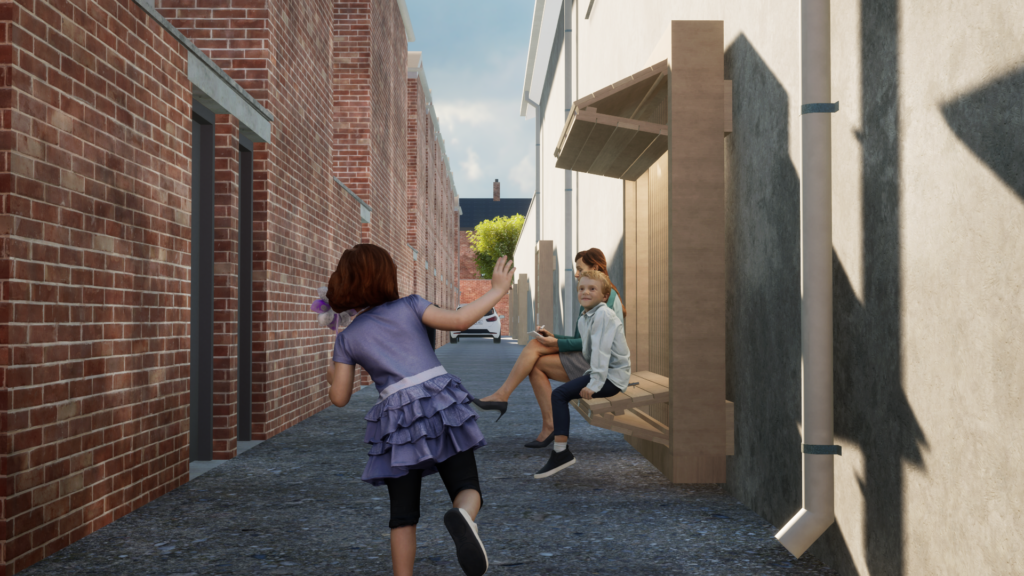
A collaboration between 9ft in Common, RSUA and JP Corry, as part of a Belfast 2024 Comission, the competition challenged designers, makers and anyone with a good idea, to propose creative ideas for a wall-mounted collapsible shelter in a residential alleyway in Belfast. The proposals were to be site-specific, but the concepts transferable to other alleys and walls across the city and beyond.

As part of the generous nature of this project, detailed designs and material requirements for all 11 designs can be viewed on the RSUA website. We encourage anyone with a talent for building things to pick a suitable one and have a go at construction.

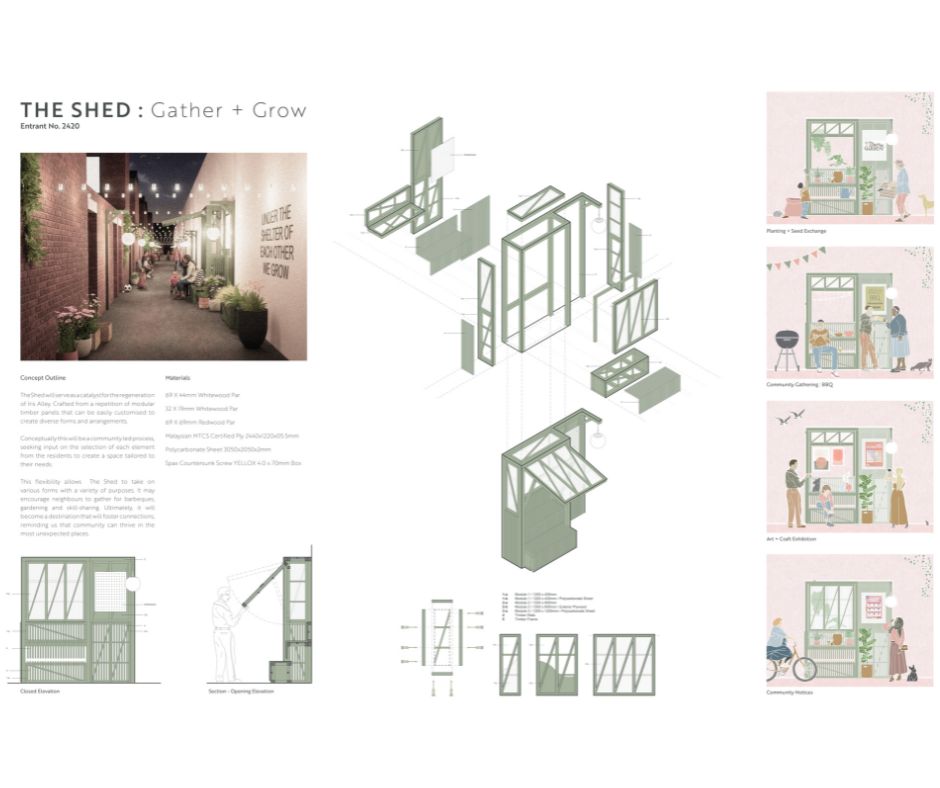
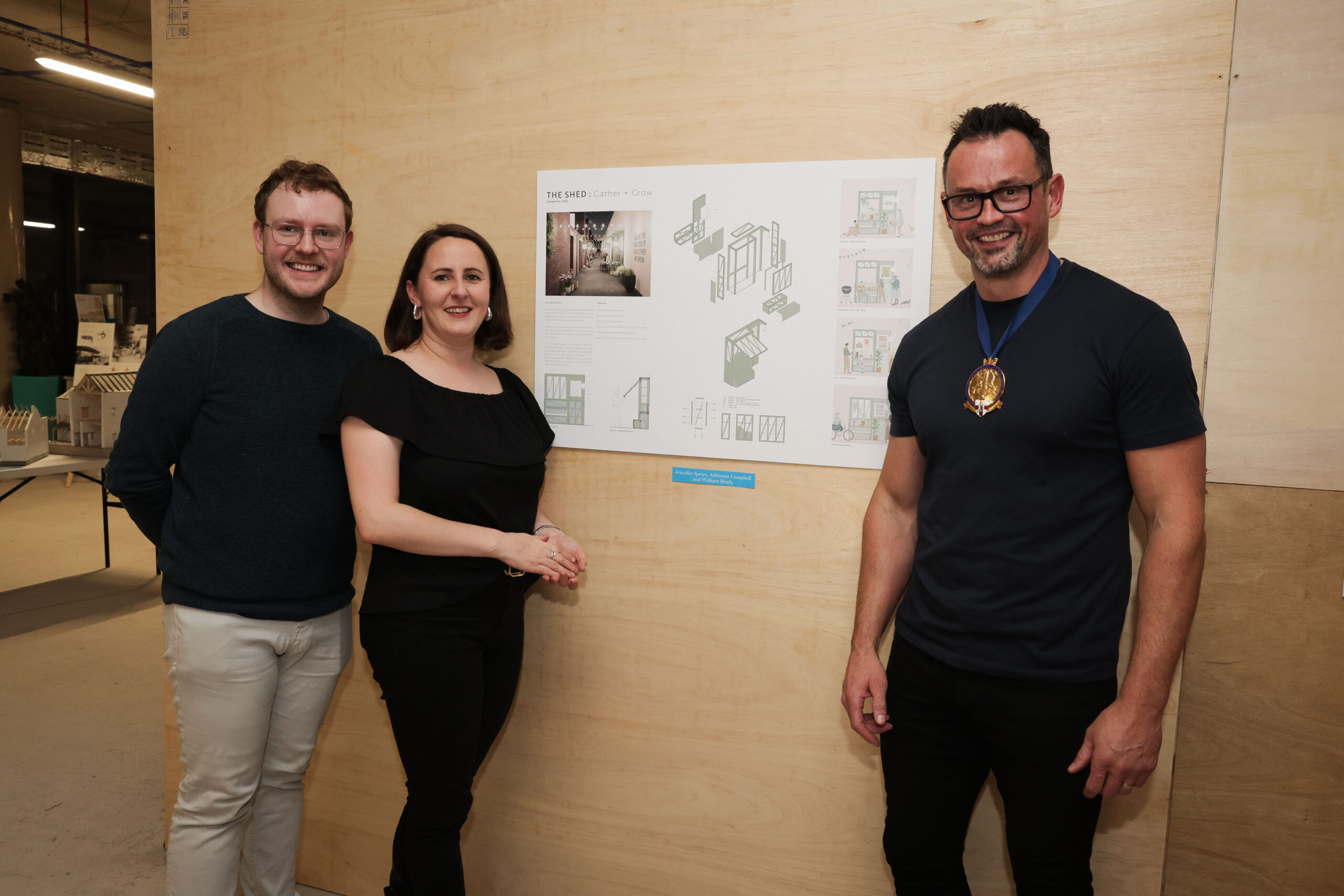
Winning Design: The Shed: Gather and Grow by Jennifer Speirs, Adrienne Campbell and William Brady

We were pleased to announce The Shed: Gather and Grow by Jennifer Speirs, Adrienne Campbell and William Brady as the winner of this year’s competition. The team will receive a monetary prize of £1500 and their shelter design will be built in Iris Alley. 

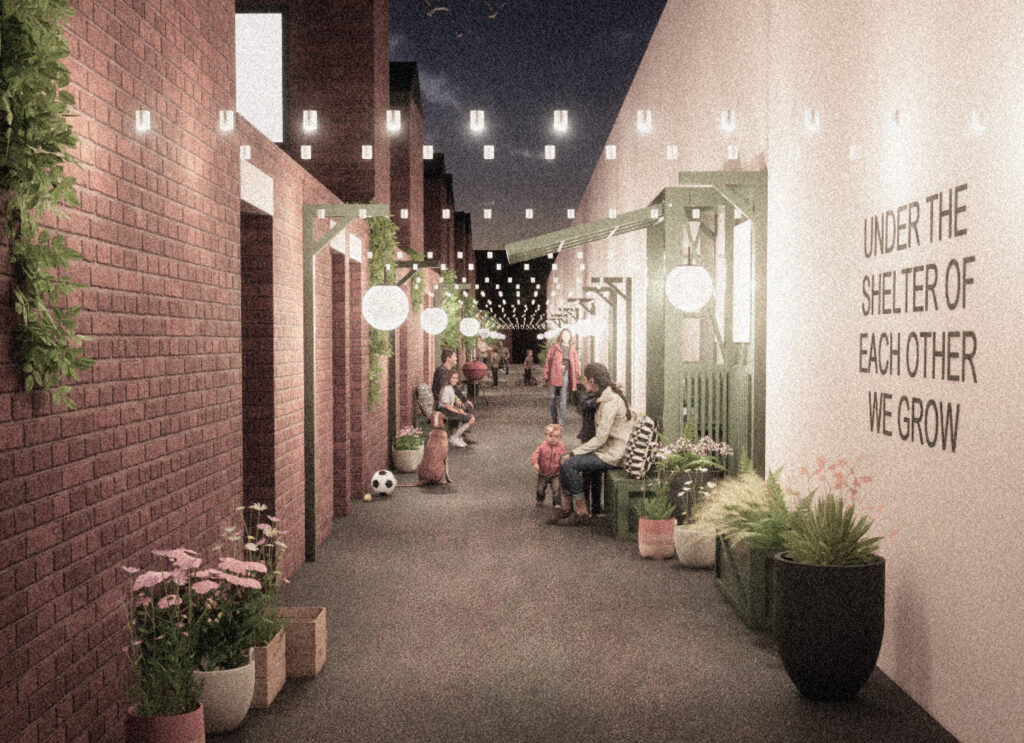
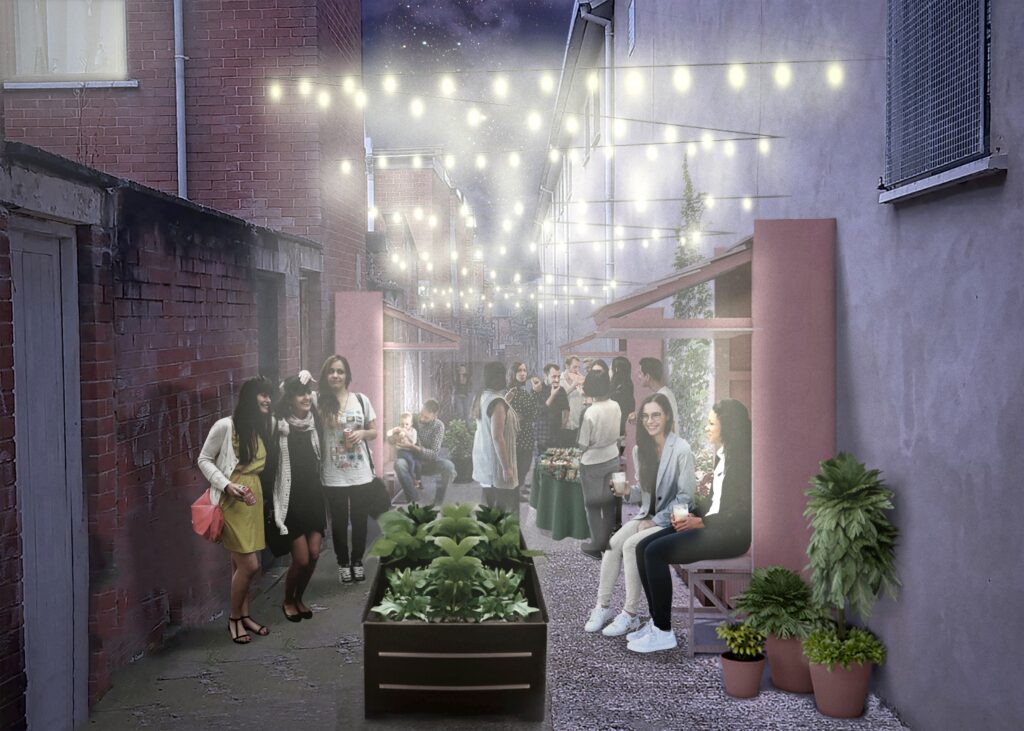
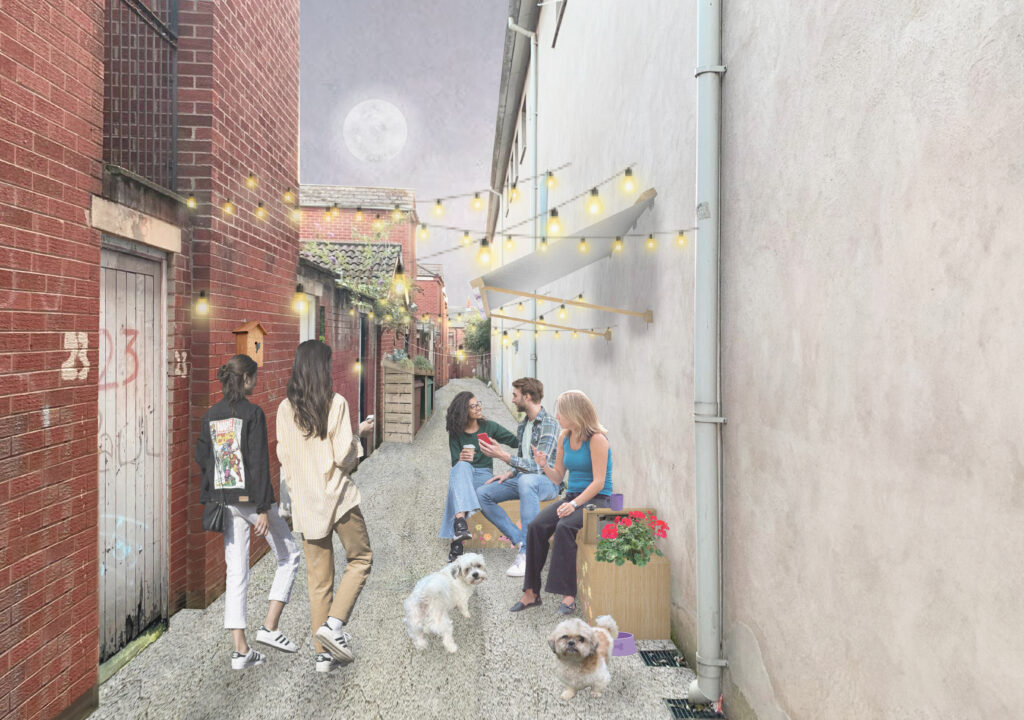
Their winning entry proposed a multi-use shelter that would act as a catalyst for the transformation of Belfast’s disused alleyways into green and vibrant communal spaces where community can flourish. Here’s an extract from their proposal:

By day, The Shed will act as a hub for gardening enthusiasts, stocked with compost, seeds, and pots, while a sturdy workbench will invite residents to get their hands dirty and nurture their green thumbs. As the sun sets, the shelter will morph into a cozy gathering spot. Neighbours will come together for evening chats, sharing stories and laughter under the soft glow of string lights.

Commenting on the competition overall they said:

‘it’s a fantastic opportunity for young architects and designers to explore their creativity for ways to enhance the local community. As a group of architects, we fully immersed ourselves into the brief, exploring various uses for the shelter, while also ensuring the construction is simple and replicable. The competition gave us an opportunity to collaborate with each other in a more involved, faster paced way than our day-to-day working, which we found to be enjoyable and enriching.’

Adrienne Campbell
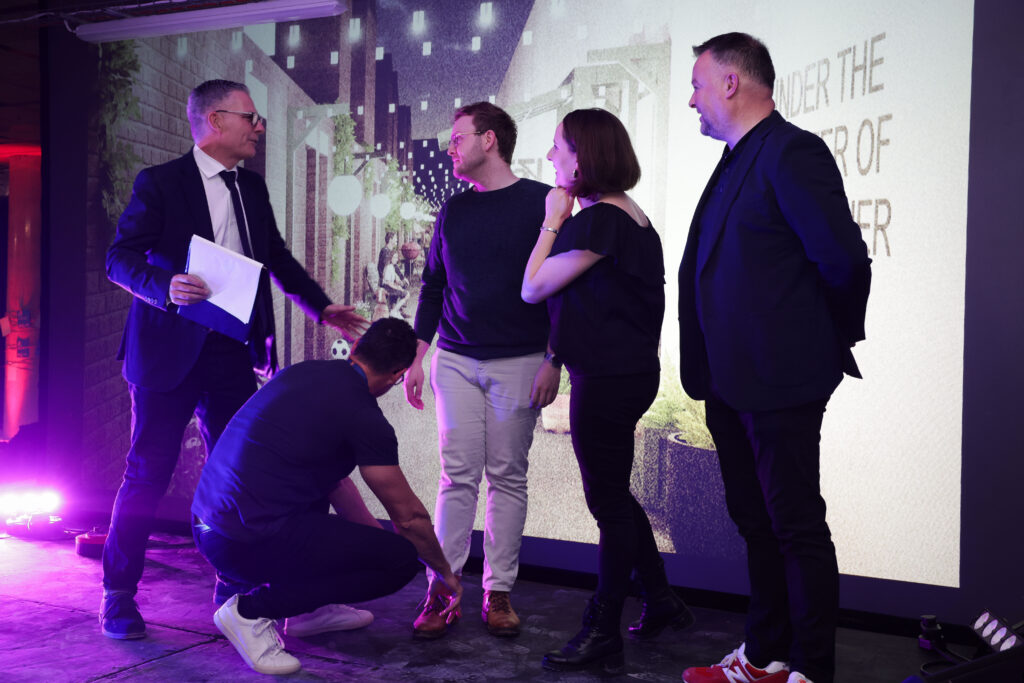
William and Adrienne from the winning team receiving their prize.

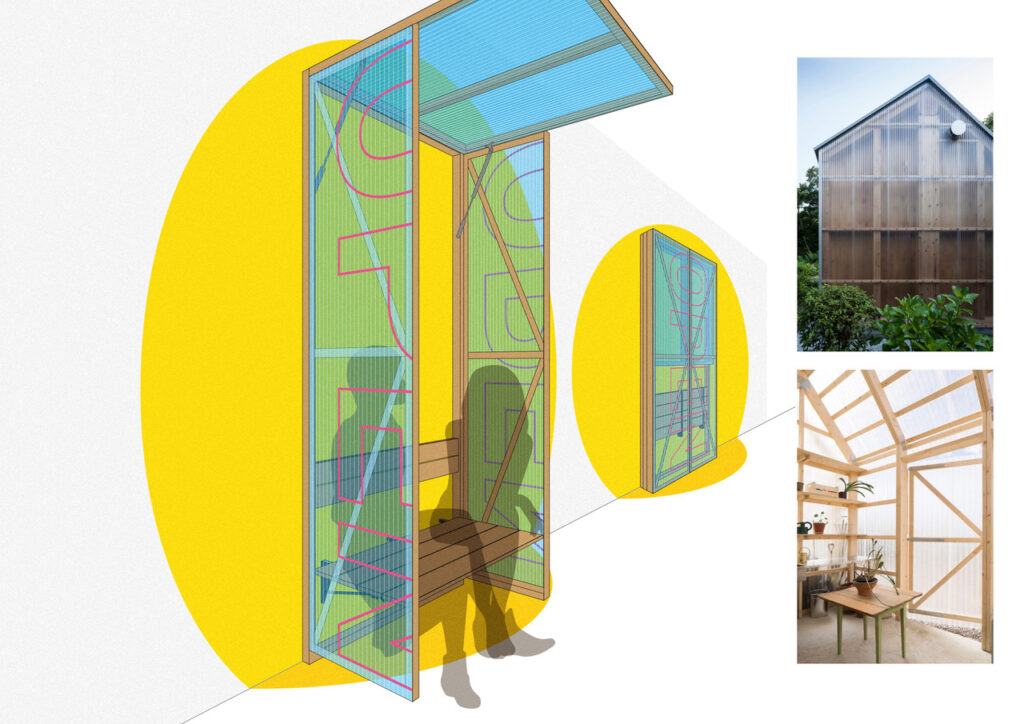
Proposals were judged on the following criteria:  Creativity and design (30%), Meeting the brief (30%), Buildability (20%), Clarity of instructions/presentation (10%) and Value for money (10%). Five of the eleven were shortlisted and invited to attend the prizegiving night. We also awarded a Runner Up prize of £500 to Ian Pitt from Me, Him and Her Design for their entry; Stick Around and Laugh a While.

Stick Around and Laugh a While. Ian Pitt

This design takes inpsiration from modern light pavilions and the humble potting shed to create: ‘A simple sheltered space, flooded with light and colour whatever the weather… where conversations can begin, understanding grown and friendships nurtured.’

Commenting on the competition, Ian said;

I thought the competition was a great initiative – and the standard of the entries blew me away. The brief was really well thought out, I liked the framework of working with a fixed budget and creating concepts that could be replicated by others throughout the rest of the city. Those factors helped to focus concepts from the fanciful to achievable – I think I went through 6 different levels of complexity on how the seating section was going to work – but in the end refocusing the design on the actual implementation. It’s always nice to step out of my comfort zone (more graphic based work) to challenge myself to apply ‘design’ as a broader sense.

Since moving here 2 years ago I’ve tried to get involved with various schemes and design initiatives that can have a positive impact on our new adopted city – this was another great chance to do that – so thanks again for the opportunity. 

Ian Pitt

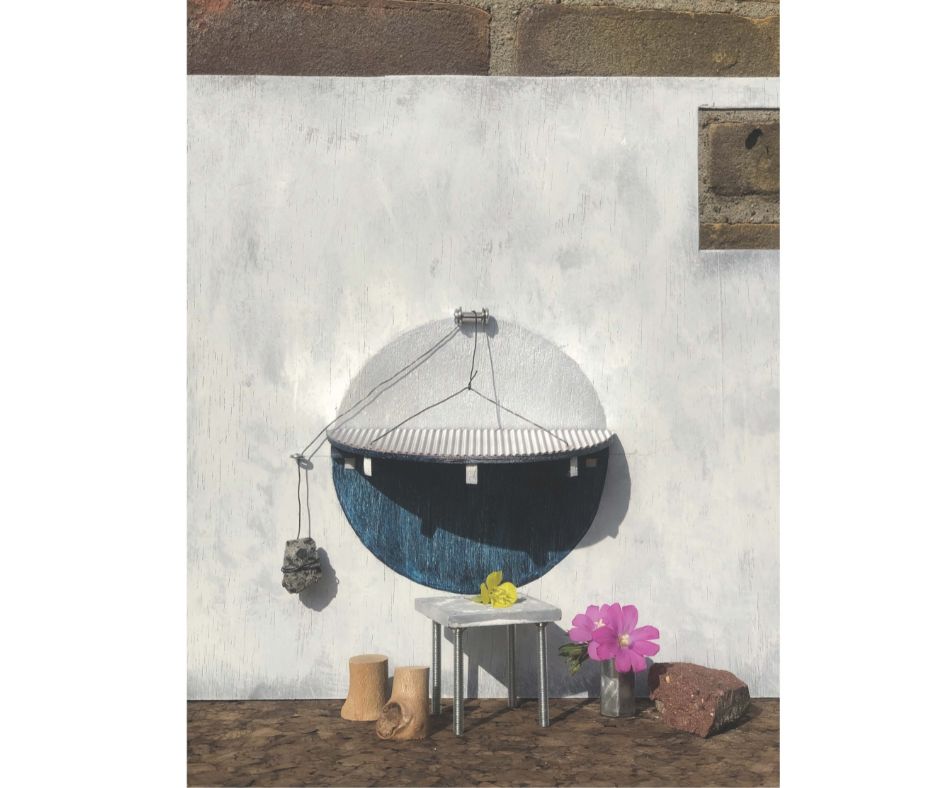
9ft in Common would also like to give a special mention to another shortlisted entry, Lunar Phase proposed by Ben Weir for its inovative stone pulley mechanism which really resonated with our current, Allez Alley citywide treasure hunt with for hagstones.

Lunar Phase proposed by Ben Weir

Lunar Phase opens and closes with a simple pulley mechanism. When closed, it appears as a large silver circle adorning the wall, its upper-half in paint and lower-half in galvanised sheeting. Pulling it down unfurls a nighttime scene, a roofed enclosure painted ultramarine. Placed relatively low and sheltering only two people, it requests intimacy.

Have a look at the rest of the design proposals. Which one would you like to see in an alley near you?

We hoped with this competition that all the entries will inspire people to create shelters in their alleys. If you build one let us know!

Thank you to everyone who entered and all our project partners.

The judges for this year’s design competition were:
  • Amberlea Neely – 9ft in Common
  • Aisling Rusk – 9ft in Common
  • Debbie Carragher – Iris Street Resident
  • Connor Couston – JP Corry
  • John Lavery – RSUA President
  • James Grieve – RSUA Vice President
  • Alan Jones – Queen’s University Belfast
  • Ciarán Fox – RSUA
Categories
Journal Resources

Ways to Celebrate Samhain

a time for reflection, transition and a little bit of magic!

Samhain is an ancient Celtic festival traditionally celebrated on October 31st to November 1st. The name is thought to be derived from the Proto-Celtic word samoni, which is believed to mean “assembly” or “gathering.” This term is associated with the idea of a communal gathering at the end of the harvest season.

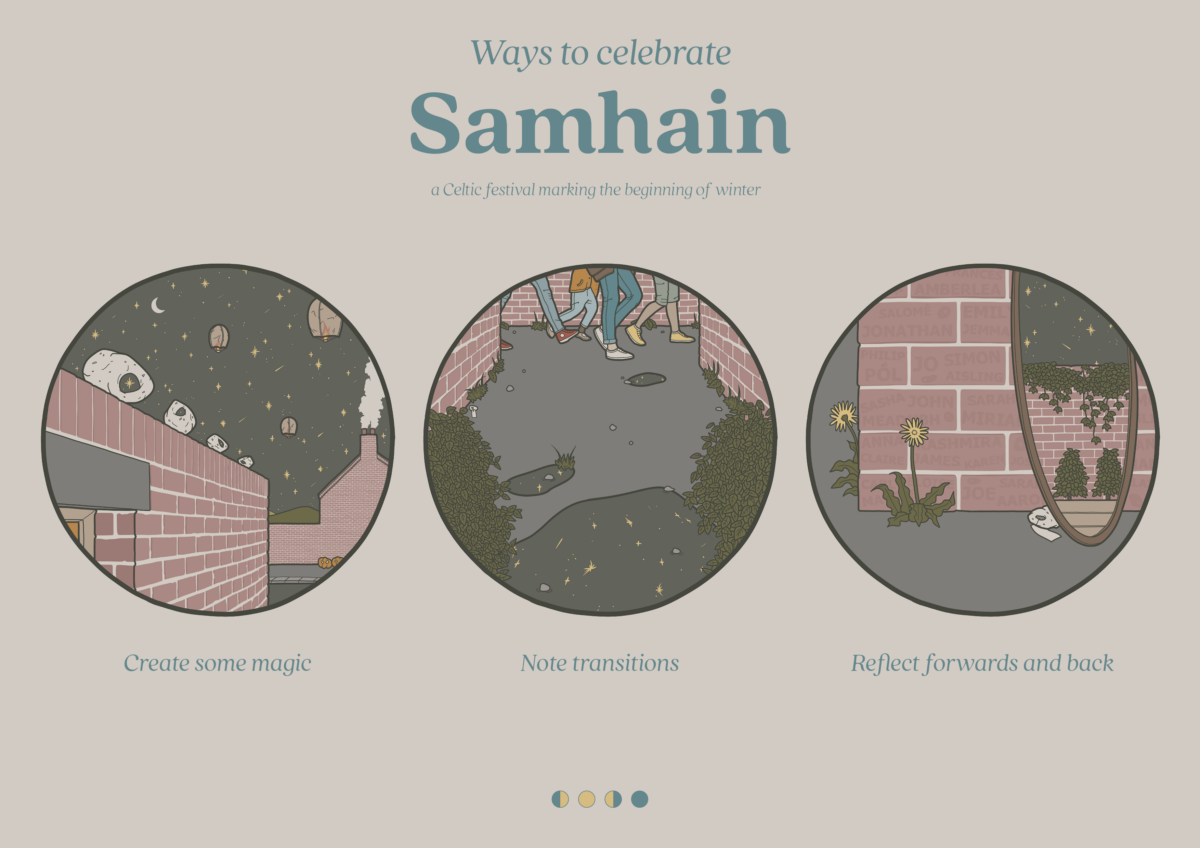
Samhain marks the transition from the light half of the year to the dark half and is the predecessor of the modern celebration of Halloween. As the nights draw in, here are 3 suggestions of simple but meaningful ways you could mark the season in an alley near you.  

Reflect: forwards and backwards
Samhain is a time for reflecting, remembering and honoring ancestors. Belfast’s alleys are part of our city’s built heritage, stretching back to the Victorian era. Imagine who might have occupied this alley before you: Are there dated initials scratched into the walls? Blocked up windows and coal hatches? What traces remain of how the alleys might have been used before?
Ask yourself, what will I remember from this past year? And, what impact can I have today which will leave a positive legacy for those who come after me?

Note Transitions
Samhain marks the transition into winter, the final period of winding down towards a new year. Likewise, the alleys are liminal, transitional spaces, thresholds and passageways leading from one place to another. Can you walk through an alley you’ve not been in for a while? What do you notice about the space, how has it changed since you last visited? Samhain is a celebration not just of the seasonal transition,  but also spiritual.
What has changed for you in the past year and what are you ready to let go of as we edge into winter?

Create Some Magic
It was believed that during Samhain, the boundaries between this world and the otherworld were thin. This is a mystical time of the year, when many communities would perform rituals for protection and good fortune.
Can you create your own magic in an alley near you?
Perhaps you could hang something to bring joy and good luck, like a wind chime, a dreamcatcher or a charm. Could you make someone’s day with a small gift or a kind gesture?  

Everyone is welcome to try these suggested celebrations to bring the festival of Samhain to an alley near you! Share how you are marking the season – tag @9ftincommon on Instagram and X/Twitter.


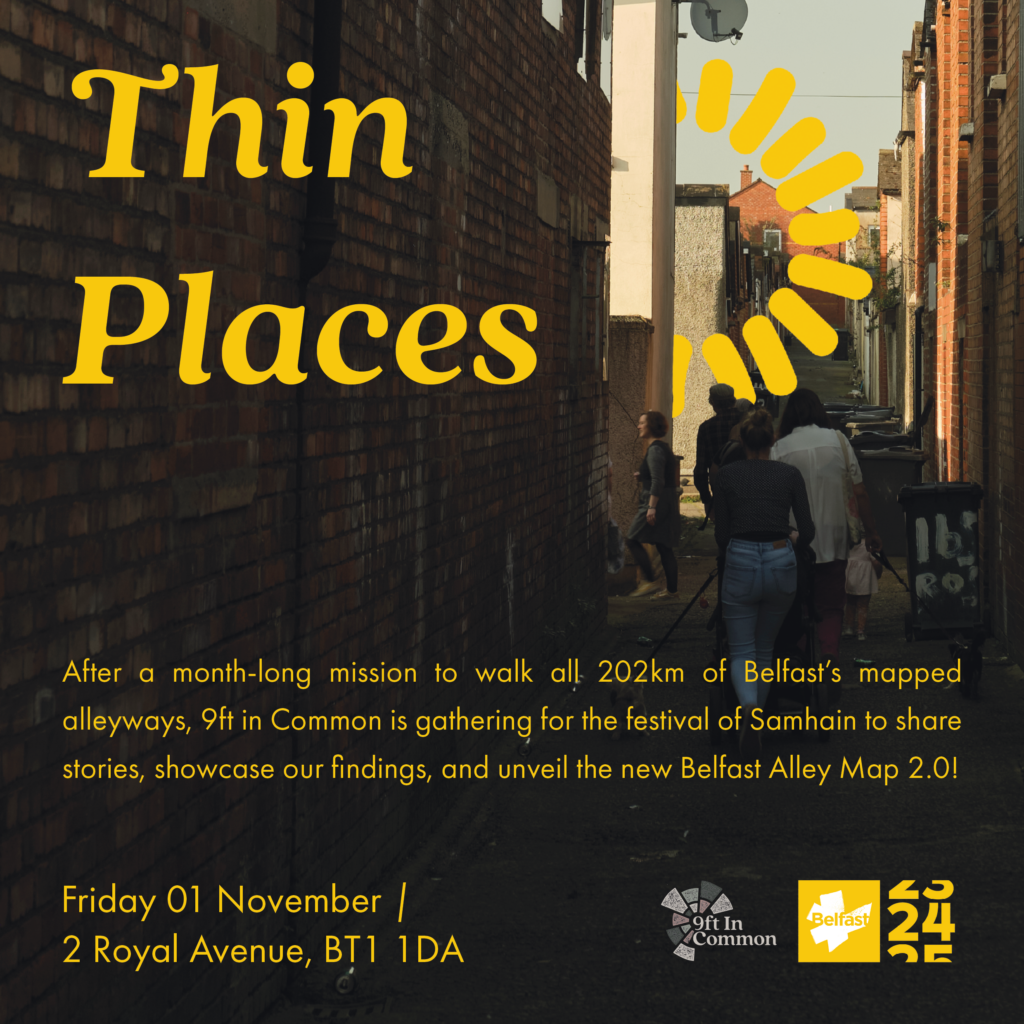
Our last seasonal gathering of the year will celebrate Samhain on November 1st

2 Royal Avenue, 12pm – 2pm

Join us for lunch and chats, reflecting on the year to date and what happens next as we prepare to launch the Manifesto for the Alleys.

Free to attend, but booking is essential, register here.

Categories
Events Resources

Ways to Name an Alley

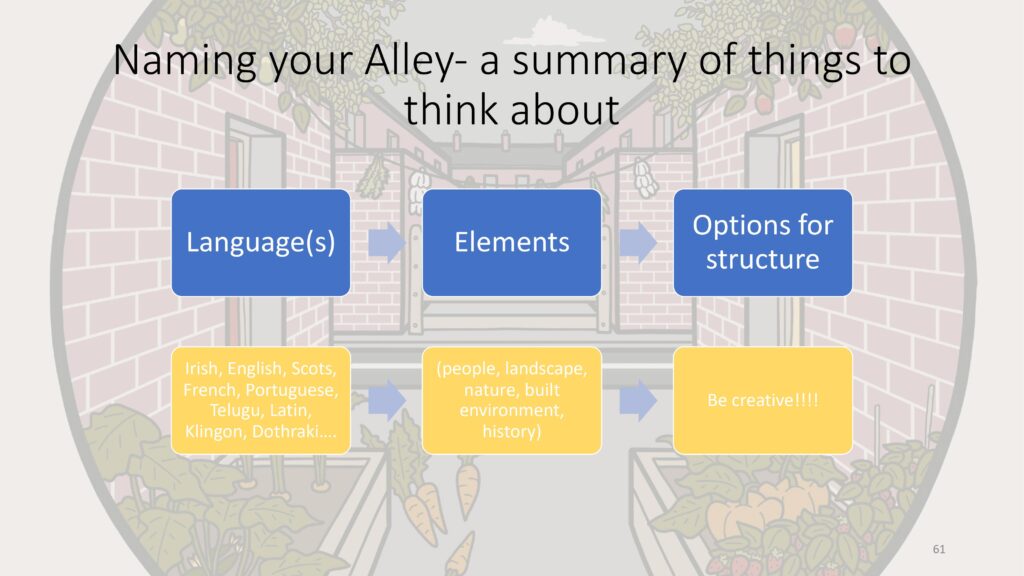
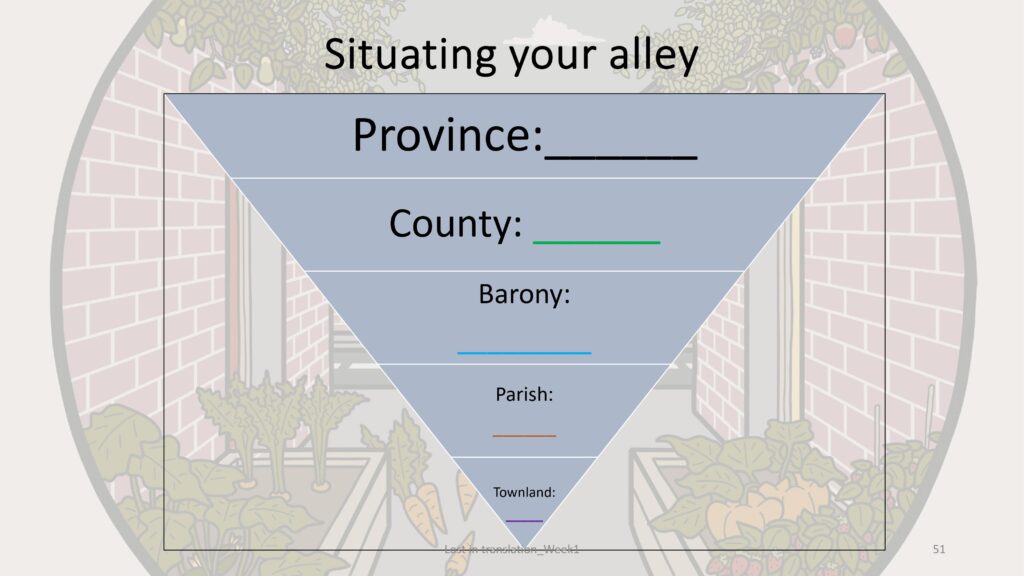
As part of our Lughnasadh program we were delighted to have Dr Frances Kane of the Northern Ireland Place-Names Project at Queen’s University join us for a super interesting talk on possible Ways to Name an Alley (or any other nameless place) by applying typical place naming patterns in reverse.  Names are powerfull things and our research has found that naming something gives a sense of ownership and belonging, making a space into a place.

Frances is so knowledgeable and passionate we could have listened to her talk for hours. She’s kindly shared her presentation with us as a resource for anyone looking for place name inspiration.

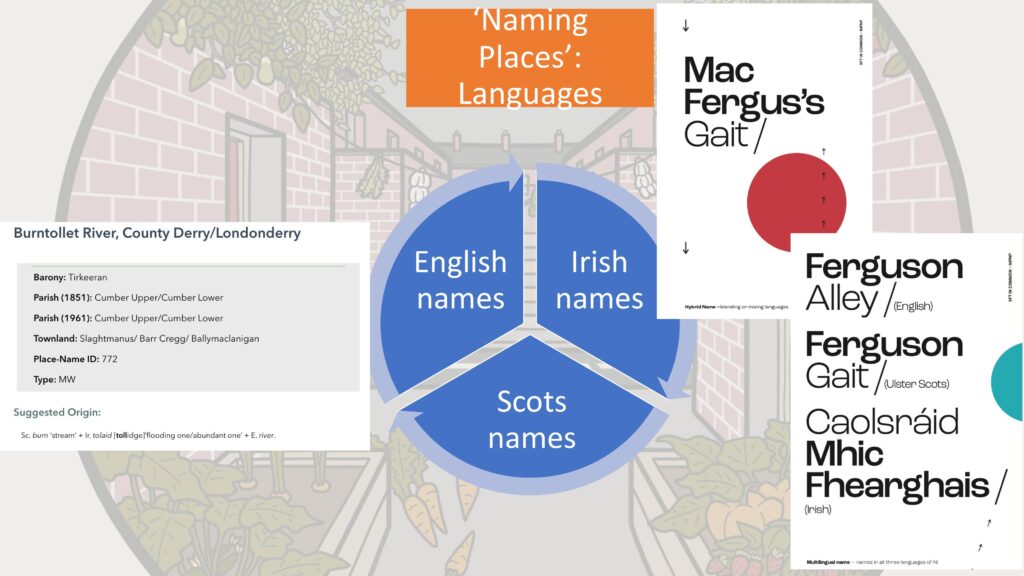
Turns out there are multitudes of ways to give a place a name – taking inspiration from significant people, natural or man-made landmarks, significant events or traditions. There are also multiple options and possibilities for translating and combining language to create a name that best represents your alley and the people that live on it.

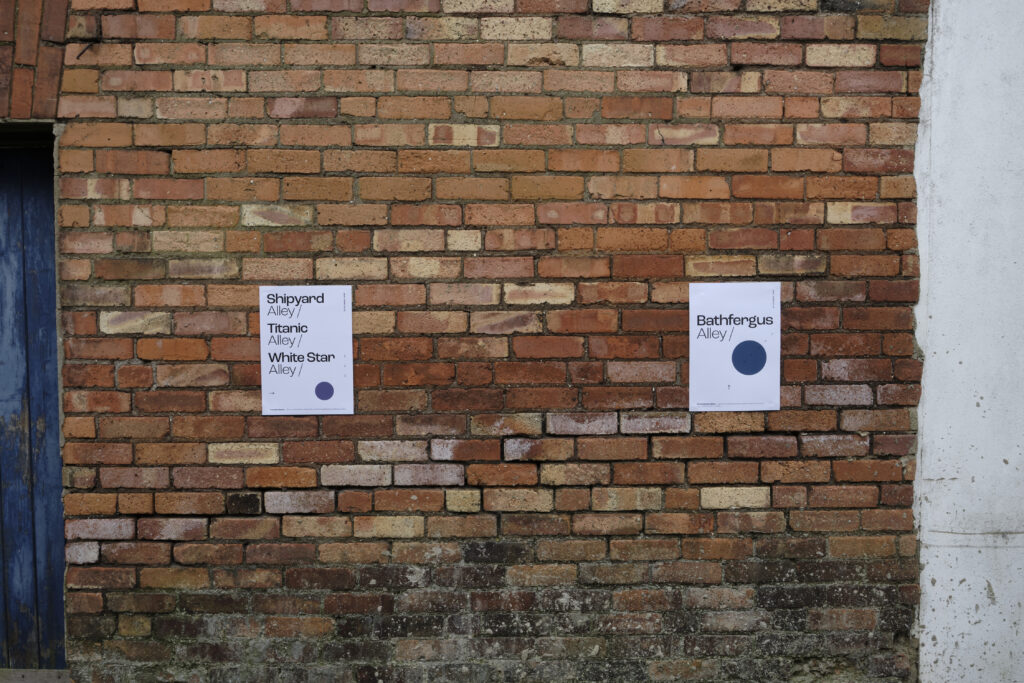
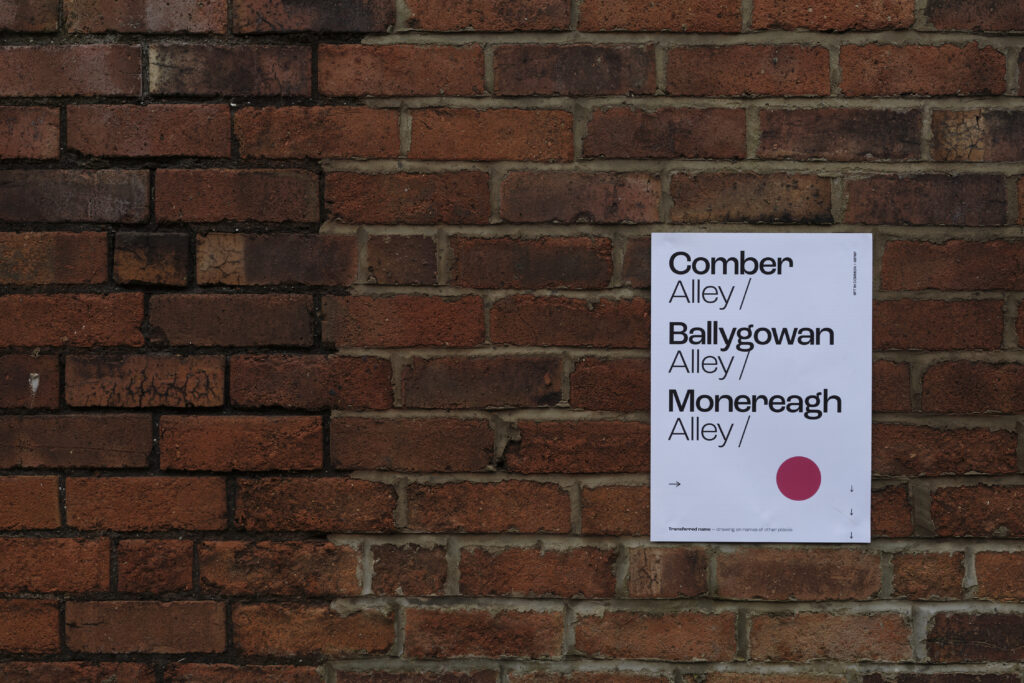
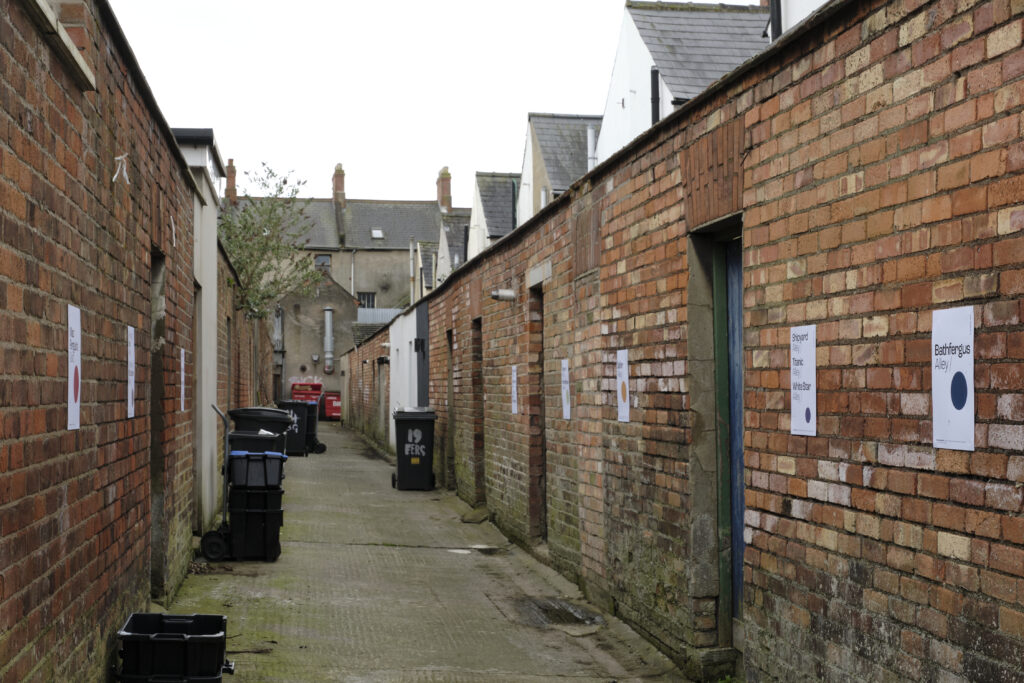
9ft in Common first worked with the Northern Ireland Place-Names project in 2020. The team applied many typical naming patterns to the alley between Bathgate and Ferguson Drive in Belmont. We commissioned graphic designer Pauline Clancy to create a series of posters highlighting each of the processes which were displayed in the alley during the Limin-Alley Exhibition in March 2021 during the Imagine Belfast Festival of Ideas and Politics.

Dr Frances Kane is a Senior Research Fellow at Queen’s University, Belfast, where she works on Place-Names and the Irish Language within The Northern Ireland Place-Name Project.