We love getting different perspectives of people from outside Belfast!
Birgit was undertaking a Masters in Urban Planning at the University of Kassel in Germany and was interested in the ideas of urban commons and unclaimed spaces. Birgit is now a Research Assistant at University of Braunschweig. Photos courtesy of her, taken during her research visit.
Examining the ‘Backside of the City’ – What the Belfast Alleyways taught me about Common Space
When I heard about 9ft in Common and their research in and around the Belfast Alleyways, I soon got drawn to this very special type of urban space. In Germany, where I come from, we hardly have any terraced houses. The single-family home dominates suburban areas, whereas in cities people live in apartment buildings that are up to 5 floors high. We do have a lot of closed backyards, but no alleys.
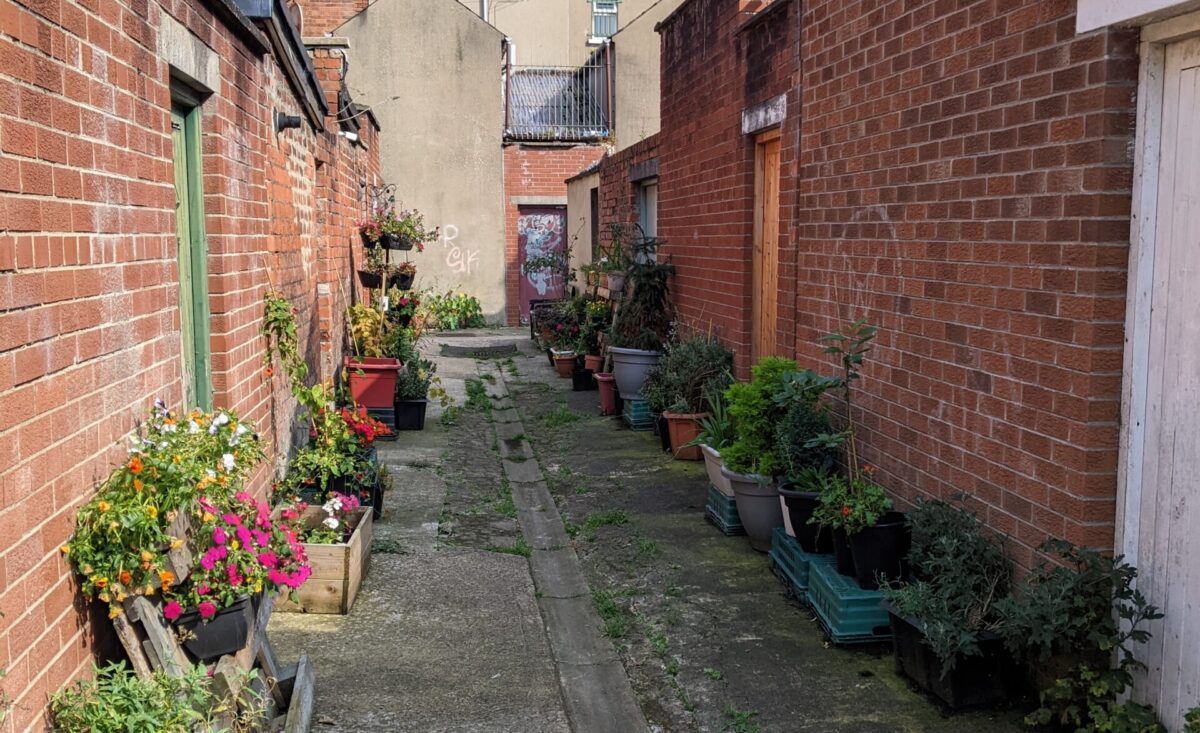
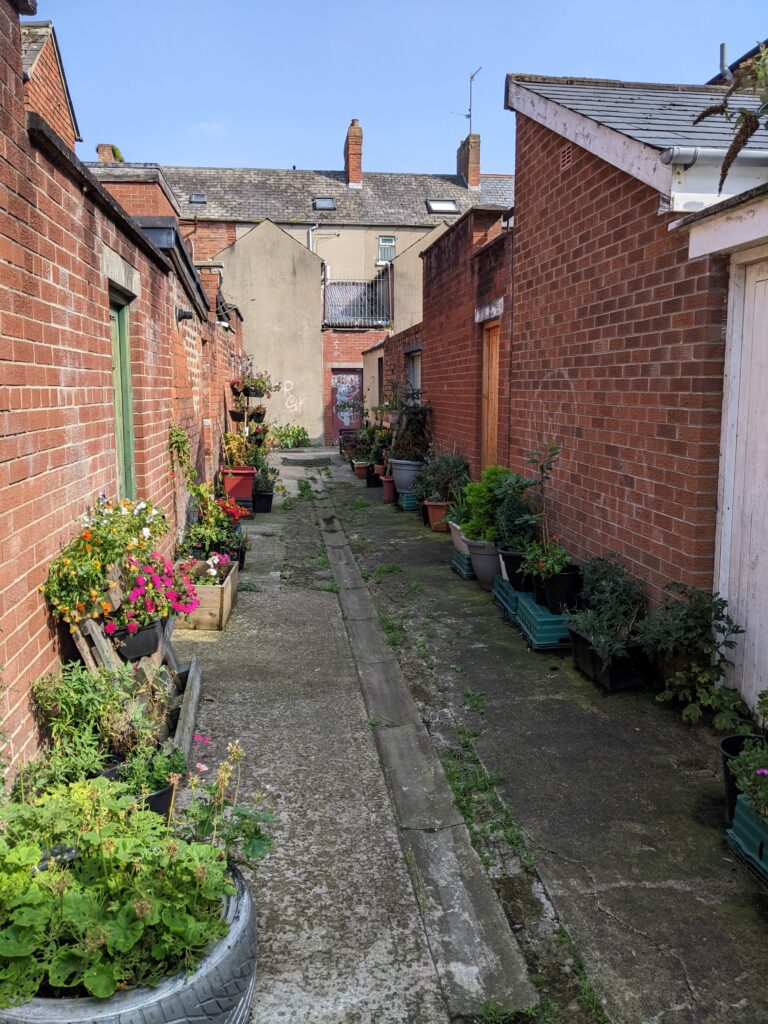
This led me to choosing the Belfast Alleyways as a topic for my Master thesis and examining how they offer space for Urban Commons. During my research I soon found out that they are in parts maintained by Belfast City Council, however most of them are not really ‘owned by anybody’. What a great prerequisite for Common Space, I thought. I went for a lot of alleywalks during my research phase in April 2024, I could feel – what Meadhbh told me when we were strolling through the alleys of her neighbourhood – as soon as people start to use these (at first glance very narrow) spaces, they magically appear bigger.
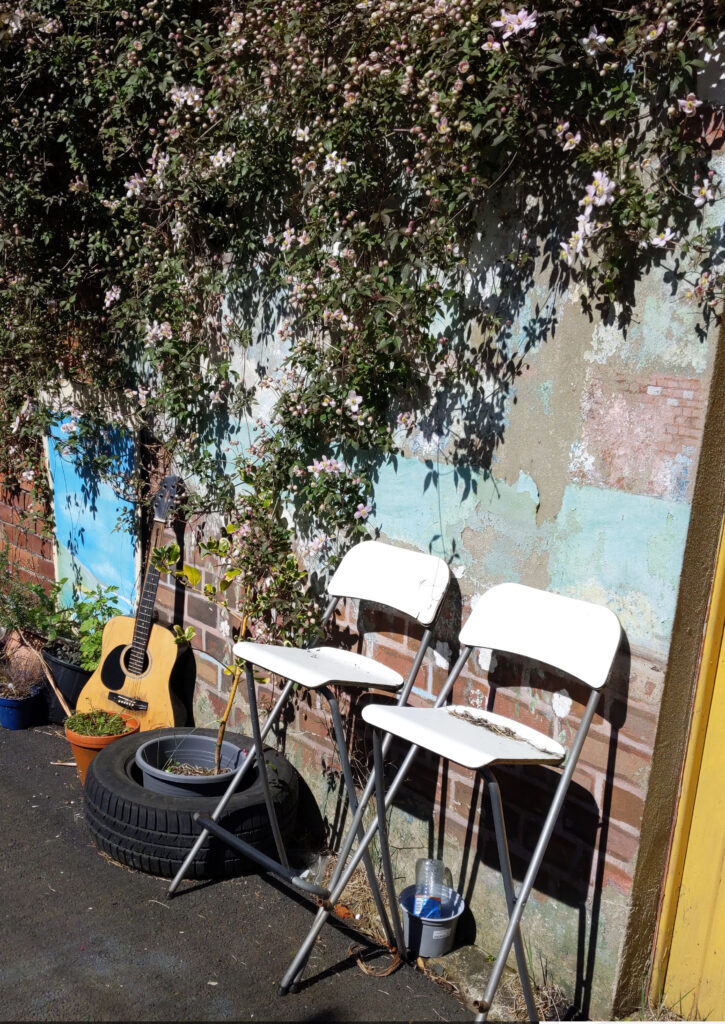
I got in touch with Bríd Ruddy, one of the founders of Wildflower Alley, who showed me her neighbourhood in the Holylands and made me realise that claiming ownership of the space behind your house also affects how you perceive the front of it. You might become more aware of the need for Common Space in your city in general, especially in a densely populated area like the Holylands.
But what does an alley need to be “claimed”, and furthermore, “maintained” as Common Space? Who claims and who maintains? How does the capitalisation of Housing influence the alleys behind those houses? Is the promise of safety and security that the current gating process makes, fulfilled? Does it only apply to the safety of residents or can it be interpreted as security for capital investment?
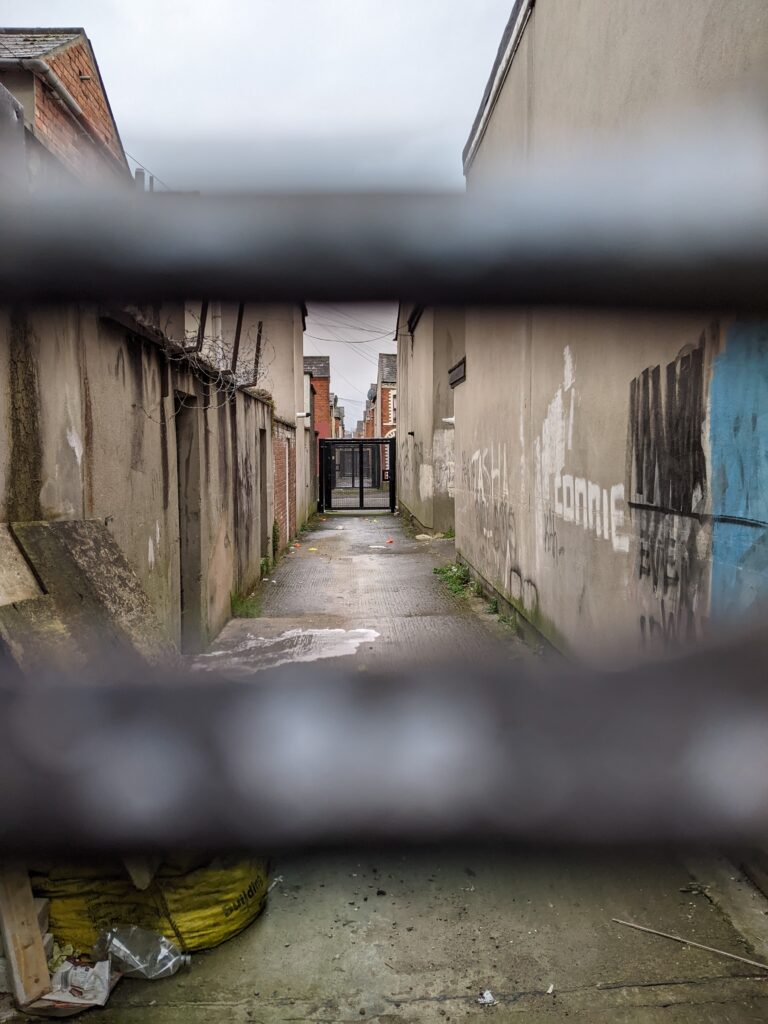
A lot of questions arose during my research on the alleys in South Belfast. In Bríd’s case, the gates surely were a necessity to make Wildflower Alley flourish. But in other areas I wasn’t so sure about people’s intentions of wanting gates for their back alley. After all, the security paradigm in Great Britain and Northern Ireland and the control of public space that comes with it, are still very strange to me. In Germany, we also like to lock our front and back doors, but further security measures and surveillance for private residences are still very rare. Strolling through the inner city alleys of Belfast, I realised that chicken wire and cameras might make the residents feel safer in their homes, but also give passers-by an impression of walking through an unsafe area. But – I am first and foremost an outside observer. The way I see and use the space differs from the way people who live in Belfast or grew up here might see it, a fact I always tried to keep in mind during my stay.
There are also structural requirements that make an alley usable. Not every passage has the capacity to become an Urban Garden or Urban playground for residents. Some shorter, more open alleys are good pathways and nice short-cuts to avoid busy streets. But isn’t that Common Space, too? Does anyone feel responsible to claim these transit spaces for Common use? And with that in mind, doesn’t the gating process regarding those alleys make them unusable in the long run?
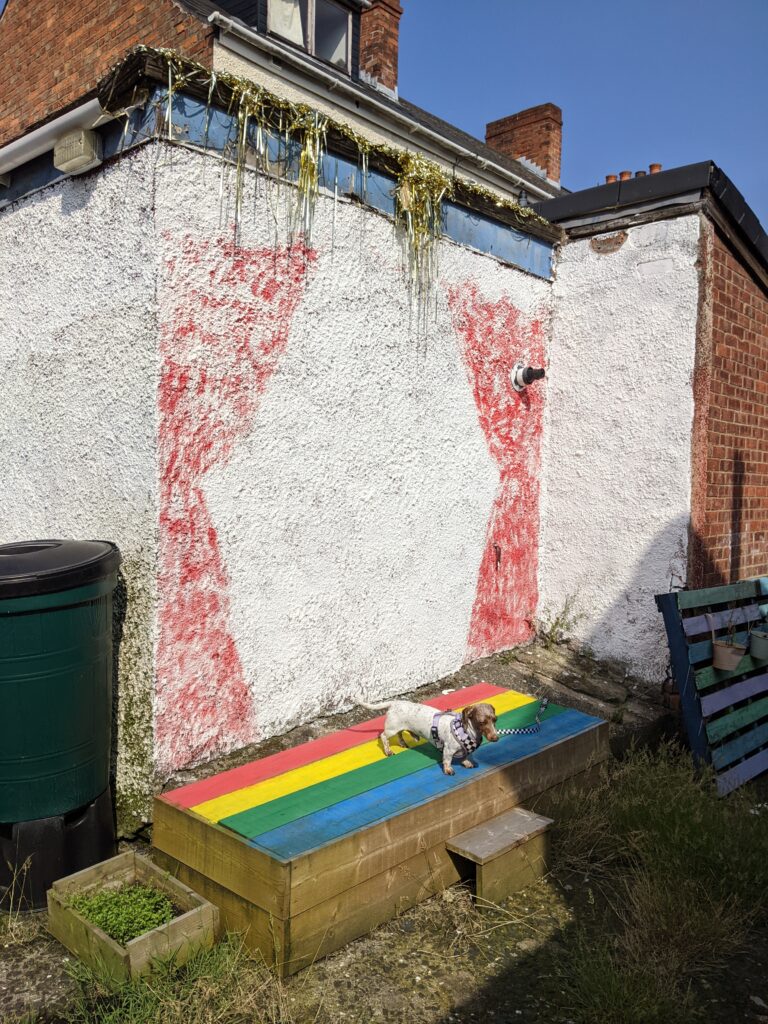
I did find some answers to these questions, but an even greater result of my field trip to Belfast was that it is not only the Common space that has to be claimed and maintained, but also the social process of making Common space itself. It is a permanent negotiation that requires resources, but it also takes willingness and belief in democratic principles. This may sound dramatic, but it reflects decades of scholarly research on Urban Commons. Cities are always on a threshold of new development, some may be unplanned or unplannable. It needs groups and individuals that are willing to actively shape their city and (in the big picture) also society.
In 1968 the economist Garret Hardin coined the term “the Tragedy of the Commons” in his essay of the same name. He declared that the Commons are damned to be overused and exploited because people are driven by self-interest and the maximisation of outcome. This theory has long been refuted by scholars that dug into the Commons as a research topic. Elinor Ostrom, a scholar of environmental economics, being one of them. She conducted studies that proved Common resources can be preserved and what people needed to achieve that. But even as the Belfast Alleyways showed me what is possible when people take action, particularly driven by the social experiences of the Covid pandemic,a lot more could be done.
While many local authorities would agree, that the idea of (Urban) Common Space is worthwhile, they do not seem to see it when it is right in front of their eyes: Space that is owned by everyone and no one, and people who are willing to cultivate this space for the better of everybody who’s using it. And despite all the Common force I found in the alleyways, administrative bodies and planning departments seem quite inert when it comes to integrating these developments into their concepts permanently.
__
I am very grateful that I have gotten insights into the network of Belfast Alleyways. Thanks to Bríd and Meadhbh who showed me their neighbourhoods. Also Aisling and Amberlea, who I didn’t meet personally, but who let me make use of the knowledge pool they created and curated online. Thank you all for letting me be part of this project and hope to see again you on my next visit!