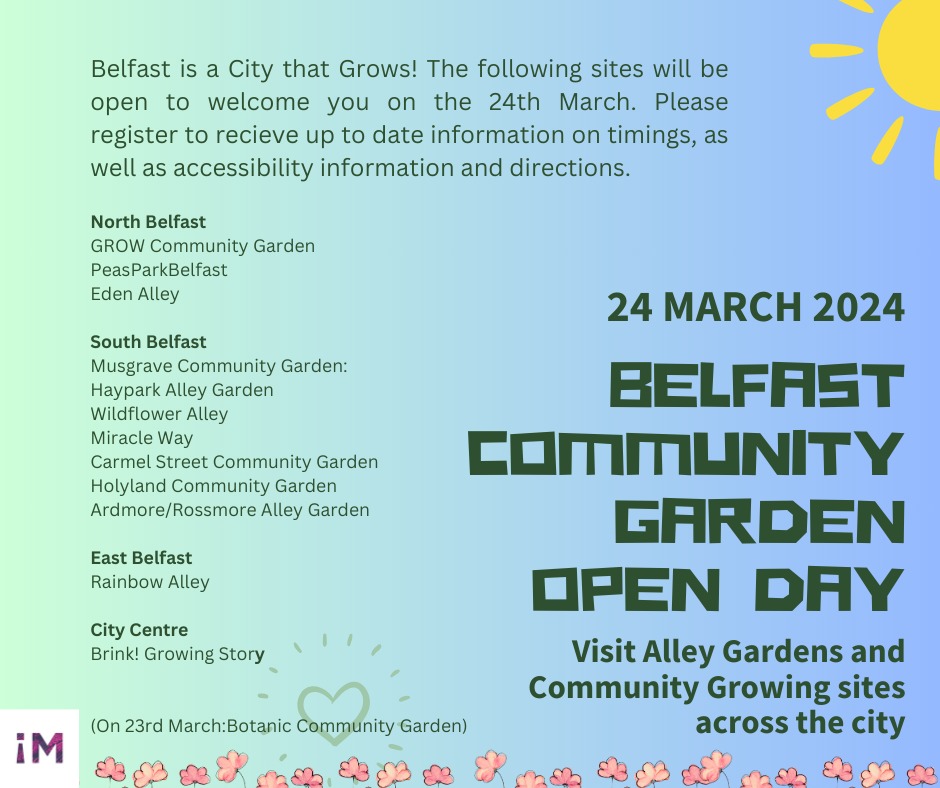
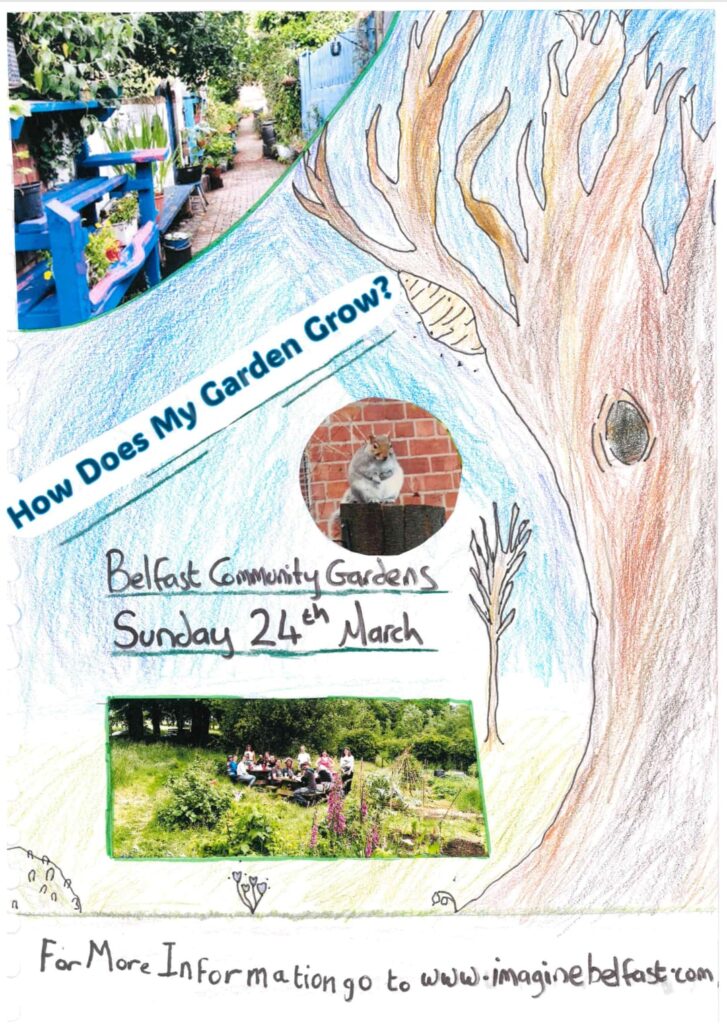
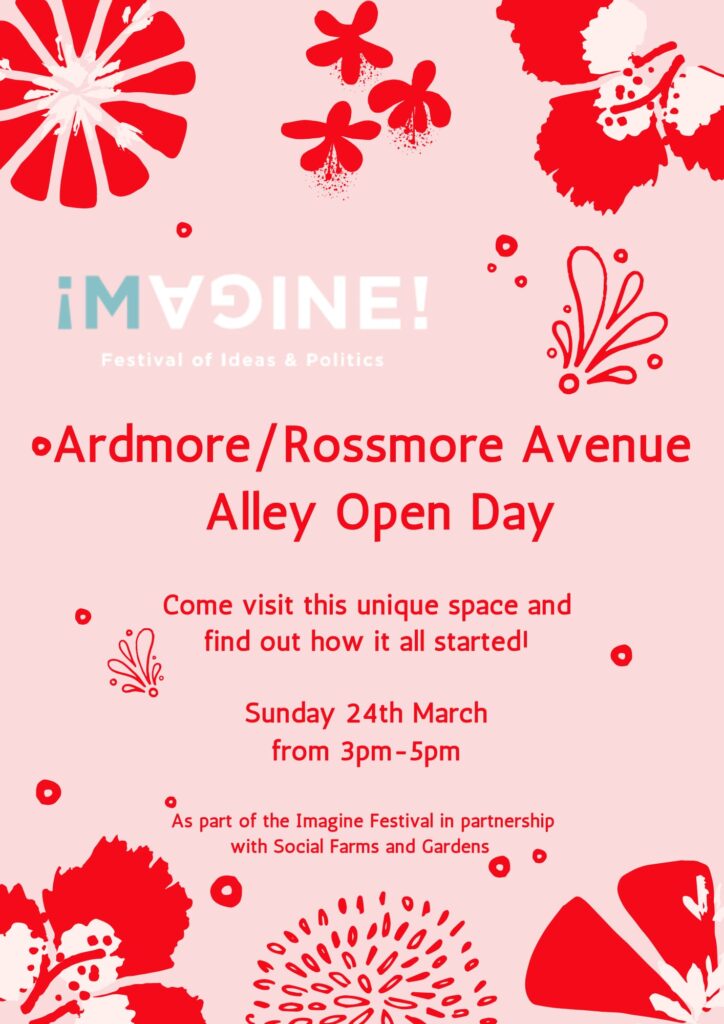
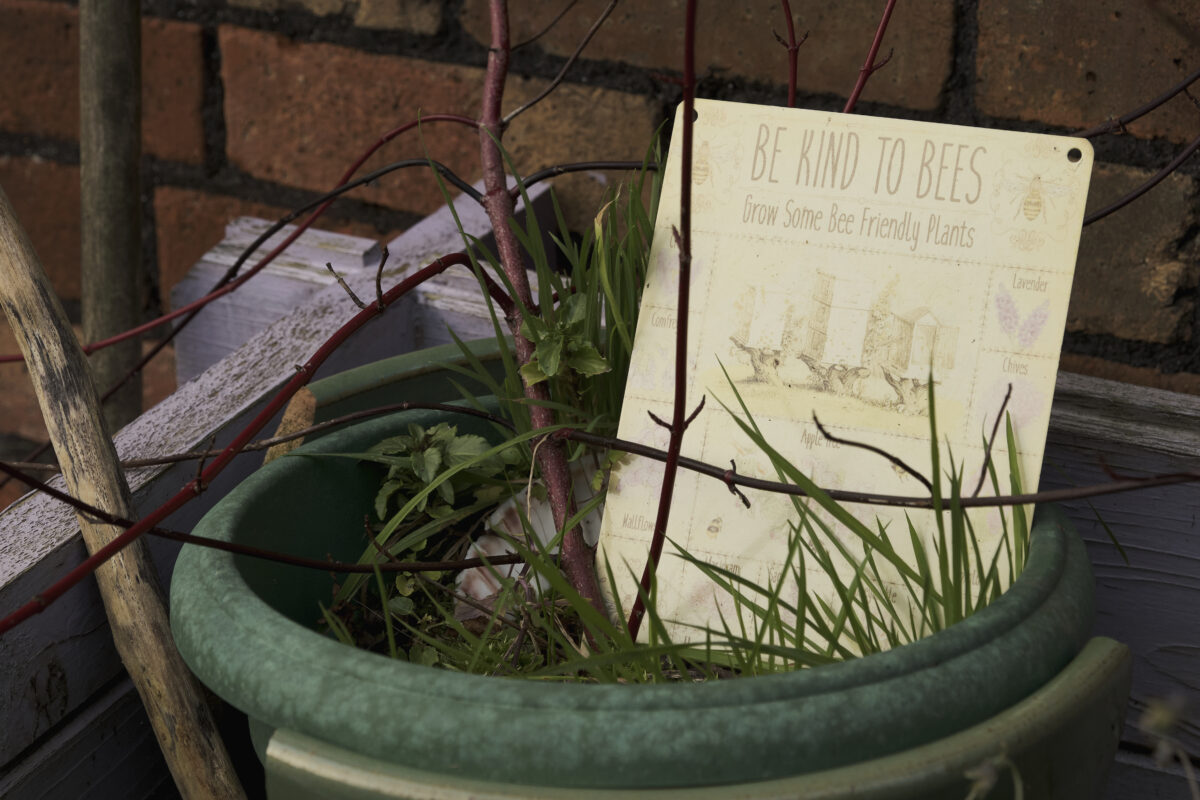
Many alley gardens across the city are opening their back gates on March 24th.
Belfast is a city that grows! Citizens have been making their own spaces for veg, flowers and wildlife- challenging communities to think about their neighbourhoods. Tackling Climate Change and Food Poverty begins at street level and the members of the Reclaim the CommonsNetworkhave been taking action. Expect to experience foraging, food, art, performance, music and practical info on how you can establish your own space for growing.
9ft in Common team members will be making our way around as many of them as possible over the course of the day, doing some documentation – courtesy of our wonderful photographer Simon Mills – and having conversations with residents and visitors alike about alleys – the joys and the struggles, the successes and challenges, what you would wish ino existance with magic wand and the parts you would like to make disappear forever.
We will be looking for people with great alley stories to follow up with for more of our creative programming over the summer and generally being very excited to see how everyone’s garden is growing. Do say hello!
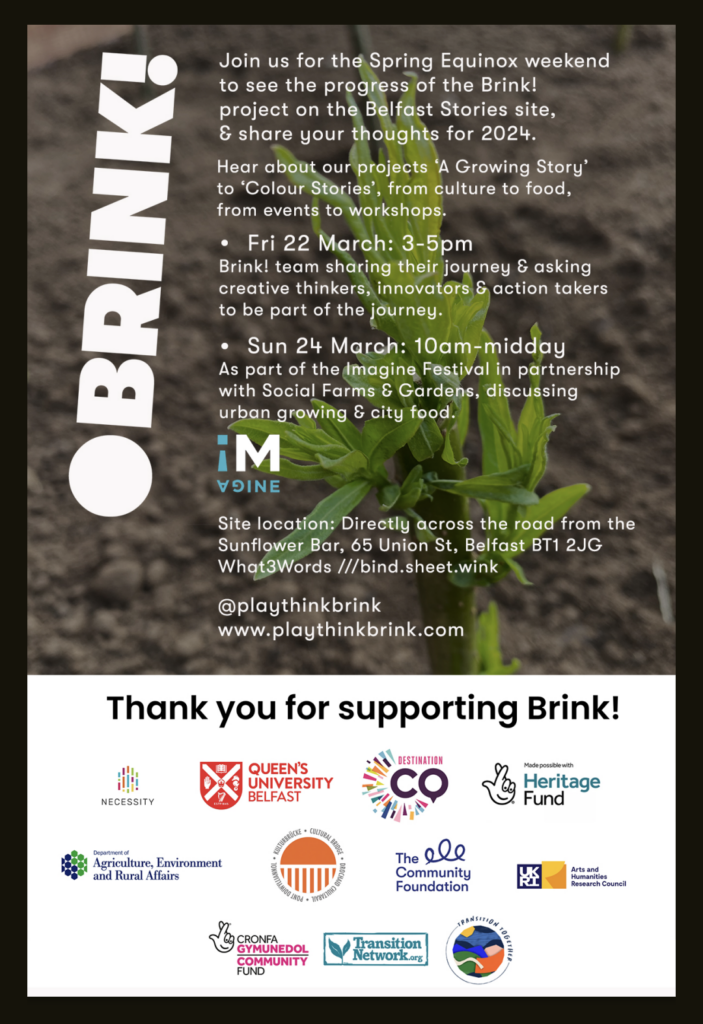
The event is part of the Imagine! Festival of Ideas and Politics who have lots of amazing events – a bunch related to food, community farming and climate activism – we’ve listed a few more below.
Please register to recieve up to date information on timings, as well as accessibility information and directions.
Belfast Food Stories – 12noon – 2pm at 2 Royal Avenue, Saturday 23rd. (free) This event will centre local stories of food in the city, and will also inspire and energise everyone to come together to grow more, talk more, cook more and share more so we can collectively, inclusively build a sustainable food city. Again, many RtC members are contributing their knowledge and experince to the event.
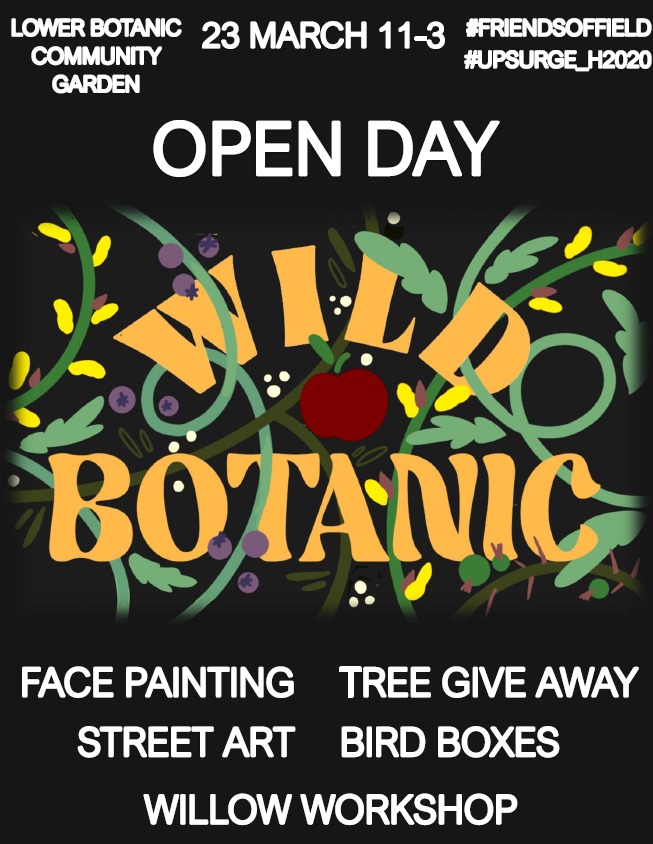
Botanic Community Garden Open Day – 11am-3pm – 23rd March Saturday (lower Botanic Gardens) – lots of family friendly activity for everyone!
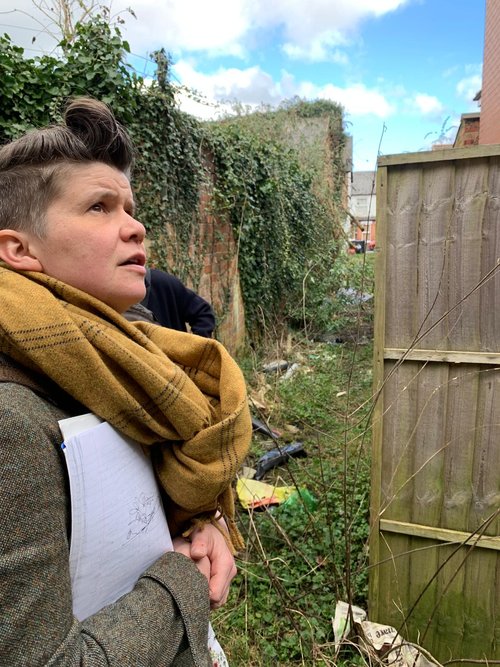
Meet Jo who’s leading our ‘Growing Potential’ action research
Jo, in Halstien Drive, East Belfast
Jo’s the founder of, and Head of Growing at Laurelbank Farm, a 7-acre organic farm located just outside Saintfield, Co. Down.
The farm’s vision is to reconnect people to the land, and to nourish and empower people through farming and feasting. At the heart of Laurelbank is ‘Farm & Feast’ – a community supported agriculture scheme (CSA) in which members share the risks, rewards and responsibilities of growing food. This sustainable business model involves members working together to cultivate and harvest delicious produce.
In addition to her role at the farm, Jo is an author and teacher. Co-authoring with Erin Bunting, Jo released her first book, ‘The Edible Flower: A Modern Guide to Growing, Cooking, and Eating Edible Flowers,’ in 2023. She also runs regular ‘grow your own’ courses at the farm.”
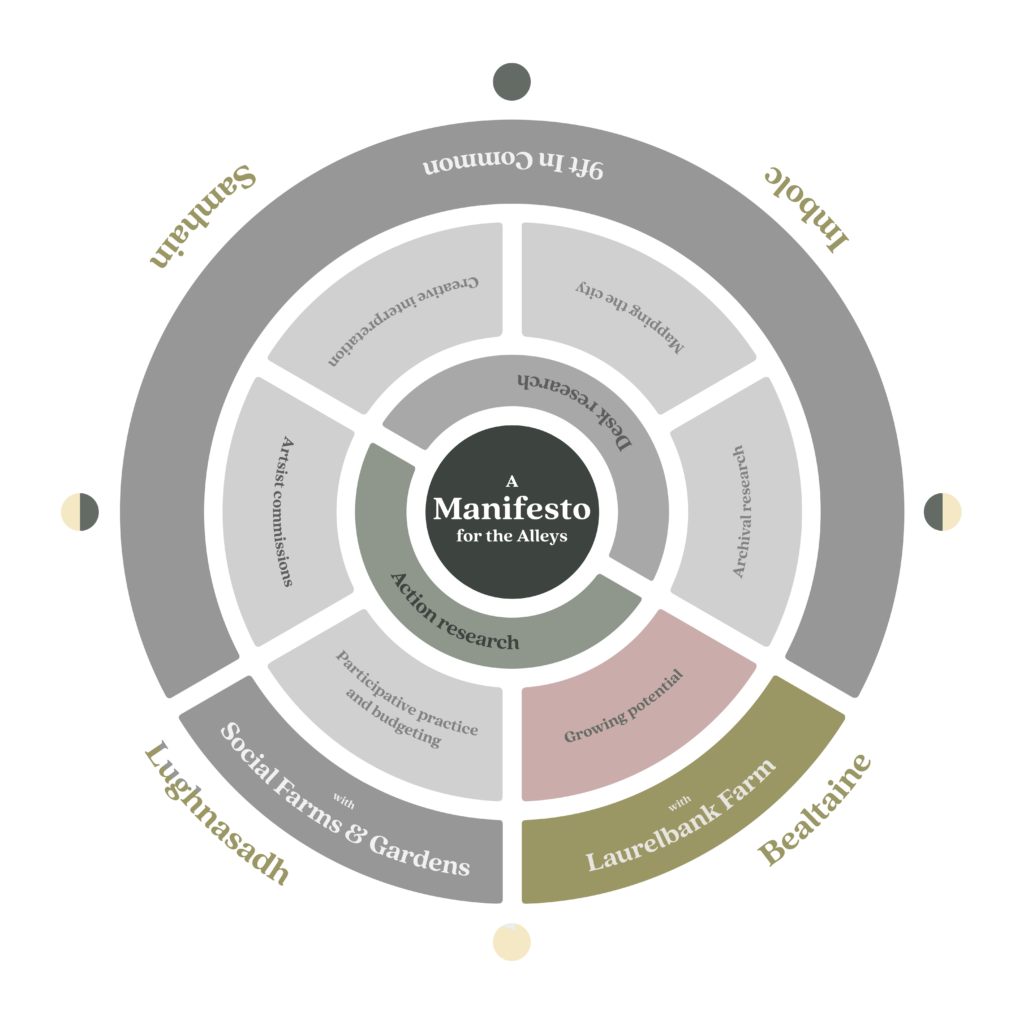
Jo’s leading the ‘Growing Potential’ action research element of Manifesto for the Alleys which will investigate the food production potential for alleys.
Last week she was out and about in Belfast meeting the residents from our 3 selected alleys and kick-starting the project planning with them. She’s written a bit about the day over on the Laurelbank Farm journal – but here’s a few quotes reflecting on the day:
It was hugely exciting to finally meet the residents and explore the alleyways that will be transformed into people friendly, growing spaces over the course of this year. The sun shone and it felt like spring as we chatted and wandered through the streets of Belfast, imagining we were plants and thinking about where we would be best placed for maximum growth!
I love planning, but there’s nothing quite like getting out to see a project in real life. I’m dead excited about the season ahead and exploring all the potential. I hope that my own experiences on the farm will help residents to experiment with new crops and techniques, and kickstart their community growing journey. I just need to figure out how to best maximise the potential of each space with their varying scale, geometry, feel and general vibes being so different it’s definitely going to be a glorious challenge!
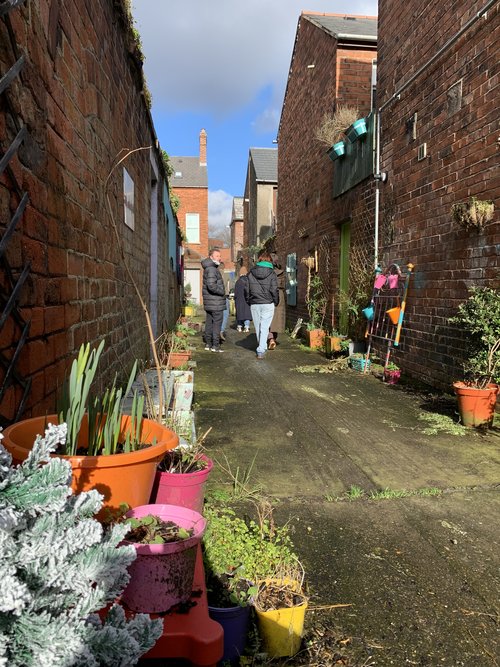
Deramore Alley, South Belfast
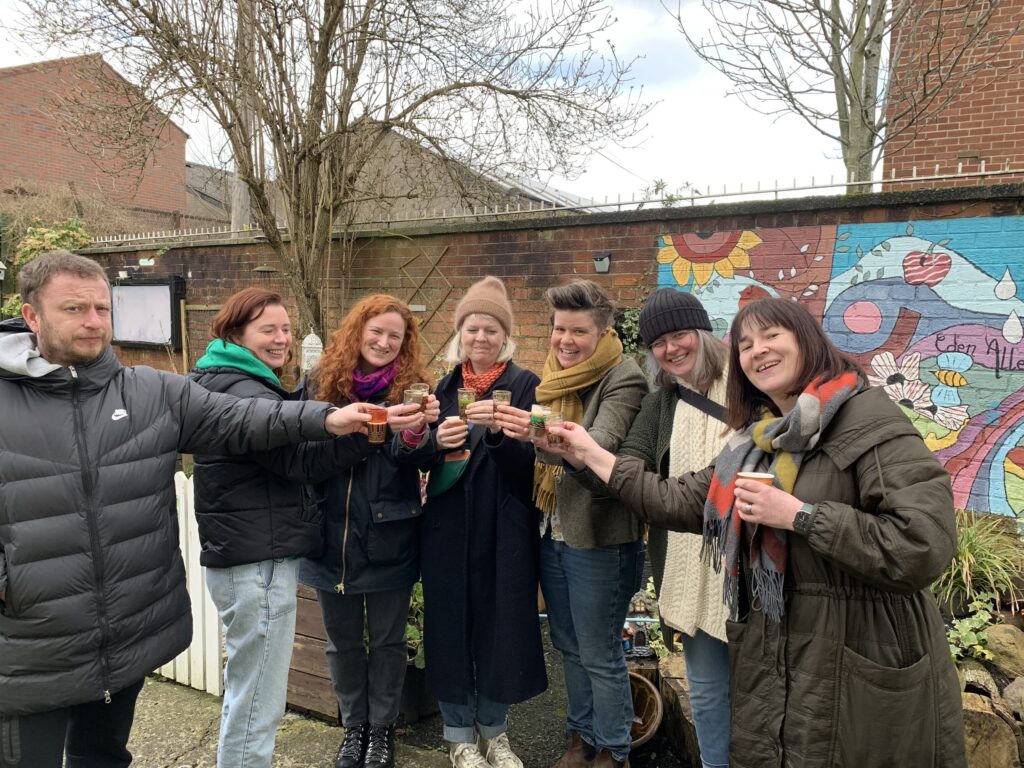
The gang shares a sample of rosemary beer last week in Eden Alley, North Belfast at the end of the visits.
You can catch Jo speaking at the upcoming Community Farming: a Catalyst for Change event in the Imagine Festival on Friday March 22nd if you want to hear more about Laurelbank Farm’s fantastic work.
There will be many opportunities for learning from the Alley Growing Potential groups over the year and Jo will be releasing practical how-to video guides each month for all aspiring-alley-gardeners – expect the first ones in the next few weeks!
Perhaps you are on the fence about whether gates are the right solution for your street.
If you feel you have not been given enough information or enough time to discuss it properly with your neighbours or that alternative solutions have not been considered for your area then YOU HAVE A VOICE and can send an objection letter, in writing by post/hand delivery to:
Belfast City Council ℅ Gavin Bell, City and Neighbourhood Services Department. 4-10 Linenhall Street Belfast BT2 8DP
BEFORE close of day on Friday March 8th.
We understand that each area is different and that there is not a one-fits-all solution but debate and democracy is what local government is for.
9ft in Common have concerns based around ideas of alleys as rights of way, the legal requirements for community consultation, the evaluation of previous gating orders (have they worked?), and, if any alternatives to gates have been properly considered.
We’ve put together an open letter to the entire Phase 5 Gating Order on grounds listed above. If you would like to add your name, please get in touch with us via email before 12noon on Friday March 8th- info@9ftincommon.com
Alternatively, you are welcome to use any of the points provided to write your own letter of objection. If you do not have access to a printer Social Farms & Gardens can print and deliver your letter if you email it to miriam@farmgarden.org.uk by 3pm Friday 8th March.
An Open Letter
Belfast City Council ℅ Gavin Bell, City and Neighbourhood Services Department. 4 -10 Linenhall Street Belfast BT2 8DP
Reference: Belfast City Council Traffic Regulation Order 2024 Phase 5a
To whom it may concern,
We write to object to the enforcement of the Gating Order 2024.
The objection is based on 4 points:
Objection point 1 – Rights of Way
Objection point 2 – Consideration for alternatives to gates
Objection Point 3 – Evaluation of gating orders
Objection Point 4 – Legal requirements for consultation
Objection point 1 – Rights of Way
As implied in the Roads Order, 1993, alleyways that have been adopted by the Department of Infrastructure, are public highways, and therefore legally, rights of way.
Belfast City Council is duty bound to assert, protect and keep public rights of way open and free from obstruction. The duty to assert public rights of way is one the council’s most important duties under the Access (NI) Order, 1983. Blocking these routes with locked gates contravenes that order. In some instances, gates have even been erected before an order has been passed, which seems hard to justify in light of the above.
Objection point 2 – Consideration for alternatives to gates
In the Guidance on Section 1 of the Clean Neighbourhoods and Environment Act (Northern Ireland) 2011 it states that:
Gating orders are not the only solution to tackling crime and ASB on certain thoroughfares. Before proposing an order, district councils should give consideration as to whether there are alternative interventions that may be more appropriate (and cost effective) for tackling the specific problems they are facing without having to gate the road.
Belfast City Council does not appear to have considered any alternative interventions. We request that Belfast City Council considers alternatives to alley gates, based on a thorough scoping and consideration of each alley in partnership with its residents and other local people who may use or pass through it, rather than a one size fits all approach that will reduce public space in the city, cost £500,000 and that hasn’t even been evaluated to see if it is effective (see objection point 3).
9ft in Common has developed a series of alternative interventions which may be more appropriate (and cost effective) than gates. We invite Belfast City Council to consider these ideas, which have been developed through conversations with citizens, architects, planners, artists, councillors, council officers, meetings on alley walks and over zoom. They are sparked by the wonderful grass-roots interventions we have seen, and offer potential solutions to some common issues that occur in alleyways. They could be considered as alternatives to resorting to installing locked gates.
We also refer to community-led Safer Streets projects that are prevalent elsewhere in England, as best practice ways of tackling ASB and crime, with work streams including ‘strengthening the local environment; and helping the community to reclaim its spaces and increase its strength and resilience.’
Objection Point 3 – Evaluation of gating orders
In the Guidance on Section 1 of the Clean Neighbourhoods and Environment Act (Northern Ireland) 2011 it also states that:
It is important to ensure that all gating orders are working as intended by undertaking evaluations of the gating sites to see whether local circumstances have changed. Therefore, it is recommended that councils review each of their orders on an annual basis. This review should evaluate whether the gating order is acting as a useful crime or ASB reduction measure. It should also assess the impact it is having on the community and discussions should be held with local residents to gauge whether the limited access is causing excessive inconvenience.
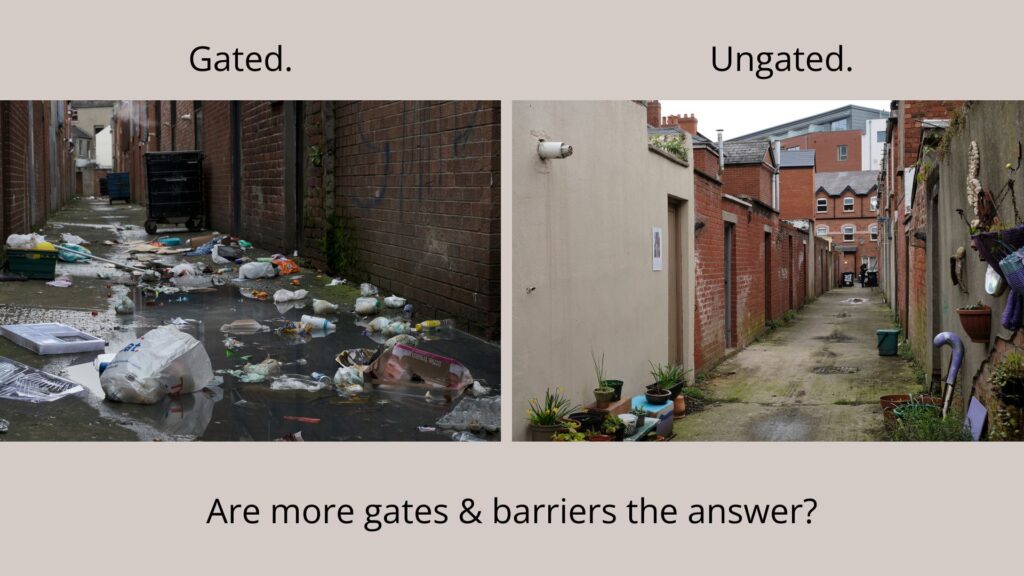
Annual evaluation of Phases 1 to 4 of alley gating in Belfast has never taken place. Qualitative evaluation of Phase 2 gates acknowledged that, even after gating, there was continued ‘poor cleanliness in the alleyways as dumped mattresses, bin bags and dog fouling have been an issue,’ and some residents called for ‘a collective plan/multi agency approach to tackling ASB in the area’, which would suggest that the ASB had not been tackled by the gates. No quantitative or comparative evaluation of ASB and crime rates after Phases 1-4 appears to have ever been conducted. In our own explorations of alleyways, we have witnessed countless examples of flytipping continuing behind closed gates, resulting in increased work for Belfast City Council who routinely clean the mess up without issuing fines or any further repercussions to perpetrators.
Before any further gates are installed, we therefore call for a thorough independent evaluation of previous Phases of alley gating, to determine if the previous Gating Orders(1 – 4) have been successful in reducing ASB or crime.
Objection Point 4 – Legal requirements for consultation
Belfast City Council’s Consultation and engagement framework, 2020 ‘has been developed based on current legal requirements and best practice.’
The consultation process for Phase 5 gating orders falls short of this commitment. Hosting hard copy plans in community centres, wrapping around lamp posts or posting through the doors of immediate residents does not equate to a consultation that embeds:
‘meaningful consultation into the council’s planning and decision-making processes and supplements the commitments in our Equality Scheme and our responsibilities to consult under Section 75 of the Northern Ireland Act 1998’ (Belfast: Consultation and engagement framework, 2020)
The Framework also states:
We are continually looking for ways in which to improve how we engage and involve people. As part of this, we have invested in digital technology and have created a dedicated online engagement platform. The aim of the platform is to make it easier for our residents and other stakeholders to find out about our engagements and to have their say. We will also use the platform to keep people informed by letting you know what people have said and what has happened as a result.
Not using this digital platform and stating that objections must be issued ‘in writing’, by post, with a closing date on a Sunday, creates all sorts of barriers to responding. Further, the online survey was closed by the time of public notice, and therefore before a lot of people even knew about it or had the opportunity to respond.
This process cannot be called a consultation. Some residents have expressed the view to 9ft in Common that the tight timeframe and format has not given them adequate time to consider the matter and discuss it with their neighbours. We request that Belfast City Council carry out a proper consultation that is in line with their own framework of best practice, and allows for an inclusive, fair, open and transparent result.
In Addition
In addition to these points of objections, 9ft in Common has been working in partnership with Social Farms & Gardens, Reclaim the Commons and Laurelbank Farm to deliver a series of capacity building and visioning interventions for alley residents and users. In the course of this work we as a partnership have become aware that the method of the current consultation is insufficient to allow residents and users to fully explore the option of alleygating for their street. We have anecdotal evidence that some residents do not want gates but do not want to risk upsetting their neighbours by raising an objection; others do not fully understand the consultation process or how to object. Some have voiced that through alley gardening with neighbours their opinion on the suitability of gates for them has shifted in the last year towards no longer wanting them.
Because of this we ask that fuller consultation happens on a neighbourhood by neighbourhood basis, involving local community workers (e.g. Ballynafeigh Community Development Association) to deliver quality facilitated neighbourhood discussions, which will allow neighbours to process this decision together. To carry on without this level of engagement will result in loss of people’s public space without their consent or input, and could cause alienation in communities that are beginning to grow a strong and resilient sense of community.
We acknowledge the support to date from Counsellors regarding alleyway issues and we thank officers for listening to constituents and working to make the city’s neighbourhoods better and safer. We hope they can support these suggestions that seek to improve the city’s democratic processes, connectedness and permeability.
Since this is a piece of action research within our Belfast 2024 project we selected 3 which, combined, give a diverse spread of location, sunlight, ground conditions and gating, in order to test a range of growing conditions and situations and have the results be applicable to the widest range of people in the city and beyond.
It’s important to the whole Manifesto for the Alley’s project team to be transparent about our selection criteria and process. We considered the following points for the tough job selecting:
A mix of gated and ungated alleys
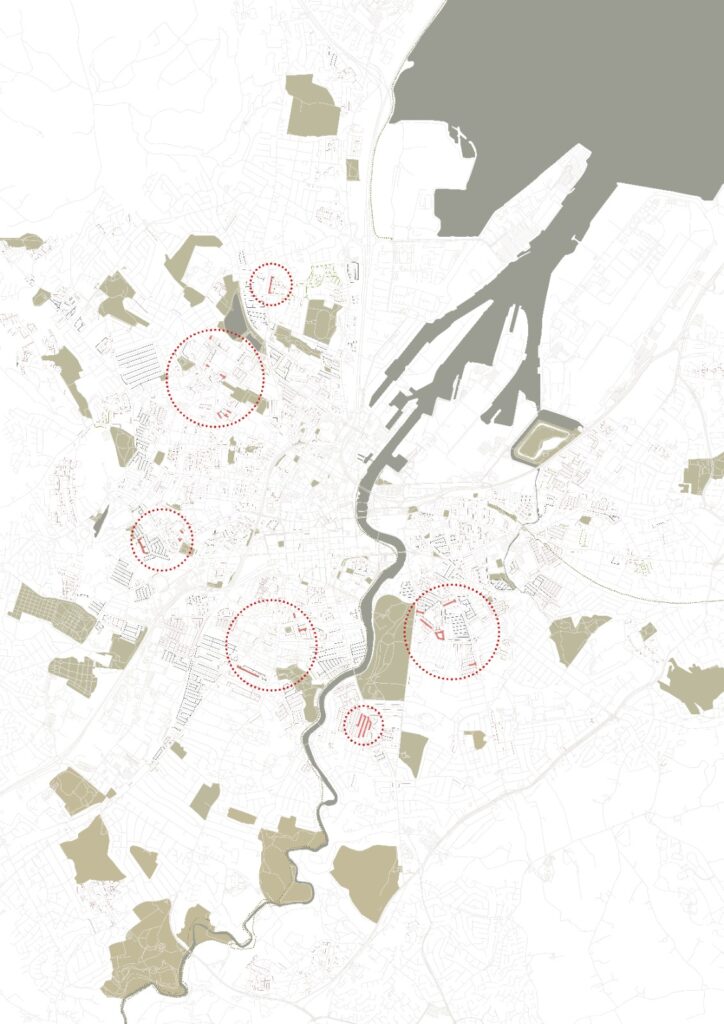
Geographical spread in the city
Surface area (tarmac vs a more permeable surface/soil)
Aspect and orientations (East/West, North/South)
Mix of established activity and areas where groups are just getting started
Let’s introduce the Growing Potenial Alleys
Adopted by Department for Infrastructure Ungated North / South Orientation Concrete and Tarmac Surface Some Container Growing Roughly 9ft Wide 70 Adjacent Houses Adopted by Department for Infrastructure Gated East / West orientation Concrete and Tarmac Surfaces Established Alley Growing Group Roughly 9ft Wide, with wider sections 32 Adjacent Houses Unadopted by Department for Infrastructure Ungated East / West Orientation Unsurfaced, exposed soil and grass No previous alley growing Roughly 9ft wide 10 adjacent houses
What happens next?
In the selected alleys things will kick off with an initial gathering in early March for everyone involved to meet each other, meet Jo from Laurelbank Farm, visit each other’s spaces and start the planning process for the year.
….and everyone else, fear not! A Manifesto for the Alleys is not just about doing, it’s also about sharing and there are still many ways to be involved.
There will be many opportunities for learning from the Alley Growing Potential groups over the year and Jo will be releasing practical how-to video guides each month for all aspiring-alley-gardeners.
For more community growing advice and support, you can also join the Reclaim the Commons Network to be (reach out to miriam@farmgarden.org.uk for more info). You can visit also some established alley gardens on March 24th, part of the Imagine! Belfast Festival, register here for inspiration and advice!
We will have a range of creative projects, commissions and gatherings to mark the seasons in alleys. Is there anything in particular you would like to see happen in your alley?
If you have an alley with potential (and they all have great potential) then we’d love to hear from you.
January 28th in Halstien Drive the first Alley Gathering of 2024 .
We asked Aaron, the new 9ft in Common Design & Research Assistant to share some words since it was also his first alley gathering.
Aisling has also written some beautiful reflections below.
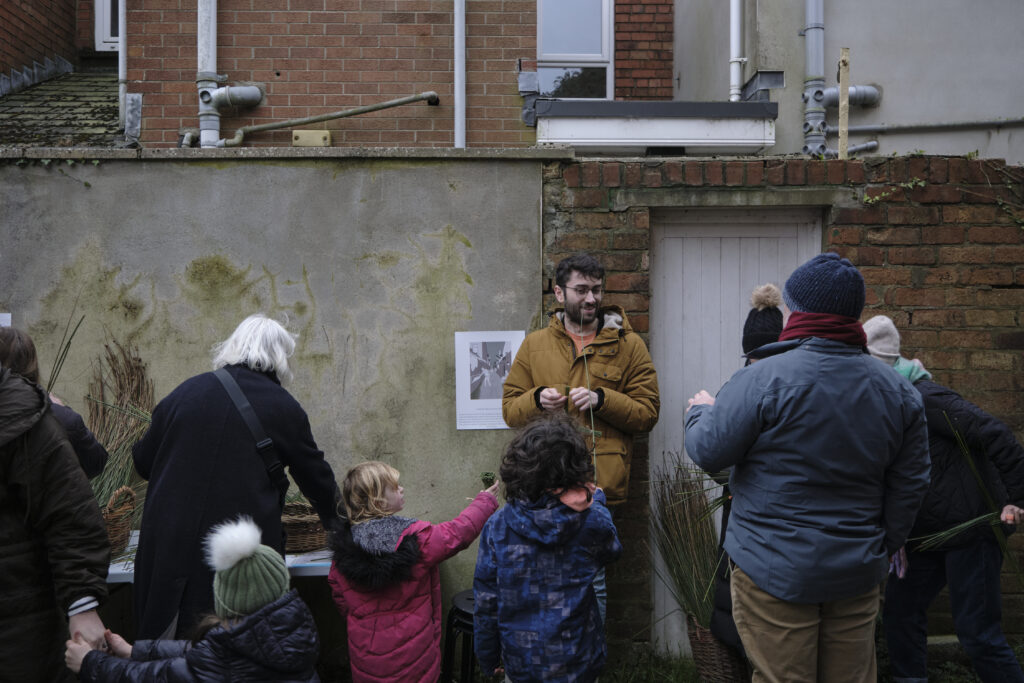
Aaron’s in the yellow coat. Hello Aaron! Photos all by Simon Mills.
This was our first of (hopefully) many alley gatherings over 2024, and what a great start it was!
Our day began with a quick spring clean of the alley – a great Imbolc exercise – followed by set up with our wonderful alley host, Sarah.
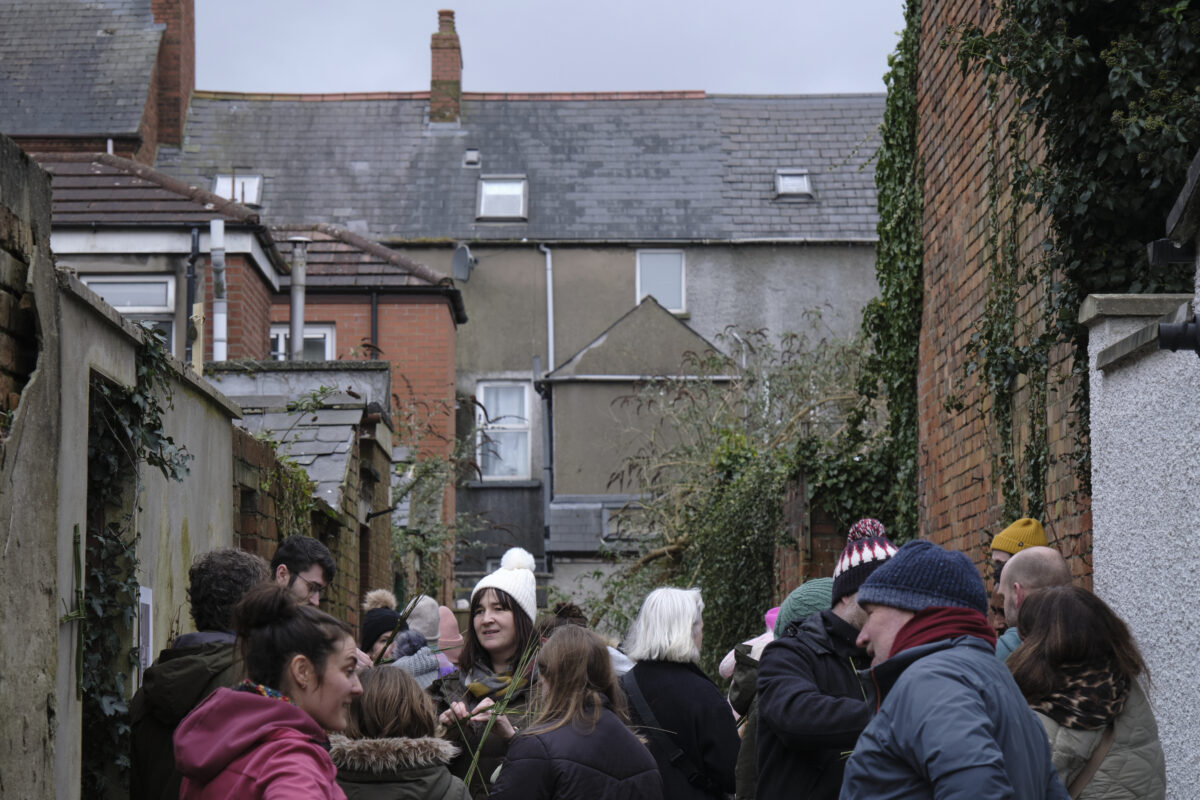
Brigid’s crosses are integral to marking the start of the season, themselves steeped in Celtic tradition. We were lucky to have Jo there – our partner at Laurelbank Farm – to lead the cross-making demonstration and sowing of sweetpea seeds. She did a brilliant job of talking everyone through what was a fairly difficult challenge and ensuring we had lots of Brigid’s crosses dotted around the alley by the end of the day.
As part of our Imbolc celebrations not only do we sow seeds, but sow intentions too. As people left, we asked if they could write down an ‘intention for an alley’; an idea to improve, or a hope for, Belfast’s alleys, something that could be focused on the writer’s own alley or a wider network.
We left brimming with excitement and inspiration for the year ahead, as we hope all our participants were too!
Jo’s comment captures the day really well:
Perhaps it’s the shape and scale of an alley that encourages meaningful connection – or maybe it’s the act of all learning and doing and teaching a simple craft together. I don’t know but it was a fab afternoon.
She’s written that and much more over on the Laurelbank Farm journal – which includes expert planting advice for anyone who took home sweet pea seeds on the day so check it out.
It was surprising just how many people turned up! What had been a quiet, overgrown alley was bursting with conversations, questions, and laughter for the whole afternoon.
Thank you to all who attended and watch this space for much more to come!
Reflections from Aisling
On a crisp January Sunday afternoon, crowds gather in the grassy alley to the south of Halstein Drive, where our warm host Sarah has her yard gate open wide, and house transformed into a crafting space for visiting children, their shoes lined up in rows by the back door. Her co-hosting neighbour Aisling’s beautiful black cat flirts with visitors – interested in the strange goings on, but letting noone too close. Little do we, or he, know, as we say goodbye to winter and welcome the spring, that he, too, is in his final throes of winter, and will pass away only days from now.
Our wonderful host Sarah’s backyard. Photo: Simon Mills.
This is Herman’s alley, we later recall – the hibernation station of one runaway tortoise from a story eloquently scribed by local Eunace Yates, and now shared far and wide.
Here, we can dig our hands or our the pots we have brought, deep into rich soil and fill it to two-thirds, before poking a sweetpea seed into its dark middle, pour a little water on top, and take it home to work its magic in our own alleyways, yards, or kitchen windows. Little hands work busily planting their seeds and little mouths ask pressing questions about where to place it, and how often it must be watered.
Further into the alley, baskets woven from Laurelbank Farm willow are bursting with Laurelbank reeds, ready to be woven into Brigid’s crosses, taken home and hung from the rafters to protect our homes. Jo is there, teaching, weaving, and shaping reed wands to place into eager hands. A how-to sheet tells you how to weave a cross, but more often than not, the learning is shoulder to shoulder, from one stranger to another: See one. Do one. Teach one. There are big crosses and wee crosses, loose ones and tight, four legged and three, tied with string and with reeds. Flyaway reeds and cut ends scatter across the alley floor, while the sounds of old stories of Imbolc and Brigid’s crosses from some seasoned pros carry in the breeze to the many who are making their first one ever.
Down an off-shoot of the alley, a boy has found a small discarded tile on the ground, upon which he is bending and shaping his reed into creations of his imagination. ‘This is my table,’ he tells passersby. ‘Be careful not to stand on it.’ Making something from little or nothing – intuitively, he has grasped the way of the alley.
And the chatter! People are talking about growing and alleys and how lucky we are with the weather, for January. About how nice it is to come and do something like this on a Sunday in East Belfast. Friends bump into one another unexpectedly, and new friends and promises are made, to meet for that coffee or help with that house move.
Imbolc. The end of winter and the beginning of spring. Both the crowd gathered, and the alley underfoot, are pregnant with possibilities of what that spring may bring.