written by Meadhbh & Aisling
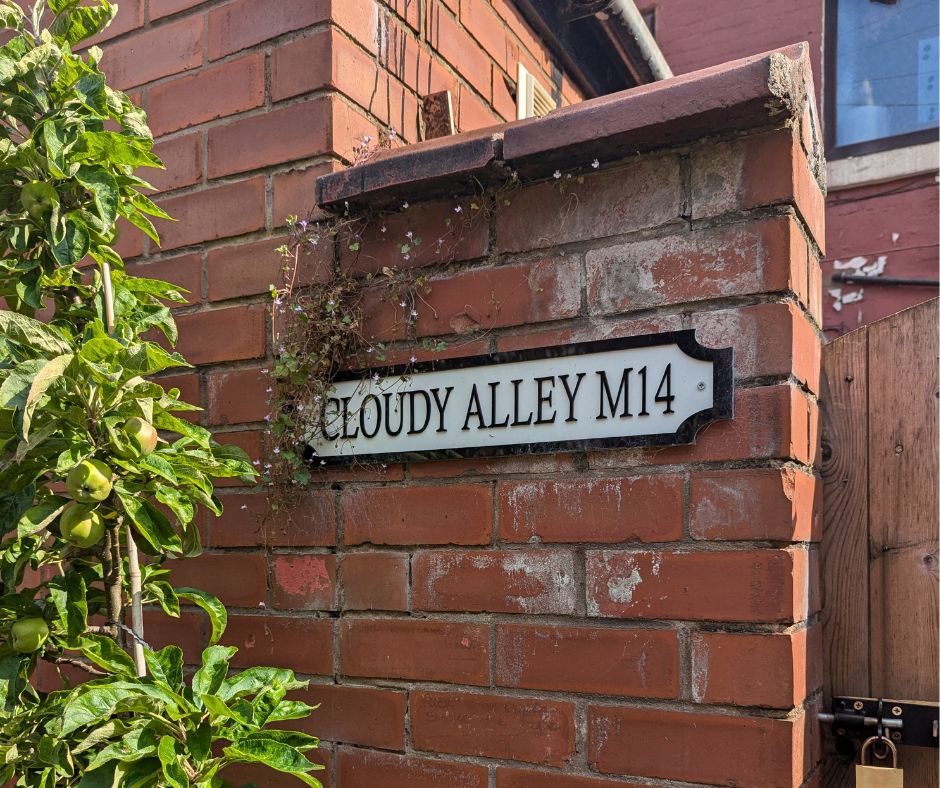
It’s Monday afternoon and we are heading to Moss Side in Manchester to meet Yasmine, an active ‘ginnel gardener’ in Cloudy Alley.
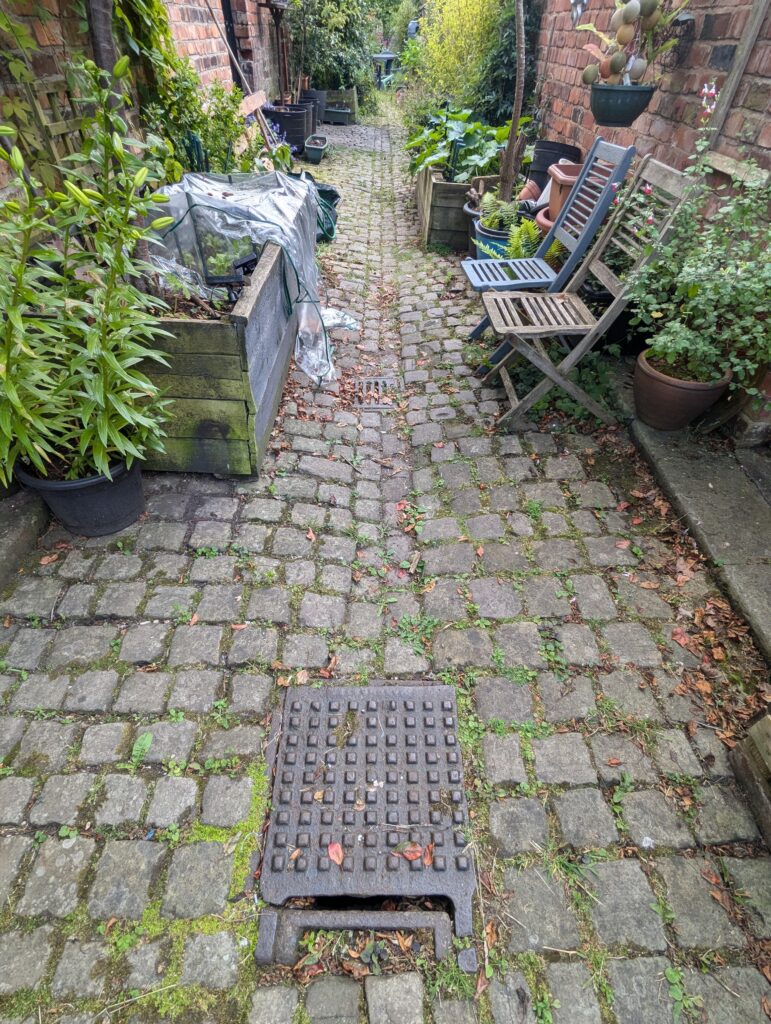
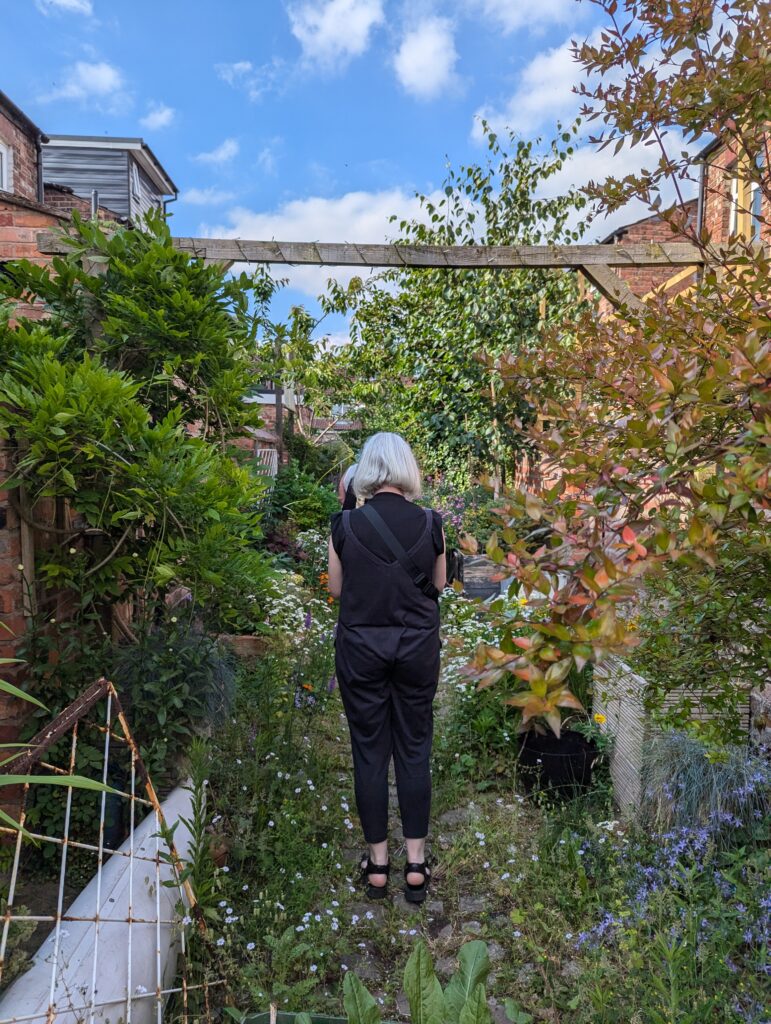
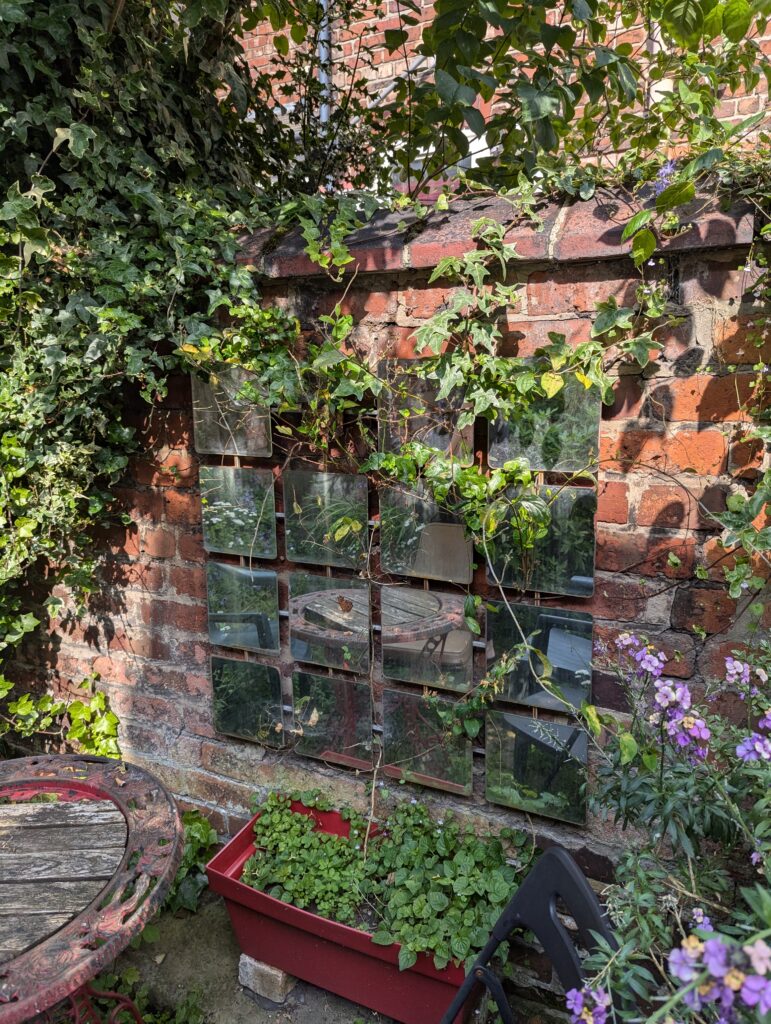
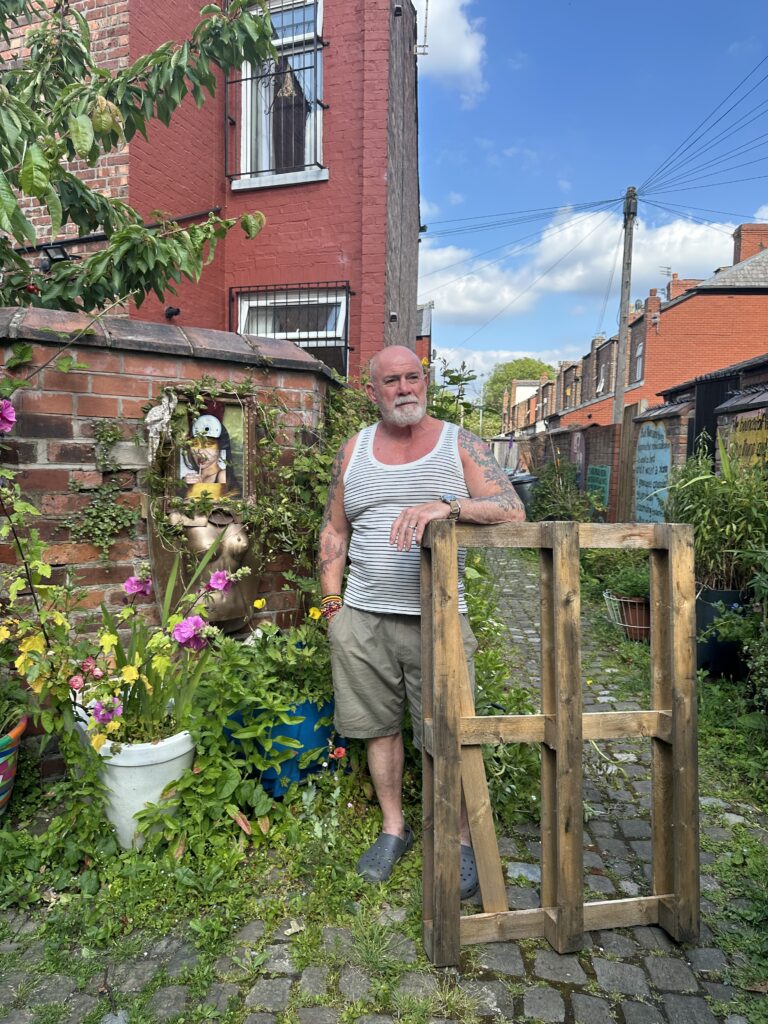
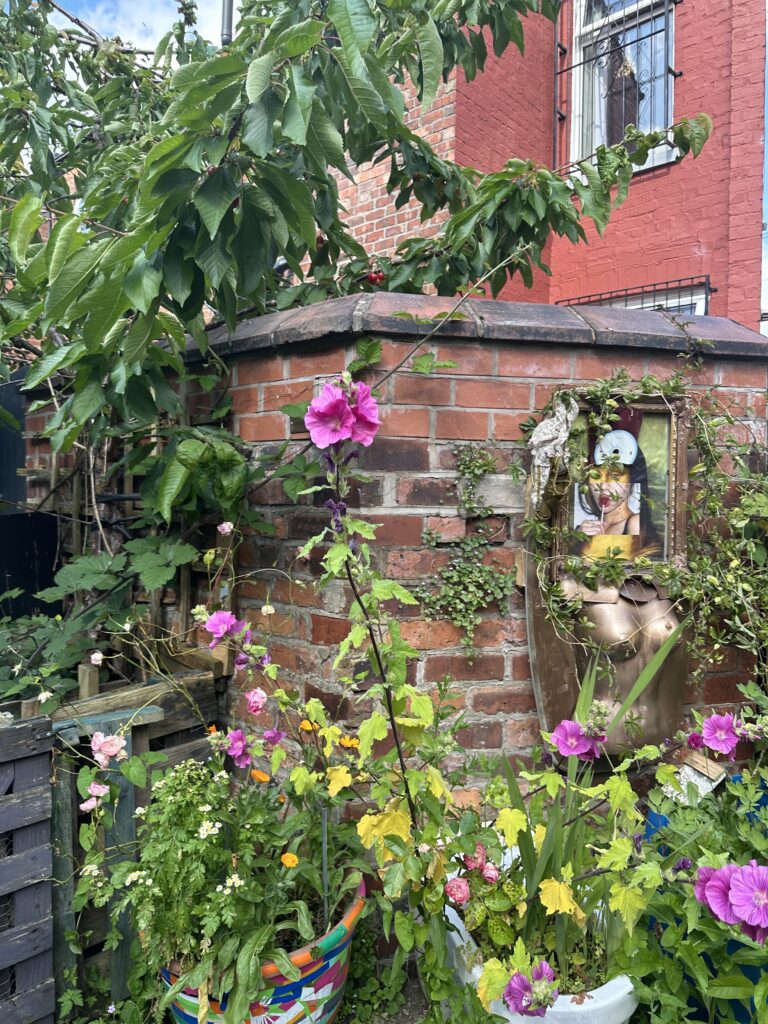
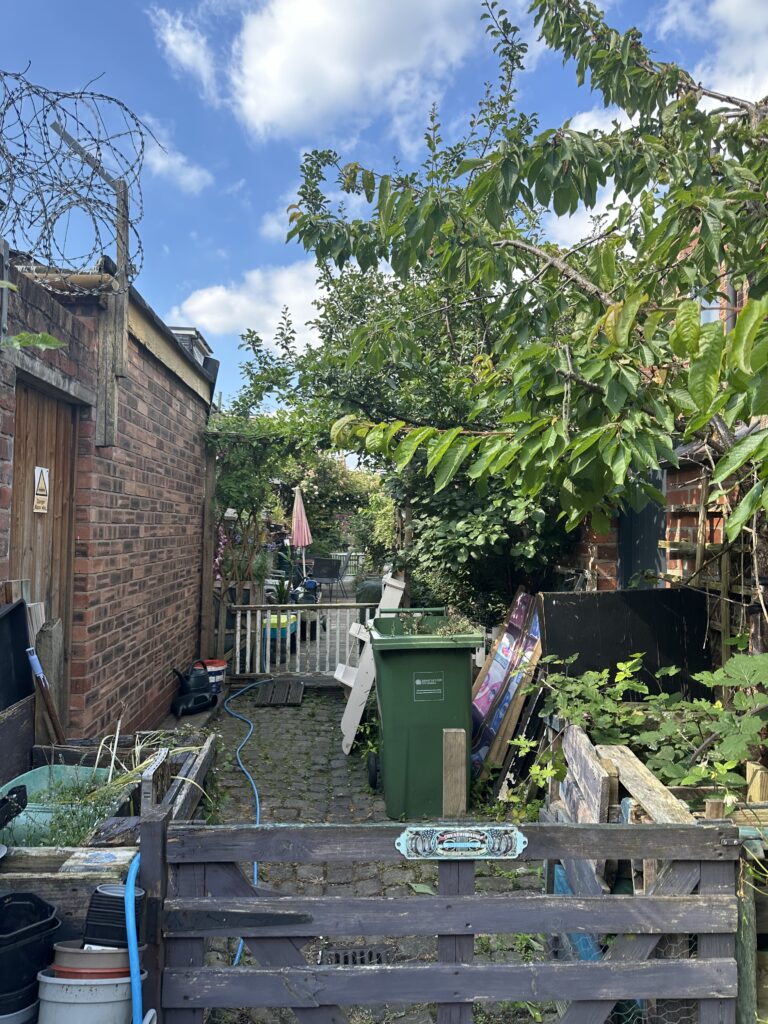
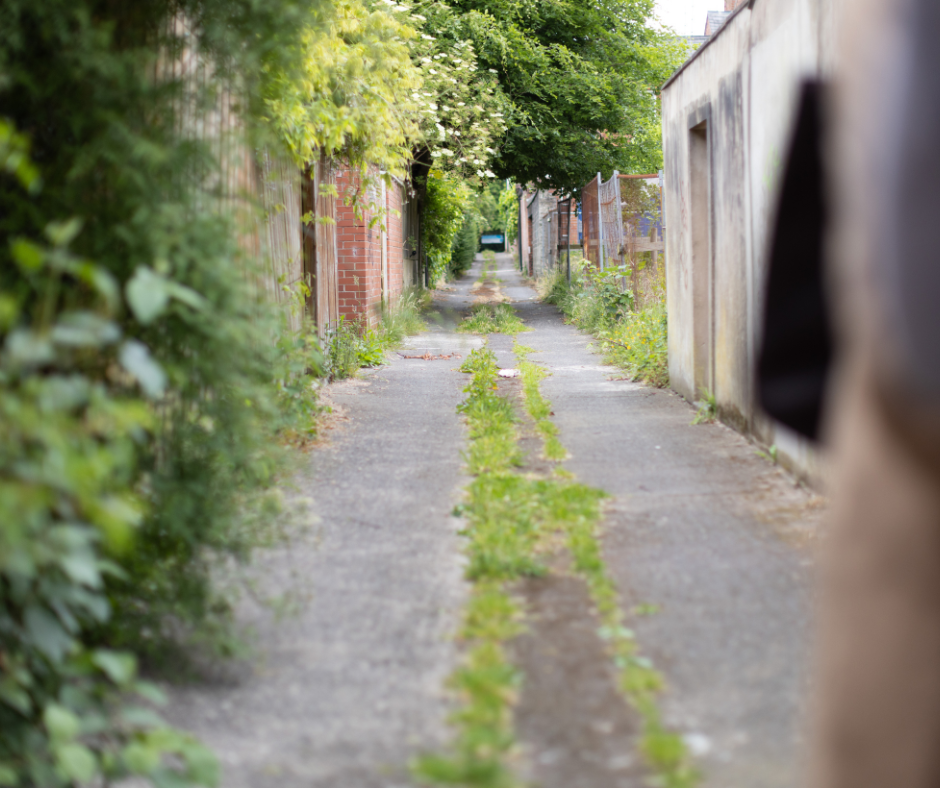
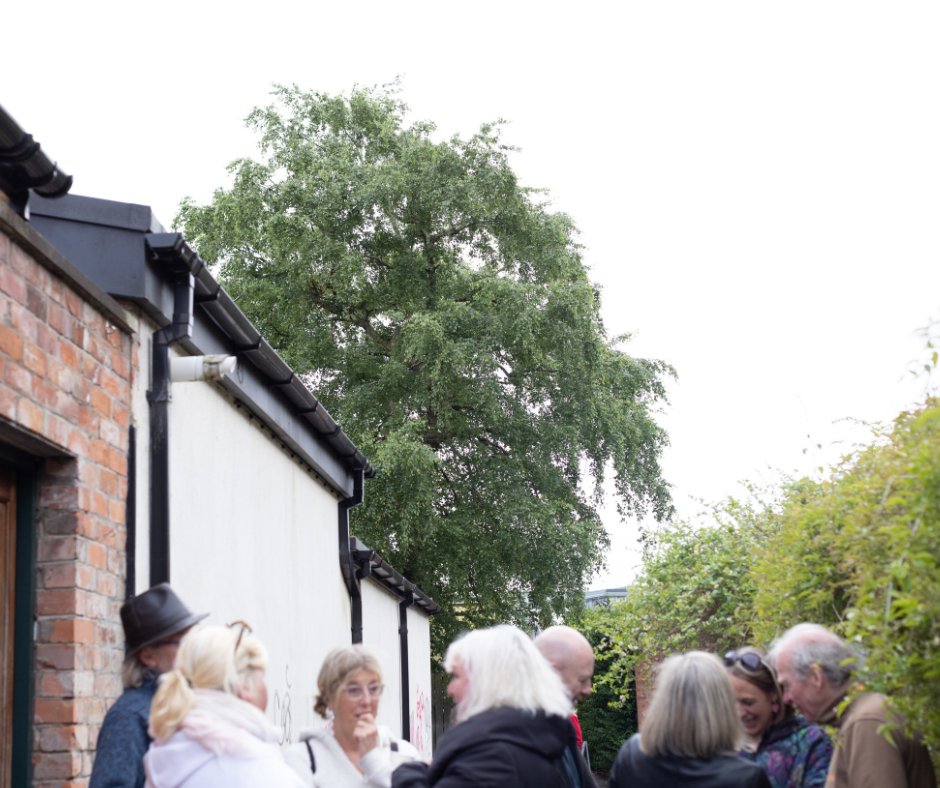
We cross the road to where the houses are red-brick terraces, with alleys at the back. Naturally, we take a shortcut through the inviting alleys and find ourselves immediately in an oasis of a back alley, abundant with flowers, art, friendly painted signs and a friendly neighbour, working away. We stop for a chat and discover we are in Origin Alley, believed to be the first alley garden transformation in the area. Our impromptu host, Martin Callery, takes us on a walk along the main spine of the alley, which is unusual in that it has a series of unlocked, low, wooden gates creating different zones that we are told are for keeping dogs and children in. One such zone is fully decked, while the rest of the alley is cobbled, with grass and wildflowers growing delightfully in the cracks. There are planters made from baths, an old fridge turned on its side with a lovely painting on the front of it and various other pots and containers. Fruit trees reach their branches, abundant with fruit, across the walkway and we duck to pass under them, taking in wall art made from jar lids and broken mirrors as we pass. Two kids walk through the alley end with their Dad, as we chat, making their way home from school. At the angled walls of the alley’s T-junction, there is a fireplace with a skateboard above it, painted bike wheels, and a golden female bust artwork we are introduced to as ‘The Medusa of Mosside’, made by martin, but he assures us the lacey undergarments were a later adornment, not by him!
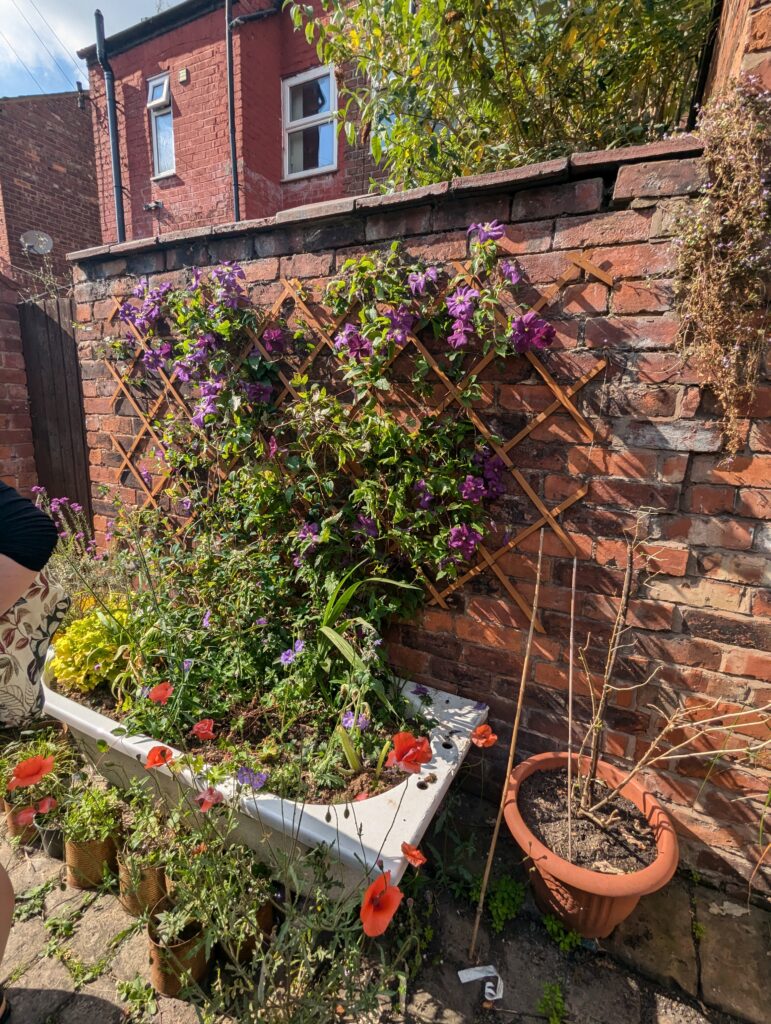
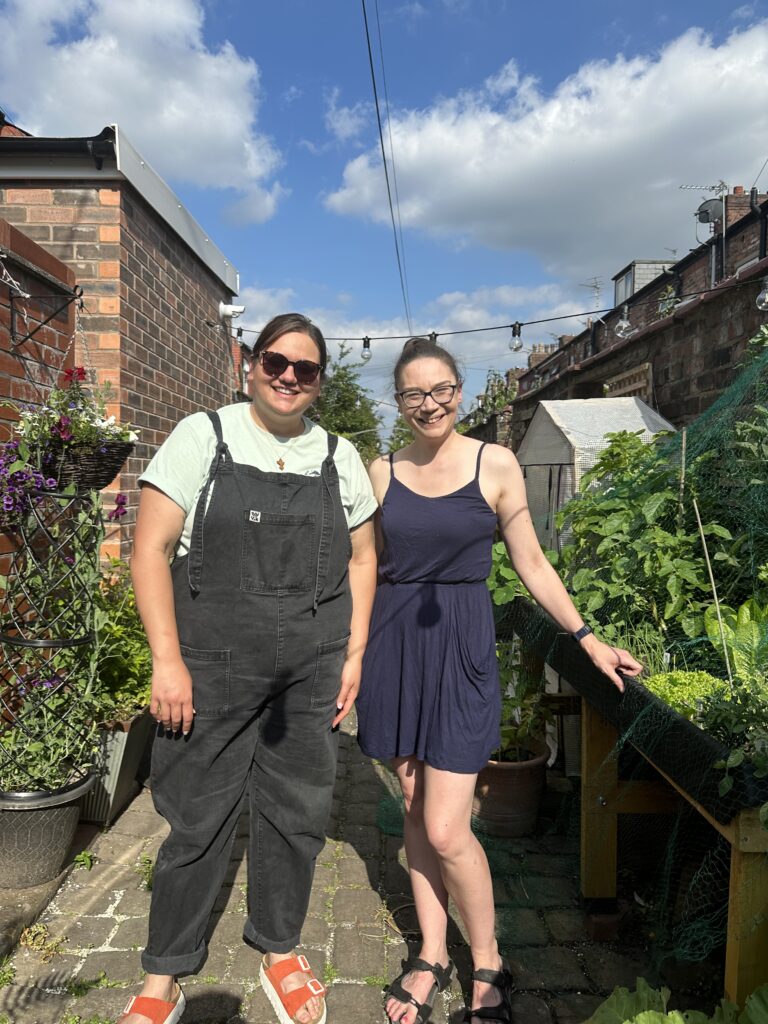
A few streets up and over, we find Yasmine in the alley, busy watering. The blazing sunshine we’re experiencing is a key difference between home and here, this just might be the hottest alley walk we’ve ever been on – and we learn that watering the plants in a communal alley is an extra challenge since in England, water is a pay-by-usage utility per household and it’s rare that these kinds of houses have outside taps.
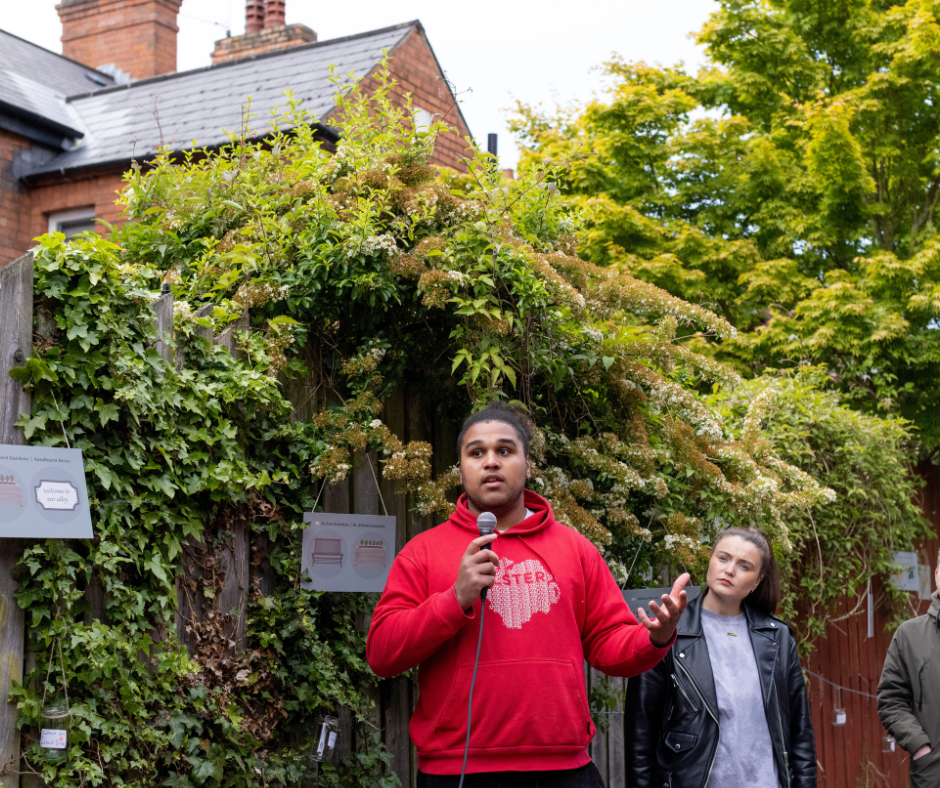
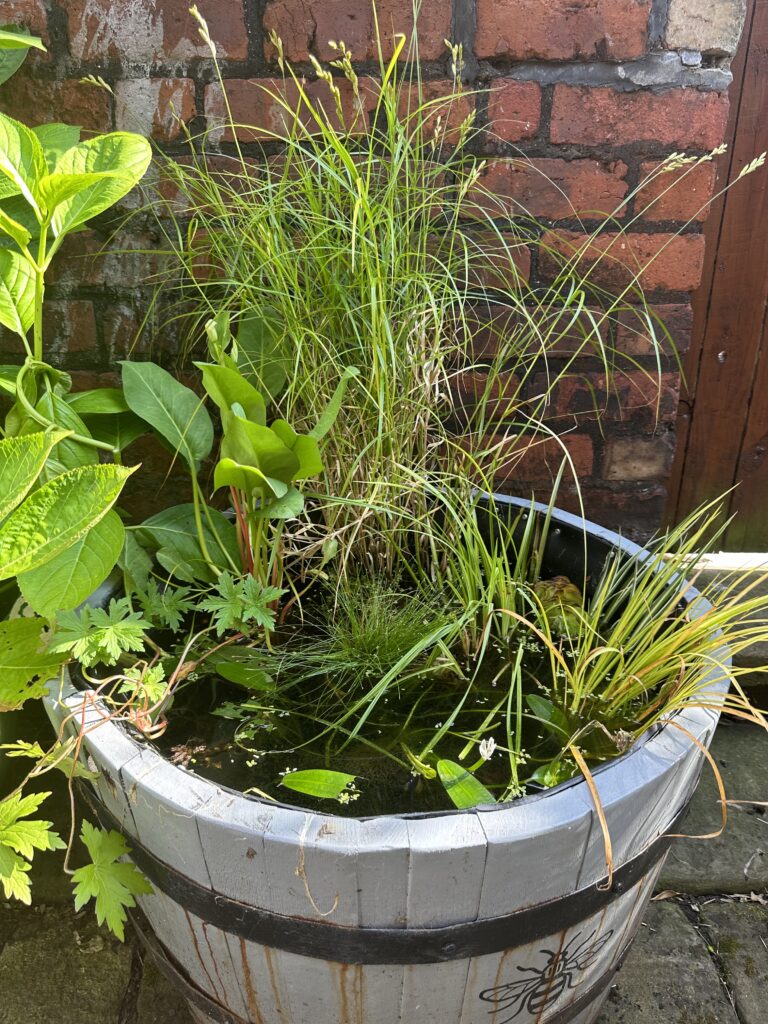
But hot or not, from what we are seeing this alley is lush! There’s multiple levels of planting, hanging baskets, raised beds. Bathtubs repurposed as planters seem to be the Moss Side signature style. A motif of colourful painted bricks runs up the whole alley, a clever way of adding a pop of colour without having to paint entire walls. They’ve been greening the space for 6 years now mostly without any significant funding or formal support but it’s a building movement and there have been some key collaborations spurring things on.
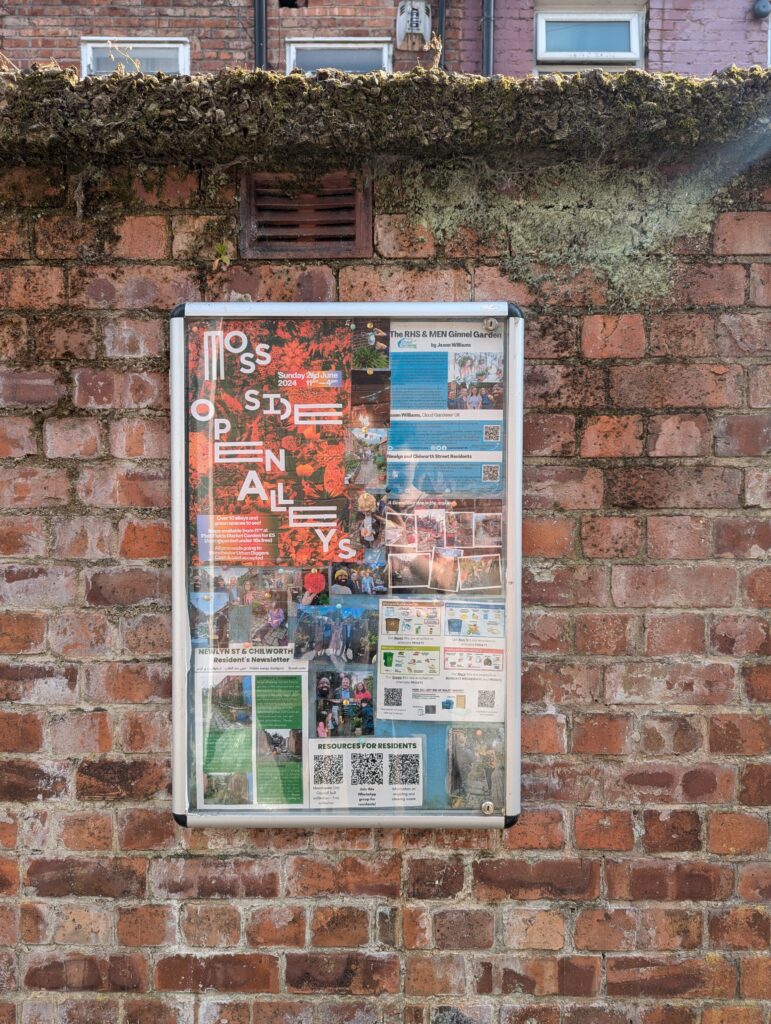
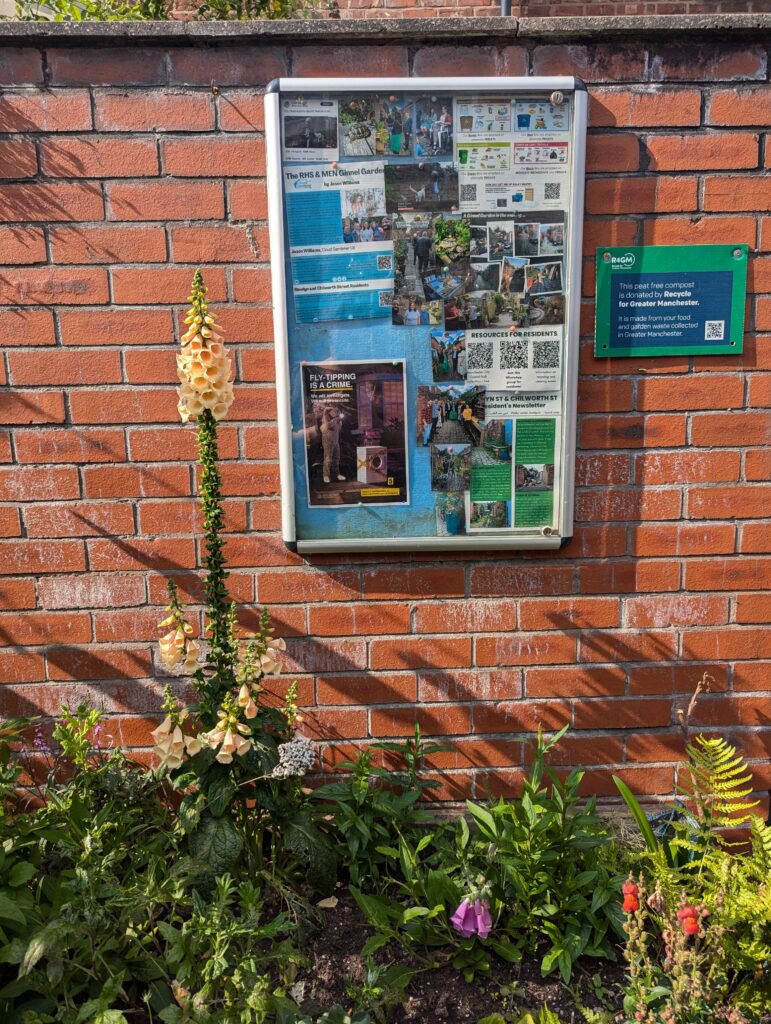
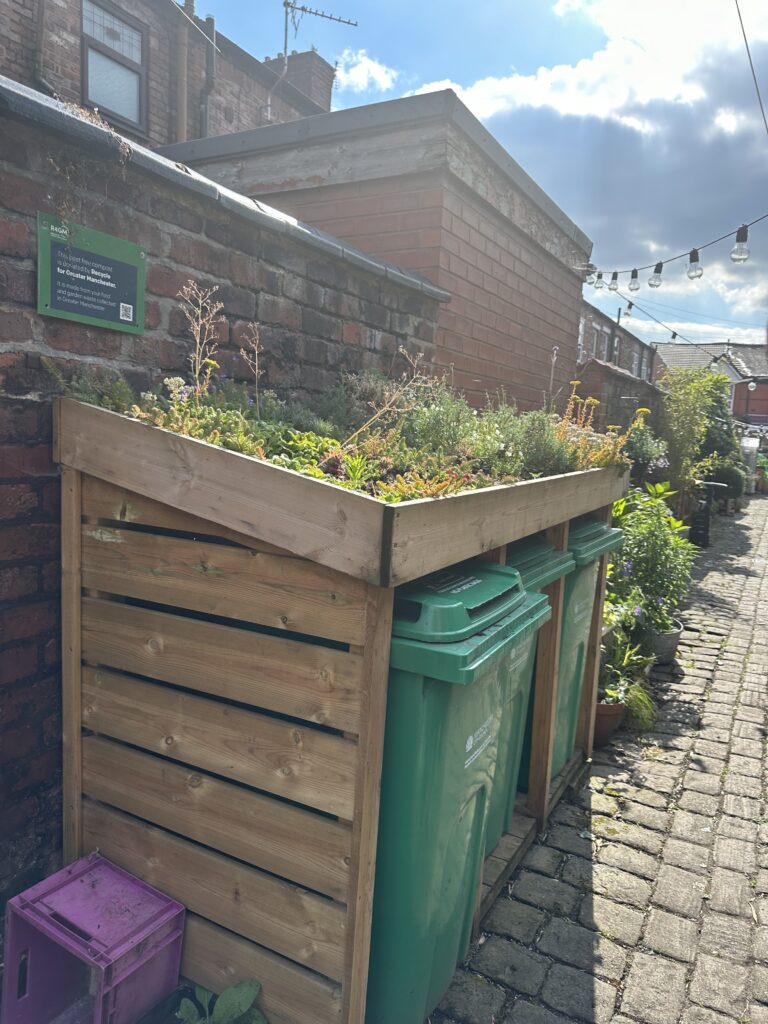
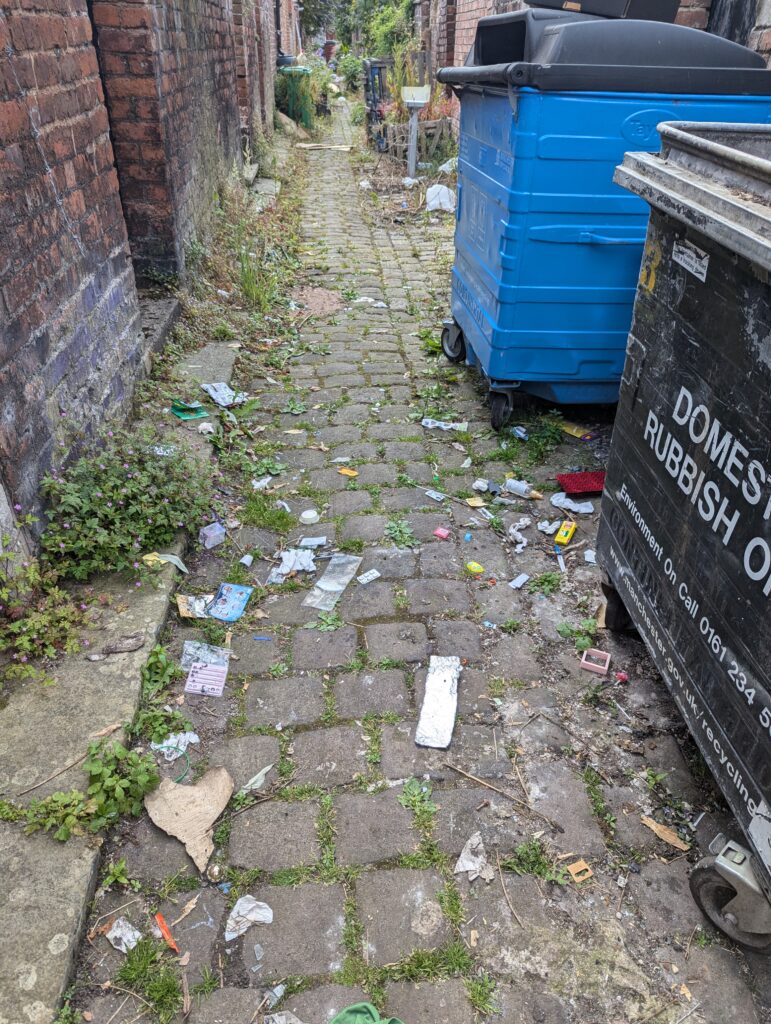
Yamsine shows us the recent ‘Moss Side Open Alleys’ poster on a community notice board. She tells us what an amazing response they had for the event – hundreds of people turning up from all over to have a look. There are pictures from their collaboration with Jason Williams, Cloud Gardner UK, who used their alley as inspiration for his Manchester Flower Festival display. Some of the plants and other materials have been gifted back to it including an amazing bin-store with a green roof. Just like at home, you can’t talk about alleys without talking about the bins. Some streets in Moss Side have communal bins and others have moved to individual bins per household system. There are pros and cons to both methods we learn, but when used properly communal bins allow much more space in the alley itself.
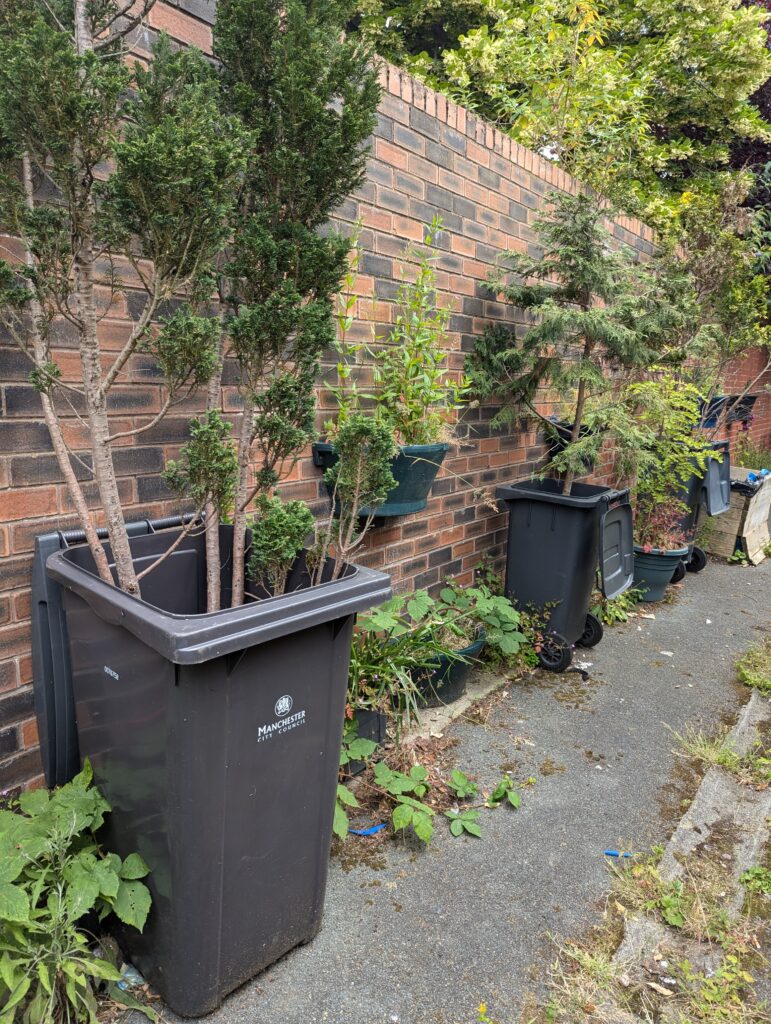
There are lots of edible plants, but it still feels like a garden, not an allotment. Apparently the question of what should be grown, flowers vs food, can be a source of tension but surely this alley is showing us that there is room for both? Cloudy Alley collaborated with Jason for another urban garden design project “Nutrion-alley” looking at the potential for home growing food in an alley. It’s a great name and we talk about the work we’re doing with Laurelbank Farm back in Belfast on alley food growing potential – we’d love to swap more detailed notes, another time hopefully!
We talk about the makeup of the area, the social problems with high levels of renting, relative poverty and food scarcity. It’s hard to keep your community engaged and connected when there’s so much turnover and transience. At the other end, there’s another community noticeboard with info on recycling, QR codes with resources for residents, available I think in at least 4 different languages – a great gesture for welcome and inclusion.
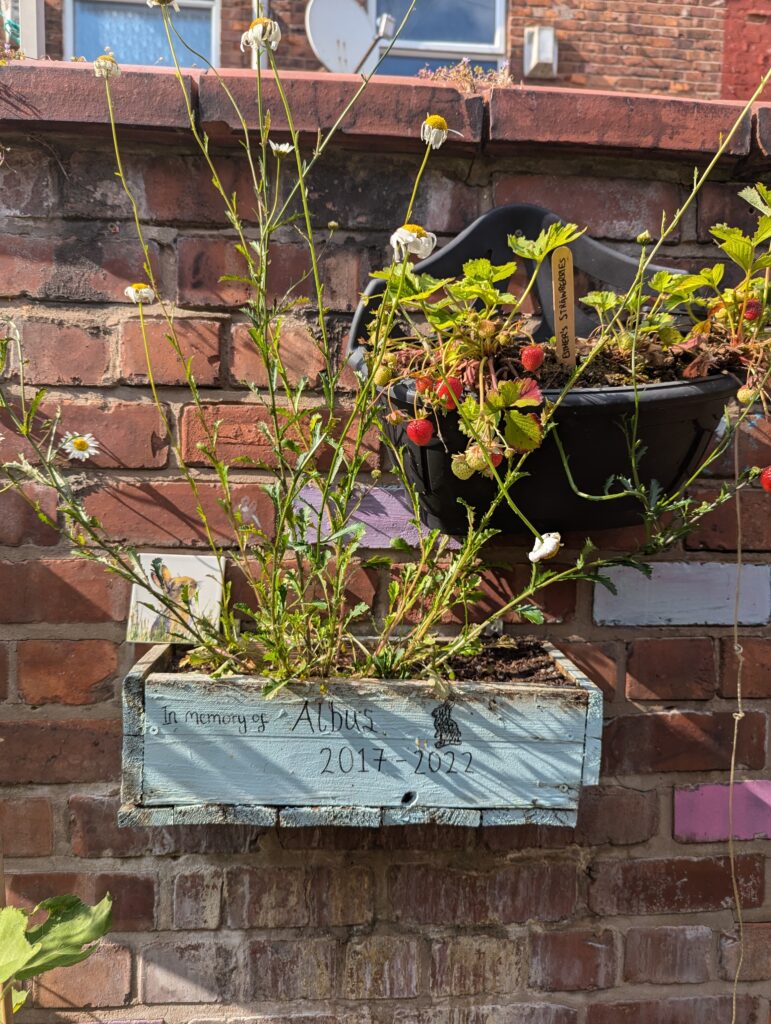
Yasmine brings us to Sunny Alley which is the next street over. This one started first and it was named after a person not the weather but the name kind of stuck and now Sunny and Cloudy are a bit of a double act. The same coloured brick motif adorns the walls but there’s a different vibe. Yasmine explains there are many more families on this street and you can feel it in the alley. Lots of additions for and by young people. We can see some pet memorials, some toys and play materials.
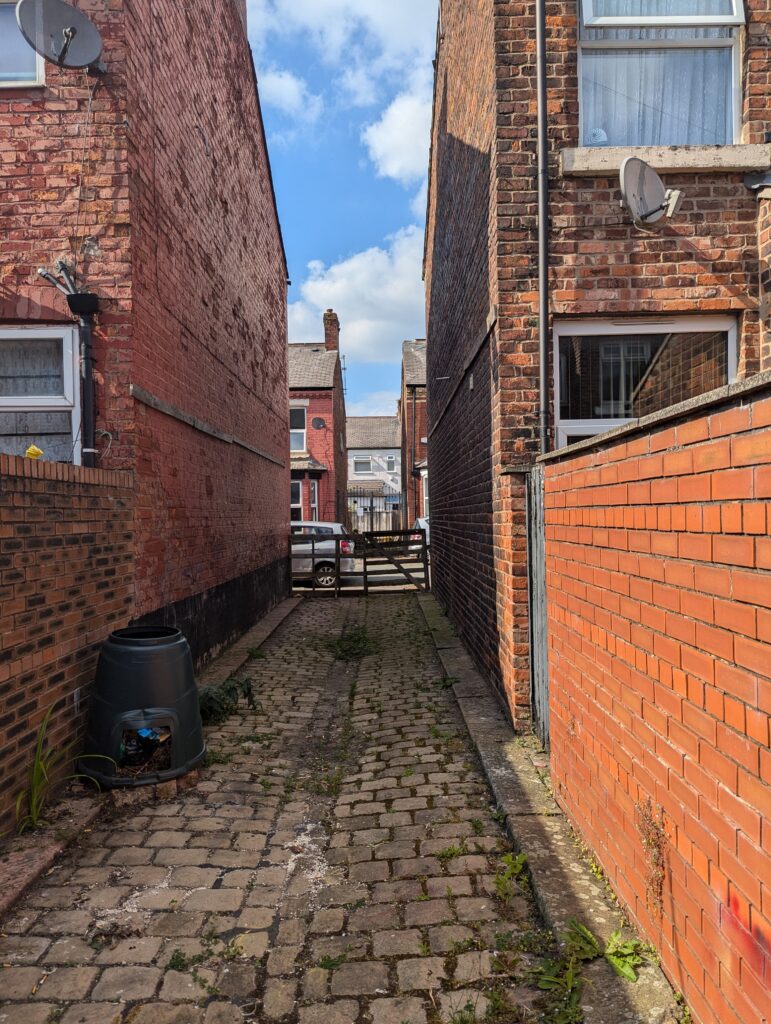
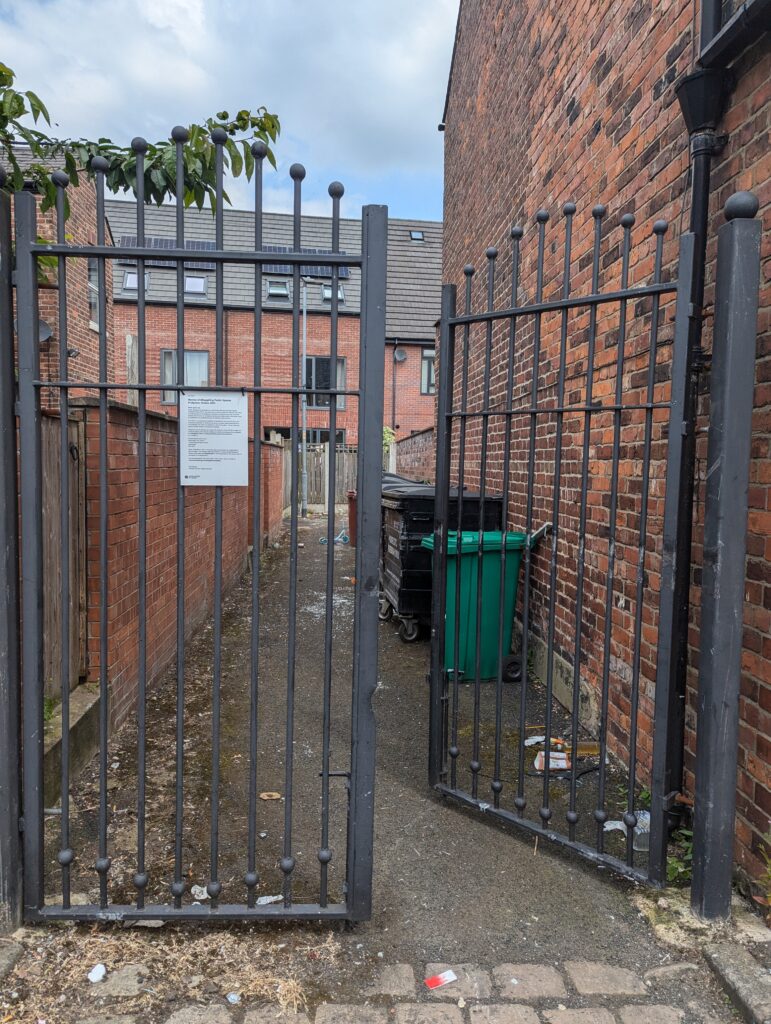
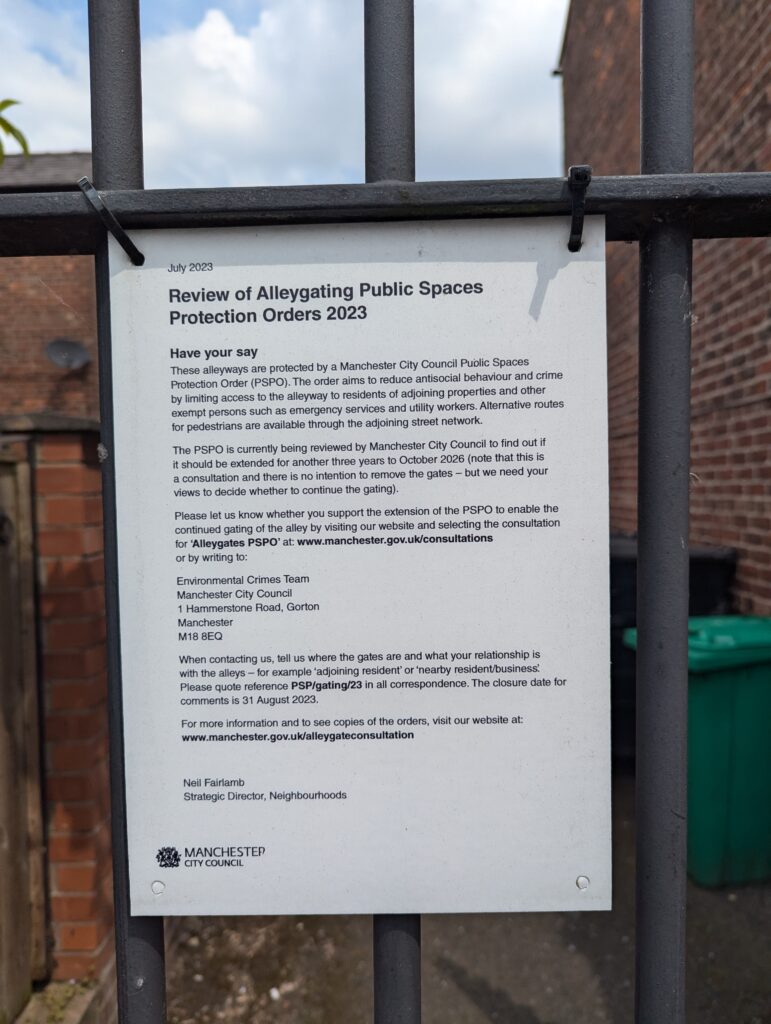
There is a DIY gate on one of the exits here. These alleys are due to be gated very soon, fence posts have recently gone in. Like at home it’s a lengthy process involving the City Council and the Department of Infrastructure. There are also various issues about ownership, some alleys can’t be gated as their ownership is unclear. Just like home, there’s no one size fits all solution but most of the residents are in favour of the gates as they feel it will make the alley a much safer space. The gates we’ve seen here are much friendlier, still black, still metal but they don’t have the same prison architecture aesthetic – we wonder how much they cost? We don’t think we will ever come to love gates but we could learn to live with these ones.
It’s been really inspiring visiting these spaces in person. To walk, to learn and to consider. It has generated lots of food for thought and we are looking forward to meeting more residents and like minded alley-aficionados tomorrow!