Categories
Gatherings Journal

Last Light Lane

Bealtine Eve – on Glandore Avenue

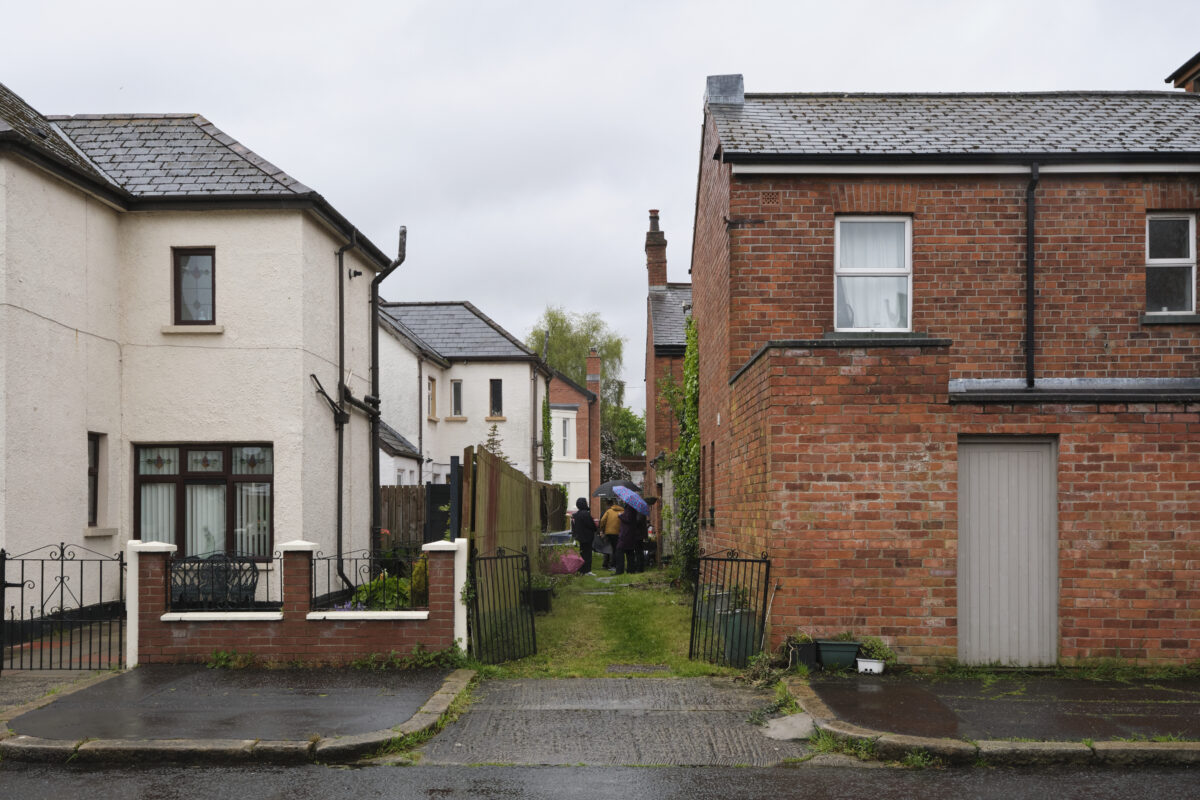
Back in 2020 Carl got in touch with 9ft in Common about his alley off Glandore Avenue. He was concerned about the responsibility of being the part owner, and so potentially liable, for this semi-public / semi-private space. He had been trying to maintain the safety of the alley for years. This resonated well with our Bealtaine programming theme of ‘check your boundaries’. We wanted to check back in to see how things might have developed.
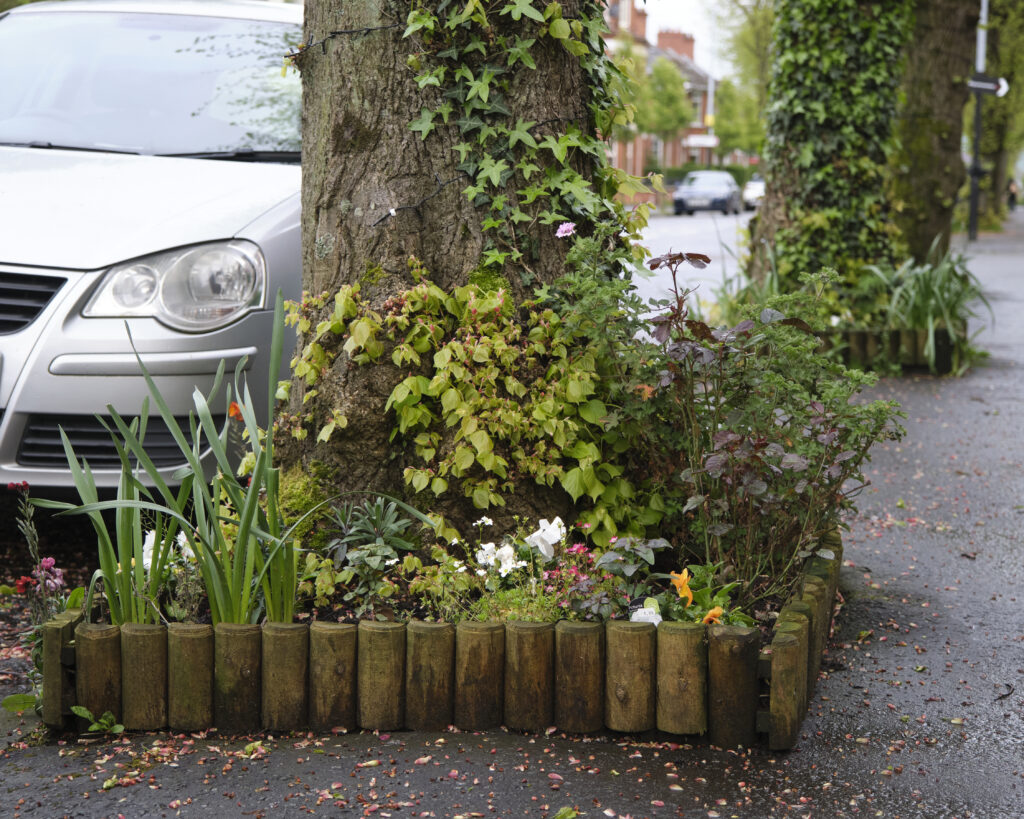
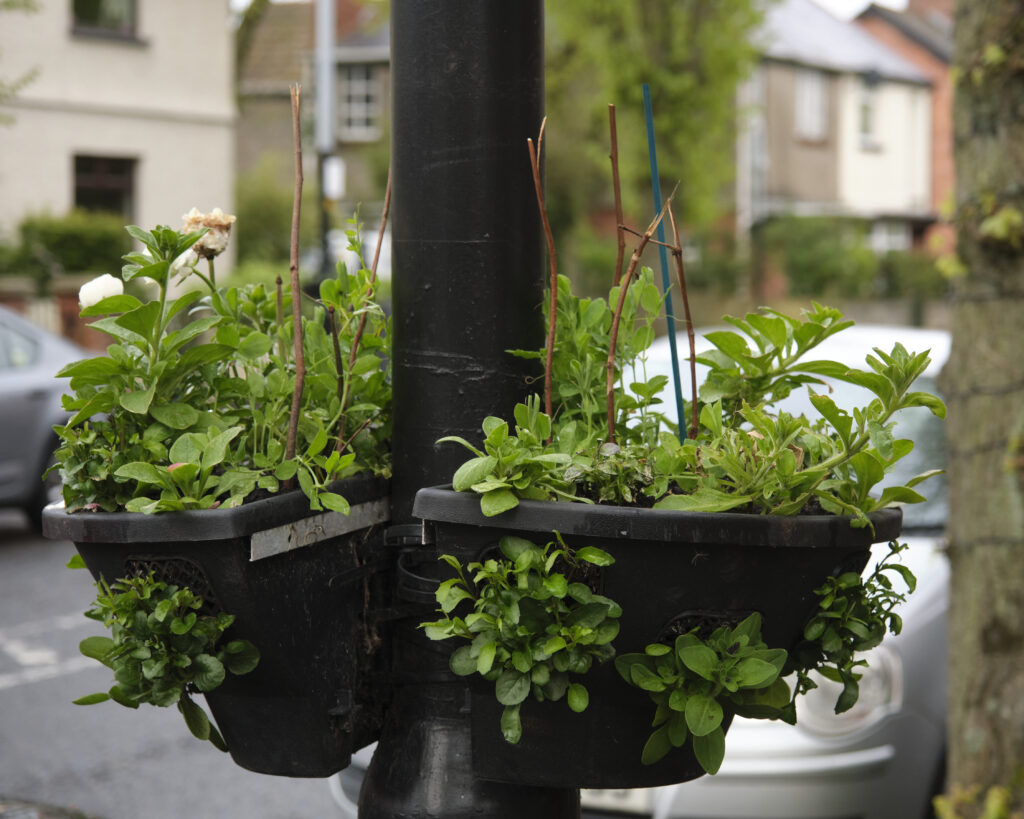
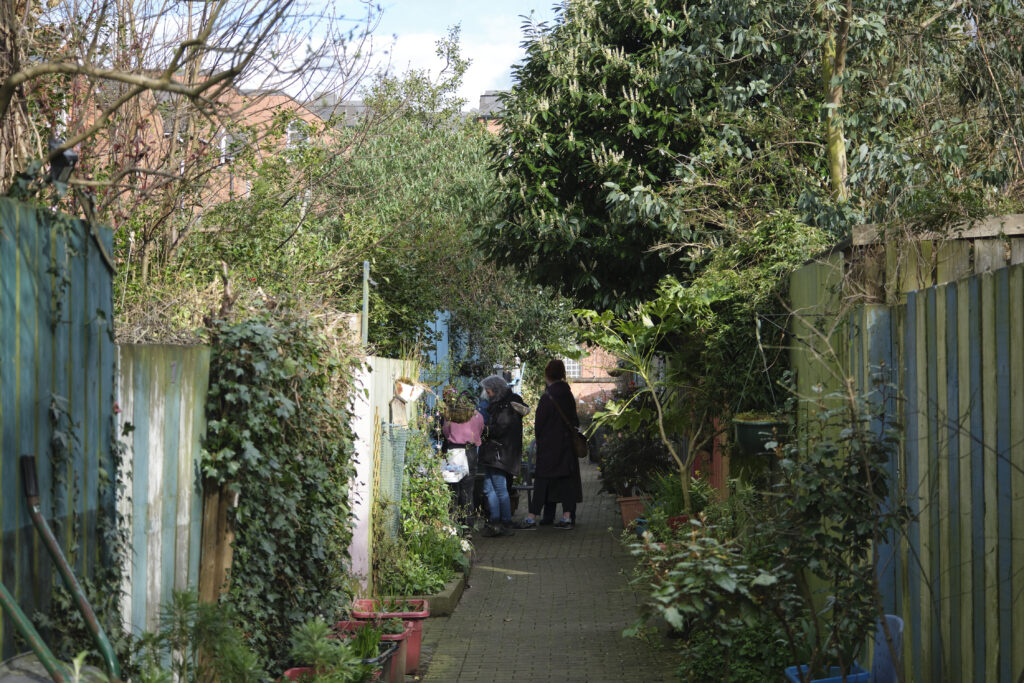
We found out that Carl and his brother Nathan are active members of Restore Glandore ATC, a community, historical and restoration awareness group. They have been doing wonderful work locally, galvanising people to care a bit more for the streets (they are behind the beautiful tree pits and flowerbaskets on Glandore) and promoting the historical significance of the Antrim Road in the city. Carl has lots of ideas for how the alley could be improved from resurfacing, to gates, lights and a few more plants and flowers. He also shared that locally the alley is referred to as ‘Last Light Lane’ as on a sunny day it will be the last spot for some evening sunshine. We do love a good name, and this really caught our attention.

We suggested doing something small but meaningful for Bealtaine in the alley – a plant and flower give away – so that we could learn a bit more about the area and Restore Glandore could gauge local interest in doing some kind of alley project.  
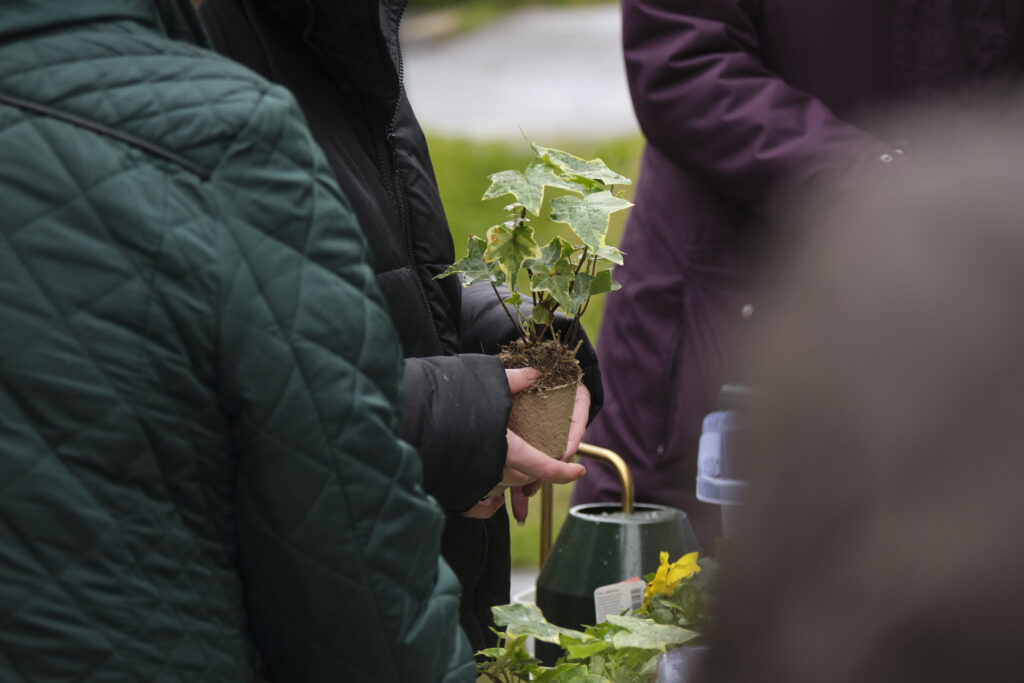
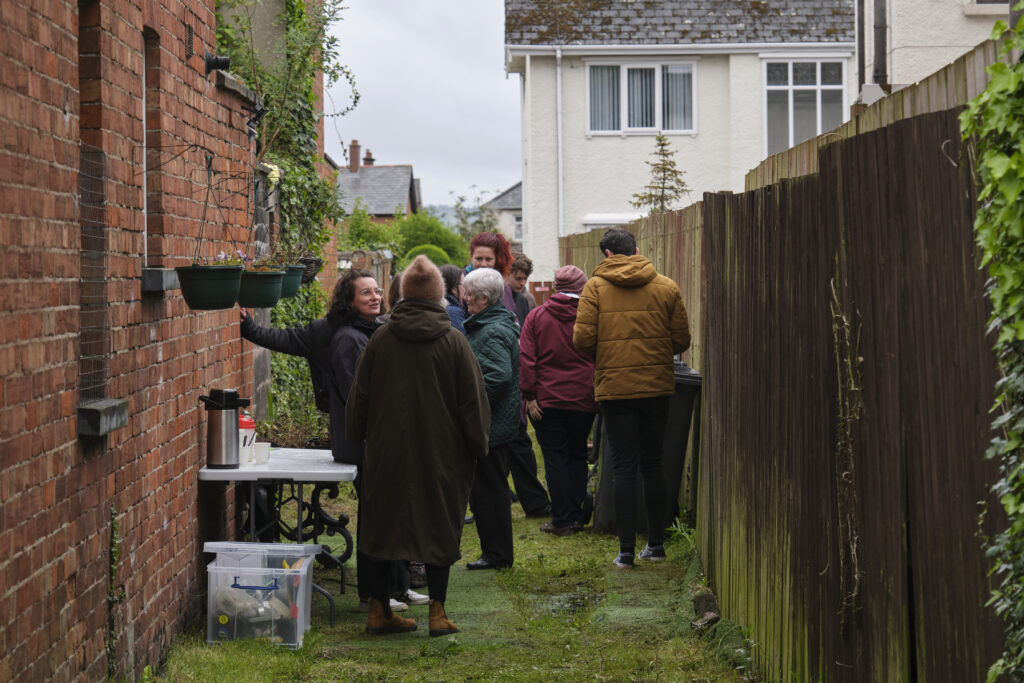
We set up two tables – one with tea and coffee and another laden with plants, seeds and compost. Despite a rainy start to proceedings, we had about 25 people stop by for a chat over the two hours. Most came from nearby in North Belfast but not necessarily from the immediate neighbourhood. Many people hadn’t met in person before – the cold and wet didn’t dampen spirits, at no point was there a moment of silence! 
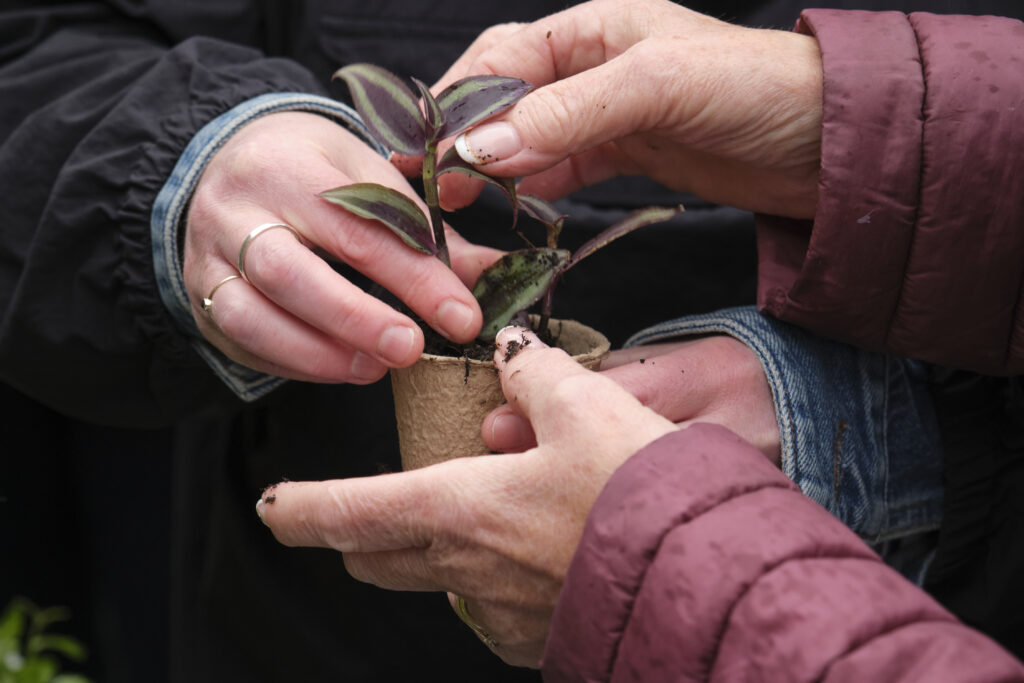
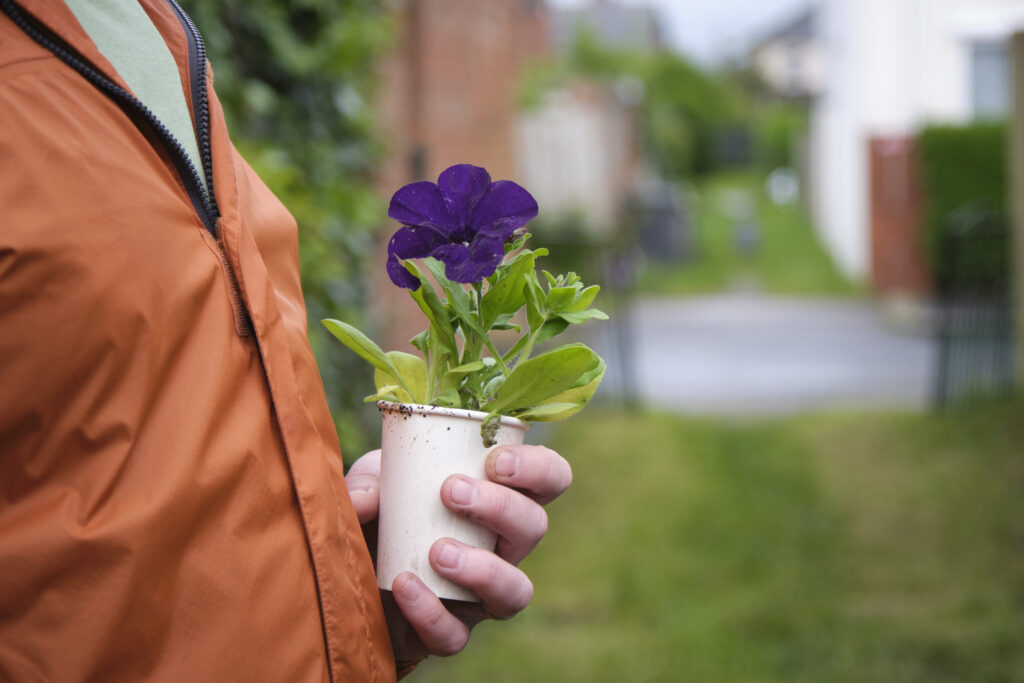
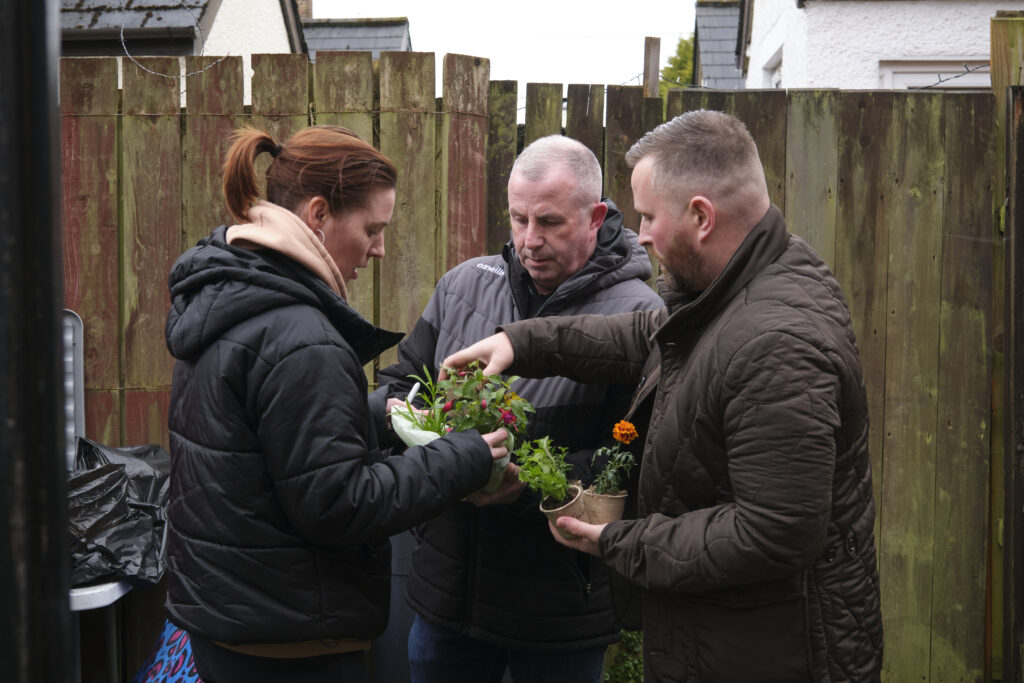
Neighbours sharing cuttings from plants

It’s amazing how such a simple act – offering a flower, a few seeds, a bit of earth can spark so many conversations and connections. We had a lady bring along some spider plants to share with everyone. There was much debate on whether some of the annuals would survive or bloom another season. We talked about our various growing spaces be they window boxes, house plants, or the lovely tree pits and lampposts of Glandore Avenue. The plants we shared all headed to a variety of different homes. 
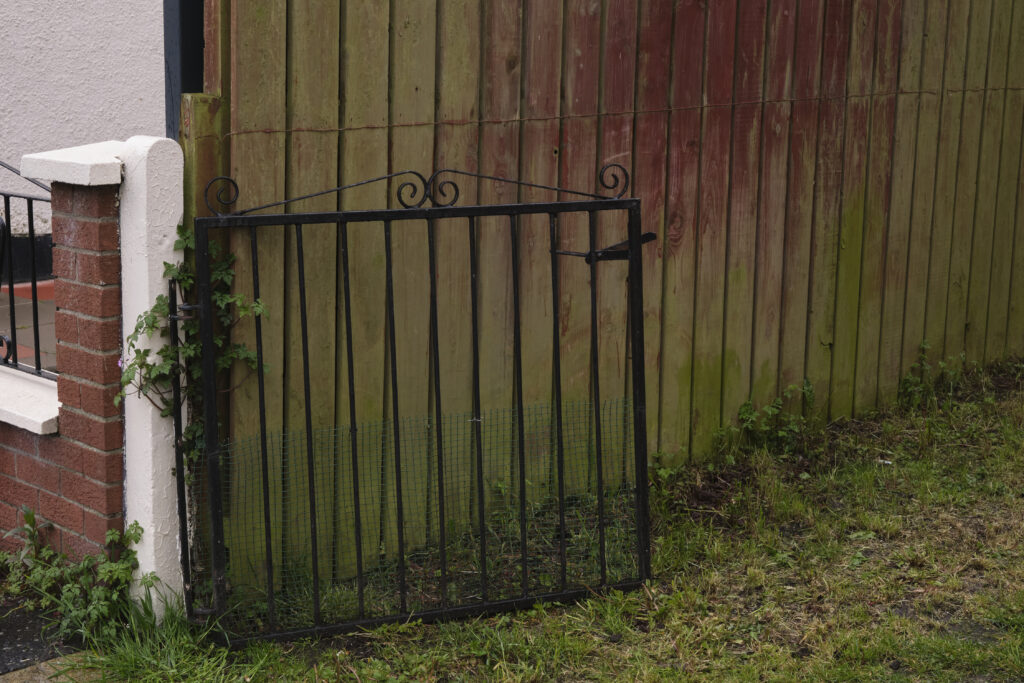
A black iron gate leans against a green fence
Iron gate option for the alley

Carl and Nathan used the opportunity to bring out some low iron gates, which they are considering putting on the alley. Most of the neighbours thought they would be a good fit and agreed that they they were more aesthetically pleasing than many of the unofficial gates across the area and more in keeping, architecturally, with many of the houses.

The area has an interesting cluster of unadopted alleys, and no doubt plenty of residents like Carl who would like to see them receive a bit more love. We look forward to doing more work with Restore Glandore in the summer!
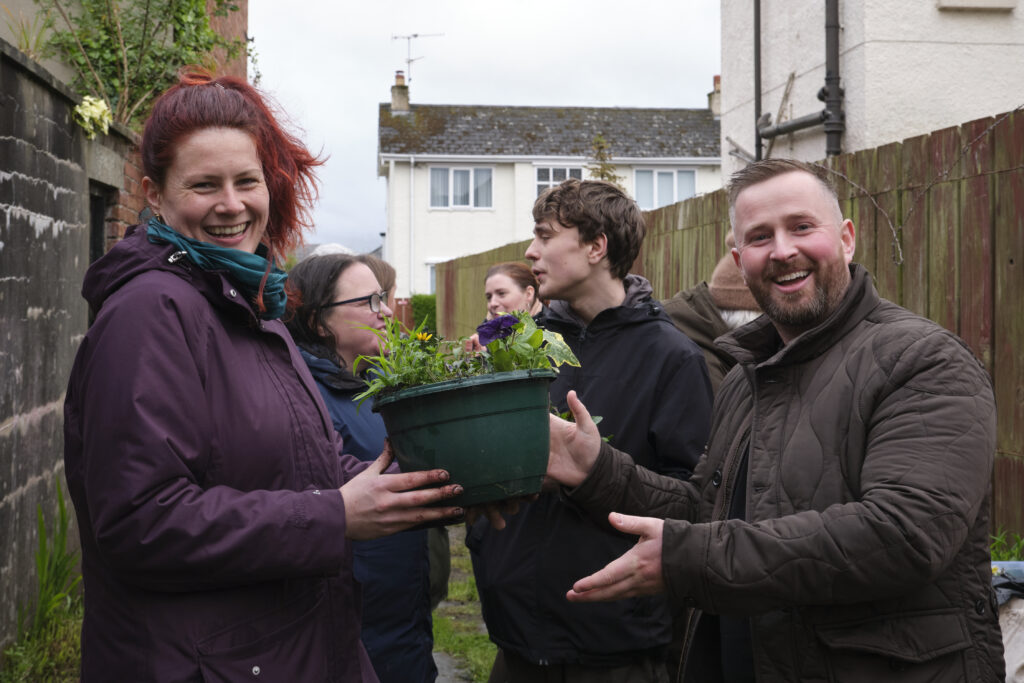
A refreshed hanging basket for Carl as a thank you for hosting us!

All images by on this page courtesy of Simon Mills.
We visited Last Light Lane on April 30th 6pm – 8pm for one of our Bealtaine Gatheirngs. We are always keen to visit alleys across the city, so get in touch if you have a alley you think we’d enjoy.
Categories
Gatherings Journal

Wild (and Wet) Alley Safari

We had watched the forecast in anticipation all week but at no point were the torrential hailstorms that appeared on the morning of Saturday April 27th mentioned. Still, no such things as bad weather, only poor clothing – we decided to go ahead with the gathering come rain, or hopefully, some sunshine. 

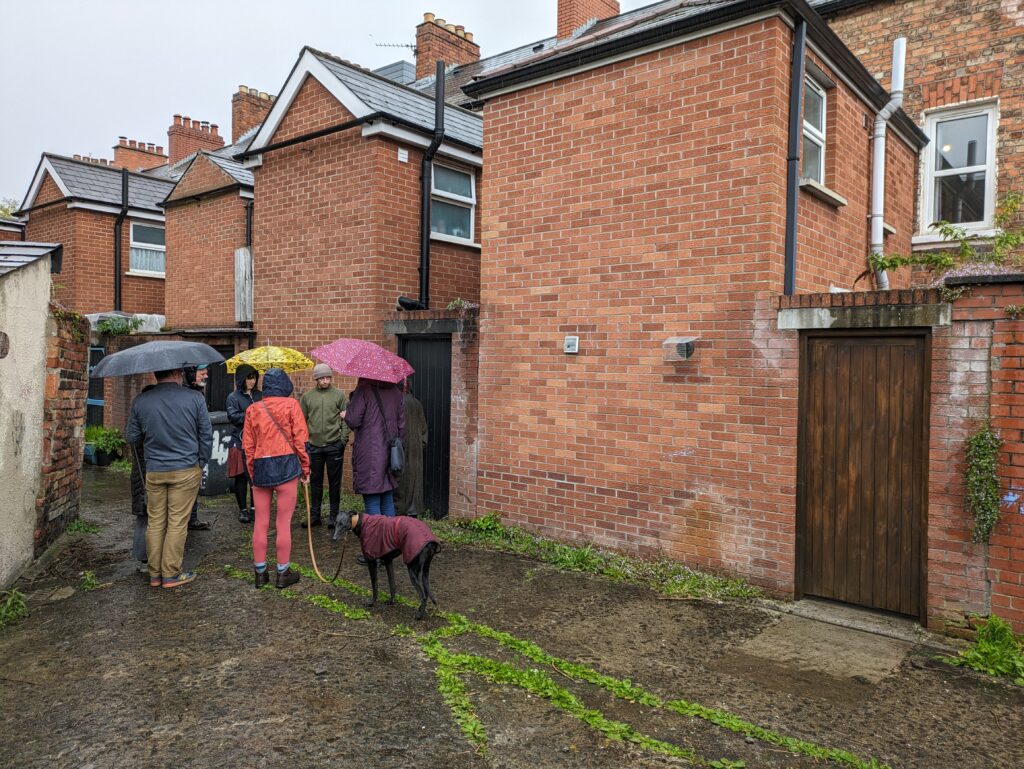
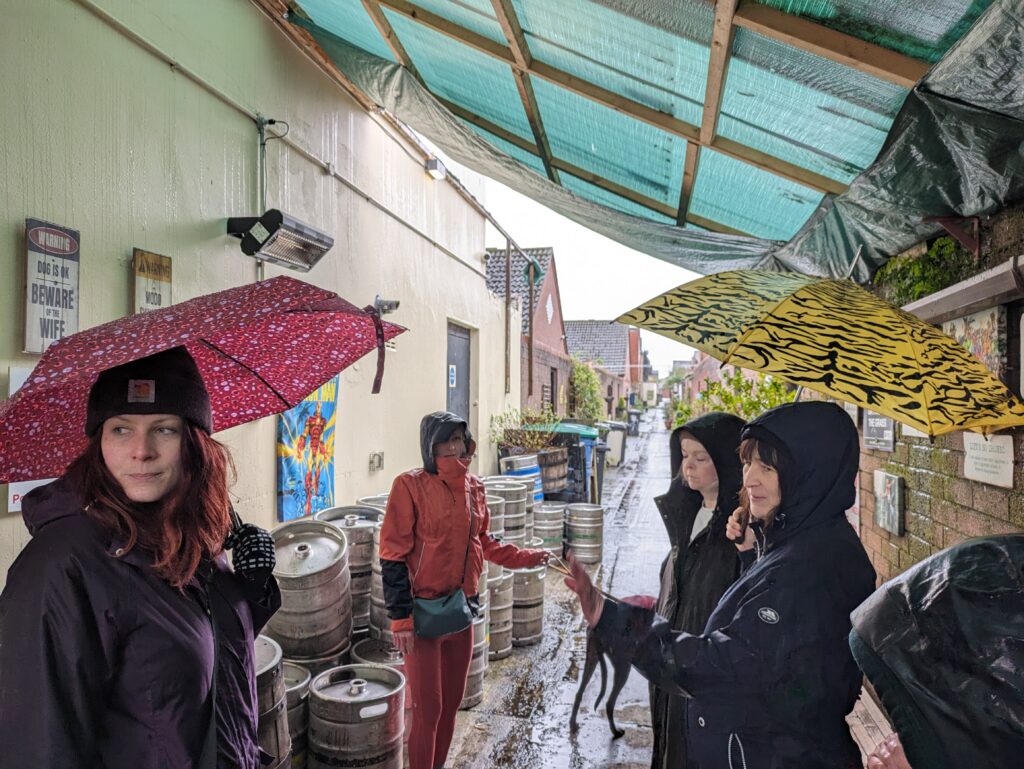
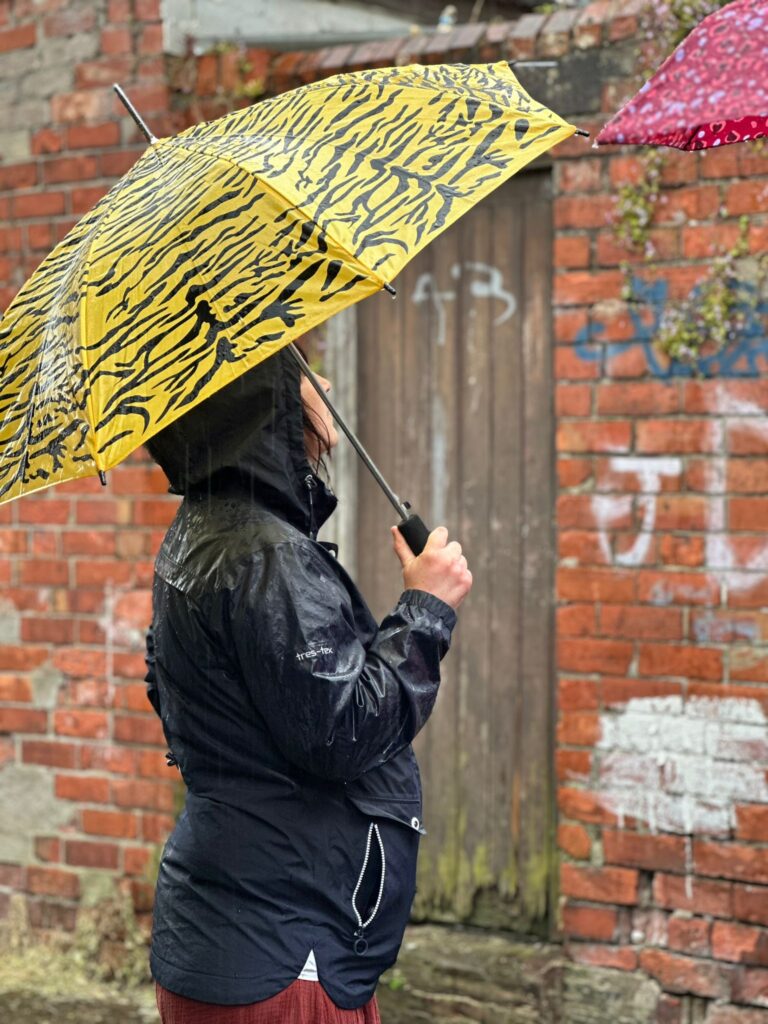
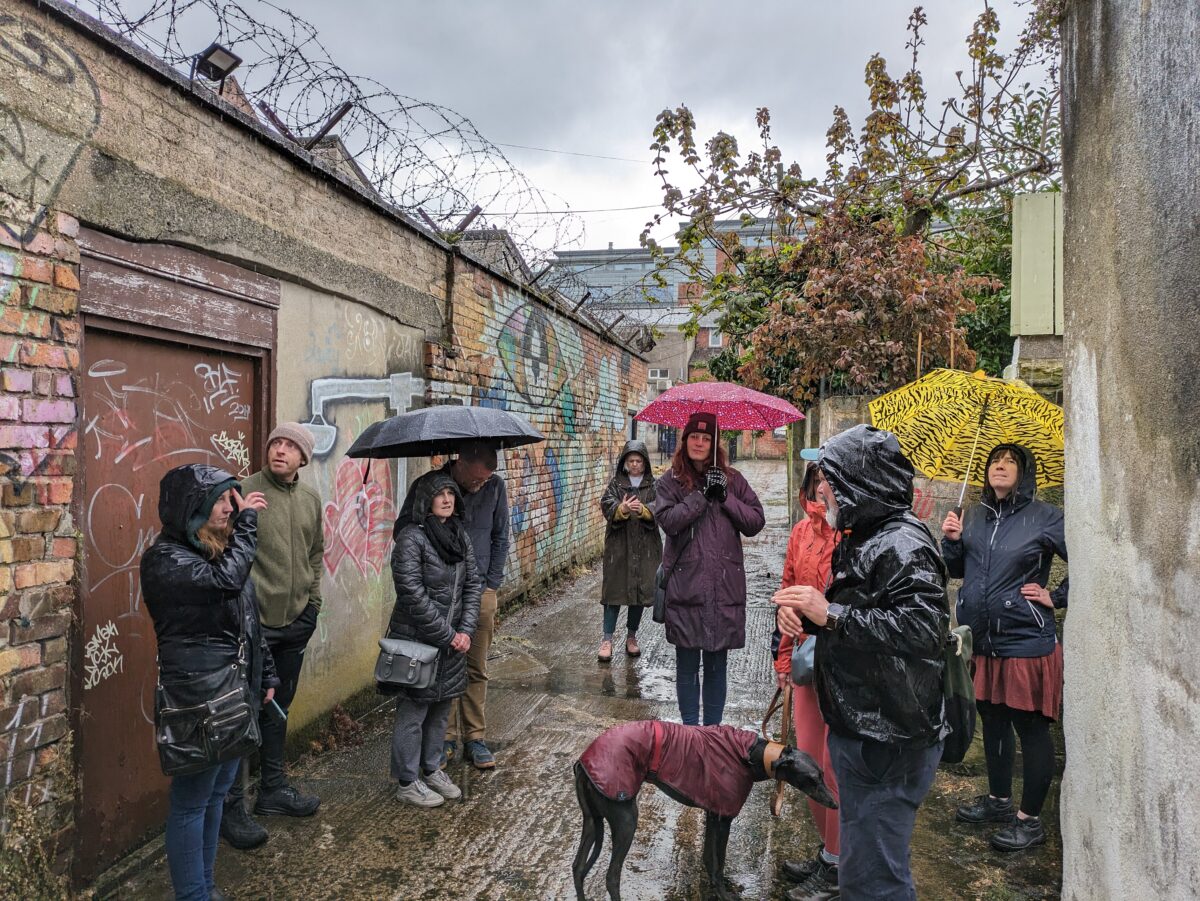
The sunshine didn’t make an appearance but a few brave souls still did! Ten of us gathered at the gates of Ormeau Park huddled in rain jackets and hats. Under the fleeting shelter of umbrellas we listened to Colin from Wild Belfast explain how we would use the iNaturalist app to observe and identify species along our route. After a brief conversation about the priority habitats for wildlife provided by the park and the river ventured into the alleys all in various states of neglect and appreciation.

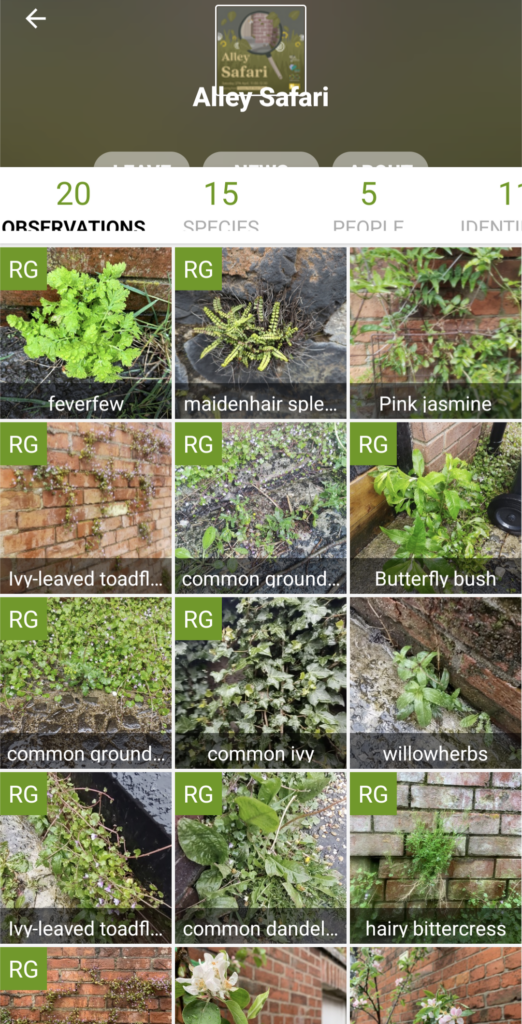
some of the observations from the walk.

We loved chatting over the noise of the raindrops, water spelling into drains and gutters, bouncing off bin lids. We learned about the importance of these corridors for biodiversity in the city. They increase the permeability of the neighbourhood, not just for humans but for our non human friends too. We played wildflower bingo on soggy pages, and noted the great range of plant life at back gates. Herb robert, ivy leaf toad-flax, willowherb and dandelions were abundant. It was agreed that the term ‘weed’ needs to be cancelled – all these flowers provide vital food for our pollinators. A wild alley is a great place for bees to refuel. Orla even had her bee saving kit with her! We learned that birds don’t see houses as buildings, they see them as cliffs and caves. We talked about building aspect, light shade and shelter needed for bug hotels, and bird boxes.

Our route took us over a gradient from alleys with very little human intervention to the more cultivated parts of Walmer Street, Deramore, Rushfield and Haypark. Here residents have helped the greening along with planters, pallets and hanging baskets. Wild Belfast shared how a reliable water source, even if it’s just a bucket, is great for attracting insects. We shared stories about unusual alley wildlife some people had witnessed – frogs over at Oakland, tortoises in Ballyhackamore. 

Inevitably, as we passed the weathering notices, soggy on the lampposts, we talked about gates, walls and concrete. Concreting and gating the alleys does seem to be the go-to option for ‘maintenance’ and ‘improvement’ but are we looking at this all wrong? For biodiversity and reconnecting with nature one of the best things we can do is actually break through the concrete, and let the earth breathe. If you have the opportunity to put planters on bare soil, do it. The earthworms will come up and make it a living ecosystem. 

In a deed document discovered in some of our research around ownership, the term ‘unmade passage’ was used to describe the alley. We wondered about this term? Does it mean the road (alleys are technically roads) was never given any type of surfacing? What could we gain from ‘unmaking’ sections of the city to leave space for nature? 

Our walk demonstrated that alleys have huge potential to be a key part in Belfast’s vital green infrastructure where so much is already paved over, walled off, and enclosed. Sometimes, the best thing you can do is nothing – nature will just do its thing when left alone. 

Categories
Journal Mapping

What if…

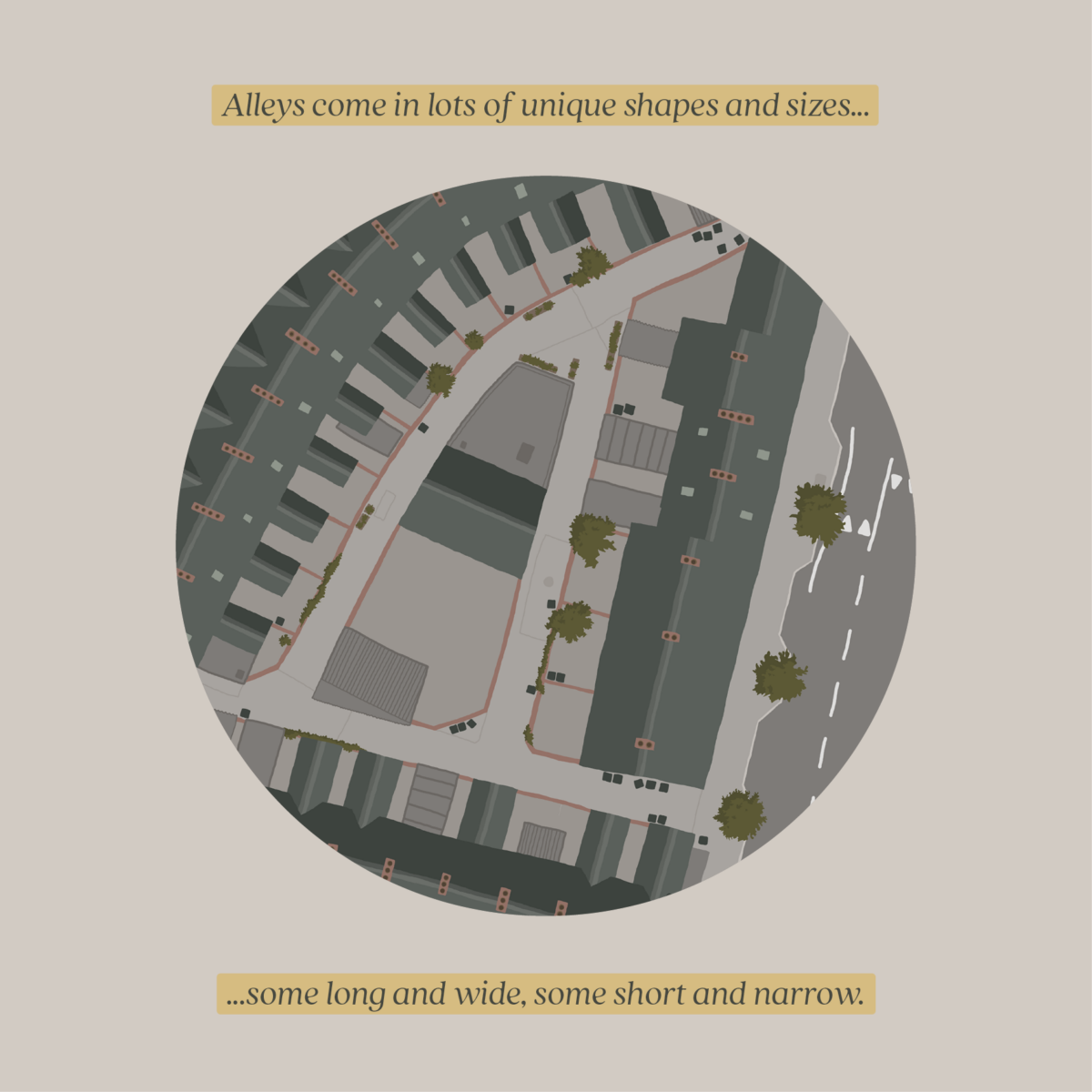
We reckon that Belfast has one of the most extensive alley systems in Ireland, a network that developed alongside the many Victorian terraces built to support a growing industrial city

In 2020 9ft in Common created the Belfast Alley Map hoping that, by making this hard-to-obtain information accessible, we could open people’s eyes to the rich history, current challenges, and untapped potential hidden just a step off the many terraced streets.

Thanks to the support of Belfast 2024 we’re able to continue advocating for the alleys and making information about them easier to understand. As part of this we recently worked out their combined length – just how expansive is Belfast’s alley network?

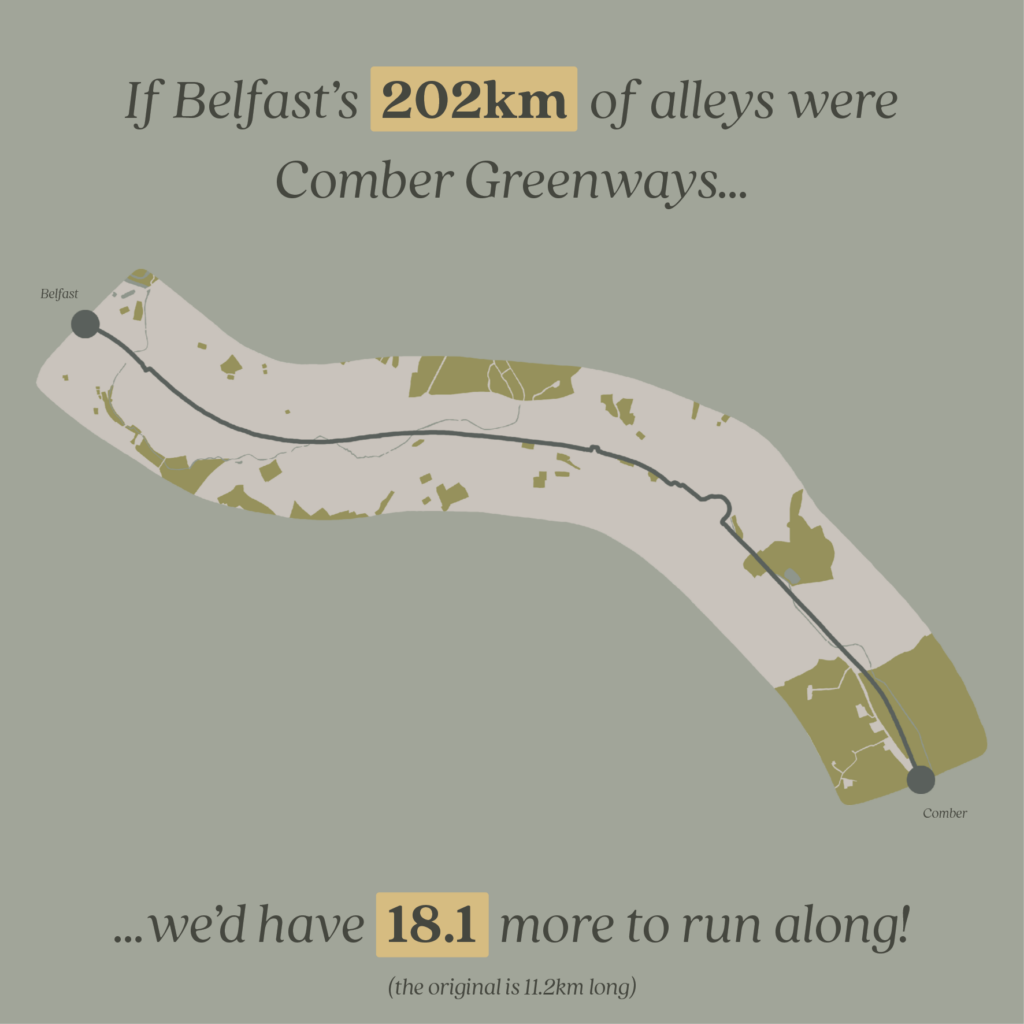
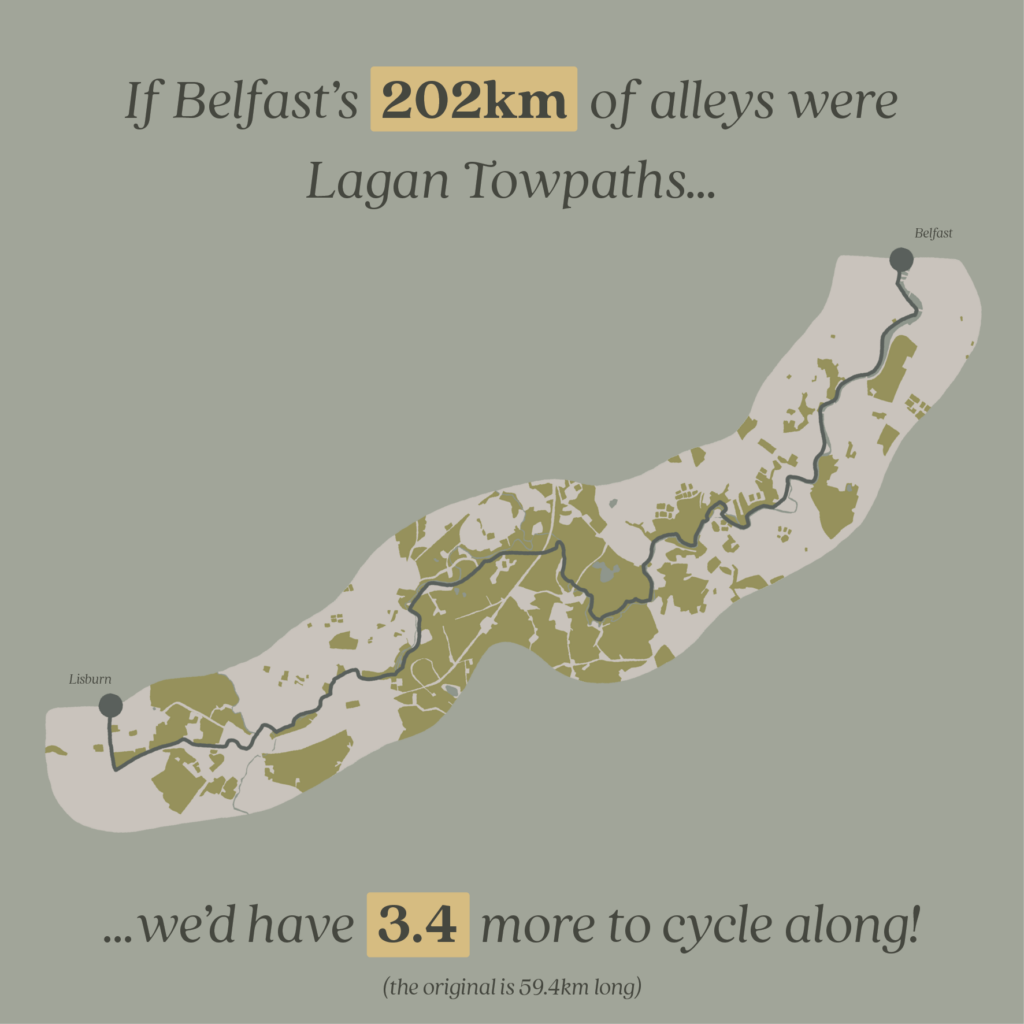
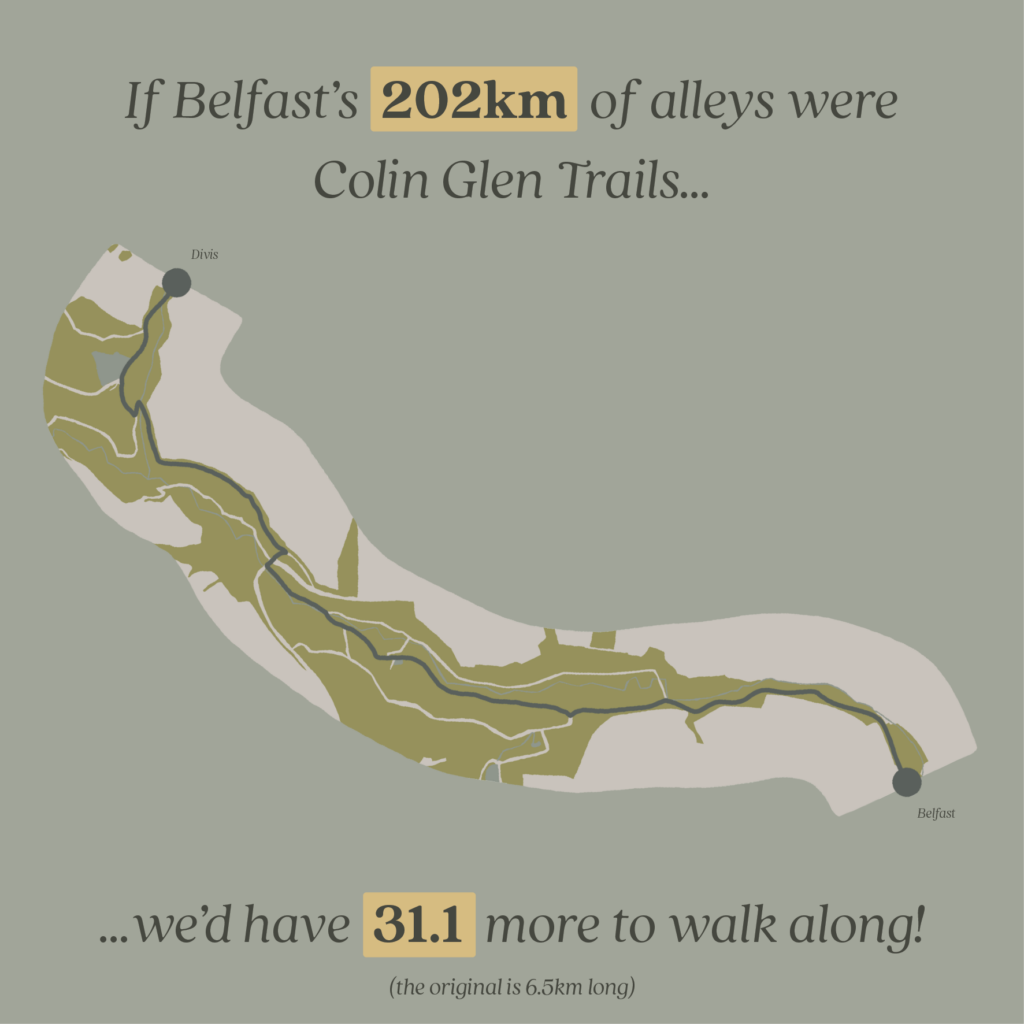
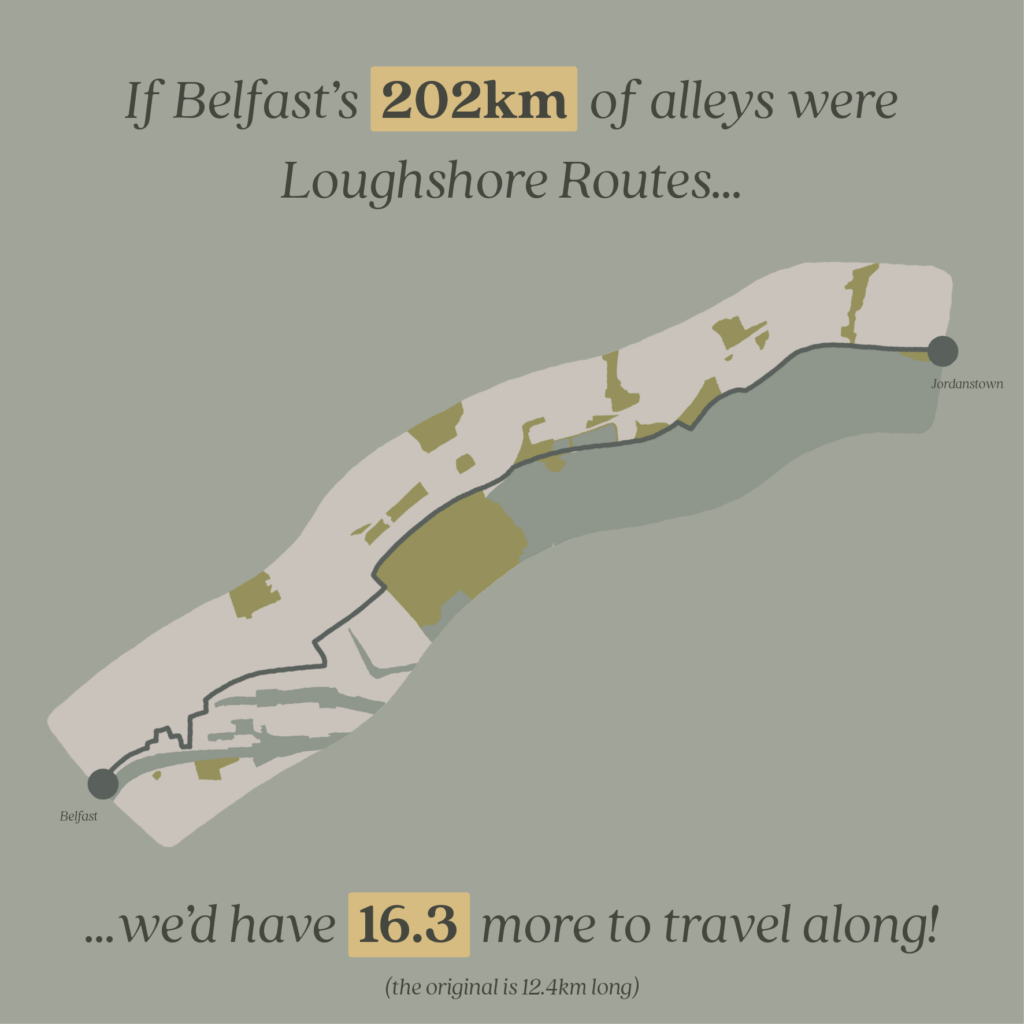
We calculated that together, our alleys would stretch an amazing 202km (126 miles)! 

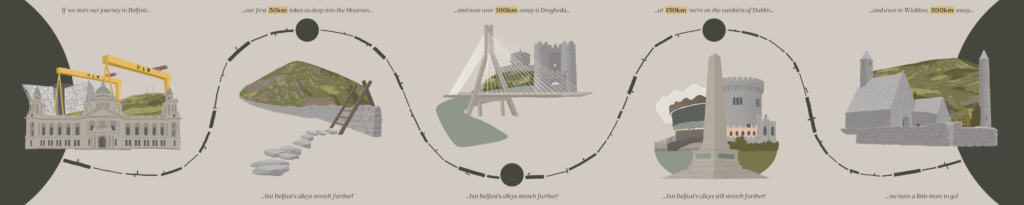
We’ve made visual comparisons to lengths you might imagine – how far a straight 202km line would take someone from Belfast?

We worked out that it would take you all the way to the Wicklow mountians (as the crow flies) and if you were able to take the journey it would be a

  • 35 hour walk
  • 22 hour run
  • 11 hour cycle

When we think of valuable urban routes, our minds often jump to places like the Comber Greenway, the Lagan Towpath, and trails up into the Belfast Hills – all fantastic resources for people and nature. Our alleys have the potential to be just as valuable.

In our conversations with the public we’ve already heard plenty of stories about using alleys as shortcuts, pedestrian-only thoroughfares, as wildlife corridors.

We’ve covered the threat that council gating orders pose to the permeability of our alley network in a previous post, so let’s imagine an alternate vision – what would it look like if we turned our alleys into public greenways? Imagine how interconnected our city could become!

Wildflower Alley in Holylands. Photo: Simon Mills

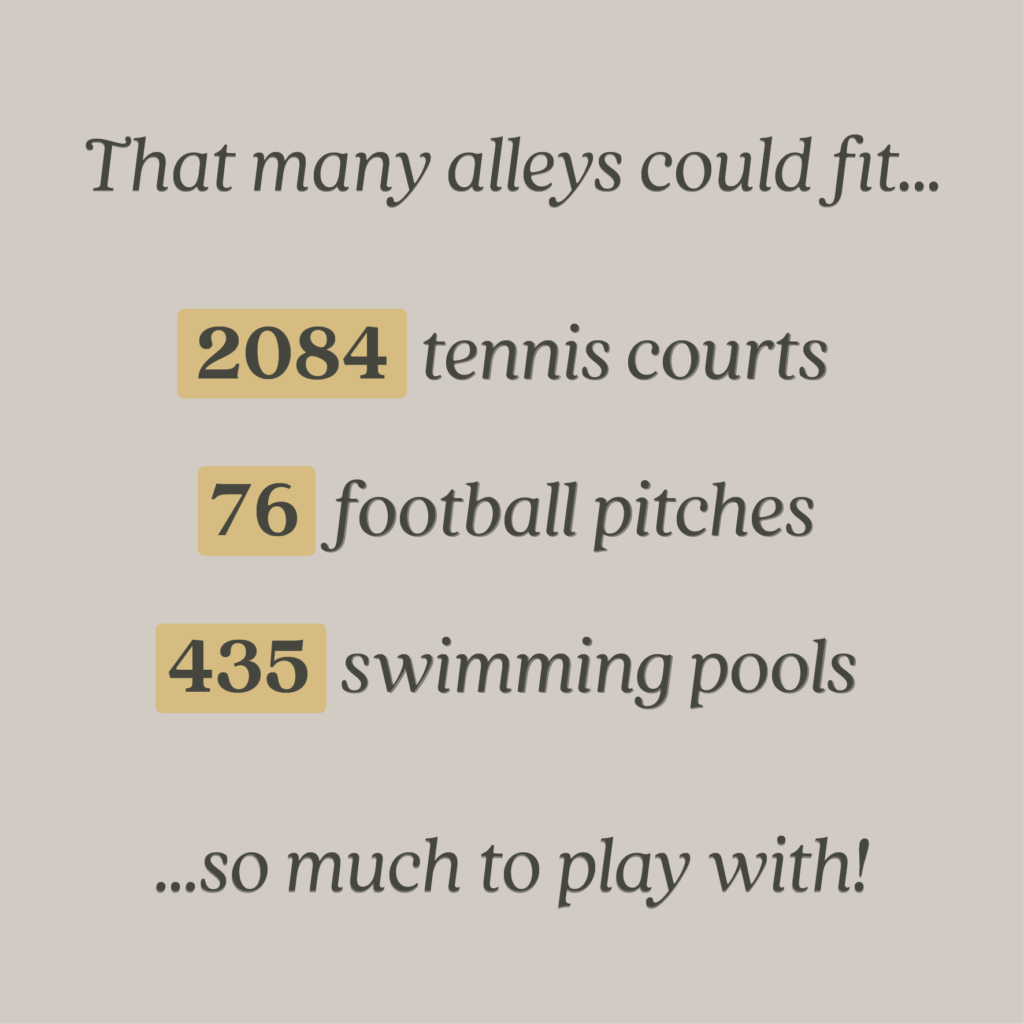
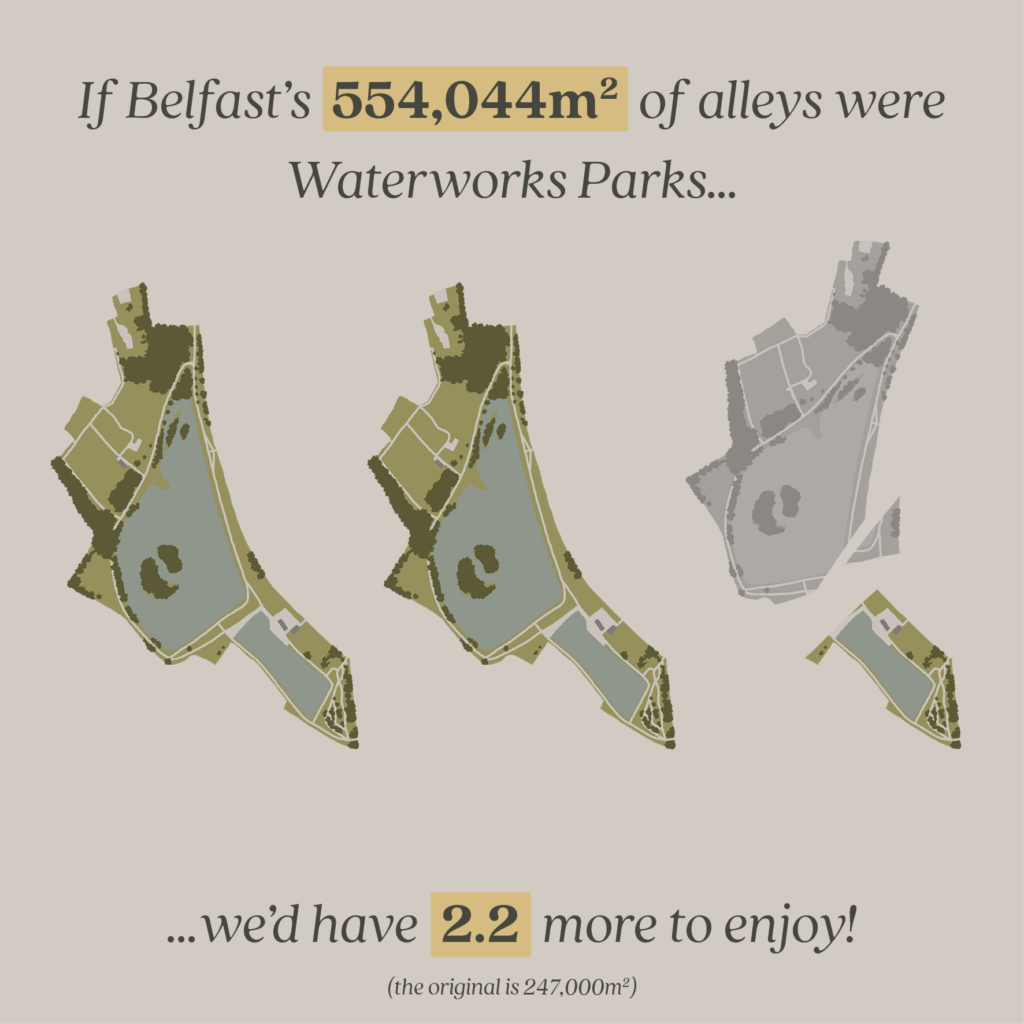
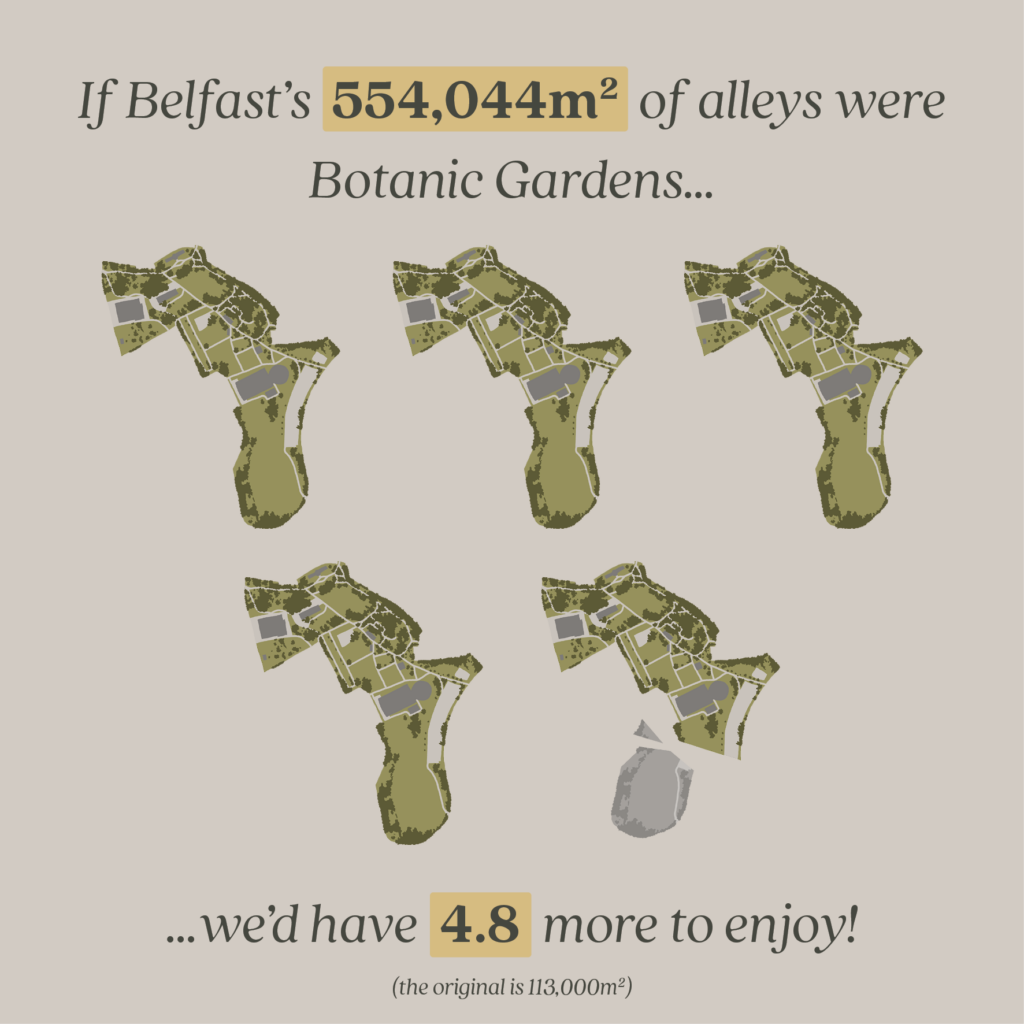
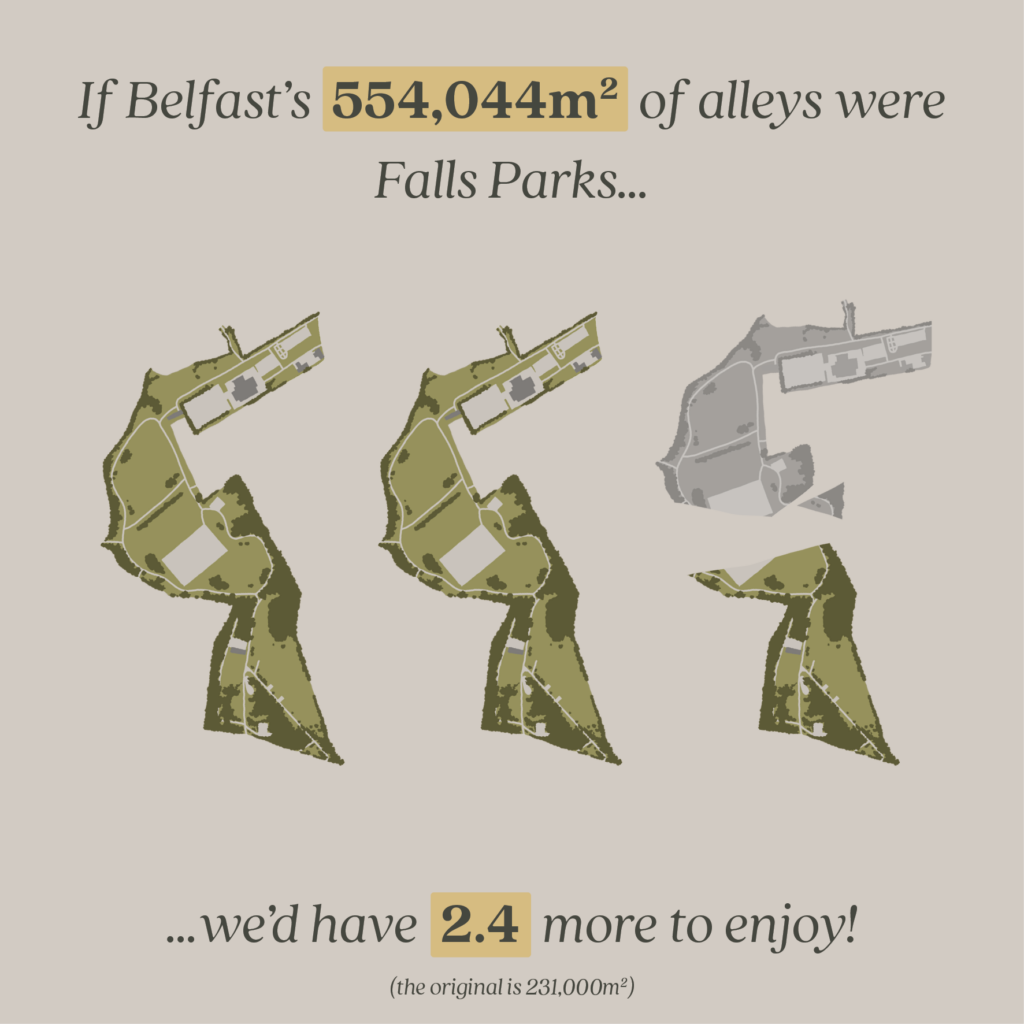
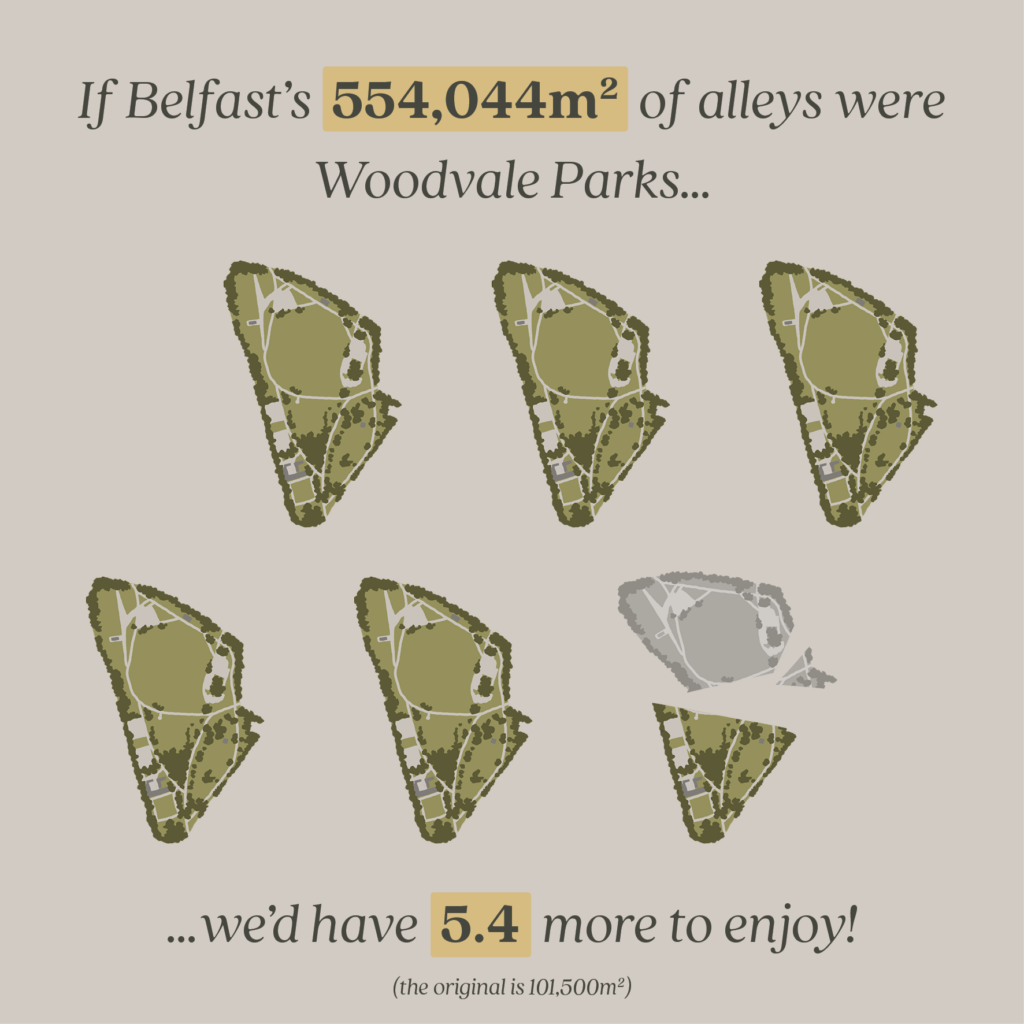
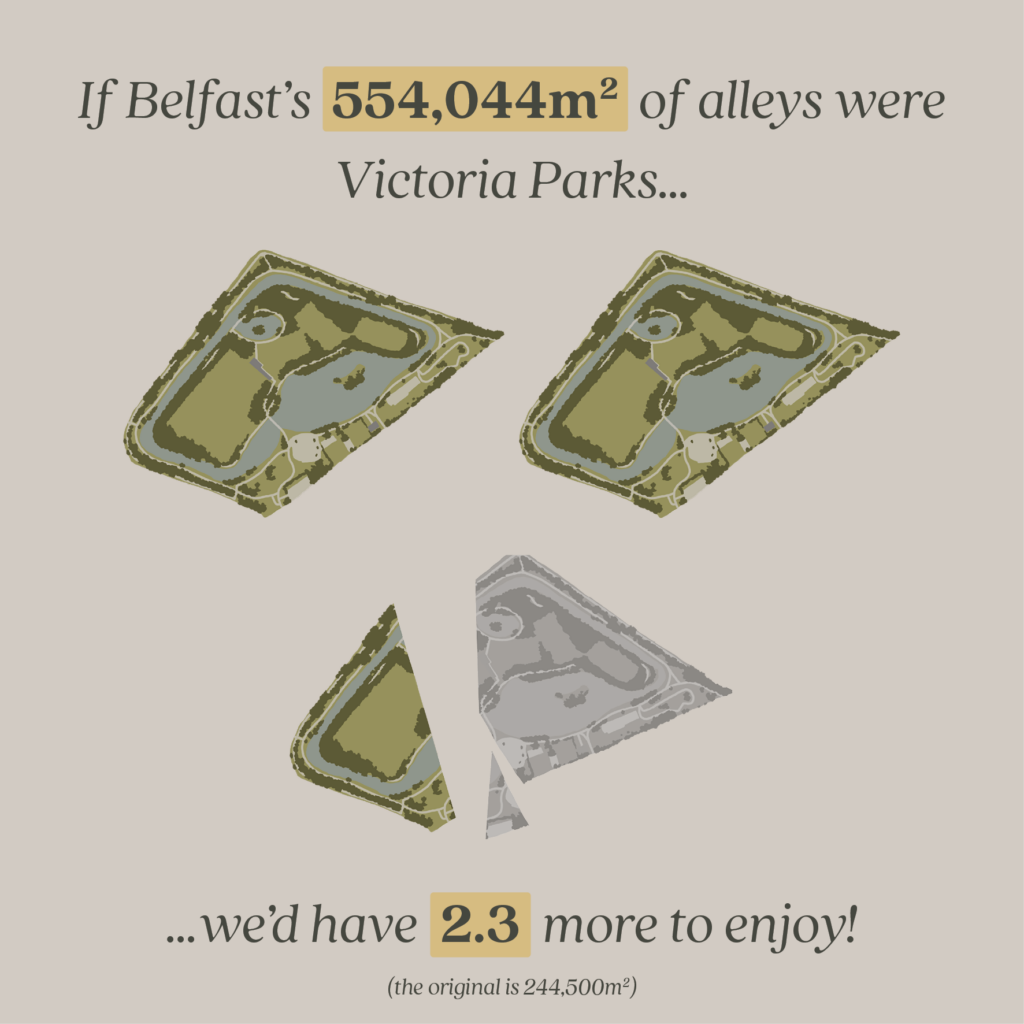
And what if our alleys were considered as parks – common spaces, open to all? We pushed our total alley distance of 202km a little further, multiplying it by 9ft to get a rough total area.

This ended up being an equally amazing 544,044m2

We set out to compare Belfast alleys to the sizes of local parks: Ormeau, Botanic, Falls, Victoria – the list goes on!

If you would like to see the alleys become greenways and parks then… use them! Use the alley as a shortcut. Start growing things using whatever you have to hand. We can start the process.

Words and Illustrations by Aaron Vinaccia, Design & Research Assistant

Aaron is a recent graduate of Architecture from Queen’s University, where his projects focused on adapting built heritage and preserving our natural environments. His previous work within the charitable sector amplified these interests, firmly grounding his design ethos in sustainability and improving spaces for the public. His dissertation researched the impact of tourism on the built environment surrounding World Heritage sites and the knock-on effect that has on what this designation seeks to preserve, including the communities connected to these sites. As well as his work for 9ft in Common, he is an architectural assistant in Studio idir.

Categories
Events Journal Resources

Micro-funding that is… ‘Right up my Alley!’ 

Via a Participatory Budgeting process.  

The Reclaim the Commons Network in Northern Ireland has a budget of £4,000 to divide between Belfast’s alleyways.

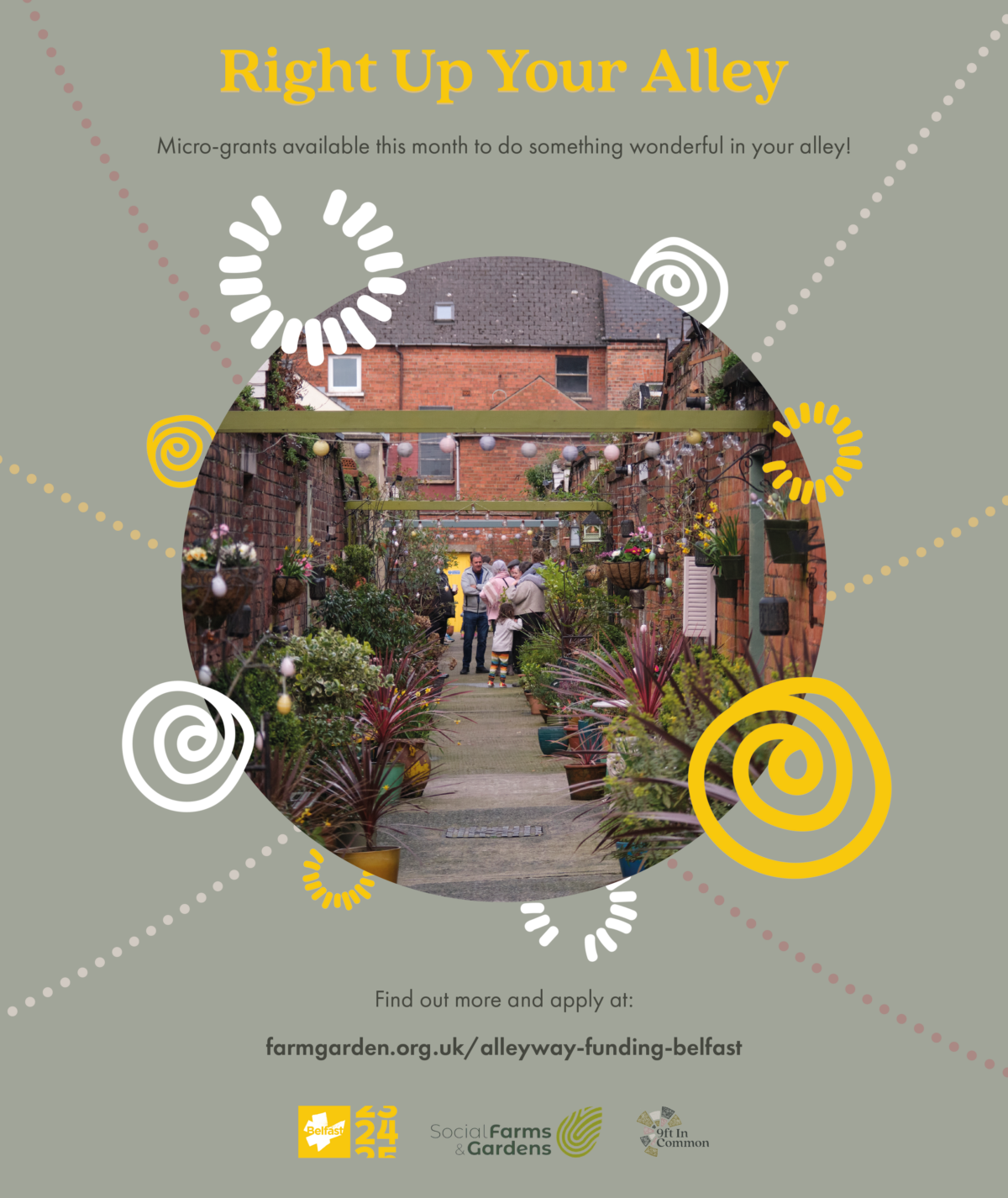
Could you use £50 -£300 to do something lovely in your alley in Belfast? Our Manifesto for the Alleys project wants to help YOU make it happen.

Our project partners at Social Farms and Gardens Norther Ireland have a budget of £4,000 to divide between the alleyways of the Reclaim the Commons Network via a Parcipatory Budgeting process.

Ideas could be for an event, materials or furniture for your alley. It could be for a website or insurance. Whatever you and your neighbours want to do, let us know in 100 words. All ideas are welcome as long as you are aged 8+, and your idea is safe, legal and for the benefit of your community, you are eligible.

At the end of May (date TBC) we will all get together to share our ideas, eat some food and collectively allocate the available pot across all the proposals. Everyone included should come away with something to help realise their idea.

Have a think about what small thing could make a difference to your space and fill in the application form by 18th May.

More information

  • Children aged 8-18 must have a sponsoring adult. 
  • Payments can be to an organisational or nominated personal bank account. Made by mid June.
  • Have an alley but not in the Network? Join the Reclaim the Commons Network or find out more. 
  • For more information contact miriam@farmgarden.org.uk

Made possible by the Belfast 2024 Programme. Remember, they have a larger parcipatory budgeting oppertunity happening too – The Bank of Ideas for projects up to £2000 – deadline May 17th.

Categories
Events Journal Resources

Bealtaine 

3 Ways to Celebrate Bealtaine in Your Alley 

One of the most significant dates in ancient Ireland was the Festival Of Bealtaine. Bealtaine means “Bright Fire”, thus celebrated as the Fire Festival with bonfires to honour the sun. It occurs at the beginning of May, the cross quarter day marking the midway point between the spring equinox and the summer solstice.

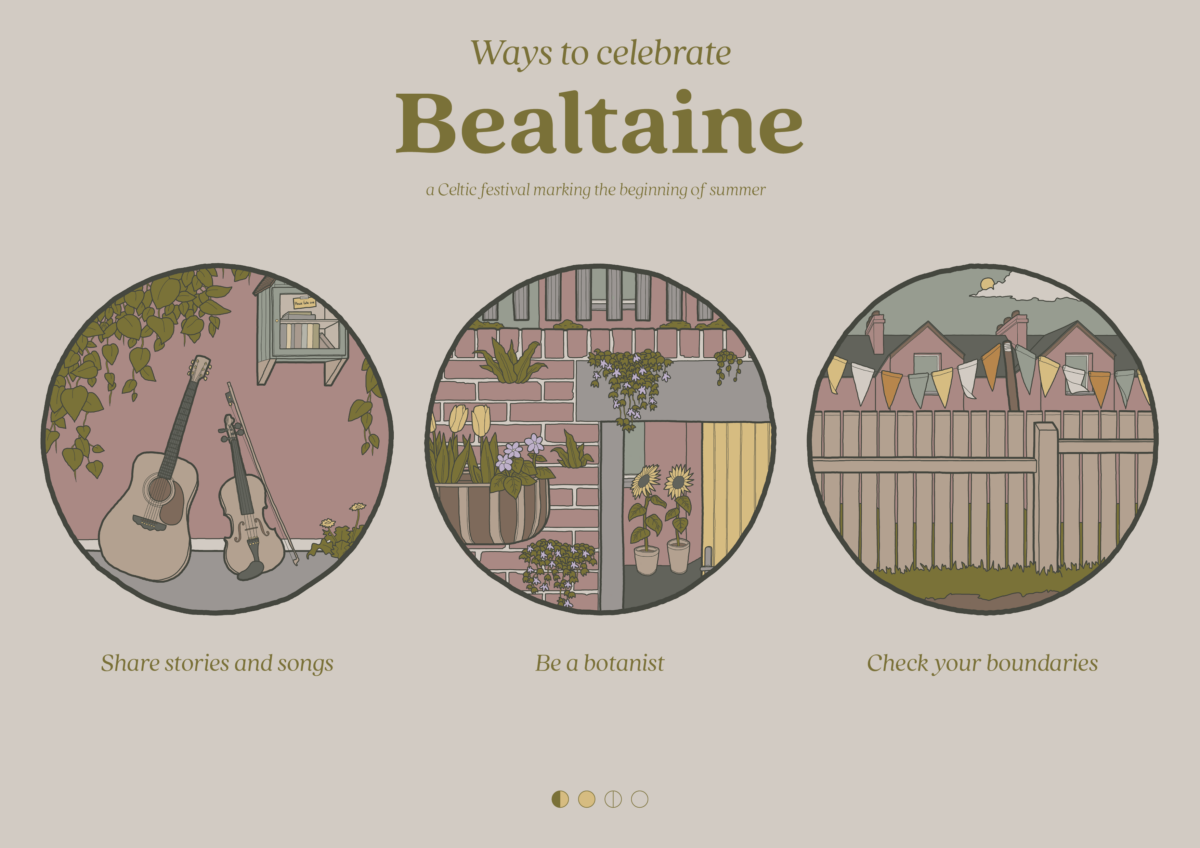
Here are 3 suggestions of simple but meaningful things you can do to mark the seasonal celebration of Bealtaine in your alley.

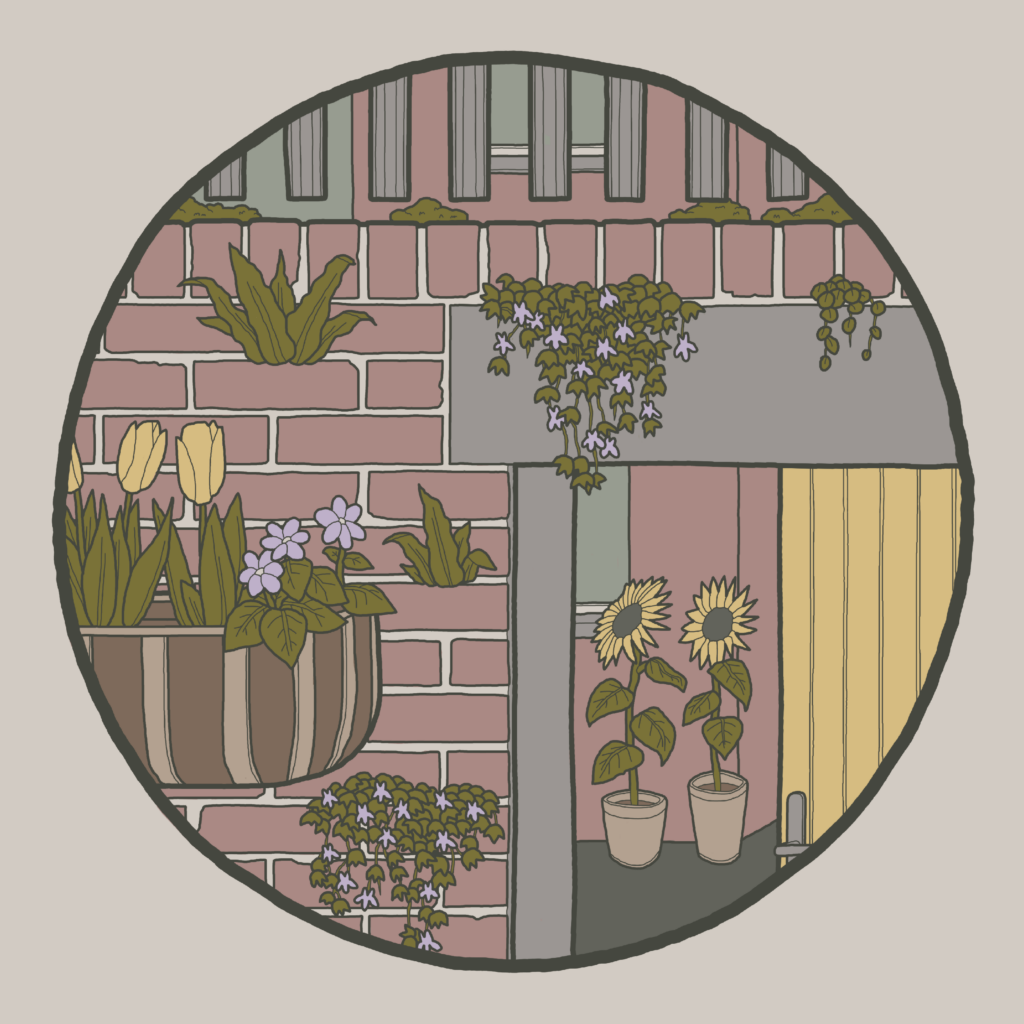
Be a Botanist!
What flowers – both wild and cultivated – can you spot pushing up through the warming ground, gaps in the walls and the cracks in the pavement?

Flowers, especially yellow flowers, represent the fertility and lushness of the season. Could you bring potted plants and flowers into the alley, transforming it into a green, blossoming space? 

We’ve created a fun ‘Wildflower Bingo’ sheet. Why not take some pals or family members on an alley walk near you and see how many of them you can find.

Share Stories & Songs
Bring friends and neighbours together for a storytelling or music session.  Share stories and memories of alleyways and adventures, hopes and plans for summer. 

Do you have a song in you, or a story that wants to be told?  What songs could you and your neighbours add to an alley-themed playlist, and play on a portable speaker for all the alley to enjoy? 


Check Your Boundaries
A lesser known Bealtaine tradition was walking the circuit of one’s property (beating the bounds), repairing fences and boundary markers. 

Could you paint your gate, tidy-up your walls or oil some hinges?  Could you maybe mend some fences – literal or symbolic?

Share how you are marking Bealtaine in your alley with us – tag @9ftincommon on Instagram and X/Twitter.