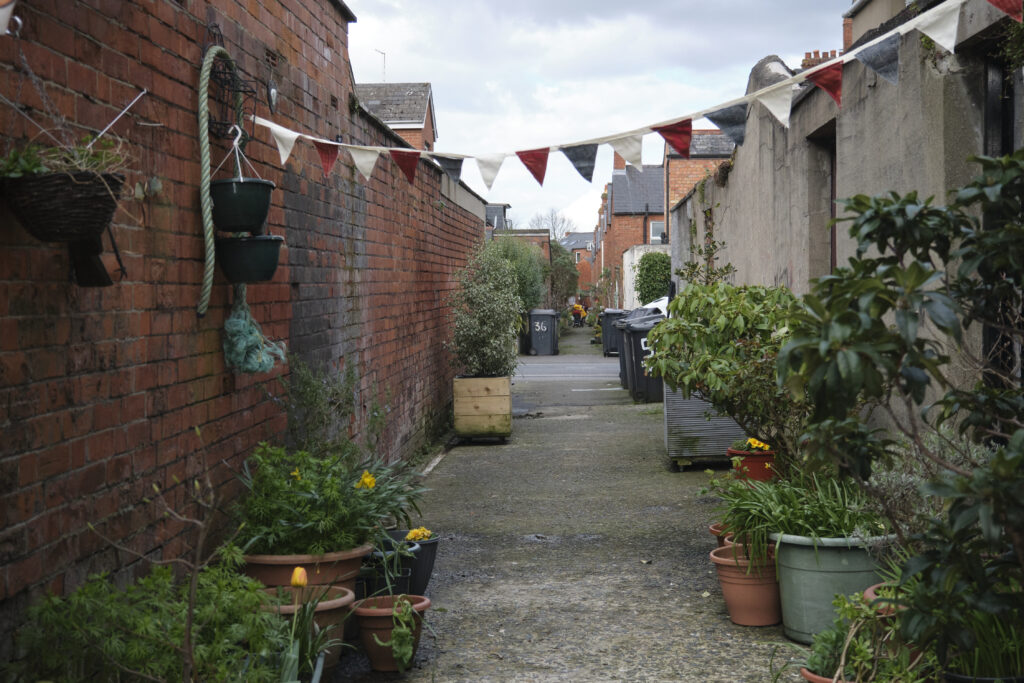
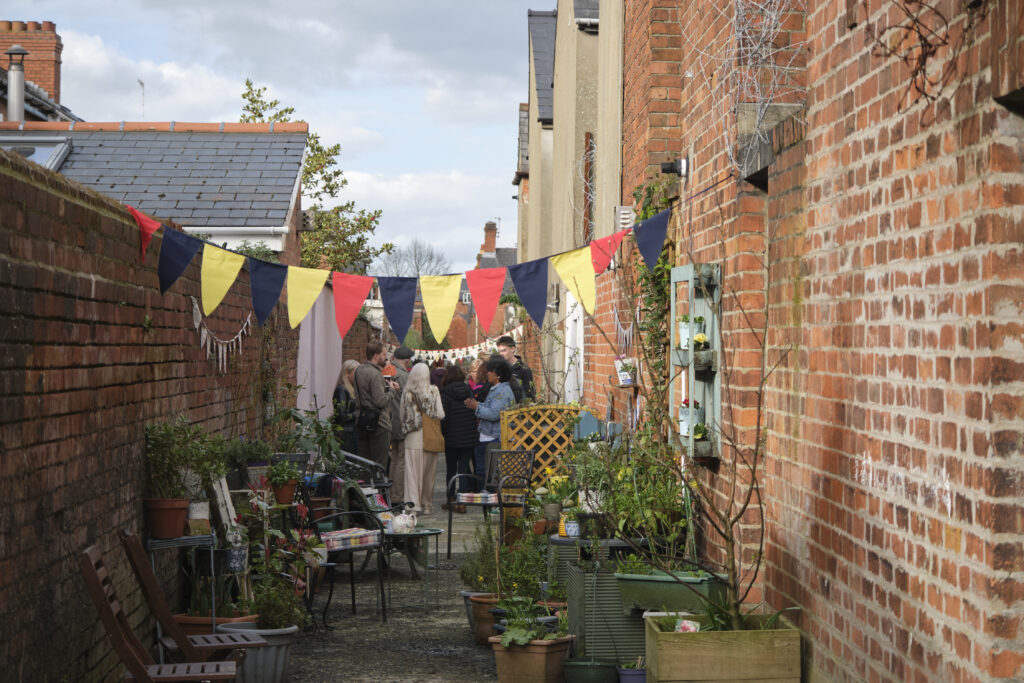
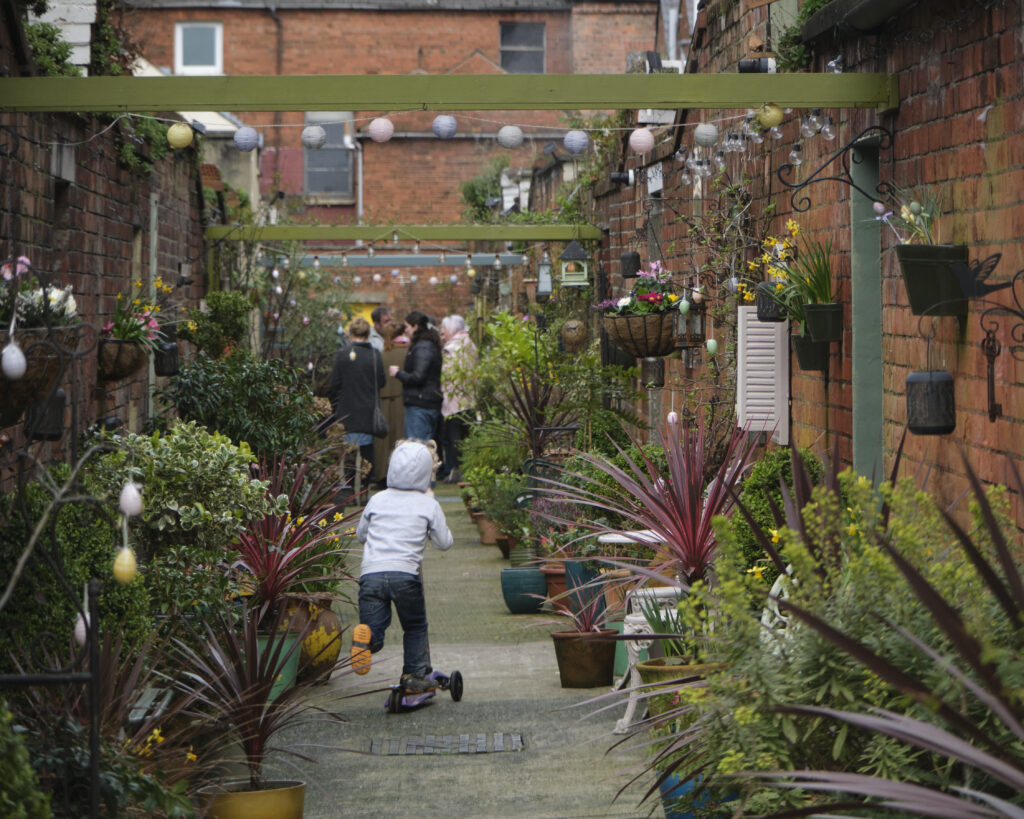
Many alley gardens across the city opened their back gates on March 24th for the ‘How Does My Garden Grow’ event.
9ft in Common team members got around to as many of them as possible over the course of the day, having chats and doing some documentation – courtesy of our wonderful photographer Simon Mills – here’s a round up of the lovely day we had including lots of his beautiful images.
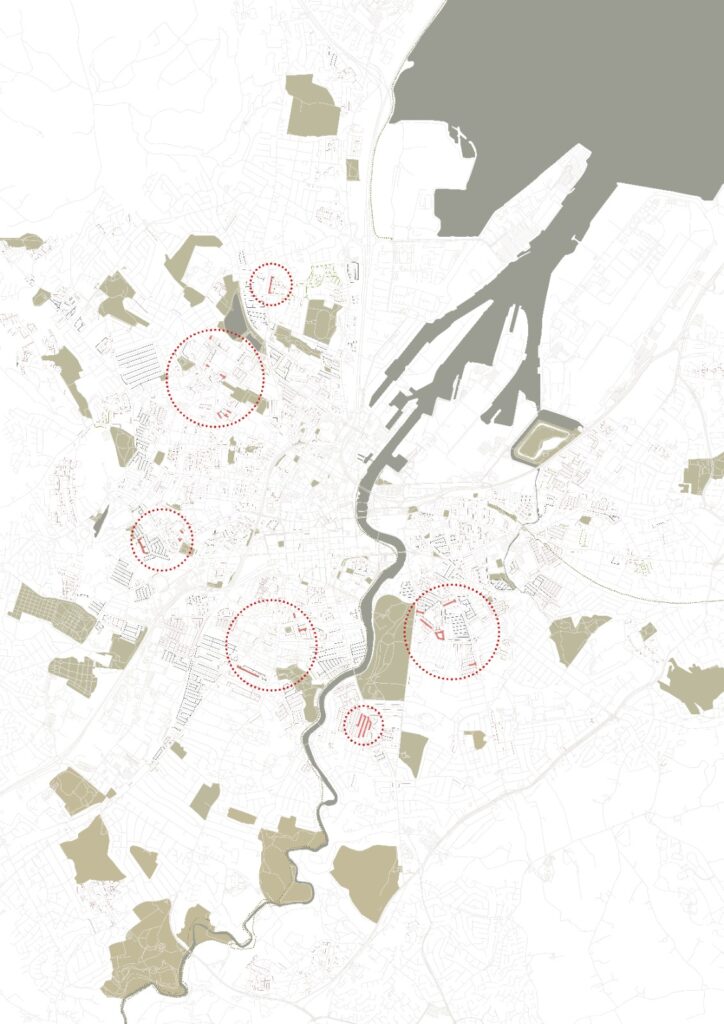
*if you spot your area and would like a copy of the image please get in touch and we’ll happily share.
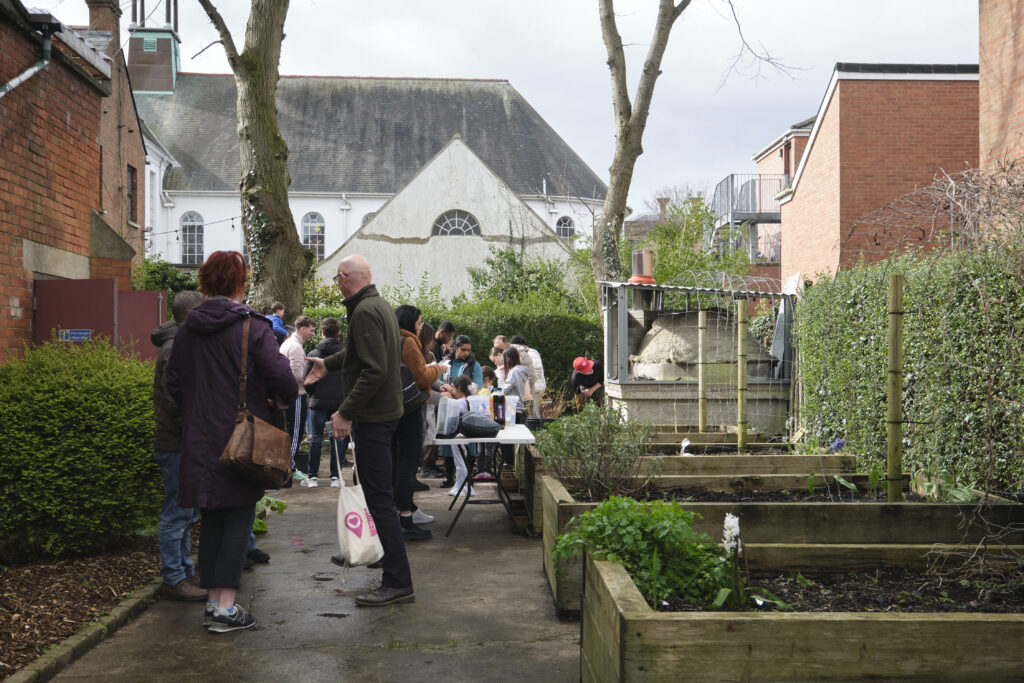
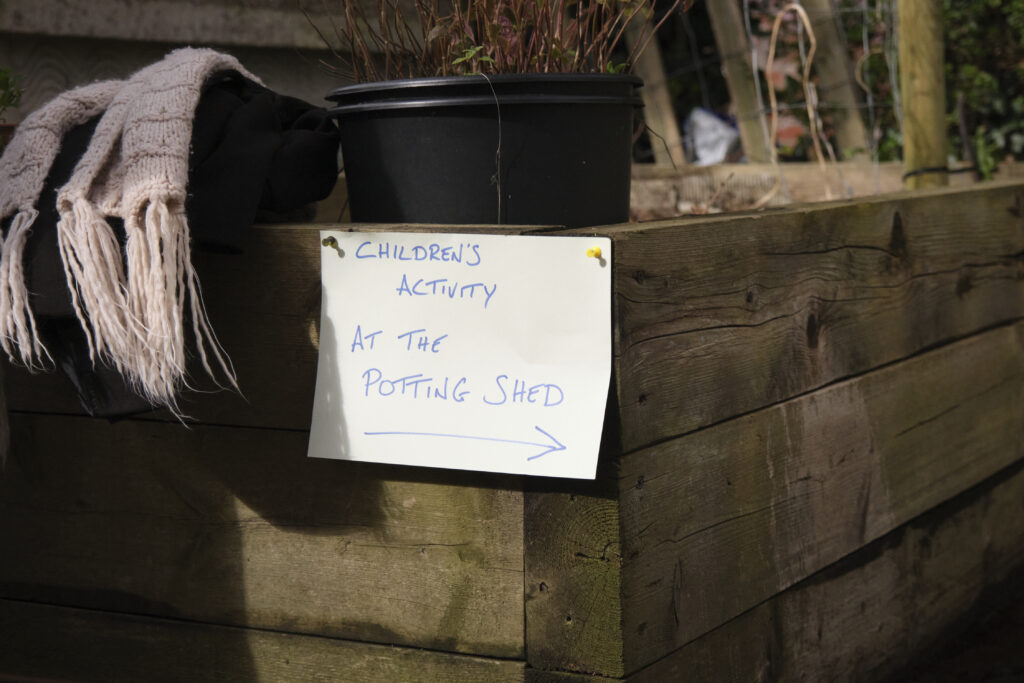
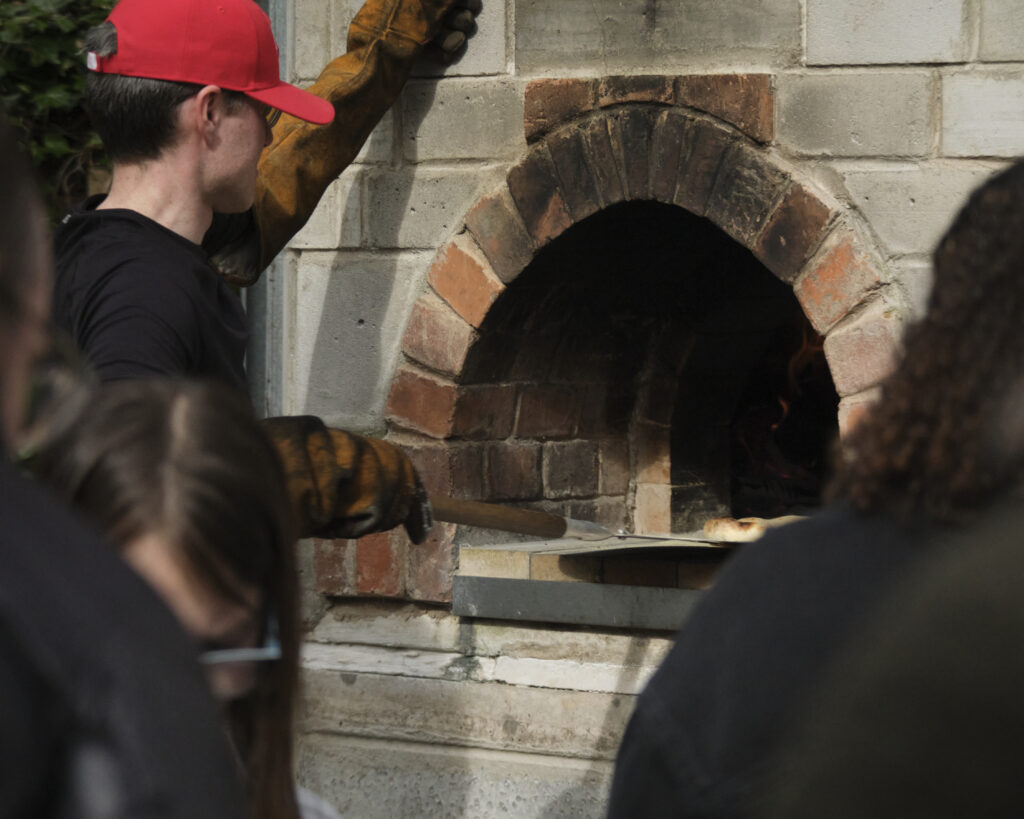
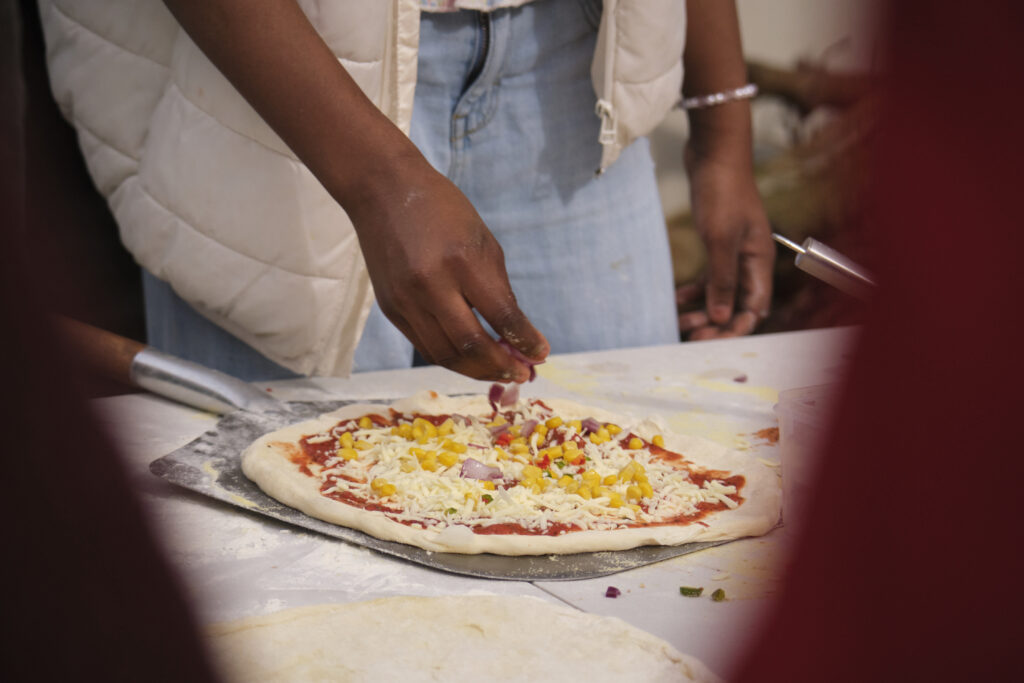
Just behind Alexander’s Bakery, is the Holylands Community Garden. It’s church land and mainly church led but open to all. It’s accessible whenever the cafe is open. They had the pizza oven firing and planting activities for kids.
We spoke with Stephen McCrory who’s the coordinator about their journey, and their hopes for space. How it’s been transformed from a bit of waste ground and their ambitions for small polytunnels and piquant bowling. He spoke about dealing with the risk of keeping it open, the different groups they invite to use it and the impact it’s had for many people without access to a garden.
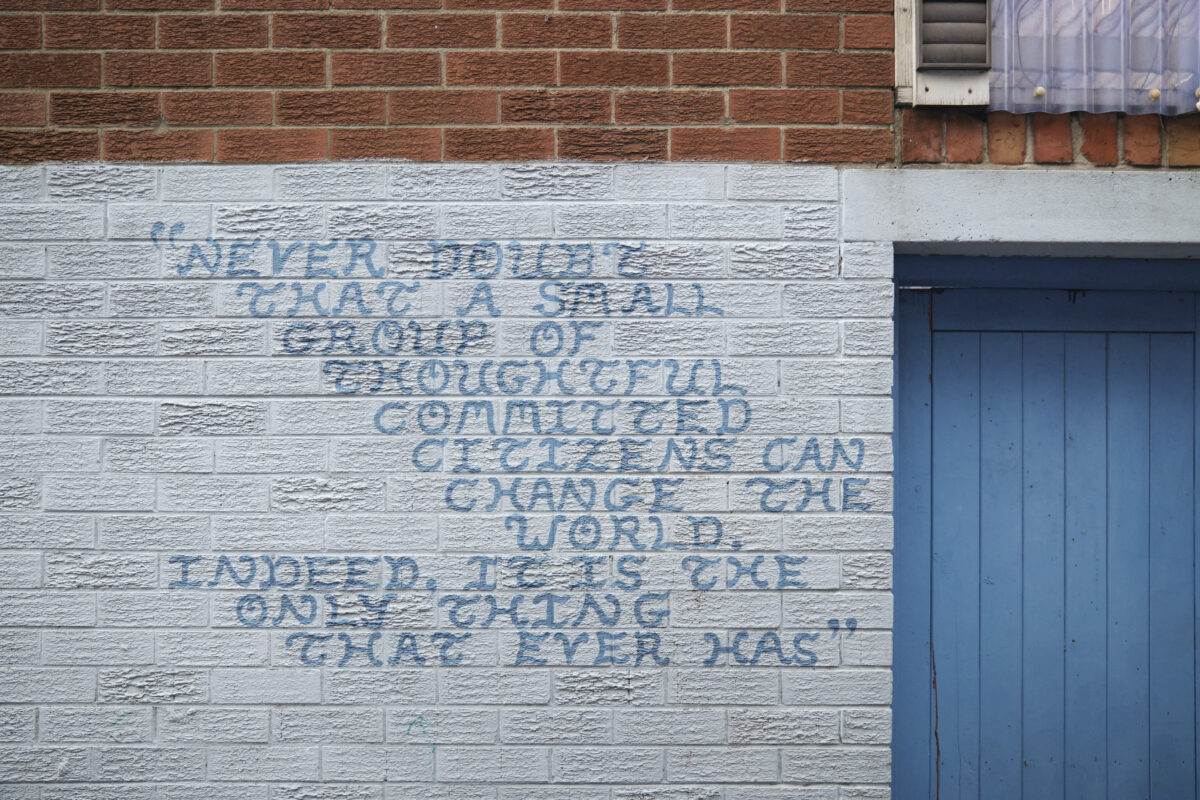
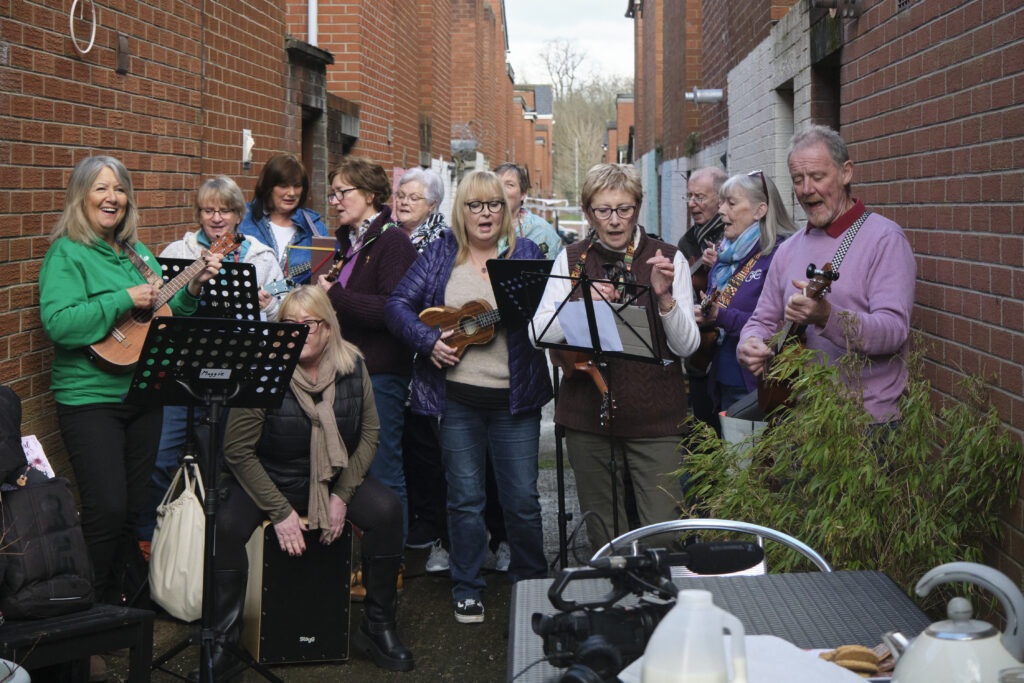
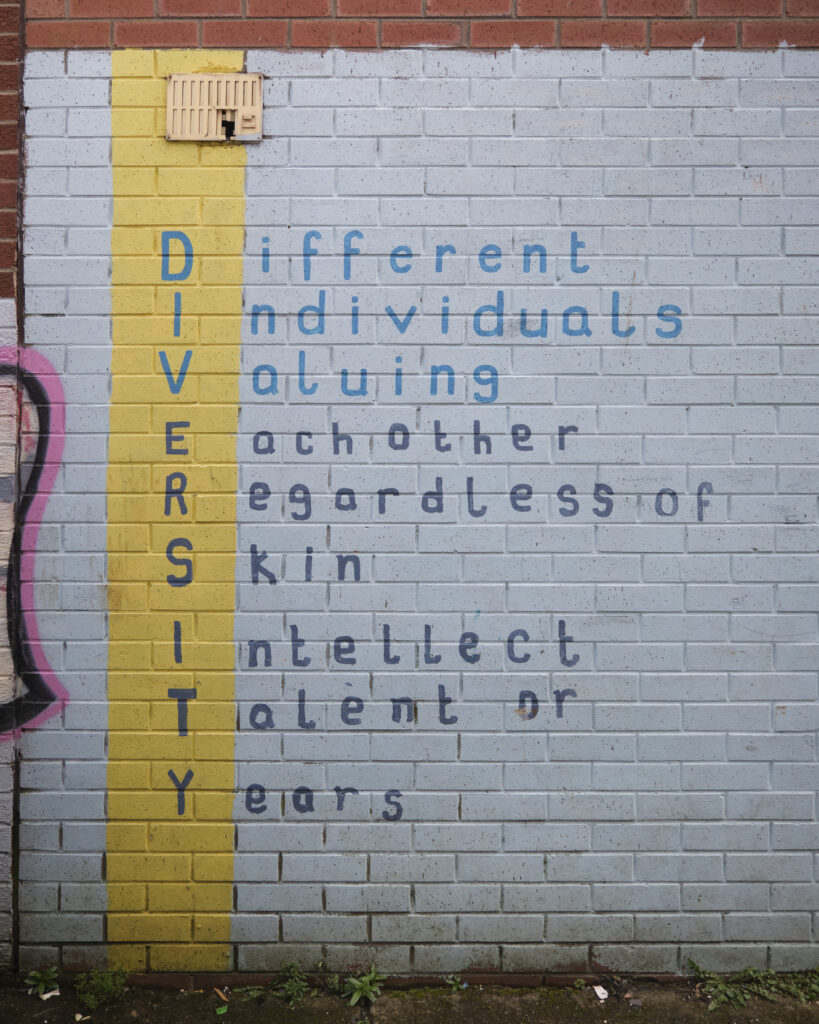
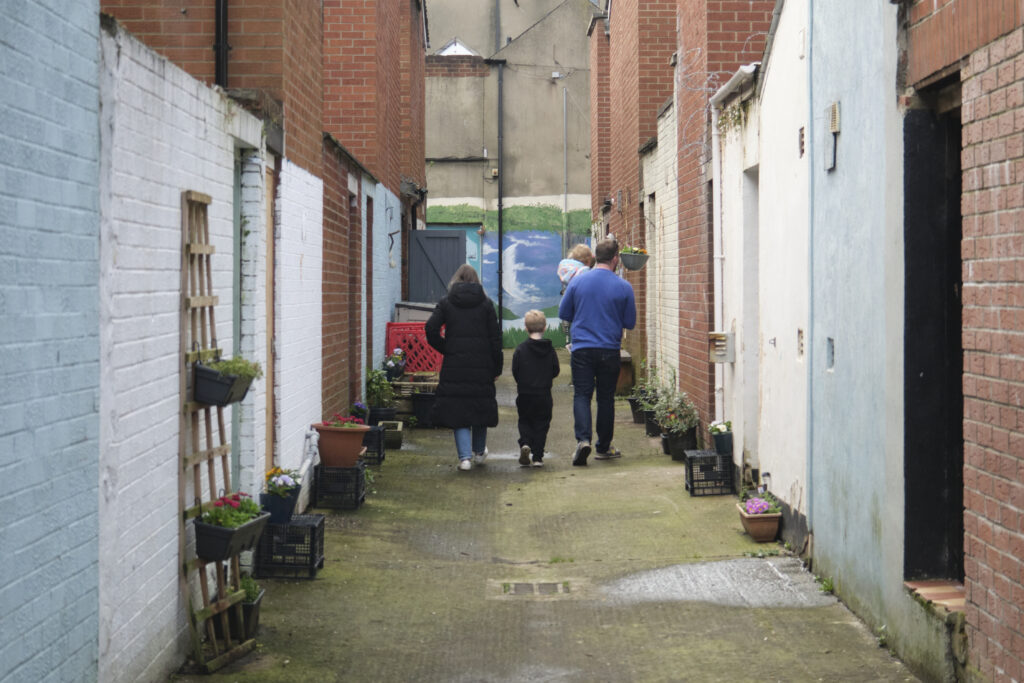
Next we walked down across the Ormeau to Rutland Street for Miracle Way’s opening at 2pm. They had a Ukulele group in the middle of the alley, litres of tea and crowds lining their beautifully painted walls. It’s a long alley, running down almost to the river. Their gable walls and back gates are splashed with colourful murals and hopeful messages about working together.
Ukulele’s in Miracle Way!
We spoke to Claire about their work in the alley – the beautiful ordinaryness of just being able to have a cup of tea, let the kids play safely etc. She spoke about the challenges of the rainy days where no one wants to help and the minor domestic tiffs around bins (everyone keeps them in the yard where possible to keep the main alley clear). Clare introduced us to Tracy, a long time friend and neighbour from the opposite street. When they were ‘reclaiming’ the alley Tracy noticed ‘reclaim’ was an anagram of Miracle which is where they got their name. She was the one who started painting the quotes on the walls. Some interesting ideas on what people leave behind on the walls and how parts of them stay on in the commnity.
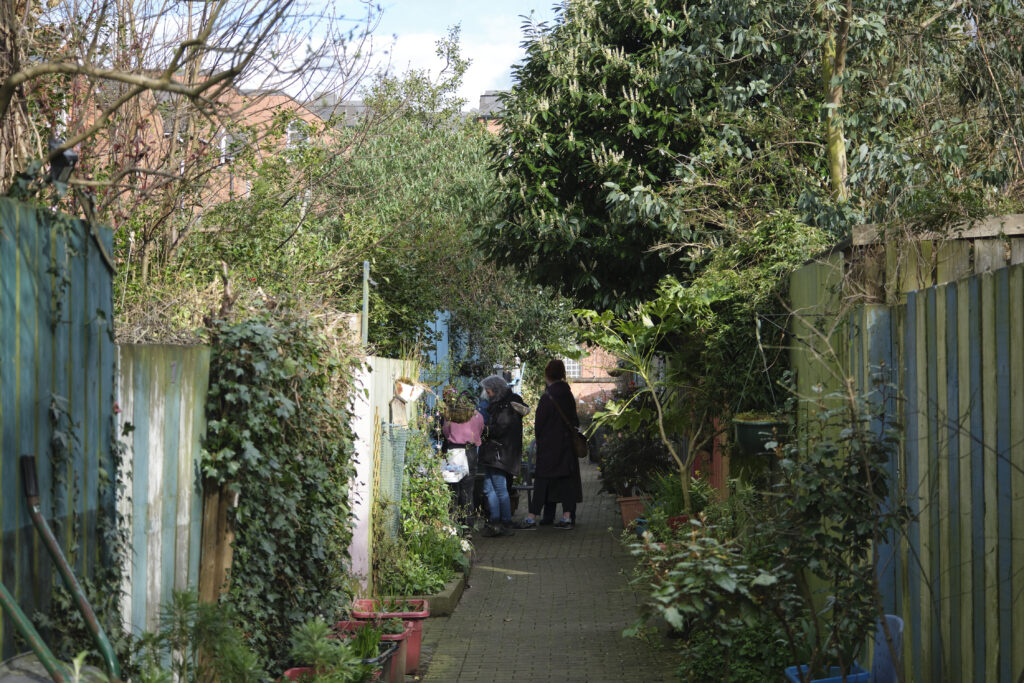
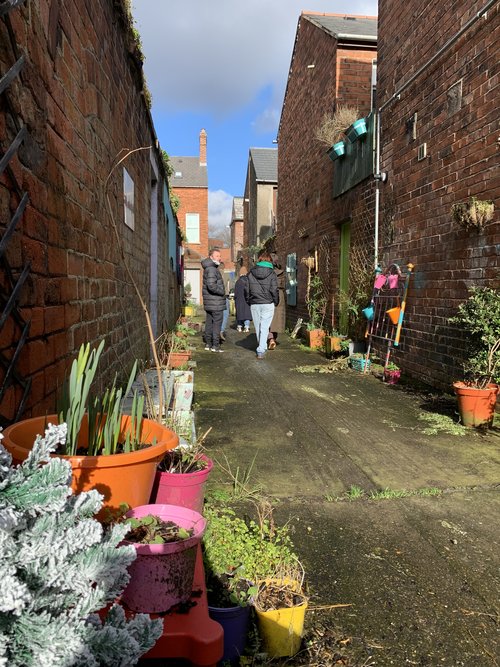
Back across the road and into the Holylands again to catch Wildflower Alley – what a delight to walk down paving overhung by mature trees. It’s easy to see why this alley has won so many awards. Decoration and lush greenery were everywhere. They were just wrapping up with a RSPB workshop. We spoke to Bríd briefly about ‘what’s next’ on their list and she spoke of a plan to investigate culturally sensitive planting – apt for such a diverse neighbourhood.
Wildflower Alley
We’re getting tight on time with so many people to get around to so it’s into the car (thanks Aaron) and off down the road this time to Rushfield Haypark.
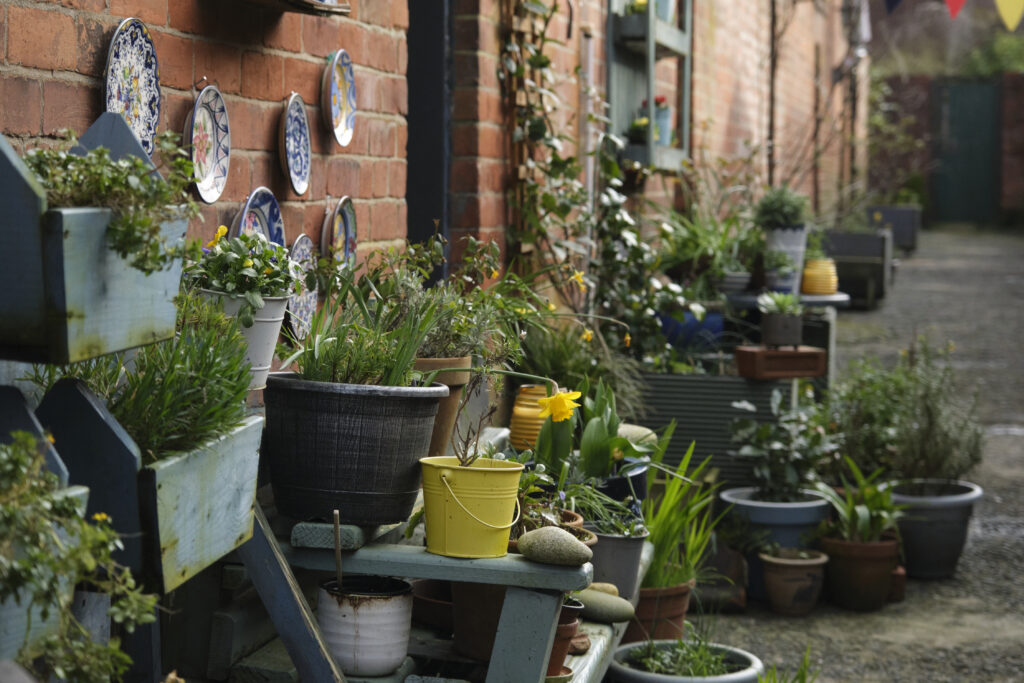
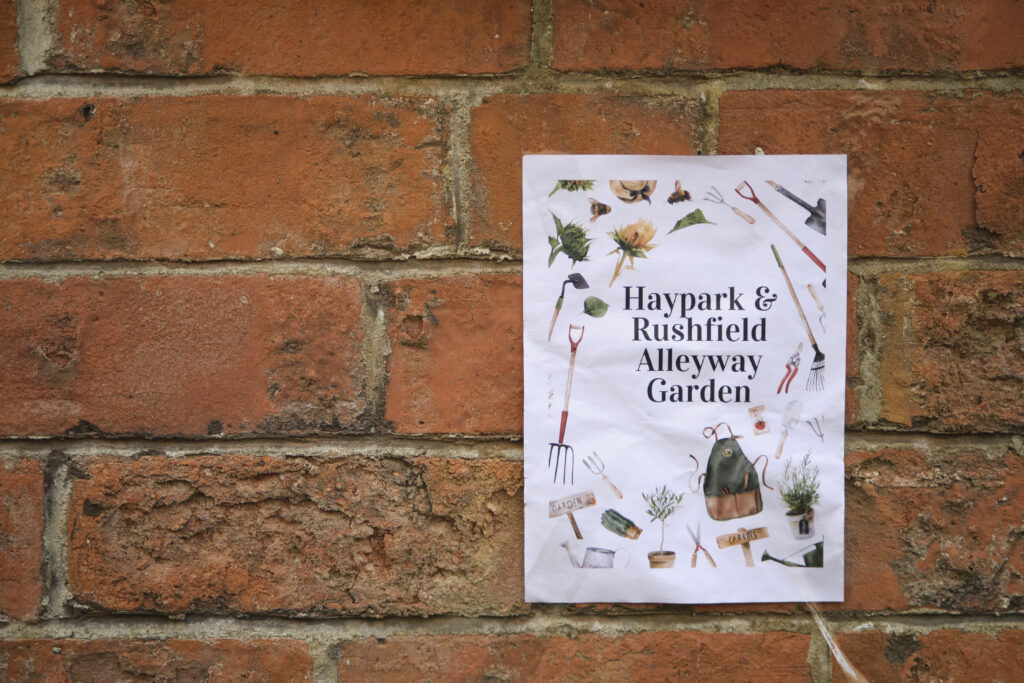
We speak to Noelle about the progress they’ve made in the last 2 years…. How they feel gates would bring a bit more peace of mind for letting the little kids to play and for leaving things – not least the washing – out unsupervised. These residents have put on a fantastic spread of food – there’s traybakes as well as chai-dessert noodles and plenty of cups of tea on the go. Chairs and ‘pallet sofas’ line the walls as well planters made up out of any leftover building materials. It looks like people have been here enjoying themselves and chatting for most of the afternoon enjoying the sun and the colourfull bunting.
Haypark / Rushfield
The day is almost over, we head off to Ardmore / Rossmore Alley for the last leg of the tour, sad we don’t have some magical stop-watch or cloning device which would have let us get to everyone. This alley is also delightfull. We chat to Paddy – named by several neighbours as the main instigator of the transformation. He explains how they got gates just prior to lockdown in 2020 and then as everyone was forced to spend time at home it just made sense to bring the bins into the yards and clear the space. He spoke about how it’s brought together the people on both streets and how they discovered they are quite a creative bunch with artists and musicians a plenty. In the last few years there have been alley concerts, parties and ambitions for other performances, Shakespeare resticals even. He spoke about how some people like things very neat tidy and others are keen to embrace a bit of wildness, just ‘letting it grow’.
Ardmore / Rossmore
It was inpsiring to see the work that all these residents has put into these spaces, no longer forgotten kingdoms rulled by bins and rubbish but valued green spaces for connection and community. We hope all the other visitors thought the same and left itching to start a transformation for their own space – it can start with a few pots, a lick of paint, and yes, probably a few conversation about bins.
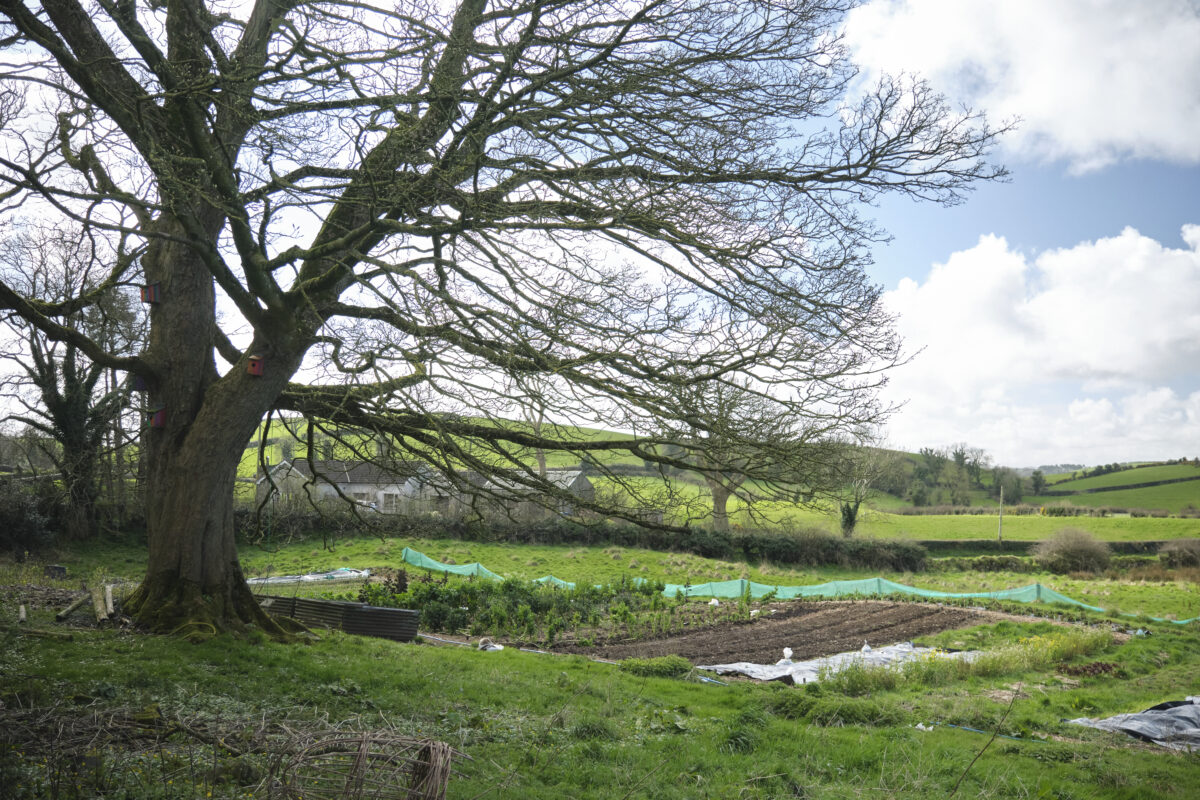
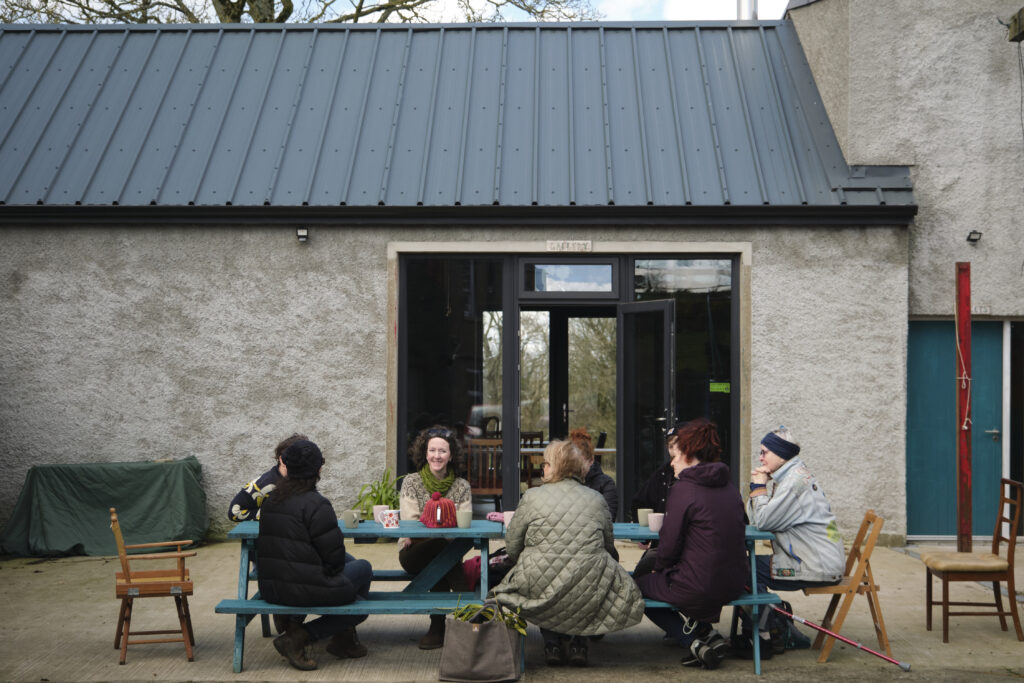
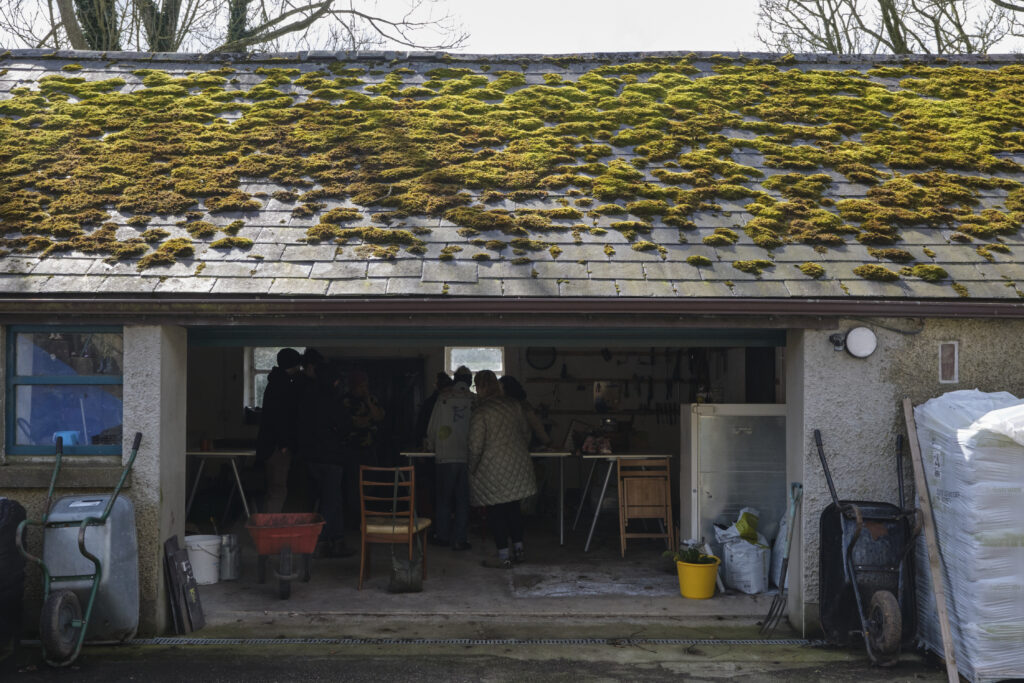
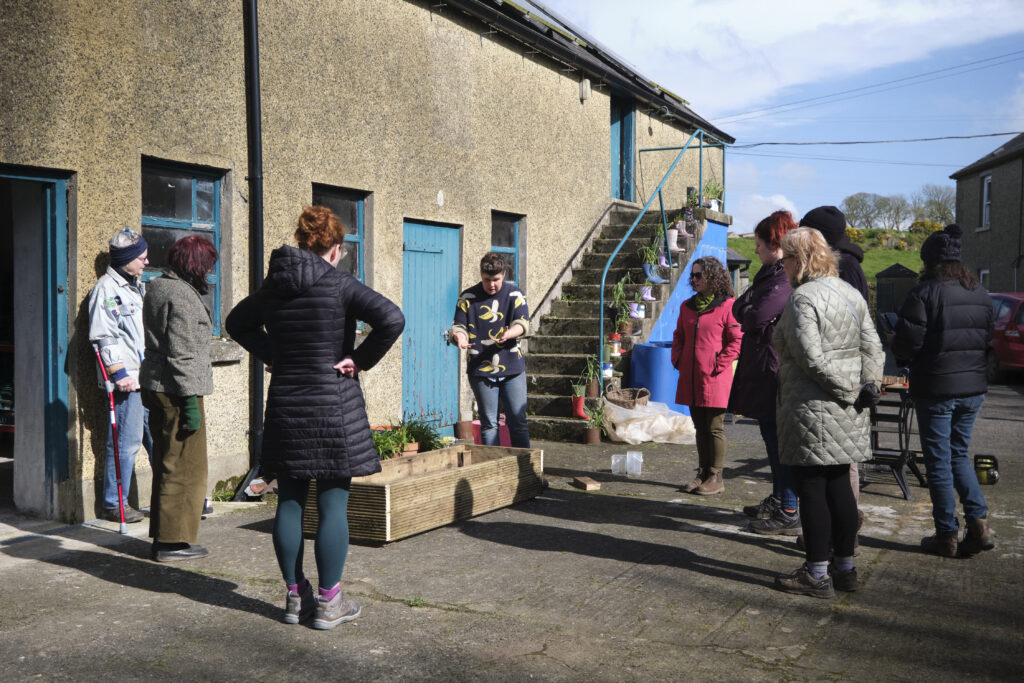
We arrived over the rolling hills of County Down at 11am – greeted with tea and coffee outside the yard as for the second time that week, the sunshine was smiling on us alley gardeners. We gathered and shared a little about ‘our alleys’ and collective growing experience.
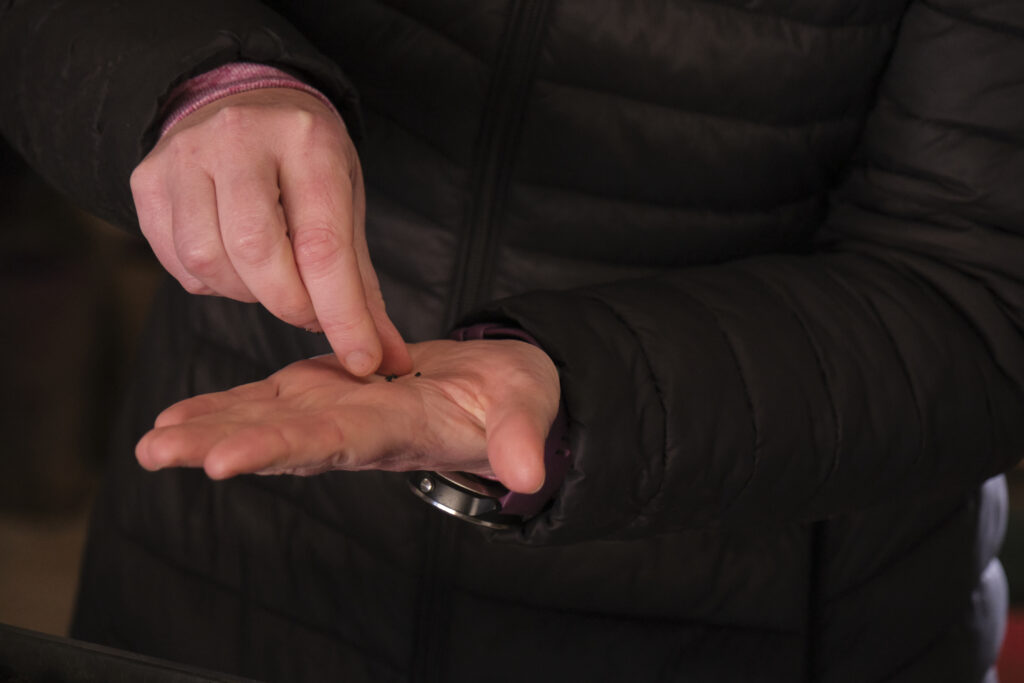
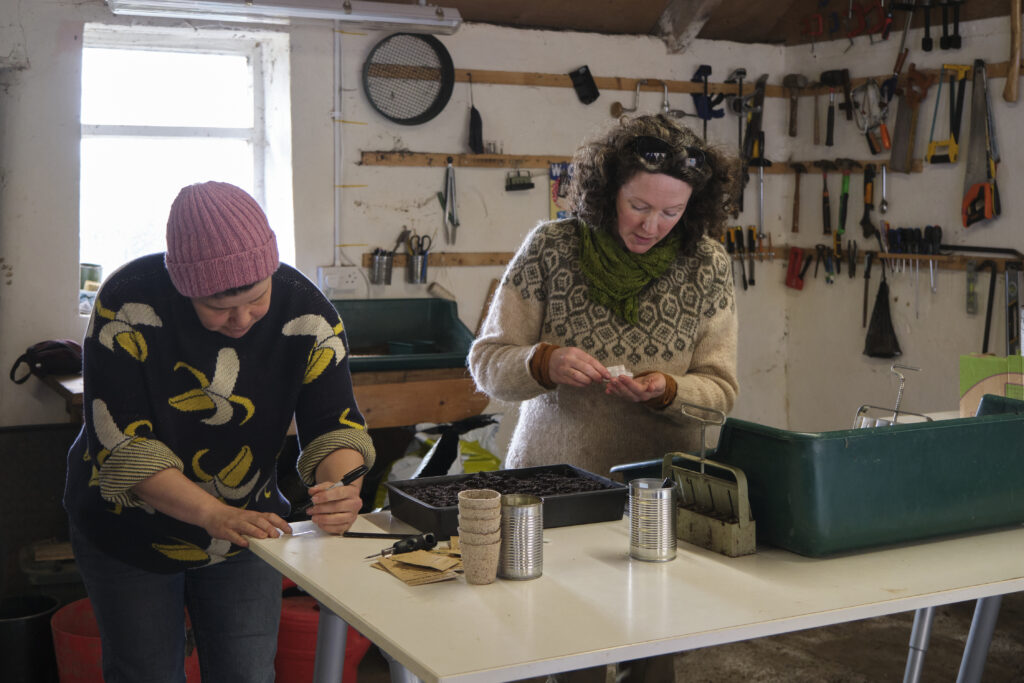
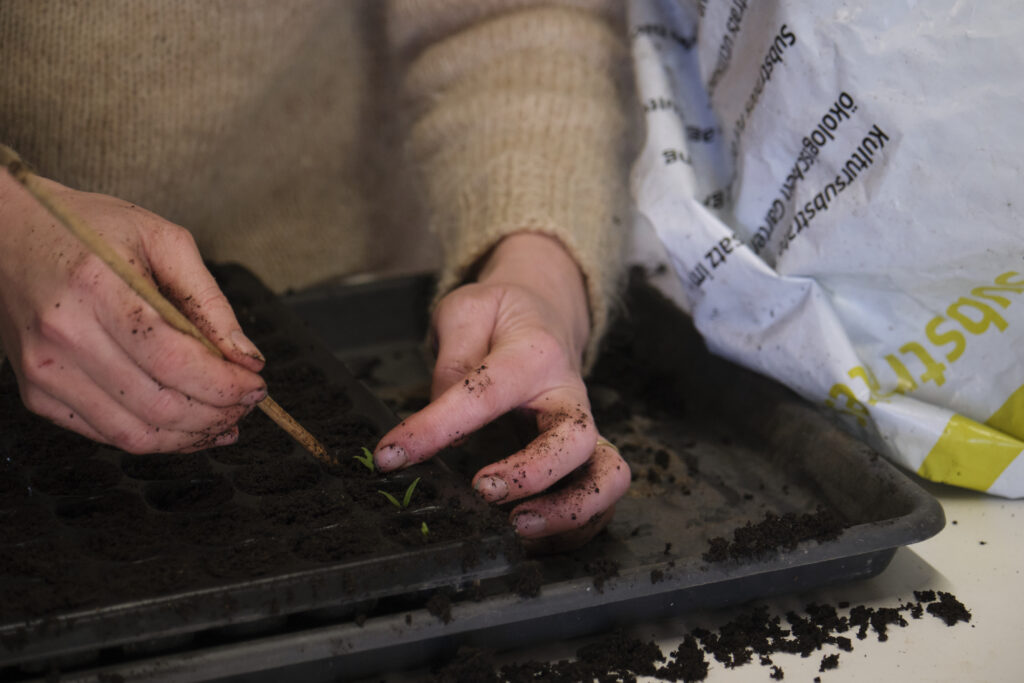
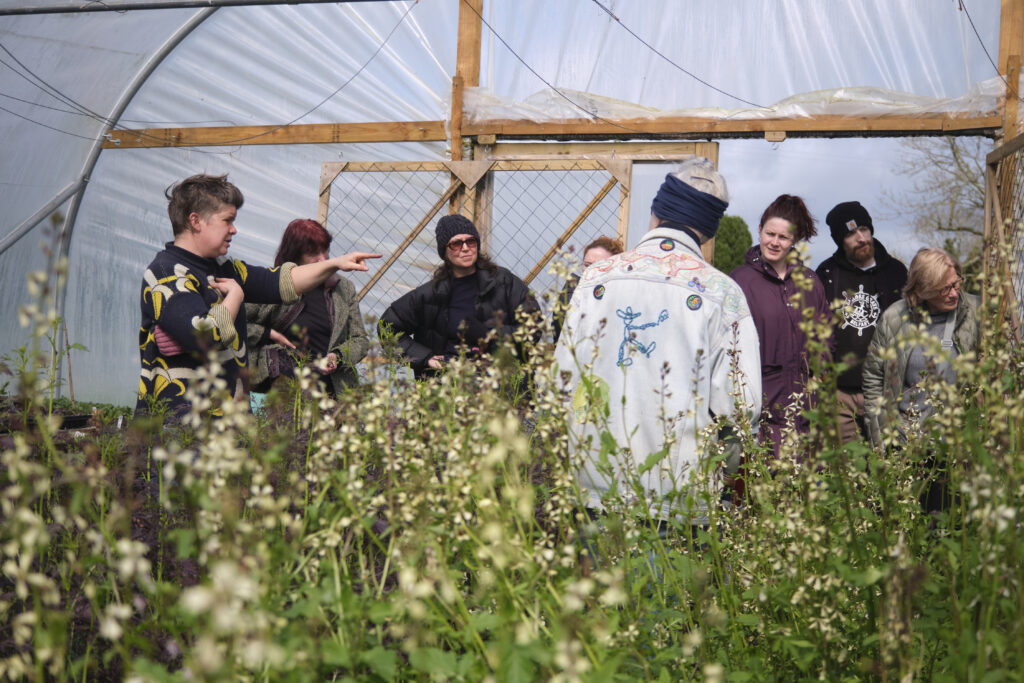
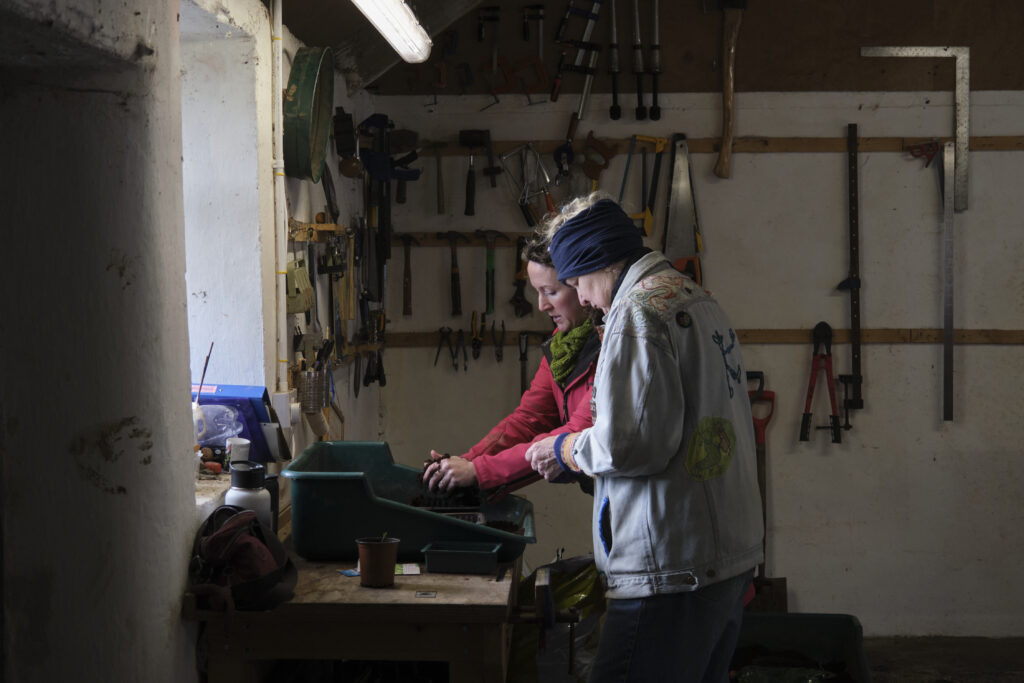
To start Cat, Laurelbank’s Assistant Grower demoed seeding – with seeds as tiny as grains of sand, and others as large as peas. We all had a go at ‘planting out’ tomato seedlings… Talked about options for trays and seed blocks about germination and temperature. Some keep seed trays toasty under the bed though this is not reccomended in homes with pets or children.
We visited the lush polytunnel – full of erratic indoor showers as the wind blew shook the plastic, fragrant with tasty coriander and mustard greens.
We dug out and violently separated some vibrant pink and rooty caucasian spinach with ‘the bread knife’ method. Apparently it’s a shade loving edible plant – we are eager to see how it fares in alley situations later in the season.
Jo shared some fascinating info (I promise Jo that’s not sarcasm, it really was fascinating) on compost vs soil. Compost we learned is 100% organic matter, whereas soil also has a large proportion of minerals too – sand, silt or loam. We talked about when to use which in planters, what to think about when making your own compost – balancing moisture is key apparently, don’t want it too slimy – wormeries and ‘nettle tea’ fertiliser among other wonderful fun facts of organic growing.
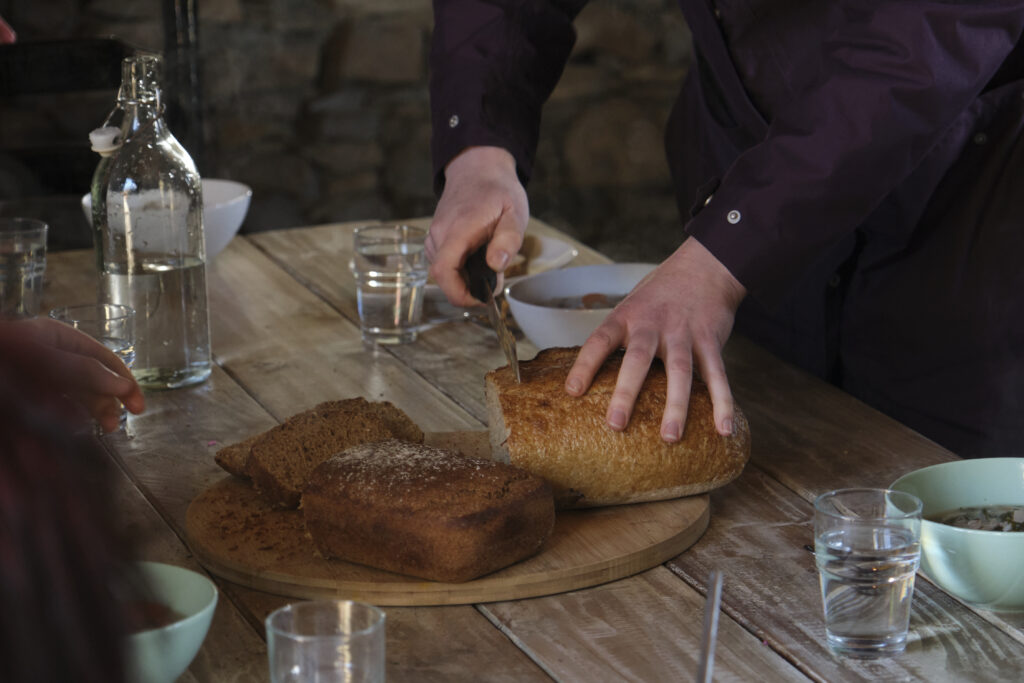
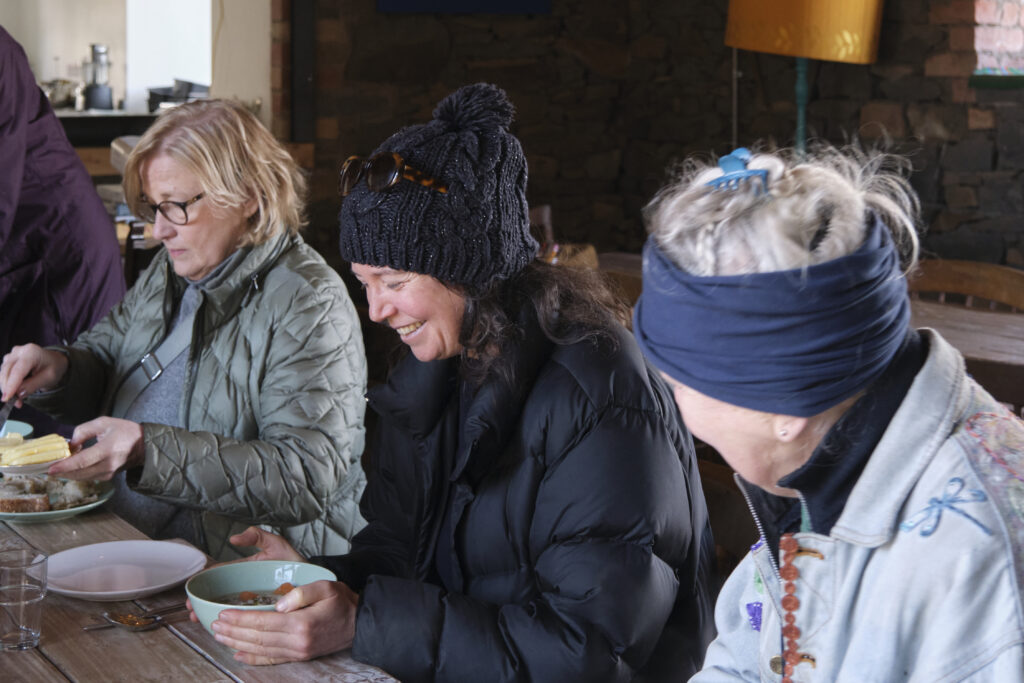
We had a delish lunch of vegetable stew, creamy with pearl barley served with warm crusty bread and locally sourced better and cheese. In the most lovely informal way, over lunch and throughout the day we all talked and chatted about life, and growing and of course eating – food’s superpower is to bring us all together.
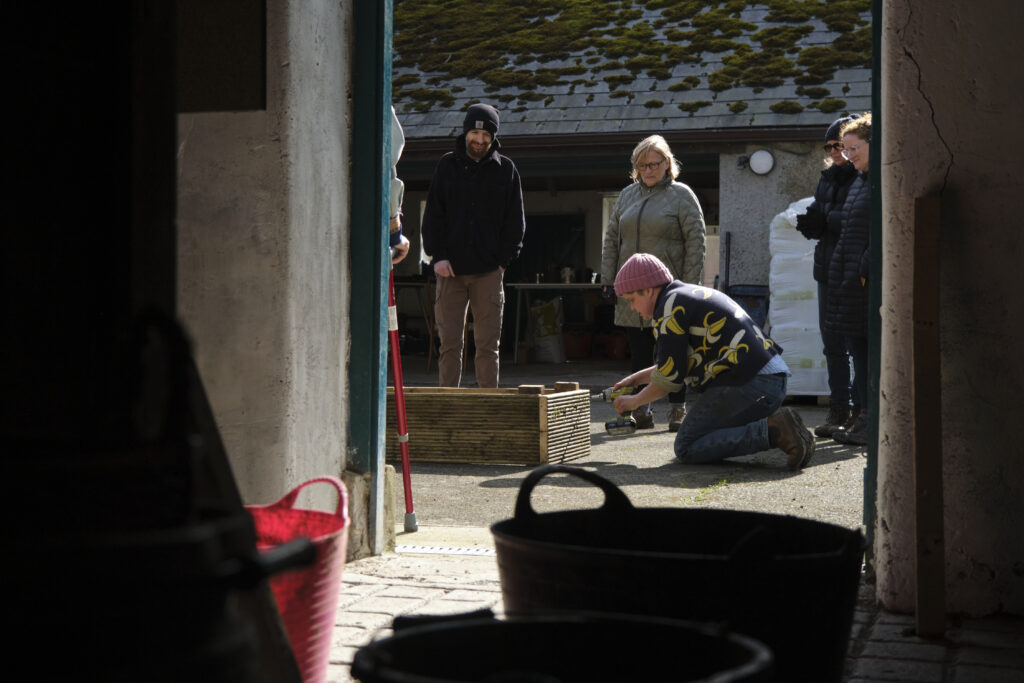
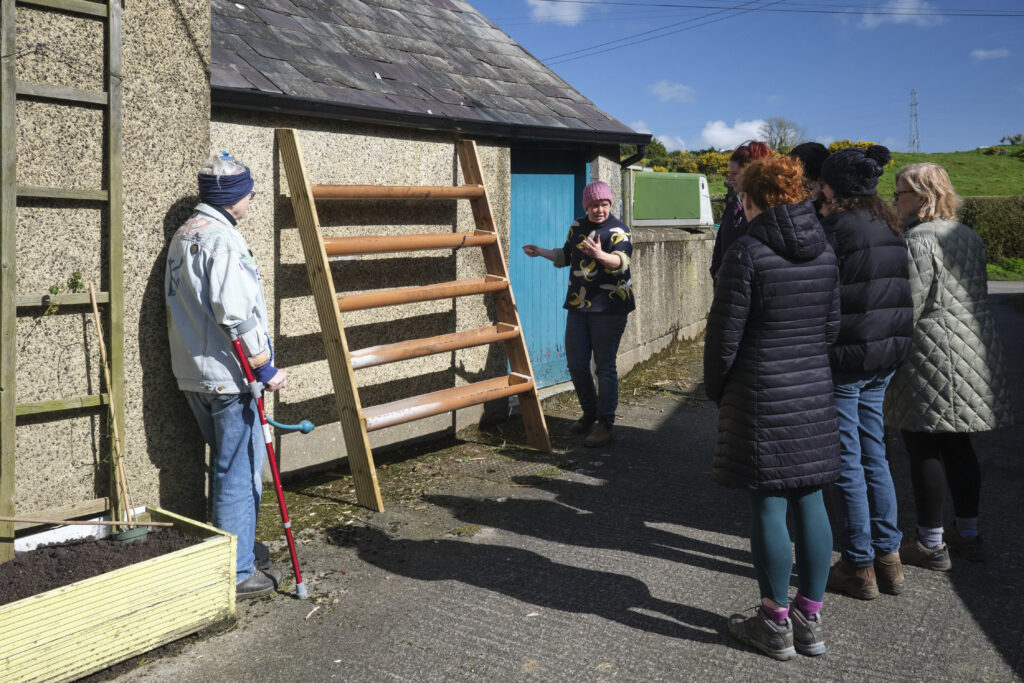
After lunch we had a look at building planters and containers – including some great prototype vertical planter designs – and people got stuck in with whatever they thought would be most helpful to take back to their own spaces.
In summary – it was such a treat to get out and learn from such knowledge growers – the key take away, plants want to grown, we just need to help them along with nice environments and some TLC.
Maybe if I can retain all this info – thanks to the magic of the internet and all these resources we are sharing, next year I’ll be able to apply it to my own alley but for now I’m so looking forward to seeing how things grow between now and the next workshop.
Aisling & Amberlea have been shortlisted for a heritage Angel Award 2024!
The Heritage Angel Awards celebrate the achievement of individuals, groups and communities who have helped to rescue, regenerate, research and record built heritage in Northern Ireland. Ranging from large scale restoration and regeneration projects to volunteers impassioned to promote a local landmark they love, the Heritage Angel Awards are a way to formally recognise the important contribution people make to the care and conservation of historic buildings and places.
We are delighted to be shortlisted among so many brilliant projects from across Northern Ireland (check them out).
Think we should win? Vote now – and hope to see some familar faces at the awards cermony on the 27th too!
Catagory is: Best Research or Interpretation of a Historic Building or Place
DR AISLING RUSK AND AMBERLEA NEELY 9ft in Common, Belfast – highlights the overlooked heritage of Belfast’s forgotten alleyways, or “entries”, as they are locally known. Amberlea and Aisling mapped the alleys, explored their ownership and illustrated creative solutions for their transformation. An archive of stories has been developed into a series of resources, from walks to ‘how to’ guides, that encourage people to use the alleys in new ways.
Voting is now open until 25th March at 11:59pm.
One vote is permitted from a single email address
The winner of the Heritage Angel Awards vote for the best project will be announced at the Awards Ceremony on 27th March.
Meet Jo who’s leading our ‘Growing Potential’ action research
Jo, in Halstien Drive, East Belfast
Jo’s the founder of, and Head of Growing at Laurelbank Farm, a 7-acre organic farm located just outside Saintfield, Co. Down.
The farm’s vision is to reconnect people to the land, and to nourish and empower people through farming and feasting. At the heart of Laurelbank is ‘Farm & Feast’ – a community supported agriculture scheme (CSA) in which members share the risks, rewards and responsibilities of growing food. This sustainable business model involves members working together to cultivate and harvest delicious produce.
In addition to her role at the farm, Jo is an author and teacher. Co-authoring with Erin Bunting, Jo released her first book, ‘The Edible Flower: A Modern Guide to Growing, Cooking, and Eating Edible Flowers,’ in 2023. She also runs regular ‘grow your own’ courses at the farm.”
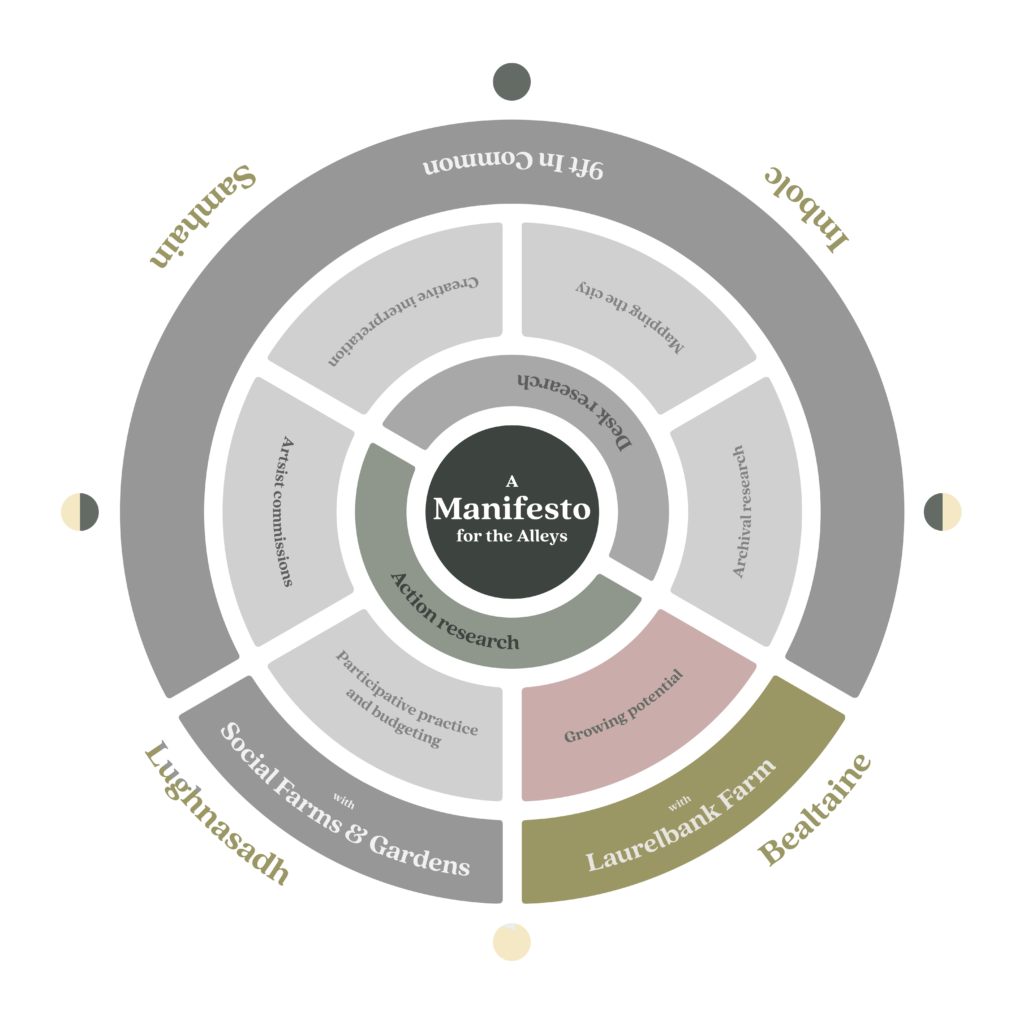
Jo’s leading the ‘Growing Potential’ action research element of Manifesto for the Alleys which will investigate the food production potential for alleys.
Last week she was out and about in Belfast meeting the residents from our 3 selected alleys and kick-starting the project planning with them. She’s written a bit about the day over on the Laurelbank Farm journal – but here’s a few quotes reflecting on the day:
It was hugely exciting to finally meet the residents and explore the alleyways that will be transformed into people friendly, growing spaces over the course of this year. The sun shone and it felt like spring as we chatted and wandered through the streets of Belfast, imagining we were plants and thinking about where we would be best placed for maximum growth!
I love planning, but there’s nothing quite like getting out to see a project in real life. I’m dead excited about the season ahead and exploring all the potential. I hope that my own experiences on the farm will help residents to experiment with new crops and techniques, and kickstart their community growing journey. I just need to figure out how to best maximise the potential of each space with their varying scale, geometry, feel and general vibes being so different it’s definitely going to be a glorious challenge!
Deramore Alley, South Belfast
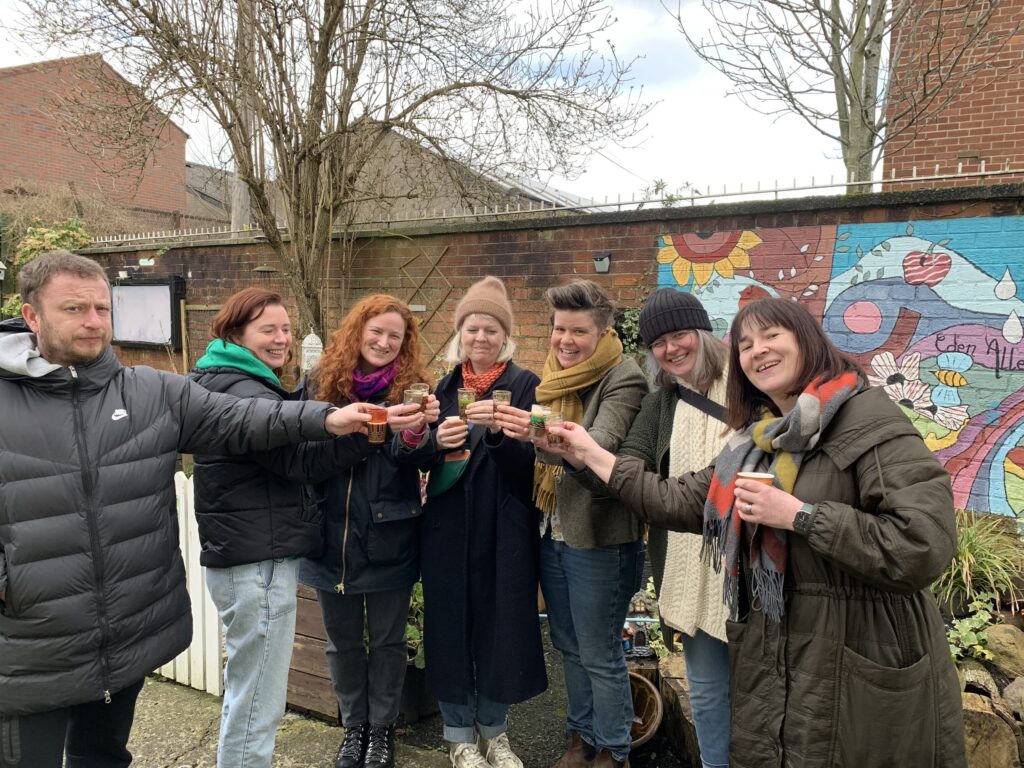
The gang shares a sample of rosemary beer last week in Eden Alley, North Belfast at the end of the visits.
You can catch Jo speaking at the upcoming Community Farming: a Catalyst for Change event in the Imagine Festival on Friday March 22nd if you want to hear more about Laurelbank Farm’s fantastic work.
There will be many opportunities for learning from the Alley Growing Potential groups over the year and Jo will be releasing practical how-to video guides each month for all aspiring-alley-gardeners – expect the first ones in the next few weeks!
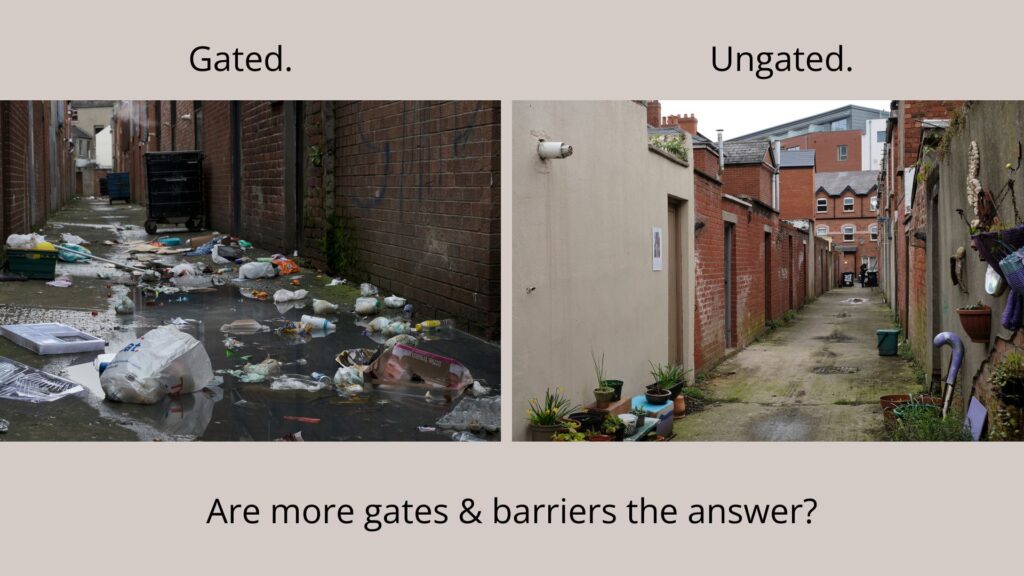
Perhaps you are on the fence about whether gates are the right solution for your street.
If you feel you have not been given enough information or enough time to discuss it properly with your neighbours or that alternative solutions have not been considered for your area then YOU HAVE A VOICE and can send an objection letter, in writing by post/hand delivery to:
Belfast City Council ℅ Gavin Bell, City and Neighbourhood Services Department. 4-10 Linenhall Street Belfast BT2 8DP
BEFORE close of day on Friday March 8th.
We understand that each area is different and that there is not a one-fits-all solution but debate and democracy is what local government is for.
9ft in Common have concerns based around ideas of alleys as rights of way, the legal requirements for community consultation, the evaluation of previous gating orders (have they worked?), and, if any alternatives to gates have been properly considered.
We’ve put together an open letter to the entire Phase 5 Gating Order on grounds listed above. If you would like to add your name, please get in touch with us via email before 12noon on Friday March 8th- info@9ftincommon.com
Alternatively, you are welcome to use any of the points provided to write your own letter of objection. If you do not have access to a printer Social Farms & Gardens can print and deliver your letter if you email it to miriam@farmgarden.org.uk by 3pm Friday 8th March.
An Open Letter
Belfast City Council ℅ Gavin Bell, City and Neighbourhood Services Department. 4 -10 Linenhall Street Belfast BT2 8DP
Reference: Belfast City Council Traffic Regulation Order 2024 Phase 5a
To whom it may concern,
We write to object to the enforcement of the Gating Order 2024.
The objection is based on 4 points:
Objection point 1 – Rights of Way
Objection point 2 – Consideration for alternatives to gates
Objection Point 3 – Evaluation of gating orders
Objection Point 4 – Legal requirements for consultation
Objection point 1 – Rights of Way
As implied in the Roads Order, 1993, alleyways that have been adopted by the Department of Infrastructure, are public highways, and therefore legally, rights of way.
Belfast City Council is duty bound to assert, protect and keep public rights of way open and free from obstruction. The duty to assert public rights of way is one the council’s most important duties under the Access (NI) Order, 1983. Blocking these routes with locked gates contravenes that order. In some instances, gates have even been erected before an order has been passed, which seems hard to justify in light of the above.
Objection point 2 – Consideration for alternatives to gates
In the Guidance on Section 1 of the Clean Neighbourhoods and Environment Act (Northern Ireland) 2011 it states that:
Gating orders are not the only solution to tackling crime and ASB on certain thoroughfares. Before proposing an order, district councils should give consideration as to whether there are alternative interventions that may be more appropriate (and cost effective) for tackling the specific problems they are facing without having to gate the road.
Belfast City Council does not appear to have considered any alternative interventions. We request that Belfast City Council considers alternatives to alley gates, based on a thorough scoping and consideration of each alley in partnership with its residents and other local people who may use or pass through it, rather than a one size fits all approach that will reduce public space in the city, cost £500,000 and that hasn’t even been evaluated to see if it is effective (see objection point 3).
9ft in Common has developed a series of alternative interventions which may be more appropriate (and cost effective) than gates. We invite Belfast City Council to consider these ideas, which have been developed through conversations with citizens, architects, planners, artists, councillors, council officers, meetings on alley walks and over zoom. They are sparked by the wonderful grass-roots interventions we have seen, and offer potential solutions to some common issues that occur in alleyways. They could be considered as alternatives to resorting to installing locked gates.
We also refer to community-led Safer Streets projects that are prevalent elsewhere in England, as best practice ways of tackling ASB and crime, with work streams including ‘strengthening the local environment; and helping the community to reclaim its spaces and increase its strength and resilience.’
Objection Point 3 – Evaluation of gating orders
In the Guidance on Section 1 of the Clean Neighbourhoods and Environment Act (Northern Ireland) 2011 it also states that:
It is important to ensure that all gating orders are working as intended by undertaking evaluations of the gating sites to see whether local circumstances have changed. Therefore, it is recommended that councils review each of their orders on an annual basis. This review should evaluate whether the gating order is acting as a useful crime or ASB reduction measure. It should also assess the impact it is having on the community and discussions should be held with local residents to gauge whether the limited access is causing excessive inconvenience.
Annual evaluation of Phases 1 to 4 of alley gating in Belfast has never taken place. Qualitative evaluation of Phase 2 gates acknowledged that, even after gating, there was continued ‘poor cleanliness in the alleyways as dumped mattresses, bin bags and dog fouling have been an issue,’ and some residents called for ‘a collective plan/multi agency approach to tackling ASB in the area’, which would suggest that the ASB had not been tackled by the gates. No quantitative or comparative evaluation of ASB and crime rates after Phases 1-4 appears to have ever been conducted. In our own explorations of alleyways, we have witnessed countless examples of flytipping continuing behind closed gates, resulting in increased work for Belfast City Council who routinely clean the mess up without issuing fines or any further repercussions to perpetrators.
Before any further gates are installed, we therefore call for a thorough independent evaluation of previous Phases of alley gating, to determine if the previous Gating Orders(1 – 4) have been successful in reducing ASB or crime.
Objection Point 4 – Legal requirements for consultation
Belfast City Council’s Consultation and engagement framework, 2020 ‘has been developed based on current legal requirements and best practice.’
The consultation process for Phase 5 gating orders falls short of this commitment. Hosting hard copy plans in community centres, wrapping around lamp posts or posting through the doors of immediate residents does not equate to a consultation that embeds:
‘meaningful consultation into the council’s planning and decision-making processes and supplements the commitments in our Equality Scheme and our responsibilities to consult under Section 75 of the Northern Ireland Act 1998’ (Belfast: Consultation and engagement framework, 2020)
The Framework also states:
We are continually looking for ways in which to improve how we engage and involve people. As part of this, we have invested in digital technology and have created a dedicated online engagement platform. The aim of the platform is to make it easier for our residents and other stakeholders to find out about our engagements and to have their say. We will also use the platform to keep people informed by letting you know what people have said and what has happened as a result.
Not using this digital platform and stating that objections must be issued ‘in writing’, by post, with a closing date on a Sunday, creates all sorts of barriers to responding. Further, the online survey was closed by the time of public notice, and therefore before a lot of people even knew about it or had the opportunity to respond.
This process cannot be called a consultation. Some residents have expressed the view to 9ft in Common that the tight timeframe and format has not given them adequate time to consider the matter and discuss it with their neighbours. We request that Belfast City Council carry out a proper consultation that is in line with their own framework of best practice, and allows for an inclusive, fair, open and transparent result.
In Addition
In addition to these points of objections, 9ft in Common has been working in partnership with Social Farms & Gardens, Reclaim the Commons and Laurelbank Farm to deliver a series of capacity building and visioning interventions for alley residents and users. In the course of this work we as a partnership have become aware that the method of the current consultation is insufficient to allow residents and users to fully explore the option of alleygating for their street. We have anecdotal evidence that some residents do not want gates but do not want to risk upsetting their neighbours by raising an objection; others do not fully understand the consultation process or how to object. Some have voiced that through alley gardening with neighbours their opinion on the suitability of gates for them has shifted in the last year towards no longer wanting them.
Because of this we ask that fuller consultation happens on a neighbourhood by neighbourhood basis, involving local community workers (e.g. Ballynafeigh Community Development Association) to deliver quality facilitated neighbourhood discussions, which will allow neighbours to process this decision together. To carry on without this level of engagement will result in loss of people’s public space without their consent or input, and could cause alienation in communities that are beginning to grow a strong and resilient sense of community.
We acknowledge the support to date from Counsellors regarding alleyway issues and we thank officers for listening to constituents and working to make the city’s neighbourhoods better and safer. We hope they can support these suggestions that seek to improve the city’s democratic processes, connectedness and permeability.